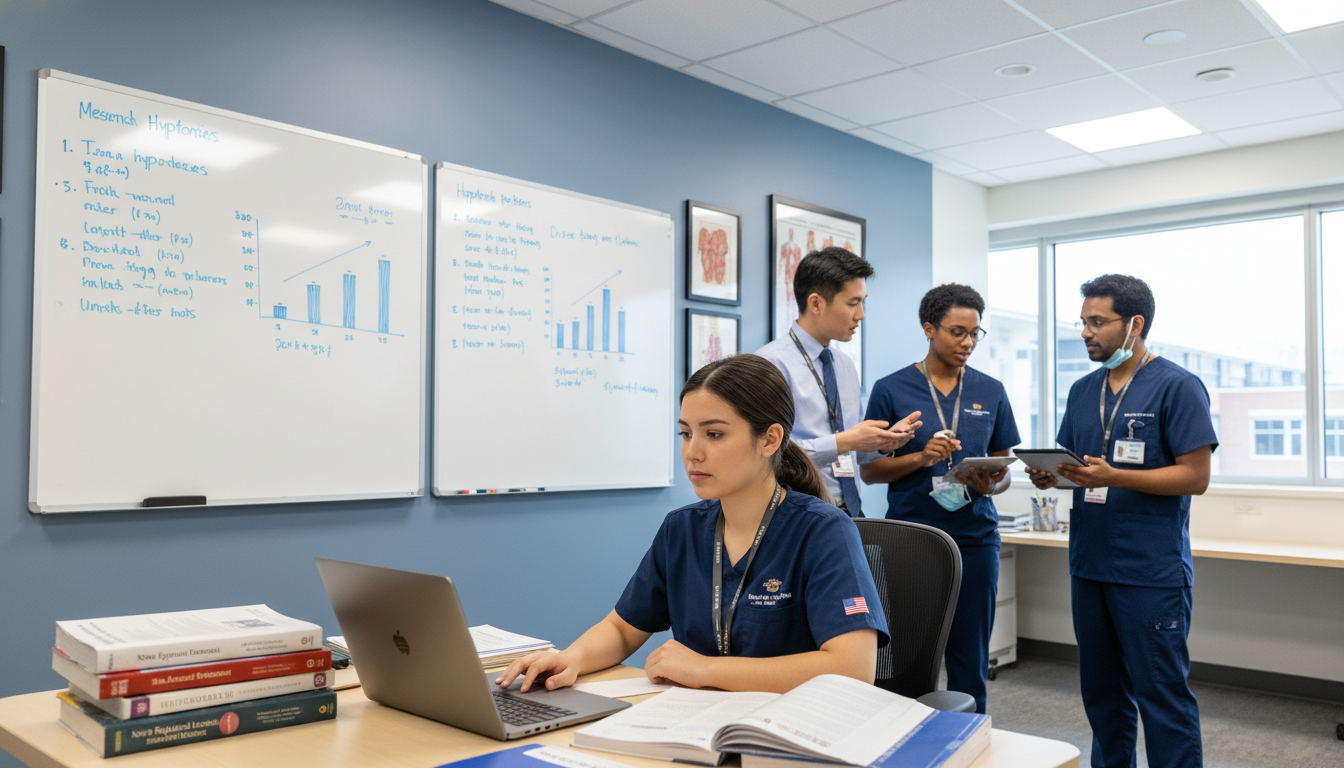
Why Research During Residency Matters for Caribbean IMGs in Emergency Medicine
For a Caribbean international medical graduate (IMG) entering emergency medicine, residency can feel like a sprint: new health system, new culture, new documentation, and a steep clinical learning curve. Adding “research during residency” to that list may seem optional—or even unrealistic.
Yet for many Caribbean IMGs, research is one of the most powerful levers you have to:
- Differentiate yourself in a competitive EM job market
- Open doors to academic positions and fellowships
- Build relationships with influential mentors and program leadership
- Strengthen your visa, employment, and long-term career prospects
Emergency medicine is becoming increasingly data-driven: ultrasound protocols, sepsis pathways, trauma systems, AI-based triage, ED operations, and quality improvement (QI) all rely on robust research. Participating in resident research projects signals that you understand how evidence is created—not just how to apply it at the bedside.
This article walks through, step-by-step, how a Caribbean IMG in an emergency medicine residency (including those from schools like SGU, AUC, Ross, Saba, etc.) can strategically plan, launch, and complete meaningful research during residency—even with limited prior experience.
Understanding Your Starting Point as a Caribbean IMG
Unique Challenges—and Advantages
As a Caribbean IMG in an emergency medicine residency, you may face:
- Less pre-residency research exposure compared with US MD graduates
- Gaps in formal research training (statistics, study design, IRB processes)
- Residency schedule and visa pressures that make extra projects feel risky or overwhelming
- Implicit bias that may lead some faculty to underestimate your academic potential
But you also bring advantages:
- Resilience and adaptability—demonstrated by navigating the Caribbean medical school residency pathway and the match
- Global health and diverse clinical exposure, often from rotations in different health systems
- Strong motivation to prove yourself and build a solid academic portfolio
- Institutional networks: if you’re an SGU graduate, for instance, the SGU residency match data and alumni connections can point you toward EM programs with established research cultures and mentors.
Recognizing both the challenges and strengths will help you plan realistic, high-yield research goals during residency.
Setting Clear Research Goals Early
Before you start saying “yes” to projects, ask yourself:
What kind of EM career do I want?
- Community ED clinician
- Academic emergency physician
- Fellowship-bound (ultrasound, critical care, EMS, toxicology, peds EM, research, etc.)
- Administrative/operations/quality improvement focus
How research-intensive do I want my path to be?
- Minimal but meaningful: 1–2 projects, a poster, maybe a publication
- Moderate: several projects, at least 1–2 first-author manuscripts, conference presentations
- Heavy: preparing for an academic residency track, research fellowship, or junior faculty position
What constraints do I have?
- Visa status and need for early employment
- Family or financial responsibilities
- Program schedule, night shifts, commute
Document these in a simple one-page “research vision” for residency. You can refine it over time, but starting with intent will help you say yes to the right opportunities and no to distractions.
Types of Research You Can Do in Emergency Medicine Residency
You don’t have to run a randomized clinical trial during residency to build a solid academic profile. There is a spectrum of feasible resident research projects that are realistic, especially for a Caribbean IMG balancing many demands.

1. Quality Improvement (QI) and Patient Safety Projects
Why it’s ideal for residents:
QI projects align directly with patient care, often require simpler methodology, and frequently fulfill program or ACGME requirements. They’re highly feasible within 12–18 months.
Examples in emergency medicine:
- Reducing door-to-antibiotic time for septic patients
- Improving ED ultrasound documentation completeness
- Increasing ED screening rates for alcohol misuse or intimate partner violence
- Reducing left-without-being-seen (LWBS) rates through triage process changes
Key features:
- Often use Plan-Do-Study-Act (PDSA) cycles
- Can lead to abstracts, posters, and even publications in QI-focused journals
- Show program leadership that you care about systems of care, not just individual patients
2. Retrospective Chart Reviews
These are among the most common resident research projects because they use existing data.
Examples:
- Characteristics and outcomes of patients presenting with opioid overdose
- Factors associated with bounce-back admissions within 72 hours of ED discharge
- Utilization and impact of point-of-care ultrasound (POCUS) in trauma activations
Benefits:
- Lower cost, no need to recruit patients prospectively
- Feasible within residency timelines
- Can produce publishable manuscripts with proper methodology
Considerations:
- Requires a clear, specific research question
- Meticulous data extraction and coding is crucial
- Will require IRB approval, though often expedited or exempt
3. Prospective Observational Studies
These involve collecting data in real time from patients or clinicians.
Examples:
- Observing how often sepsis screening tools miss septic patients in triage
- Recording sonographic findings during FAST exams and correlating with CT or OR outcomes
- Measuring pain scores before and after a new analgesia protocol
Pros:
- Stronger evidence than purely retrospective studies
- Can be highly relevant to ED practice
Cons:
- More logistically demanding
- May require longer time frames and stable resident availability
- Need tighter IRB oversight and data protection plans
4. Survey-Based Research
Surveys can be directed at patients, clinicians, or learners.
Examples in EM:
- Attitudes of residents and nurses toward ED boarding policies
- Burnout levels and coping strategies among EM residents
- Knowledge and adoption of evidence-based guidelines (e.g., PE, DKA) among ED staff
Pros:
- Easier to design and implement compared with clinical trials
- Useful for education, wellness, or systems questions
Cons:
- Response bias and low response rates
- Need validated survey instruments when possible
5. Case Reports and Case Series
Not “research” in the traditional sense, but important early scholarly work.
Examples:
- Unusual presentation of toxic ingestion
- Novel use of POCUS to diagnose a rare pathology
- A cluster of cases highlighting a new or emerging pattern (e.g., vaping-associated lung injury)
These are:
- A friendly gateway into academic writing
- Often achievable in intern or early resident years
- Good opportunities for first authorship
6. Educational Research
If you enjoy teaching, consider studying:
- The impact of simulation curricula on procedures (intubation, central lines)
- Flipped-classroom vs traditional didactics for EM residents
- Effectiveness of US-guided nerve block workshops for medical students or off-service rotators
Educational projects fit naturally into academic residency tracks and can be continued post-residency.
How to Get Started: Finding a Research Home and Mentor
Step 1: Map Your Program’s Research Ecosystem
Soon after starting residency (or even before), identify:
- Who publishes regularly in EM at your institution?
- Does your program have a research director or vice chair for research?
- Are there ongoing resident research projects you could join?
- What databases exist (trauma registry, sepsis, stroke, chest pain, ED operations data)?
- Are there EM faculty with joint appointments in public health, informatics, or critical care?
If you trained at a Caribbean medical school like SGU, use the SGU residency match and alumni network to locate graduates at your program or hospital who have done EM research. They can give you an insider’s view of which attendings are supportive and what projects are realistic.
Step 2: Select a Primary Research Mentor
Look for someone who:
- Has published in the area you’re interested in (or at least is research-friendly)
- Has a track record of working with residents
- Is responsive and willing to meet regularly
- Understands the particular hurdles that IMGs and Caribbean graduates may face
If your own program is limited in research depth, consider:
- Co-mentorship with faculty from another department (e.g., internal medicine, pediatrics, public health, biostatistics)
- Virtual mentorship through national EM organizations (ACEP, SAEM, AAEM), some of which have dedicated IMG or resident mentorship tracks
Step 3: Start Small—But Start Early
Intern year is the best time to “join something that already exists.” Don’t wait until PGY-3 to begin your first project. Strategies:
- Join an existing resident research project as a co-investigator
- Contribute to data collection or chart review
- Help with abstract preparation for national conferences
This early involvement helps you:
- Learn the research workflow in your institution
- Build credibility with faculty
- Identify which project ideas realistically fit your schedule
Designing a Feasible, High-Impact Resident Research Project

Step 1: Refine Your Research Question
Use the FINER criteria:
- Feasible – Can be done with your time, resources, and sample size
- Interesting – To you and your mentorship team
- Novel – Adds something not already known
- Ethical – Protects patient rights and confidentiality
- Relevant – To EM clinicians, patients, and systems
In emergency medicine, specificity is crucial. Compare:
- Weak: “Are we managing sepsis effectively in our ED?”
- Stronger: “Among adult patients with suspected sepsis presenting to our ED over a 12-month period, what factors are associated with receiving antibiotics within 60 minutes of triage, and how does timely antibiotics impact in-hospital mortality?”
Step 2: Choose an Appropriate Study Design
Align your design with your question and time frame:
- QI project – If you’re changing a process (e.g., sepsis order set), with pre- and post-intervention metrics
- Retrospective cohort study – For association questions using existing charts
- Cross-sectional survey – For attitudes, knowledge, or single-time-point outcomes
- Prospective observational study – For bedside data collection
Your mentor and institutional biostatistician can help refine the best approach.
Step 3: Plan Your Methods Early and In Detail
Include:
- Inclusion/exclusion criteria
- Data points to be collected (demographics, vitals, labs, imaging, interventions, outcomes)
- Data source (EMR, registry, survey platform)
- Data collection forms (build in REDCap, Excel, or institution-approved tools)
- Primary and secondary outcomes
The more detailed your protocol, the smoother IRB review and data collection will go.
Step 4: Navigate the IRB (Institutional Review Board)
Even QI projects often require at least a determination of exemption from the IRB.
For a Caribbean IMG new to the US system:
- Ask a mentor to share previous successful IRB applications as templates
- Clarify whether your project is research vs QI, as the IRB process may differ
- Address patient privacy explicitly: HIPAA, data de-identification, secure storage
Once you’ve gone through IRB once, it becomes far less intimidating.
Making Research Work Within a Busy EM Residency Schedule
Emergency medicine residency is shift-based, unpredictable, and exhausting. Planning is everything.
Create a “Protected Time” Mindset—Even Without Formal Protected Time
Even if your program doesn’t grant official “research days,” you can:
- Block off recurring weekly time (e.g., 1–2 hours, two days per week) for research tasks
- Use post-night-shift windows strategically (e.g., 60–90 minutes after waking, before your next shift)
- Combine administrative half-days with research meetings
- Plan “deep work” sessions on lighter rotation months (peds EM, ultrasound, elective)
Treat research like a longitudinal “rotation” that overlaps everything else.
Break Projects into Micro-Tasks
Instead of “work on study,” define highly concrete tasks:
- Draft inclusion/exclusion criteria list
- Email statistician with 3 specific questions
- Extract data from 10 patient charts
- Revise abstract background paragraph
These micro-tasks can be accomplished in 20–30 minute pockets, which are realistic in EM residency life.
Use Tools to Stay Organized
- Task management: Notion, Trello, Asana, or even a simple Google Sheet
- Reference management: Zotero, Mendeley, or EndNote Basic for PDFs and citations
- Writing collaboration: Google Docs, Overleaf, or MS Word with track changes
- Data capture: REDCap (often institution-provided), or Excel with secure hospital storage
Building a Long-Term Academic Profile from Your Residency Research
Aim for Measurable Outputs
For each project, target at least one of the following:
- Abstract submission to a regional/national EM conference (SAEM, ACEP, AAEM, CORD)
- Poster presentation at your institution’s research day or regional meetings
- Oral presentation at a conference or departmental grand rounds
- Manuscript submission to a peer-reviewed journal
Don’t be discouraged if a journal rejects your manuscript—this is normal. Revision and resubmission elsewhere are part of the process.
Using Research to Position Yourself for Academic or Competitive Paths
If you’re interested in:
- Academic emergency medicine:
- Engage in multiple projects, ideally in a consistent theme (e.g., ultrasound, sepsis, ED operations)
- Seek authorship roles (first or second author)
- Ask about an academic residency track or a research-focused elective during PGY-3
- Fellowships (e.g., ultrasound, critical care, EMS, toxicology):
- Align at least one project with your desired fellowship area
- Present at specialty conferences aligned with that field
Recruiters and fellowship directors like to see a coherent story: your projects, interests, and career goals should feel aligned.
Special Considerations for Caribbean IMGs
Your research output can:
- Offset concerns about Caribbean medical school residency pedigree by demonstrating performance in a US academic environment
- Strengthen your candidacy for faculty positions that sponsor visas or support green card applications
- Provide letters of recommendation that speak to your scholarly potential, not just clinical competence
If you’re from an institution like SGU, mentioning your involvement in SGU residency match–related academic initiatives or alumni research collaborations can further demonstrate continuity between your training and your EM career.
Common Pitfalls and How to Avoid Them
1. Overcommitting Early
Joining too many projects can lead to:
- Burnout
- Incomplete work
- Strained relationships with mentors
Start with one primary project plus possibly one low-intensity project (e.g., case report) until you see how much you can realistically handle.
2. No Clear Ownership or Role
Clarify from the beginning:
- Who is the project PI (principal investigator)?
- What is your specific role? (data collection, analysis, writing)
- How will authorship be decided?
For major contributions, aim to be first or second author, and confirm this in writing (even if informally by email).
3. Delaying Writing Until “All the Data Are Done”
You can draft:
- Introduction and background while IRB is pending
- Methods while you’re designing data collection tools
- Template tables/figures early in analysis
Front-loading writing makes final manuscript completion far easier.
4. Ignoring Statistics Until the End
Involve a biostatistician or methodologist early:
- They can help with power calculations, variable selection, and outcome definitions
- Improper analysis can weaken or invalidate your findings
Even for QI or small retrospective projects, basic statistical guidance is invaluable.
Example Roadmap: 3-Year EM Residency Research Plan for a Caribbean IMG
PGY-1 (Intern Year)
- Goal: Learn the system, join existing work, build basic skills
- Actions:
- Attend departmental research meetings
- Join one ongoing QI or retrospective project
- Co-author at least one poster or abstract
- Complete online research modules (e.g., CITI training, basic stats resources)
- Submit at least one case report if an interesting case arises
PGY-2
- Goal: Lead your own project and work toward publication
- Actions:
- Identify a feasible main project (QI, chart review, or survey)
- Lead IRB submission and data collection
- Present preliminary data at a regional or national conference
- Begin manuscript drafting
PGY-3
- Goal: Convert work into manuscripts and align with post-residency plans
- Actions:
- Finalize data analysis and submit at least one manuscript
- Seek oral presentation opportunities
- If interested in academics or fellowships, explore academic residency track options or research electives
- Use research mentors for career planning and letters of recommendation
By graduation, this roadmap could realistically yield:
- 1–3 posters or oral presentations
- 1–2 case reports
- 1+ original research or QI manuscripts (submitted or published)
For a Caribbean IMG in emergency medicine, that’s a strong academic foundation.
Frequently Asked Questions: Research During EM Residency for Caribbean IMGs
1. I did almost no research in medical school. Is it too late to start during residency?
No. Many residents—IMGs and US grads alike—start their first real research projects during residency. Your first steps should be:
- Join an existing project to learn workflow
- Complete basic research and ethics training (e.g., CITI)
- Find a mentor with experience guiding first-time researchers
Residency research expectations vary widely by program; what matters most is engagement, follow-through, and tangible outputs, not how early you started.
2. How many research projects should I aim for as an EM resident?
Quality matters more than quantity. For most Caribbean IMGs in EM:
- Minimum solid goal: 1 substantial project + 1–2 smaller projects (e.g., case reports)
- Academic-leaning goal: 2–3 substantial projects, with at least one first-author manuscript
If you target academic emergency medicine or a research-heavy fellowship, more may be ideal, but only if you can complete them.
3. Do QI projects “count” as research for fellowships or academic jobs?
Yes—if they are well-designed, systematically studied, and disseminated (posters, talks, manuscripts). Many fellowships and academic positions value:
- Demonstrated ability to improve systems of care
- Experience leading interdisciplinary teams
- Evidence of completed projects with measurable outcomes
Clearly frame your QI work in your CV and cover letters under “Scholarly Activity” or “Quality Improvement and Research.”
4. I’m worried my Caribbean background will bias people against my research potential. What can I do?
You can’t control others’ implicit biases, but you can:
- Deliver reliable, high-quality work and meet deadlines
- Seek mentors who are supportive of IMGs and diversity
- Present your Caribbean medical school residency journey as evidence of resilience, adaptability, and global perspective
- Build a CV that shows consistent academic engagement, regardless of where you trained
Over time, performance and professionalism outweigh initial assumptions. Many Caribbean IMGs now hold prominent positions in US academic emergency medicine; your research during residency can be a key part of following that path.
Research during residency is not just for “future physician-scientists.” For Caribbean IMGs in emergency medicine, it is a strategic tool to expand opportunity, demonstrate excellence, and shape the future of ED care. With realistic planning, strong mentorship, and disciplined time management, you can build a research portfolio that supports whatever EM career you choose—community, academic, or somewhere in between.