Why Research During Residency Matters for a DO Graduate in Global Health
As a DO graduate pursuing global health, research during residency is not just a nice-to-have—it is one of the strongest levers you have to shape your career. Whether you envision yourself working with an NGO abroad, joining an academic residency track, or leading a global health residency track, research skills will:
- Make you more competitive for fellowships and academic positions
- Enable you to critically evaluate global health interventions
- Help you design and lead resident research projects that impact real communities
- Strengthen your application for leadership roles in global health organizations
For DO graduates in particular, research is a powerful way to demonstrate academic rigor, scholarly productivity, and commitment to evidence-based, osteopathic-informed care in international medicine.
This guide walks step-by-step through how to build a robust research portfolio during residency—specifically tailored to DO graduates with global health interests.
Positioning Yourself in the Osteopathic Residency Match and Beyond
Understanding the Landscape: DO Graduate Residency and Global Health
Although the single accreditation system has integrated many DO and MD programs, DO graduates still face some unique challenges and opportunities in the osteopathic residency match:
- Some programs (especially academically heavy or research-focused) may have historically favored MD applicants.
- At the same time, many global health and primary-care–oriented residencies value the holistic, community-oriented DO training.
- Research experience can help neutralize any perceived disadvantage and highlight your strengths as an osteopathic physician interested in international medicine.
If you are a DO graduate who has already matched, your focus now shifts from matching to maximizing what you get out of residency, especially if you’re heading into a global health-oriented path.
How Research Strengthens Your Global Health Profile
For a DO graduate, sustained research during residency signals:
- Scholarly discipline – You can generate and interpret evidence, not just follow it.
- Global perspective – Projects in cross-cultural settings or underserved populations mirror international medicine challenges.
- Leadership potential – Designing and executing resident research projects is training for future program leadership or NGO roles.
- Adaptability – Working in resource-limited settings or with incomplete data mimics many global health environments.
This combination is attractive to:
- Global health fellowships (e.g., academic global health, tropical medicine, humanitarian medicine)
- Academic institutions looking for clinician-educators
- NGOs and global health organizations seeking physician leaders
Types of Research Opportunities During Residency (With Global Health Focus)
You do not have to be in an NIH-funded academic residency track to do meaningful global health research. Instead, think in terms of types of projects and how each aligns with your career goals.
1. Quality Improvement (QI) and Patient Safety Projects
These are often the most accessible starting point for resident research projects.
Examples in a global health context:
- Reducing missed TB screenings among immigrant or refugee populations at your clinic
- Improving prenatal care follow-up among uninsured or undocumented patients
- Implementing a protocol for malnutrition screening in a community health center
QI projects often use Plan–Do–Study–Act (PDSA) cycles and can be completed within a year, making them well suited to residency timelines.
Why this matters for DO global health residents:
- Directly applicable to international medicine where process improvement is critical.
- Often lower regulatory burden (sometimes exempt from full IRB review, though this must be confirmed).
- Can lead to posters, abstracts, and sometimes publications.
2. Clinical Research
Clinical research focuses on diagnosis, treatment, or outcomes of patients. This may be retrospective (chart review) or prospective (following patients over time).
Global health-oriented clinical research examples:
- Retrospective chart review of HIV outcomes among uninsured patients in your city who originate from specific regions
- Comparing clinical outcomes before and after introducing an osteopathic manipulative treatment (OMT) protocol in a community with high musculoskeletal burden
- Evaluating adherence to WHO or national guidelines for management of malaria, TB, or hepatitis in local immigrant populations
Why clinical research is valuable:
- Develops skills in study design, data analysis, and statistics.
- Highly valued in academic residency tracks and global health fellowships.
- Can be extended into future international collaborations.
3. Epidemiologic and Public Health Research
These projects often focus on populations, not just individual patients.
Examples:
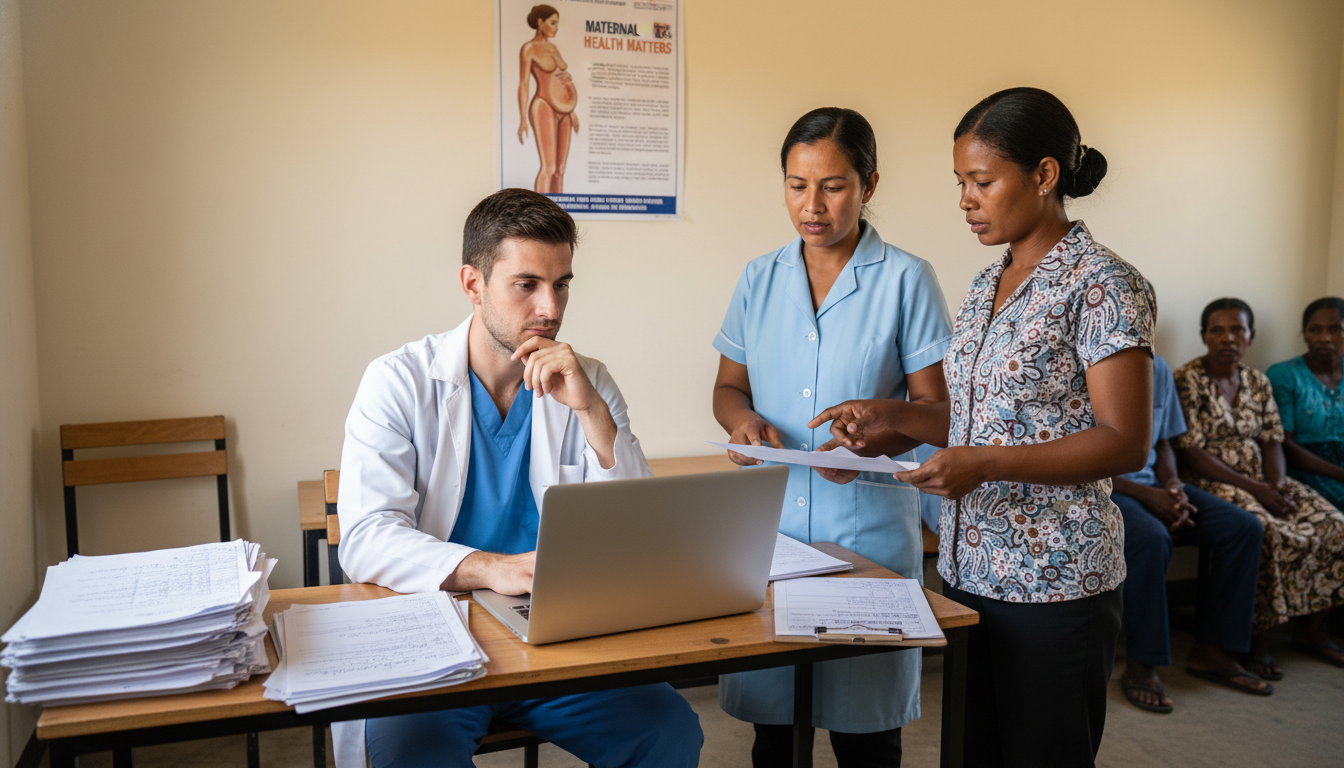
- Surveying community health workers on barriers to postpartum follow-up care in a migrant community
- Mapping the prevalence of non-communicable diseases (e.g., hypertension, diabetes) in a refugee population served by your clinic
- Evaluating effectiveness of a health education campaign on vaccination uptake among newly arrived families
This type of research overlaps heavily with international medicine and global health, even if conducted entirely within the U.S. or your home country.
4. Implementation Science and Systems-Level Research
Implementation science examines how to get evidence-based interventions into real-world practice. In global health, this is crucial.
Example projects:
- Testing an SMS-based reminder system to improve clinic attendance for chronic disease follow-up
- Studying how often global health guidelines are actually implemented in resource-limited hospitals and what barriers exist
- Adapting a successful intervention from one low-resource setting to another and evaluating feasibility and acceptability
Implementation projects are often considered high impact and attractive to global funders and academic global health centers.
5. Education and Curriculum Research
If your ultimate aim is academic global health, education research is powerful.
Examples:
- Designing and evaluating a global health curriculum for residents or medical students
- Studying the impact of integrating OMT into refugee health rotations
- Assessing knowledge and attitudes toward cultural humility among residents before and after a structured course
These projects can be ideal if you enjoy teaching and see yourself in an academic residency track or as a program director in the future.
How to Get Started: Step-by-Step for DO Residents in Global Health Tracks
Step 1: Clarify Your Career Goals Early
Before diving into research, ask:
- Do I want an academic career (teaching + research)?
- Do I envision myself in field-based international medicine (NGOs, humanitarian work, mission hospitals)?
- Am I most interested in policy and health systems, or community-level work?
Your answers will help you decide which types of projects to prioritize.
Example pathways:
- Academic global health career → Prioritize clinical, epidemiologic, and education research; aim for first-author papers; link projects to a future fellowship.
- NGO / humanitarian career → Focus on implementation, QI, and operational research in resource-limited or migrant settings; develop skills in program evaluation.
- Community-based osteopathic physician with global health focus → Engage in community-based participatory research and QI that improves care for immigrant/refugee or underserved populations.
Step 2: Identify Mentors and Research Infrastructure
Strong mentorship is the single most important factor in successful research during residency.
Potential mentors for DO global health residents:
- Faculty involved in your program’s global health residency track (if available)
- A program director or associate program director with global health or research interests
- Faculty at affiliated academic institutions (e.g., school of public health, global health center)
- DO faculty who previously completed global health fellowships
- External mentors through professional societies (e.g., AAFP global health groups, ACP global health committees, specialty-specific global health sections)
When meeting a potential mentor:
- Be specific about your interests and long-term goals.
- Ask what ongoing resident research projects you could join.
- Clarify time expectations and authorship possibilities.
If your residency has limited resident research infrastructure, explore:
- Partnering with local universities or public health departments
- Virtual mentorship or collaboration with global health organizations
- Multi-center resident research projects coordinated through specialty societies
Step 3: Start Small and Build Momentum
Many DO residents underestimate how long research takes. Start with a project that:
- Has a clearly defined endpoint (e.g., conference abstract, QI report, manuscript).
- Fits within your schedule (e.g., can be done with 2–4 hours per week).
- Leverages existing data or simple data collection methods.
Good first projects for a DO global health resident:
- QI project around vaccination uptake in a clinic serving refugees
- Retrospective chart review of anemia in pregnant patients from specific regions
- Survey study on barriers to chronic disease follow-up among uninsured immigrant patients
Once you succeed with a smaller project, you can:
- Expand into a multi-site study
- Add a qualitative component (interviews, focus groups)
- Publish in a higher-impact journal or present at national/global conferences
Step 4: Learn the Basics of Study Design and IRB
You do not need to become a PhD-level epidemiologist, but you should understand:
- Prospective vs. retrospective studies
- Observational vs. interventional designs
- Quantitative vs. qualitative methods
- Basic statistics (e.g., p-values, confidence intervals, regression basics)
Most institutions offer:
- Resident research workshops or bootcamps
- Online modules about human subjects research (e.g., CITI training)
- Biostatistics or methodology consults
For any research involving human subjects, you will need to consider IRB (Institutional Review Board) approval or exemption. Even for global health work conducted abroad, your home institution’s IRB often must be involved, and sometimes a local IRB as well.
DO-specific tip: Highlight the osteopathic bias toward holistic and patient-centered care when framing your research questions—this can differentiate your proposals and align them with global health values.

Balancing Clinical Duties and Research: Practical Strategies
Residency is demanding; adding research and global health interests can feel overwhelming. The key is structure and strategic planning.
Protecting Time for Research
- Elective research rotations: If your program offers them, plan at least one block per year for research-intensive work.
- Global health electives: Integrate data collection or evaluation components into global health rotations.
- Longitudinal research time: Ask program leadership if you can protect 0.5–1 day per month for scholarly work.
Even without formal protected time, you can:
- Dedicate 1–2 hours per week (e.g., one evening or one weekend morning) to research.
- Use less intense rotations (e.g., outpatient clinic, elective time) to push manuscripts and abstracts forward.
Time Management Tactics
- Break projects into micro-tasks:
- Week 1: Finalize research question
- Week 2–3: Literature review
- Week 4: Draft IRB application
- Week 5–6: Revise with mentor
- Use tools like Trello, Notion, or a spreadsheet to track tasks and deadlines.
- Reserve recurring “research appointments” on your calendar, treating them like non-optional clinic time.
Working Smart With Your Data
- Start with data that already exists (EHR, registries, clinic logs) when possible.
- If collecting new data, keep your instrument focused and feasible (e.g., short survey vs. 8-page questionnaire).
- Use secure, IRB-approved tools like REDCap or institutional survey systems.
Turning Resident Research Projects Into a Long-Term Global Health Career
What you do during residency should not just end with graduation. Aim to design research projects that:
- Are relevant to your intended practice setting
- Can be expanded or replicated after residency
- Demonstrate a coherent narrative of your professional interests
Building a Coherent Scholarly Narrative
A strong global health portfolio for a DO graduate might show a progression like:
- PGY-1: QI project improving vaccination completion among refugee children
- PGY-2: Clinical research on chronic disease management in uninsured immigrant adults, co-authored with a public health mentor
- PGY-3: Implementation project evaluating a culturally tailored health education intervention for a specific migrant group
By graduation, your CV tells a clear story: you are committed to health equity and global health, with growing expertise in implementation and population health research.
Preparing for Fellowships and Academic Tracks
If you are aiming for:
Global health fellowships:
- Seek at least one first-author peer-reviewed publication.
- Present at national or international conferences (e.g., CUGH, ASTMH, specialty-specific global health meetings).
- Engage in one substantial global or international medicine project (domestic or abroad).
Academic residency track jobs (assistant professor, clinician-educator):
- Demonstrate ability to lead and mentor future residents in research.
- Show experience in curriculum design or education research.
- Have a clear research focus area (e.g., refugee health, maternal-child health in low-resource settings, non-communicable diseases in LMICs).
Leveraging Your DO Background
Your osteopathic training offers several unique angles:
- OMT and musculoskeletal health in low-resource settings
- Holistic, biopsychosocial frameworks applied to global health challenges
- Preventive and primary care orientation aligning with global burden of disease needs
Frame your research and your narrative so that your DO identity is an asset, not just a credential.
FAQs: Research During Residency for DO Graduates in Global Health
1. Do I need research experience before residency to be successful with research during residency?
No. While prior experience helps, it is not mandatory. Many DO graduates start their research journey in residency. What matters most is:
- Finding good mentors
- Starting with feasible projects
- Being reliable and consistent
If you have minimal background, invest early in learning basics of study design and IRB processes, and consider starting as a co-investigator on an existing project before leading your own.
2. Can I still do global health research if my residency does not have a formal global health residency track?
Yes. You can:
- Focus on underserved or immigrant populations in your local community as a proxy for international medicine.
- Partner with external global health organizations or universities that run projects abroad.
- Join multi-center studies or remote collaborations through professional societies.
Your goal is to work on research questions that address global health principles (equity, access, resource constraints), even if the geographic setting is local.
3. How many publications should I aim for during residency if I want a career in global health?
There is no strict number, but as a target:
- For global health fellows or academic positions:
- 1–2 first-author publications
- 1–3 co-authored papers or published abstracts
- Several national or international conference presentations
Quality and coherence matter more than raw numbers. It is better to have a few well-executed, global health–relevant projects than many scattered, unrelated ones.
4. Can my global health research during residency double as my scholarly or capstone requirement?
In many programs, yes. Discuss with your program leadership early:
- What counts as acceptable scholarly activity (QI, case series, clinical study, curriculum project, etc.)
- Whether a global health or international medicine–focused project meets these criteria
- How to structure your project timeline so you satisfy institutional requirements and also build your personal career portfolio
Designing your research project to fulfill both program requirements and your long-term global health goals is one of the most efficient ways to maximize residency.
By approaching research during residency strategically—as a DO graduate with clear global health goals—you can build a scholarly foundation that supports an impactful career in international medicine, whether in academia, NGOs, or community-based practice.