Why Every Future Doctor Should Prioritize Research Experience
Introduction: Research as a Core Pillar of Modern Medical Training
In today’s fast-evolving world of Medical Education, future doctors are expected to do far more than memorize facts and perform physical exams. They are entering a profession driven by data, Medical Innovation, and rapidly changing evidence. In this landscape, Research Experience is no longer a “nice-to-have”—it is a powerful differentiator and a core component of serious Career Development.
For premeds and medical students, engaging in research:
- Deepens understanding of the basic and clinical sciences
- Builds habits of critical appraisal that are vital for safe, effective patient care
- Demonstrates initiative and curiosity to admissions committees and residency program directors
- Opens doors to mentors, collaborators, and new career paths in academia, industry, and public health
This article explores why every future doctor should prioritize research experience, particularly in the PREMED_AND_MEDICAL_SCHOOL_PREPARATION phase. We will examine how research strengthens Medical Education, develop critical skills for clinical practice, fuels Medical Innovation, and boosts competitiveness for medical school and residency.
Enhancing Medical Education Through Hands-On Research
Medical school curricula are intense and information-dense. Without context, much of that knowledge risks becoming abstract and quickly forgotten. Research experience helps transform content into understanding.
Building a Strong Knowledge Foundation
Participating in research lets you see how core scientific concepts actually operate in real life. Instead of simply reading about pathophysiology or pharmacology, you witness how these mechanisms are investigated, quantified, and translated into therapies.
Key educational benefits include:
Active engagement with the scientific method
- Formulating a clear, testable question
- Designing an experiment or study to answer it
- Collecting and analyzing data
- Interpreting results in light of existing literature
Connecting basic science to clinical practice
- Understanding why certain drugs are first-line therapies
- Appreciating how clinical guidelines are developed
- Recognizing how laboratory findings lead to diagnostic tests
Example:
A student learning about type 2 diabetes in class might join a research team studying insulin resistance and inflammatory markers. By running assays, cleaning datasets, and discussing results at lab meetings, they move beyond memorizing “metabolic syndrome” to actually understanding its molecular underpinnings. That depth of understanding makes later endocrine rotations and patient encounters more meaningful and intuitive.
Exposure to Cutting-Edge Medical Innovation
Doctors are expected to practice evidence-based medicine, but evidence changes quickly. Involvement in research trains you to:
- Stay current with new therapies, diagnostics, and technology
- Critically evaluate new clinical trials instead of accepting headlines at face value
- Understand the strengths and limitations of different study designs
Research naturally pushes students into the frontier of knowledge:
- Reading and presenting journal articles at lab meetings builds comfort with the primary literature
- Attending research seminars, grand rounds, and conferences exposes you to leaders in various specialties
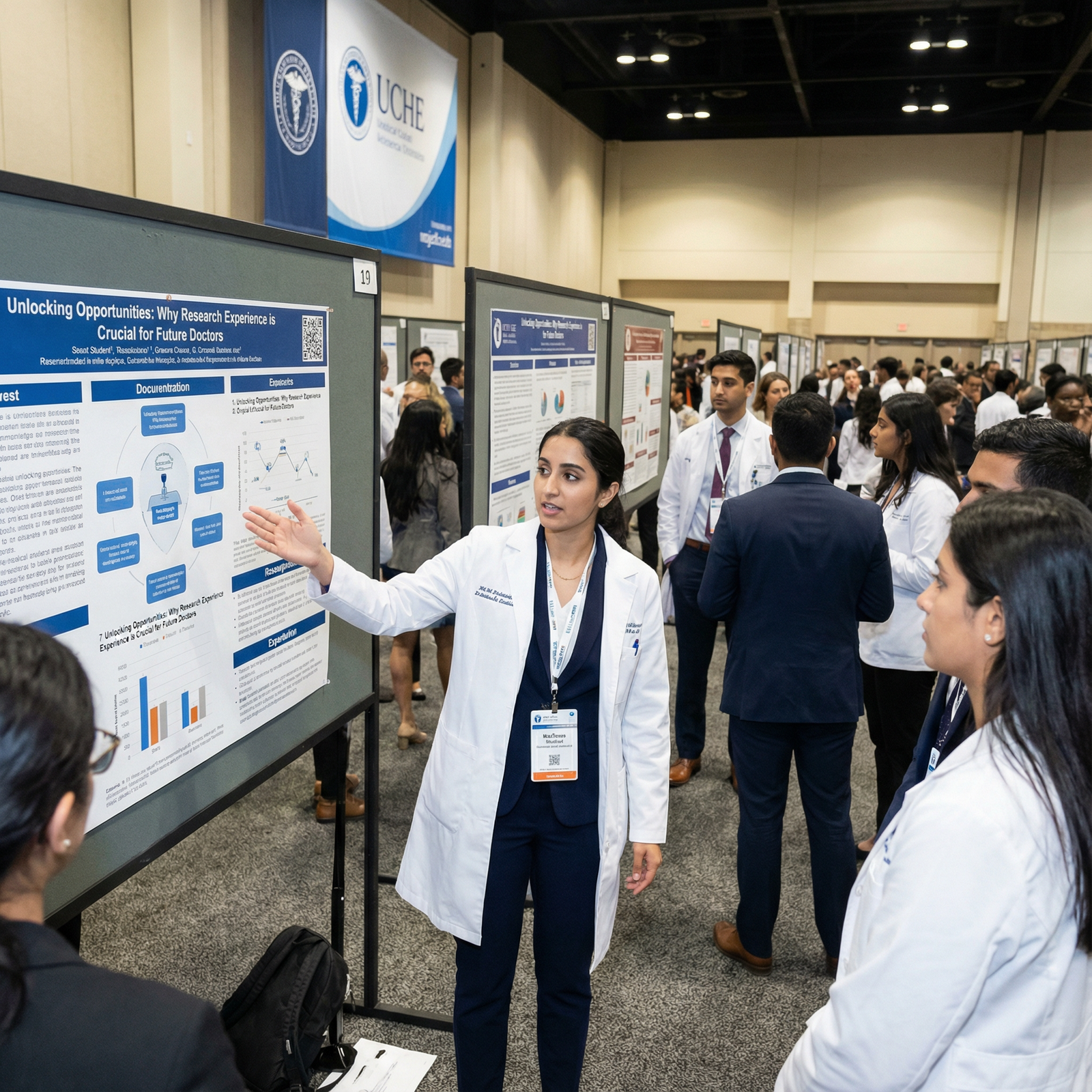
- Contributing to abstracts and posters for scientific meetings helps you synthesize and communicate key findings
These experiences are invaluable for Future Doctors who will later have to answer patient questions such as, “Is this new drug better for me?” or “Should I try this new test I saw advertised?”
Developing Core Skills for Clinical Excellence and Career Development
Research is not just about pipettes and p-values. It is one of the most powerful training grounds for professional skills that translate directly to clinical practice and long-term Career Development.
Analytical and Critical Thinking for Future Clinicians
Every patient encounter is, in a sense, a “mini research project.” You gather data (history, exam, labs), generate hypotheses (differential diagnosis), and test them through additional studies and therapeutic trials. Research training strengthens each step of this process.
Through research, you learn to:
- Ask focused, answerable questions (“What is the effect of X on Y?”)
- Recognize bias and confounding factors in data
- Distinguish between correlation and causation
- Assess the validity and applicability of study results to a specific patient population
Case Study:
A medical student works on a quality improvement project evaluating antibiotic use for community-acquired pneumonia at their teaching hospital. They collect data on prescribing patterns, guideline adherence, and patient outcomes. In doing so, they:
- Learn to interpret microbiology reports and resistance patterns
- Understand stewardship principles (narrow vs. broad-spectrum, duration of therapy)
- Develop confidence in making evidence-informed decisions in their later clinical rotations
Later, as a resident, this same physician is better equipped to push back against unnecessary broad-spectrum antibiotic use, potentially reducing Clostridioides difficile infections and resistance.
Communication, Collaboration, and Interprofessional Skills
Modern medicine is built on teams, and research projects mirror that environment. In a single project, you might work with:
- Faculty investigators
- Residents and fellows
- Biostatisticians and data scientists
- Laboratory technicians and research coordinators
- Nurses and allied health professionals
This collaborative environment helps you:
- Practice clear, concise communication in emails, meetings, and presentations
- Learn to translate complex data into understandable messages for varied audiences
- Navigate differences in perspective between clinicians, scientists, and administrators
These are the same skills you will rely on when:
- Presenting a patient on rounds
- Communicating with consultants
- Explaining diagnoses and treatment plans to patients and families
Time Management and Professionalism Under Pressure
Balancing research with coursework, clinical duties, and personal life requires:
- Planning and tracking tasks
- Setting realistic timelines for data collection and analysis
- Learning to say no when overextended
- Meeting deadlines for abstracts, manuscripts, and progress reports
These are the exact competencies emphasized in professionalism milestones during residency. Students who have navigated the demands of a research project are often better prepared for:
- The pace and structure of clinical rotations
- Residency life with call schedules and patient care responsibilities
- Long-term projects like quality improvement initiatives and scholarly work
Driving Medical Innovation and Improving Patient Care
For many students, the most compelling reason to pursue research is the chance to contribute—however modestly—to discoveries that change lives. Research experience places you directly inside the engine of Medical Innovation.
Contributing to the Pursuit of Medical Knowledge
Medicine advances because someone asked a question and refused to accept “we’ve always done it this way” as a final answer. As a student, you can join this process through:
- Basic science research – studying cells, molecules, genes, and animal models
- Clinical research – evaluating new interventions, diagnostic tests, or clinical pathways
- Translational research – bridging lab discoveries and bedside application
- Epidemiologic and public health research – understanding disease patterns and interventions at a population level
- Health services research – optimizing delivery systems, access, and cost-effectiveness
Real-World Examples:
- Student-led projects on telemedicine during the COVID-19 era helped refine protocols for remote monitoring of chronic disease and post-operative follow-up.
- Participation in genomics research has led students to co-author papers on variants associated with rare diseases, contributing to precision medicine efforts.
- Work on social determinants of health has allowed trainees to identify barriers to care in underserved communities and propose evidence-based interventions.
Even small projects—like a retrospective chart review on readmissions for heart failure—can generate insights that improve local practices and patient outcomes.
Translating Research into Better Patient Care
There is a direct line from research findings to bedside decisions:
- Clinical trials test new drugs or procedures before they become standard of care
- Observational studies reveal what works in real-world settings
- Quality improvement projects refine care processes to reduce errors and disparities
By engaging in research early, you develop:
- Respect for evidence and the process required to generate it
- Skepticism toward unproven therapies or anecdote-driven practice
- Confidence in explaining risk-benefit trade-offs to patients
When you later counsel a patient about a new anticoagulant, immunotherapy, or surgical technique, your background in research helps you interpret the data behind that recommendation and communicate it clearly.
Building a Scholarly Track Record: Posters, Publications, and Presentations
Disseminating research is part of professional identity-building in medicine. For students and residents, scholarly output can include:
- Poster presentations at local, regional, or national meetings
- Oral presentations or “research day” talks
- Co-authored manuscripts in peer-reviewed journals
- Case reports with literature reviews that demonstrate your ability to synthesize evidence
These accomplishments:
- Strengthen your CV for medical school and residency applications
- Provide concrete examples to discuss during interviews
- Demonstrate persistence, teamwork, and intellectual curiosity
Even if your study results are negative or inconclusive, the process of completing and presenting the work is itself valuable and often viewed positively by selection committees.
Strengthening Medical School and Residency Applications
For applicants in the PREMED_AND_MEDICAL_SCHOOL_PREPARATION stage, Research Experience can be a major asset, especially in competitive specialties or research-focused institutions.
Standing Out in a Competitive Applicant Pool
Medical school and residency admissions committees increasingly look beyond grades and test scores. They seek applicants who:
- Engage deeply with medicine as an evolving science
- Demonstrate initiative and follow-through on long-term projects
- Show potential to contribute to the academic and research missions of their institutions
Having research on your application helps you stand out by:
- Highlighting your comfort with data and evidence
- Signaling that you can function within an academic environment
- Providing rich material for personal statements and interview discussions
Even if your ultimate goal is primarily clinical practice, a documented ability to understand and apply research is highly valued.
Demonstrating Passion and Purpose in Medicine
Research can help clarify and showcase your interests:
- A student interested in neurology who pursues stroke outcomes research demonstrates sustained, field-specific engagement.
- A premed working on public health research in underserved communities shows commitment to equity and population health.
These experiences not only inform your own Career Development choices but also help admissions committees see you as a purposeful, mission-driven applicant rather than someone pursuing medicine for generic reasons.
Building a Network of Mentors and Collaborators
One of the most underrated benefits of research is mentorship. Through research, you gain:
- Faculty mentors who can offer advice on specialty choice, application strategy, and work-life balance
- Strong letters of recommendation based on prolonged, close interaction in a scholarly setting
- Connections with residents and fellows who can share honest insights about training and career paths
These relationships often outlast a single project and can:
- Lead to additional opportunities (new projects, conference travel, leadership roles)
- Serve as career anchors when making complex decisions (e.g., MD vs. MD/PhD, academic vs. community practice)
- Support you during challenging phases of medical training
Practical Strategies to Get Started With Research
Many students know research is important but feel unsure how to begin. The process can be more approachable with a structured plan.
Step 1: Identify Your Goals and Interests
Ask yourself:
- Do I want to explore a potential specialty (e.g., cardiology, orthopedics)?
- Am I more interested in lab work, clinical outcomes, or public health?
- How much time can I realistically commit during the semester or summer?
- Are publications important to my long-term goals (e.g., academic medicine)?
Clarifying your goals helps you find a project that aligns with both your interests and schedule.
Step 2: Find the Right Mentor and Environment
Look for mentors who:
- Have an active research program (recent publications, ongoing projects)
- Have a track record of working with students
- Communicate clearly and set reasonable expectations
- Are in areas related to your current or potential career interests
Ways to identify mentors:
- Visit your institution’s departmental websites and browse faculty profiles
- Attend research seminars, grand rounds, or student research days
- Ask senior students or residents about good mentors
- Email potential mentors with a concise introduction, CV, and specific interest statement
Step 3: Start Small, Then Build
Your first project does not need to be groundbreaking. In fact, small, well-defined projects can be ideal:
- Assisting with data entry and cleaning
- Performing chart reviews under supervision
- Helping with literature reviews and reference management
- Joining an ongoing quality improvement initiative on a clinical service
As you gain experience, you can take on more responsibility:
- Data analysis (with support from a statistician)
- Drafting sections of a manuscript or abstract
- Presenting at local conferences or departmental meetings
- Designing a sub-study or follow-up project
Step 4: Balance Research With the Rest of Your Life
To prevent burnout:
- Be honest with your mentor about your availability
- Use project management tools (calendars, task lists)
- Establish regular check-ins to maintain momentum
- Reassess your commitments each semester or rotation period
Remember that research is a long game; consistency over time often matters more than intense short bursts.
FAQs: Research Experience for Premed and Medical Students
1. Do I need research experience to get into medical school?
Not every medical school requires research, but competitive programs—especially those at research-intensive institutions—strongly favor applicants with meaningful research experience. Even for schools where research is not mandatory, it can significantly strengthen your application by demonstrating curiosity, critical thinking, and commitment to evidence-based medicine.
If research is not feasible at your institution or location, you can still show similar qualities through:
- Quality improvement or data-driven projects in clinical or community settings
- Independent academic work such as honors theses or capstone projects
- Rigorous scholarly activities like systematic literature reviews under faculty guidance
2. What type of research is “best” for my future medical career?
There is no single “best” type. Any well-structured, mentored research experience can be valuable. Consider:
- Basic science research – helpful if you are considering MD/PhD or highly academic careers
- Clinical research – directly relevant to most clinical specialties
- Public health/epidemiology – ideal if you are interested in population health, policy, or global health
- Health services or quality improvement research – useful in any field, especially for those interested in leadership or systems-based practice
Choose an area that genuinely interests you and fits your schedule; passion and perseverance are more important than topic prestige.
3. How much time should I dedicate to research as a student?
There is no universal formula, but common patterns include:
- Premeds: 5–10 hours per week during the school year, more during summers
- Medical students (pre-clinical): Variable, often 3–8 hours per week
- Medical students (clinical years): Focused research blocks, elective time, or dedicated research years
The key is balance: research should complement, not compromise, your academic performance or well-being. Quality, consistency, and completion of a project are more important than sheer hours.
4. I haven’t published anything. Will that hurt my application?
Publications are helpful, but not mandatory—especially early on. Admissions committees know that many research projects extend beyond the timeline of a typical student. What matters most is:
- The depth of your involvement (not just listing your name on a large team)
- Your ability to clearly explain the project and your role in it during interviews
- Demonstrated follow-through (e.g., abstracts, posters, local presentations, or completed data collection)
If you haven’t published yet, emphasize what you learned, the skills you gained, and any tangible products (e.g., submitted abstracts, in-preparation manuscripts, or institutional presentations).
5. How can I talk about my research effectively in personal statements and interviews?
Focus on:
- The question: What problem were you trying to solve, and why did it matter?
- Your role: What specific tasks did you perform? What skills did you develop?
- The impact: What did the project teach you about medicine, patients, or yourself?
- Reflection: How did this experience shape your career interests or understanding of Medical Innovation?
Avoid excessive technical jargon. Instead, highlight how the experience made you a more thoughtful, evidence-minded, and compassionate future physician.
Research experience is not just another line on your CV; it is a powerful vehicle for becoming the kind of doctor medicine needs today—curious, analytical, collaborative, and grounded in evidence. By investing in research early in your journey, you simultaneously enhance your Medical Education, contribute to Medical Innovation, and lay a strong foundation for lifelong Career Development as a physician.