Introduction: Why Early Involvement in Medical Research Matters
Entering the world of Medical Research as a premed or medical student can dramatically shape your future career. Beyond boosting your CV, research helps you think more critically, understand evidence-based medicine, and contribute to discoveries that directly improve patient care. For many future clinicians and physician-scientists, research becomes a defining part of their professional identity.
At the same time, getting started can feel overwhelming. What kind of research should you do? How do you find a mentor? Do you need advanced degrees in Biomedical Science to be competitive? And what specific skills and tools actually matter for residency applications and long-term Career Guidance?
This guide expands on the “essential toolkit” idea and walks you step-by-step through:
- Understanding what medical researchers actually do
- Building a strong foundational knowledge base
- Gaining meaningful, hands-on research experience
- Developing a professional network and mentors
- Learning the publishing and funding process
- Planning next steps in your education and career
Whether you are a premed, early medical student, or considering a physician–scientist path, you can use this as a roadmap to enter research strategically and confidently.
Understanding the Role of a Medical Researcher
Before assembling your toolkit, you need a clear picture of what medical researchers contribute and where you might fit.
Medical researchers aim to generate new knowledge about human health and disease, then translate that knowledge into better diagnostics, therapies, and health systems. They work in academic medical centers, universities, industry, government agencies, and nonprofit organizations.
Major Types of Medical Research (and Where Students Fit In)
Basic (Bench) Research
- Focus: Fundamental mechanisms of cells, molecules, genes, and tissues.
- Typical methods: Cell culture, animal models, molecular biology, biochemistry.
- Student roles: Running experiments, maintaining lab cultures, collecting and analyzing data, preparing figures.
- Example: Studying how a specific gene mutation alters cardiac muscle function.
Translational Research
- Focus: Bridging basic science discoveries to clinical applications (“bench to bedside”).
- Typical methods: Biomarker development, early-phase trials, testing interventions in models that closely mimic human disease.
- Student roles: Data collection, literature reviews, protocol implementation, patient sample processing.
- Example: Taking a newly discovered cancer target and testing whether an inhibitor can be safely used in humans.
Clinical Research
- Focus: Directly involves patients or patient data to evaluate diagnostics, treatments, or care strategies.
- Typical methods: Randomized trials, observational studies, cohort studies, registries.
- Student roles: Screening and enrolling participants, extracting chart data, managing databases, helping write manuscripts.
- Example: Comparing outcomes between two blood pressure medications in patients with diabetes.
Epidemiological and Public Health Research
- Focus: Distribution and determinants of diseases across populations.
- Typical methods: Large datasets, biostatistics, surveys, public health interventions.
- Student roles: Data cleaning, statistical analysis, literature synthesis, preparing conference abstracts.
- Example: Assessing whether neighborhood-level air pollution correlates with asthma exacerbations.
Understanding these categories helps you align your interests and strengths. If you love lab work and molecular stories, basic science may fit. If you’re energized by patient interaction and clinical outcomes, clinical or epidemiological research may be more appealing.
Building an Essential Knowledge Base for Medical Research
Even before you step into a lab or clinic, you can build a strong intellectual foundation. This is where your Biomedical Science knowledge and understanding of Research Techniques really matter.
1. Core Biomedical Science Competencies
To contribute meaningfully, you should steadily build mastery in:
Molecular and Cell Biology
- DNA/RNA structure and function, gene expression, signaling pathways.
- How cells communicate, divide, differentiate, and die.
- Resources: Molecular Biology of the Cell, online courses (Coursera, edX), institutional lectures.
Biochemistry and Pharmacology
- Enzyme kinetics, metabolism, receptor dynamics.
- Drug mechanisms, pharmacokinetics/pharmacodynamics, side effect profiles.
- Resources: pharmacology flashcards, “Sketchy” style resources, pharm podcasts.
Pathophysiology
- How disease processes disrupt normal anatomy and physiology.
- Linking molecular mechanisms to clinical signs and symptoms.
- Resources: Robbins Basic Pathology, board-review-style materials.
You don’t need to be an expert in everything before starting; instead, let your research inform what you study in depth. If you join a cardiology lab, spend extra time on cardiac physiology and vascular biology.
2. Research Methods and Biostatistics
Research is more than “doing experiments.” It is about asking precise questions and using rigorous methods to answer them.
Learn the language of study design
At minimum, understand:
- Randomized controlled trials (RCTs) – gold standard for testing interventions.
- Cohort studies – following groups over time to see who develops an outcome.
- Case-control studies – comparing people with and without a condition retrospectively.
- Cross-sectional studies – snapshot of a population at one point in time.
- Systematic reviews and meta-analyses – summarizing multiple studies objectively.
Knowing these designs helps you:
- Critically appraise journal articles.
- Discuss research ideas intelligently with mentors.
- Propose realistic projects within your time and resource constraints.
Develop basic statistical literacy
You don’t need to be a biostatistician, but you should be comfortable with:
- Descriptive statistics: means, medians, standard deviations, confidence intervals.
- Common tests: t-tests, chi-square, ANOVA, regression basics.
- Concepts: p-values, effect size, power, confounding, bias.
Learn at least one statistical software tool commonly used in Medical Research:
- R (free, powerful, widely used in academia and epidemiology).
- SPSS (user-friendly, often available via institutions).
- Stata or SAS (common in large clinical and epidemiological studies).
Actionable step:
Enroll in an introductory biostatistics course or complete a structured online course with projects. Apply what you learn by analyzing real datasets (many are publicly available—NIH, CDC, open genomic datasets).
3. Ethics and Responsible Conduct of Research
Ethical competence is not optional; it is central to credible science and patient protection.
Key principles:
- Respect for persons – informed consent, voluntariness, autonomy.
- Beneficence and non-maleficence – maximize benefits, minimize harm.
- Justice – fair selection and treatment of research participants.
Learn about:
- Institutional Review Boards (IRBs) and human subjects protection.
- Data privacy (HIPAA in the U.S. and analogous regulations elsewhere).
- Authorship ethics, plagiarism, and data integrity.
- Conflicts of interest and how they are managed.
Many institutions require Responsible Conduct of Research (RCR) training for all research personnel—take this seriously; it also looks good on your CV.

Gaining Practical Research Experience: From Observer to Contributor
Reading about research is helpful, but true growth happens when you participate in real projects. Strategic choices early on can accelerate your development and make you a more competitive applicant for medical school and residency.
4. Finding and Joining Research Projects
Identify your interests and constraints
Ask yourself:
- Do I prefer lab-based or patient-facing work?
- How many hours per week can I realistically commit?
- Am I looking for a long-term project (1–2+ years) or a short, focused experience (summer, gap year)?
- Do I care more about publications, skills, specific content area, or mentorship?
Your answers will guide your search.
Practical ways to find opportunities
Faculty directories
- Browse your university or medical school’s departmental websites.
- Look up faculty profiles and recent publications.
- Email potential mentors with a concise, tailored message and attached CV.
Research offices and honors programs
- Many schools have centralized offices that coordinate undergraduate or medical student research.
- Ask about structured summer programs, stipends, or research tracks.
Student organizations and interest groups
- Specialty interest groups (e.g., internal medicine, neurosurgery, pediatrics) often connect students with active investigators.
- Attend meetings and ask explicitly, “Who here is recruiting students for research?”
Summer internships and external fellowships
- NIH summer programs, REUs (Research Experiences for Undergraduates), and hospital-based internships can provide intensive exposure.
- Apply early—deadlines can be 6–9 months in advance.
When reaching out, emphasize:
- Your genuine interest in the field.
- Specific skills or courses you’ve completed (even if basic).
- Your availability and time horizon (e.g., “10 hours/week for at least one year”).
- Your willingness to start with simple tasks and grow.
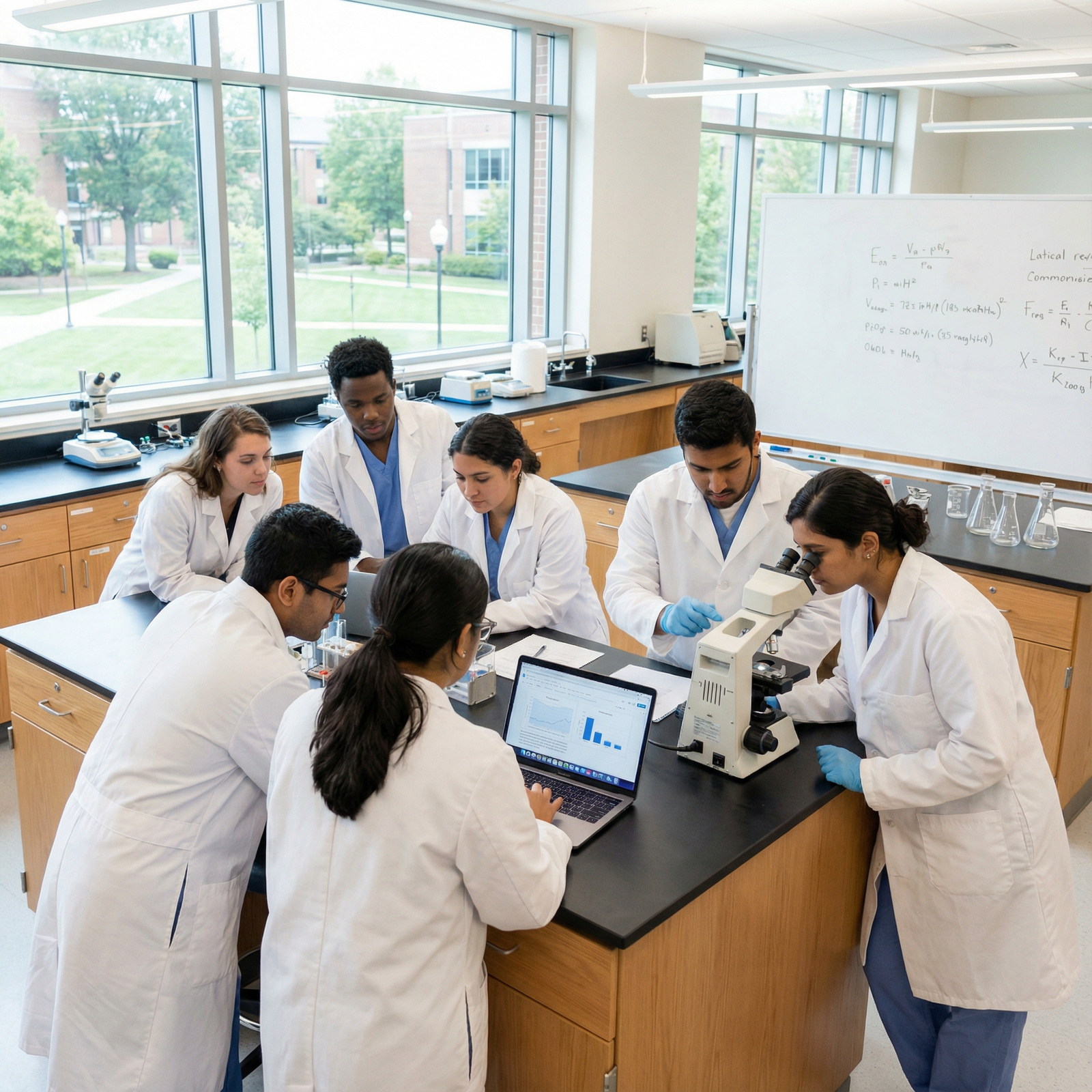
5. Developing Core Laboratory and Clinical Research Techniques
The techniques you learn should match the type of Medical Research you’re doing, but some skills are broadly valuable.
Common bench research techniques
- Cell culture – maintaining cell lines, sterile technique, media preparation.
- PCR and qPCR – amplifying and quantifying DNA/RNA.
- Western blotting, ELISA – protein detection and quantification.
- Flow cytometry – analyzing cell populations by phenotype and function.
- Microscopy – imaging cells and tissues, including immunofluorescence.
You might start by:
- Labeling tubes, preparing buffers, or running simple gels.
- Gradually moving into independently designing and executing experiments.
- Keeping a rigorous lab notebook (electronic or paper).
Clinical and epidemiological research techniques
- Chart review – extracting structured data from electronic health records.
- Data management – building and maintaining databases (e.g., REDCap).
- Survey design – creating and validating questionnaires.
- Statistical analysis – cleaning data, running analyses, creating tables and figures.
- Qualitative methods – conducting interviews, focus groups, thematic analysis.
Practical tips:
- Ask your mentor to define clear, discrete tasks with timelines.
- Request feedback often, and show that you refine your work accordingly.
- Track your contributions; they will inform your CV and future letters of recommendation.
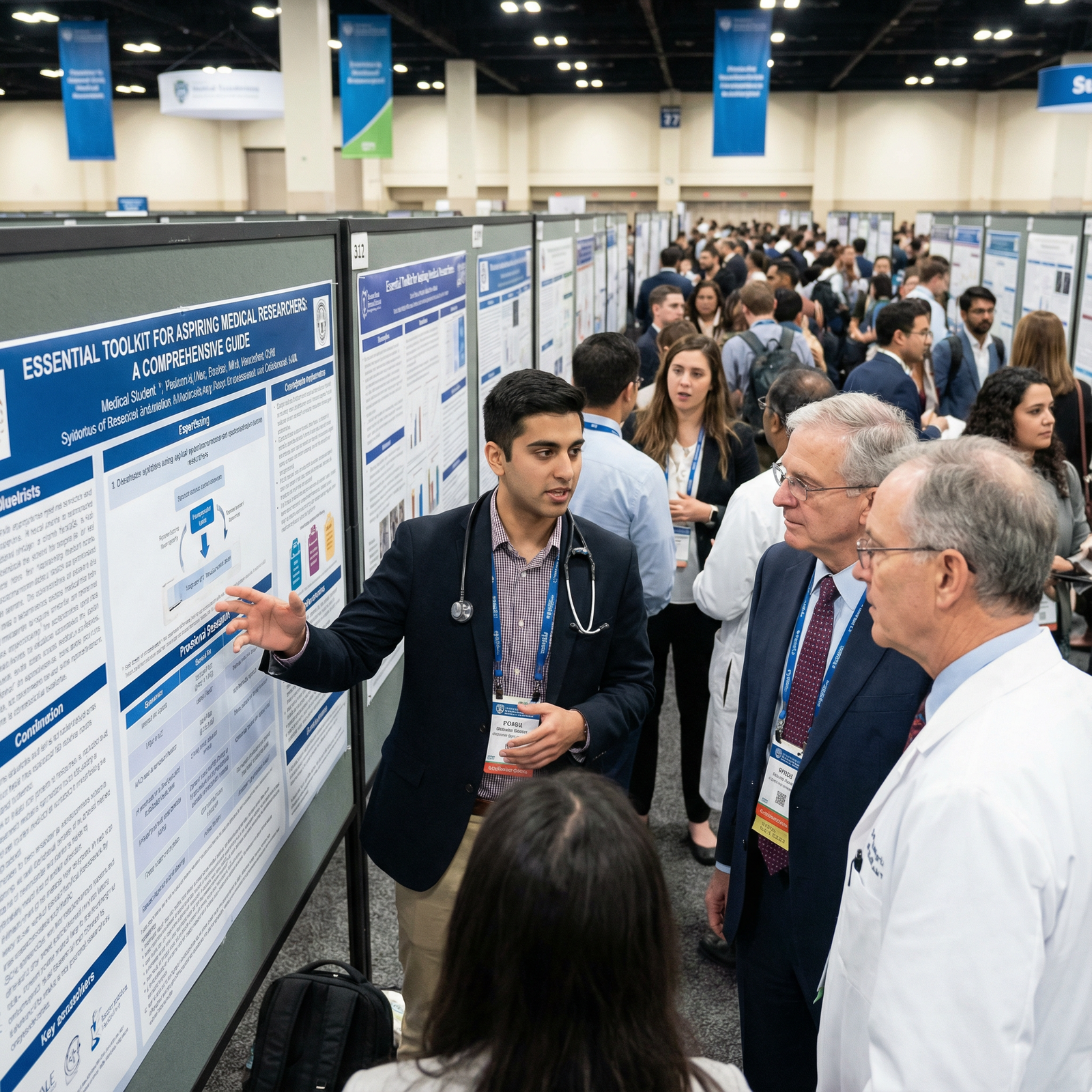
6. Conferences, Workshops, and Presentations
Presenting your work is an essential part of the research lifecycle and a visible marker of progress.
Local and institutional conferences
- Student research days, departmental seminars, poster sessions.
- Ideal first steps: low pressure, easy access.
National and international meetings
- Specialty-specific societies (e.g., AACR for cancer research, Society for Neuroscience, American College of Physicians).
- Aim to submit abstracts once you have preliminary results.
Benefits:
- Networking with leaders and potential collaborators.
- Receiving feedback that can strengthen your manuscript.
- Demonstrating initiative and commitment on your CV and in interviews.
Skill-building:
- Learn how to design clear, visually compelling posters and slides.
- Practice concise, jargon-appropriate “elevator pitches” for your project.
- Be ready to explain your specific role in a multi-author project.
Networking, Mentorship, and Professional Development in Research
Research is a team sport. Strong networks and good mentors can be more important than any single project.
7. Building Productive Mentor Relationships
A good mentor provides guidance on both scientific questions and Career Guidance. You may need more than one:
- Research mentor – primary supervisor on a project.
- Career mentor – helps navigate long-term goals (e.g., MD/PhD, academic medicine).
- Peer mentor – someone one or two years ahead of you who remembers what it felt like to be in your shoes.
What to look for:
- Availability and responsiveness.
- Clear expectations about time commitment and authorship.
- A track record of supporting student growth and publication.
How to be a good mentee:
- Show up prepared and on time.
- Send concise updates and agendas before meetings.
- Own your mistakes and learn from them.
- Express appreciation and keep your mentor updated on your achievements.
8. Leveraging Professional Organizations and Networking
Joining professional organizations is a powerful, underused strategy for trainees.
- Examples:
- American Association for Cancer Research (AACR)
- Society for Neuroscience (SfN)
- American Medical Association (AMA) and specialty societies
- Public health and epidemiology associations
Member benefits often include:
- Discounted or free conference registration.
- Access to journals, webinars, and Career Guidance workshops.
- Student or trainee sections with mentorship programs.
- Opportunities to serve on committees—demonstrating leadership.
Networking tips:
- Prepare a brief self-introduction: who you are, what you work on, what you’re looking for.
- Follow up with people you meet via email or LinkedIn within a week.
- Don’t just ask for opportunities; share how you can contribute.
9. Crafting a Strong Academic CV
Your academic CV is the formal record of your growth as a researcher.
Core sections for students:
- Education – institutions, degrees, relevant coursework (e.g., biostatistics, advanced physiology).
- Research Experience – projects, mentors, clear bullet points describing your role and outcomes.
- Publications – peer-reviewed papers, preprints, book chapters.
- Abstracts and Presentations – posters, oral presentations at any level.
- Grants, scholarships, and awards – research fellowships, travel awards, honors.
- Professional memberships and leadership – committees, elected positions, organizing roles.
Actionable tips:
- Start your CV early and update it every 3–6 months.
- Use consistent formatting and follow academic norms (e.g., reverse chronological order).
- Emphasize outcomes: “Co-authored a manuscript accepted in [journal],” “Developed data collection tool implemented in 200+ patients,” etc.
From Data to Publication: Writing, Peer Review, and Funding
To fully participate in the research enterprise, you need to know how findings become part of the scientific literature and how studies are funded.
10. Learning Scientific Writing and Communication
Strong writing amplifies the impact of your work and makes you a more competitive researcher.
Core components of a scientific paper:
- Abstract – concise summary of objectives, methods, results, and conclusions.
- Introduction – defines the problem, gaps in existing knowledge, and your study goals.
- Methods – detailed, reproducible description of what you did.
- Results – objective presentation of data (tables, figures, statistics).
- Discussion – interpretation, limitations, and implications for practice or future research.
How to improve:
- Read high-impact papers in your field and analyze their structure.
- Ask mentors to let you draft sections (e.g., Introduction, Methods) under supervision.
- Use writing resources and style guides (e.g., AMA Manual of Style).
- Practice summarizing articles in 2–3 sentences to train clarity and concision.
Beyond manuscripts, learn to write:
- Abstracts for conferences.
- Personal statements that integrate your research experiences.
- Lay summaries for patients, funders, or the public.
11. Experiencing the Peer Review Process
Peer review is how the scientific community evaluates the quality and significance of research.
As a student, you may:
- Assist your mentor in responding to reviewers’ comments.
- Review draft manuscripts of peers or junior students.
- Join journal clubs where you “review” papers in a structured way.
These experiences teach you:
- What reviewers look for (rigor, clarity, novelty, ethical soundness).
- Common reasons manuscripts are rejected—and how to avoid them.
- How to handle criticism constructively and revise your work.
12. Fellowships, Grants, and Funding Applications
Even as a trainee, you can apply for:
- Summer research fellowships
- Student or trainee travel awards
- Small project grants from departments or student organizations
A strong proposal usually includes:
- Clear, focused aims – 1–3 specific questions you will answer.
- Background and significance – why this problem matters.
- Feasible methodology – realistic for your timeline and skill level.
- Preliminary data or rationale – what makes your approach plausible.
- Mentorship and environment – evidence you have support and resources.
- Budget justification – transparent and tied to your research needs.
Grant writing is a powerful skill that will serve you through residency, fellowship, and beyond, especially if you pursue academic medicine or physician–scientist careers.
Frequently Asked Questions (FAQ) for Aspiring Medical Researchers
Q1: Do I need a PhD to have a meaningful career in medical research?
Not necessarily. There are multiple paths:
- MD (or equivalent) with research – Many clinicians conduct impactful clinical or translational research without a PhD, especially if they join research-oriented residencies and fellowships.
- MD/PhD (or MBBS/PhD) – Ideal if you aim for a career as an independent investigator in academic medicine, leading a lab or major research program.
- Master’s in Biomedical Science, Public Health, or Clinical Research – Can strengthen your methodological skills and competitiveness for research-focused roles.
- Bachelor’s or Master’s with research – You can work as a research assistant, coordinator, or data analyst and be a crucial part of research teams.
Early, high-quality research experiences and strong mentorship often matter more than the specific letters after your name at the premed/medical school stage.
Q2: What types of research roles are realistic for me as an undergraduate or early medical student?
Common entry-level roles include:
- Volunteer or paid research assistant – Helping with data collection, lab work, or chart review.
- Summer research fellow – Full-time for 8–12 weeks on a defined project.
- Research coordinator assistant – Supporting patient enrollment, scheduling, and data management in clinical trials.
- Honors thesis student – Leading a contained project under faculty supervision.
Aim for positions where:
- Your role is clearly defined.
- You can learn new skills and take on increasing responsibility.
- There is a realistic path to presenting or publishing your work.
Q3: How can I find research opportunities if my university or medical school has limited resources?
Consider these strategies:
- Nearby institutions – Academic medical centers, VA hospitals, or research institutes in your region often welcome motivated trainees from smaller colleges.
- Remote collaborations – Some data analysis, literature reviews, and systematic reviews can be done remotely under virtual mentorship.
- National and international programs – Apply to competitive summer or year-long research programs at major centers (e.g., NIH, large academic hospitals).
- Online courses and open datasets – You can teach yourself analysis skills using public data and then approach investigators with demonstrable capabilities.
Proactivity and persistence are key. Many successful researchers started at institutions with modest infrastructure and built opportunities through networking and initiative.
Q4: How important is networking in medical research, and how do I do it without feeling “fake”?
Networking is essentially building genuine professional relationships. It matters because:
- Many opportunities (projects, positions, fellowships) are shared informally before they are formally advertised.
- Mentors and collaborators significantly influence your training and career trajectory.
- Strong letters of recommendation often come from people who know you and your work well.
To network authentically:
- Be curious—ask questions about people’s work and career paths.
- Offer value—help with tasks, share relevant articles, introduce others.
- Follow up thoughtfully after conferences or meetings (e.g., “I enjoyed your talk on X; I’d love to learn more about Y”).
- Maintain relationships over time with occasional updates, even when you’re not asking for anything.
Q5: How can I stay updated on current developments in medical research without getting overwhelmed?
Use a structured approach:
- Set a manageable reading goal – e.g., 1–2 key articles per week in your area of interest.
- Follow specific journals and alerts – use email alerts or RSS feeds for a handful of major journals or topics.
- Attend grand rounds and journal clubs – short, focused updates on clinically relevant research.
- Use curated summaries – reputable newsletters, podcasts, or platforms that digest complex studies into key points.
- Track topics, not everything – focus on a few niches aligned with your research or career goals (e.g., stroke interventions, cancer immunotherapy, health disparities).
The goal is not to read every paper, but to gradually build pattern recognition and a deep understanding of the questions that matter in your chosen area.
By intentionally building your knowledge base, seeking practical experiences, cultivating mentors, and learning to communicate your work, you assemble a powerful toolkit for a career in Medical Research. Whether you ultimately choose full-time laboratory investigation, clinically focused research, public health, or a balanced clinician–educator role, the skills you gain now in Biomedical Science, Research Techniques, and Networking will serve you throughout your professional life.
Start small, be consistent, and treat each project as both a learning opportunity and a chance to contribute to better patient care.