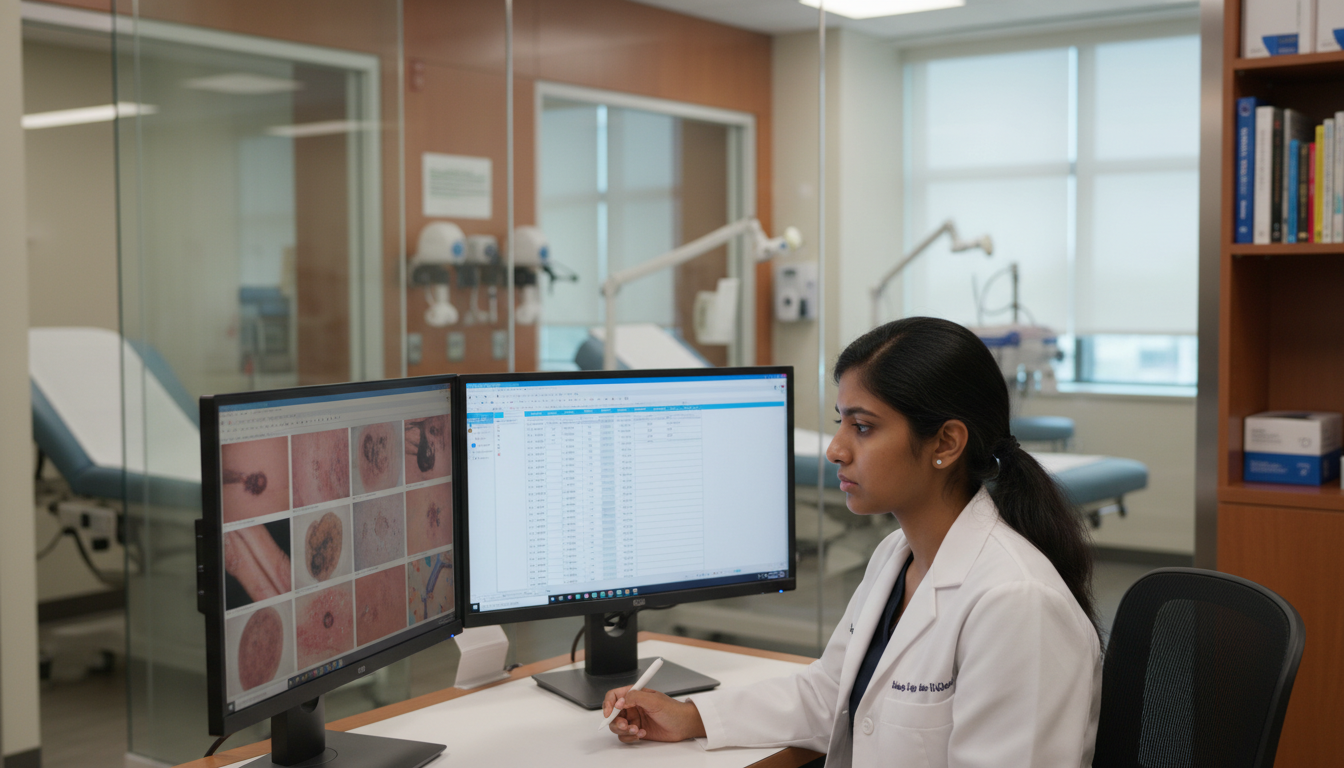
Grants and Funding: Your Gateway to Medical Research Success
Financial support is the engine that drives meaningful Medical Research and Healthcare Advancements. Behind every breakthrough therapy, diagnostic tool, or public health intervention, there are grants and funding decisions that made the work possible. For premeds, medical students, and residents, understanding how Grants and Funding work is not just “nice to know”—it’s a core career skill.
Whether you dream of becoming a physician-scientist, contributing to clinical trials, or leading public health initiatives, learning how to navigate Funding Opportunities and write strong Research Proposals will open doors. This expanded guide walks you step-by-step through:
- The major types of funding sources for medical research
- How grant mechanics work and what funders look for
- A structured process to find and apply for funding
- Practical strategies to improve your chances of success
- Real-world examples of how funding has changed the trajectory of medicine
By the end, you’ll have a clearer roadmap to turn your ideas into funded, impactful projects.
Understanding the Landscape of Medical Research Funding
Medical research funding is diverse, competitive, and constantly evolving. As an early-stage trainee, it can feel overwhelming—but that also means there are more entry points than you might realize.
Funding ranges from small travel awards and summer research scholarships to multi-million-dollar grants for clinical trials. Even if you are just starting in medical school, you can (and should) begin building your experience with smaller awards that prepare you for larger grants later.
Why Funding Matters for Your Career
For students and trainees, grants and funding are important because they:
- Allow protected time for research (e.g., summer research programs, research years)
- Support supplies, data access, and participant recruitment
- Make your CV stand out when applying for residency or fellowships
- Demonstrate initiative, leadership, and academic potential
- Connect you to mentors and research networks you can build on for years
Understanding where money comes from and how it is awarded is foundational if you want to be competitive in academic medicine or research-heavy specialties.
Major Types of Funding Sources for Medical Research
Medical research is supported by multiple sectors—government, philanthropy, industry, institutions, and even the public. Each has distinct priorities, structures, and expectations.
1. Government Grants: Large-Scale Drivers of Healthcare Advancements
Government agencies are among the largest and most stable sources of research dollars. They fund work across the spectrum: basic science, translational research, clinical trials, health services research, and public health.
Key U.S. Government Funders
National Institutes of Health (NIH)
The primary U.S. biomedical research agency. NIH offers:- R-series grants (e.g., R01, R21) for investigators
- F-series fellowships (e.g., F30/F31) for predoctoral trainees
- T32 training grants and K awards for career development
For students, NIH also supports summer research programs and diversity-focused supplements.
Centers for Disease Control and Prevention (CDC)
Focuses on public health, epidemiology, preventive medicine, and community-based interventions. CDC often funds researchers working on surveillance, outbreak response, and implementation science.Department of Defense (DoD)
Funds health research relevant to service members, veterans, and their families—such as trauma, PTSD, TBI, infectious diseases, and rehabilitation.Other agencies (e.g., AHRQ, HRSA, NSF)
Support health services research, workforce development, and basic science related to health.
These grants typically have:
- Clearly defined funding announcements or requests for applications (RFAs)
- Rigid eligibility rules and deadlines
- Formal peer-review scoring systems
- Detailed requirements for reporting, ethics, and data sharing
For early-stage trainees, your direct interaction with these grants is often via your mentor’s funded projects, but you can still contribute significantly and learn the process from the inside.
2. Private Foundations: Mission-Driven Medical Research Funding
Private foundations use philanthropic dollars to target specific diseases, populations, or research gaps. Many are ideal for medical students and residents because they often offer starter grants, fellowships, and small project awards.
Examples include:
- Bill & Melinda Gates Foundation – Global health, infectious diseases, maternal/child health, and health systems.
- Michael J. Fox Foundation – Parkinson’s disease research, especially translational and clinical work.
- American Cancer Society, American Heart Association, American Diabetes Association – Disease-specific grants, fellowships, and career development awards.
- Disease-specific advocacy organizations (e.g., Cystic Fibrosis Foundation, Lupus Foundation of America, Alzheimer’s Association) – Often fund pilot projects and young investigators.
Key features:
- Strong focus on mission alignment
- Emphasis on translational impact and patient benefit
- Often more flexible than government grants, with diverse funding mechanisms (pilot awards, young investigator grants, travel awards, training grants)
For trainees, these foundations often provide your first real opportunity to be a named PI (principal investigator) on a smaller project.
3. Pharmaceutical and Biotechnology Company Support
Industry plays a major role in funding research that may lead to new drugs, devices, or diagnostics.
Common forms of support:
- Investigator-Initiated Studies (IIS) – You propose a study related to a company’s product or therapeutic area; they may provide funding, drug supply, or data.
- Sponsored clinical trials – Industry-financed trials often use academic sites and physician-investigators.
- Educational grants and fellowships – For CME programs, research training, or disease-area education.
Important considerations:
- Potential conflicts of interest must be disclosed and managed.
- Your institution’s IRB and legal/contracting offices typically review all industry agreements.
- Industry support can be valuable but should be balanced with independence and scientific integrity.
For medical students and residents, industry-funded research is commonly accessed through your mentor’s lab or clinical research program.
4. Crowdfunding: Community-Supported Medical Research
Digital platforms now allow researchers—even trainees—to raise funds directly from the public.
- Platforms: Experiment.com (science-focused), GoFundMe, Kickstarter, Indiegogo.
- Typical uses: Small pilot projects, proof-of-concept work, community health projects, or public-facing science.
Advantages:
- Builds public engagement and science communication skills
- Can support high-risk or niche projects that traditional funders may overlook
- Flexible and relatively fast compared to traditional grant cycles
Challenges:
- Funds are usually small relative to formal grants
- Requires significant effort in outreach, storytelling, and transparency
- Institutional approvals may still be needed if patients or clinical data are involved
While crowdfunding won’t replace major grants, it can be a creative option for early-stage pilot data or community-based initiatives.
5. University and Institutional Grants: Your First Funding Home
Many students overlook the rich Funding Opportunities embedded within their own institution.
Common internal mechanisms:
- Medical student summer research stipends
- Departmental seed grants for small projects
- Pilot grants from research centers or institutes (e.g., cancer centers, CTSA hubs)
- Travel awards for presenting at conferences
- Gap funding for projects between larger grants
Institutional grants are often:
- More accessible for trainees
- Simpler in application requirements
- Designed to generate preliminary data for larger external grants
Your institution’s Office of Research, Office of Medical Education, or student affairs/research dean is a critical resource. Make it a priority to learn what’s available early in your training.
How Grants Work: Core Components of Strong Research Proposals
Regardless of the funder, most grants share common structural elements. Understanding these early helps you read opportunities more effectively and write stronger applications.
Core Elements of a Grant Application
1. Research Objectives and Specific Aims
This is the intellectual heart of your proposal:
- Define the problem or gap in knowledge
- State clear, focused aims (typically 2–3 for smaller grants)
- Explain why it matters for patients, systems, or science
- Ensure aims are feasible within the budget and timeline
For example, instead of “Study diabetes in adolescents,” a strong aim might be:
“Evaluate whether a 12-week mobile-app–based coaching program improves HbA1c by at least 0.5% in adolescents with type 1 diabetes compared to usual care.”
2. Background and Literature Review
Show reviewers you understand:
- What is already known
- What has been tried and where results are inconsistent
- Where the true gap lies
- How your study directly addresses that gap
Use recent, high-quality sources and synthesize, rather than just listing studies.
3. Methods and Study Design
Reviewers will focus heavily here. You should:
- Define the study population, inclusion/exclusion criteria, and setting
- Describe data collection methods (surveys, chart review, lab tests, interviews, etc.)
- Explain sample size and power (even in simple, approximate terms for student projects)
- Outline statistical or qualitative analyses
- Address ethical considerations and IRB approval plans
As a trainee, lean on a biostatistician or experienced mentor to help ensure rigor.
4. Budget and Justification
Even small grants need a clear, realistic budget. Typical categories:
- Personnel (e.g., stipend support, research assistants)
- Supplies and equipment (e.g., lab reagents, software licenses)
- Participant costs (e.g., incentives, travel reimbursement)
- Data access (e.g., database fees, EHR extraction)
- Travel (e.g., presenting at a conference)
Your budget justification should explain how each cost supports the specific aims. Avoid padding; reviewers can tell.
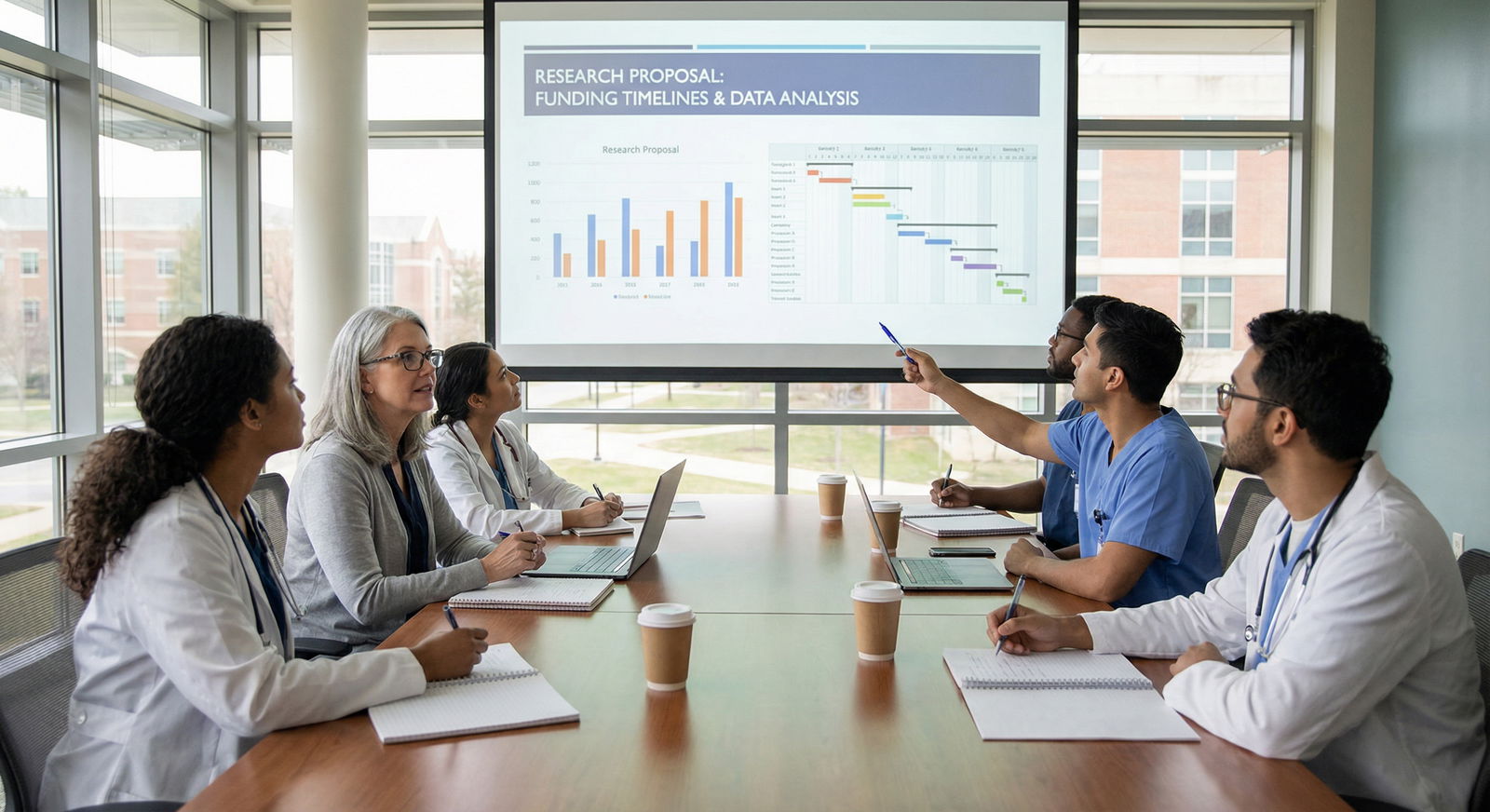
5. Timeline and Milestones
A simple Gantt chart or narrative timeline shows that your plan is:
- Organized
- Realistic for the funding period
- Aligned with academic milestones (e.g., summer break, research year, residency schedule)
Include concrete milestones like: IRB approval, data collection start/finish, analysis, abstract submission, manuscript draft.
6. Investigator and Environment
Funders want to know:
- Why you are well positioned to do this work (even as a trainee: motivation, skills, coursework, prior projects)
- Who will mentor you and what their experience is
- What institutional resources (labs, cores, databases, clinics) you can access
A strong mentorship team and supportive environment can significantly offset your limited track record as a student or resident.
Step-by-Step Guide: How to Find and Secure Grants and Funding
Step 1: Identify the Right Funding Opportunities
Match your project to the right funder and mechanism.
Practical strategies:
- Use databases:
- Grants.gov, NIH RePORTER, Foundation Directory Online, ClinicalTrials.gov (for related study sponsors)
- Explore society and foundation websites:
- Specialty societies (e.g., ACP, AAP, ACOG, ACS) often have student and resident research awards
- Talk to your mentors:
- Ask what grants funded their work and whether there are trainee-specific mechanisms
- Subscribe to email lists:
- Your institution’s research office, relevant foundations, and professional societies often send funding alerts.
Keep a simple spreadsheet of potential opportunities including:
- Funder and mechanism
- Eligibility (student/resident status, citizenship, discipline)
- Deadline and cycle
- Award size and duration
- Alignment with your topic
Step 2: Develop a Focused, Feasible Project
Ambition is good; overreach is not. Tailor your Research Proposal to your level and time frame.
Ask:
- Can this realistically be completed with my schedule and resources?
- Is the scope appropriate for the amount of funding available?
- Does it produce something tangible (abstract, manuscript, QI outcome) within the grant period?
Often, your mentor will help you “right-size” your project for a given funding call.
Step 3: Align with Funding Priorities and Review Criteria
Every grant opportunity emphasizes certain priorities. Thoroughly read:
- The Request for Proposals (RFP) or Funding Opportunity Announcement (FOA)
- Specific review criteria (e.g., significance, innovation, approach, investigator, environment)
Then explicitly:
- Use their language when relevant (without forced keyword stuffing)
- Show how your work advances the funder’s mission (e.g., reducing health disparities, improving access, generating preliminary data for future trials)
- Address all required sections (e.g., diversity plans, community engagement, dissemination)
Step 4: Build a Strong Mentorship and Collaboration Network
Especially as a trainee, your team matters as much as your idea.
- Identify a primary research mentor with a track record in your area.
- Add co-mentors for complementary expertise (e.g., statistics, qualitative methods, health equity).
- Consider multidisciplinary collaborators (e.g., pharmacists, nurses, data scientists, social workers) when relevant to your topic.
Networking strategies:
- Attend departmental research days, grand rounds, and journal clubs.
- Approach faculty whose work you respect and ask about opportunities.
- Use national conferences to connect with potential collaborators and learn current research questions in your field.
Step 5: Write, Revise, and Polish Your Application
Strong grant writing is a skill you develop over time.
Actionable tips:
- Start early—ideally 6–8 weeks before the deadline, longer for complex grants.
- Draft a Specific Aims page first; share it with your mentor and revise until it’s sharp.
- Write clearly and concisely; avoid jargon where possible.
- Use headings, bullets, and figures to improve readability.
- Ask multiple reviewers (mentor, peer, statistician) to critique your draft.
Many institutions offer:
- Grant writing workshops or boot camps
- Sample successful applications
- Editing support through research offices or writing centers
Take full advantage of these resources.
Step 6: Submit Early and Follow All Instructions
Details matter:
- Adhere strictly to page limits, font size, margins, and file formats.
- Ensure all required attachments (biosketches, letters of support, human subjects sections) are included.
- Submit at least 24–48 hours before the deadline to allow for technical problems or last-minute fixes.
After submission, track:
- Confirmation emails or portal status updates
- Review timelines
- Resubmission or feedback options
Strategies to Boost Your Funding Success as a Trainee
Collaborate with Experienced Investigators
As a student or resident, your credibility is enhanced by working with:
- Established PIs with prior grant success
- Faculty recognized in your chosen field
- Research groups or centers that regularly secure funding
You don’t lose ownership by collaborating; instead, you gain mentorship and infrastructure that can transform a good idea into a fundable one.
Use Institutional Support Services
Commonly overlooked but powerful:
- Biostatistics core – helps refine design and analyses
- IRB office – clarifies ethical and regulatory issues
- Grants management or pre-award office – ensures compliance and helps with budgets
- Library and informatics teams – support literature searches, systematic reviews, and data management
Knowing how to leverage these services is a hallmark of a developing physician-scientist.
Study Successful Grant Applications
Ask mentors or senior trainees if they’re willing to share:
- Previously funded applications (with sensitive information removed)
- Summary statements or reviewer comments
Pay attention to:
- How they structure the Specific Aims page
- How clearly they connect background, gap, and proposed solution
- The level of detail in methods and budgets
Use these as models—but never copy text or structure inappropriately.
Embrace Rejection as Part of the Process
Even top investigators get rejections frequently.
To grow from the process:
- Read reviewer comments carefully and unemotionally.
- Discuss feedback with your mentor; identify what can be improved.
- Revise and resubmit when possible or adapt your proposal for a different funder.
Persistence, resilience, and willingness to iterate are critical traits in a successful research career.
Real-World Examples: How Grants and Funding Transform Medicine
1. COVID-19 Vaccine Development
The rapid development of COVID-19 vaccines illustrates how coordinated funding can accelerate Healthcare Advancements:
- Massive investments from governments (e.g., Operation Warp Speed in the U.S.)
- Industry partnerships with biotech companies (e.g., mRNA platform developers)
- Support for large-scale clinical trials and manufacturing infrastructure
Without this unprecedented financial support, the typical decade-long vaccine timeline could not have been compressed into under a year.
2. Alzheimer’s Disease Research
Foundations like the Alzheimer’s Association and public agencies like NIH have:
- Funded basic science to understand amyloid and tau biology
- Supported clinical trials for disease-modifying therapies
- Backed early-career investigators building Alzheimer’s-focused careers
While a definitive cure remains elusive, sustained funding has led to new diagnostics (e.g., biomarkers, imaging) and emerging treatments targeting disease mechanisms more precisely.
3. HIV/AIDS Research
The National Institute of Allergy and Infectious Diseases (NIAID) and global funders have transformed HIV from a fatal illness into a manageable chronic condition:
- Funding basic virology and immunology research
- Supporting development of antiretroviral therapies
- Investing in implementation science and global health delivery
Additionally, philanthropy and community advocacy have driven research in PrEP, prevention strategies, and stigma reduction. This history illustrates how sustained, targeted funding can reshaped the natural history of a global epidemic.
FAQ: Grants and Funding for Aspiring Medical Researchers
1. What types of funding are most realistic for medical students and residents?
Students and residents most commonly access:
- Institutional grants (summer research stipends, departmental seed funds)
- Professional society awards (e.g., ACP, AAP, ACOG small grants)
- Foundation fellowships or pilot grants aimed at early-stage investigators
- Travel awards to present at conferences
Larger NIH or foundation grants are typically held by your mentor, but you can be listed as a key trainee and gain valuable experience.
2. How can I improve my chances of getting funding with limited research experience?
Focus on:
- Building a strong mentorship team
- Designing a feasible, well-scoped project with clear aims
- Demonstrating your commitment (prior coursework, related volunteering, or smaller projects)
- Using institutional resources (biostats, writing support, research office)
- Submitting a polished, on-time application that directly addresses the funder’s priorities
A compelling, achievable project with excellent mentorship is often more persuasive than a flashy but unrealistic idea.
3. How do I find research mentors and projects that can be funded?
Practical approaches:
- Attend departmental research days, grand rounds, and interest group meetings.
- Review faculty profiles on your institution’s website to find investigators whose work matches your interests.
- Email faculty with a concise introduction, your CV, and a brief description of your interests.
- Ask senior students or residents which mentors actively involve trainees in publishable work.
Once you join a lab or research group, ask specifically about Funding Opportunities and how you can contribute to grant-writing or data collection.
4. Do I need a fully original idea to apply for a grant?
Not necessarily. Many impactful trainee projects:
- Extend or refine a mentor’s existing research
- Adapt proven interventions to a new population or setting
- Apply established methods (e.g., QI frameworks) to a local clinical problem
Funders value innovation, but innovation can be incremental—improving care delivery, closing equity gaps, or implementing evidence more effectively—not just discovering entirely new molecules.
5. Is it acceptable to apply for multiple grants with the same project?
Yes, with caveats:
- Be transparent about overlapping submissions if applications ask.
- You generally cannot accept duplicate funding for the exact same costs.
- If multiple grants are awarded, you may need to:
- Decline one, or
- Adjust budgets and scopes so there is no double billing.
Your mentor and institution’s grants office can help you navigate this ethically and administratively.
Grants and Funding are not just abstract concepts reserved for senior scientists—they are practical tools you can start using as a premed, medical student, or resident. By understanding funding sources, mastering the basics of Research Proposals, and learning how to align your work with mission-driven Healthcare Advancements, you position yourself for a research career that is both sustainable and impactful.
Every major medical breakthrough began with a well-crafted idea and a funded study. With guidance, persistence, and the strategies outlined in this guide, your work can be part of that story.