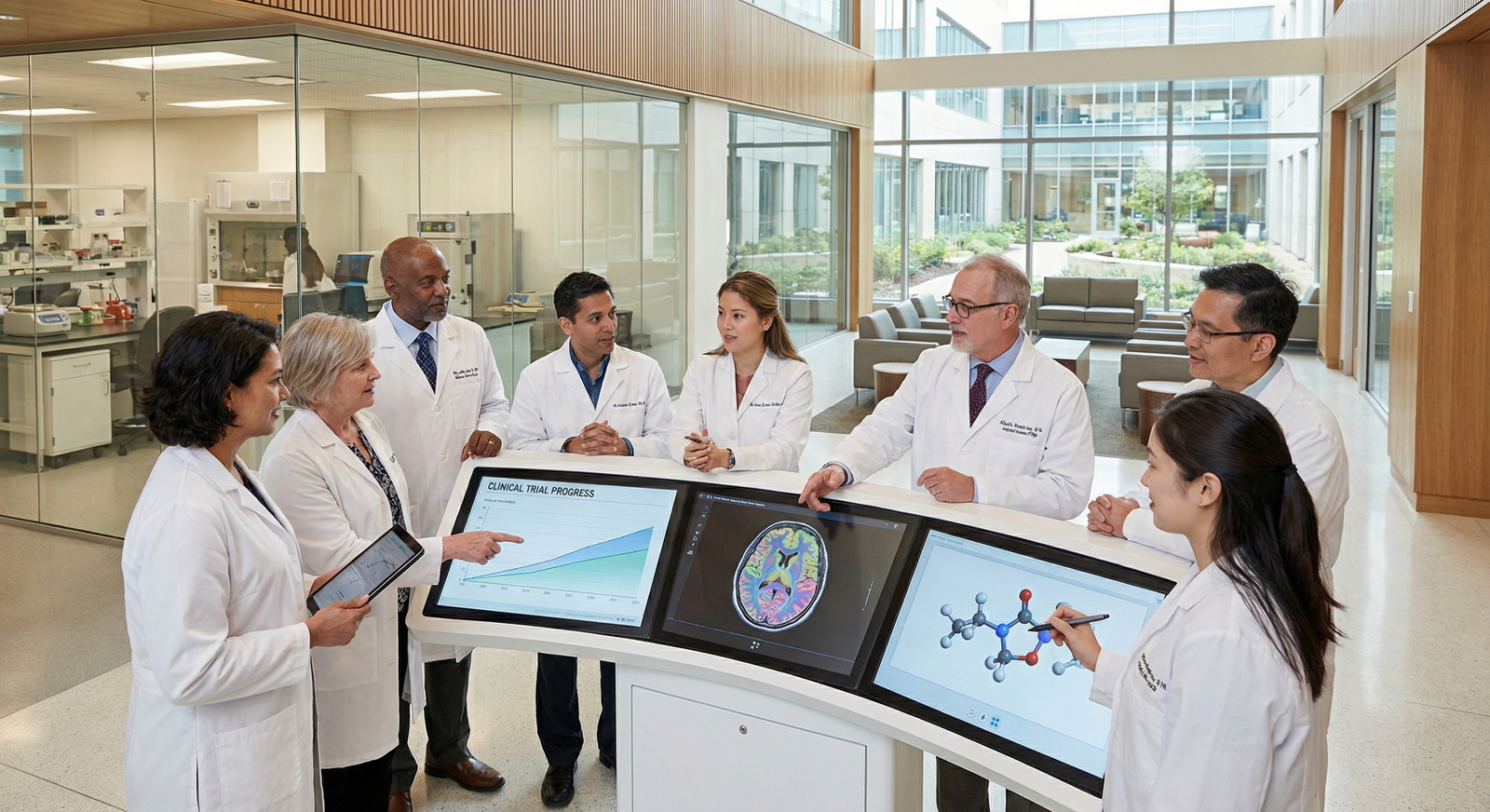
Why Research During Residency Matters for IMGs in EM–IM
For an international medical graduate (IMG) pursuing an Emergency Medicine–Internal Medicine (EM–IM) combined residency, research is not just a “nice to have”—it is a strategic tool that can shape your career trajectory.
In a dual residency that spans both acute and longitudinal care, research during residency helps you:
- Build credibility in a new training system
- Differentiate yourself for fellowships, academic positions, and leadership roles
- Understand and improve systems of care across the ED, ICU, and inpatient wards
- Develop skills that translate directly to quality improvement and patient safety
This IMG residency guide focuses on how to successfully engage in research during residency as an EM–IM resident: how to get started, what types of resident research projects are realistic, how to balance clinical load with scholarship, and how to strategically use research to build an academic residency track and long‑term career.
Understanding the EM–IM Combined Pathway and Its Research Landscape
The Unique Position of EM–IM Residents
Emergency Medicine–Internal Medicine combined programs are designed to train physicians who can:
- Provide high-acuity, time-sensitive care in the ED
- Manage complex chronic and inpatient conditions on medicine services
- Serve as bridges between prehospital, emergency, inpatient, and sometimes ICU care
This dual exposure opens a wide research spectrum:
- ED-based research (triage, sepsis, trauma, resuscitation)
- Internal medicine and hospitalist research (chronic disease management, readmissions, inpatient outcomes)
- Transitional care and systems-based research between ED and wards
- Critical care topics in programs with ICU exposure
For IMGs, this breadth is both an opportunity and a challenge. You will have:
- More clinical environments to study
- More potential mentors (EM, IM, critical care, hospitalist, epidemiology, informatics)
- More competing demands on your time
Planning your research strategy early will keep your efforts focused and feasible.
Research Expectations in EM–IM Programs
Not all EM–IM programs have identical research requirements, but common expectations include:
- Participation in at least one scholarly project (often required for graduation)
- Quality improvement (QI) projects tied to hospital metrics or patient safety
- Presentation at local, regional, or national conferences
- Manuscript preparation and, ideally, publication in a peer-reviewed journal
Some EM–IM programs explicitly offer an academic residency track, which provides:
- Protected time for research
- Structured mentoring and scholarship oversight
- Didactic sessions on research methods, statistics, and scientific writing
- Support for presenting at conferences (funding, days off)
Ask early in your intern year:
- “What are the program’s scholarly requirements?”
- “Are there formal research or academic tracks?”
- “What is the typical level of research productivity among graduating residents?”
This will help you calibrate your goals.
Getting Started: Foundations for IMGs Entering Research
Step 1: Clarify Your Long-Term Goals
Your research choices should align with your career vision. For an IMG in EM–IM, think about where you see yourself:
- Academic emergency physician with a focus on health services research
- Academic internist or hospitalist leading quality and safety initiatives
- Critical care, toxicology, ultrasound, or other subspecialty fellowship
- Global health or international emergency medicine leader
- Community EM–IM physician with a niche in process improvement
Your goals influence the type of projects you pursue. Examples:
- Planning for a critical care fellowship? Consider research on sepsis, resuscitation, ventilator management, or ED-to-ICU transitions.
- Aiming for a hospitalist career? Focus on readmissions, inpatient workflows, hospital medicine quality metrics.
- Interested in global health? Look for ED–IM research on low-resource care pathways or telemedicine-supported decision-making.
For IMGs, research can offset perceived disadvantages by demonstrating excellence in scholarship, adaptability, and familiarity with U.S. academic standards.
Step 2: Assess Your Starting Point
As an international medical graduate, your prior exposure to research may vary:
- Some IMGs have multiple publications from their home countries
- Others have limited research experience due to systemic or resource constraints
Be honest about:
- Methodological knowledge (study design, statistics, ethics)
- Writing skills in academic English
- Familiarity with U.S. IRB processes and institutional expectations
Then identify what you need:
- Online or institutional courses on research methods (e.g., Coursera, institutional CME modules)
- Basic biostatistics workshops offered by your hospital or university
- Writing support via writing centers or mentors experienced with IMGs
If you already have publications, highlight them to potential mentors—it shows you can see a project through.
Step 3: Build Your Research Network Early
During your first 6–9 months of residency:
- Attend departmental research meetings in both EM and IM
- Introduce yourself to the program’s research director(s)
- Ask senior EM–IM residents:
- “Who are the most resident-friendly research mentors?”
- “Which projects have historically been successful for residents?”
Compile a short list of possible mentors across both departments. Look especially for:
- Faculty who publish regularly in EM, IM, or critical care journals
- Clinician-researchers with joint EM–IM or EM–IM–CCM training
- People actively involved in resident research projects, not just large R01-level grant work
Avoid trying to work with everyone. One or two good mentors are better than four uninterested big names.

Types of Research Feasible for EM–IM Residents
1. Retrospective Chart Review Studies
For busy residents, retrospective studies are often the most realistic:
- Use existing EMR data to answer a defined question
- Require IRB approval but no real-time patient enrollment
- Can often be completed within 6–18 months
EM–IM examples:
- Outcomes of ED sepsis pathways and their effect on inpatient LOS
- Predictors of 72-hour ED return visits among patients with chronic heart failure
- Association between ED boarding time and inpatient mortality for IM admissions
As an IMG, retrospective studies are an accessible entry point because:
- They require analytic discipline more than cultural familiarity
- Language barriers are less problematic than in qualitative research
- Work can be done flexibly outside clinical hours
2. Quality Improvement (QI) and Patient Safety Projects
QI is highly valued and often required in EM and IM departments. Unlike traditional research, QI focuses on:
- Implementing change in clinical processes
- Measuring performance metrics over time
- Iterative Plan–Do–Study–Act (PDSA) cycles
Examples for EM–IM residents:
- Increasing early sepsis bundle completion in the ED and improving inpatient handoffs
- Reducing unnecessary telemetry orders on medicine floors for ED admissions
- Improving anticoagulation reversal workflows between the ED, ICU, and wards
QI projects:
- Can be completed in 6–12 months
- Are excellent for showing system-level thinking—very attractive for academic and leadership track positions
- May result in conference abstracts and publications in QI-focused journals
3. Prospective Observational Studies
These can be more demanding but are highly valuable:
- Systems require protocol development, IRB approval, and training of data collectors
- Enrollment may depend on your clinical schedule
EM–IM-friendly examples:
- Observing adherence to ED-initiated guidelines for COPD exacerbations and their inpatient outcomes
- Prospective registry of ED shock patients admitted to IM vs ICU and their outcomes
- ED-based screening for social determinants of health and its relation to readmissions
For IMGs, these projects offer deeper integration into the system, but:
- Be realistic about time commitment
- Share responsibilities with co-residents or students
- Ensure your mentor has experience with prospective projects
4. Educational Research
As a dual-trained resident, you interact with many learners (medical students, EM and IM interns, APPs). Educational research might involve:
- Simulation-based training in sepsis resuscitation and its effect on ED and IM performance
- An EM–IM-specific curriculum on transitions of care and its impact on handoff quality
- Ultrasound education across ED and general medicine services
Educational projects often:
- Involve surveys, assessments, and pre–post designs
- Have lower regulatory burdens than clinical trials
- Fit well with residents who enjoy teaching and academic environments
5. Multidisciplinary and Systems-Based Research
EM–IM residents are uniquely placed to lead cross-departmental projects:
- ED–IM transitions of care research
- ED-initiated interventions for chronic disease management (e.g., heart failure, COPD, diabetes)
- ICU triage studies looking at who gets admitted to ICU vs IM ward and how that affects outcomes
For IMGs, these projects:
- Showcase collaboration skills
- Highlight systems understanding across departments
- Position you well for roles in hospital administration, quality, or clinical operations
Practical Strategy: How to Actually Get a Project Done
Timeline Planning Across a Five-Year EM–IM Program
Most EM–IM programs are 5 years, giving more runway than standard 3-year residencies. A realistic structure:
PGY-1 (Intern Year)
- Learn the system and culture
- Attend research/QI meetings
- Meet potential mentors
- Join an ongoing project in a limited role (e.g., data collection, literature review)
PGY-2
- Take defined ownership of a project (often retrospective or QI)
- Submit at least one abstract to a national or regional EM or IM conference
- Start building basic skills in data analysis and academic writing
PGY-3
- Aim to complete at least one project to submission as a manuscript
- Take on a second, more ambitious project (e.g., prospective or cross-departmental)
- Explore potential fellowships and identify what kind of research portfolio they prefer
PGY-4–5
- Consolidate your research focus (EM-based, IM-based, critical care, education, QI, or systems)
- Lead a project where you are clearly the primary resident investigator
- Aim for at least one first-author publication and several presentations
- Solidify mentors who will write strong letters emphasizing your research trajectory
For an IMG building a competitive profile in a new system, this timeline can make you stand out for post-residency opportunities.
Choosing the Right Mentor (Critical for IMGs)
A strong mentor for an IMG in EM–IM typically has:
- Prior success mentoring residents (ask senior residents for honest feedback)
- Regular publications in your area of interest
- Time and willingness to meet regularly (e.g., monthly)
- Understanding of the additional challenges IMGs face (e.g., visa issues, cultural adaptation)
Ask potential mentors:
- “What is your expectation of resident involvement in your projects?”
- “How many resident projects are you currently supervising?”
- “What roles have prior residents had—data analysis, writing, presenting?”
- “How do you typically support IMGs who are new to U.S. research systems?”
Choose mentors whose working style matches your needs: some are hands-on, others expect more independence.
Scoping a Feasible Project
For each potential project, assess:
- Time: Can this be realistically completed within your remaining years?
- Complexity: Are the methods and analysis appropriate for your current skill level?
- Support: Is there a statistician, data analyst, or research coordinator to help?
- Impact: Will this improve patient care, system performance, or educational quality?
- Dissemination: Is this project likely to produce at least an abstract or publication?
If a project has high complexity, low support, and uncertain feasibility, it may not be ideal—especially as your first project.

Balancing Clinical Duties and Research as an IMG in EM–IM
Time Management Strategies
Dual training in emergency medicine internal medicine is intense. Combine that with call schedules, night shifts, and cross-department responsibilities, and time becomes your limiting factor.
Practical approaches:
- Block scheduling:
- Reserve a consistent weekly research block (e.g., Sundays 8–11 AM or one post-call afternoon) and treat it as non-negotiable.
- Micro-tasks:
- Use short gaps (15–30 minutes) to do small tasks: editing a paragraph, checking references, replying to co-authors.
- Prioritize by phase:
- Data collection phases often require more flexible time. Writing phases can be more easily chunked.
Discuss with your program directors:
- Options for selective rotations with research time
- Elective blocks dedicated to research (especially PGY-3–5)
- Requirements for maintaining clinical competencies while on a more academic track
Leveraging the Strengths of Being an IMG
As an international medical graduate, you may bring:
- Experience working in resource-limited settings
- A global health perspective on systems and patient populations
- Strong work ethic and resilience, often already proven through the match process
Use these strengths in research:
- Choose topics where your background adds depth (e.g., ED care for immigrants, language barriers, cross-cultural communication, health literacy).
- Consider global or comparative projects if your program has international collaborations.
- Highlight your dual understanding of different healthcare systems when writing introductions and discussions in manuscripts.
Addressing Common IMG-Specific Barriers
Language and Writing
- Use institutional writing centers or peer editors.
- Read high-quality EM and IM journal articles regularly to internalize academic style.
- Ask mentors to provide specific feedback on structure, tone, and clarity rather than only grammar.
Visa and Time Horizons
- If on a visa, align your research timeline with your likely post-residency plans (e.g., J-1 waiver jobs, fellowships).
- Projects that can produce abstracts or manuscripts within 1–2 years may be more useful than 4–5 year endeavors with uncertain outcomes.
Cultural and System Navigation
- Ask co-residents what “unwritten rules” exist around authorship, conference submissions, or departmental politics.
- Clarify authorship expectations early with your team to avoid misunderstandings.
Turning Residency Research into a Long-Term Academic Career
Building an Academic Portfolio as an EM–IM IMG
By graduation, aim for a balanced portfolio that demonstrates:
- Depth: At least one thematic area of focus (e.g., sepsis performance, transitions of care, ED-initiated chronic disease management, educational innovation).
- Productivity:
- 1–2 first-author manuscripts
- Several co-author publications or abstracts
- Multiple conference presentations (EM, IM, or combined forums)
- Leadership:
- Leading at least one project where you designed, implemented, and disseminated the work
These components are especially powerful for an IMG seeking:
- Fellowship positions (critical care, ultrasound, toxicology, health services research, etc.)
- An academic residency track during or after training
- Junior faculty roles in academic departments
Showcasing EM–IM Dual Expertise
When you present or publish, make your EM–IM angle explicit:
- Frame problems across the continuum: ED to wards, ED to ICU, or acute to chronic care.
- Emphasize how your combined perspective enables you to see system gaps and integration opportunities.
- Highlight your ability to work easily with both EM and IM teams and leadership.
Examples of framing:
- “As an Emergency Medicine–Internal Medicine resident, I recognized recurring challenges in handoffs between the ED and inpatient teams…”
- “Our project focused on sepsis bundle adherence from ED triage through inpatient day 1, reflecting the full trajectory of patient care.”
This clear identity can differentiate you from single-specialty candidates.
Using Resident Research Projects to Compete for Fellowships and Jobs
When applying for fellowships or positions:
- Prepare a concise research narrative (1–2 pages) summarizing:
- Your main research interests
- Key projects and their outcomes
- Skills acquired (study design, QI methodology, statistics, mentoring junior learners)
- Future directions and how their program will support your growth
For academic jobs, emphasize:
- Ability to mentor future residents and students, particularly IMGs
- Your experience bridging EM and IM departments in previous research
- Interest in developing interdisciplinary or cross-departmental initiatives
If you plan a research-heavy career, consider:
- Post-residency research fellowships or advanced degrees (MPH, MS in Clinical Research, etc.)
- Early engagement with institutional career development programs (e.g., K-award pipelines in the U.S.)
FAQs: Research During EM–IM Residency for IMGs
1. I’m an IMG with no prior research experience. Can I still build a strong research profile in EM–IM?
Yes. Start with smaller, structured projects like retrospective chart reviews or QI initiatives under close mentorship. Many IMGs successfully publish during residency despite starting with little prior experience. The key is to engage early (PGY-1), choose feasible projects, and steadily increase the complexity and independence of your work.
2. How many publications do I need to be competitive for fellowships or academic positions?
There is no fixed number, but for competitive academic fellowships or junior faculty roles in EM, IM, or critical care, many successful candidates have at least:
- 1–2 first-author publications
- Several co-author publications or conference abstracts
Quality and relevance to your intended subspecialty often matter more than raw quantity. A focused body of work that tells a coherent story is more impressive than numerous unrelated projects.
3. Is QI work considered “real” research for my career?
Yes—especially in EM, IM, and hospitalist medicine. High-quality QI projects with robust methodology, appropriate statistics, and measurable outcomes can be published and presented at national meetings. QI is highly aligned with leadership, systems improvement, and health services roles and is increasingly recognized as critical scholarly work.
4. How do I choose between EM-focused and IM-focused research as a dual EM–IM resident?
You don’t have to choose strictly one, but you should aim for a coherent theme. For example, you might focus on:
- ED sepsis management and inpatient outcomes (bridge between EM and IM)
- ED readmissions and chronic disease management (again crossing both fields)
- ICU triage or ED-to-ICU pathways (if interested in critical care)
Prioritize projects that leverage your combined training and support your long-term career goals, whether in EM, IM, critical care, or academic leadership.
By strategically engaging in research during your EM–IM residency, you not only fulfill program requirements but also build a compelling academic identity—one that highlights your strengths as an international medical graduate and a physician uniquely trained to understand both emergency and internal medicine across the full spectrum of patient care.