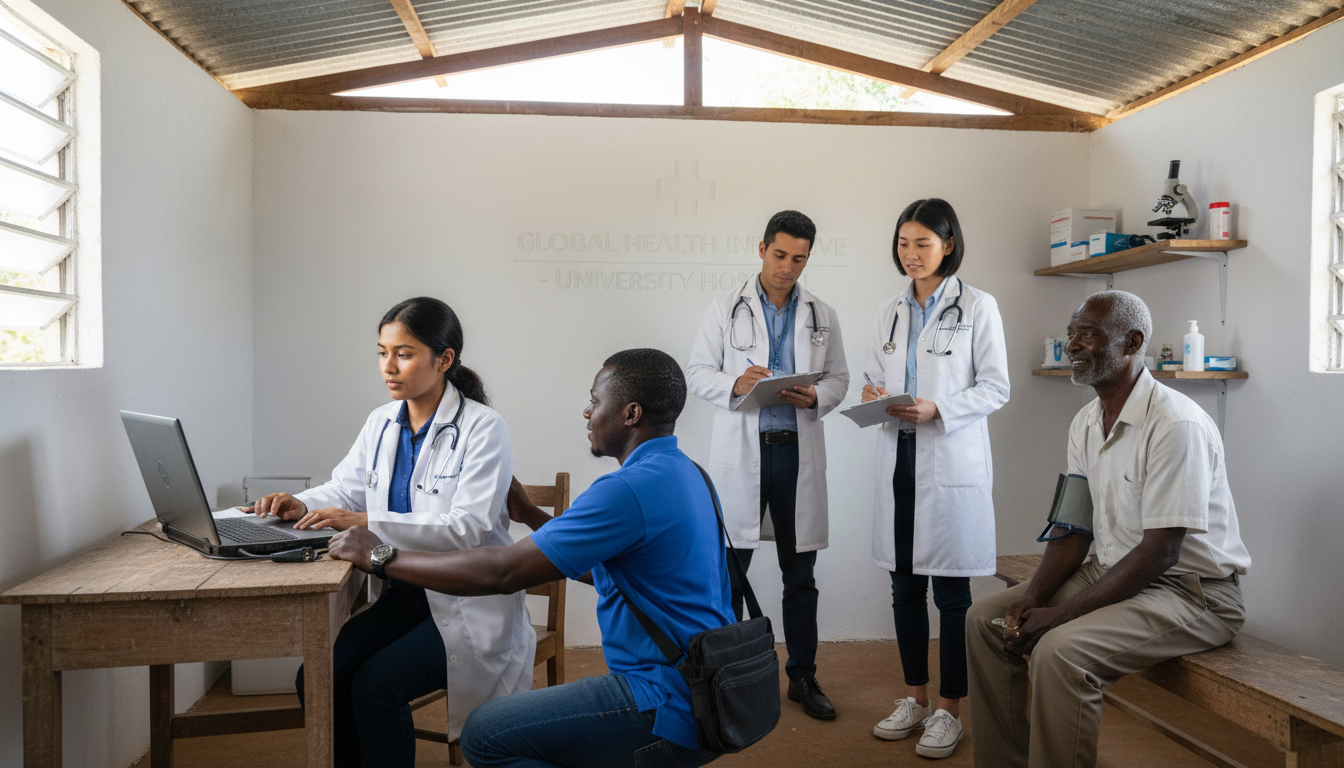
Why Research During Family Medicine Residency Matters for IMGs
For an international medical graduate, residency is already demanding—new healthcare system, new culture, and high expectations. It can be tempting to view research as optional or “extra.” In family medicine, though, research during residency can significantly shape your training and future opportunities, especially if you are considering an academic career, fellowship, or leadership roles.
Engaging in research:
- Strengthens your CV and future fellowship or job applications
- Demonstrates your ability to think critically and improve patient care
- Helps you build mentors and professional networks in your new system
- Improves your comfort with evidence-based medicine and guidelines
- Can support your interest in an academic residency track or clinician-educator role
This IMG residency guide will walk you step by step through how to get involved in resident research projects in family medicine, how to balance research with clinical work, and how to use these experiences strategically for your long-term career.
Understanding Research in Family Medicine Residency
Types of Research You’ll Encounter
Family medicine has a broad scope, so research can look very different from classic lab-based projects. Common types include:
Clinical Research
- Chart reviews on chronic diseases (e.g., diabetes, hypertension)
- Studies on preventive care (e.g., cancer screening rates)
- Evaluations of new clinical workflows (e.g., same-day visits, telemedicine)
Quality Improvement (QI) Projects
- Process-focused: improving vaccination rates, follow-up after hospital discharge, reducing ED utilization
- Often required for ACGME or program milestones
- Shorter cycles (PDSA: Plan–Do–Study–Act) and quickly translatable to practice
Education Research
- Evaluating a new teaching curriculum for residents
- Studying impact of simulation, OSCEs, or new feedback methods
- Surveys of residents’ or medical students’ attitudes and skills
Community-Based and Population Health Research
- Social determinants of health, health equity, access to care
- Partnerships with community organizations or public health departments
- Evaluating outreach clinics or mobile health units
Behavioral and Mental Health Research
- Depression and anxiety screening in primary care
- Integrated behavioral health models
- Substance use screening and brief interventions
As an international medical graduate, you may have strong clinical skills but less exposure to QI or community-based projects. Recognizing these as valid and often high-impact research opportunities is essential.
How Research Is Structured in Residency
Most family medicine programs support resident research in at least one of these ways:
Dedicated research or scholarly activity curriculum
Often includes teaching on study design, statistics, and critical appraisal.Protected research time
Some programs offer elective blocks or half-days for research, especially in later years (PGY-2, PGY-3).Capstone or required scholarly project
Residents complete a project and present at a departmental or local conference.Academic residency track
An optional “plus” pathway with added research, teaching, and scholarship expectations.
As you evaluate or start your residency, ask how research during residency is supported and what recent resident research projects have been published or presented.

Getting Started: First Steps for IMGs in U.S. Family Medicine Programs
Step 1: Clarify Your Goals Early
Before jumping into any project, ask yourself:
- Do I want an academic career or to pursue an academic residency track?
- Am I interested in a fellowship (sports medicine, geriatrics, palliative care, addiction, maternal-child health, academic medicine, etc.)?
- Do I want to practice primarily in community or academic settings?
- Do I enjoy data, writing, teaching, or quality improvement?
Your answers will guide the type and intensity of research you seek:
- If you aim for an academic career or fellowship, prioritize projects that lead to:
- Peer-reviewed publications
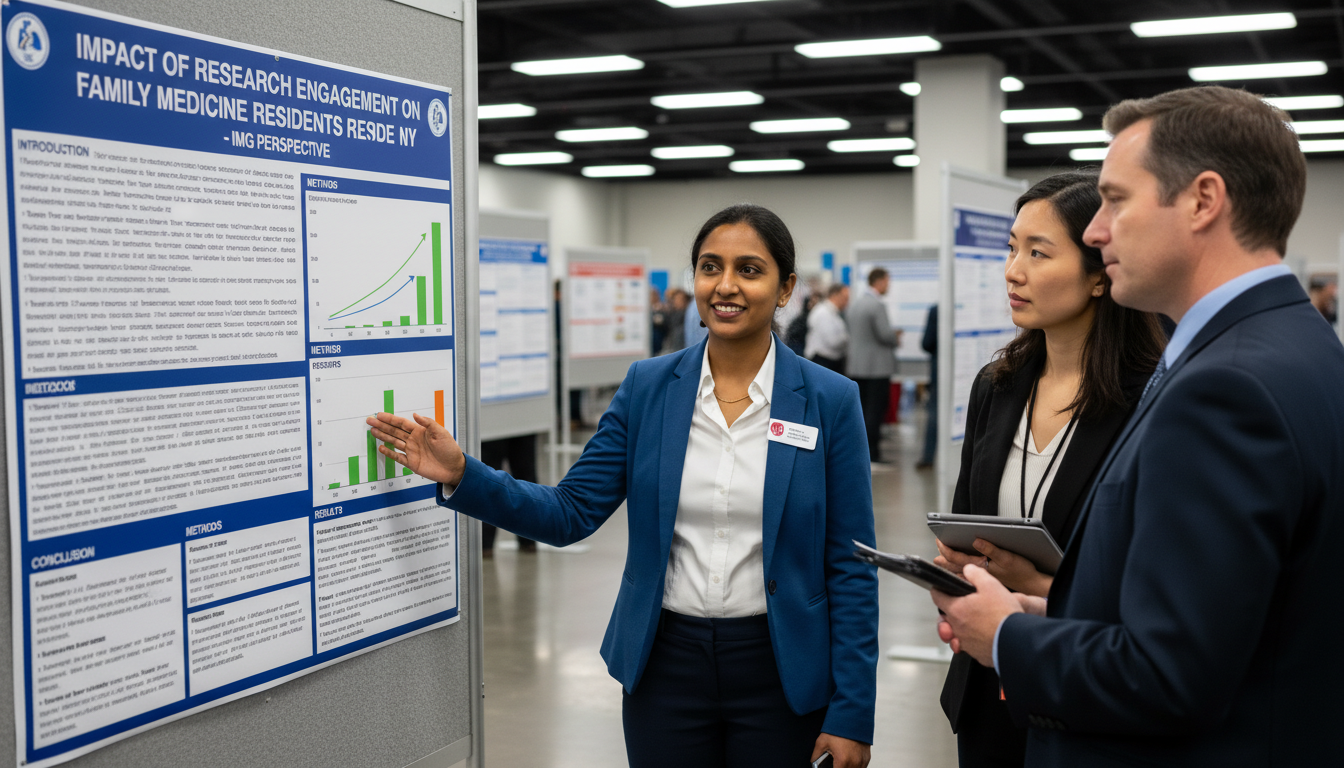
- Oral or poster presentations at regional or national conferences
- If you plan community practice, emphasize:
- QI projects directly improving patient care and clinic metrics
- Leadership in practice transformation or population health initiatives
Step 2: Learn the Local Research Culture
As an IMG, you may not be familiar with how U.S. departments are structured. Early in PGY-1:
- Identify:
- Program research director or scholarly activity coordinator
- Faculty with active research grants or publications
- The residency research committee, if one exists
- Ask:
- Are there ongoing family medicine resident research projects I can join?
- Are there standard “templates” for QI or research projects residents frequently do?
- Is there a list of mentors who enjoy working with residents and IMGs?
Attend any resident presentations, research days, or journal clubs. They show you what “successful” projects look like at your institution.
Step 3: Assess Your Own Skills Honestly
Many international medical graduates have done audits or small projects during medical school, but feel insecure about:
- Study design terminology
- Statistical methods
- IRB (Institutional Review Board) processes
- Manuscript and abstract writing in English
Conduct a quick self-assessment:
- Have I ever:
- Written a case report or original article?
- Used software like SPSS, R, or Excel for data analysis?
- Presented a poster or oral presentation in English?
If your experience is limited, you can still be a strong contributor by:
- Leading data collection
- Designing surveys
- Working on literature reviews and background sections
- Drafting case reports
- Helping prepare posters and PowerPoint slides
Over time, your skills will expand. Start where you are and be transparent with mentors—they expect residents to be learners.
Choosing and Designing a Feasible Resident Research Project
What Makes a Good Project for a Busy Resident?
Your time and energy are limited. A good research or QI project during residency should be:
- Feasible: Can be started and finished within 12–24 months
- Focused: Answering one clear, specific question
- Supported: Has an engaged mentor and necessary approvals
- Relevant: Connected to your clinical interests or local practice gaps
- Presentable: Has potential for at least a poster or brief publication
A helpful test: If you were suddenly on night float for a month, would your project collapse—or could it keep moving with some adjustments?
Common and Practical Project Ideas in Family Medicine
Chronic Disease Management
- Example: “Improving A1c control in patients with type 2 diabetes at our residency clinic.”
- Possible design: QI project using EMR data to create a registry, implement a new visit template, and track A1c before and after.
Preventive Care Gaps
- Example: “Increasing colorectal cancer screening rates in uninsured patients.”
- Approach: Identify baseline screening rates, educate patients and staff, introduce reminder systems, re-measure outcomes.
Mental Health Integration
- Example: “Impact of routine PHQ-9 screening on depression detection in primary care.”
- Design: Before–after study of detection rates and referrals.
Resident or Medical Student Education
- Example: “Evaluation of a resident-led teaching curriculum for medical students in the family medicine clinic.”
- Method: Pre- and post-surveys, assessment of student evaluations, qualitative feedback.
Telemedicine and Access to Care
- Example: “Patient satisfaction and no-show rates before and after introduction of video visits.”
- Data: Compare appointment outcomes over defined time periods.
Health Disparities and Social Determinants
- Example: “Addressing food insecurity in a family medicine clinic population.”
- Method: Implement a screening tool and referral pathway, measure uptake and patient-reported outcomes.
Steps to Build Your Research Question
Use the PICO framework (especially helpful for IMGs adapting to U.S. EBM language):
- Patient/Population: e.g., adults with type 2 diabetes in your clinic
- Intervention: e.g., nurse-led education calls
- Comparison: e.g., previous standard of care
- Outcome: e.g., proportion of patients achieving A1c <8% at 6 months
Example question:
“In adult patients with type 2 diabetes in our residency clinic (P), does adding nurse-led education calls (I), compared with usual care (C), improve the percentage of patients achieving A1c <8% (O) over 6 months?”
Present this framework when you meet mentors. It signals that you understand research basics and are serious.
Navigating IRB and Administrative Requirements
As an international medical graduate, IRB language and ethics processes may be new or different:
QI vs. Research
- QI often focuses on local improvement and may not require full IRB review.
- Research intended for generalizable knowledge typically requires IRB oversight.
Practical tips:
- Ask your mentor or research office: “Is this QI or research, and what level of IRB review is needed?”
- Use existing templates—many programs have standard IRB applications for common project types.
- Attend any IRB or research ethics workshops your institution offers.
Starting IRB early is key. Delays here are a common reason resident projects do not finish before graduation.
Balancing Research With Clinical Duties as an IMG
Time Management Strategies That Work
Your primary responsibility is safe patient care. Successful IMGs who complete research during residency usually:
Start Small and Early
- Join an existing project in PGY-1 to learn process and expectations.
- Plan your own primary project in late PGY-1 or early PGY-2.
Use Structured, Short Work Sessions
- 30–60 minute blocks for:
- Literature review and reference organization
- Data cleaning or entry
- Drafting small manuscript sections (methods, results)
- Use tools like reference managers (Zotero, Mendeley, EndNote).
- 30–60 minute blocks for:
Align Research With Rotations
- Work more intensively during:
- Outpatient blocks
- Electives
- Lighter rotations
- Protect time during ICU, inpatient heavy months primarily for clinical learning.
- Work more intensively during:
Create a Timeline With Your Mentor
- Example:
- Months 1–2: Refine question, IRB submission
- Months 3–6: Data collection or intervention launch
- Months 7–9: Data analysis
- Months 10–12: Abstract writing and conference submission
- Example:
Print your timeline or keep it visible in your workspace.
Communicating as an IMG in a New System
Clear, proactive communication is crucial, especially if English is not your first language:
Set expectations early with mentors about:
- Your clinical schedule
- Religious or cultural holidays you may observe
- Any visa or work-hour restrictions that could impact travel for conferences
Ask for specific feedback:
- Instead of: “Is this draft okay?”
- Try: “Can you please comment on the clarity of my methods and whether the results are presented logically?”
Use institutional support:
- Writing centers
- English-language assistance programs
- Senior residents who have successfully published
Building a reputation as reliable and communicative will help you be invited to more resident research projects in the future.
Protecting Your Well-Being
Burnout risk is real, especially for IMGs handling cultural adjustments, visa stress, and family responsibilities abroad.
Practical boundaries:
- Limit major commitments to one primary project and at most one or two smaller collaborations.
- Choose projects that energize you—topics you genuinely care about or where you enjoy the team.
- Be honest with mentors if your clinical workload suddenly escalates; renegotiate deadlines before you disappear.
You do not need a dozen publications to be successful. A few well-executed projects with clear impact often matter more.
Turning Research Into Career Momentum for IMGs
Building an Academic Residency Track Profile
If your program has an academic residency track (or something similar: “scholarly concentration,” “academic medicine track”), research is usually a core component. To position yourself:
Early in PGY-1:
- Express interest to the program director and track director.
- Ask: “What are the expectations for scholarship in the academic track?”
Build a portfolio that showcases:
- At least one project where you are primary or co-first author
- Several presentations (local, regional, or national)
- Evidence of teaching: workshops, lectures, or curriculum design
As an international medical graduate, your unique perspective on global health, immigrant health, or cross-cultural communication can become a niche focus in academic family medicine.
Making Research Count for the FM Match and Beyond
If you are still in the application phase, program directors often see research during residency as evidence of:
- Curiosity and motivation
- Ability to complete long-term tasks
- Skills that can help the residency’s own scholarly output
For future jobs or fellowships, highlight:
Results and impact, not just “participation”:
- “Led QI project that increased colorectal cancer screening from 45% to 65% in one year.”
- “First author on a peer-reviewed article on telemedicine satisfaction in a safety-net family medicine clinic.”
Transferable skills:
- Data interpretation -> ability to lead QI in a new practice
- Teaching and presentations -> foundation for faculty or leadership roles
Include research during residency in your CV under:
- “Scholarly Activity”
- “Quality Improvement Projects”
- “Publications and Presentations”
Networking and Visibility for IMGs
Use research to open doors that can sometimes be harder for IMGs:
- Present at conferences (e.g., STFM, AAFP, NAPCRG, regional family medicine meetings)
- Introduce yourself to:
- Program directors from other institutions
- Fellowship directors in your area of interest
- Researchers working in your chosen niche
Prepare a brief “elevator pitch” about your project and your career goals. For example:
“I’m a PGY-2 family medicine resident and international medical graduate interested in academic family medicine and chronic disease management. My current project focuses on improving hypertension control in a safety-net clinic through a team-based care model.”
Common Pitfalls and How IMGs Can Avoid Them
Overcommitting Early
- Temptation: Saying yes to every project to “catch up” with U.S. grads.
- Solution: Prioritize depth over quantity. Commit fully to 1–2 meaningful projects.
Lack of Clear Ownership
- If roles are vague, you may become just a data collector.
- Solution: Negotiate early: “Can I be first author if I take responsibility for X, Y, and Z?”
Missing Deadlines Due to Clinical Demands
- Common during heavy rotations.
- Solution: Build “buffer time” into your project timeline, and notify collaborators early when your schedule changes.
Language and Writing Barriers
- Some IMGs struggle with scientific English style.
- Solution: Use manuscript templates, read published articles in your target journal, and ask mentors to recommend language resources or co-editors.
Not Finishing the Last 10%
- Many projects stall at the analysis or manuscript stage.
- Solution: Start with the end in mind—pick a target conference or journal from the beginning, and set firm internal deadlines to reach submission.
FAQs: Research During Family Medicine Residency for IMGs
1. Is research required for family medicine residency, and is it realistic for IMGs?
Many family medicine programs require at least one scholarly or QI project, but expectations vary. For IMGs, it is absolutely realistic to complete research during residency, especially if you:
- Start planning early (late PGY-1 or early PGY-2)
- Work with an experienced mentor
- Choose a focused, practical project rather than something overambitious
You do not need prior extensive research experience to succeed; curiosity, reliability, and willingness to learn are more important.
2. How many publications do I need if I’m aiming for an academic career or fellowship?
There is no fixed number. Quality and impact are more important than quantity. That said, a competitive portfolio for an academic path might include:
- 1–2 first-author publications or major abstracts
- Several poster or oral presentations at regional or national conferences
- Demonstrated leadership in at least one project (design, implementation, or analysis)
For many fellowships, strong letters from mentors and evidence of consistent scholarly engagement can outweigh pure publication count.
3. Can quality improvement projects really “count” as research?
Yes. In family medicine, QI is often central to scholarship and can be highly valued by programs and employers. Many QI projects:
- Are presented at conferences
- Are written up as brief reports or “practice transformation” articles
- Lead directly to better patient care and clinic performance metrics
The key is to systematically collect data, analyze outcomes, and clearly describe methods and results—similar to traditional research.
4. What if my English writing skills are weak compared with U.S. graduates?
You can still contribute meaningfully and improve over time:
- Start by focusing on:
- Data collection
- Methods and results sections (which tend to be more structured)
- Figures and tables
- Ask mentors for concrete, line-by-line feedback on early drafts.
- Use grammar tools and writing centers if available.
- Read several recent articles from your target journal to model style and structure.
With consistent practice across 2–3 years of residency, many IMGs see substantial improvement and become confident writers.
Engaging in research during residency as an international medical graduate in family medicine is both challenging and deeply rewarding. By choosing the right projects, building supportive mentorship, and strategically aligning your efforts with your career goals, you can transform your scholarly activity into a powerful asset for the FM match, academic opportunities, and long-term success in your new healthcare system.