
Why Research During Residency Matters for IMGs in Psychiatry
For an international medical graduate (IMG) in psychiatry, residency is not only a time to learn clinical skills—it is also the most accessible and structured opportunity to build a research portfolio in the United States or other high‑income training systems.
Engaging in research during residency helps you:
- Strengthen your CV for fellowships, visas, and future academic jobs
- Build credibility as an international medical graduate in a competitive field
- Develop critical appraisal skills for evidence-based psychiatry
- Gain mentorship and networking opportunities
- Explore subspecialty interests (e.g., child, addiction, geriatric, consultation-liaison psychiatry)
This IMG residency guide focuses on how to approach research strategically once you have matched (or are preparing to match) into psychiatry residency, with specific emphasis on the unique challenges and opportunities facing international medical graduates.
Understanding Research Opportunities in Psychiatry Residency
The Landscape: What “Research During Residency” Really Looks Like
Psychiatry residency programs vary widely in how much time and structure they provide for research. Broadly, you will see:
Clinically focused programs with optional research
- Research time is limited (e.g., half‑day per week or elective blocks)
- Projects are typically small-scale (case reports, QI projects, chart reviews)
Programs with formal research tracks or “academic residency track”
- Protected research time (e.g., 20–50% of total time in PGY3–PGY4)
- Close supervision by funded investigators
- Often linked with MD/PhD or research fellowships
Hybrid programs
- Structured scholarly project requirement for all residents
- Optional, additional research time for interested residents
As an IMG, you may not have had extensive research exposure in medical school, or your prior research may not translate directly to the U.S. context. The goal in residency is not necessarily to become a full-time scientist, but to:
- Learn the process of turning a clinical question into a feasible project
- Understand ethics, IRB review, and data management
- Contribute to at least one or more scholarly outputs: posters, abstracts, manuscripts, or quality improvement (QI) projects
Types of Resident Research Projects in Psychiatry
You don’t need to design a randomized controlled trial to have meaningful research during residency. Common resident research projects include:
Case reports and case series
- Unique presentations (e.g., first-episode psychosis with rare medical etiology)
- Adverse effects of psychotropics
- Complex comorbidities (e.g., autism + OCD + catatonia)
Chart review (retrospective) studies
- Treatment patterns in a specific population (e.g., clozapine prescribing patterns)
- Outcomes after hospitalization for suicidal ideation
- Predictors of readmission in a psychiatric unit
Prospective observational studies
- Symptom trajectory of patients starting a new treatment
- Adherence to follow-up after inpatient discharge
Quality improvement (QI) projects
- Reducing restraint use in inpatient psychiatry
- Improving metabolic monitoring in patients on antipsychotics
- Enhancing screening for substance use disorders in outpatient clinics
Educational research
- Evaluating a new curriculum (e.g., cultural psychiatry for IMGs)
- Teaching interventions for medical students or residents
These projects can lead to abstracts, posters, oral presentations, and peer‑reviewed publications—each valuable for your psych match outcomes if you later apply to fellowships or academic positions.

Getting Started: First Year (PGY1) Strategy for IMGs
Step 1: Map Your Program’s Research Ecosystem
Early in PGY1, intentionally learn how research is structured at your institution:
- Attend the program orientation’s research segment carefully
- Review your residency handbook or website section on research
- Identify:
- Required scholarly projects
- Available elective time for research
- Research track or academic residency pathway (if any)
- Affiliated centers (e.g., neuroscience, addiction, mood disorder centers)
Ask program leadership explicitly:
- “Is there an academic residency track open to IMGs?”
- “What are examples of resident research projects from the last 3–5 years?”
- “How many residents typically publish or present at conferences each year?”
Collect the names of:
- Key research faculty (PIs)
- Clinical services known for ongoing studies (e.g., first-episode psychosis clinic)
- Research coordinators and statisticians
Step 2: Clarify Your Personal Goals
Not every international medical graduate wants a heavy research career. Consider:
Clinical academic career (e.g., future faculty at teaching hospital)
- Aim for multiple projects, at least 1–2 first‑author papers
- Seek an academic residency track or research concentration
Balanced clinician with some scholarship
- Aim for at least one good quality project and a few presentations
Primarily private practice or community psychiatry
- Minimal but meaningful research/QI project that strengthens critical thinking
Write down achievable goals, such as:
- “By the end of PGY4, I want at least 2 poster presentations and 1 publication.”
- “I want research experience in mood disorders and psychopharmacology.”
Step 3: Address IMG-Specific Challenges Upfront
As an international medical graduate, you may encounter:
Visa limitations
- Some grants or positions (e.g., NIH T32) may require U.S. citizenship or permanent residency
- J‑1/H‑1B constraints can affect moonlighting or extra paid research roles
Different prior training
- You may have strong clinical skills but limited exposure to IRB, HIPAA, or statistics
- Terminology and expectations may differ from your home country
Implicit bias or underestimation
- Some faculty may assume you have fewer research skills
- Turning this around by showing reliability and initiative is crucial
Mitigation strategies:
- Be transparent with mentors about your background and what you want to learn
- Take institutional short courses (research methodology, statistics, REDCap use)
- Engage with international faculty who understand IMG trajectories
- Learn basic statistical thinking (even if a biostatistician runs the analysis)
Finding Mentors, Projects, and an Academic Track
Identifying the Right Mentor as an IMG
A good mentor is more important than a “flashy” topic. Qualities to look for:
- Experience working with residents (especially IMGs)
- Active projects with room for additional collaborators
- Clear track record of resident authorship and conference presentations
- Accessible and responsive (not perpetually traveling or overcommitted)
Practical steps to find a mentor:
Study faculty bios on your department website
- Look for: “resident supervision,” “clinical research,” “education research,” “early psychosis,” etc.
Ask senior residents
- “Which attendings are highly supportive of residents doing research?”
- “Who helped you get your poster or paper accepted?”
Set up brief introductory meetings
- Prepare: a 1-page CV and a 3–4 line summary of your interests
- Example email:
I am a PGY1 international medical graduate interested in mood disorders and suicide prevention. I would appreciate 20–30 minutes of your time to learn about ongoing projects and how a resident might get involved.
Entering an Academic Residency Track as an IMG
If your program offers an academic residency track:
- Find out application timing
- Some programs select residents for the track at the end of PGY1 or PGY2
- Ask about eligibility for IMGs
- Clarify whether visa status affects participation
- Understand expectations
- Number of research hours per week
- Required seminars or coursework
- Output goals (e.g., abstracts, manuscripts, grant proposals)
Strengthening your application:
- Start with a small project early in PGY1 (e.g., case report, literature review)
- Present a poster at a local or regional conference
- Be able to explain clearly how the academic track fits into your long‑term career goal
Choosing the Right Project for Your Level
Start with projects that:
- Match your time and skills (e.g., a retrospective chart review before a prospective trial)
- Are feasible with your schedule and visa constraints
- Have clear mentorship and defined deliverables
Example progression for an IMG psychiatry resident:
- PGY1
- Case report of rare side effect of antipsychotic medication
- Help a senior resident extract data for a chart review study
- PGY2
- Co-author a retrospective study on factors associated with high-dose benzodiazepine use
- Initiate a QI project on improving screening for metabolic syndrome
- PGY3–PGY4
- Lead an independent project (e.g., implementation of a group CBT program with outcome measures)
- Draft one or more first‑author manuscripts
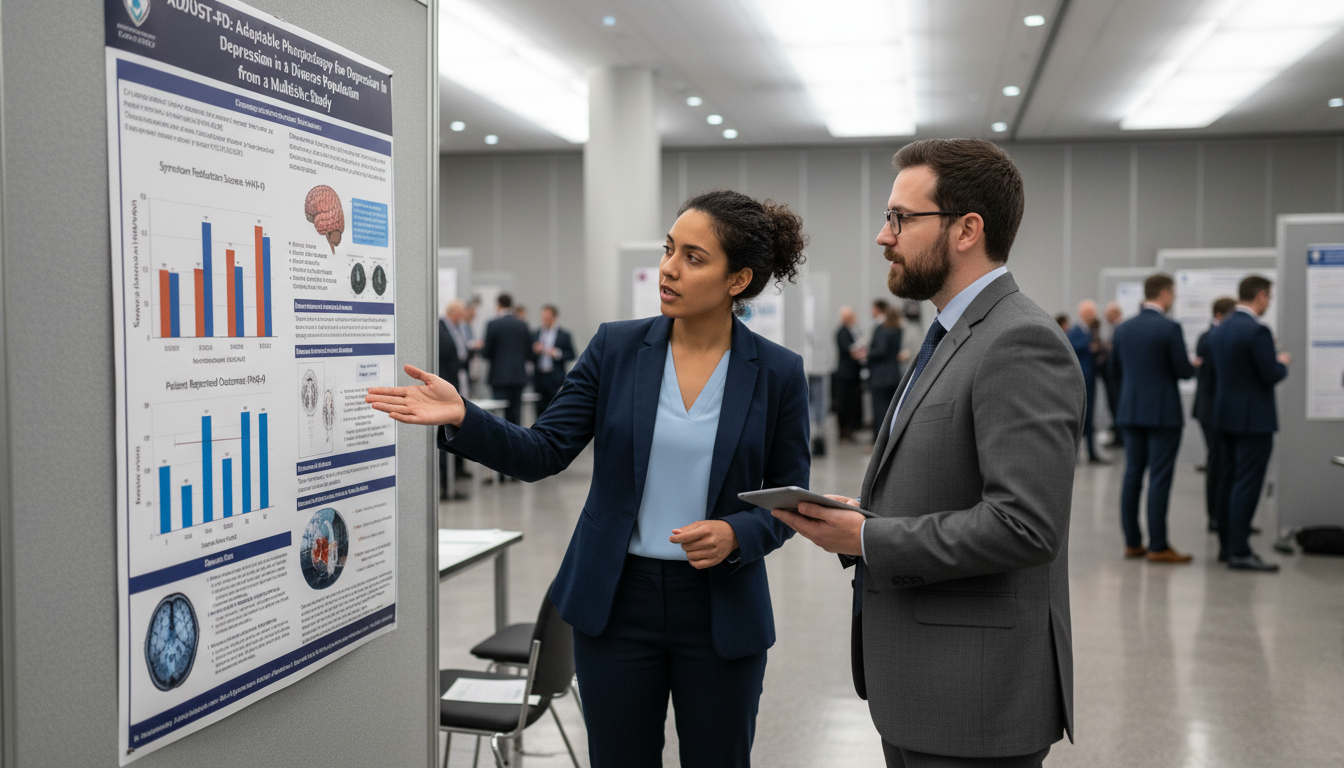
Executing Research During Residency: From Idea to Publication
Navigating IRB and Ethics as an IMG
Understanding Institutional Review Board (IRB) processes is essential in U.S.-based research:
- Determine the type of project
- Case report vs. case series
- QI vs. formal research
- Check institutional policies
- Some case reports may not require full IRB review, but many offices request a brief submission or exemption letter
- Complete mandatory trainings
- CITI (Collaborative Institutional Training Initiative) courses on human subjects protection
- HIPAA training on patient confidentiality
As an international medical graduate, this may be your first encounter with such formal structures. Treat this as a learning opportunity; familiarity with IRB language will be valuable for fellowships, academic positions, and future grants.
Time Management: Balancing Clinical Work and Research
The most common reason resident research projects fail is not a lack of intelligence; it is a lack of realistic time planning.
Key strategies:
Align projects with rotations
- If you have a lighter outpatient rotation with regular hours, plan data collection or manuscript writing during that block
- Avoid starting major projects during intense inpatient or night float months
Set micro‑deadlines with your mentor
- Example:
- Week 1: Finalize research question and hypothesis
- Week 2–4: Complete literature search and draft introduction
- Week 5–8: Finish IRB submission
- Month 3–6: Data collection
- Month 6–9: Analysis and first draft of manuscript
- Example:
Use tools intentionally
- Task management: Trello, Asana, or simple spreadsheets
- Reference management: Zotero, Mendeley, or EndNote
- Data capture: REDCap or institutionally approved tools
Writing Skills: Turning Work into Scholarly Output
You will gain little benefit from research during residency if you never disseminate your work. International medical graduates sometimes feel less confident in academic English writing; however, this can be improved with practice and support.
Steps to build writing skills:
Read good psychiatry papers actively
- Notice how the Introduction narrows from broad relevance to specific research question
- Study how Methods sections are structured (participants, measures, procedures, analysis)
Draft early and revise often
- Even if your first draft is imperfect, it gives your mentor something to work with
- Ask for feedback on structure, clarity, and tone
Target appropriate journals and conferences
- For resident-level work, consider:
- Psychiatric Services, Academic Psychiatry, general psychiatry journals with resident sections
- Specialty society meetings: APA, AACAP, AAGP, ASAM, etc.
- For resident-level work, consider:
Capitalize on conferences
- Abstracts often require limited data; you can present preliminary findings
- Posters count as scholarly output and networking opportunities
Resident Research Projects that Match Clinical Training
You can increase efficiency by connecting your research topics to your clinical experiences:
Inpatient rotation:
- Study predictors of seclusion and restraint
- QI project on documentation of suicide risk assessments
Addiction psychiatry rotation:
- Evaluate outcomes of buprenorphine induction protocols
- Survey patient satisfaction with integrated addiction treatment
Child and adolescent psychiatry rotation:
- Analyze patterns of psychopharmacology in youth with autism
- Educational research: impact of caregiver psychoeducation group
This way, your research during residency deepens your understanding of psychiatry practice, not just your CV.
Planning Beyond Residency: Using Research to Shape Your Career
Positioning Yourself for Fellowships and Academic Jobs
If you plan to apply for subspecialty fellowship (e.g., child, addiction, geriatric, forensic, CL psychiatry) or an academic role, your research during residency helps in several ways:
- Demonstrates sustained interest in a topic (e.g., several resident research projects on suicide prevention)
- Shows you can complete projects and collaborate effectively
- Distinguishes you from other applicants, especially as an international medical graduate
Important steps:
Maintain a research portfolio document listing:
- Project titles, mentors, roles, outcomes (poster, publication)
- Pending or in‑preparation manuscripts
Ask for strong letters of recommendation from research mentors highlighting:
- Your initiative, independence, critical thinking
- Your contribution to design, analysis, and writing
Align your personal statement with your research narrative
- Explain how your resident research projects shaped your clinical and academic interests
Visa and Research Pathways for IMGs
Your status as an international medical graduate may affect your post‑residency options:
J‑1 visa holders
- Often must complete a waiver service commitment (typically 3 years in an underserved area)
- Academic jobs are possible but may be more limited immediately after residency
- Research experience still helps you secure more desirable waiver positions or academic/community hybrid roles
H‑1B or permanent residents
- May have greater flexibility to pursue academic psychiatry positions directly
- More eligible for certain federal grants or postgraduate research fellowships
Regardless of visa type:
- Research exposure during residency keeps open the possibility of future academic transitions
- Even community psychiatrists with research background can collaborate on multi-site or practice-based studies
From Resident Research to Lifelong Scholarship
Many psychiatrists continue modest research even in non-academic settings:
- Participation in practice-based research networks
- Collaboration with academic centers on multi-site trials
- Implementation and evaluation of new clinical models (telepsychiatry, integrated care)
If you view your resident research projects as foundational training rather than a one‑time requirement, you will be better prepared to critically assess new treatments, contribute to guideline development, and advocate for evidence-based mental health policy.
Common Pitfalls for IMGs and How to Avoid Them
Pitfall 1: Taking on Too Much, Too Fast
If you join multiple projects without clear roles, you risk burnout and incomplete work.
Solution:
Prioritize 1–2 meaningful projects where you have defined responsibility and authorship, rather than 5 where you are a peripheral contributor.
Pitfall 2: Working Without Clear Authorship Agreements
Authorship expectations can be different from your home country. In some systems, IMGs discover too late that their expected first‑authorship has shifted.
Solution:
- Discuss authorship early, ideally in writing (e.g., email summarizing the plan)
- Clarify that you aim for first‑author or co‑first‑author status when appropriate
- Accept that senior mentors may be last author, which is standard
Pitfall 3: Ignoring Statistical Support
Attempting complex analyses alone without guidance can delay projects or yield incorrect conclusions.
Solution:
- Ask your mentor how to involve a statistician or methodologist early
- Attend departmental basic biostatistics seminars
- Focus on understanding the logic of the analysis even if you are not doing the coding yourself
Pitfall 4: Underestimating Cultural and Language Barriers
Academic English, conference networking, and navigating hierarchy may feel unfamiliar.
Solution:
- Practice presenting your work to co-residents or a journal club
- Ask mentors to review your slide decks and poster layouts
- Watch recordings of scientific talks to model language and structure
FAQs: Research During Psychiatry Residency for IMGs
1. I had little or no research experience before residency. Is it too late as an IMG?
No. Many residents—IMG and U.S. graduates—begin serious research training during residency. Start with manageable projects like case reports or QI and progressively move to more structured studies. Showing growth and completion is more important than having years of prior publications.
2. Will research during residency help me if I plan to leave academia and work in private practice?
Yes. Research skills enhance your ability to interpret evidence, counsel patients about treatments, and evaluate new interventions in clinical practice. Additionally, having scholarly work on your CV can help with leadership roles, medical directorship positions, and credibility with referring physicians.
3. How many publications or posters “should” I aim for as an IMG in psychiatry?
There is no fixed number. For a competitive academic path or subspecialty fellowship, many applicants have at least a few conference presentations and 1–3 peer‑reviewed publications by the end of residency. Quality, relevance to your interests, and your role (first author vs minor collaborator) matter more than sheer quantity.
4. Does doing an academic residency track guarantee an academic job?
No program can guarantee job placement, but an academic residency track significantly increases your exposure to research methods, mentorship, and networks that facilitate academic careers. Use the track strategically: complete projects, build relationships with senior faculty, and align your work with future fellowship or faculty interests.
For an international medical graduate in psychiatry, research during residency is both an opportunity and a differentiator. Whether your goal is a future in academic psychiatry or high-quality clinical care enriched by evidence-based thinking, resident research projects and, where available, an academic residency track can lay a strong foundation for your career. By choosing mentors wisely, planning realistically, and translating your work into tangible outputs, you can build a scholarly profile that reflects not only your skills but also your journey as an IMG in modern psychiatric practice.