Understanding the Role of Research During Neurology Residency for IMGs
For an international medical graduate (IMG), matching into neurology is already a significant achievement. Yet for many, the journey does not stop at simply completing a neurology residency. Academic careers, subspecialty fellowships, visa stability, and even future job opportunities often hinge on one critical component: meaningful research during residency.
This IMG residency guide focuses on how to strategically build resident research projects during neurology training, even if you are starting with limited prior experience or institutional connections. Whether you aspire to an academic residency track, a clinician-educator role, or simply want to strengthen your neuro match profile for fellowship, research can be a powerful lever—if you understand how to use it.
Why Research Matters Specifically in Neurology
Neurology is a rapidly evolving field. New disease classifications, biomarkers, and therapeutics appear almost annually. Program directors, fellowship committees, and academic departments increasingly expect residents—especially those aiming for subspecialties like epilepsy, stroke, neurocritical care, movement disorders, or neuroimmunology—to demonstrate:
- Ability to interpret and apply evidence
- Familiarity with clinical trial methodology
- Experience working in research teams
- Basic skills in data analysis and scientific writing
For IMGs, research during residency also:
- Helps offset perceived disadvantages (unknown medical school, different grading systems)
- Demonstrates adaptability to the US academic culture
- Expands your professional network beyond your home program
- Strengthens fellowship applications (especially competitive ones like vascular neurology, neurocritical care, interventional neuroradiology)
- Can support visa extensions or institutional sponsorship if you pursue an academic career
If you matched with minimal research on your CV, you are not “behind.” Residency is an excellent time to build a solid academic foundation—if you approach it strategically.
Laying the Foundation: First-Year Strategy for IMGs
Your intern year or PGY-1/PGY-2 (depending on program structure) is the best time to set the stage for research productivity later in residency. You will be busy learning the system, but thoughtful planning early can multiply your impact.
Step 1: Clarify Your Long-Term Goals
Before saying yes to any project, be honest about what you want:
- Academic neurology vs. community practice?
- Fellowship or general neurology only?
- US-based career vs. possible return to home country?
- Interest in specific subspecialties (stroke, epilepsy, neuromuscular, movement, MS, neuroimmunology, behavioral neurology, neuro-oncology, neurocritical care, neurophysiology, headache, etc.)?
Your goals will influence:
- Type of research: clinical, translational, outcomes, education, quality improvement (QI)
- Intensity of involvement you should aim for
- Whether to pursue an official academic residency track, research certificate, or master’s degree (e.g., clinical research, public health) later in residency
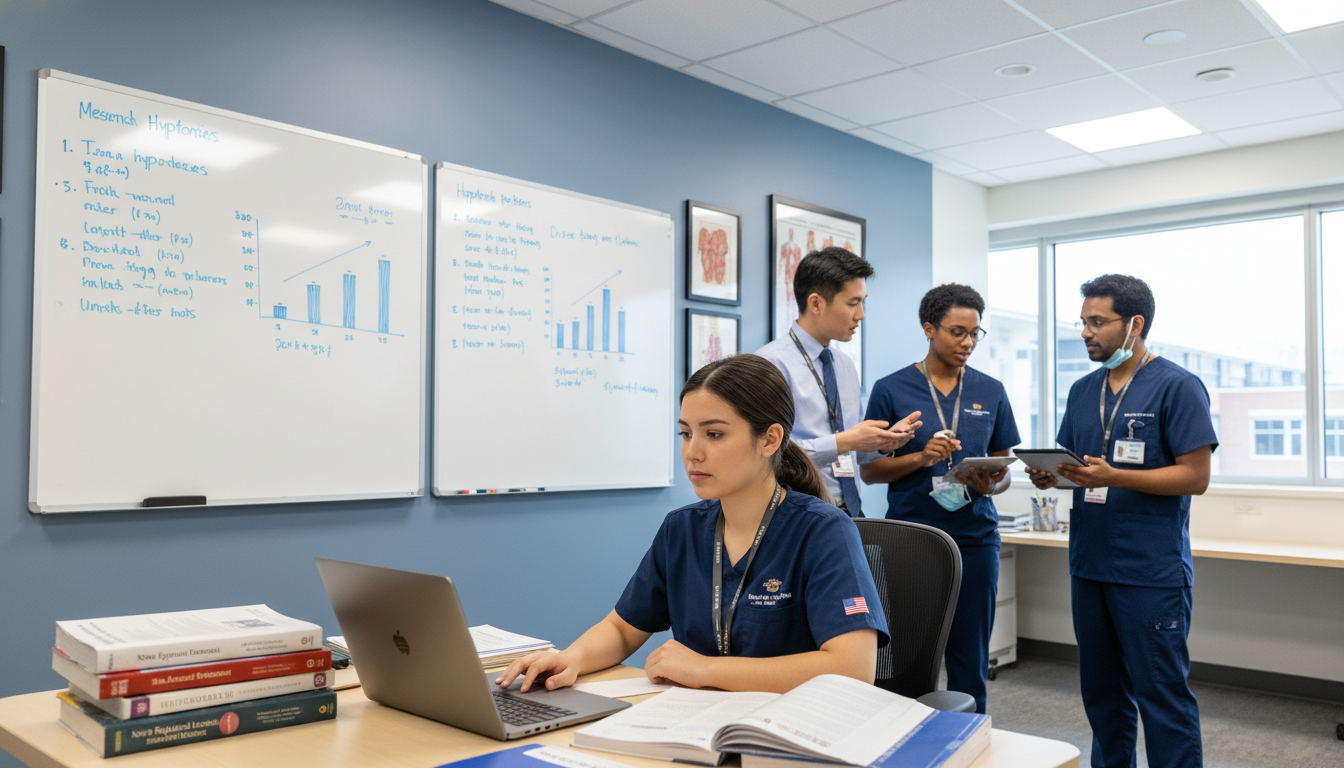
Step 2: Map the Research Ecosystem in Your Program
As an IMG, you may not be familiar with how US academic departments are structured. Early on, try to understand:
Who is doing what?
- Stroke/vascular neurology: clinical trials, registries, outcomes studies
- Epilepsy: EEG-related projects, device studies, surgical outcome analyses
- Neurocritical care: ICU databases, prognostication research
- Movement disorders: DBS outcomes, new therapies, gait analysis
- MS/Neuroimmunology: drug trials, imaging biomarkers, registries
- Neuromuscular: EMG-related studies, genetic cohorts, natural history
What infrastructure exists?
- Is there a clinical and translational science center (CTSC or CTSI)?
- Does the department have a neurology research coordinator or biostatistician?
- Are there regular research conferences or “Works in Progress” meetings?
- Is there a formal academic residency track or scholarly requirement?
What support is available for residents?
- Protected academic time in senior years
- Resident research funds or travel grants
- Access to databases (e.g., REDCap, stroke registry, EMR data warehouse)
- Internal IRB (institutional review board) support for study approval
A practical way to start is to ask your program director or mentor:
“Could you point me to faculty who are particularly active in research and enjoy working with residents?”
Step 3: Build Mentorship Early
Mentorship is often the difference between productive research during residency and endless unfinished projects. As an IMG, you may hesitate to approach faculty, but in US programs this is expected and encouraged.
Consider building a small mentorship team:
Primary mentor (neurology faculty)
Someone working in your area of interest who can provide day-to-day guidance.Career mentor (program director or senior faculty)
Helps align your research with your long-term goals (fellowship, academic career, visa).Methodology mentor
Biostatistician, epidemiologist, or clinical researcher who can teach you about study design and analysis.
When approaching potential mentors:
- Read one or two of their recent papers first.
- Prepare 2–3 specific questions or ideas.
- Be clear about your time constraints and level of experience.
- Ask: “What would be a realistic, achievable project for me to complete during residency?”

Choosing the Right Type of Research During Residency
Not all research is equally feasible during a busy neurology residency. The “best” resident research projects are not necessarily the most complex—they are the ones you can actually complete and publish or present.
Spectrum of Research Options
From least to most time-intensive and complex:
Case Reports and Case Series
- Good entry point for interns and early PGY-2s.
- Use interesting or rare cases you encounter on the stroke service, epilepsy monitoring unit, neuro ICU, or consult service.
- Practical steps:
- Ask attending: “Is this case suitable for a case report?”
- Review literature for novelty.
- Obtain patient consent if required.
- Target neurology journals that accept educational case reports, or conference poster submissions.
- Impact: modest, but builds writing skills and publication history.
Clinical Vignettes and Educational Research
- Conference vignettes based on instructive cases.
- Projects on teaching neurology to residents/medical students (e.g., simulation, OSCEs, bedside teaching).
- Often lower barrier to IRB approval (sometimes exempt or minimal risk).
Retrospective Chart Review Studies
- Very common and well-suited to residency.
- Examples in neurology:
- Stroke outcomes for patients receiving thrombectomy at night vs. day.
- Seizure recurrence in patients started on specific AEDs.
- Prognostic factors in neuromuscular ICU admissions.
- Key advantages:
- Data already exists.
- Flexible timeline—can work nights/weekends.
- Challenges:
- Need IRB approval and data extraction plan.
- Requires basic stats (often manageable with support).
Database/Registry or Big Data Projects
- Using stroke registries, national inpatient databases, MS registries, etc.
- Often higher-impact but may require more sophisticated stats.
- Suitable for residents with strong mentorship and some prior experience.
Prospective Clinical Studies and Trials
- More complex logistics and higher IRB burden.
- Can be rewarding if you join as a sub-investigator on existing trials (e.g., stroke, MS, epilepsy device studies).
- As a resident, you may:
- Recruit patients
- Perform standardized assessments
- Help manage study visits
- Less ideal to initiate large prospective trials from scratch during residency unless part of a structured academic track.
Basic Science / Translational Lab Research
- Time- and skill-intensive; harder to combine with full-time clinical neurology residency.
- More realistic if:
- You have a dedicated research year or academic track.
- You already have lab experience and a committed PI.
- Consider carefully; do not overcommit if clinical demands are intense.
Matching Projects to Your Level and Goals
For most IMGs in neurology residency, a reasonable progression is:
PGY-1 / early PGY-2:
Case reports, case series, educational projects, begin a small retrospective study.Late PGY-2 / PGY-3:
Lead a larger retrospective study or database project; co-author additional projects with peers; submit abstracts to major meetings (AAN, ISC for stroke, AES for epilepsy, CMSC for MS, etc.).PGY-4 and beyond:
Prepare first- or senior-author manuscripts; explore grants or small pilot projects; refine niche in preparation for fellowship or faculty applications.
If your program offers an academic residency track, this often provides structured support—including protected time, formal courses in research methods, and clearer expectations for output (e.g., one first-author paper by graduation). As an IMG, applying for such a track early can signal your commitment and open doors to more substantial projects.
Making Research Fit a Busy Neurology Schedule
Time is often the biggest barrier for residents, and IMGs may also be juggling family responsibilities, visa tasks, or remittances to support relatives. Efficient strategies are essential.
Principles of Time Management for Resident Research
Start Small but Start Early
- Aim for 1–2 manageable projects rather than 6 half-finished ones.
- Set the clear goal: “I want at least one accepted abstract and one manuscript submitted by the end of PGY-3.”
Create Micro-Blocks of Research Time
- 30–60 minutes on post-call afternoons for simple tasks (literature searches, outline drafting).
- Weekend mornings for deeper work (data analysis, writing).
- Use commute time (if not driving) for reading articles, listening to neurology research podcasts, or editing text.
Integrate Research into Clinical Rotations
- Stroke month: identify potential cases or data for a registry-based study.
- Neuro ICU: consider prognostic or QI-oriented questions.
- Clinic: track interesting patterns in disease presentation or treatment responses.
- Keep a “research ideas” note on your phone.
Use a Project Management Approach
- For each project:
- Define scope and timeline.
- List co-authors and roles.
- Set internal deadlines (e.g., “data collection done by June 1”).
- Revisit weekly or biweekly with your mentor or co-resident collaborators.
- For each project:
Leverage Teamwork
- Collaborate with co-residents, medical students, or fellows.
- Delegate data extraction or literature reviews when possible.
- Offer to help on others’ projects—co-authorship in exchange for meaningful work.
Practical Example: A Feasible Resident Project
- Question: Are door-to-needle times different for stroke patients during overnight vs. daytime hours at our hospital, and does this impact outcomes?
- Design: Retrospective review of stroke admissions over 3 years.
- Data: Time metrics (arrival to CT, CT to tPA), NIHSS, discharge mRS.
- Feasibility:
- Pre-existing stroke registry or easily extractable EMR fields.
- IRB minimal risk category.
- Stats support from departmental biostatistician.
- Outputs:
- Abstract to International Stroke Conference.
- Manuscript submitted to a vascular neurology journal.
- Timeline: 9–12 months from idea to submission if consistently managed.
For an IMG, a completed project like this signals the ability to ask clinically relevant questions, manage data, and see a project through to publication—all valuable for fellowship and academic residency track applications.
Turning Research Into Career Capital: Presentations, Publications, and Networking
Doing research is only half the story; sharing it effectively and leveraging it for your career is equally important.
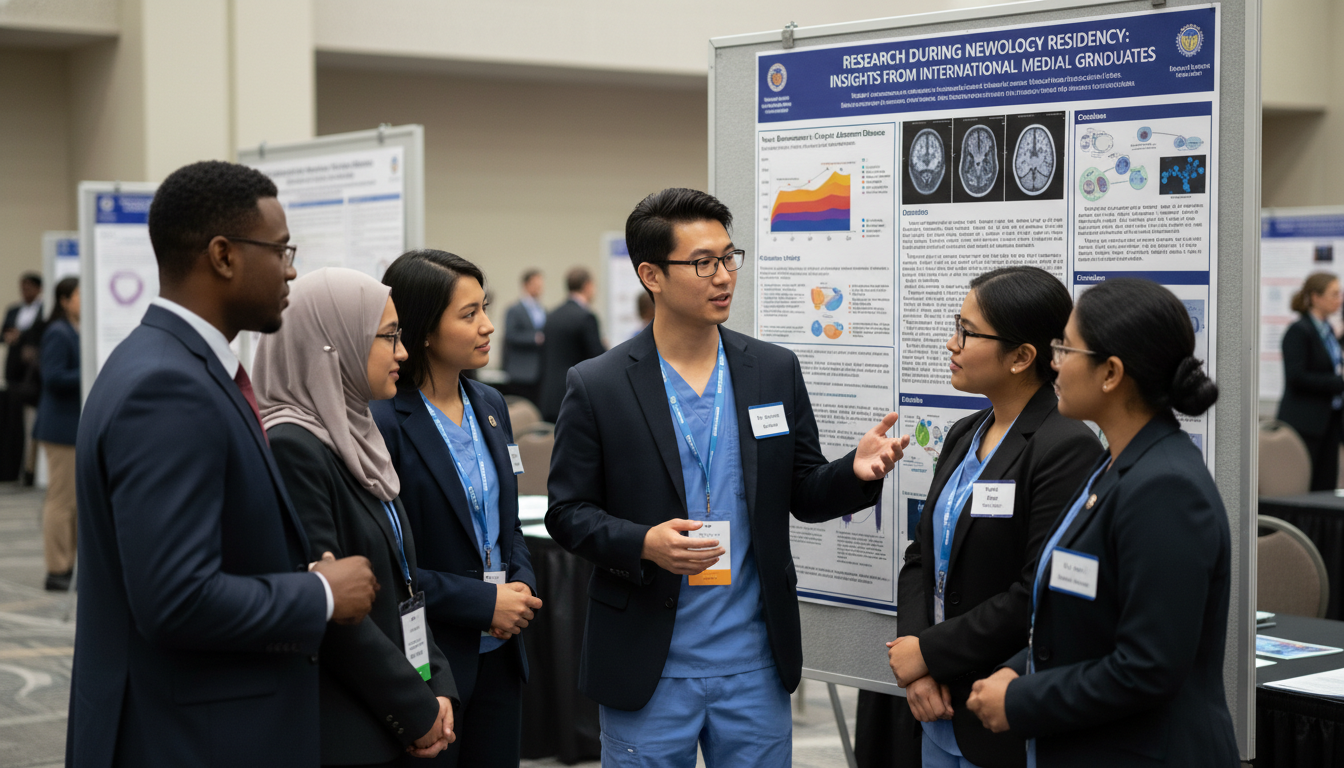
Abstracts and Conference Presentations
For neurology residents, some high-yield conferences include:
- AAN (American Academy of Neurology) – broad neurology topics
- International Stroke Conference (ISC) – vascular neurology and stroke
- AES (American Epilepsy Society) – epilepsy and EEG
- AANEM (American Association of Neuromuscular & Electrodiagnostic Medicine) – neuromuscular
- CNS/AANS sessions – neurocritical care and neurosurgical collaborations
- Subspecialty society meetings (movement disorders, MS, headache, sleep, etc.)
Benefits for an IMG:
- Visibility beyond your home institution
- Networking with potential fellowship mentors
- Understanding the “language” and priorities of your subspecialty
- Strengthening your CV with peer-reviewed abstracts
Practical tips:
- Ask your mentor about internal abstract deadlines, often earlier than conference deadlines.
- Prepare both poster and oral versions—even if you only present as a poster.
- Practice a 2-minute “elevator pitch” about your project for conference networking.
Manuscripts and Authorship
Aim to convert as many projects as possible into manuscripts. Common obstacles:
- Loss of momentum after the abstract is accepted or presented
- Fear of writing in English (for many IMGs)
- Difficulty coordinating co-author feedback
Solutions:
- Block time after the conference specifically for manuscript preparation.
- Use templates: Introduction–Methods–Results–Discussion format.
- Ask co-authors to review specific sections rather than the entire paper at once.
- Consider writing the manuscript in parallel with data analysis, updating as results become final.
As an IMG, you may worry about language. Content matters more than perfect grammar; journals often provide professional copy-editing. Peer feedback and institutional writing resources can help you polish.
Building an Academic Narrative
By PGY-4, you should be able to describe your academic niche:
- “I am interested in stroke systems of care and health disparities.”
- “My focus is epilepsy outcomes in resource-limited settings.”
- “I work on neuroimaging biomarkers in MS.”
Your neuro match for fellowship or early faculty positions will be stronger if you show:
- Coherent theme across your projects
- Progression in responsibility (from co-author to first author)
- Clear future directions that align with the programs you apply to
If you are considering staying in the US long-term, involvement in research during residency also signals to departments that you can eventually thrive on an academic residency track, contribute to funding efforts, and mentor future trainees.
IMG-Specific Challenges and Strategies in Neurology Research
International medical graduates often face unique barriers that are rarely discussed openly. Acknowledging them allows you to plan more effectively.
Common Challenges
Visa Limitations
- Travel restrictions may limit conference attendance.
- Some funding sources require citizenship/permanent residency.
Lack of Early Mentorship
- No prior exposure to US-style research methods.
- Hesitation in approaching senior faculty due to cultural differences.
Perceived “Late Start”
- Peers may already have PhDs, MPH degrees, or multiple publications.
- Pressure to “catch up” quickly.
Language and Writing Anxiety
- Concern about academic English, especially for manuscripts and grant applications.
Family and Financial Pressures
- Supporting relatives back home, adjusting to a new country, or dealing with immigration-related stress.
Practical Solutions and Mindset Shifts
Play the Long Game
- You do not need 20 publications during residency. A smaller number of completed, high-quality resident research projects aligned with your career goals is more valuable than scattered, unfinished efforts.
Use Institutional Resources
- Writing centers, biostatistics consultations, IRB office workshops, clinical research seminars.
- Many institutions have grant offices that help with small intramural awards, which IMGs are usually eligible for.
Be Explicit in Your Requests
- Tell mentors, “I am an IMG and I’d like to build a research portfolio that supports an academic career in the US. What steps do you recommend over the next 2–3 years?”
Leverage Your International Perspective
- You may have unique insights into global neurology, infectious or genetic diseases common in your region, or health system differences. These can inspire valuable research questions.
Seek External Collaborations
- Online research collaboratives, multicenter registries, international neurology groups.
- Alumni networks from your home medical school who now work in the US, Canada, or Europe.
Document Everything
- Keep a detailed CV updated with:
- Abstracts and posters (even local or institutional)
- Presentations at morning report or resident conferences
- QI or education projects
- Keep a detailed CV updated with:
This documentation will be essential for fellowship applications, visas, and job searches.
FAQs: Research During Neurology Residency for IMGs
1. I matched into neurology with little to no research experience. Is it too late to build an academic profile?
No. Residency is a highly acceptable time to start building your research history. Focus on:
- One or two well-defined projects early on (case series, retrospective studies).
- Finding mentors who understand you are starting from scratch.
- Showing consistent progression: abstract → poster → manuscript.
Fellowship and academic residency track committees value trajectory and commitment, not just raw numbers.
2. How many publications or projects do I need for a competitive neurology fellowship?
There is no fixed number, but for competitive fellowships (stroke, epilepsy, neurocritical care, etc.), a typical successful applicant might have:
- Several abstracts/posters (3–8) presented at major meetings.
- A few peer-reviewed publications, ideally with at least one first-author.
- Projects clearly aligned with the fellowship’s subspecialty.
As an IMG, aim for quality and coherence. A single solid first-author paper in the subspecialty you are applying for can be very influential, especially if backed by strong letters from research mentors.
3. Should I prioritize clinical excellence or research during residency?
Both matter, but clinical competence is non-negotiable. Poor evaluations or board failures will overshadow strong research. A balanced approach:
- PGY-1/early PGY-2: focus on clinical foundations, start small research effort.
- PGY-2/PGY-3: increase research intensity as you become more efficient clinically.
- PGY-4: consolidate and publish; prepare for fellowship/job applications.
Program directors often favor residents who are clinically reliable and academically productive, rather than those who are strong in only one domain.
4. Can I do a formal research degree (e.g., MPH, MS in Clinical Research) during neurology residency as an IMG?
Sometimes, but it depends on:
- Program structure and flexibility (academic residency track, protected time).
- Visa constraints and tuition support.
- Your career goals (strongly academic vs. primarily clinical).
If you are seriously considering an academic career, pursuing a formal degree can be beneficial—but usually only if your program explicitly supports it and you have adequate protected time. Otherwise, you can achieve substantial progress through focused resident research projects, mentorship, and institutional short courses in research methods.
By approaching research during residency with clear goals, strategic project selection, and strong mentorship, an international medical graduate in neurology can transform residency into a powerful launchpad for an academic, subspecialized, or leadership-oriented career.