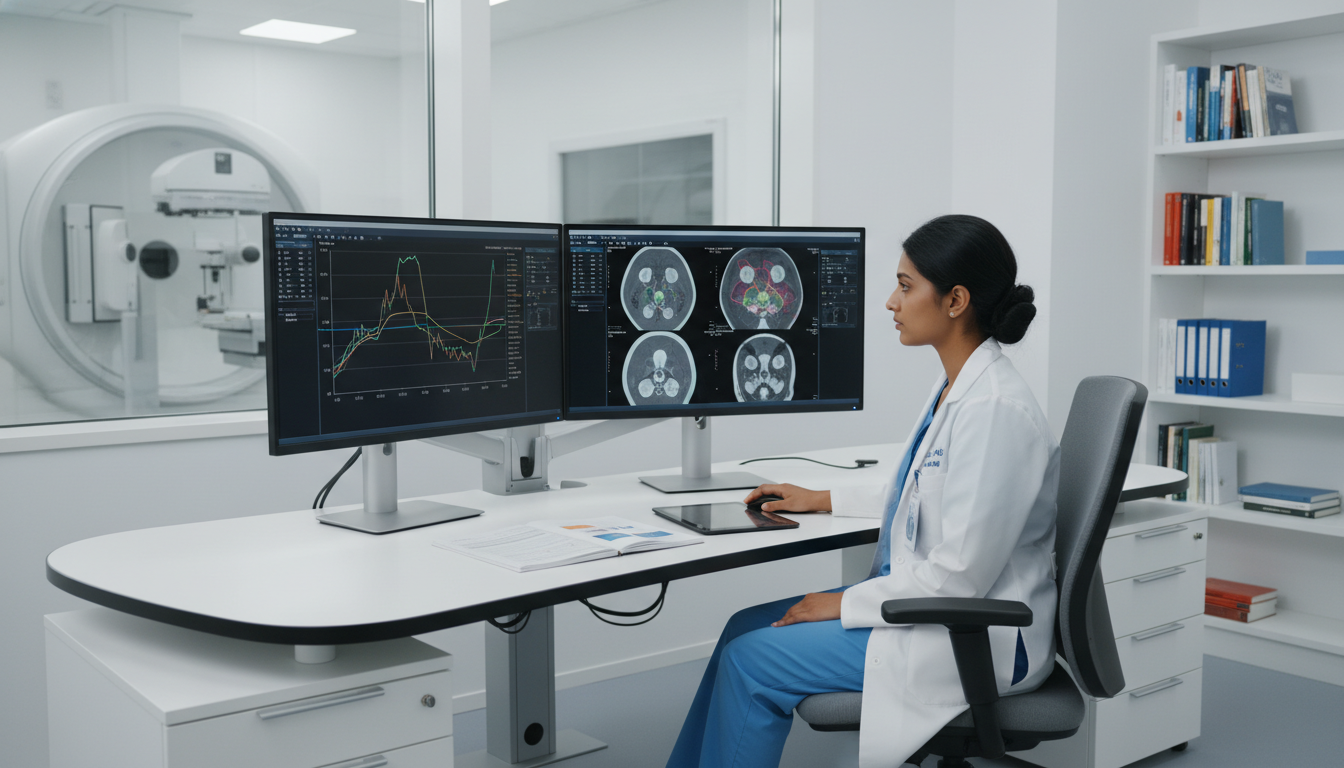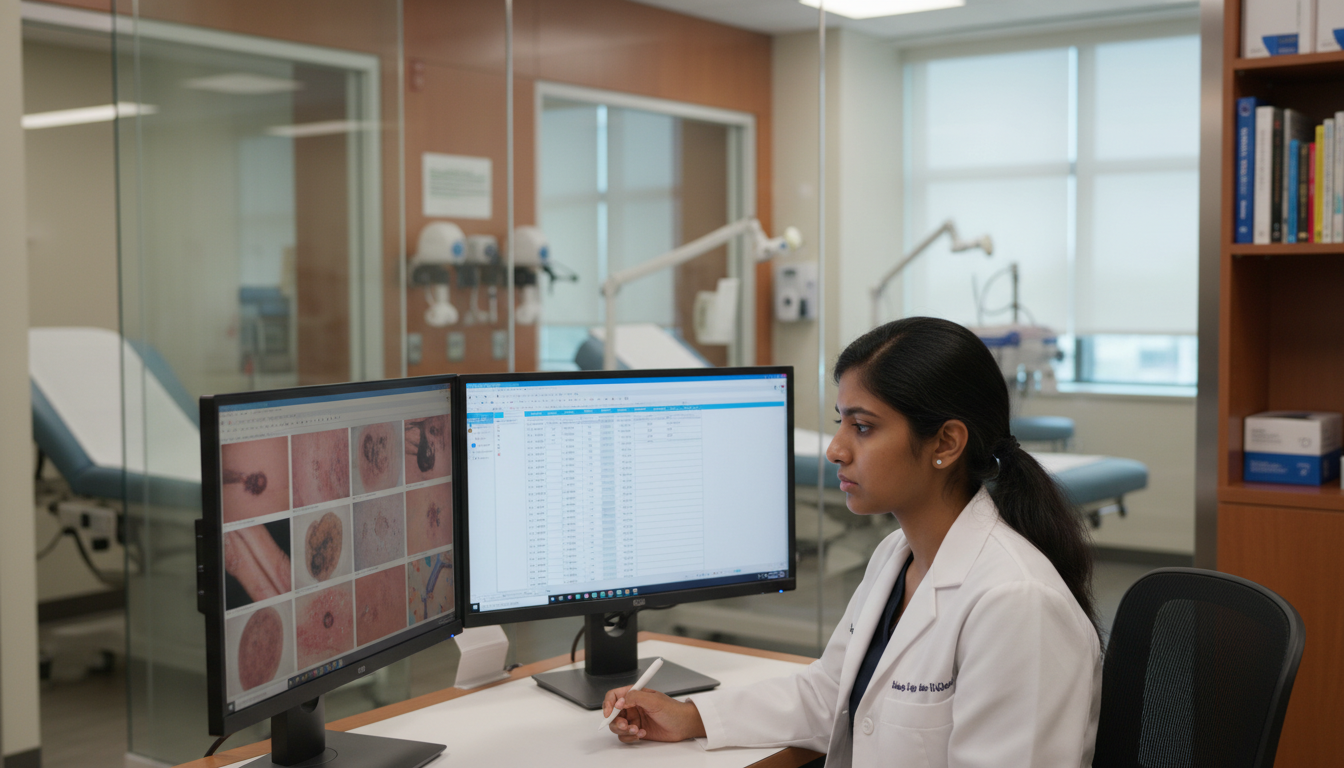
Understanding Research During Pathology Residency as an IMG
For an international medical graduate (IMG) in pathology, “doing research during residency” is no longer optional—it is a strategic necessity. Whether you aim for an academic residency track, a competitive fellowship (hematopathology, molecular, dermpath, neuropathology, etc.), or a future in academic medicine, research can dramatically shape your trajectory.
This IMG residency guide will walk you through:
- Why research matters in pathology residency
- How to realistically integrate research into a busy training schedule
- Practical steps to start and complete resident research projects
- How to leverage research for the pathology match and post-residency careers
All with a specific focus on challenges and opportunities unique to international medical graduates.
Why Research Matters for Pathology Residents (Especially IMGs)
1. Research and the Pathology Match
If you are still planning for the pathology match, research experience strongly strengthens your application, particularly for academic programs. Program directors often see research as:
- Evidence of intellectual curiosity
- Ability to complete long-term projects
- Familiarity with academic culture and scholarly communication
For an IMG, research may help compensate for:
- Older graduation year (YOG)
- Limited U.S. clinical experience
- Less familiarity with the U.S. health system
Even if you already matched into pathology, understanding this helps you frame your goals: your residency research will support fellowship applications and junior faculty positions in the same way.
2. Why Research Is So Central in Pathology
Pathology as a specialty is deeply intertwined with:
- Translational research – connecting bench to bedside
- Molecular diagnostics and genomics
- AI and digital pathology
- Quality improvement and laboratory management
Pathologists generate and interpret data. Being able to ask questions of that data and answer them using formal research methods is a core academic pathology skill.
For IMGs, research during residency can lead to:
- Co-authorship on manuscripts and book chapters
- National conference presentations (e.g., USCAP, CAP, ASCP)
- Early networking with leaders in subspecialties of interest
- Credentials that distinguish you in competitive fellowships
3. Unique Value of IMGs in Pathology Research
As an international medical graduate, you may bring:
- Exposure to different disease patterns (e.g., infectious diseases, tropical pathology)
- Experience with resource-limited settings, useful for cost-effectiveness or implementation research
- Multilingual ability, useful for international collaborations or systematic reviews including non-English sources
Use these as strengths when designing and choosing research projects.
Types of Research Opportunities for Pathology Residents
Not all research requires a PhD or advanced statistics. Understanding the menu of options will help you start something feasible, especially within the time constraints of residency.
1. Clinical and Translational Research
These projects often emerge directly from daily sign-out work.
Examples:
- Correlation between histologic features and patient outcomes (e.g., grading or staging systems)
- Validation of a new immunohistochemical stain or molecular assay
- Study of interobserver variability among pathologists
Why it’s good for IMGs:
- Uses real cases from your institution
- Builds your credibility as a future subspecialist
- Often directly supported by attendings with active labs
2. Retrospective Chart/Case Reviews
This is the most common and often the most feasible during residency.
Examples:
- Ten-year review of a rare tumor type in your institution
- Analysis of misdiagnosed or reclassified cases (e.g., re-review using updated WHO criteria)
- Outcomes of patients with specific biomarkers or molecular signatures
Advantages:
- Uses existing data—no prospective patient recruitment needed
- Often exempt or expedited IRB review
- Good entry point for IMGs with limited prior research experience
3. Quality Improvement (QI) and Laboratory Management Projects
Residency programs increasingly encourage QI and safety projects.
Examples:
- Reducing specimen labeling errors in the gross room
- Improving turnaround times for urgent frozen sections
- Implementing a synoptic reporting template and measuring adherence
These can often be converted into publishable research, especially if you have clear pre- and post-intervention data.
4. Case Reports and Case Series
Case-based publications are often an IMG’s first entry into pathology research.
Examples:
- Unusually rare tumor or infectious process
- New pattern of immunohistochemical staining
- Unexpected adverse reaction to a pathology-related procedure or test
Tips:
- Prioritize novelty and teaching value
- Discuss with your attending early—many institutions have guidance on which cases are worth writing up
5. Basic Science or Bench Research
Some pathology departments have extensive wet-lab research, especially in cancer biology, immunology, and genomics.
As a resident, basic science research is more realistic if:
- You have protected research time (e.g., a formal academic residency track)
- You are in a research-heavy institution
- You are considering a research-focused career or a physician–scientist path
It usually requires:
- Longer time commitment
- Training in lab techniques and experimental design
- Understanding that publications may take more time to generate
6. Educational Research
Pathology residents often contribute to teaching medical students and other learners.
Examples:
- Evaluating a new digital pathology teaching module
- Comparing in-person vs virtual slide teaching outcomes
- Assessing how residents learn grossing best (checklists vs videos vs direct supervision)
Educational research is often overlooked but can be highly publishable and impactful.

How to Get Started: Step‑by‑Step Strategy for IMGs
Step 1: Choose the Right Environment (During Application and Match)
If you are still applying or early in your residency, research-friendly programs often have:
- Faculty with ongoing funded research (check department websites and PubMed)
- A track record of resident publications and conference abstracts
- Optional or formal research tracks or dedicated research months
- Departmental biostatistics or research support
When interviewing, ask specific questions:
- “How many residents present at USCAP or CAP each year?”
- “Is there protected time for resident research projects?”
- “Do residents usually appear as first authors?”
Even if you’re already in a less research-intensive program, individual attendings may still be active scholars—identify them early.
Step 2: Identify Mentors and Build a Research Team
Strong mentorship is critical, especially if you trained abroad and are learning the U.S. research culture.
Look for mentors who:
- Are consistently publishing (check their recent PubMed activity)
- Have a history of including residents as co-authors
- Are responsive and willing to meet regularly
- Have research in areas that genuinely interest you (e.g., GI, heme, molecular)
Create a “core team”:
- Primary faculty mentor – content expert and institutional guide
- Possibly a co-mentor – methodologist, statistician, or another subspecialist
- Senior residents or fellows – recent experience with feasibility and workflow
As an IMG, proactively schedule a short meeting to introduce yourself and express interest:
“My long-term goal is to work in academic hematopathology. I’m very interested in starting small research projects early in residency. Could I help with an ongoing study or start something with your guidance?”
Step 3: Start Small but Aim for Completion
For IMGs transitioning to a new system, it’s better to complete a manageable project than to start an overly ambitious one and never finish.
Early-first or second-year resident projects:
- Single-case reports
- Small case series (10–20 cases)
- Literature reviews with an attending
- Simple QI projects in grossing or cytology
Intermediate projects:
- Retrospective chart reviews involving 50–200 patients
- Multi-institutional collaborations if your mentor has the network
- Studies linking pathology features to clinical outcomes
Advanced/senior resident projects:
- Prospective cohorts
- Algorithm or AI model development using digital slides
- Translational projects with tissue banks and molecular data
Step 4: Understand the IRB and Institutional Requirements
As an IMG, navigating the Institutional Review Board (IRB) process may be unfamiliar.
Key points:
- Most retrospective chart reviews require IRB approval or at least an exemption. Do not start collecting identifiable data without approval.
- Case reports may be exempt, but some institutions still require documentation that they are non-human-subjects research.
- Your mentor and department research coordinator can guide you.
Actionable steps:
- Complete mandatory research ethics / human subjects training (e.g., CITI Program) early in PGY-1.
- Ask your mentor for sample IRB applications from previous residents.
- Save templates for data collection sheets that match your IRB protocol.
Step 5: Plan Your Time Around Clinical Duties
Residency is demanding, especially at the start. Successful IMGs use structure:
- Set weekly micro-goals:
- Week 1: finalize research question
- Week 2: complete literature search
- Week 3–4: draft IRB application
- Use low-call, low-rotation-intensity months (e.g., some CP months) to push projects forward.
- Block 2–3 hours per week specifically for research, just like you would for studying.
Time-saving tips:
- Use citation managers (Zotero, EndNote, Mendeley).
- Draft parts of your future paper while working on the project (Introduction, Methods).
- Keep a running log of what you’ve done and what remains—this helps when your schedule changes.
Designing Strong Resident Research Projects in Pathology
1. Formulating a Research Question
Use the FINER criteria: Feasible, Interesting, Novel, Ethical, Relevant.
For example, you might start with:
“Does the use of immunohistochemistry panel X improve diagnostic accuracy for small round blue cell tumors in children in our institution?”
Check:
- Feasible: Do you have enough cases and access to pathology archives?
- Novel: Quick PubMed search to see what’s already been done.
- Relevant: Would this change practice or education in your department?
2. Choosing Appropriate Methods
Many pathology resident projects rely on:
- Descriptive statistics (counts, percentages)
- Simple comparative tests (chi-square, t-tests)
- Interobserver agreement (kappa statistics) for diagnostic categories
- Outcomes analysis (e.g., Kaplan–Meier curves), often with help from a statistician
As an IMG, don’t let limited prior statistics exposure deter you. Use your resources:
- Biostatistics consultation services at your institution
- Online courses (Coursera, edX) on basic biostatistics & R/SPSS
- Your mentor’s existing analytic frameworks from prior projects
3. Data Collection and Management
Make this as organized as possible from day one:
- Use secure, IRB-approved platforms (REDCap, institution-approved Excel).
- Define variables clearly: diagnosis, age, sex, immunostains, outcomes, etc.
- Create a standardized data dictionary to avoid confusion.
For IMGs used to different formats of charts and pathology reports, ask:
- “Can I see how previous residents structured their data sheets?”
- “Which report fields are considered reliable for research in this EMR?”
4. Writing Abstracts and Manuscripts
Manuscripts in pathology typically follow IMRaD: Introduction, Methods, Results, Discussion.
Role of the resident:
- Draft the Introduction and Methods early.
- Work closely with your mentor for Results and Discussion—especially interpretation.
- Follow journal author guidelines for structure, word limits, and figure formatting.
As an IMG, you might worry about scientific English. Solutions:
- Use your mentor’s prior papers as linguistic templates.
- Ask experienced co-authors to help refine phrasing.
- Some departments offer scientific writing workshops or editing support.
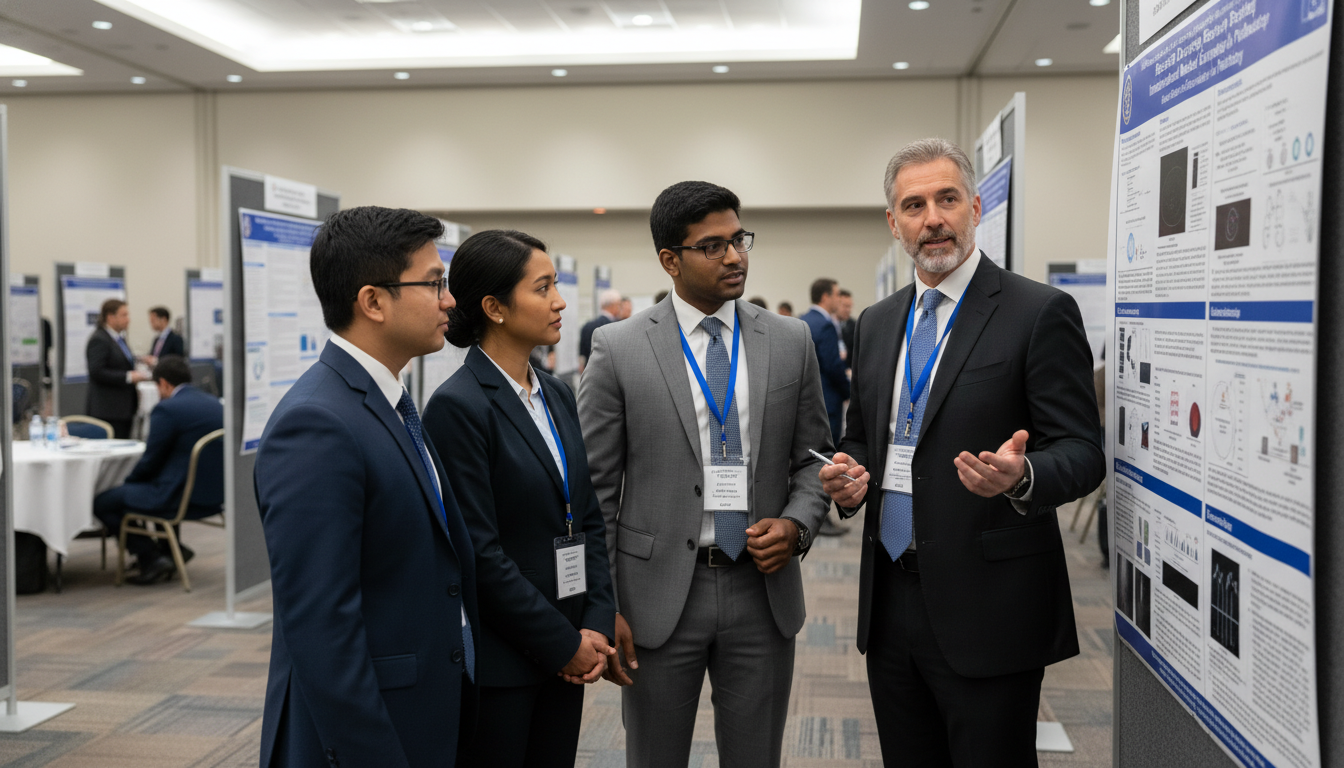
5. Presenting at Conferences
Key pathology meetings:
- USCAP (United States and Canadian Academy of Pathology) – highly regarded for anatomic pathology research
- CAP (College of American Pathologists) – practice-focused research and QI
- ASCP (American Society for Clinical Pathology) – education and laboratory science
- Subspecialty meetings (e.g., hematopathology, cytology, neuropathology)
Benefits for IMGs:
- Visibility to fellowship directors
- Networking with potential future employers and collaborators
- Opportunities for awards, travel grants, or recognition
Plan ahead:
- Abstract deadlines are often 6–9 months before the conference.
- Ask your mentor which meeting is most appropriate for your project.
- Use poster or platform presentations to clarify your work before journal submission.
Balancing Research With Career Goals as an IMG
1. Research for Academic vs Community Careers
Not every pathologist will become a full-time researcher, but research still benefits all career trajectories.
Academic career / academic residency track:
- Aim for multiple first-author publications during residency.
- Seek extended research blocks or an extra research year if available.
- Get involved in multi-center or grant-funded studies.
Community practice:
- A few solid projects still demonstrate critical thinking and quality improvement skills.
- QI-oriented work (turnaround time, error reduction) is especially relevant.
- Educational research can be helpful if you plan to teach residents or students in community-based programs.
2. Building a Research Portfolio for Fellowships
Competitive fellowships (e.g., hematopathology, molecular, dermpath, GI, neuropathology) often receive many IMG applicants. Research can differentiate you.
Strategies:
- Focus projects in your intended subspecialty as early as possible.
- Strive to have at least one major project (abstract + manuscript) directly related to that subspecialty.
- Request strong letters from mentors that highlight your analytical abilities, productivity, and independence.
When applying:
- Prepare a 1–2 page CV section specifically listing resident research projects, abstracts, and publications.
- Be ready to describe your role in each project during interviews (idea, data collection, analysis, writing).
3. Overcoming Common IMG Challenges in Research
1. Limited early exposure to research methods
Solution:
- Take short, structured courses on research methods and statistics.
- Shadow senior residents or fellows on their projects.
2. Visa and time constraints
Solution:
- Choose projects with realistic timelines (e.g., retrospective reviews that can be done in 6–12 months).
- Avoid projects that depend heavily on long-term prospective data if you are unsure of timelines.
3. Cultural and communication differences
Solution:
- Observe how your mentors present data, discuss limitations, and handle criticism.
- Practice presentations with peers before conferences or departmental talks.
4. Self-doubt (“Impostor syndrome”)
Solution:
- Start with small wins: finish a case report, then a small series, and build from there.
- Remember that your international background brings genuine, unique value to certain research areas.
4. Using Research Skills Beyond Publications
Even if you later choose a clinically-heavy role, research skills help you:
- Critically evaluate new diagnostic tests and literature
- Lead local QI initiatives and lab process improvements
- Teach evidence-based pathology to students and residents
- Advocate for diagnostic policies based on real data
For IMGs who may eventually return to their home countries or work in resource-limited settings, research training enables you to:
- Conduct implementation research to adapt high-income country practices to your setting
- Generate local evidence to support better diagnostics and policies
- Collaborate internationally on issues like infectious disease pathology and global oncology
Practical Tips to Maximize Your Research Output in Residency
- Start early – ideally PGY-1. Many IMGs wait until PGY-2 or later, then feel rushed.
- Aim for 1–2 projects per year, with at least one reaching publication by the time you apply for fellowships.
- Reuse your work smartly:
- Abstract → poster → manuscript
- QI project → internal talk → conference presentation
- Track everything: keep a document with your project titles, mentors, project stage, and target journals.
- Say “no” strategically: avoid taking on too many minor, low-impact side projects that distract from one or two strong ones.
- Ask for authorship expectations upfront so there is no confusion later.
- Network at conferences and through email—many international collaborations begin with a simple conversation at your poster.
Frequently Asked Questions (FAQ)
1. How many research projects should I aim for during pathology residency as an IMG?
Quality is more important than sheer quantity. A reasonable target:
- 2–4 meaningful projects over four years
- Ideally 1–2 first-author publications plus several abstracts or co-authored papers
For a heavily academic path, aim higher, but only if you can maintain quality and actually complete projects.
2. Can I succeed in pathology without doing research during residency?
Yes, particularly in community-based practice. However, as an IMG, research:
- Strengthens your profile for residency and fellowship applications
- Improves your critical appraisal and analytic skills
- Increases your career flexibility, especially if you later decide to pursue academic roles
Even one or two solid projects can be very beneficial.
3. I have very little research experience from medical school. Is it too late to start in residency?
No. Many IMGs begin serious research for the first time during residency. The key is to:
- Start with feasible projects like case series or small retrospective reviews
- Find mentors who are willing to teach methodology step-by-step
- Build skills gradually in literature review, data collection, and scientific writing
Your first project will feel challenging; each subsequent one becomes easier and more efficient.
4. How do I balance preparation for boards, clinical responsibilities, and research?
Use deliberate time management:
- Prioritize clinical competence and board prep—these remain your foundation.
- Set small, scheduled research blocks (e.g., 2–3 hours weekly).
- Use less intense rotations and vacation-adjacent weeks to push research milestones (IRB submission, data completion, drafting manuscripts).
- Communicate with your mentor about your schedule; most understand that clinical duties come first.
Research during residency is one of the most powerful tools you have as an international medical graduate in pathology to shape your future. With strategic planning, strong mentorship, and manageable, well-designed projects, you can build a research portfolio that supports a successful pathology career—whether in academic medicine, community practice, or global health.