
The belief that bench research is the “gold standard” for premed and medical student research is outdated—and clinging to it is quietly hurting a lot of applicants.
The Myth: Bench or Bust
Walk through any premed advising office or med school forum and you’ll hear the same script:
“If you want to be competitive, you need bench research.”
“Clinical research is fine, but basic science is more impressive.”
“Top programs care about pipettes, not REDCap.”
That story is at least 15–20 years old.
(See also: Premed Research Hype: What Actually Impresses Adcoms? for more details.)
Here’s the uncomfortable reality: for a growing number of medical schools and residencies, clinically focused and data-driven research is at least as valuable as wet lab work—often more so for the career paths most students actually end up in.
Not because program directors suddenly stopped caring about science.
Because the kind of science that changes patient care, guidelines, and health systems has shifted toward:
- Big clinical datasets
- Outcomes research
- Implementation science
- Quality improvement (QI) with real metrics
- AI / machine learning on clinical data
- Pragmatic trials and registry studies
Meanwhile, most undergrad and early medical student bench projects are tiny slivers of a postdoc’s work that never see daylight in a meaningful way.
Let’s dismantle the myth and get precise about where bench is still king, where it is not, and how clinical data research has caught up—and in many arenas, passed it.
What Admissions and PDs Actually Care About (Not What People Repeat)
Programs do not give you bonus points because you held a pipette instead of writing code in R.
They care about:
Evidence you can think scientifically
- Can you form a question, design a method, understand bias, interpret results?
- Did you understand why you did what you did, or did you just “help out in the lab”?
Sustained engagement and ownership
- Did you stick with a project long enough to see something through?
- Do you own some part of the work—analysis, protocol design, data collection, a figure in the final paper?
Scholarly output
- Abstracts, posters, manuscripts, conference presentations, even well-built QI projects with real outcome measures.
- No one is impressed by “I did 2 years of Western blots” with no poster, no paper, and no clear takeaway.
Fit with your stated career direction
- Applying neurosurgery and obsessed with ion channel physiology? Bench makes sense.
- Applying EM with an interest in health systems and crowding? Clinical operations data and QI are directly relevant.
Now look at what kind of research most reliably produces these outcomes for students.
A large undergrad at a big state school gets a slot in a molecular biology lab. They plate cells, run gels, do what they are told. Three years later: no paper, maybe a middle-author abstract the PI presented.
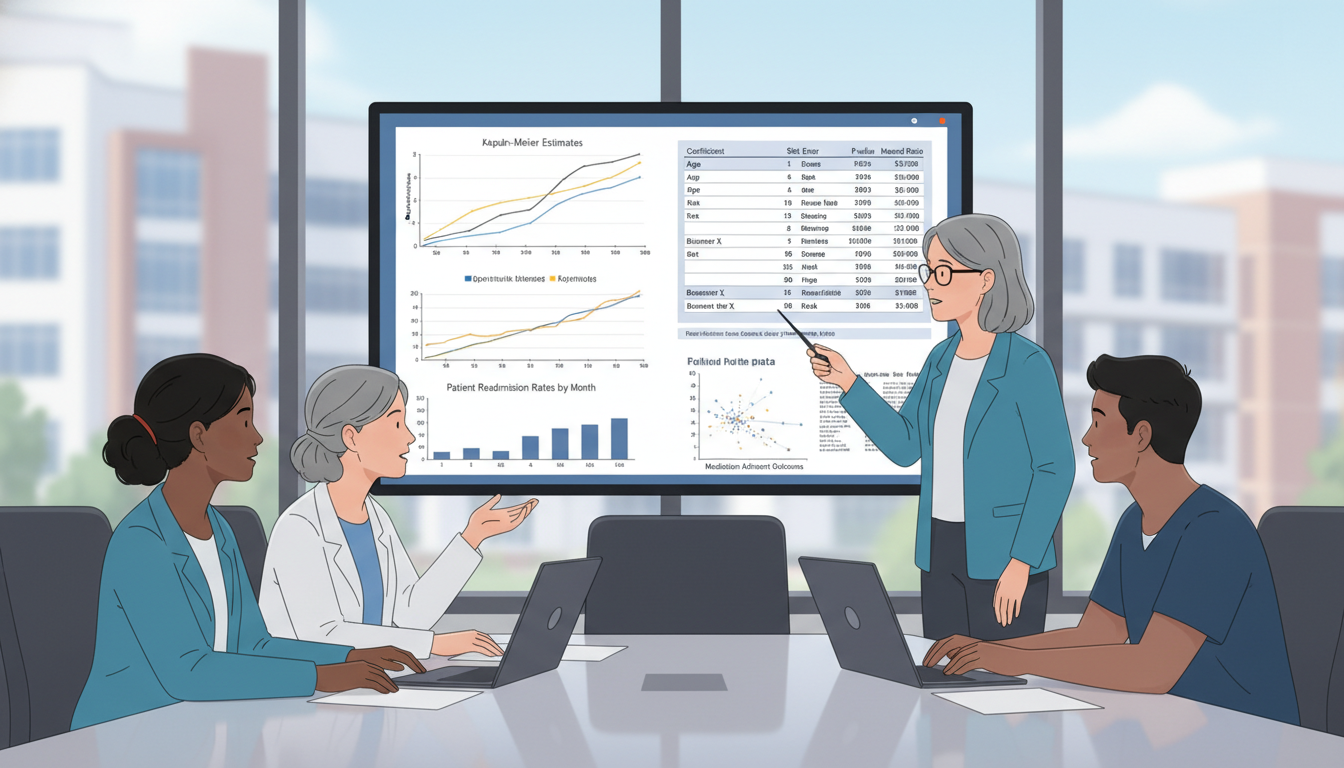
Contrast that with a med student working with an outcomes researcher on heart failure readmissions using an institutional database. Six months later: a first-author poster at ACC and a draft manuscript under review.
Which one shows scientific thinking, ownership, and output?
Which one is easier to talk about in an interview with actual insight?
That’s why the blanket “bench > clinical” hierarchy has cracked.
Where Bench Research Is Still King (And Where It Is Not)
Let’s be honest: there are contexts where basic science still dominates.
Bench is still king if:
You’re aiming for a physician-scientist (MD/PhD, PSTP) career
- MSTP programs and serious research residencies (e.g., internal medicine PSTPs at UCSF, Brigham, Penn) want proof you can live in the basic/translational world.
- They look for: wet lab experience, mechanistic thinking, maybe a bench-focused thesis or a strong letter from a basic science PI.
You’re targeting certain research-heavy fellowships
- For example, someone who wants to do structural biology of ion channels in cardiology.
- Or an oncologist-in-training invested in tumor immunology at the single-cell level.
You want to apply for NIH-style early-career grants in basic science
- K08-type paths still care deeply about your track record in mechanistic work.
In those worlds, saying “I did retrospective chart reviews on appendicitis outcomes” is not going to cut it.
But here’s the critical flip side.
Bench is not automatically king if:
You want to be a strong clinical academic in internal medicine, EM, pediatrics, or psychiatry
- Outcomes research, trial design, health services research, and QI are absolutely central.
- NIH K23-type paths are built around clinical and translational projects, not necessarily wet lab.
You’re targeting competitive but clinically focused specialties
- Dermatology, EM, ophthalmology, radiology, anesthesiology, even ortho in many programs: they care that you can produce relevant scholarship.
- A well-designed clinical outcomes study in that field often beats “unrelated bench work from undergrad” by a mile.
You want impact on practice
- New guidelines in cardiology, oncology, and critical care often arise from large clinical trials and observational cohorts, not cell lines.
Data from NRMP Program Director surveys back this up: what PDs rate highly is “any research experience” and “demonstrated scholarly activity”—they rarely distinguish bench versus clinical in the scoring.
The old hierarchy hangs on mostly in student gossip and old-school advising, not in how modern academic medicine actually functions.
Why Clinical Data Has Caught Up (And Often Pulled Ahead)
Clinical and data-driven research is no longer the “lesser” option. Three shifts matter here.
1. The scale and sophistication of clinical data exploded
Electronic health records, claims databases, registries, and big collaborative networks (e.g., PCORnet, N3C) have changed the game.
You’re not just hand-counting charts anymore.
Students can work on projects that:
- Use tens of thousands of patients to examine real-world effectiveness
- Employ advanced statistics (propensity matching, survival analysis, mixed models)
- Analyze equity: differential outcomes by race, language, insurance status
- Feed into guidelines or quality initiatives at their institution
You’re learning:
- Study design
- Confounding and bias
- Data wrangling
- Interpretation of effect sizes and confidence intervals
Those skills are directly transferable to how you will read NEJM and JAMA papers for the rest of your career.
2. Translational and health services research became core to “serious” academia
Look at faculty job postings in internal medicine, EM, or pediatrics at academic centers. Many are explicitly seeking:
- “Clinician-investigators with expertise in health services research”
- “Faculty with interest in implementation science, health equity, or pragmatic trials”
They’re not shy about it.
High-impact papers in JAMA, Annals, and BMJ are disproportionately:
- Randomized or quasi-experimental interventions in real-world care
- Policy evaluations using large datasets
- Implementation and QI work with measurable outcomes
For a student, that means a well-executed clinical project can land in recognizable journals and be discussed in actual conferences your interviewers attend.
3. Students can own more in clinical projects than at the bench
Ownership is underrated.
In many bench labs, undergrads/early med students are technicians.
They follow protocols developed by a grad student. They almost never:
- Design the experimental question
- Choose outcome measures
- Write the first draft of the manuscript
In clinical and data research, a motivated student can:
- Propose the question (“What’s our 30-day readmission rate after X?”)
- Help define inclusion/exclusion criteria
- Build the REDCap instrument
- Run the primary analysis under supervision
- Draft the abstract and manuscript
That’s why you see med students as first authors on clinical papers far more often than on basic science work.

The Real Question You Should Ask: What Story Are You Building?
You’re not just collecting “impressive” checkboxes. You’re building a coherent narrative.
Bench vs clinical is the wrong axis.
The right axis is: Does my research match who I say I want to become?
Example 1: The would-be cardiologist
Version A:
- 2 years in a Drosophila genetics lab in undergrad (no cardiology connection)
- Role: cleaning fly vials, genotyping, no papers
Version B:
- 1.5 years in a cardiology outcomes group
- Projects on heart failure readmissions and disparities in PCI use
- One national conference poster, one submitted manuscript
- Comfortable discussing hazard ratios, Kaplan–Meier curves, risk adjustment
For most cardiology fellowship directors, Version B is clearly stronger, even though Version A is “bench.”
Example 2: The MD/PhD aspirant
Here the equation changes.
Version A:
- 2 years in an immunology lab with a well-known PI
- Co-author on a JCI paper, strong letter describing independent thinking
- Clear understanding of signaling pathways, experimental controls, limitations
Version B:
- Several retrospective clinical projects in rheumatology
- Multiple abstracts, maybe a paper
Now Version A is the better fit, because the career story explicitly involves mechanistic lab work.
The mistake is assuming everyone must optimize for the MD/PhD version of “impressive research.” Most of you are not headed there.
Clinical Data Research Done Poorly vs Done Well
Not all clinical research is equal. A lot of the bad reputation comes from weak “chart review for the sake of chart review” projects.
Clinical research done poorly looks like:
- Vague questions (“let’s just see what we find”)
- No statistical plan beyond “we’ll run some t-tests”
- Tiny, underpowered samples
- No attention to bias, missing data, or confounding
- Outcomes no one cares about, with no link to actual practice change
That’s just as unimpressive as pouring buffers in a lab for two years with no clue why.
Clinical research done well looks like:
- A specific, clinically relevant question (e.g., “Does early palliative care in advanced HF reduce ICU days in the last 6 months of life?”)
- Thoughtful design (inclusion/exclusion, clear primary outcome)
- Predefined analysis plan
- Sensitivity analyses to check robustness
- Connection to guidelines, policy, or institutional practice
When you can walk into an interview and clearly explain:
- The question
- Why it matters
- How you designed the study
- What the limitations are
- And what you’d do next
You’re demonstrating scientific maturity. That’s what impresses serious physicians, not whether you handled RNA or SQL.
How to Choose Wisely Based on Your Phase and Goals
As a premed
Your constraints: limited time, limited access to major labs, often no stats training.
Bench can be fine if:
- You truly enjoy it
- You can get a meaningful letter
- There’s a realistic chance of a poster or paper
But don’t contort your life for a marginal bench role just because Reddit insists.
If you can instead join a clinical data or public health project with clear mentorship and real output, that’s often a better move.
What med schools want from you:
- Evidence you can stick with something intellectually challenging
- Some exposure to how science actually works
- Reflection on your role and what you learned
You don’t need to cure cancer by age 21.
As a medical student
Your decisions start to shape your future trajectory more directly.
Ask yourself:
- Do I see my future self pipetting at a bench?
- Do I get more energized reading NEJM original clinical articles or Cell/Science mechanistic papers?
- Which mentors do I actually connect with—basic scientists or clinician-educators/investigators?
Then align.
- If you lean bench: commit deeply, not shallowly. Get into a lab where students publish.
- If you lean clinical: prioritize projects with strong methods and mentorship in your field of interest.
For competitive residencies, what matters is substantial scholarship, not a specific flavor of research.
Neurosurgery? Ortho? Derm? They care that you’ve engaged with the academic core of their field. That can be:
- Clinical outcomes
- Imaging studies
- Health services research
- Trials
- Or yes, bench, if it’s relevant and serious
The hierarchy is relevance + rigor > bench vs clinical.
The Payoff: Thinking Like the Kind of Doctor You’ll Actually Be
Most physicians will:
- Read clinical literature weekly
- Evaluate relative risks, confidence intervals, subgroup analyses
- Interpret big trials and meta-analyses
- Participate in QI projects at their hospitals
They will not:
- Design CRISPR constructs
- Optimize antibody concentrations
- Troubleshoot cell culture contamination
Bench research is vital to medicine as a whole. But for the skills you personally need as a clinician, well-done clinical and data-oriented research maps directly onto your lifelong work.
So if you genuinely love basic science, excellent—pursue it seriously.
If you don’t, stop torturing yourself because someone told you “bench looks better.”
Here’s what the data and the modern reality actually show:
- Bench is not inherently superior; relevance, rigor, and ownership matter far more.
- Clinical and data-driven research now sit at the center of how medicine changes—and they offer students real chances for impact and authorship.
- Your research should match your future story: physician-scientist, clinician-investigator, or practicing clinician who understands evidence, not someone else’s outdated hierarchy.