Why Networking Matters in Medical Research and Career Development
Networking in medicine is not just about collecting business cards or LinkedIn connections. In the world of Medical Research and academic medicine, your professional relationships can profoundly shape your training, your publication record, and your long-term Career Development.
Whether you’re a premed student, medical student, resident, or early-career physician, learning how to strategically network for research will help you:
- Find mentors who can guide your Professional Growth
- Join productive research teams
- Secure letters of recommendation and references
- Hear about hidden research and job opportunities
- Stay on the cutting edge of clinical and scientific advances
In medicine, much of what “happens” in careers—projects, fellowships, leadership roles—arises through informal connections, trusted recommendations, and reputation. Building a strong network is not optional; it’s a core skill for anyone who wants to contribute meaningfully to the advancement of medical science.
The Strategic Value of Networking in Medical Research
1. Creating Opportunities for Collaboration
Collaboration is the backbone of high-impact Medical Research. No single person has all the skills required to design a study, collect data, perform advanced statistics, write the manuscript, manage IRB issues, and submit grants.
Effective networking helps you:
- Identify faculty whose research interests match yours (e.g., health disparities, oncology, cardiology, AI in medicine)
- Join ongoing studies as a co-investigator, data analyst, or manuscript writer
- Find collaborators with complementary skills (e.g., someone strong in statistics, someone with access to specific patient populations, someone with lab resources)
- Co-author abstracts, posters, and peer-reviewed publications
For example, a medical student interested in sepsis outcomes might meet a critical care fellow at a journal club. A short conversation reveals that the fellow has a dataset but limited time to analyze it. The student offers to help with data organization and literature review. That simple connection can evolve into a first-author paper and multiple follow-up projects.
2. Gaining Access to Expertise and Insider Knowledge
Medical research can be complex, especially when you are just getting started. Networking puts you in touch with people who have already navigated:
- IRB submissions and regulatory hurdles
- NIH and foundation grant applications
- Selecting appropriate study designs (retrospective vs. prospective, qualitative vs. quantitative)
- Choosing journals and responding effectively to reviewer comments
When you have a network of experienced researchers, you can ask focused questions such as:
- “Is this project feasible for a student within 6–12 months?”
- “Which funding sources are realistic for this idea?”
- “How can I strengthen my methods section?”
These insights can save you months of wasted time and help you avoid common pitfalls.
3. Building Strong Mentorship Relationships
Mentorship is one of the most powerful benefits of effective Networking Strategies in medicine. A good research mentor can:
- Help you select projects that align with your career goals
- Provide feedback on abstracts, posters, manuscripts, and presentations
- Introduce you to other leaders in your field
- Write strong, specific letters of recommendation for residency, fellowships, or jobs
Networking is how most mentee–mentor relationships start: a conversation after a lecture, a thoughtful email, or being introduced by another faculty member. Over time, that relationship can turn into ongoing career guidance and sponsorship, not just one-off project advice.
4. Staying Informed and Ahead of the Curve
Medicine and science move quickly. Through networking, you:
- Hear about cutting-edge trials, new guidelines, and ongoing studies
- Learn about upcoming conferences, abstract deadlines, and workshops
- Discover institutional resources (biostatistical support, databases, simulation labs, etc.)
- Stay aware of emerging fields (e.g., digital health, AI in diagnostics, implementation science)
Being connected means you’re not just reacting to published articles—you’re aware of what’s coming next, and you can position yourself to participate.
5. Opening Doors to Jobs, Fellowships, and Leadership Roles
Many research positions, scholarships, and early faculty roles are never widely advertised. Instead, they are filled through:
- Word-of-mouth recommendations
- Faculty asking, “Do you know a good resident or student for this position?”
- Former collaborators reaching out with new opportunities
If you’ve demonstrated reliability, curiosity, and professionalism in your research network, you’re much more likely to be tapped for opportunities that could significantly accelerate your Professional Growth.
Laying the Groundwork: Clarifying Your Networking Goals
Before you start sending emails or attending events, spend time clarifying what you actually want from your networking efforts. This will make your outreach more focused and less overwhelming.
Define Your Research and Career Priorities
Ask yourself:
- What fields or specialties genuinely interest me? (e.g., neurology, health policy, emergency medicine)
- Am I more drawn to clinical research, basic science, translational research, or medical education research?
- What is my primary focus right now?
- Joining any research to build experience?
- Publishing quickly for residency applications?
- Building a long-term niche in a specific area?
Your answers will influence who you should try to meet and how you should frame your conversations.
Set Specific, Realistic Networking Goals
Instead of vague goals like “network more,” set specific targets, such as:
- “Connect with two faculty doing research in cardiology this month.”
- “Attend one local research seminar weekly and introduce myself to at least one new person each time.”
- “Schedule three informational interviews over the next six weeks with people whose careers I admire.”
Clear goals help you track progress and reduce anxiety by turning networking into a series of manageable steps.
High-Impact Ways to Connect with Medical Research Professionals
1. Leverage Educational and Institutional Opportunities
Your own institution is usually the easiest and most natural place to begin networking for research.
Attend Grand Rounds, Seminars, and Journal Clubs
Most academic centers host:
- Departmental grand rounds
- Subspecialty conferences (e.g., tumor boards, cardiac conference)
- Research-in-progress meetings
- Journal clubs
Practical tips:
- Read the speaker’s bio and one recent paper beforehand.
- Arrive a few minutes early and sit near the front.
- After the talk, introduce yourself:
- “Thank you for your talk on [topic]. I’m a [med student/MS2/resident] interested in [related area]. Would it be okay if I emailed you about any projects where a trainee could help?”
A short, genuine conversation is often all it takes to start a connection.
Take Advantage of Student and Resident Research Programs
Many schools and hospitals have:
- Summer research programs
- Scholarly concentrations
- Dedicated research tracks
- Honors or distinction in research pathways
These programs don’t just provide project opportunities—they also connect you directly with research mentors, program directors, statisticians, and administrators who know where opportunities exist.
2. Maximize Conferences for Networking and Mentorship
National and regional conferences are powerful environments for Networking Strategies in medicine.
Common examples:
- American College of Physicians (ACP)
- Society for Academic Emergency Medicine (SAEM)
- American Heart Association (AHA)
- American Association for Cancer Research (AACR)
- Specialty-specific trainee research symposia
Actionable conference strategies:
Before the conference:
- Review the program and highlight sessions or posters in your area.
- Email 2–3 people you’d like to meet:
- “I’ll be attending [conference] and admired your work on [topic]. Would you have 10–15 minutes during the meeting for a brief conversation about career paths in this area?”
During the conference:
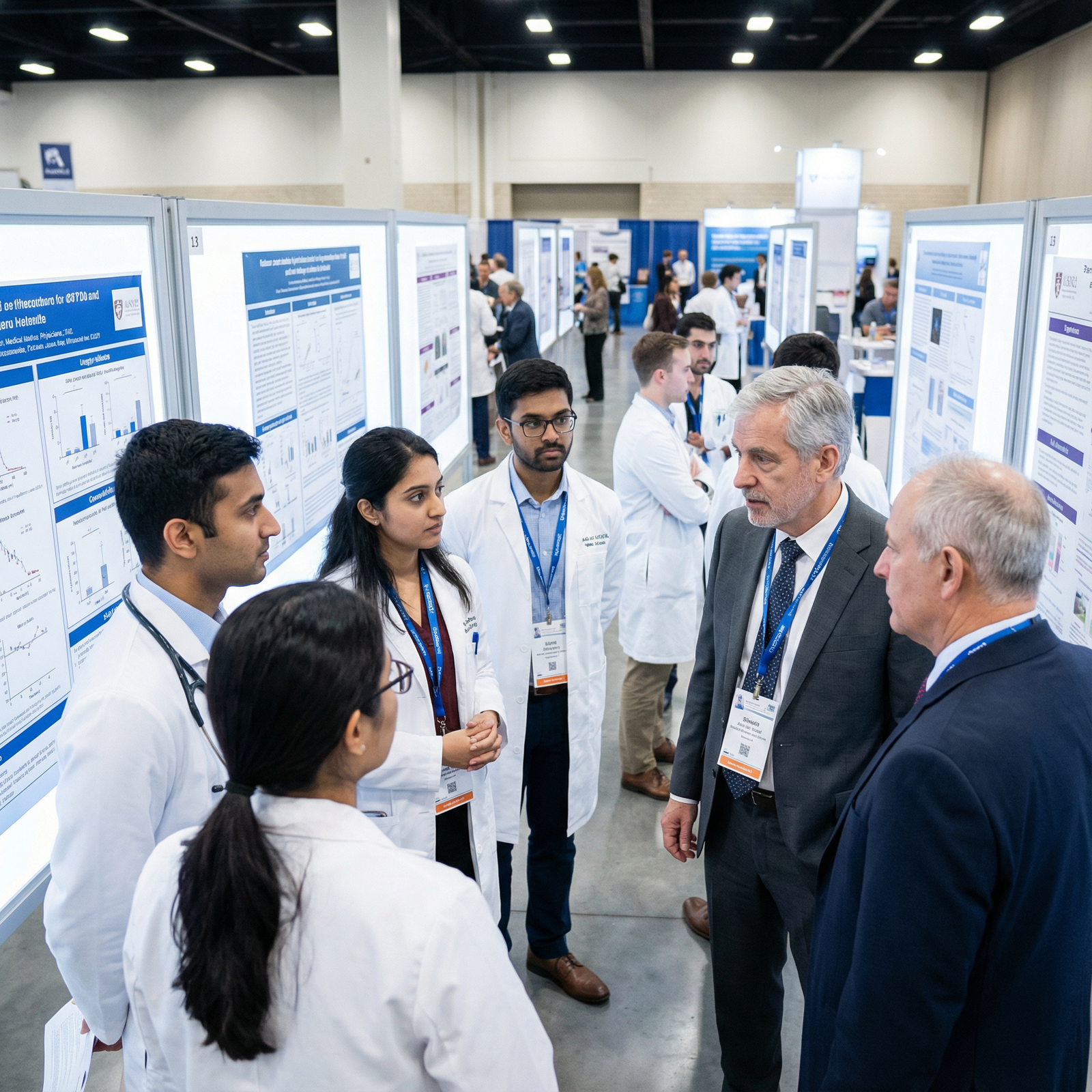
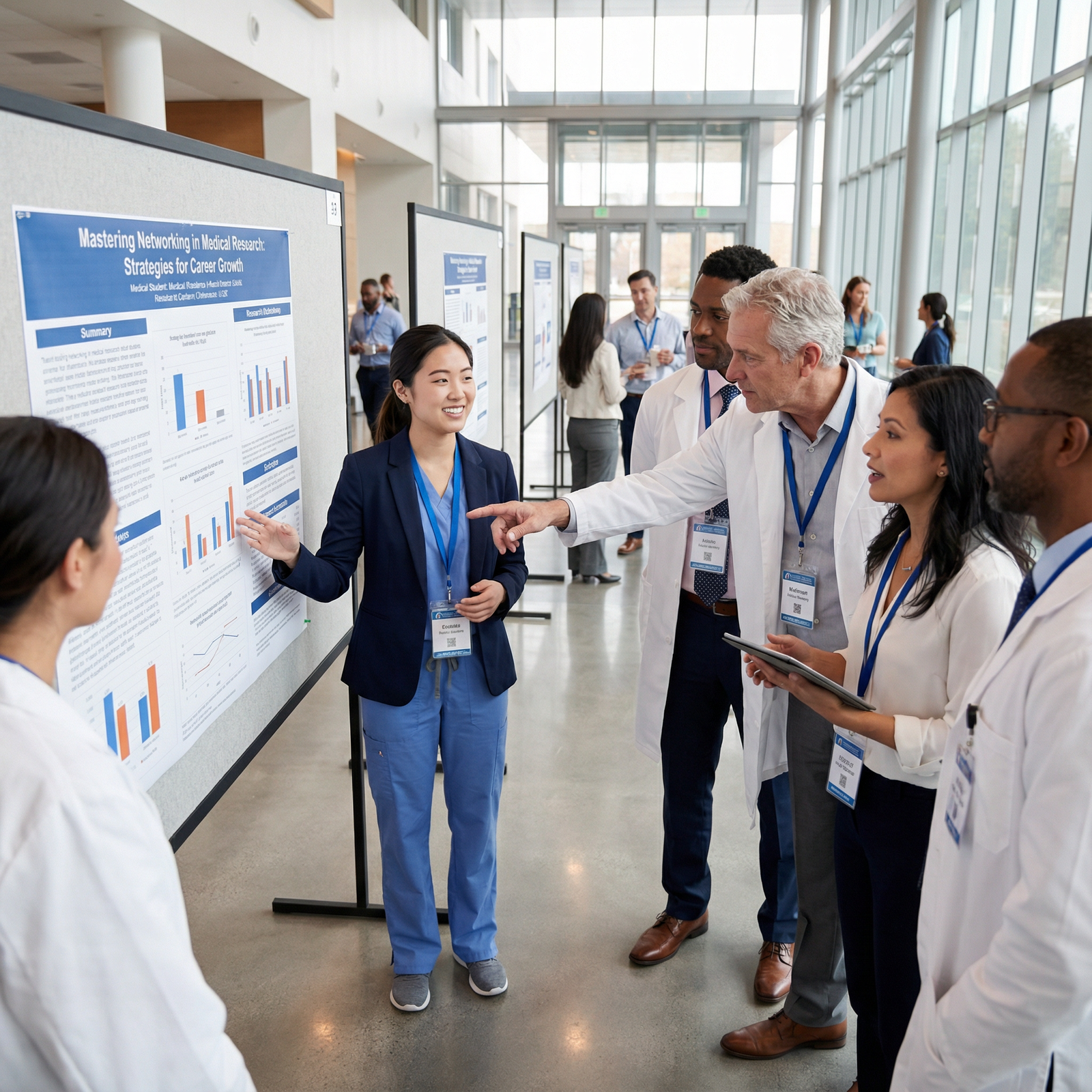
- Attend poster sessions—these are often less intimidating and more conversational.
- Ask presenters:
- “How did you get involved in this project?”
- “What advice would you give a trainee interested in this field?”
After the conference:
- Send a brief thank-you email within 48 hours, referencing something specific you discussed.
- Connect on LinkedIn or appropriate platforms and stay in touch periodically with short updates.
3. Use Online Platforms Strategically and Professionally
Digital networking is now integral to Career Development in medicine. Used wisely, it can dramatically expand your reach.
- Build a clear, professional headline (e.g., “MS3 interested in cardiology and outcomes research”)
- Include a short “About” section summarizing your interests and goals.
- List your projects, abstracts, and posters under “Experience” or “Publications.”
- When sending connection requests, always add a personal note:
- “I’m a medical student interested in [topic] and really enjoyed your paper on [x]. I’d be grateful to connect and learn more about your work.”
ResearchGate and Google Scholar
- Create a profile if you have posters, abstracts, or publications.
- Follow researchers and labs doing work you admire.
- Engage with discussions or ask methodological questions respectfully.
X (Twitter) / Academic Twitter
Many physicians and researchers are highly active on X/Twitter:
- Follow hashtags like #MedTwitter, #AcademicTwitter, #MedEd, #FOAMed, #HealthServicesResearch
- Share your conference posters or newly published work (while respecting institutional and patient privacy policies).
- Comment thoughtfully on threads related to your field—this is a way to join ongoing conversations and be visible as a serious learner.
4. Join Professional Organizations to Build Long-Term Connections
Membership in relevant organizations can be a foundation for sustained Professional Growth.
Potential organizations include:
- American Medical Association (AMA)
- American Association for the Advancement of Science (AAAS)
- Specialty-specific societies (e.g., American Academy of Neurology, American College of Surgeons)
- Regional or institutional biomedical research associations
Benefits often include:
- Discounted conference registration
- Access to trainee sections or committees
- Formal mentorship programs pairing students with senior members
- Leadership roles (e.g., student representative) that put you in direct contact with established researchers
Look specifically for “student member,” “resident member,” or “early-career member” options.
5. Conduct Informational Interviews with Intention
Informational interviews are short, structured conversations where your goal is to learn, not to immediately ask for a job or project.
How to request an informational interview:
- Send a concise, respectful email:
- Who you are
- Why you’re reaching out
- What you hope to learn
Example:
“Dear Dr. Lee,
I’m a second-year medical student at [institution] with a growing interest in health services research in oncology. I’ve read your recent work on [topic] and found it very inspiring. If you have 15–20 minutes in the next month, I’d be grateful for the chance to ask a few questions about your career path and how a student might get started in this area.”
Before the meeting:
- Read at least one or two of their recent papers.
- Prepare 5–7 questions, such as:
- “What early experiences were most important in shaping your research career?”
- “How do you advise students to choose mentors or projects?”
- “What skills should I develop now to be useful on a research team?”
End the conversation by asking:
- “Is there anyone else you think I should speak with as I explore this area?”
This can expand your network through warm introductions.
6. Engage in Collaborative and Volunteer Research Projects
If you’re early in your trajectory, be open to entry-level roles on projects:
- Data collection or chart review
- Survey administration
- Literature reviews and reference management
- Formatting figures or tables
- Assisting with IRB documents
While these tasks may seem basic, they:
- Build your reputation as reliable and detail-oriented
- Help you learn how research actually works on the ground
- Position you for greater responsibility over time, such as leading an abstract or manuscript
Be upfront about your available time and your goals (e.g., “I can commit 3–4 hours a week” or “I hope to be involved enough to eventually contribute to a manuscript”).
Maintaining and Deepening Your Professional Relationships
Initial contact is only the first step; relationship-building is where networking becomes powerful.
Thoughtful Follow-Up After Meeting Someone
Within a few days of meeting:
- Send a brief thank-you email:
- Reference something specific from your conversation
- If appropriate, attach your CV or a one-page research summary
- Suggest a clear next step if one makes sense (e.g., “I’d love to follow up in a month after I’ve read more about [topic].”)
Example:
“Dear Dr. Patel,
It was great speaking with you after grand rounds about your work in stroke outcomes. I appreciated your advice about learning basic stats and getting involved in ongoing registry projects. I’ve attached a brief CV for your reference. If you’re aware of any projects where a motivated student could help with data collection or literature review, I’d be very interested. Thank you again for your time.”
Staying Genuinely Engaged Over Time
To keep relationships active:
- Share occasional updates:
- “I wanted to share that our abstract was accepted to [conference]. Thank you again for your mentorship.”
- Send relevant articles or news:
- “I saw this paper on [topic] and thought of our discussion about [x]. Curious what you think.”
- Congratulate them on new roles, awards, or publications:
- “Congratulations on your recent paper in [journal]—the findings on [x] were fascinating.”
You don’t need constant contact; periodic, meaningful touchpoints are enough to maintain connection.
Using Social Media to Strengthen Professional Ties
With mentors or collaborators who are active online:
- Engage occasionally with their posts: like, retweet, or reply with thoughtful comments.
- Share your own learning journey (e.g., conference experiences, reflections on a new paper) while maintaining professionalism and confidentiality.
Always adhere to your institution’s social media and professionalism policies.

Real-World Examples: How Networking Translates into Outcomes
Example 1: From Conference Conversation to Long-Term Mentorship
Dr. Jane, a second-year resident, attended a national cardiology conference uncertain about her future in research. After a plenary lecture, she approached Dr. Smith, a well-known investigator in heart failure.
She introduced herself, briefly shared her interest in health disparities in cardiology, and asked if she could email Dr. Smith later. After the meeting, she followed up with a concise email and attached her CV.
Over time:
- Dr. Smith invited her to join a multi-center registry project.
- Jane took responsibility for data cleaning and a sub-analysis.
- This led to a first-author abstract, then a manuscript.
- Dr. Smith later connected her with a fellowship program director.
By initiating one conversation and following up well, Jane built a mentorship relationship that shaped her research portfolio and fellowship trajectory.
Example 2: Serendipitous Collaboration Through Local Networking
Dr. John, a medical student fascinated by regenerative medicine, regularly attended his university’s research-in-progress talks even when the topics were only loosely related to his interest.
At one session on orthopedic outcomes, he asked a question about how tissue engineering might change future treatment options. After the talk, a faculty member approached him, mentioning a collaborator in biomedical engineering working on a regenerative cartilage project.
Within a few weeks:
- John met the engineering PI, joined their weekly lab meetings, and started helping with data analysis.
- He co-authored a conference poster and a review article.
- Those experiences became central talking points in his residency interviews.
His willingness to show up, ask thoughtful questions, and be open to connections outside his exact niche turned passive attendance into active opportunity.
Frequently Asked Questions: Networking for Medical Research Success
Q1: I’m introverted and find networking uncomfortable. How can I still be effective?
You don’t need to be extroverted to network well. Focus on small, intentional interactions:
- Prepare 2–3 questions in advance for any talk or event.
- Aim to speak with one or two people, not everyone.
- Use email to follow up in writing, where you may feel more comfortable.
Over time, repetition builds confidence, and you’ll find a style that feels authentic to you.
Q2: How can I keep in touch with contacts without feeling like I’m “bothering” them?
Most mentors and researchers expect occasional updates from motivated trainees. You can:
- Send a short update every few months (new poster, exam passed, next career step).
- Share an article or paper related to their work with a short comment.
- Congratulate them on visible milestones (new paper, award, or role).
Keep messages brief, specific, and respectful of their time—that is generally welcomed, not bothersome.
Q3: Are online networking platforms really as valuable as in-person interactions?
They serve different but complementary roles:
- In-person meetings (rounds, conferences, local events) are powerful for building strong initial impressions.
- Online platforms (LinkedIn, ResearchGate, X/Twitter) allow you to maintain and expand those relationships and connect with people you might never meet otherwise.
Combining both approaches gives you the broadest and most resilient professional network.
Q4: How do I appropriately ask a potential mentor for a research opportunity?
First, demonstrate you’ve done your homework:
- Read at least one of their recent papers.
- Express specific interest in their work (not just “I want research”).
Then phrase your request clearly and humbly:
“I’m very interested in [topic] and would love to gain experience in research. If there are any ongoing projects where a student could help with tasks like data collection, chart review, or literature review, I’d be grateful to be considered.”
Be honest about your availability and timeline so they can assess fit.
Q5: How does networking in medical school and residency impact my long-term career?
Networking early builds a foundation that can shape your entire trajectory:
- It increases your chances of meaningful publications and strong mentorship, which are critical for competitive residencies and fellowships.
- It helps you discover specialties and niches that truly fit your interests and values.
- Over the long term, your network can lead to collaborative grants, leadership positions, multidisciplinary projects, and career transitions (e.g., from clinical to industry or policy roles).
Investing in relationships is investing in your long-term impact and satisfaction in medicine.
By approaching networking as a combination of curiosity, generosity, and consistency, you can build a community of mentors, collaborators, and colleagues who will support your Professional Growth throughout your career. Each conversation, email, or conference interaction is not just a transaction—it’s a step toward contributing more meaningfully to the future of Medical Research.