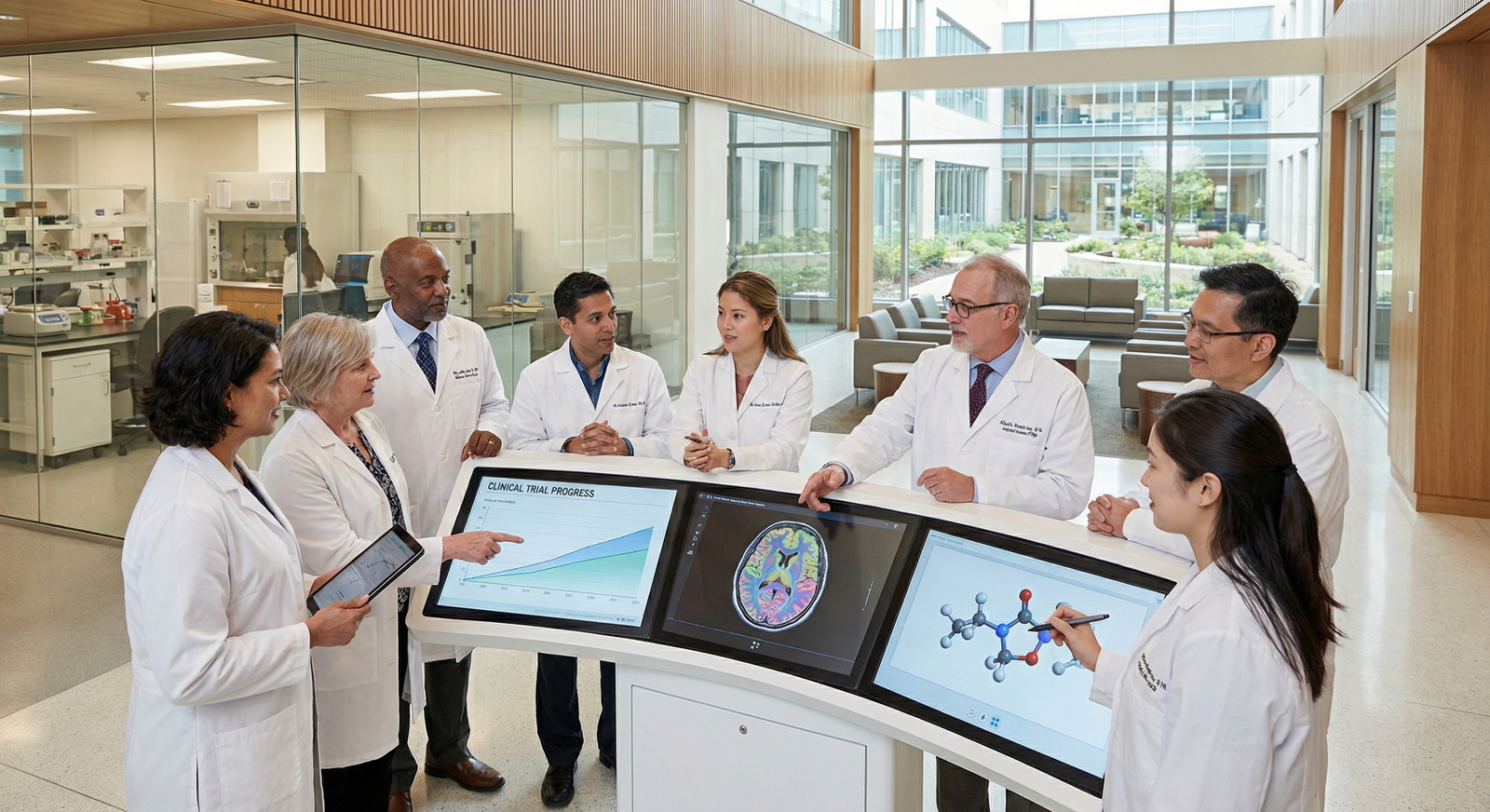
Residency in neurology is already intense—packed with consults, call, and steep clinical learning curves. Adding research during residency can feel daunting, but it is one of the most powerful ways to shape your future career, differentiate yourself in the neuro match for fellowship or early faculty positions, and improve patient care. This guide walks you through why and how to do research during a neurology residency, practical strategies to make it manageable, and how to align your resident research projects with long-term goals.
Why Research During Neurology Residency Matters
1. Career Development and Differentiation
Neurology is increasingly data-driven and subspecialty-focused. Doing research during residency helps you:
- Stand out for competitive fellowships (stroke, epilepsy, movement disorders, neuromuscular, neurocritical care, behavioral neurology, neuroimmunology, neuro-oncology, etc.).
- Strengthen your CV beyond “standard” metrics like Step scores and clerkship performance.
- Signal commitment to an academic residency track or academic career if that is your goal.
- Begin building a scholarly identity—a theme or niche that you can carry into fellowship and beyond (e.g., autoimmune encephalitis, post-stroke recovery, deep brain stimulation outcomes, EEG in ICU).
Program leadership and fellowship directors often look beyond whether you simply participated in research and instead ask:
- Is there a coherent story to your work?
- Did you show initiative and productivity (e.g., abstracts, posters, manuscripts)?
- Did you work with known mentors in the field?
- Were you able to complete projects despite the demands of residency?
Even a handful of well-executed resident research projects can be more impactful than a long list of partially completed or low-quality efforts.
2. Improving Clinical Reasoning
Research is not just about publications. It hones skills that make you a better neurologist:
- Critical appraisal: Reading the literature with a researcher’s eye helps you evaluate evidence quality for clinical decision-making.
- Hypothesis-driven thinking: You learn to think about mechanisms, not just patterns: Why is this patient’s MS course atypical? What outcomes should we measure after stroke thrombectomy?
- Comfort with uncertainty: Research trains you to manage incomplete data and conflicting findings—common realities in neurology (e.g., cryptogenic stroke, refractory epilepsy).
- Lifelong learning habits: Understanding study design and statistics makes ongoing self-education far more efficient.
3. Networking and Mentorship
Engaging in research during residency automatically expands your professional network:
- You gain mentors who can vouch for you in recommendation letters.
- You collaborate with fellows, statisticians, and basic scientists.
- Presentations at conferences (AAN, subspecialty meetings) introduce you to leaders in your field of interest.
These relationships often lead to:
- Fellowship opportunities
- Multi-center collaborations
- Early co-authorship on larger studies
- Long-term mentorship beyond training
Types of Research Opportunities in Neurology Residency
Neurology residents have access to an unusually broad spectrum of research opportunities, spanning bedside observations to bench science.

1. Clinical Research
This is the most common and accessible form of research during residency.
Examples:
- Retrospective chart reviews (e.g., outcomes of patients with status epilepticus treated with a specific protocol).
- Prospective observational cohorts (e.g., tracking cognitive changes following mild stroke).
- Quality improvement projects with publishable data (e.g., door-to-needle times in stroke).
- Clinical trials participation (e.g., screening and enrolling patients into stroke or MS trials).
Why this is resident-friendly:
- Uses patient data you encounter daily.
- Can often be done with flexible schedules.
- Frequently leverages existing institutional databases or registries.
- May produce quicker outputs (abstracts, posters) compared to basic science.
2. Translational and Basic Science Research
More intensive but highly impactful, especially if you are leaning toward a heavily academic residency track or physician-scientist career.
Examples:
- Animal models of neurodegenerative disease.
- Molecular pathways in autoimmune neurology.
- Neurophysiology experiments related to seizures or movement disorders.
Considerations:
- Requires a significant, stable time commitment and usually protected research time.
- Often best suited for:
- Residents in research pathways (e.g., ABPN-approved research tracks).
- Those planning a PhD or post-doctoral experience.
- Residents with prior research training who want to extend ongoing work.
If you do pursue basic/translational work during residency, ensure expectations are realistic about what can be achieved within your available time.
3. Imaging and Neurophysiology Research
Neurology is rich in imaging and electrophysiology modalities:
- MRI (functional MRI, diffusion tensor imaging, advanced sequences).
- EEG and evoked potentials.
- MEG (magnetoencephalography) in some centers.
- Ultrasound (TCD, carotid ultrasound) in vascular neurology.
Potential projects:
- Using MRI markers to predict outcomes after intracerebral hemorrhage.
- EEG biomarkers of post-anoxic coma recovery.
- Comparing quantitative EEG features in ICU delirium vs non-delirious patients.
These areas are well suited for residents who enjoy technology, pattern recognition, and data-heavy projects.
4. Outcomes, Health Services, and Quality Improvement (QI)
These projects focus on systems and patient outcomes rather than molecular mechanisms.
Examples:
- Disparities in stroke care by race/ethnicity, gender, or socioeconomic status.
- Tele-neurology implementation outcomes.
- Adherence to epilepsy treatment guidelines and associated outcomes.
- QI project on reducing readmission for headache or seizure patients.
Many QI projects can be designed to be rigorous enough for publication, effectively doubling as research during residency. This can be particularly efficient in busy programs where time is limited.
5. Medical Education and Simulation Research
If you are interested in teaching, consider:
- Evaluating a new neurology clerkship curriculum.
- Assessing simulation-based training for lumbar punctures or NIH Stroke Scale.
- Studying impact of bedside teaching tools (e.g., structured neuro exam checklists).
You can create research questions around educational interventions, collect data, and present at education-focused conferences (AAN, AAMC, etc.).
Getting Started: Building a Research Plan in Residency
1. Clarify Your Goals Early
During PGY-1 (if you are in a preliminary year) or early PGY-2, ask yourself:
- Do I see myself in academic medicine, private practice, or a hybrid career?
- Am I likely to pursue a fellowship, and if so, in which area?
- Do I want to be the principal driver of research or a contributor on multiple projects?
If you’re unsure, it’s fine to start broad. For example:
- Join a stroke outcomes project while on vascular neurology rotation.
- Ask about ongoing epilepsy database projects on your EEG rotation.
- Join a QI initiative in the ICU related to seizure monitoring or neuroprognostication.
Clarity improves with exposure.
2. Find the Right Mentor
Mentorship is critical. Look for mentors who:
- Have a track record of publishing with trainees.
- Are accessible—respond to emails, schedule regular meetings.
- Match your interests (subspecialty, methods, or at least your general direction).
- Are realistic and transparent about scope and timelines.
A powerful strategy is to create a mentorship “team”:
- A primary clinical mentor in your desired subspecialty (e.g., epileptologist).
- A methods mentor (biostatistician, epidemiologist, or outcomes researcher).
- Possibly a senior resident or fellow who helps you day-to-day on the project.
When you meet a potential mentor, bring:
- A brief CV.
- A sense of your time constraints and interests.
- Questions about existing datasets or ongoing projects where you can plug in.
3. Start with Achievable Projects
For your first research during residency, prioritize:
- Projects with defined, limited data sets.
- Retrospective studies where IRB approval is already in place or easily obtained.
- Secondary analyses of existing registries or trials.
A realistic early goal: a single-center retrospective study that yields:
- 1–2 abstracts.
- A poster or oral presentation at a national meeting.
- A manuscript you can submit by late PGY-3 or PGY-4.
Avoid starting residency with a massive, multi-year, multi-center trial as your first lead project unless you have extensive prior experience and dedicated time.
4. Understand the IRB and Research Infrastructure
Learn early:
- How your institution’s IRB submission process works.
- Who the research coordinators are in various divisions (stroke, epilepsy, MS, movement).
- What internal resources exist:
- Biostatistics cores or consulting services.
- Data warehouses or clinical data repositories.
- Neurology research administrators.
Ask senior residents: “Who do we email to get started on an IRB?” or “Is there a template protocol for stroke chart reviews?” Leveraging existing systems saves enormous time.
Time Management: Balancing Clinical Work with Research

1. Use Rotation-Specific Strategies
Different rotations naturally lend themselves to distinct research tasks:
- ICU/Stroke service: Take structured notes on interesting cases that might become case reports or case series. Learn which patients are in registries or trials.
- Outpatient continuity clinic: Track patterns (e.g., medication adherence in epilepsy, side effects from new migraine therapies) that could inform a QI or outcomes project.
- Elective or research blocks: Schedule deep work for data analysis, manuscript writing, and IRB submissions.
Map your year:
- Identify light rotations and dedicated research or elective blocks.
- Plan to launch projects (IRB, design, data plans) just before or during these periods.
2. Protect Small, Regular Time Blocks
Research thrives on consistency. Even in a packed neurology residency, you can often carve out:
- 1–2 hours once or twice per week during lighter days.
- A half-day on certain weekends during less intense blocks.
Use these micro-blocks to:
- Clean and organize datasets.
- Draft sections of a manuscript (Methods, Introduction).
- Create abstract templates you can adapt later.
Consider using strategies like:
- Time boxing: “From 7–8 pm, I will only work on Results tables for Project X.”
- Task chunking: Break tasks into 20–30 minute pieces (e.g., “Write 3–4 background paragraphs,” “Revise one figure”).
3. Set Clear Milestones
With your mentor, define concrete targets:
- Month 1–2: IRB submission and dataset definition.
- Month 3–4: Complete data extraction.
- Month 5–6: Submit abstract to a regional/national meeting.
- Month 7–9: Draft full manuscript.
Make these realistic with residency demands. Revisit and adjust as needed.
4. Collaborate Strategically
Working with co-residents, fellows, and medical students can:
- Distribute workload (e.g., data collection, chart reviews).
- Provide continuity when you’re on heavy call.
- Give you leadership experience if you coordinate the team.
Be clear about:
- Roles and expectations (who does what, by when).
- Authorship order (discuss this explicitly early on).
- How decisions will be made and communicated.
Maximizing Impact: From “Doing Research” to Building a Scholarly Profile
1. Align Projects with a Coherent Theme
For the neuro match at the fellowship level or early academic jobs, it helps if your research during residency isn’t random. Common neurology themes might include:
- Vascular neurology and health disparities.
- Epilepsy surgery outcomes and neurophysiology.
- MS and neuroimmunology biomarkers.
- Movement disorders and device-based therapies.
- Neurocritical care and prognostication.
You don’t need every project to be tightly aligned, but a noticeable thread makes your application more compelling and your narrative easier to articulate in personal statements and interviews.
2. Aim for Multiple Outputs from Each Project
Each research project can yield several scholarly products:
- Abstracts and posters (hospital research days, AAN, subspecialty meetings).
- Oral presentations.
- Peer-reviewed manuscripts.
- Educational spin-offs (e.g., grand rounds, resident teaching sessions).
Example: A single stroke outcomes dataset might generate:
- One abstract on functional outcomes at 90 days.
- A second abstract on rehospitalization patterns.
- A focused QI paper on improving follow-up scheduling.
3. Learn Basic Biostatistics and Study Design
Even if you plan a primarily clinical career, basic literacy in methods is essential:
- Understand common study designs: cohort, case-control, randomized trials, cross-sectional.
- Become comfortable with:
- p-values and confidence intervals.
- Regression models (logistic, linear, Cox).
- Common bias types (selection, information) and confounding.
Use institutional workshops, online courses, or short textbooks. This not only strengthens your research but dramatically improves your everyday reading of neurology literature.
4. Communicate Your Work Effectively
Strong communication multiplies the value of your research:
- Posters: Clear figures, minimal text, a simple central take-home message.
- Presentations: Tell a story—clinical relevance, question, approach, findings, implications.
- Manuscripts: Prioritize clarity over complexity; lean on your mentor’s experience.
Keep a running list of your works-in-progress, submitted abstracts, accepted presentations, and published papers. This is invaluable for fellowship applications, annual evaluations, and updates to your CV.
Special Considerations: Academic Tracks, Funding, and the “Neuro Match”
1. Academic Residency Track vs Standard Track
Some neurology programs offer explicit academic residency track options:
- Additional protected research time (e.g., 6–12+ months total).
- Early identification of research mentors.
- Tailored didactics in methods, grantsmanship, and career development.
- Formal affiliation with PhD programs or T32 training grants.
If your goal is a physician-scientist career, look for:
- ABPN-approved research pathways.
- Track records of graduates obtaining K awards or similar funding.
- Integration with basic science or translational laboratories.
Even in programs without a formal track, you may negotiate:
- A longitudinal research block.
- Extra elective time structured for research.
- Protected continuity for a major project.
2. Funding and Support
Most resident research projects can be conducted with minimal direct funding, especially retrospective or registry-based works. However, for more ambitious projects:
- Explore institutional trainee grants or pilot funds.
- Ask about departmental support for:
- Conference travel if your abstract is accepted.
- Statistical consultation.
- Data extraction from institutional warehouses.
Your mentor is usually your best guide to appropriate funding mechanisms.
3. How Research Affects Fellowship and Academic Job Applications
When fellowship and early faculty selections are made, program directors often consider:
- Number and type of publications (first-author vs co-author).
- Relevance of your research to the fellowship subspecialty.
- Evidence of project completion and persistence.
- Quality of recommendation letters that highlight your scholarly potential.
Practical steps:
- Time key outputs (abstracts, manuscripts) so they appear on your application by PGY-3/early PGY-4.
- In personal statements, articulate how your research during residency shaped your career goals.
- Be ready to discuss:
- Your role in each project.
- Challenges you overcame.
- Next steps or “future directions.”
FAQs About Research During Neurology Residency
1. How much research do I need to be competitive for a neurology residency?
For the initial neurology neuro match from medical school to residency, programs do value research, but:
- Quality, relevance, and evidence of follow-through matter more than raw quantity.
- A small number of neurology-focused experiences (e.g., a stroke project, a case report in epilepsy) can be more impressive than numerous unrelated or unfinished projects.
- If you’re targeting academic-heavy programs, especially those with a research focus, prior research experience signals that you’ll likely take advantage of their infrastructure.
If you don’t have extensive pre-residency research, you can still build a strong profile by engaging actively in resident research projects once you arrive.
2. Is it possible to do serious research if my program has limited resources?
Yes, but you’ll need to be strategic:
- Focus on retrospective chart reviews, QI projects, and outcomes research that use data you can access locally.
- Look for regional or national collaborations through societies like the American Academy of Neurology (AAN) or subspecialty organizations.
- Partner with non-neurology departments (e.g., internal medicine, ICU teams, radiology) on shared-interest projects such as stroke, delirium, or neuroimaging.
- Use freely available tools for data management and analysis where allowed (respecting all privacy and institutional policies).
In some cases, you can also maintain remote collaborations with mentors from medical school or prior institutions.
3. How early should I start research during residency?
Ideally:
- Begin exploring during late PGY-1 or the first half of PGY-2:
- Meet potential mentors.
- Join ongoing projects in a limited role to learn the local system.
- Aim to initiate at least one primary project by mid-PGY-2, so you have:
- Abstracts by late PGY-2 or early PGY-3.
- Manuscript-ready work by PGY-3 or PGY-4.
If you start later, you can still make meaningful contributions, but your window for impactful outputs before fellowship applications narrows.
4. Do I need publications specifically in neurology, or is any research good?
Any well-executed research shows you can think systematically, manage projects, and persevere through the scientific process. However:
- For neurology residency and especially for subspecialty fellowship applications, neurology-relevant work carries extra weight.
- If your prior work is in another field (e.g., oncology, cardiology, basic immunology), try to:
- Complement it with at least one neurology-centric project during residency.
- Connect your prior research skills to your neurology interests (e.g., immunology background informing MS or neuroimmunology work).
Over time, aim to converge toward a coherent neurology-focused scholarly profile, even if your research beginnings were elsewhere.
Research during a neurology residency is not about checking a box; it’s about building the skills, relationships, and scholarly habits that will support a lifetime of better patient care and professional growth. With thoughtful planning, realistic expectations, and strong mentorship, even a very busy resident can meaningfully contribute to the field—and arrive at the next stage of training with a clear, compelling academic story.