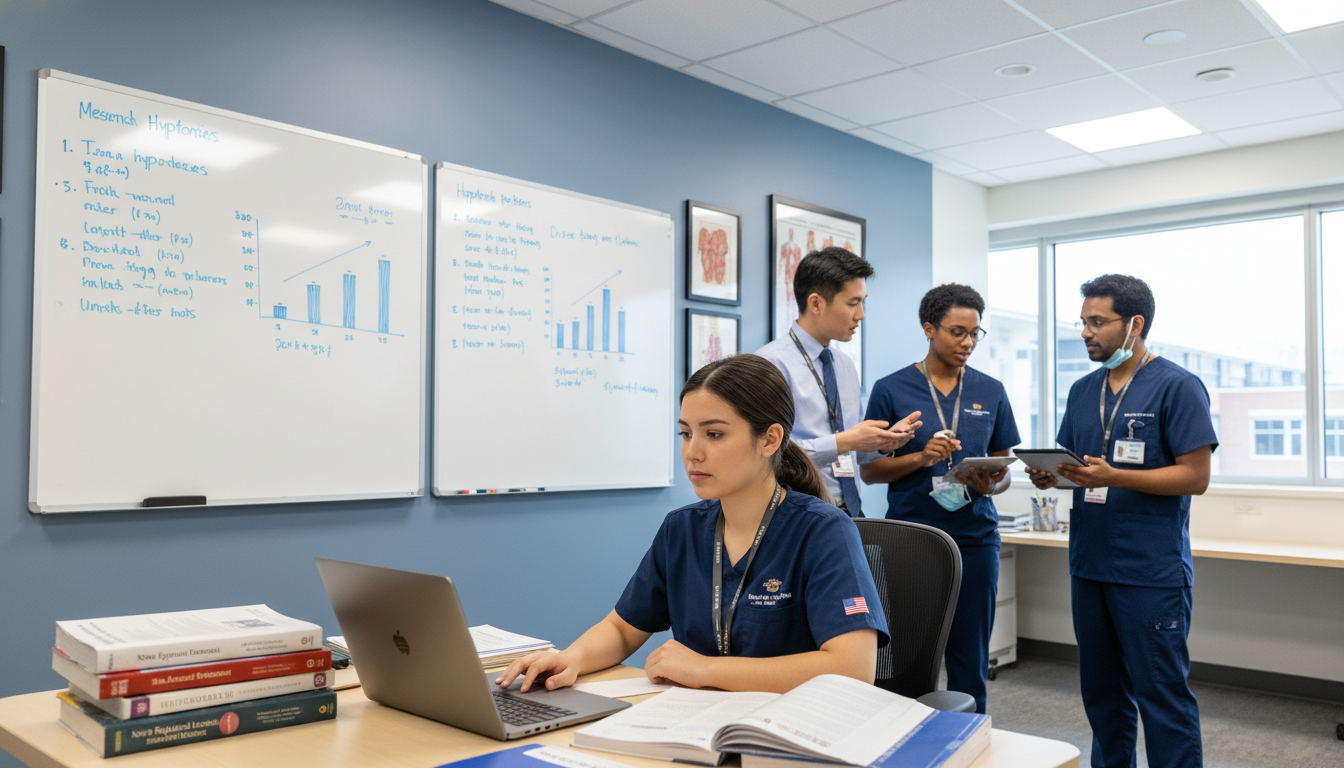
Research during residency is one of the most powerful ways a US citizen IMG in pathology can accelerate their career, build credibility, and open doors to academic and leadership roles. As an American studying abroad, you already know your path may not be as straightforward as that of U.S. MD graduates—but research can be the great equalizer.
This article will walk you through why research matters, how to realistically integrate it into a demanding pathology residency, and how to use it strategically to stand out for fellowships and academic careers.
Why Research During Residency Matters for US Citizen IMGs in Pathology
For a US citizen IMG, the pathology match is often more competitive than it appears from raw fill-rate numbers. Program directors frequently use research as a marker of:
- Commitment to pathology as a specialty
- Ability to think critically and analyze data
- Future potential in an academic, subspecialty, or leadership role
Unique advantages and challenges for US citizen IMGs
As a US citizen IMG or American studying abroad, you bring some specific strengths and obstacles:
Advantages:
- Familiarity with U.S. culture and healthcare expectations
- No visa sponsorship issues (a major concern for programs with non-US citizen IMGs)
- Often more flexible in location and program type (academic vs. community)
Challenges:
- Perception of weaker clinical or scientific training compared with U.S. MD schools
- Fewer established research mentors connected to U.S. academic pathology
- Limited opportunities for funded research during medical school, especially if training abroad
Research during residency—and especially visible output like posters, oral presentations, and publications—helps offset these concerns. It shows that you can compete in the same academic environment as U.S.-trained peers.
How research shapes your long-term pathology career
Strong research during residency can influence:
- Fellowship opportunities (e.g., dermatopathology, hematopathology, cytopathology, molecular pathology)
- Academic residency track positions (chief resident, junior faculty, or clinician-educator roles)
- Industry roles (diagnostic companies, biotech, AI in pathology, pharma)
Program directors and fellowship selection committees look for:
- A track record of following projects through to completion
- Evidence that you understand scientific methodology
- Collaboration skills (co-authored projects, multi-author studies)
- Fit with their program’s existing research strengths
For a US citizen IMG, this can be the difference between a standard community job after residency and a path that leads to academic advancement.
Understanding the Landscape: Types of Research in Pathology Residency
Many residents think research equals bench science or complex molecular projects. In pathology, that’s only one slice of the pie. You can succeed with various types of resident research projects, depending on your interests and resources.
1. Retrospective chart or case series studies
This is often the most feasible starting point for busy residents.
Examples:
- Clinicopathologic review of rare tumor types at your institution
- Analysis of discordant diagnoses between frozen sections and final pathology
- Outcomes associated with specific biomarker expressions in a tumor cohort
Why it’s ideal for residents:
- Uses existing data and archived slides
- Does not typically require patient enrollment
- Can be completed within 12–24 months
- Often results in at least a poster, sometimes a full paper
2. Quality improvement (QI) and laboratory process projects
These align well with clinical workflow and can be particularly compelling to program leadership.
Examples:
- Improving turnaround time for STAT surgical pathology cases
- Standardizing synoptic reporting for certain cancer types
- Reducing specimen labeling errors in surgical pathology or cytology
These projects can produce:
- Internal presentations
- Abstracts for pathology meetings
- Manuscripts in journals focused on lab management or quality
3. Case reports and small case series
While lower on the traditional academic hierarchy, these are highly achievable and especially useful early in training.
Examples:
- Rare histologic variant of a tumor
- Unusual infectious disease in a non-endemic region
- Unique immunohistochemical or molecular findings
These are excellent starter projects for PGY-1 or PGY-2 residents building confidence.
4. Translational or basic science research
These projects can be higher impact but require more infrastructure and time.
Examples:
- Molecular characterization of a tumor subtype
- Studying gene expression profiles in specific hematologic malignancies
- Developing AI tools for digital pathology slide analysis
If you’re interested in an academic residency track or an NIH-funded research career, these are valuable, but they demand strong mentorship and often protected time.
5. Educational and curriculum research
Pathology education is a fertile area for residents who enjoy teaching.
Examples:
- Developing and evaluating a digital slide teaching module for medical students
- Studying the impact of virtual sign-outs on resident learning
- Analyzing performance trends on in-service training exams
These can be a good fit if you ultimately want a clinician-educator role.
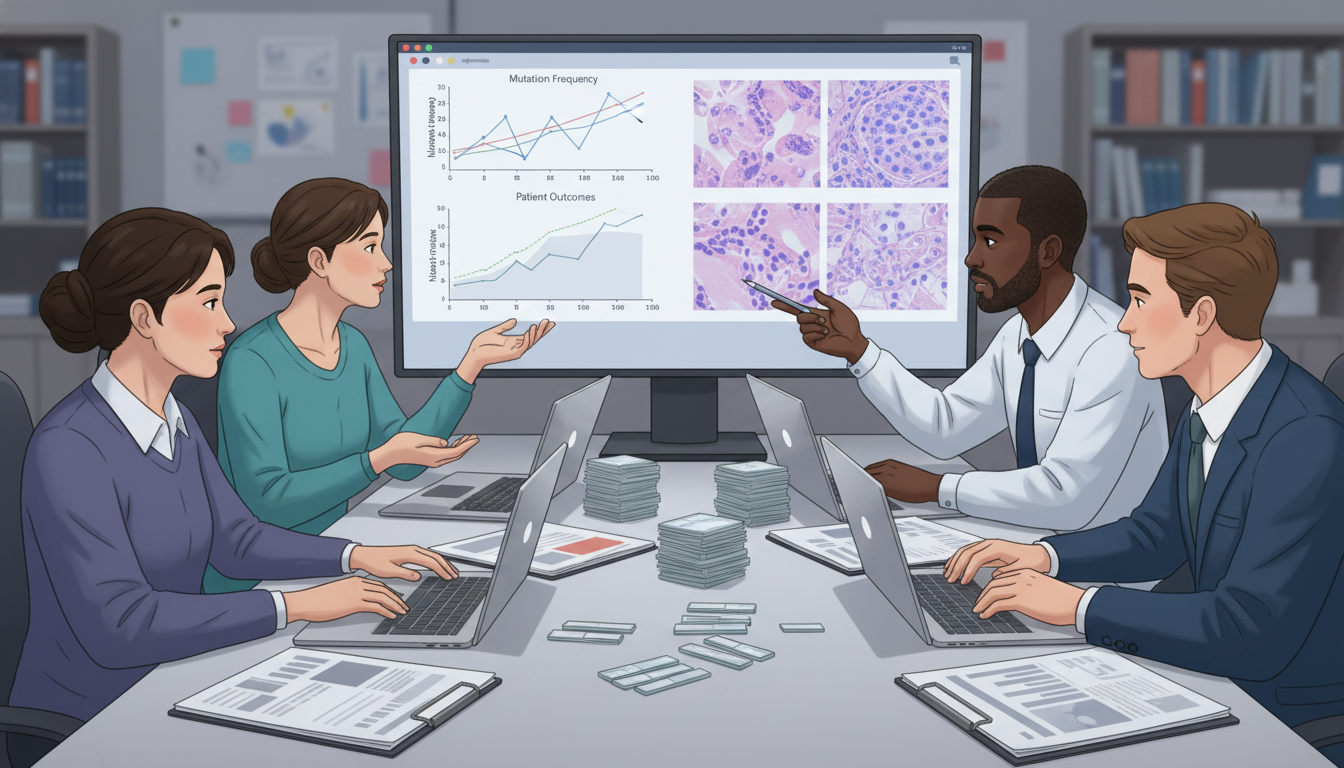
Getting Started: Building Your Research Foundation in Residency
The hardest part is often not the research itself, but figuring out how to begin, especially if you didn’t have strong research training in medical school.
Step 1: Clarify your research goals early
During PGY-1 (or even before you start), ask yourself:
- Do I see myself in academic practice, community practice, industry, or undecided?
- Am I aiming for a competitive fellowship that values publications?
- How comfortable am I with statistics and scientific writing?
Your answers shape how ambitious and time-intensive your projects should be.
Example approach:
- If you’re leaning toward academic hematopathology, aim for one or two hematopathology-focused projects and at least one publication by the end of PGY-3.
- If you’re leaning toward community practice, focus on practical QI projects and maybe one or two case reports.
Step 2: Identify potential mentors and research environments
As a US citizen IMG, you may not have pre-existing networks at your residency institution, so you must be proactive.
Look for:
- Faculty with a strong publication record in your area of interest
- A department with ongoing resident research projects and prior resident publications
- Pathology divisions that routinely present at national meetings (USCAP, CAP, ASCP, ASH, etc.)
How to approach mentors:
- Read 1–2 of their recent papers before meeting
- Send a concise email: who you are, that you’re a US citizen IMG pathology resident, your interest in research, and your goal (e.g., “I’d like to be involved in a clinically feasible project during residency that could lead to a presentation or publication.”)
- Offer to start with manageable tasks: data collection, chart review, slide review, or literature search
Mentors are more likely to invest in you if they see that you’re reliable and realistic.
Step 3: Understand institutional requirements and resources
Find out early:
- How to navigate IRB (Institutional Review Board) approval
- Who handles data extraction or biostatistics support
- Whether your program has protected research time (some academic programs build this into rotations)
- Available internal grants, resident research awards, or departmental funding
Ask your program director or chief residents:
- “What are recent examples of successful resident research projects here?”
- “Does the department have a formal process for pairing residents with research mentors?”
Step 4: Match project scope to your level and schedule
As a resident, your clinical responsibilities, call schedule, and boards preparation must come first. Overcommitting is a common mistake.
Reasonable expectations:
- PGY-1: One case report or small QI project + assisting on an ongoing project
- PGY-2: One main retrospective project + abstract submission
- PGY-3–4: Submitting manuscripts, possibly leading more complex projects
If you’re in a four-year AP/CP program, spreading work across years and rotations is essential.
Making Research Work Within a Busy Pathology Residency
The best research plan fails if it’s not sustainable alongside service work, on-call duties, and exam prep.
Time management strategies that actually work
Block scheduling your research time
- Reserve 2–4 hours per week consistently (e.g., Friday mornings before sign-out, one evening per week, or during lighter rotations like cytology or autopsy).
- Treat it like a conference or duty hour—it’s not “extra,” it’s part of your training.
Set concrete micro-goals
- Upcoming week: “Finalize data collection for 20 more cases.”
- Upcoming month: “Complete methods section draft.”
Use productivity tools
- Reference managers (Zotero, EndNote, Mendeley)
- Shared documents (Google Docs, institutional OneDrive)
- Project management tools (Trello, Notion, or even a simple spreadsheet)
Maximizing “hidden” research opportunities
Pathology residency is full of raw material for publishable work:
Interesting cases from sign-out
- Ask your attending if an unusual case could become a case report or short series.
- Keep a running list of “interesting cases” with anonymized identifiers for later IRB-approved review.
Discrepancies or delays in workflow
- Noticing recurring delays in tumor board slide preparations? That’s a QI project.
Educational innovations
- If your program transitions to digital pathology or remote sign-out, you can study how it affects turnaround time or diagnostic concordance.
Collaborating with co-residents and other departments
As a US citizen IMG, collaboration helps you integrate into your program and build a reputation as a team player.
Effective collaboration ideas:
- Team up with a co-resident in another year level (e.g., PGY-2 + PGY-4) to share workload and experience.
- Partner with clinicians (oncologists, surgeons, dermatologists) for clinicopathologic studies.
- Work with radiology for radiology-pathology correlation projects.
Having multiple authors can increase your project’s scope and impact while distributing the workload.
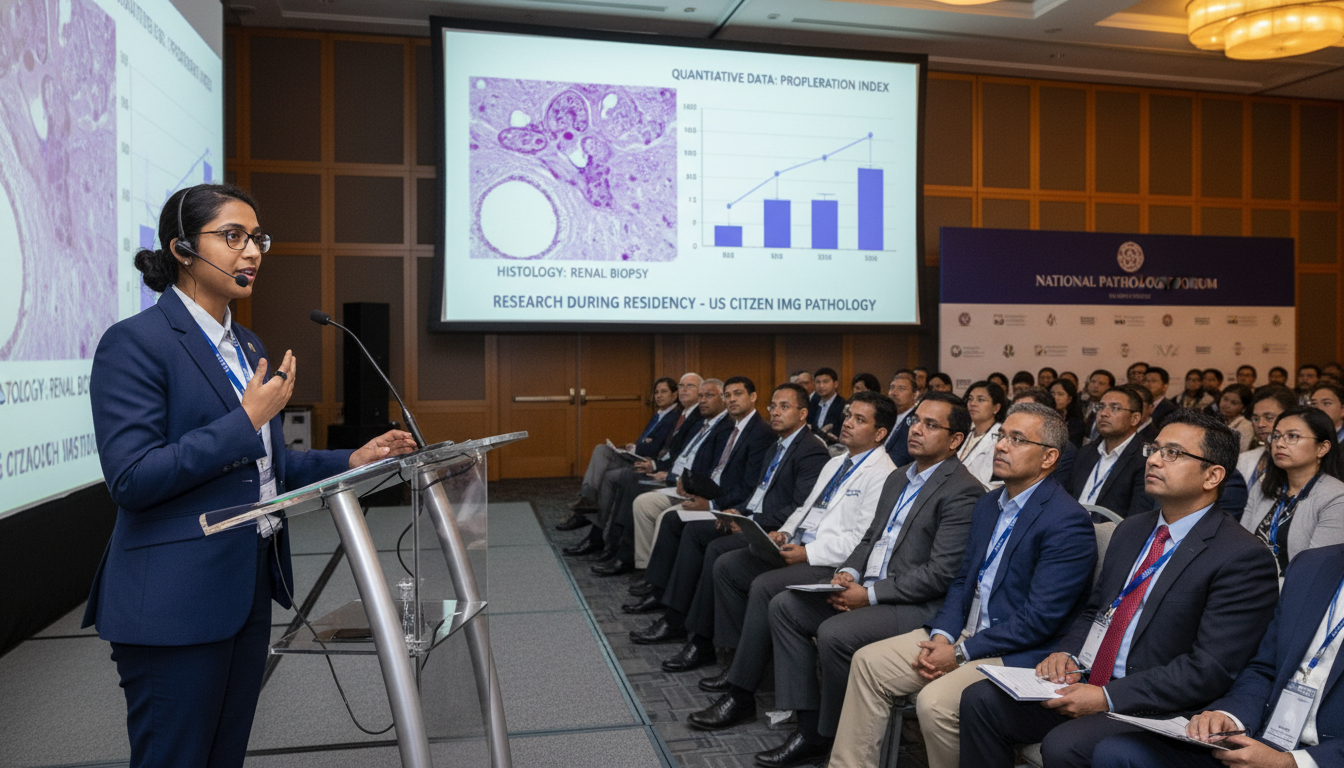
Turning Projects into Output: Abstracts, Posters, and Publications
Simply “doing research during residency” is not enough; you need visible products to showcase in your CV and ERAS applications, fellowship interviews, and job searches.
Abstracts and conference presentations
For pathology residents, conferences like USCAP, CAP, ASCP, and subspecialty meetings are key.
Process overview:
- Select a project with at least preliminary data ready 6–9 months before the conference.
- Check abstract submission deadlines early (they are often 5–8 months ahead of the meeting).
- Work with your mentor on structuring the abstract (Background, Methods, Results, Conclusions).
- If accepted, create a poster or oral presentation.
Benefits for US citizen IMGs:
- Demonstrates active engagement in the academic community
- Allows you to build a U.S.-based professional network
- Strong talking points for interviews: “Tell me about a project you’re proud of.”
Manuscripts and publications
Publications hold significant weight for applicants to fellowships or academic jobs.
Key steps:
- Choose a journal that matches the scope of your project (e.g., subspecialty journals for focused topics).
- Follow the “Instructions for Authors” strictly—formatting errors slow down the process.
- Discuss authorship early and transparently, particularly if multiple residents or faculty are involved.
Realistic goals for a US citizen IMG in pathology:
- 1–3 peer-reviewed publications during residency is excellent
- Several additional posters or abstracts at major meetings
- A mix of first-author and co-author work
Documenting your research for future applications
Maintain a living CV that includes:
- Each abstract, poster, and publication (with full citations)
- Your role in each project (especially when not first author)
- Awards or recognitions (best poster, travel grants, etc.)
When applying for fellowship or an academic residency track, program directors want to see not just volume, but progression—from simpler projects to more sophisticated work over time.
Positioning Your Research for the Future: Fellowships, Academia, and Beyond
Your research during residency can—and should—be intentionally aligned with where you want to be after graduation.
Aligning projects with fellowship plans
If you’re eyeing a specific subspecialty, it helps to show a consistent narrative.
Examples:
- Dermatopathology fellowship aspirant: Projects on melanocytic lesions, inflammatory dermatoses, or cutaneous lymphomas.
- Hematopathology fellowship aspirant: Studies on flow cytometry patterns, molecular markers in leukemia/lymphoma, or bone marrow biopsy correlations.
- Cytopathology aspirant: QI projects on adequacy rates of FNA biopsies, correlation between cytology and surgical pathology.
Even one or two focused projects can tip the scales in competitive fellowships, especially for US citizen IMGs who must demonstrate parity with U.S.-trained peers.
Research and the academic residency track
If you want to join an academic residency track or stay on as junior faculty:
- Aim to show continuous scholarly productivity rather than sporadic projects.
- Seek roles on departmental or institutional research committees.
- Get involved in teaching-related research (curriculum development, exam performance studies, digital education).
Many academic departments look for residents who can eventually:
- Apply for institutional or external grants
- Mentor medical students and future residents
- Build niche expertise in a focused area of pathology
Your residency research is the foundation for this trajectory.
Non-academic but research-relevant career paths
Even if you plan to work in community practice, your research background can:
- Make you the go-to person for QI projects and protocols
- Position you as the lab’s liaison for industry collaborations
- Prepare you for industry roles (diagnostic companies, biotech, pharma) later in your career
The ability to interpret literature, understand study design, and think analytically is a core skill in modern pathology, regardless of practice setting.
Common Pitfalls and How to Avoid Them
Even talented residents run into preventable problems. Being aware of them early provides a major advantage.
Overcommitting to too many projects
As a motivated US citizen IMG, it’s tempting to say yes to everything. This can backfire.
Red flags:
- You’re on 4+ projects but none are close to completion.
- You dread project meetings because you’re consistently behind.
Solution:
Prioritize 1–2 main projects at a time. Finish something—even a small case series—before starting new work.
Choosing mentors without time or track records
A brilliant diagnostician is not always a good research mentor.
Warning signs:
- Faculty member has minimal recent publications.
- They routinely miss meetings or are chronically late with edits.
What to do:
- Seek out faculty who have guided residents through successful posters and publications in the last 3–5 years.
- Consider having two mentors: a content expert and a “logistics” mentor who is skilled at navigating IRB, data extraction, and manuscript submission.
Neglecting IRB and ethical requirements
Retrospective or educational projects can still require IRB oversight.
Consequences:
- Inability to publish data collected without appropriate approvals.
- Institutional pushback or delays.
Best practice:
- Confirm IRB requirements at the start of any project.
- Work with mentors and institutional offices to ensure full compliance.
Poor communication with your program
If your research time or travel for conferences is not properly communicated, it can strain your relationship with leadership.
Avoid this by:
- Informing your program director and chief residents of major deadlines and travel plans far in advance.
- Ensuring that clinical responsibilities are covered when you attend conferences.
For US citizen IMGs trying to build trust and prove reliability, this professionalism is particularly important.
FAQs: Research During Pathology Residency for US Citizen IMGs
1. I’m a US citizen IMG with little research experience from medical school. Can I still build a strong profile during residency?
Yes. Many residents start research in PGY-1 or PGY-2 and still achieve abstracts and publications by graduation. Start with manageable projects (case reports, QI, retrospective chart reviews), find a reliable mentor, and focus on completing a few high-quality projects rather than starting many.
2. How much research do I need to be competitive for subspecialty fellowships in pathology?
There is no exact number, but having at least 1–3 abstracts or publications—ideally related to your intended subspecialty—puts you in a strong position. Program directors look at the overall pattern: sustained effort, progression in complexity, and clear alignment with your fellowship interests.
3. Can I start research before residency if I’m still an American studying abroad in medical school?
Absolutely. Even small projects, like case reports or literature reviews with faculty at your medical school, can be helpful. If possible, try to collaborate with U.S.-based institutions during electives. This shows initiative and provides early exposure to U.S.-style research expectations, which helps in both the pathology match and your later career.
4. How does research during residency help if I plan to go into community practice, not academia?
Research sharpens your ability to interpret literature, improves your understanding of test performance and statistics, and trains you to approach lab and workflow issues systematically. In community settings, physicians with research experience often become leaders in QI, test utilization, and interactions with reference labs and industry partners.
Research during residency is one of the most powerful levers you have as a US citizen IMG in pathology. It can transform perceived disadvantages into clear strengths, open doors to competitive fellowships and academic roles, and make you a more thoughtful, effective pathologist—no matter where you ultimately practice. By choosing realistic projects, securing strong mentorship, and steadily converting work into tangible output, you can build an academic profile that stands shoulder to shoulder with any of your peers.