Why Research During Residency Matters for Caribbean IMGs in Pediatrics
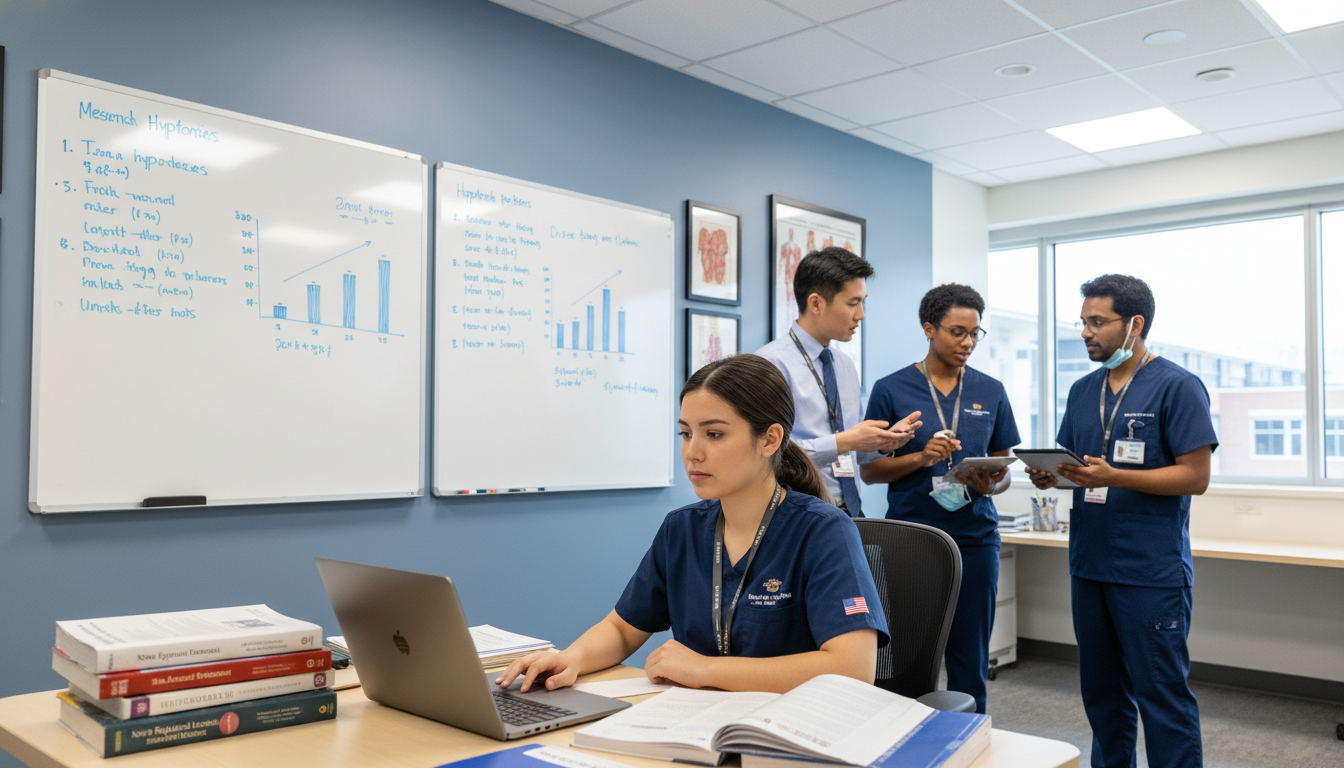
For a Caribbean IMG in pediatrics, residency is often framed primarily as a time to master clinical skills and succeed in the peds match. Yet, research during residency can be equally transformative—especially if you trained at a Caribbean medical school and are building your long‑term academic and career identity in the U.S. system.
Whether you are at an institution with a strong SGU residency match footprint or another Caribbean medical school residency pathway, engaging in research can:
- Strengthen your CV for fellowships (e.g., neonatology, PICU, pediatric cardiology)
- Open doors to academic pediatrics and leadership roles
- Improve your critical appraisal and evidence-based medicine skills
- Give you a niche or “brand” within pediatrics (e.g., asthma, neonatology, global health)
- Help you stand out as a Caribbean IMG in competitive environments
Importantly, you do not need to be a “born researcher”. Most successful resident research projects begin with curiosity and the right mentorship, not with prior PhD-level experience.
This article walks you through why and how to do research during a pediatrics residency as a Caribbean IMG, how to choose feasible projects, and how to leverage your work for future career advancement.
Understanding the Role of Research in Pediatric Residency
How Programs View Research in Pediatrics
Pediatrics is perceived as more “academic” than some other primary care specialties. Many children’s hospitals are affiliated with universities, and program leadership often values scholarship. In this context:
- Residency programs look favorably on residents who contribute to scholarly activity.
- Fellowship programs (e.g., NICU, heme/onc, infectious disease) often expect evidence of research or quality improvement (QI).
- Academic residency tracks within some programs specifically support research and education-focused career paths.
As a Caribbean IMG, engaging in research during residency can help “neutralize” concerns about your training background by demonstrating:
- Ability to work within U.S. academic systems
- Familiarity with IRB processes, data handling, and ethical standards
- Commitment to ongoing learning and advancing pediatric care
Types of Research Relevant to Pediatric Residents
You do not need to design a massive randomized controlled trial. Most resident research projects fall into a few manageable categories:
Quality Improvement (QI) Projects
- Focus: improving processes and patient outcomes (e.g., vaccination rates, asthma control).
- Methods: PDSA cycles (Plan-Do-Study-Act), chart audits, protocol changes.
- Pros: Often easier to start and complete within residency; supported by many programs.
- Example: Increasing influenza vaccination rates among hospitalized asthmatic patients.
Retrospective Chart Reviews
- Focus: analyzing existing patient data from the EMR.
- Methods: define inclusion criteria, collect data, perform basic statistics.
- Pros: No patient-contact recruitment; fewer logistical challenges.
- Example: Characteristics and outcomes of infants admitted with bronchiolitis over five years.
Case Reports / Case Series
- Focus: rare cases, unusual presentations, or novel interventions.
- Pros: Excellent entry point for new researchers; manageable timeline.
- Example: Case report on an unusual metabolic disorder presenting as failure to thrive.
Prospective Observational Studies
- Focus: following patients forward in time to collect standardized data.
- Pros: Higher methodological rigor, potentially more impactful.
- Cons: More complex IRB, logistics, and time investment.
Educational Research
- Focus: curriculum development, assessment tools, simulation training.
- Pros: Ideal if you like teaching; aligns with academic residency track interests.
- Example: Studying the impact of a new simulation curriculum on resident confidence in pediatric codes.
Any of these can become a legitimate resident research project that helps you grow clinically and academically.

Getting Started: Early Steps for Caribbean IMGs
Step 1: Clarify Your Goals
Your research strategy should match your long-term direction. Ask yourself:
- Do I want to pursue a subspecialty fellowship?
- Am I interested in an academic residency track and a future in academic pediatrics?
- Do I want to work in community pediatrics, but still be recognized as a leader in QI or practice improvement?
- Do I see myself involved in global child health, particularly linked to the Caribbean?
Depending on the answer:
- Fellowship-oriented residents: Aim for projects that can yield abstracts and publications in subspecialty areas.
- Academic-path residents: Combine research with teaching or curriculum development; seek mentorship from physician-educators.
- Community-oriented residents: Focus on QI that can improve outpatient practice and translate into practical changes.
Step 2: Understand Your Institution’s Scholarly Expectations
Most pediatrics residency programs have some requirement for scholarly activity. Learn:
- Is there a mandatory resident research or QI project?
- Are there designated research blocks or elective time?
- Are there resident research mentors or a research director?
- Does the program offer an academic residency track with protected time?
As a Caribbean IMG who may feel behind peers from U.S. schools, proactively asking about these resources signals initiative.
Practical action:
- During orientation, ask chiefs or senior residents:
“What do most residents do for their scholarly project? Are there templates or examples I can review?” - Request previous resident posters or presentations to see what’s feasible within your setting.
Step 3: Find a Mentor (or a Team of Mentors)
Successful research during residency is rarely done alone. As a Caribbean IMG, targeted mentorship is especially valuable in navigating institutional culture.
Look for:
- Faculty who publish in areas you’re interested in (e.g., NICU, asthma, obesity, infectious disease).
- Someone active in resident education or the academic residency track.
- A mentor with a track record of getting resident research projects to completion and publication.
How to approach a potential mentor:
- Read 1–2 of their recent papers or abstracts.
- Email a concise message:
- Introduce yourself as a Caribbean IMG pediatric resident.
- Share your broad interests (e.g., general pediatrics, neonatology, global child health).
- Ask if they are working on any resident-friendly projects or willing to help you design one.
- Offer flexibility:
“I’m open to joining an existing project or starting something small and feasible we can complete during residency.”
A quality mentor will help you refine your research question, navigate IRB, and identify realistic timelines.
Designing a Feasible Resident Research Project
Choosing a Research Question That Fits Residency Realities
Your project must balance ambition with feasibility. Constraints to consider:
- Limited time (clinical duties, call schedules)
- Variable access to data or statisticians
- IRB turnaround time
- Need to present or publish before graduation
For Caribbean IMGs, it’s strategic to pick a project you can realistically finish—even if it’s “smaller”—rather than overcommitting to something that never gets submitted.
A good resident research question is:
- Focused: Not “all causes of pediatric sepsis” but “factors associated with delayed antibiotic administration in pediatric sepsis in our ED.”
- Data-accessible: Uses data your institution already collects or can reasonably collect.
- Aligned with mentor expertise: Leverages existing research infrastructure.
- Actionable: Particularly for QI, leads to change in practice or policy.
Example: A Realistic Pediatrics Resident Research Project
Scenario: You’re a PGY‑1 Caribbean IMG in a mid-sized academic peds program, interested in hospital pediatrics and QI.
Possible project:
- Title: “Improving Timeliness of Asthma Controller Medication Prescription at Discharge in Hospitalized Children”
- Type: QI with pre- and post-intervention chart review
- Question: Does a standardized discharge checklist increase appropriate controller prescriptions in pediatric asthma discharges?
- Methods:
- Baseline chart review (3–6 months).
- Implement an electronic or paper discharge checklist.
- Reassess rates for the following 3–6 months.
- Output:
- Resident research poster at your hospital’s research day.
- Abstract submission to a regional or national pediatric conference.
- Potential short publication in a QI-focused journal.
This kind of project is tightly scoped and realistic while still meaningful.
IRB and Ethical Considerations
As a Caribbean IMG, you may be less familiar with U.S.-based IRB procedures, so make sure to:
- Ask your mentor if the project is research or QI (different IRB pathways).
- Complete any required CITI training or institutional research ethics modules.
- Understand:
- How data are de-identified
- Who can access the data
- How long data will be stored
In many cases, QI projects may qualify for expedited review or exemption, but this decision must be made by the IRB—not by residents or faculty alone.

Balancing Clinical Work and Research During Residency
Time Management Strategies
Clinical duties will always come first in residency, but research can be integrated without overwhelming you. Key strategies:
Start Early
- Explore mentors and topics in the second half of PGY‑1.
- Aim to have a defined project by early PGY‑2.
Use Research or Elective Blocks Wisely
- Schedule dedicated research time when major data collection or analysis is needed.
- Set clear goals for those blocks (e.g., complete data extraction, first manuscript draft).
Micro-Tasking
- Break tasks into 20–40 minute units:
- Review five charts.
- Edit one section of an abstract.
- Respond to mentor feedback on one figure.
- Use lighter call days, pre‑call afternoons, or post‑rounds gaps to progress in small increments.
- Break tasks into 20–40 minute units:
Use Tools to Stay Organized
- Project management: Trello, Notion, or simple spreadsheets.
- Reference management: Zotero, Mendeley, or EndNote.
- Version control: Shared cloud folders (OneDrive, Google Drive) with clear file names.
Communication with Your Team and Program
As a Caribbean IMG, transparent communication reinforces professionalism and trust:
- Inform your program director or chief residents about your research commitments.
- If you are part of an academic residency track, clarify expectations for scholarly output early.
- When clinical demands spike (e.g., RSV season), adjust timelines and communicate that to your mentor:
- “I may be delayed on data entry until next month due to ICU coverage, but can we schedule a check-in afterward?”
Residency leadership usually supports research during residency when it does not compromise patient care or duty hour regulations.
Maximizing the Impact of Your Resident Research
Turning Projects into Presentations and Publications
For a Caribbean IMG, visible scholarly output is particularly valuable. Aim to produce:
Posters or Oral Presentations
- Local: Hospital research day, department grand rounds.
- Regional/National: State AAP chapter meetings, Pediatric Academic Societies (PAS), subspecialty conferences.
- Submit your peds match application or fellowship application with accepted abstracts whenever possible.
Manuscripts
- Not every project needs a full paper, but at least one or two publications during residency strongly support an academic trajectory.
- Start with:
- Case reports or case series.
- Brief reports or QI reports.
- Co-authorship on a mentor’s larger study.
Institutional Changes
- QI projects that change protocols (e.g., a new asthma pathway) can be added to your CV under “Institutional Quality Improvement and Leadership.”
Building a Niche: Branding Yourself as a Caribbean IMG Pediatrician
Research during residency can help you develop a recognizable niche:
- Clinical niche examples:
- Asthma management in urban populations
- Nutrition and childhood obesity
- Neonatal outcomes, especially late preterm infants
- Pediatric infectious diseases and vaccination
- Global and Caribbean-focused angles:
- Tropical diseases in pediatrics
- Health disparities and access to care for Caribbean-origin populations
- Immunization coverage in immigrant communities
When you apply for fellowships or academic positions, your personal statement and CV can emphasize:
- “My clinical and research interest in pediatric asthma in underserved communities, shaped by my training as a Caribbean IMG, has led to…”
- “Through resident research projects and an academic residency track focus, I developed experience in QI and outcomes research.”
Leveraging Research for Future Career Paths
Fellowship Applications
- List your research projects, abstracts, and any publications clearly on ERAS.
- Ask mentors who supervised your resident research to write letters of recommendation.
- In interviews, be prepared to:
- Summarize your project in 2–3 minutes.
- Explain your role (design, data, analysis, writing).
- Reflect on limitations and next steps.
Academic Pediatrics and Hospitalist Roles
- Emphasize your participation in resident research projects, QI committees, and any teaching-related scholarship.
- Show trajectory: from a Caribbean medical school residency to active involvement in U.S. academic settings.
Community Practice Leadership
- Use your QI and research background to:
- Lead practice-wide initiatives (e.g., vaccination campaigns, asthma registries).
- Serve on local or regional AAP committees.
- Use your QI and research background to:
For Caribbean IMGs, this narrative—moving from Caribbean medical school to U.S. residency to impactful, research-informed practice—helps counter implicit biases and demonstrates value.
Special Considerations for Caribbean IMGs
Addressing Perceptions and Bias
You may encounter subtle doubts about your background compared to U.S. MDs or DOs. Research involvement helps by:
- Showing you can thrive in an academic environment.
- Demonstrating mastery of evidence-based practice and statistics.
- Highlighting that any perceived “gap” in prestige is more than offset by productivity and initiative.
Be prepared to frame your story:
- “Coming from a Caribbean medical school residency pathway, I knew I wanted to contribute academically. That’s why I sought out mentors early and became involved in resident research projects related to pediatric asthma and quality improvement.”
Using Prior Experiences from Caribbean Medical Schools
Some Caribbean schools, including those with strong SGU residency match performance, offer opportunities for research in basic science, clinical topics, or public health. Leverage these:
- Include prior abstracts or publications from medical school on your CV.
- Connect your previous work to your current interests.
- Show continuity: “I started studying pediatric infectious diseases in the Caribbean and continued exploring infection prevention through QI projects during residency.”
Visas and Academic Careers
For non-U.S. citizens, visa status can intersect with research opportunities:
- Research productivity can strengthen your case for academic positions that might support H‑1B or O‑1 visas.
- Publications and national presentations contribute to an evidence base of “extraordinary ability” if you ever pursue certain immigration categories.
While visa strategy is beyond the scope of this article, understand that scholarship can indirectly support your career flexibility long-term.
Putting It All Together: A Sample 3-Year Research Roadmap
Below is an example of how a Caribbean IMG in a pediatrics residency might structure research activity:
PGY‑1
- Learn institutional expectations for scholarly activity.
- Attend resident research workshops (if offered).
- Identify 1–2 potential mentors; schedule introductory meetings.
- Join an existing QI team or start planning a small project.
- Begin a case report if you encounter an interesting patient.
PGY‑2
- Finalize a primary resident research or QI project.
- Obtain IRB or QI approval as needed.
- Collect data (chart review, surveys, etc.).
- Submit a case report or first abstract from early work.
- Start considering alignment with an academic residency track, if available.
PGY‑3
- Complete data collection and analysis.
- Draft abstracts for local and national meetings.
- Write manuscripts (even if submission is after graduation).
- Use research experiences in fellowship or job applications.
- Ask research mentors for letters highlighting your scholarly development.
This roadmap is flexible but provides a realistic structure for completing meaningful research during residency without sacrificing clinical growth.
FAQs: Research During Pediatric Residency for Caribbean IMGs
1. I have no prior research experience. Is it too late to start during residency?
No. Many residents—IMGs and U.S. grads alike—do their first real research during residency. Start with manageable projects like QI or case reports, and work with mentors who are used to helping beginners. Curiosity, reliability, and follow-through matter more than prior experience.
2. How many research projects do I need if I want a pediatrics fellowship?
There is no fixed number, but fellowship programs typically like to see at least:
- One substantial project (QI or clinical research) where you played a significant role.
- A few outputs: 1–2 abstracts and ideally at least one manuscript (submitted, in revision, or published).
For highly competitive fellowships (e.g., NICU, heme/onc), more substantial research presence helps, but quality and clear involvement are more important than sheer quantity.
3. Does being from a Caribbean medical school put me at a disadvantage in residency research?
Not if you are proactive. You may need more deliberate mentorship and orientation to U.S. research systems, but many Caribbean IMGs are very successful in resident research projects. Use your background as a strength—your experiences can shape unique research questions, especially in global child health, infectious diseases, or health disparities.
4. How can I talk about my resident research effectively in interviews?
Prepare a concise, structured explanation:
- Background/Question: Why was the problem important?
- Your Role: What exactly did you do (design, data collection, analysis, writing)?
- Findings: What did you discover or improve?
- Impact/Future Directions: How did this change practice, and what would you do next?
Practice this for both residency and fellowship interviews, emphasizing how research during residency made you a more thoughtful pediatrician.
Research during residency is not just an academic checkbox—especially for Caribbean IMGs in pediatrics. Done thoughtfully, it becomes a powerful tool to elevate your clinical practice, open doors to fellowships and academic tracks, and articulate a compelling career narrative rooted in curiosity, rigor, and commitment to children’s health.