Why Research During Residency Matters for Future Radiologists
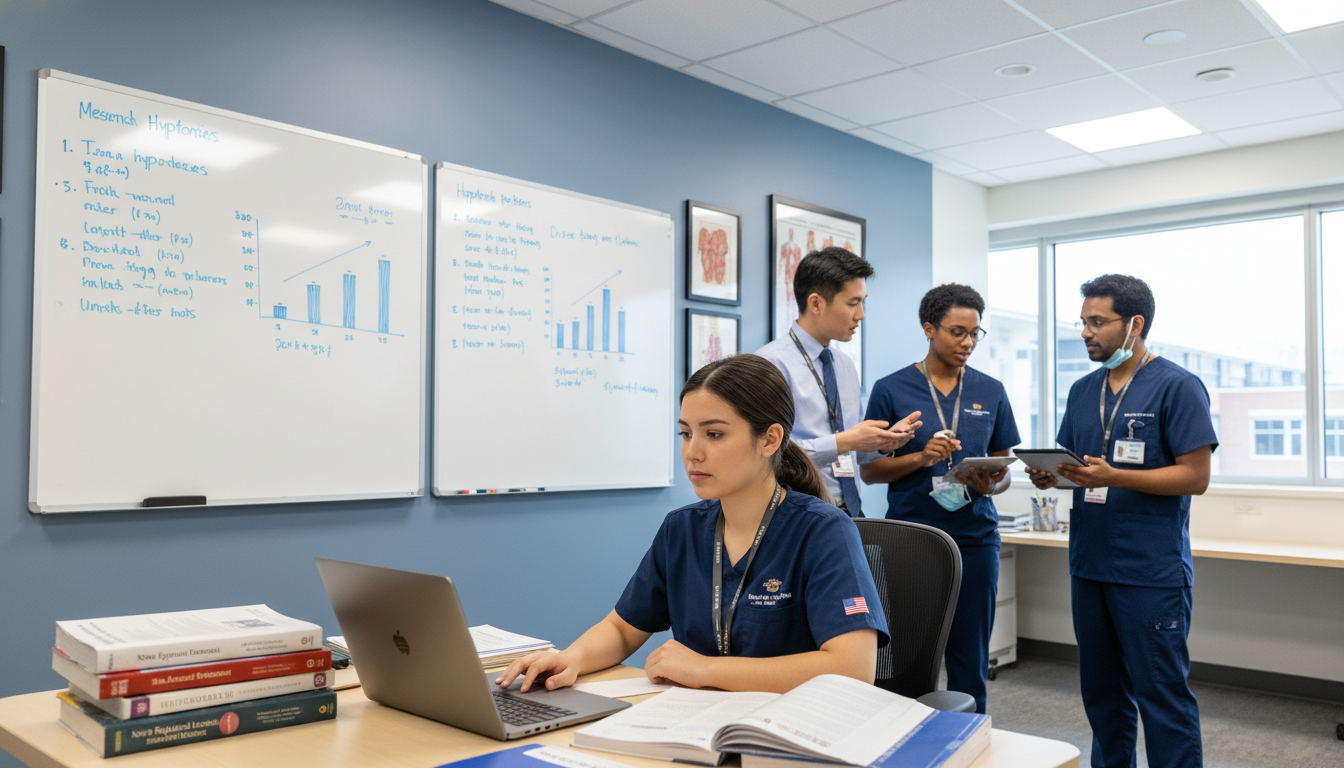
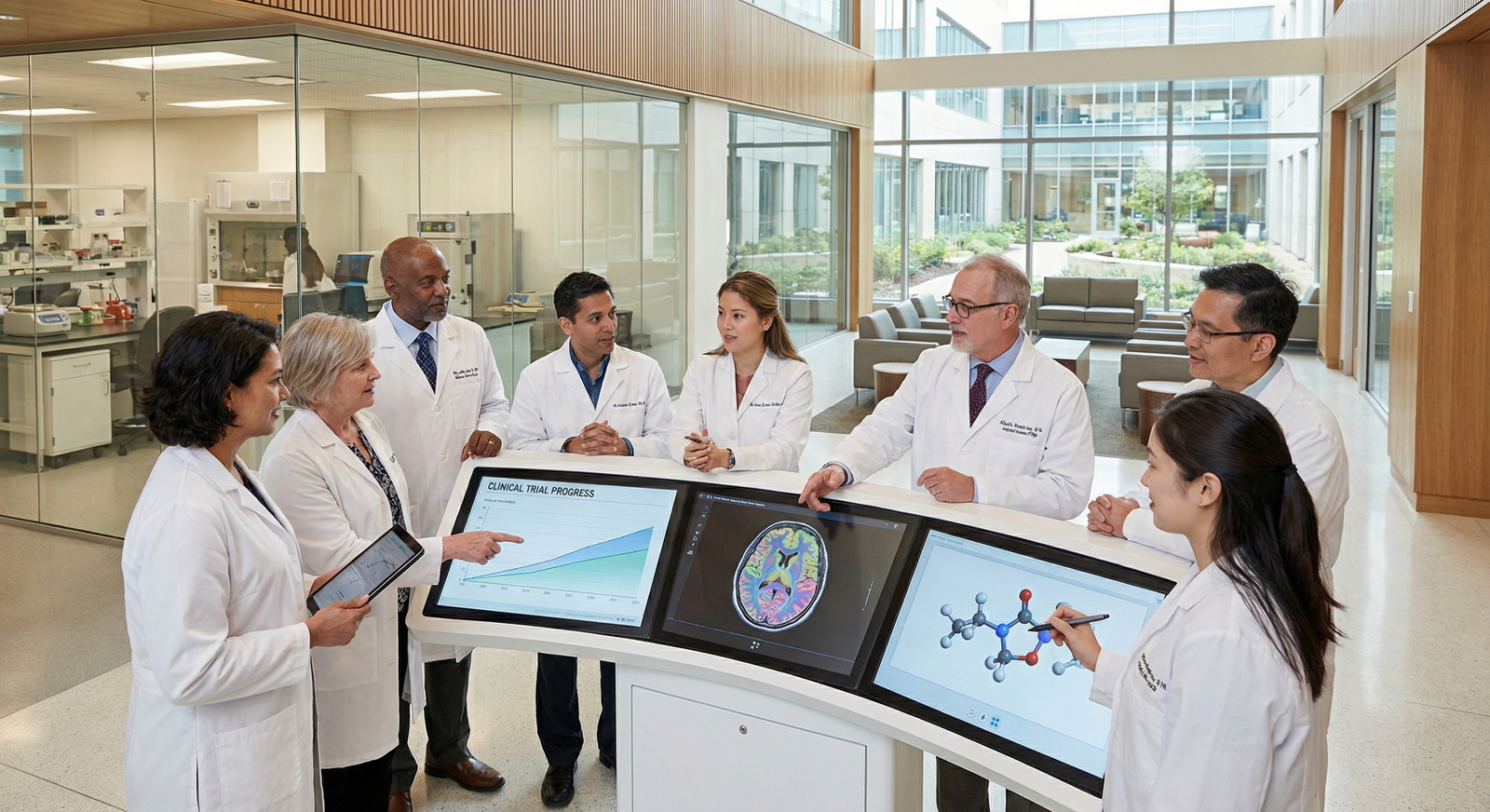
For an MD graduate entering diagnostic radiology, residency is often seen primarily as intensive clinical training in imaging interpretation and procedures. Yet for many programs—especially those with an academic residency track—research during residency is not just an optional extra; it’s a core expectation and a key differentiator for your future career.
Whether your goal is to match into a competitive fellowship, become academic faculty, or simply be a high-value radiologist in private practice, engaging meaningfully in resident research projects offers several benefits:
- Strengthens your competitiveness for fellowships and jobs
- Builds expertise in a subspecialty of interest (e.g., neuroradiology, MSK, IR, breast)
- Teaches you how to ask good clinical questions and interpret evidence
- Opens doors to mentorship, collaboration, and leadership roles
- Prepares you for a career in quality improvement and value-based care
As an MD graduate who has already navigated the allopathic medical school match and secured a radiology residency, you’re at a critical junction: how do you integrate research into an already demanding training environment without burning out—and how do you choose projects that truly advance your goals?
This article walks through the “why, what, and how” of research during residency in diagnostic radiology, with concrete strategies and examples tailored to your level.
Understanding the Role of Research in Diagnostic Radiology Training
Research expectations vary widely among programs—from minimal requirements to highly structured, protected research pathways as part of an academic residency track. Knowing where your program sits on this spectrum helps you plan realistically.
1. Types of Research Radiology Residents Commonly Do
In diagnostic radiology, resident research projects usually fall into one or more of these categories:
Retrospective clinical studies
- Use existing imaging and clinical data
- Examples:
- Evaluating MRI features that predict tumor grade
- Comparing diagnostic performance of CT vs MRI in appendicitis
- Pros: Usually feasible with limited time; often IRB-exempt or expedited
- Cons: Susceptible to bias; needs careful data handling
Prospective clinical research
- Involves enrolling patients and collecting data forward in time
- Examples:
- Testing a new ultrasound protocol in the ED
- Evaluating patient anxiety before and after MRI noise-reduction interventions
- Pros: Higher-quality evidence; more impactful if well designed
- Cons: IRB approval can be lengthy; requires coordination and follow-up
Imaging informatics and AI projects
- Focus on workflows, algorithms, or software tools
- Examples:
- Developing NLP algorithms to flag critical results in reports
- Evaluating an AI tool that detects intracranial hemorrhage on CT
- Pros: High visibility; rapidly growing area; often welcomed by academic departments
- Cons: May require programming or data science collaboration
Quality improvement (QI) and operations research
- Target workflow, safety, and efficiency
- Examples:
- Reducing CT contrast extravasation rate
- Decreasing turnaround time for STAT CTs
- Pros: Often easier to complete; can meet ACGME QI requirements; directly improves patient care
- Cons: Less likely to be in high-impact journals unless rigorously done
Educational research
- Focus on teaching, evaluation, and curriculum
- Examples:
- Evaluating a new resident boot camp for first-year radiology trainees
- Measuring the impact of structured reporting templates on resident learning
- Pros: Great if you’re interested in medical education; often feasible with survey-based designs
- Cons: Requires understanding of survey design and statistics; may face response-rate challenges
Basic or translational imaging science
- Less common at the resident level but available in well-resourced centers
- Examples:
- Working with physics faculty on new MRI sequences
- Exploring imaging biomarkers for oncology
- Pros: Highly academic; can lead to significant publications and grants
- Cons: Time-intensive; may require advanced technical knowledge
2. Program Cultures: Academic vs Clinically Oriented
- Academically focused programs
- Often emphasize resident research projects
- May have formal “scholarly activity” requirements (e.g., at least one abstract or publication)
- Likely to offer structured mentorship, research seminars, and protected time
- Community or clinically heavy programs
- May be more flexible but provide less built-in support
- Research opportunities often require more resident initiative
- QI and operations projects may be more accessible than lab-heavy science
If you’re in an academic residency track, research is not only encouraged but typically expected as part of your professional identity. For residents in more clinically oriented settings, research can still meaningfully differentiate your portfolio, particularly if you plan a diagnostic radiology match into competitive fellowships later (e.g., neuro, IR, pediatrics, breast).
Getting Started: Choosing the Right Research Path as a Radiology Resident
As an MD graduate who already has some exposure to research (and perhaps even experience from your allopathic medical school match process), you may be tempted to “collect” projects. Instead, aim for aligned, meaningful, and feasible work.
1. Clarify Your Goals Early
Ask yourself:
- Do I see myself in academic medicine long-term?
- If yes, prioritize projects likely to lead to publications, presentations, and eventual grant potential.
- Do I want to be a clinically dominant private-practice radiologist?
- QI, workflow, and clinically impactful retrospective projects may be the best fit.
- Am I targeting a specific fellowship?
- Align resident research projects with subspecialty interests (e.g., breast imaging, neuroradiology, MSK) for added credibility.
For example:
- If you’re aiming for neuro:
- Focus on MRI-based outcome studies, stroke imaging workflow improvements, or AI tools for hemorrhage detection.
- If you’re interested in IR:
- Consider projects on clinical outcomes of embolization procedures, radiation dose optimization, or pre-/post-procedural imaging analysis.
2. Find the Right Mentor and Research Environment
A strong mentor can matter more than a glamorous topic. Look for:
- A track record of publishing with residents
- Reasonable availability and responsiveness
- Alignment with your subspecialty interests
- Willingness to guide you on IRB, statistics, and manuscript writing
Practical steps:
- Review your department’s faculty publication lists on PubMed
- Ask senior residents who is “resident-friendly”
- Attend departmental research meetings or grand rounds
- Request a brief meeting: “I’m a PGY-2 interested in research during residency, particularly in abdominal imaging and QI. Could we discuss possible projects?”
3. Gauge Feasibility (Time, Data, Skills)
Radiology residency is intense; call schedules and new modalities demand focus. Assess:
- Timeline
- Can this project be meaningfully advanced within 6–12 months?
- Data availability
- Is there an existing database or PACS search strategy?
- Resources
- Is there access to statisticians, IRB support, or data analysts?
- Skill requirements
- Does it require coding, advanced stats, or lab methods you don’t yet have?
For your first project, prioritize:
- Retrospective or QI work with:
- Clear end-points
- Available data
- A defined scope (e.g., one modality, one disease, one outcome)
Step-by-Step: Executing Resident Research Projects in Radiology
Breaking your research during residency into discrete steps helps keep it manageable alongside clinical duties.
Step 1: Formulate a Focused, Answerable Question
Use frameworks like PICO (Population, Intervention, Comparison, Outcome) or a simple clinical question format.
Examples:
“In adult ED patients with suspected PE (Population), does using a dedicated reduced-dose CT protocol (Intervention) compared with standard CT pulmonary angiography (Comparison) reduce radiation exposure without compromising diagnostic accuracy (Outcome)?”
“Among patients with known liver cirrhosis (Population), what imaging features on baseline MRI (Exposure) predict development of hepatocellular carcinoma within 2 years (Outcome)?”
Keep your question:
- Clinically relevant
- Narrow enough to be feasible
- Measurable with available data
Step 2: Review the Literature Strategically
As an MD graduate, you likely have basic literature review skills. Tailor them to imaging:
- Use PubMed, Embase, and radiology-specific journals (e.g., Radiology, AJR, European Radiology, JACR)
- Focus on:
- Existing evidence gaps
- Common methodological approaches
- Standard definitions and outcome measures
Output of this step:
- A brief background summary (which will later become your introduction)
- A refined study question that fills a niche rather than duplicating existing work
Step 3: Design Your Study and Plan Your Methods
Collaborate with your mentor early. Define:
- Study design (retrospective cohort, case-control, cross-sectional, QI pre-post, etc.)
- Inclusion and exclusion criteria
- Primary and secondary outcomes
- Data elements to collect (demographics, imaging findings, clinical outcomes)
- Statistical methods
- Basic: t-tests, chi-square, logistic regression
- More advanced: survival analysis, ROC curves, multivariable models
Work with your institution’s biostatistics or clinical research office if available. In many academic residency tracks, statisticians are allocated for resident projects.
Step 4: Navigate IRB and Institutional Requirements
Most hospitals require IRB or equivalent review, even for retrospective studies:
- Retrospective chart/imaging reviews:
- Often qualify for exempt or expedited review
- Prospective or interventional projects:
- Typically require full IRB review and more time
Tips:
- Use prior approved protocols as a template
- Ask co-residents for sample IRB applications
- Clearly define:
- Data sources
- De-identification methods
- Data storage and privacy safeguards
Step 5: Data Collection and Management
This is where time management becomes critical.
- Build a data collection sheet or REDCap database:
- Predefine variables and coding (e.g., 0/1 for binary variables)
- Leverage:
- PACS search functions
- Radiology information system (RIS)
- EMR queries
Practical techniques:
- Schedule regular “research blocks” in your calendar (e.g., 1–2 hours twice weekly)
- Use a consistent naming system for cases and data files
- Track inter-rater reliability if multiple readers are involved (e.g., Cohen’s kappa)
Step 6: Data Analysis and Interpretation
Work closely with a statistician or experienced mentor:
- Confirm that your planned analyses match your data structure
- Watch for:
- Missing data
- Small sample sizes
- Confounding variables
Beyond the statistics themselves, focus on clinical interpretation:
- Does the effect size matter in real-world imaging practice?
- Would this change how residents, fellows, or attendings read studies or choose protocols?
Step 7: Writing, Presenting, and Publishing
The culmination of research during residency involves dissemination:
Abstract preparation
- Submit to:
- RSNA, ARRS, AUR, subspecialty meetings (e.g., ASNR, SIR)
- Institutional research days
- Abstracts are lower barrier and excellent CV builders.
- Submit to:
Manuscript writing
- Follow journal author guidelines
- Standard structure: Introduction, Methods, Results, Discussion
- Aim for a journal that aligns with:
- Study topic
- Rigor level
- Audience (clinical radiologists vs imaging scientists)
Presentations
- Practice a 10-minute talk for conferences
- Convert the same content into a 5-minute “elevator pitch” for job or fellowship interviews
Good research during residency is only truly impactful when others can see, critique, and apply it.

Balancing Clinical Demands and Research: Time Management for Radiology Residents
Even the best-designed project will fail if it doesn’t fit your life as a resident. Time management is central to research during residency.
1. Use the Natural Rhythm of Your Rotations
Different rotations have different intensities:
- Heavy call months (e.g., night float, ED)
- Focus: Literature review, outlining manuscripts, small data tasks during lighter hours
- Lighter rotations (e.g., some outpatient or elective blocks)
- Focus: Intensive data collection, analysis, and writing
- Dedicated research electives (if available)
- Plan ahead to have IRB approval and data strategy in place before the block starts
2. Protect Your Research Time Like a Clinic Appointment
Treat your research as a professional obligation:
- Block specific hours weekly
- Communicate with your mentor:
- Send brief progress updates every 2–4 weeks
- Avoid multitasking:
- When doing research, close reading room workstations and notifications unless on call
3. Start Small, Then Scale
Especially in your PGY-2 year:
- Begin with:
- One well-defined project
- Possible involvement as a co-author on another
- Avoid:
- Taking on 4–5 projects simultaneously without clear timelines or structure
As you become more efficient, you can expand your portfolio and mentor junior residents or medical students.
Building a Long-Term Academic Profile in Diagnostic Radiology
If you’re considering an academic career, your resident research projects should be part of a bigger trajectory—not just isolated activities.
1. The Academic Residency Track Mindset
Residents on an academic residency track can leverage:
- Formal research curricula
- Sessions on study design, statistics, and grant writing
- Protected research time
- 3–6 months during later years for intensive project work
- Advanced degrees
- Opportunities to pursue MPH, MS in Clinical Research, or imaging science degrees
Key goals by the end of residency:
- A cohesive research theme (e.g., neuroimaging outcomes, AI in emergency imaging, radiation dose optimization)
- Multiple first- or second-author publications
- Evidence of leadership:
- Organizing resident research meetings
- Mentoring juniors on data collection or poster creation
2. Transitioning from MD Graduate to Early-Career Imaging Investigator
Use residency to:
- Learn grant basics:
- Pilot funding from your department
- Institutional seed grants
- Build collaborative networks:
- Clinical departments (neurosurgery, oncology, emergency medicine)
- Basic scientists and physicists
- Data scientists and engineers
This foundation will serve you whether you remain purely diagnostic or branch into hybrid roles (e.g., clinician-investigator, division chief, section head).
3. How Research Helps Beyond Academic Appointments
Even if you move into a predominantly clinical environment, your research experience will:
- Improve your critical appraisal skills
- Make you a leader in protocol development and departmental QI
- Enhance your ability to:
- Negotiate for resources by presenting data-driven arguments
- Take on roles such as quality officer or section director
Frequently Asked Questions (FAQ)
1. I already did research as an MD graduate before the allopathic medical school match. Do I still need research during residency?
Yes, for several reasons:
- Radiology is a distinct discipline; prior research may not be imaging-focused.
- Residency research:
- Demonstrates sustained scholarly engagement
- Aligns directly with your diagnostic radiology match–related career trajectory
- Builds subspecialty credibility (e.g., neuroradiology projects if you want a neuro fellowship)
Prior experience helps you work more efficiently, but residency-level work is viewed as more mature and specialized.
2. How many publications or presentations should I aim for during radiology residency?
There is no universal “correct number,” but a practical benchmark:
- Minimum: 1–2 meaningful scholarly outputs (poster, oral, or publication)
- Competitive for academic paths/fellowships:
- 3–6 total outputs, with at least 1–2 as first author
- Highly academic trajectory:
- A focused body of work (multiple projects in one theme) is more valuable than sheer quantity
Quality, relevance, and your role in the project matter more than the raw count.
3. I’m in a program with limited research infrastructure. How can I still do meaningful projects?
Consider:
- Quality improvement and workflow projects:
- Often feasible in any setting
- Multi-center collaborations:
- Join national resident research networks or subspecialty societies
- Remote mentorship:
- Reach out to researchers at other institutions via email or conference networking
- Medical students as collaborators:
- Delegate parts of data collection under your supervision
Even without an elaborate infrastructure, a well-designed retrospective or QI project can still be publishable and impactful.
4. Will focusing on research during residency hurt my clinical training in diagnostic radiology?
Not if balanced thoughtfully. In fact, strong research during residency can enhance clinical practice by:
- Deepening your understanding of disease-imaging relationships
- Improving your ability to interpret literature and apply guidelines
- Encouraging systematic thinking about protocols, dose, and diagnostic yield
However:
- Never compromise patient care or core clinical competencies for research.
- Use protected time, balanced schedules, and realistic project scopes to prevent overextension.
Engaging in research during residency as an MD graduate in diagnostic radiology is not simply an academic box to check. It is an opportunity to shape your professional identity, contribute to the field’s evolution, and position yourself for the next stages of your career—whether as a clinically focused expert or a leader in academic imaging. By choosing projects strategically, finding strong mentorship, and integrating research into your residency rhythm, you can build a scholarly foundation that will serve you well for decades.