Why Research During Anesthesiology Residency Matters for US Citizen IMGs
For a US citizen IMG (American studying abroad) who has already navigated the challenges of the anesthesia match, residency can feel like the time to “just learn to be a good clinician.” Clinical excellence does come first—but research during residency can fundamentally change your career trajectory.
In anesthesiology, research is tightly linked to:
- Fellowship and academic job competitiveness
- Leadership opportunities in patient safety and quality improvement
- Subspecialty expertise (cardiac, critical care, pain, regional)
- Visa- and location-flexible career options, even if you’re a US citizen with an international degree
As a US citizen IMG, you already overcame one major perception barrier by matching into anesthesiology residency. Strategic engagement in resident research projects and scholarly work can reinforce your profile and open doors that might otherwise feel harder to access.
This article breaks down how to approach research during anesthesiology residency—step by step—from the perspective of a US citizen IMG, with concrete strategies tailored to your unique background.
Understanding the Role of Research in Anesthesiology Training
Why anesthesiology values research
Research in anesthesiology is not just about laboratory science. It encompasses:
- Clinical research – optimizing intraoperative management, postoperative pain control, hemodynamic targets, airway strategies
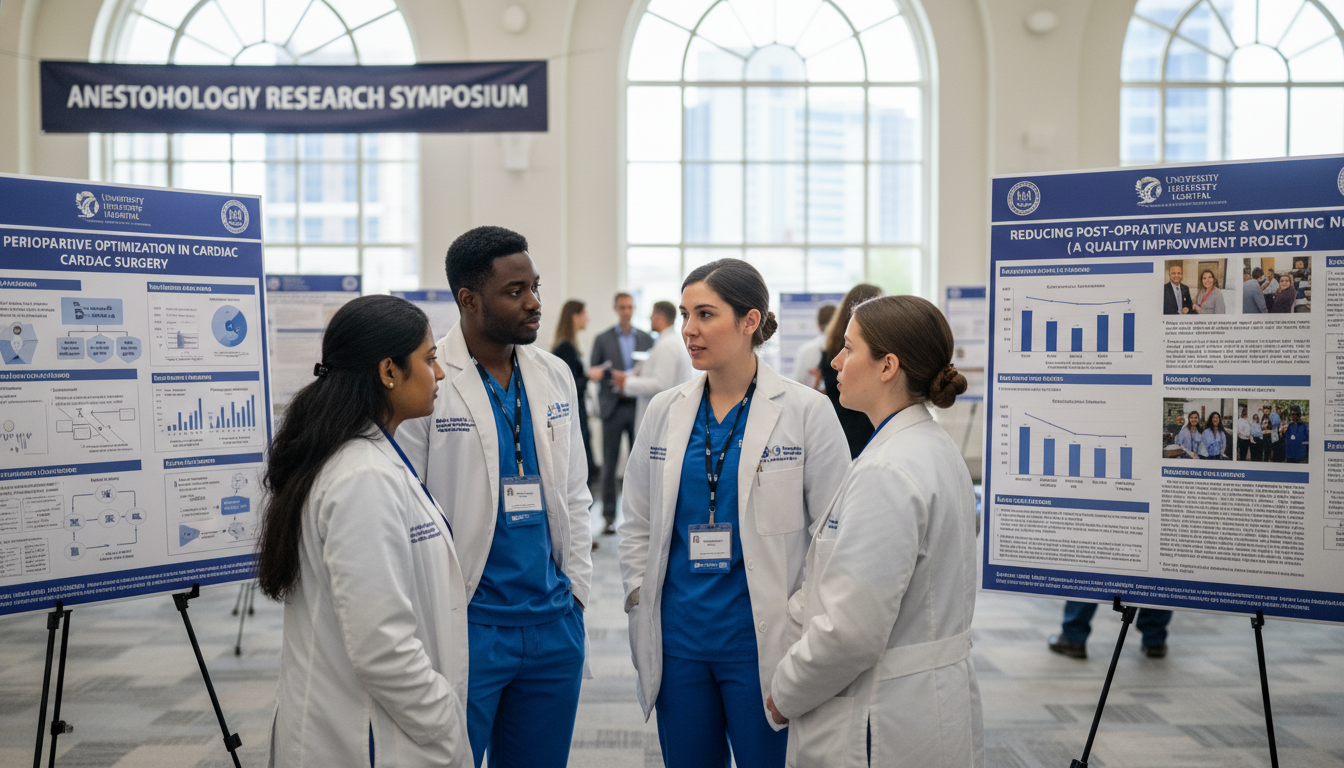
- Quality improvement (QI) – reducing postoperative nausea and vomiting (PONV), improving OR efficiency, decreasing complication rates
- Education research – simulation-based training projects, curriculum design, evaluation of teaching methods
- Translational and basic science – physiology, pharmacology, organ protection, neurocognition, perioperative inflammation
Residency programs (and later, fellowship directors) look for evidence that you can:
- Ask clear, clinically relevant questions
- Organize and complete a scholarly project
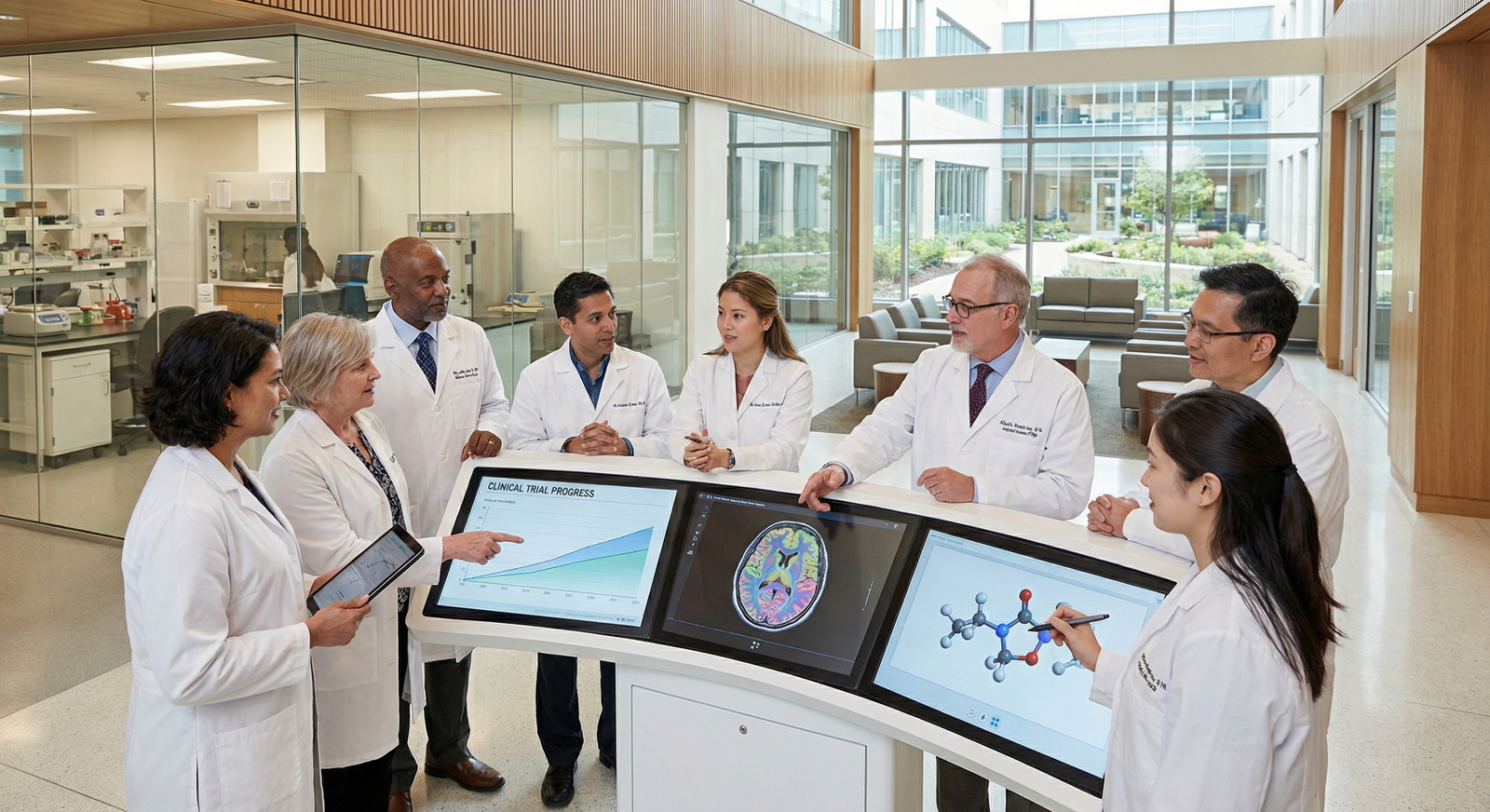
- Work within a multidisciplinary team
- Communicate results (abstracts, posters, presentations, manuscripts)
For you as a US citizen IMG, this is particularly impactful because research output:
- Counters bias by showing objective academic productivity
- Demonstrates that your non‑US medical education is not a barrier to high-level scholarship
- Helps you network with national faculty and leaders who may later write letters, support fellowship applications, or collaborate on larger academic residency track options
How programs typically structure resident research
Most anesthesiology residencies in the US include at least one of the following:
- Dedicated research elective(s) – 1–3 months total, sometimes more in research-heavy programs
- Required scholarly project – can be QI, case series, retrospective study, or curriculum design
- Departmental “resident research day” or “scholarly day” – residents present projects, often judged with awards
- Access to institutional infrastructure – IRB support, statisticians, medical librarians, data analysts
Before you commit to a large project, review your program’s:
- Policy on protected research time
- Expectations for scholarly output (e.g., mandatory poster vs. publishable work)
- Availability of mentorship and resources
As an American studying abroad who is now back in the US for residency, leverage your unique position: you may bring an international perspective on perioperative care, pain management, or resource variability that translates into novel research questions.

Getting Started: Building a Research Plan as a US Citizen IMG
Step 1: Clarify your long-term goals
Your research strategy should align with where you might want to end up:
- Academic attending – research is close to essential; aim for multiple resident research projects, at least one publication, and national presentations.
- Private practice with leadership aspirations – QI projects and outcomes research that show system-level thinking will be most valuable.
- Fellowships (cardiac, critical care, pain, peds, regional, obstetric) – subspecialty-aligned research makes fellowship applications much stronger.
- Education-focused career – pursue medical education research, simulation studies, and curriculum projects.
Make an honest assessment early in CA‑1 (or late PGY‑1) and revisit yearly. Even if you’re undecided, engaging in at least one structured project will build skills and keep doors open.
Step 2: Assess your starting point
Ask yourself:
Did you do research in medical school (at home or abroad)?
- If yes: What type? Any publications? What skills do you already have (data collection, analysis, writing)?
- If no: You’ll need extra structure and mentorship in your first project.
What’s your comfort level with:
- Reading literature critically
- Using citation software (EndNote, Zotero, Mendeley)
- Basic statistics (t‑tests, chi-square, regression)
- Writing abstracts and manuscripts in English
As a US citizen IMG, your English may be native or near-native, but your school may have offered fewer structured research opportunities. Recognizing these gaps (and strengths) lets you target specific skills.
Step 3: Map opportunities within your program
Practical ways to identify projects:
Department grand rounds and M&M (morbidity & mortality)
- Listen actively: repeated clinical issues (e.g., hypotension after induction, PONV in certain populations) are ready-made research questions.
Ask explicitly about ongoing resident research projects
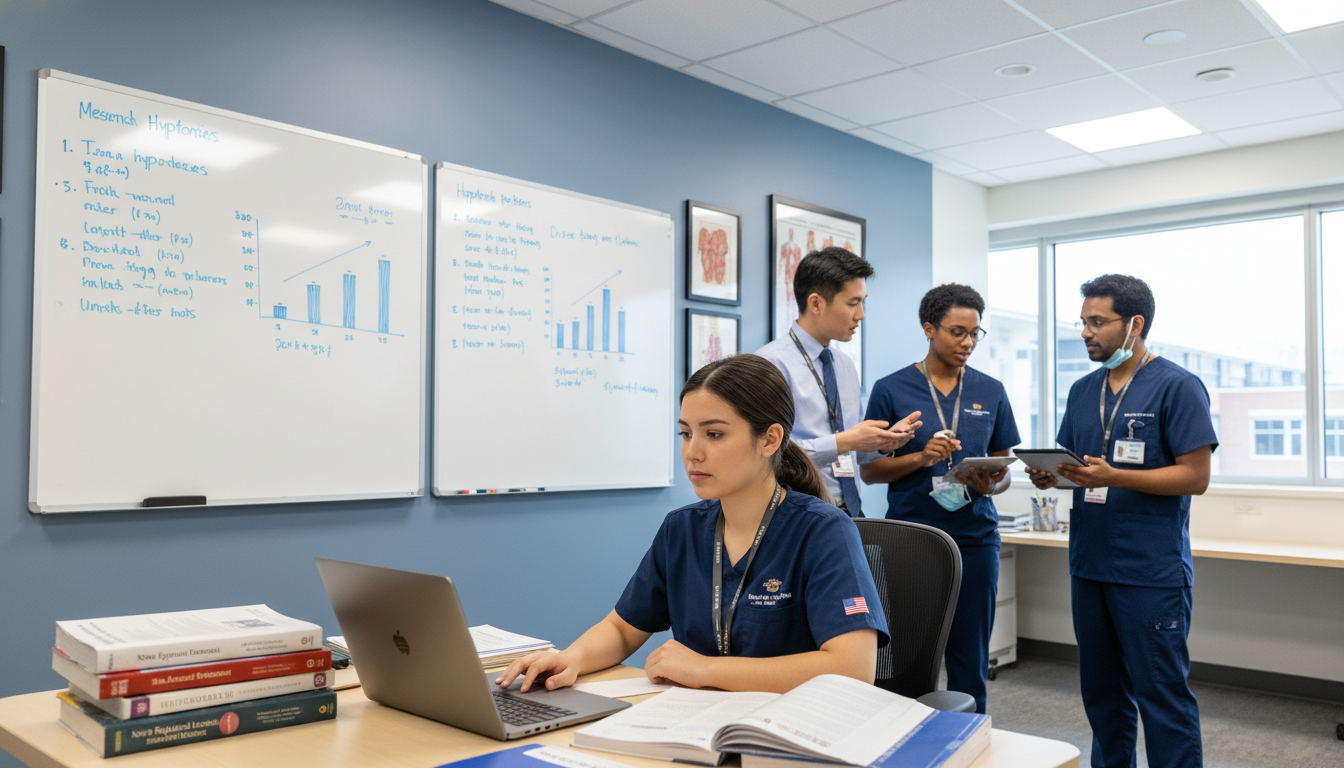
- Many attendings have “shelved” projects (data collected, no one to write them up). These can be perfect entry points for a busy CA‑1.
Talk to senior residents and fellows
- Ask: “Who is productive and supportive with resident research?”
- Identify attendings known for working well with trainees.
Check your institution’s research office or intranet
- Look for anesthesiology projects, perioperative medicine, ICU research groups, and pain research units.
Create a simple spreadsheet to track:
- Faculty name and subspecialty
- Type of research (QI, clinical, basic, education)
- Ongoing or proposed project titles
- Your level of interest and potential role
Choosing the Right Type of Project: Matching Scope to Reality
1. QI and patient safety projects
Best for: Busy early residents or those new to research.
- Examples:
- Reducing inappropriate perioperative fasting durations
- Increasing compliance with multimodal analgesia protocols
- Improving documentation of difficult airways
- Standardizing PACU handoff checklists
Why they’re ideal:
- Easier IRB pathways (sometimes exempt / QI only)
- Shorter timelines: you can often complete a project within 6–12 months
- Clear clinical impact—great for interviews and future job talks
Example:
As a CA‑1 US citizen IMG, you notice frequent unplanned ICU admissions after high-risk abdominal surgery. You work with your attending to design a QI project: implement a structured preoperative risk stratification tool and track unplanned ICU admissions and length of stay.
Outcomes:
- Abstract submission to ASA or a regional meeting
- Possible manuscript in a perioperative or patient safety journal
- Concrete improvement in your hospital’s care pathways
2. Retrospective clinical studies
Best for: Residents willing to invest more time and learn data analysis.
- Examples:
- Comparing outcomes for two different airway strategies in obese patients
- Evaluating effectiveness of a new PONV protocol
- Investigating predictors of postoperative delirium in elderly patients
Key steps:
- Define a precise, answerable question
- Perform a focused literature review
- Develop a data collection form and define variables clearly
- Work with a statistician early
- Plan for realistic sample size and timeline
Timeframe: 12–24 months from idea to potential publication.
For a US citizen IMG, these projects are particularly valuable: they look “serious” on a CV and can offset concerns about unfamiliar medical schools or non-US preclinical training.
3. Prospective clinical studies
Best for: Residents at research-heavy programs or those on an academic residency track.
Challenges:
- More complex IRB approval
- Need for patient consent
- Data collection logistics during busy OR days
- Longer timelines—may straddle CA‑1 to CA‑3 years
If you’re considering a research year, a PhD track, or a heavily academic career, one well-executed prospective study can be a career-defining experience. For most residents, however, starting with QI and retrospective work is more realistic.
4. Education and simulation research
Best for: Residents interested in teaching, simulation, or program leadership.
Examples:
- Evaluating a new simulation curriculum for crisis resource management
- Studying flipped-classroom or spaced-learning approaches for CA‑1 boot camp
- Assessing different feedback strategies for regional anesthesia training
Benefits:
- Often faster IRB or educational-exempt pathways
- Directly tied to resident life and learning
- Ideal if you want a future role as program director, simulation director, or education scholar
Maximizing Research During Residency: Practical Strategies and Time Management
Integrating research into a busy clinical schedule
Residency schedules are demanding. To make research sustainable:
Block your time realistically
- 2–4 hours per week during heavy rotations (ICU, nights)
- 4–8 hours per week during lighter rotations or research electives
Use “hidden” time wisely
- Read and annotate articles between cases when appropriate
- Draft abstract outlines during call lulls
- Do clerical tasks (references, formatting) on post‑call days if you’re mentally tired but still functional for low-stakes work
Create micro-goals
Instead of “write introduction,” break tasks into:- Identify 10 core references
- Draft the first 2 paragraphs
- Revise topic sentences
Building your resident research team
Even as a junior resident, don’t work in isolation:
Primary mentor (attending)
- Provides clinical expertise and departmental support
- Helps navigate politics, resources, authorship, and IRB
Secondary mentor or co-mentor
- Can be a statistician, QI specialist, or intensivist
- Offers different perspective and methodological expertise
Peer collaborators (co-residents, fellows, medical students)
- Share data collection, literature review, and figure creation
- Good for learning teamwork and project management
As a US citizen IMG, mentorship is critical—not just for the project, but for integration into the department’s academic culture and networks you may have missed by not training in a US medical school.
Communication and expectations
To avoid common pitfalls:
Agree on roles early
- Who is first author? Who handles data collection? Who leads writing?
- Put this in an email summary after your initial meeting.
Set a written action plan
- Example:
- Month 1: Literature review and study question finalized
- Month 2–3: IRB submitted and approved
- Month 4–8: Data collection
- Month 9–10: Analysis
- Month 11: Abstract submission
- Month 12–14: Manuscript drafting
- Example:
Schedule regular check-ins
- 30–45 minutes every 4–6 weeks, even just to maintain momentum.
Leveraging institutional resources
Most academic centers, even mid-sized ones, provide:
- IRB office consultations
- Statistical support (often free for residents up to a certain limit)
- Medical library services
- Librarians can perform structured searches and help with citation management.
- Grants for resident research
- Even small internal grants ($1,000–$5,000) look impressive on a CV.
Ask your program coordinator or chief residents how previous resident research projects were supported; replicate the pathways that worked.
Translating Research into Career Advantages for US Citizen IMGs
1. Strengthening your anesthesia match narrative (for future transitions)
Even though you already matched into anesthesiology, your trajectory isn’t fixed. For fellowships or later transitions:
Use your resident research projects to tell a coherent story:
“As an American studying abroad, I became interested in how resource variability affects perioperative outcomes. During residency, I studied X, Y, and Z and developed an interest in perioperative optimization and critical care…”Show progression:
- CA‑1: Case report or QI project
- CA‑2: Larger retrospective study or education research
- CA‑3: Subspecialty-aligned project, leadership in departmental initiatives
2. Standing out for fellowships and academic positions
Program directors and fellowship selection committees look closely at:
- Abstracts and posters at:
- ASA, IARS, SCA, ASRA, SCCM, SOAP, SPA, pain society meetings
- Peer-reviewed publications, even if you’re not first author
- Letters of recommendation that specifically mention your research initiative, independence, and reliability
If you aim for:
- Cardiac anesthesia – projects on hemodynamics, cardiac surgery outcomes, TEE education
- Critical care – sepsis, mechanical ventilation, perioperative ICU transitions
- Regional anesthesia & acute pain – nerve block protocols, ERAS pathways, opioid-sparing regimens
- Chronic pain – neuromodulation, interventional outcomes, opioid stewardship
Align your resident research projects with those areas during CA‑2 and CA‑3.
3. Considering an academic residency track or research pathway
Some anesthesiology programs offer:
- Formal academic residency tracks – extra research time, mentorship committees, protected didactics on statistics and study design.
- Integrated research pathways – 6–12 months of dedicated research, sometimes combined with early fellowship exposure.
As a US citizen IMG, if you’re in such a program or can transfer into this track internally:
- Document your early productivity (abstracts, posters, manuscripts-in-progress).
- Show clear commitment in your personal statements and in discussions with your program director.
- Ask about funding sources for extended research time (T32 grants, institutional support).
4. Using research to buffer against bias
Persistent (if unfair) assumptions about IMGs may include:
- Weaker research exposure or scientific training
- Less familiarity with US-centric practice patterns
- Limited academic potential
You can counter this through:
- Early, visible engagement in departmental projects
- Consistent presence at conferences and presenting locally and nationally
- Co-authoring with respected faculty whose reputations indirectly validate your capabilities
In interviews and professional conversations, highlight:
- Your research as evidence of adaptability and initiative
- How your international training gave you unique questions or perspectives that enriched the project
Common Pitfalls and How to Avoid Them
Taking on too much too soon
- Problem: Saying “yes” to every project, then failing to complete them.
- Solution: Start with 1–2 well-scoped projects, finish them, then expand.
Vague or unanswerable research questions
- Example of a bad question: “Does anesthesia affect outcomes in surgery?” – too broad.
- Better: “Among adults undergoing elective laparoscopic cholecystectomy, does a multimodal analgesia protocol reduce PACU opioid consumption compared with opioid-based analgesia?”
Use the PICO framework (Population, Intervention, Comparison, Outcome) and get feedback from your mentor before proceeding.
Ignoring statistics until the end
- This leads to underpowered or flawed studies.
- Involve a statistician at the design stage, especially for retrospective or prospective clinical work.
Underestimating the time needed for writing
- Data collection is only half the story. Manuscript writing takes multiple rounds of revision.
- Block protected time for writing, especially in CA‑2 and CA‑3 when clinical responsibilities are high but so are leadership expectations.
Frequently Asked Questions (FAQ)
1. I’m a US citizen IMG in anesthesiology with no prior research experience. Is it too late to start during residency?
No. Residency is a perfectly reasonable time to start, especially in anesthesiology. Start with a manageable project such as:
- A QI initiative with a clear, measurable outcome
- A retrospective chart review with well-defined endpoints
Focus on learning the research process: formulating a question, navigating the IRB, collecting data, and writing an abstract. One well-executed project is more valuable than many half-finished ideas.
2. How many research projects should I aim to complete during residency?
Quality matters more than quantity, but as a rough guide:
- Minimum: 1 substantial project that leads to at least a poster presentation
- Competitive for fellowships/academic jobs:
- 2–3 projects, ideally with:
- 1–2 national-level presentations
- 1+ peer-reviewed publication (first or co-author)
- 2–3 projects, ideally with:
If you are on an academic residency track or research-focused path, higher scholarly output may be expected, but don’t sacrifice quality or your clinical training.
3. Does research during residency really matter, or are medical school publications enough?
For anesthesiology, research during residency is often more impactful than older medical school work because:
- It’s directly related to your chosen specialty
- It occurs in a US clinical environment, which carries particular weight for US training institutions
- It demonstrates growth, continuity, and current engagement
Medical school research (especially if done as an American studying abroad) is helpful, but residency research shows you can balance scholarship with real clinical responsibilities.
4. What if my residency program doesn’t have a strong research culture?
You still have options:
- Identify 1–2 research-minded faculty, even if they’re few.
- Connect with hospital-wide or system-wide research and QI offices.
- Collaborate across departments (e.g., ICU, surgery, pain, hospital medicine).
- Seek external mentorship through specialty societies (ASA, subspecialty groups) or prior mentors from medical school.
- Start small but aim for measurable scholarship: posters, short communications, or case series that you can realistically complete.
If you plan ahead and advocate for yourself, you can still build a solid research portfolio—even in a lower-research-volume environment.
By approaching research during residency with a clear strategy, realistic expectations, and strong mentorship, you can turn your position as a US citizen IMG in anesthesiology into a distinct strength. Your background and perspective are assets; research is one of the most powerful ways to showcase them while advancing both your career and the specialty.