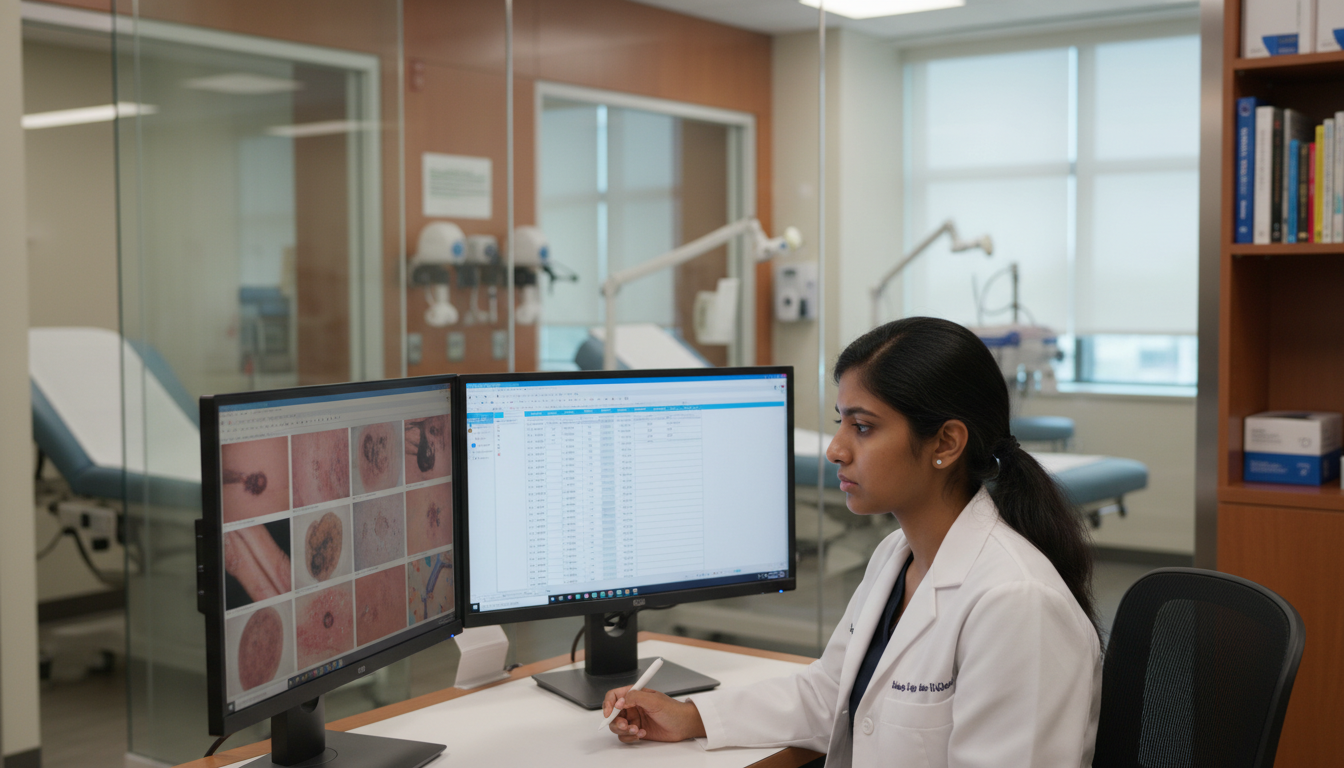
Why Research During Dermatology Residency Matters
Dermatology is one of the most competitive specialties—and also one of the most research-driven. While you can become an excellent clinician without ever publishing, engaging in research during residency can dramatically expand your skill set, network, and career options.
For many residents, research feels like “extra work” on top of a demanding schedule. But when approached strategically, it can be energizing rather than draining, and it can help you clarify your long-term path—whether that’s private practice, an academic residency track, industry, or public health/advocacy.
This guide will walk you through:
- How research fits into dermatology residency
- Types of projects that are realistic during training
- How to get started and choose mentors
- Practical strategies to integrate research during residency into a busy schedule
- How to leverage resident research projects for fellowships and early-career jobs
Throughout, the focus is on pragmatic, actionable advice tailored to dermatology.
The Role of Research in Dermatology Residency
Why Research Is So Prominent in Dermatology
Dermatology is uniquely visual and heterogeneous, with evolving diagnostic tools (e.g., dermoscopy, confocal microscopy, AI image analysis) and rapidly changing therapeutics (biologics, JAK inhibitors, targeted therapies). This creates constant opportunities for:
- New disease classifications
- Improved diagnostic algorithms
- Comparative effectiveness studies
- Translational work bridging immunology, oncology, and genetics
Because of this, many dermatology departments have a strong academic culture. Even if you’re not in an explicitly academic residency track, you’ll likely be exposed to:
- Departmental research conferences
- Journal clubs with a heavy focus on study design and interpretation
- Residents presenting at national meetings (AAD, SID, ASDS, etc.)
- Faculty with active clinical trials or laboratory programs
How Programs View Resident Research
Most dermatology residencies consider research a core component of training—even if informally.
Common program expectations include:
- Completing at least one resident research project
- Presenting work at regional or national meetings
- Submitting at least one manuscript, case report, or review
- Participating in quality improvement (QI) initiatives linked to clinical care
Residency program directors may look at your research activity as a marker of:
- Intellectual curiosity
- Academic potential
- Work ethic and follow-through
- Ability to collaborate and communicate
For those eyeing MOHS, dermatopathology, pediatric dermatology, complex medical dermatology, or other competitive fellowships, a solid research profile can make a meaningful difference in your derm match for fellowship.
Types of Research Opportunities in Dermatology Residency
Not all research looks like pipettes and cell cultures. One of the most important choices you’ll make is what kind of research you pursue. Ideally, your projects should align with both your interests and your program’s infrastructure.
1. Clinical Research
Clinical research is often the most accessible during residency because it leverages your daily patient care.
Common clinical research formats:
Retrospective chart reviews
- Examples:
- Outcomes of biologic therapy in psoriasis patients with comorbid IBD
- Patterns of antibiotic use in acne and their alignment with guidelines
- Melanoma staging and survival trends at your institution over 10–15 years
- Pros: Feasible, relatively fast, often publishable
- Cons: Data quality depends on charting; IRB approval still required
- Examples:
Prospective cohort studies
- Examples:
- Following patients starting a new systemic agent (e.g., JAK inhibitor) and tracking side effects
- Evaluating adherence to topical regimens using electronic monitors or patient apps
- Pros: Higher level of evidence, can yield strong abstracts and manuscripts
- Cons: More time-intensive; may extend beyond residency duration
- Examples:
Clinical trials (industry-sponsored or investigator-initiated)
- Roles for residents:
- Sub-investigator
- Helping with consent, data collection, photography, and adverse event documentation
- Pros: Exposure to cutting-edge therapies; excellent learning experience
- Cons: Regulatory complexity; your contribution may be less “independent”
- Roles for residents:
2. Case Reports and Case Series
Case-based work is classic in dermatology because skin findings can be highly specific and visually documented.
Good cases for reports/series:
- Unusual presentations of common diseases
- Rare diseases with striking images (e.g., genodermatoses, paraneoplastic eruptions)
- Novel treatment approaches or off-label drug responses
- Serious adverse cutaneous drug reactions (SCARs)
Benefits:
- Faster path to submission and publication
- Ideal for early research exposure
- Great for teaching and conference posters
Limitations:
- Lower in the hierarchy of evidence
- Less impactful for research-heavy academic career paths—though still valuable as building blocks
3. Basic Science and Translational Research
If your department has strong basic science labs, you might have opportunities in:
- Immunology of inflammatory skin diseases (psoriasis, atopic dermatitis)
- Tumor biology of melanoma, Merkel cell carcinoma, cutaneous lymphomas
- Genetics and genomics of genodermatoses
- Skin microbiome studies
These projects may involve:
- Bench work (cell culture, flow cytometry, molecular assays)
- Bioinformatics and -omics data analysis
- Translational collaborations linking biopsy specimens to clinical outcomes
Considerations:
- Time horizon: Basic science projects usually span multiple years.
- Feasibility: Often better suited for residents on a research track or those planning an academic career, sometimes with protected research time.
- Payoff: Can yield high-impact publications and foster deep mentorship relationships.
4. Health Services, Outcomes, and Epidemiology
These projects can be especially rewarding if you’re interested in policy, population health, or disparities.
Examples:
- Access to dermatology care in rural vs. urban settings
- Teledermatology effectiveness for triaging skin cancers
- Racial and ethnic disparities in melanoma stage at diagnosis
- Cost-effectiveness of biologics versus conventional systemic therapies
Methods may involve:
- Database analyses (institutional data, registries, national datasets)
- Surveys and mixed-methods research
- Quality and safety metrics
These projects can often be performed with flexible hours and are very relevant to long-term system-level improvements in care.
5. Educational Research
As a resident, you’re immersed in both teaching and being taught—perfect conditions for educational research.
Potential topics:
- Evaluating dermoscopy teaching methods for residents or medical students
- Designing and testing new curricula for primary care physicians on skin cancer detection
- Assessing the impact of virtual pathology modules
Outputs:
- Educational innovations that can be presented at meetings like AAD or AAMC
- Publications in medical education or dermatology journals
- Portfolio material if you pursue an academic residency track with a teaching focus

How to Get Started: Finding Mentors, Topics, and a Niche
Step 1: Clarify Your Goals
Before jumping into any project, ask yourself:
- Do I see myself in academic dermatology, private practice, or undecided?
- Am I interested in fellowships (e.g., MOHS, dermpath, pedi derm, complex medical derm)?
- What genuinely interests me—autoimmune disease, procedural dermatology, lasers, skin of color, teledermatology, global health?
Your goals will shape:
- The type of research you prioritize
- The intensity and time commitment
- The kind of mentors you seek
If you’re unsure, start broad with a smaller, lower-risk project (like a case report or short retrospective review) to get a feel for the process.
Step 2: Identify and Approach Mentors
Strong mentorship is the single most important factor in productive resident research.
Where to find mentors:
- Program leadership (PD, APD) often know who is active and resident-friendly
- Department research directors or vice-chairs
- Faculty members whose clinical interests match yours (e.g., psoriasis clinic, oncodermatology, pediatric clinic)
- Adjacent departments: pathology, rheumatology, oncology, infectious disease, or biostatistics
How to approach:
- Send a brief, focused email:
- 2–3 sentences about who you are
- One sentence about your interests
- One or two concrete questions (e.g., “I’m looking for a resident-level project in cutaneous oncology; might you have anything appropriate or suggestions on where to start?”)
- Offer realistic time expectations (e.g., “I can commit 3–4 hours per week during this rotation.”)
Red flags:
- Mentors who have ideas but no track record of publishing
- Vague promises of authorship without clear roles
- Projects that rely on multiple layers of approval but no defined timeline
Step 3: Choosing the Right First Project
Characteristics of a strong first project during dermatology residency:
- Scope: Limited enough to complete within 6–12 months
- Dataset: Clearly defined and accessible (e.g., single-center data)
- Mentor: Engaged and available, with a history of shepherding residents through to publication
- Defined deliverables: A planned abstract, poster, or manuscript from the outset
Good starting options:
- Single-center retrospective chart review with a clearly framed clinical question
- Case report or short case series on patients you are directly involved in caring for
- A QI project that can generate both institutional value and scholarly output
Once you’ve completed one or two smaller projects successfully, you can move into more ambitious resident research projects, such as multi-center collaborations or prospective studies.
Making Research Work Within a Busy Residency
Understanding Your Program’s Structure
Dermatology residency schedules differ widely. Some programs have:
- Protected research blocks (2–6 weeks per year)
- Longitudinal half-days reserved for research or electives
- Formal research tracks or “scholarly concentration” pathways
Others may offer only informal time for research during lighter rotations. Your first step is to:
- Review your program’s handbook for research policies
- Ask senior residents how they balanced research with call and clinics
- Clarify expectations (formal vs. informal) for research during residency
Time Management Strategies that Actually Work
Start small and early
- Begin a manageable project in PGY-2 or early PGY-3.
- Avoid waiting until the final year when board prep, job searches, and fellowship applications peak.
Block protected mini-time
- Reserve two 2-hour blocks per week on your calendar as “research appointments” with yourself.
- Treat them like clinic: non-negotiable except for emergencies.
Productivity sprints
- Use 25–50 minute focused work intervals (e.g., Pomodoro or similar).
- Good for discrete tasks like data extraction, literature searches, or editing a results section.
Predefine micro-goals
- Instead of “work on paper,” define:
- “Extract data from 10 more patients”
- “Draft methods paragraph on inclusion/exclusion criteria”
- “Revise introduction based on mentor comments”
- Instead of “work on paper,” define:
Leverage ‘dead time’
- Use:
- Commuting time (if not driving) for reading or drafting outlines
- Short breaks to update to-do lists or check references
- Keep key documents accessible via cloud storage with appropriate HIPAA safeguards.
- Use:
Practical Workflow for a Resident Research Project
A common path for a retrospective study:
Refine the question
- Use PICO (Population, Intervention, Comparison, Outcome) or a variant.
- Example: In adult psoriasis patients at our institution (P), how often are health maintenance labs monitored (O) after starting methotrexate (I) compared with guideline recommendations (C)?
Literature review
- Spend 1–2 sessions reading and summarizing:
- 3–5 key original articles
- 1–2 recent reviews or guidelines
- Use citation managers (Zotero, Mendeley, EndNote).
- Spend 1–2 sessions reading and summarizing:
IRB protocol
- Work with your mentor to draft:
- Background and rationale
- Objectives and hypotheses
- Methods (inclusion/exclusion criteria, data fields, analysis plan)
- Submit early; IRB turnaround can be slow.
- Work with your mentor to draft:
Data collection
- Create a standardized data collection tool (e.g., REDCap, Excel).
- Clarify definitions ahead of time (e.g., what qualifies as “treatment failure”).
- Pilot your form on 5–10 charts to refine entries.
Data analysis
- Collaborate with a statistician or methodologist if available.
- Learn basic analysis approaches (e.g., t-tests, chi-square, logistic regression) relevant to your field.
Writing and dissemination
- Aim first for an abstract for a targeted meeting.
- Use the abstract as a scaffold for the full manuscript.
- Plan for at least one internal presentation (e.g., resident conference).
Maximizing the Impact of Your Resident Research
Building a Coherent Research Story
Even if you’re not planning an academic career, having a coherent theme to your research during residency can be valuable for:
- Fellowship applications
- Early-career job interviews
- Developing a recognizable niche
Examples of coherent themes:
- Skin cancer & dermato-oncology
- Projects on melanoma staging, immunotherapy toxicities, or non-melanoma skin cancer outcomes
- Inflammatory dermatoses
- Work on psoriasis registries, atopic dermatitis treatment pathways, or biologic safety
- Procedural and aesthetic dermatology
- Studies on laser outcomes, scar treatments, or complication rates in cosmetic procedures
- Health disparities and skin of color
- Analyses of delayed melanoma diagnosis, keloid treatments, or pigmentary disorders
When your CV shows multiple projects within a related area, it signals to reviewers that you are developing depth and expertise, which is attractive for both clinical and academic residency track positions.
Presenting and Publishing
Aim to transform each substantive project into:
An abstract
- Submit to appropriate venues:
- American Academy of Dermatology (AAD)
- Society for Investigative Dermatology (SID)
- American Society for Dermatologic Surgery (ASDS)
- Regional or state dermatology societies
- Abstracts are often more competitive when they:
- Have clear, concise conclusions
- Demonstrate clinical relevance
- Include at least preliminary data
- Submit to appropriate venues:
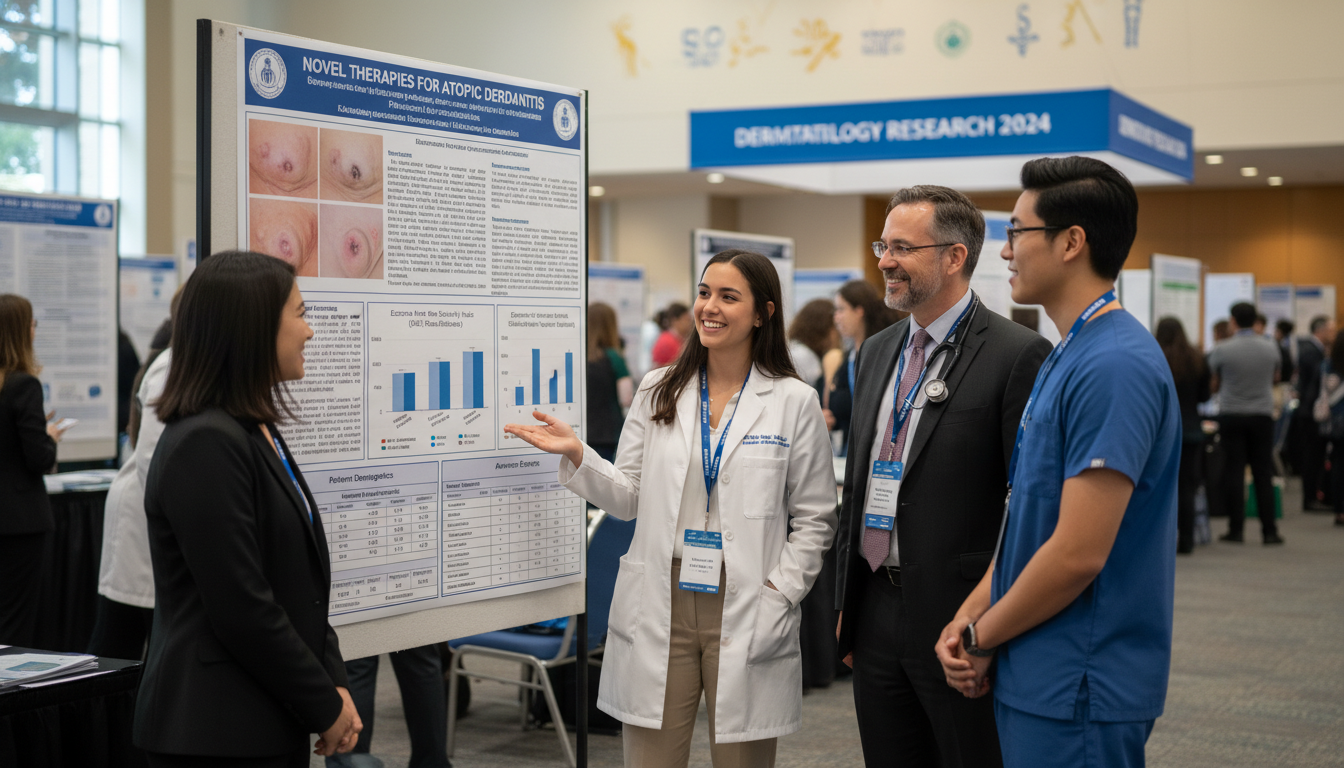
A poster or oral presentation
- Polish your visual design:
- Use high-quality, de-identified clinical images
- Emphasize key messages with bold headings and clear figure legends
- Practice a 1-minute “elevator pitch” of your project for conference networking.
- Polish your visual design:
A manuscript
- Choose journals aligned with your topic:
- High-impact: JAMA Dermatology, Journal of the American Academy of Dermatology (JAAD), British Journal of Dermatology (BJD)
- Subspecialty: Pediatric Dermatology, Dermatologic Surgery, Cutaneous Oncology journals
- Don’t be discouraged by rejection; resubmissions are common. Each round helps refine your work and writing.
- Choose journals aligned with your topic:
Using Research to Support Your Career Path
For those pursuing an academic residency track or a long-term academic career:
- Seek longitudinal mentorship with one or two key faculty.
- Aim to be first author on several papers by graduation.
- Get involved in multi-center collaborations or registries if possible.
- Consider a research elective or even a dedicated research year (if your pathway and life circumstances permit).
For those heading to private practice or hybrid careers:
- Research helps differentiate you in the derm match for fellowships and in competitive markets.
- It provides content for:
- CME talks
- Practice marketing (e.g., “Our dermatologist has published on X”)
- Ongoing consultation or part-time academic roles
For residents considering industry or clinical trials work:
- Participate in trials as a sub-investigator.
- Learn about study operations, regulatory aspects, and sponsor interactions.
- Develop skills in protocol design and clinical endpoint assessment.
Frequently Asked Questions (FAQ)
1. Do I have to do research during dermatology residency to get a good job?
No. Many excellent dermatologists in community or private practice have minimal research. However:
- Research experience can strengthen your application for fellowships and academic roles.
- It enhances your ability to critically appraise new therapies and literature.
- Even a small number of resident research projects can significantly enrich your training, teaching, and credibility with patients and colleagues.
If your career goals are strictly non-academic, focus on 1–2 manageable projects that genuinely interest you rather than chasing quantity.
2. How many publications should I aim for during residency?
There’s no magic number, and expectations vary by program and subspecialty. Rough benchmarks:
- General goal for most residents: 1–3 publications (including case reports, reviews, or original studies).
- For research-heavy academic careers or highly competitive fellowships: often more, with at least a few first-author, hypothesis-driven projects.
Quality, coherence, and your role (first vs. middle author) often matter more than raw count.
3. What if my program has limited research infrastructure?
You still have options:
- Start with case reports or case series using patients from your clinic.
- Partner with faculty who have ongoing projects but need help with data collection, chart review, or manuscript drafting.
- Reach out to alumni or nearby academic centers for collaborative opportunities.
- Explore multi-center or society-led resident research projects (often announced through AAD resident sections or listservs).
- Consider remote collaboration on database or literature-based projects with strong mentorship and clear communication plans.
Even in resource-limited environments, a focused, well-executed project can be impactful.
4. How do I balance research with board prep and clinical responsibilities?
Prioritization and timing are key:
- Early residency (PGY-2/early PGY-3): Start 1–2 small to moderate projects; learn research basics; build habits.
- Mid residency (PGY-3): Push to complete data collection and initial manuscripts; present at meetings.
- Late residency (PGY-4): Focus on polishing manuscripts, submitting remaining work, and shifting more energy toward board prep and career planning.
Communicate transparently with mentors about your exam schedule, call responsibilities, and clinic load. Most will be supportive if you set realistic timelines and follow through on agreed tasks.
Engaging in research during dermatology residency doesn’t have to be overwhelming or reserved for future physician-scientists. With the right mentorship, strategic project selection, and disciplined time management, you can turn resident research projects into powerful tools for learning, career development, and patient care improvement—while still preserving your well-being and clinical growth.