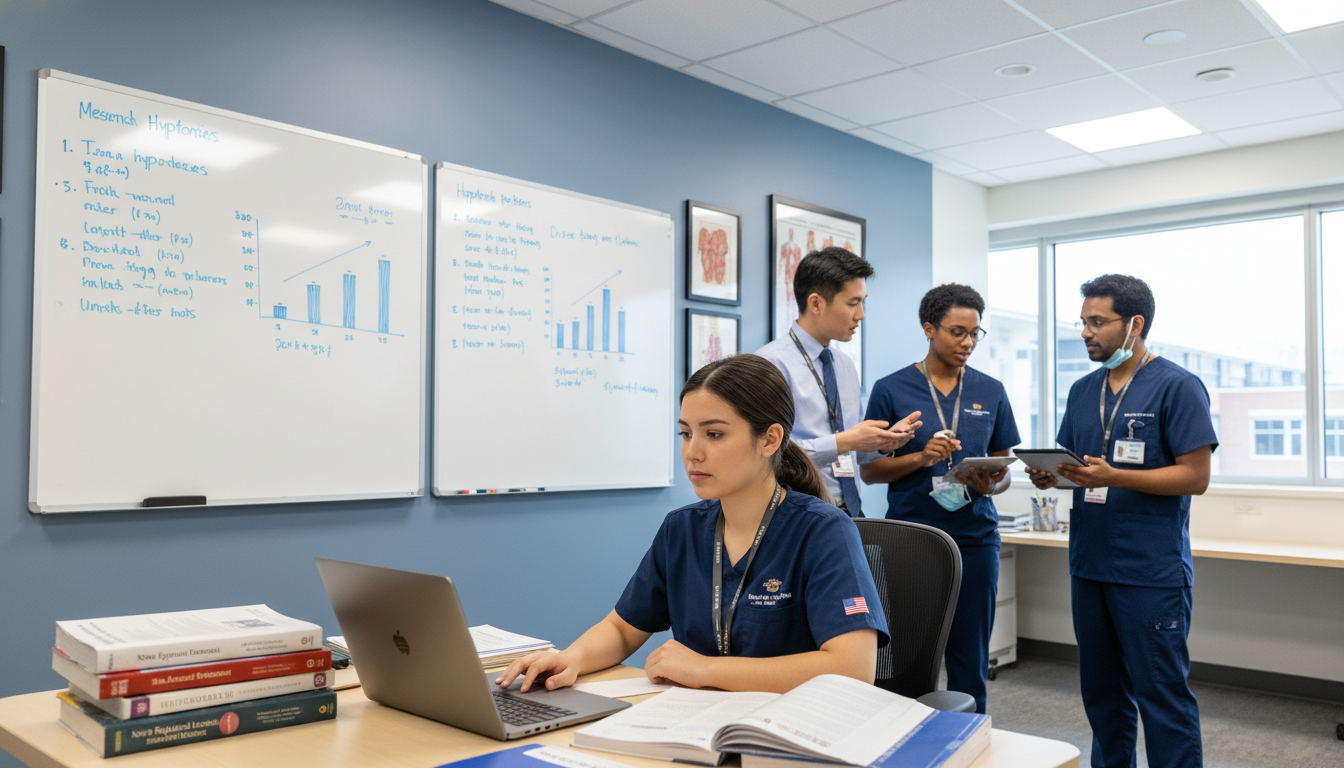
Understanding Research During Residency as a DO in Emergency Medicine
For a DO graduate entering emergency medicine, residency can feel like stepping onto a treadmill already running at full speed. You’re managing critical patients, learning procedures, studying for boards, and adapting to the culture of the emergency department (ED). Adding “research during residency” to that list can seem overwhelming.
Yet research is increasingly important in emergency medicine—whether your goal is an academic residency track, a fellowship, or simply becoming a sharper clinician. Crucially, as a DO graduate, engaging in research can also help you stand out in a field that historically has been more MD-heavy, especially at large academic centers.
This guide breaks down how to approach research during residency as an emergency medicine (EM) resident, with a specific focus on DO graduates and the unique opportunities and challenges you might encounter. We’ll cover why research matters, how to get started, how to realistically balance projects with clinical duties, and practical examples of resident research projects that fit into a busy EM schedule.
Why Research Matters for DO Graduates in Emergency Medicine
1. Levelling the Playing Field in an Academic Environment
With the single accreditation system, DO graduates now train alongside MDs in the same emergency medicine residency programs. Many EM programs, particularly academic ones, still emphasize scholarly activity in their culture, websites, and fellowship selection criteria.
For a DO graduate, participating in research during residency can:
- Demonstrate that you are comfortable in an academic environment
- Counter outdated biases about osteopathic training by generating measurable scholarly output
- Strengthen your portfolio for fellowships (toxicology, critical care, EMS, ultrasound, palliative EM, pediatric EM, etc.)
- Create mentors and advocates who know your work ethic and can write strong letters of recommendation
Even if your prior research experience from medical school or the osteopathic residency match felt limited, residency is a fresh opportunity to build your academic identity.
2. Improving Clinical Reasoning and Evidence-Based Practice
Emergency medicine is fast-paced and full of uncertainty. Research training teaches you to:
- Ask focused clinical questions (e.g., “What’s the safest, simplest way to risk-stratify low-risk chest pain?”)
- Critically evaluate literature instead of relying solely on habit or anecdote
- Understand statistics enough to see when a study’s conclusion does not match its data
- Integrate evidence into ED protocols, order sets, and quality-improvement (QI) initiatives
This mindset makes you a stronger clinician and a more credible voice when advocating for changes in your department.
3. Protecting Career Flexibility for the Future
You may not know exactly where you want your career to go. Perhaps you’re unsure whether you want to be:
- A community ED physician with a niche interest (e.g., ultrasound or EMS)
- A fellowship-trained subspecialist
- A core faculty member for an EM residency program
- A clinician-educator or researcher on an academic residency track
Engaging in research during residency keeps all of these doors open. Programs hiring core faculty or fellowship candidates often ask:
- Do you have a track record of completing resident research projects?
- Have you presented at conferences?
- Are you comfortable working with data and quality metrics?
Even a modest portfolio—one or two projects, a few abstracts or posters—is usually enough to demonstrate potential.

Getting Started: Finding Your Niche and Opportunities
1. Understand Your Program’s Expectations and Resources
Early in PGY-1 (or even before starting), clarify your department’s requirements:
- Does your program mandate a scholarly project or thesis?
- Are there dedicated research faculty, statisticians, or a research coordinator?
- Are there ongoing EM match–related or resident research projects you can join?
- Does the program have an academic residency track with structured research time?
As a DO graduate, you may be joining a program where expectations were designed around MD-associated academic structures. Don’t be intimidated—use that to your advantage. Academic programs often have:
- Preexisting protocols and IRB templates
- Databases of ED visits and outcomes
- Faculty already publishing in emergency medicine journals
Joining an established project can be a faster path to productivity than starting from scratch.
2. Pick a Research Area That Fits EM Reality
Successful research during residency fits at the intersection of:
- Your clinical interests
- Available mentorship and resources
- Feasibility within your schedule
Common and realistic areas for EM resident projects include:
Clinical outcomes and protocols
- New triage pathways (e.g., for sepsis, chest pain, stroke)
- Observation unit protocols and their impact on LOS (length of stay)
- Pain management strategies and opioid-sparing protocols
Operational and systems research
- ED crowding, boarding, and throughput
- Left-without-being-seen (LWBS) rates and interventions
- Effect of new documentation tools or AI decision support
Education research
- Simulation-based teaching for procedures or rare emergencies
- Impact of new intern orientation on patient safety metrics
- Evaluating feedback tools or resident wellness interventions
Ultrasound-focused research
- Accuracy and impact of specific POCUS protocols
- Time savings or safety improvements from bedside ultrasound
Pick something you actually care about. If you’re passionate about ultrasound, sepsis, or EMS, let that drive your project—your intrinsic interest will carry you through the inevitable logistical hurdles.
3. Identify Mentors Strategically
Your research success will depend heavily on mentorship. Aim to have:
- A content mentor – An attending with expertise in your chosen topic (e.g., toxicology, ultrasound, critical care).
- A process mentor – Someone who knows how to run IRB submissions, manage data, and get manuscripts published.
For DO graduates, mentors can also help normalize your path and connect you with opportunities if you’re less familiar with the academic research culture. Look for:
- Faculty with a track record of publications and resident involvement
- Attendings who completed research-focused fellowships
- EM physicians on an academic residency track who are visibly active in projects
Don’t hesitate to ask directly:
“I’m a DO EM resident and I’d like to build a research project during residency. I’m especially interested in [topic]. Would you be open to mentoring or co-mentoring a small project?”
Mentors often appreciate clarity and enthusiasm, and many are explicitly recruited to support resident research projects.
Types of Research Projects That Fit a Busy EM Residency
1. Retrospective Chart Review: The Resident-Friendly Classic
Why it works for EM residents:
- No need to change clinical workflow or enroll patients in real time
- Can often be completed mostly off-shift
- Frequently used for ED operational and clinical questions
Example project (DO-friendly, high-yield):
“Impact of an ED chest pain risk-stratification pathway on admissions and 30-day return visits.”
- Pull charts from before and after pathway implementation
- Measure admission rates, stress testing, and return visits
- Analyze for safety and cost-effectiveness
This kind of study is publishable and helps you understand the real-world behavior of your ED.
Key steps:
- Define a precise research question and primary outcome (e.g., admission rate, 72-hour returns).
- Work with your mentor and/or statistician to plan sample size and data fields.
- Submit an IRB application—retrospective studies are often expedited.
- Use an electronic data capture system (e.g., REDCap) rather than improvised spreadsheets.
2. Quality Improvement (QI) With a Research Lens
Most programs require residents to participate in QI. You can often turn a QI project into scholarly work.
Example:
A DO emergency medicine resident notices inconsistent analgesia for fracture patients.
Possible QI+research project:
- Implement a nurse-driven protocol for early analgesia and regional blocks
- Measure time to pain control, patient satisfaction scores, and opioid use before vs after the intervention
- Present at a regional meeting and draft a manuscript on translating osteopathic principles of holistic pain management into ED protocols
QI projects can be:
- More flexible with IRB (some may be exempt or minimal risk)
- Highly aligned with department leadership interests (throughput, quality metrics, complaints)
- Well-suited to group work with co-residents
3. Educational Research for Clinician-Educator–Minded Residents
If you enjoy teaching and envision a future as core faculty, educational research is ideal.
Example topics:
- Effect of simulation boot camps on intern performance during codes
- Impact of a structured feedback model on milestone evaluations
- Role of asynchronous online modules versus in-person lectures in resident learning
These projects often include:
- Pre- and post-intervention tests
- Surveys or validated assessment tools
- Collaboration with the residency leadership and medical education office
As a DO, you might explore how osteopathic principles (e.g., whole-person care, communication strategies, functional assessment) can be incorporated into EM teaching and evaluated for impact.
4. Multi-Center Collaborative Studies
If your institution participates in EM research networks (e.g., pediatric EM networks, sepsis collaboratives, ultrasound consortia), you may:
- Join ongoing multi-center studies
- Help with patient enrollment, data collection, or local coordination
- Earn authorship on resulting abstracts and papers
This is a powerful path to impact:
- Multi-center designs are more publishable in higher-impact journals
- You gain exposure to a broad academic network across institutions
- It can help offset limited local resources if your own ED is smaller or more community-based
Balancing Research With Clinical Demands and Wellness
1. Be Realistic About Time and Energy
Emergency medicine residency is demanding. To succeed with research during residency:
- Avoid overcommitting to multiple large projects
- Start with one well-scoped primary project and possibly one small secondary role (e.g., sub-analysis, co-author)
- Schedule your research like any other responsibility—block off dedicated time instead of relying on “when I have free time”
Ask your program director (PD) and research director:
- Are there elective blocks that can be devoted to research?
- Is there a formal academic residency track with protected time?
- Can you swap some non-ED rotations late in residency for research time once requirements are met?
2. Use Simple Project Management Tools
Treat your project as a professional obligation:
- Create a timeline: IRB submission, data extraction, analysis, abstract submission, manuscript drafting.
- Break work into small, concrete tasks you can complete in 30–60 minutes.
- Use shared folders (e.g., Google Drive, institutional OneDrive) and a simple task tracker (Trello, Notion, Asana, or even a spreadsheet).
Having a structure prevents projects from stalling when you rotate to a busy ICU month or a string of night shifts.
3. Protect Your Own Wellness and Boundaries
Night shifts, high-acuity cases, and emotional stress are core parts of EM. Research should not come at the cost of burnout.
Practical tips:
- Avoid working on data entry or complex analysis immediately post-night shift; use that time for sleep and recovery.
- Batch research tasks on lighter weeks or during elective time.
- Be honest with your mentor about your schedule and limits. It’s better to downsize a project early than abandon it halfway.
Residency is a marathon, not a sprint. A single, completed, good-quality project is more valuable than multiple half-finished ones.
Turning Research Into Career Capital: From Project to Publication
1. Aim for Tangible Outputs
For DO graduates especially, visible academic output can be particularly impactful on your CV. Try to convert your work into:
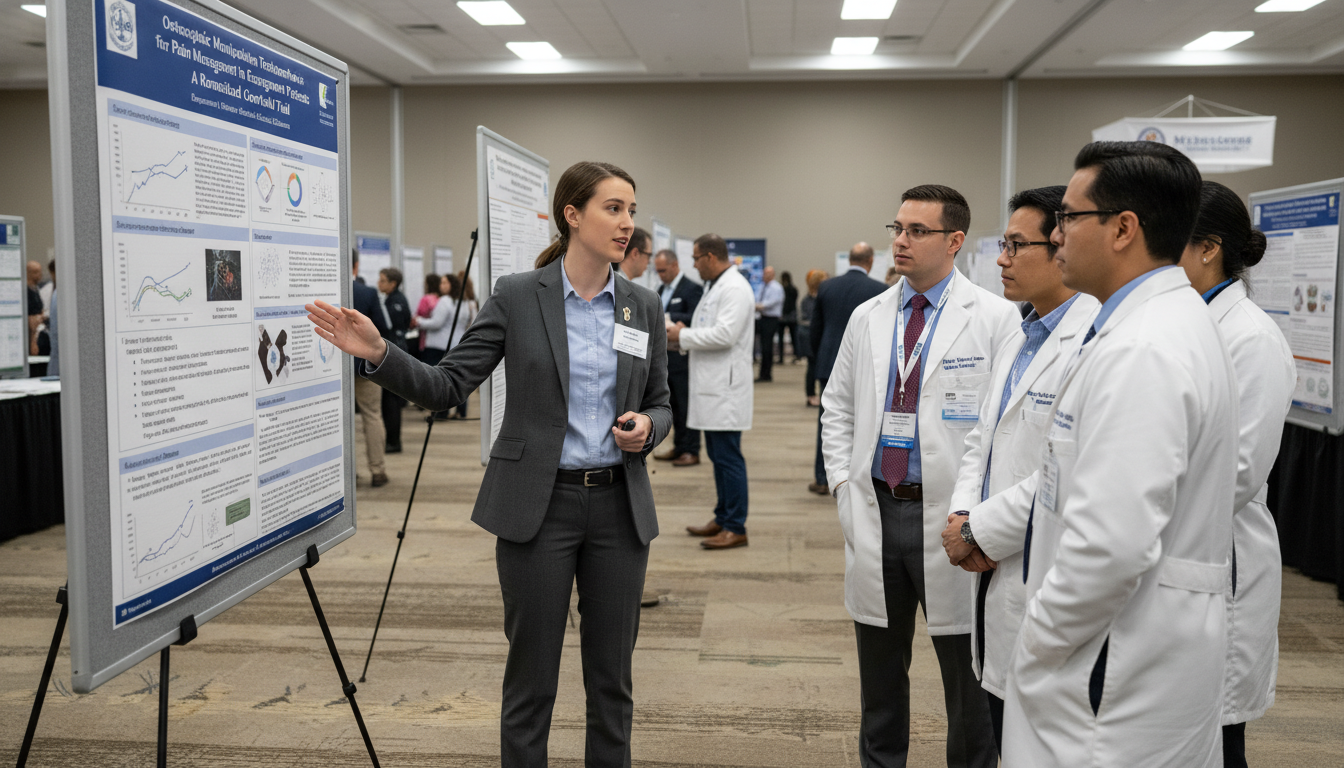
- Abstracts and posters at local, regional, and national conferences (ACEP, SAEM, AAEM, EMRA, AOCEP, etc.).
- Oral presentations if your abstract is selected for a talk.
- Peer-reviewed manuscripts, even if in smaller specialty or regional journals.
Prioritize venues that align with emergency medicine and osteopathic practice when helpful, such as:
- Emergency medicine specialty journals
- Osteopathic journals that highlight DO contributions
- Educational journals if your project is MedEd-focused
2. Learn the Basics of Scientific Writing
Don’t wait until PGY-3 to start learning how to write a paper. Early on, ask your mentor to:
- Share examples of their published manuscripts as templates
- Walk you through how to structure an Introduction, Methods, Results, and Discussion
- Help you interpret statistical output clearly and honestly
You can also:
- Attend institutional workshops on research writing
- Use residency academic time to draft sections of your manuscript
- Offer to co-author with peers to gain practice with writing and revising
3. Showcase Your Work for Fellowships and Academic Jobs
If you’re considering an EM fellowship or academic track, you’ll need to present a coherent scholarly narrative:
- What questions have you pursued in your resident research projects?
- How does your work connect to your desired fellowship (e.g., ultrasound, toxicology, critical care) or academic role?
- What skills in research methods, QI, or education have you developed?
For example:
- A DO graduate applying to a critical care fellowship might highlight an EM sepsis protocol project with outcome data.
- A DO interested in academic leadership might feature an educational research project about simulation or milestone assessment.
Include your research activities prominently on your CV:
- Peer-reviewed publications
- Abstracts and posters
- Presentations and invited talks
- Awards for research or education
Mention them specifically in your personal statements and interviews—this shows that you can complete projects and contribute meaningfully to academic environments.
Practical Example: A DO EM Resident’s Research Pathway
To make this concrete, consider the following example of how research during residency can unfold for a DO graduate in emergency medicine:
PGY-1: Exploration and Foundation
- You join an academic EM program after successfully navigating the osteopathic residency match into a now ACGME-accredited program.
- During orientation, you meet the research director and express interest in ultrasound and chest pain pathways.
- You become a sub-investigator on a multi-center study enrolling ED patients with suspected PE; your main tasks are consent and data entry.
- Simultaneously, you start brainstorming a simple retrospective project with your mentor.
PGY-2: Ownership and Data Collection
- You submit an IRB protocol for a retrospective chart review: evaluating the impact of a new chest pain risk stratification pathway on admissions and 30-day MACE (major adverse cardiac events).
- With guidance, you define inclusion criteria, outcomes, and data fields.
- On lighter rotations and elective blocks, you abstract data from the EMR into REDCap.
- You submit an abstract to a regional EM meeting and present a poster.
PGY-3: Publication and Career Positioning
- With your mentor and statistician, you complete data analysis and draft a manuscript.
- You submit the paper to an emergency medicine journal, revise based on peer review, and eventually get it accepted.
- You attend a national conference, present your findings, and network with faculty from programs where you’re considering an ultrasound fellowship.
- In interviews, you describe how your research experience taught you to evaluate pathways, manage data, and improve clinical efficiency—skills important for an academic or leadership role.
By graduation, you have:
- 1 first-author paper
- 2–3 abstracts or posters
- Experience in both single-center and multi-center research
- Strong letters from mentors who can speak to your scholarship and work ethic
This is a realistic and attainable path for many DO emergency medicine residents.
Frequently Asked Questions (FAQ)
1. I’m a DO graduate and had minimal research experience in medical school. Can I still build a meaningful research portfolio during residency?
Yes. Many residents—DO and MD—start with limited prior research. The key is to:
- Start early (ideally PGY-1)
- Choose a feasible, focused project with strong mentorship
- Prioritize completion over complexity
Even one solid retrospective chart review, QI project with outcome data, or educational study can lead to multiple abstracts and at least one published paper.
2. How do I balance research with a demanding emergency medicine schedule?
Focus on:
- Scope: Pick one main project you can realistically complete.
- Time management: Block specific hours on less intense rotations, during electives, or on nonclinical days.
- Support: Use your program’s research coordinator, statistician, and mentor to streamline IRB, data management, and analysis.
Also, protect your wellness: avoid sacrificing sleep and recovery after night shifts and be transparent with mentors about your workload.
3. Do I need research to get into an academic residency track or fellowship as a DO in EM?
You don’t always “need” it, but research significantly strengthens your application. For many competitive fellowships and academic residency positions:
- Evidence of completing at least one substantive project is highly valued.
- Publications and conference presentations show you can contribute to the academic mission.
As a DO graduate, research can help demonstrate your readiness for academic environments where scholarship is expected.
4. What types of projects are most realistic for an EM resident who is new to research?
Commonly successful starting points include:
- Retrospective chart reviews on ED protocols or outcomes
- QI projects with measurable pre/post-intervention metrics (e.g., throughput, pain control, sepsis bundle compliance)
- Educational research tied to simulation, feedback, or resident performance
These formats:
- Fit naturally into ED operations
- Are familiar to faculty mentors
- Are feasible within typical residency timelines
Engaging in research during residency as a DO graduate in emergency medicine is not only possible—it can be transformative for your career. With the right mentorship, a focused project, and realistic expectations, you can turn the chaos of the ED into meaningful, publishable insights that advance both your professional future and the care of your patients.