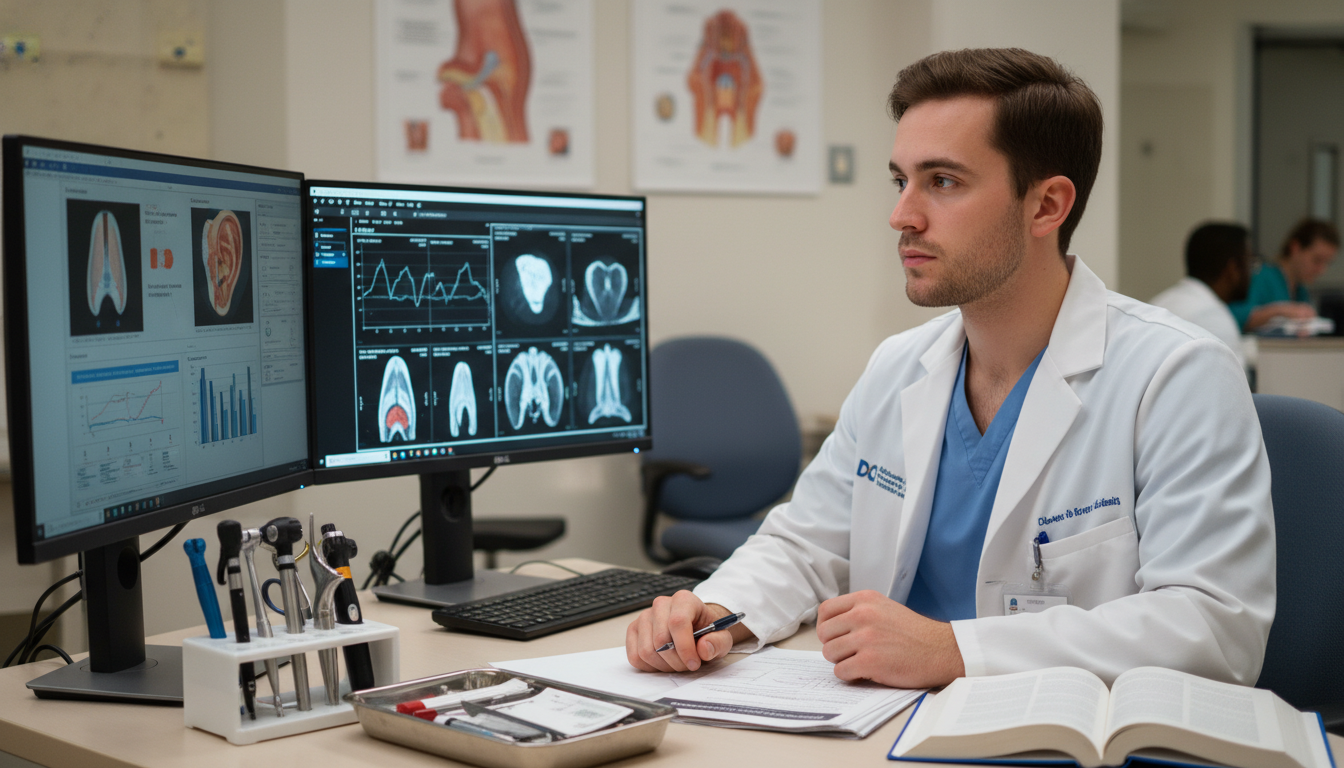
Why Research During Residency Matters for a DO in Medicine-Psychiatry
As a DO graduate entering a medicine-psychiatry combined residency, you occupy a uniquely powerful space in modern healthcare: you are trained to think holistically, integrate body and mind, and navigate both inpatient medicine wards and psychiatric units. Research during residency is one of the most effective ways to amplify that impact.
Participating in resident research projects is not just about padding a CV. In medicine-psychiatry combined programs, research can:
- Shape how teams approach medically complex patients with severe mental illness
- Influence hospital policy on integrated care
- Improve outcomes for populations often marginalized by fragmented systems
- Position you for leadership roles on an academic residency track or clinician-educator roles
For a DO graduate residency trainee, engaging in research also helps challenge outdated biases about osteopathic physicians by demonstrating rigor, curiosity, and scholarship equal to any MD colleague.
In this article, we’ll walk step-by-step through how to pursue research during residency in a med psych residency, what projects are realistic, and how to align your work with a sustainable, satisfying career path.
Understanding the Research Culture in Medicine-Psychiatry Programs
The Dual-World Challenge and Opportunity
A medicine psychiatry combined residency is structured to train you in both internal medicine and psychiatry over four or five years. That means:
- You rotate through medicine: wards, ICU, ambulatory, subspecialties
- You rotate through psychiatry: inpatient, CL (consult-liaison), outpatient, emergency, subspecialties
Each world has its own research culture:
- Internal Medicine side:
- Strong emphasis on quality improvement (QI), outcomes research, epidemiology, and clinical trials
- Typically more infrastructure for prospective clinical studies and database-driven projects
- Psychiatry side:
- Focus on neurobiology, psychopharmacology, psychotherapy outcomes, health services research, and social determinants of mental health
- Increasing emphasis on integrated care and collaborative care models
As a DO graduate, your osteopathic training and whole-person perspective position you particularly well in:
- Health services research on integrated care
- QI projects centered on functional status, pain, and somatic symptom presentations
- Evaluating multidisciplinary, biopsychosocial interventions
What Does “Research” Actually Mean in Residency?
“Research during residency” is broader than classic bench science. For a medicine-psychiatry combined resident, it may include:
- Quality Improvement (QI) projects
- Retrospective chart reviews
- Prospective clinical research (small or pilot studies)
- Case reports and case series
- Educational research (curriculum design and outcomes)
- Health services / implementation research (e.g., collaborative care models)
Most residents will not run a randomized clinical trial from scratch; instead, they plug into existing studies or design feasible, tightly scoped projects. That’s not a limitation—it’s a realistic reflection of time, resources, and duty-hour constraints.

Getting Started: Identifying Interests, Mentors, and Opportunities
Step 1: Clarify Your Niche in Medicine-Psychiatry
In a med psych residency, your potential topics range widely. Narrowing your focus early makes it easier to find mentors and feasible resident research projects. Consider intersections such as:
- Cardiometabolic health in serious mental illness
- E.g., metabolic syndrome in patients on atypical antipsychotics
- Substance use and comorbid medical illness
- E.g., managing cirrhosis in patients with alcohol use disorder and major depression
- Functional and somatic symptom disorders
- A natural fit for osteopathic physicians who think about body-mind integration
- Integrated inpatient medical-psychiatric units
- Outcomes of co-managed teams vs. traditional consultation models
- Neurocognitive disorders and complex medical comorbidities
- Psychiatric manifestations of systemic disease
- Autoimmune encephalitis, endocrine disorders, infectious diseases
- Collaborative care models in primary care or hospitalist settings
Make a short list of 2–3 major interest areas and 1–2 specific questions you find yourself asking clinically. This will guide conversations with potential mentors.
Step 2: Map the Research Landscape in Your Program
Early in PGY1 or PGY2, actively explore what's already happening:
- Attend research or scholarly activity orientations offered by your program
- Ask your chief residents which faculty are known for working with residents
- Explore your institution’s research websites for:
- Ongoing clinical trials in psychiatry and internal medicine
- Centers or institutes related to behavioral health, population health, or integrated care
- QI/Patient Safety offices with structured project templates
If you matched into your osteopathic residency match with an interest in research, you may have already met faculty at interviews. Reconnect with those contacts early.
Step 3: Find the Right Mentors—Plural
For a medicine-psychiatry combined track, you should ideally build a small mentoring team, for example:
- A primary mentor in psychiatry with experience in outcomes or health services research
- A co-mentor in internal medicine familiar with QI methodology or clinical epidemiology
- A methodologist: biostatistician or clinical researcher associated with your institution’s research office
As a DO graduate, look also for faculty who understand and value osteopathic training. They may help you explore OMM/OMT-related questions in medically complex psychiatric populations or advocate for you when misconceptions about DO training appear.
Tips for approaching faculty:
- Send a concise email: 1–2 paragraphs summarizing your background, interest in medicine-psychiatry combined care, and 2–3 possible project ideas
- Ask to meet for 20–30 minutes to discuss potential projects; bring a short CV
- Be explicit about time constraints and your year in training
Step 4: Align Your Project with a Realistic Timeline
Typical residency timelines:
- PGY1: Explore interests, learn basic research/QI concepts, maybe join an existing project
- PGY2–PGY3: Design and launch your own primary project; submit IRB if needed
- PGY3–PGY4+ (if 5-year program): Complete data collection, analysis, abstracts, and manuscripts
Ask your program director about expectations:
- Is there a formal scholarly project requirement?
- Are there protected research blocks or electives available?
- Can you cluster outpatient rotations to free time for research during residency?
Designing Feasible, High-Impact Resident Research Projects in Med-Psych
Start with Projects You Can Finish
A completed QI project with a poster and a publication is more valuable than an over-ambitious RCT that never gets enrolled.
For a DO medicine-psychiatry resident, consider starting with:
Retrospective Chart Review
- Example topic: “Rates of metabolic screening and intervention in patients with serious mental illness admitted to the medicine service vs. psychiatric unit.”
- Why it fits:
- Uses existing data; IRB often easier
- Directly relevant to your dual training
- Aligns well with DO focus on whole-person care
QI Project on Integrated Care Processes
- Example topic: “Improving completion of depression screening and brief intervention in a hospitalist service.”
- QI methods (PDSA cycles, run charts) are very feasible within residency schedules.
- May use standardized templates from your hospital’s QI office.
Case Report / Case Series
- Example: “Catatonia in a patient with systemic lupus erythematosus: integrated internal medicine and psychiatry management”
- These are good entry points to learn basic writing, literature review, and IRB exemptions.
Educational Research in Med-Psych
- Example: “Impact of a new med-psych curriculum on resident comfort managing delirium on medicine wards.”
- Useful if you’re interested in academic residency track or clinician-educator careers.
Combining Clinical Insight with Research Questions
Your clinical experiences will generate questions daily. Pay attention when you think:
- “We see this problem all the time, but nobody seems to track it.”
- “Our team handles this differently than other services—does it matter?”
- “This seems like a perfect case of ‘psych vs. medical’ being falsely separated.”
These thoughts are fertile ground for medicine psychiatry combined research. Examples:
- Do patients with chronic schizophrenia receive different levels of VTE prophylaxis on medicine wards compared to non-psychiatric patients?
- Among patients admitted to the med-psych unit, how often do we adjust psychotropics to address QTc prolongation or metabolic issues?
- Do OMT interventions for pain or insomnia reduce PRN sedative use in medically ill psychiatric patients? (Very DO-relevant.)
Navigating IRB and Regulatory Requirements
Any time you collect data for generalizable knowledge (not just internal QI) you must address IRB:
- QI vs. Research:
- Pure QI (aimed at local improvement without generalizable intent) might be exempt or expedited.
- Retrospective chart reviews often qualify for expedited review.
- Seek help from your mentor or institutional research office to:
- Prepare IRB documents
- Create data dictionaries
- Address HIPAA and patient privacy
Build IRB timelines into your project plan: approvals often take weeks to months.
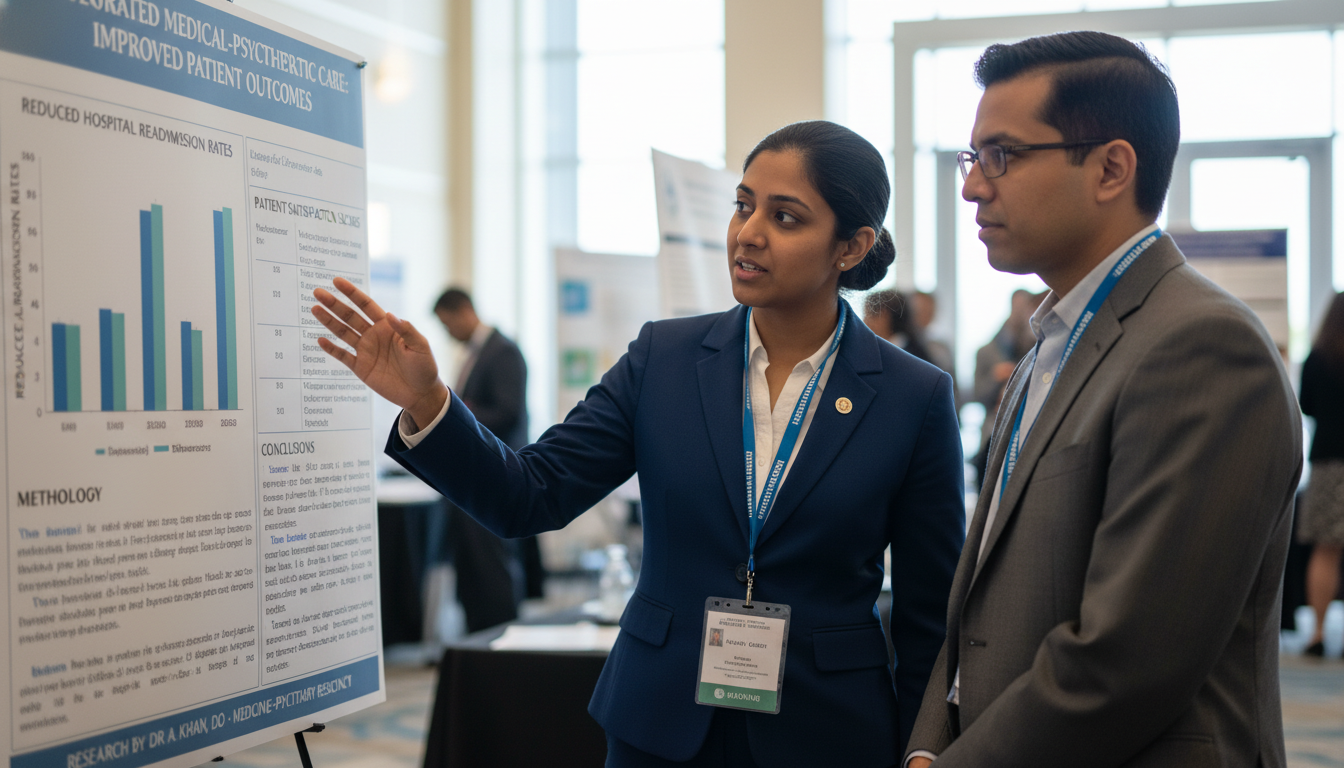
Balancing Research with Clinical Duties in a DO Graduate Residency
Time Management Strategies That Actually Work
You will be busy. But residents in demanding programs still complete robust research during residency by:
Scheduling Research Like a Clinical Duty
- Block 1–2 hours/week as a recurring calendar event labeled “Research Work—Protected.”
- Even on busy weeks, 30 focused minutes of data cleaning or writing will accumulate.
Chunking Tasks
Break your project into small, discrete steps:- Week 1–2: Finalize research question and aims
- Week 3–4: Literature review outline
- Next month: Draft IRB
- Following month: IRB submission and revisions
Leveraging Research Electives
If your program offers scholarly or research electives:- Plan them during periods of heavy data collection or manuscript drafting
- Negotiate in advance with your program director, especially if you are on an academic residency track
Using Tools Efficiently
- Reference managers (Zotero, EndNote, Mendeley)
- Secure RedCap databases for data entry
- Templates for QI projects and posters from your institution
Protecting Your Well-Being
Burnout is a real risk in any combined training program. To sustain research during residency:
- Choose a project that genuinely interests you, not just what “looks good”
- Team up with co-residents if possible to share the workload
- Set realistic publication goals (e.g., a poster and one manuscript by graduation)
- Have open conversations with mentors about workload and expectations
Your osteopathic background emphasizes wellness and holistic health—apply that mindset to your own training experience.
Leveraging Both Sides of Your Curriculum
Your med psych residency schedule can actually help your research if you plan ahead:
- During psychiatry-heavy blocks:
- Focus on integrated care, CL settings, and behavioral health outcomes
- Recruit participants from psych clinics or inpatient units
- During medicine-heavy blocks:
- Collect data on somatic and behavioral comorbidity, QI projects, delirium, and complex medical management
- Observe differences in how mental illness is managed across services
Speak with your program leadership about aligning your research goals with specific rotations—this is often possible, especially in programs that value scholarly activity.
How Research Shapes Your Long-Term Career as a Med-Psych DO
Opening Doors: Fellowships, Jobs, and Academic Roles
Completing research during residency significantly broadens your post-graduation options:
Academic Medicine-Psychiatry Roles
- Universities highly value residents with publications and experience leading projects
- You may pursue joint appointments in medicine and psychiatry departments
Subspecialty Fellowships (e.g., Consultation-Liaison Psychiatry, Addiction Medicine, Geriatrics, Palliative Care)
- Programs appreciate candidates who can contribute to scholarly output
- Your experience with integrated care research will be a strong asset
Leadership and Systems-Level Roles
- Medical director of integrated medical-psychiatric units
- Director of behavioral health integration in primary care systems
- QI or patient safety leadership roles
For DO graduates, research success helps demonstrate that osteopathic physicians can lead at the highest levels of academic and health system leadership.
Building a Personal Academic Niche
Think of residency research as the “first chapter” in your long-term professional story. Common niche examples for medicine psychiatry combined DO physicians:
- Cardiometabolic health in serious mental illness
- Longitudinal work on diabetes, obesity, and cardiovascular risk in patients with psychotic or mood disorders
- Collaborative care and hospital-based integrated models
- Evaluating med-psych units, CL psychiatry, or embedded behavioral clinicians in medical services
- Somatic symptom and related disorders
- Bridging osteopathic manual treatment, behavioral interventions, and medical care
- Substance use and complex medical care
- Designing integrated treatment pathways for patients with cirrhosis, heart failure, or HIV and co-occurring SUD
Over time, you can:
- Develop resident research projects that mentor juniors
- Turn QI initiatives into multi-site studies
- Lead curriculum development for integrated training (and publish on it)
Sustaining Research After Training
To convert your residency projects into a sustainable scholarly career:
- Maintain relationships with mentors and collaborators as you graduate
- Choose jobs (or fellowships) that provide at least some protected time for scholarship
- Apply for small grants or institutional seed funding based on work you started in residency
- Consider additional training (certificate or master’s in clinical research, education, or public health) if you stay in academics
Your DO lens—emphasizing structural, functional, and biopsychosocial integration—can inform program design, clinical pathways, and research agendas long after residency ends.
Frequently Asked Questions (FAQ)
1. Do I need prior research experience from medical school to be successful in residency research?
No. While prior experience helps, many DO residents in med psych programs start with minimal background. What matters more is:
- Curiosity and willingness to learn
- Good time management
- Finding supportive mentors
Start with manageable projects (QI, case reports, retrospective reviews) and build skills stepwise. Attend your institution’s workshops on statistics, research design, and scholarly writing.
2. Will doing research during residency hurt my clinical performance or wellness?
Not if you’re intentional and realistic. Risks arise when residents:
- Take on overly ambitious projects without clear structure
- Work entirely alone without mentorship
- Try to do research in unstructured, late-night “spare time” only
Instead, integrate research into your schedule, negotiate electives or scholarly time if available, and select projects aligned with your clinical rotations. Communicate openly with your program director about workload and burnout.
3. What types of research projects are most valuable for a DO medicine-psychiatry resident?
“Most valuable” depends on your goals, but high-yield options include:
- QI projects on integrated care processes or outcomes
- Retrospective studies of metabolic health, hospital outcomes, or psychotropic safety in medically ill patients
- Implementation or health services research examining collaborative care models
- Educational research on integrated curricula
These align with both internal medicine and psychiatry, demonstrate system-level thinking, and are achievable within residency.
4. How can my research help distinguish me as a DO graduate in a competitive field?
As a DO, you can leverage your osteopathic training to design research that:
- Focuses on functional outcomes, whole-person care, and mind-body interactions
- Evaluates OMT/OMM or osteopathic-informed approaches in medically and psychiatrically complex patients
- Highlights holistic, team-based models of care
Publishing and presenting such work at regional and national meetings not only strengthens your CV; it also broadcasts the value of DO physicians in leading integrated, patient-centered innovations.
Research during residency is not just an optional extra for medicine-psychiatry DO graduates—it’s one of the most powerful tools you have to define your niche, advocate for integrated care, and build a career that reflects your dual training and osteopathic values. By starting early, choosing feasible projects, and aligning with strong mentors, you can complete meaningful scholarly work that shapes both your future and the future of med-psych care.