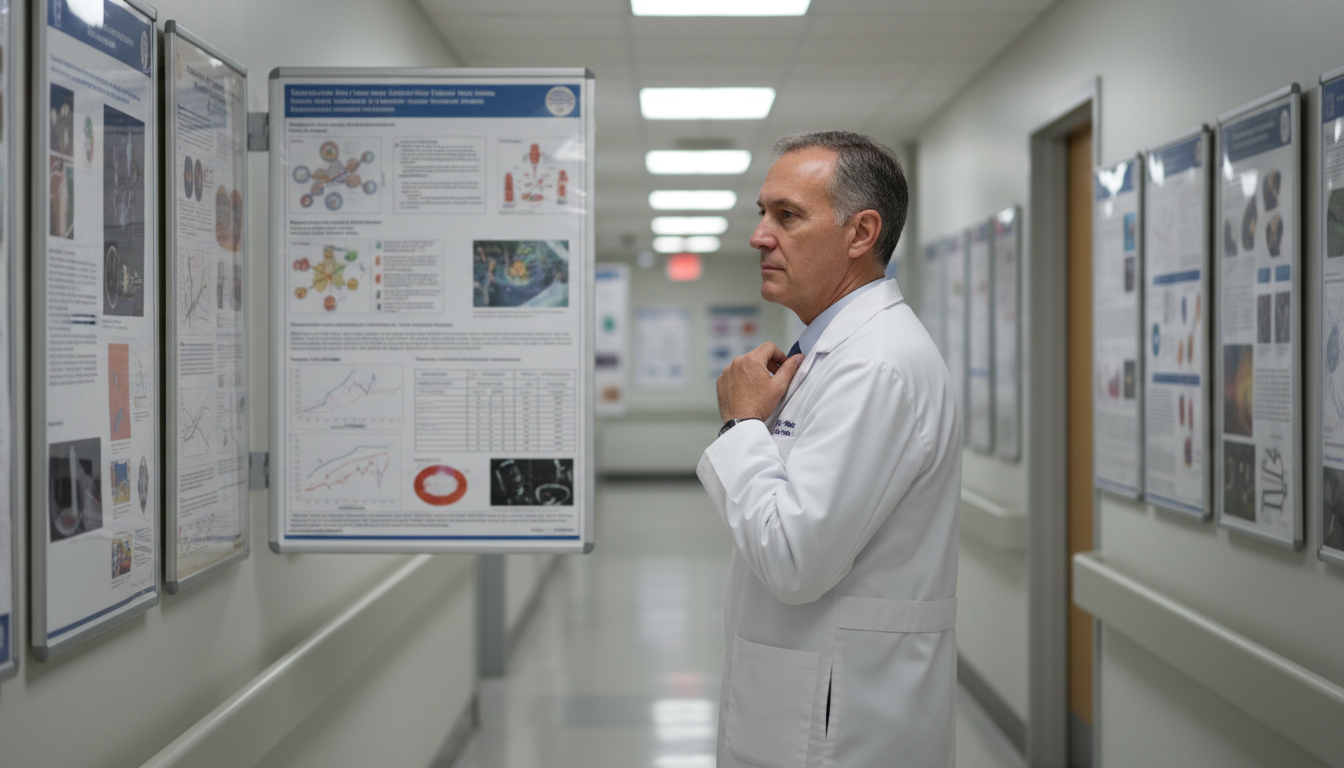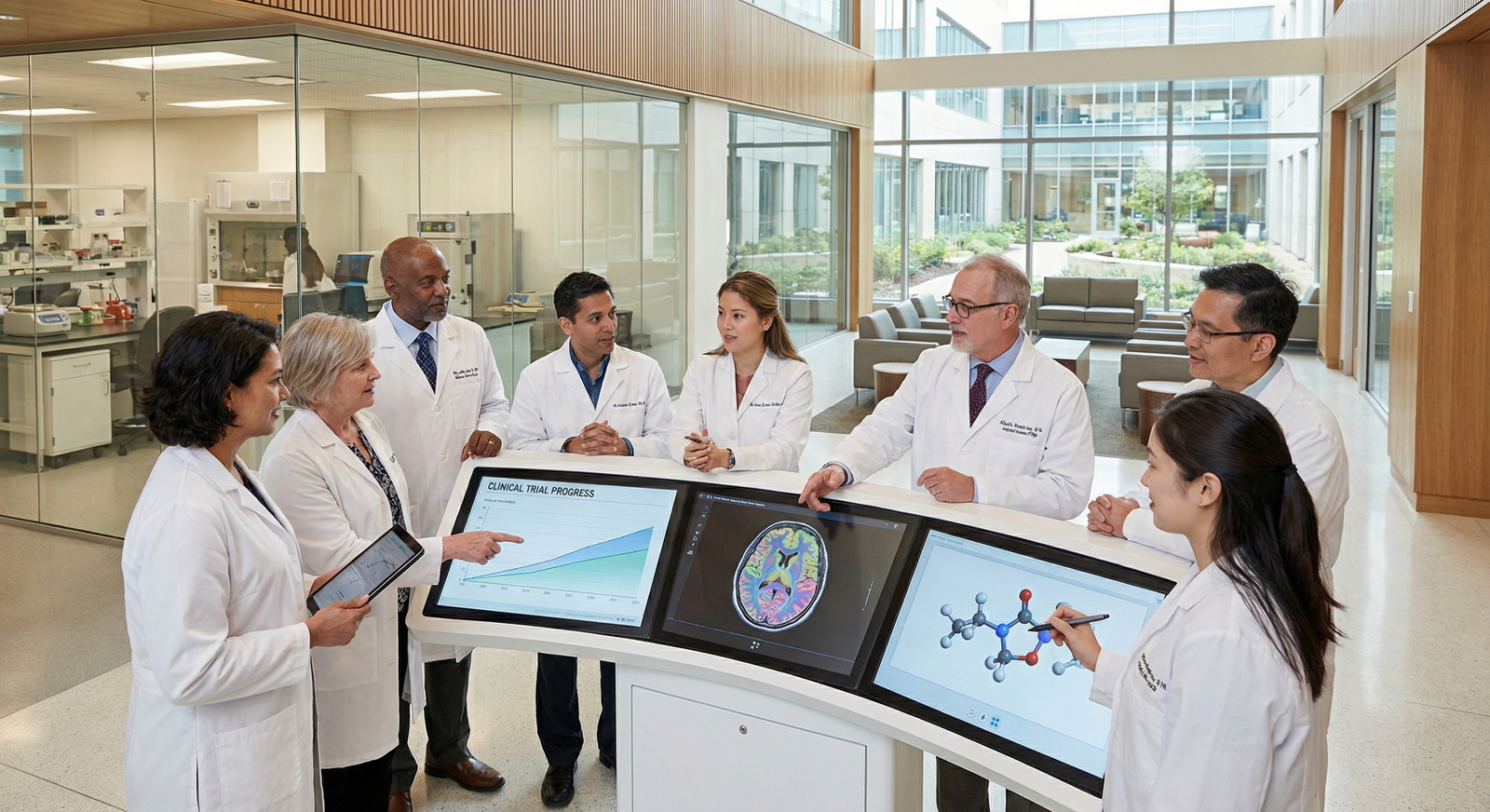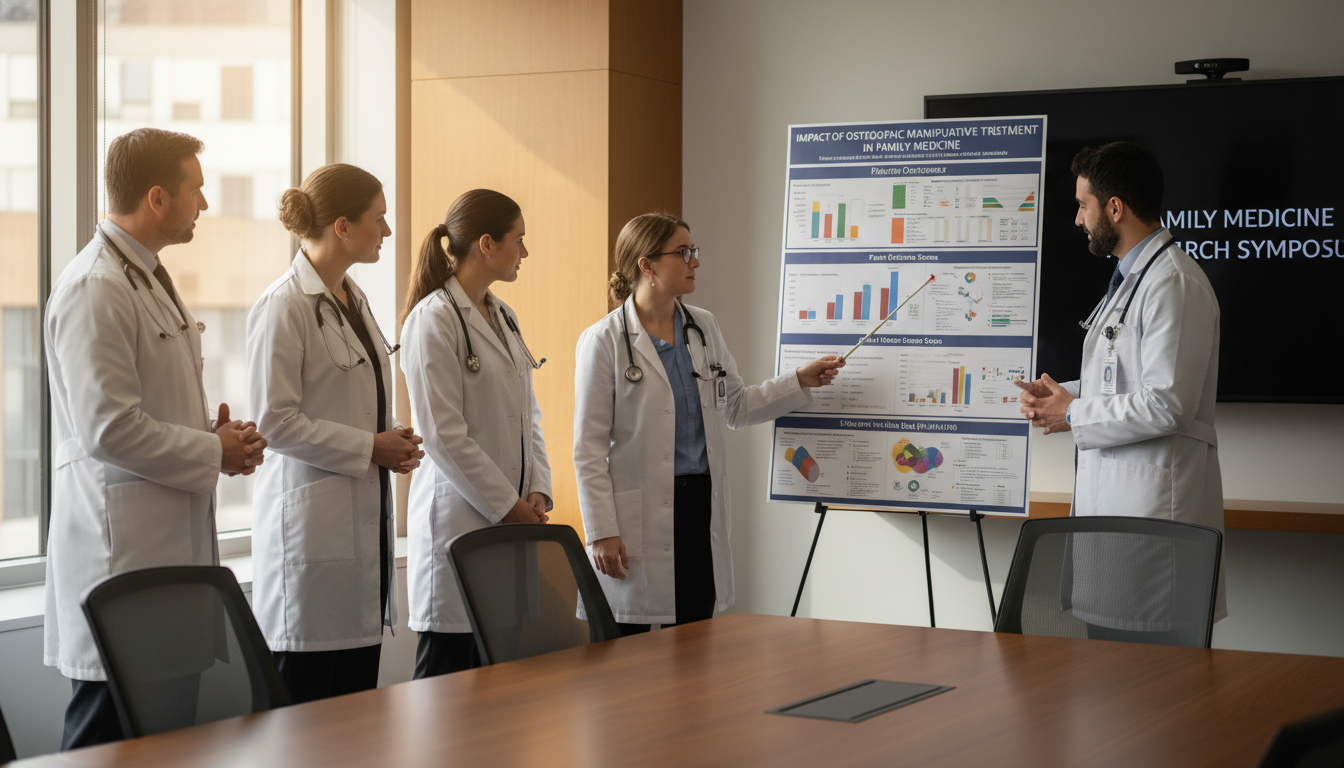
Why Research Matters for a DO Graduate in Family Medicine
For many osteopathic physicians, family medicine is a natural fit: broad scope, continuity of care, and a philosophy that aligns closely with holistic, patient-centered practice. Yet one area that often feels less intuitive—especially for DO graduates—is research during residency.
You might wonder:
- “Do I really need research if I’m not planning on an academic career?”
- “Is there a place for research in a community-focused specialty like family medicine?”
- “How can I balance research with clinic, inpatient rotations, and board prep?”
For a DO graduate entering a family medicine residency, engaging in research is not just “nice to have.” It can:
- Strengthen your clinical decision-making and critical appraisal skills
- Differentiate you for leadership roles, fellowships, or an academic residency track
- Improve patient care in your own continuity clinic and future practice
- Help combat bias some DO graduates may still encounter by demonstrating scholarship and rigor
This article walks through how to navigate research during residency as a DO graduate in family medicine—from understanding opportunities, to choosing a feasible project, to finishing and presenting your work.
We will assume you have already matched into a family medicine residency (or are preparing to apply) and are interested in resident research projects that are realistic yet meaningful.
1. The Landscape: Research in Family Medicine Residency for DO Graduates
Historically, family medicine has been seen as “less research heavy” than subspecialties like cardiology or oncology. That perception is changing rapidly.
1.1. Why research is increasingly important in family medicine
Modern family medicine emphasizes:
- Evidence-based practice: Guidelines change quickly; understanding the science behind them improves your care.
- Population health: FM physicians are uniquely positioned to study community-level interventions, health disparities, and social determinants.
- Quality improvement (QI): Accrediting bodies and payers increasingly expect data-driven care.
For you as a DO graduate, this is an opportunity to combine:
- Osteopathic principles (whole-person care, prevention, function)
- Data-driven interventions (chronic disease management, screening programs, behavioral health integration)
Research lets you quantify what works in your clinic and community.
1.2. Where DO graduates fit in the research ecosystem
Some DO graduates worry they are at a disadvantage compared to MD peers in research-heavy environments. In reality:
- Many DO graduate residency programs in family medicine are increasingly supportive of scholarly work.
- DOs often train in community-based programs, which are rich environments for practice-based research and QI.
- Your osteopathic background can inspire unique research questions: e.g., manual treatment for chronic pain, functional outcomes, lifestyle medicine, or interprofessional approaches.
If you plan to apply for an academic residency track, hospital leadership roles, or fellowships (e.g., sports medicine, geriatrics, palliative care), research experience during residency becomes even more valuable.
1.3. Types of residency programs and research culture
Programs differ significantly in research expectations:
Community-based FM residency (no university affiliation)
- Often strong in clinical training and community engagement
- Research may focus more on QI, case reports, or small practice-based projects
- Resources may be limited but mentorship can still be strong
University-affiliated or academic FM residency
- More formal research infrastructure (IRB office, statisticians, research coordinators)
- Clear expectations for scholarly activity (posters, presentations, manuscripts)
- More likely to offer an academic residency track
Hybrid programs (community-based with university support)
- Increasingly common
- Often offer flexible research opportunities without overwhelming expectations
When evaluating or starting residency, clarify:
- Is resident research required, optional, or strongly encouraged?
- Are there dedicated research curriculum sessions?
- Are faculty actively publishing or participating in networks (e.g., practice-based research networks, PBRNs)?
- Are there protected elective blocks for research?

2. Types of Research and Scholarly Activity You Can Realistically Do
You’re balancing clinic, night float, inpatient service, exams, and maybe a family. So the question is not “What is the fanciest project I can imagine?” but “What can I actually complete during residency?”
2.1. Core categories of resident research and scholarship
Quality Improvement (QI) Projects
- Often the most feasible during residency
- Directly tied to patient care metrics (e.g., A1c control, vaccination rates)
- Usually lower regulatory burden than full clinical research (sometimes outside IRB purview if purely QI)
Examples for family medicine:
- Increasing colorectal cancer screening rates in your continuity clinic
- Reducing 30-day readmissions for congestive heart failure
- Improving depression screening and follow-up documentation
Retrospective Chart Reviews
- Use existing EMR data to answer a specific question
- Requires IRB approval but no new patient recruitment
Examples:
- Patterns of opioid prescribing in chronic low back pain
- Outcomes of patients referred to group visits for diabetes education
- Impact of osteopathic manipulative treatment (OMT) on headache frequency or analgesic use
Prospective Observational Studies
- Collect data going forward in time (e.g., questionnaires, physical findings)
- More complex logistics but still doable with good mentorship
Examples:
- Observing blood pressure changes in patients starting a lifestyle program
- Evaluating patient satisfaction before vs. after implementing a new telehealth follow-up protocol
Interventional Studies (Small-scale)
- Introduce a new intervention and measure outcomes
- Requires stronger design and often more IRB scrutiny
Examples:
- Trial of group-based smoking cessation counseling vs. usual care
- Brief OMT intervention for pregnant patients with low back pain
Case Reports and Case Series
- Ideal starting point for research-naïve residents
- Good for rare conditions, unusual presentations, or novel use of OMT
Examples:
- A unique presentation of autoimmune disease in primary care
- Case series of FM patients benefiting from OMT for chronic migraines
Educational Research
- Study curricula, resident wellness interventions, or teaching methods
Examples:
- Assessing impact of simulation-based training on code performance
- Evaluating a resilience curriculum in a family medicine residency
2.2. Matching project type to your career goals
- If you envision a full-time community practice, QI and practice-based projects prepare you to improve outcomes in any clinic.
- If you’re leaning toward an academic career or fellowship, a combination of QI + at least one more formal project (retrospective chart review, prospective study) will be more compelling.
- If you’re considering an academic residency track, try to:
- Present at regional/national meetings (e.g., AAFP, STFM)
- Aim for at least one manuscript submission, even if it’s a brief report or case series
3. Getting Started: Finding a Question, Mentor, and Feasible Project
The biggest barrier isn’t motivation; it’s usually not knowing where to start. Break it down into clear steps.
3.1. Step 1: Identify an area that genuinely interests you
You’ll be more likely to finish a project you care about. Reflect on your rotations and continuity clinic:
- Which patient problems do you see repeatedly? (e.g., uncontrolled diabetes, chronic pain, depression, multimorbidity)
- Do you have specific osteopathic interests? (e.g., OMT, musculoskeletal medicine, integrative care)
- Are there health disparities or access issues in your patient population?
Examples of strong, FM-relevant questions:
- “Does standardized depression screening in our clinic increase referral and follow-up rates with behavioral health?”
- “What factors are associated with missed well-child visits in our underserved population?”
- “What is the impact of introducing a structured OMT clinic on back pain outcomes and opioid use?”
3.2. Step 2: Find a mentor early
For a DO graduate, mentorship is especially key as many programs still differ in research culture. Start in PGY-1 if possible.
Where to look for mentors:
- Residency program director or associate program director
- Faculty known for QI or research involvement
- Hospital-based research office or clinical epidemiology department
- Nearby osteopathic or allopathic medical school faculty
When you meet potential mentors:
- Share your interests briefly
- Ask what kinds of projects past residents completed successfully
- Clarify expected time commitment, frequency of meetings, and availability for guidance
Good mentors:
- Help narrow your question
- Connect you with resources (statisticians, IRB staff, data analysts)
- Push you to aim higher but still realistically (poster; maybe manuscript)
3.3. Step 3: Scoping the project to fit residency realities
A common mistake is biting off far more than you can chew. A feasible resident project:
- Has a clear, focused question
- Uses data you can realistically collect (or already exists in the EMR)
- Can be completed within 12–18 months (from idea to submission/presentation)
Example of scoping down:
- Too broad: “Evaluate outcomes of all patients with diabetes in our health system.”
- Feasible: “Among adult patients with type 2 diabetes in our residency clinic, how did A1c levels change 12 months after we implemented a group visit program?”
3.4. Step 4: Understanding IRB vs. QI
You need to know whether your project requires Institutional Review Board (IRB) approval.
- Pure QI (aimed solely at improving your own clinic’s performance, not generalizable knowledge) may be exempt from IRB.
- Research intended for publication or generalizable conclusions usually requires IRB review, even for chart reviews.
Talk to:
- Your mentor
- The institutional IRB office or liaison
Plan this early, as IRB approval can take weeks to months.
4. Making It Work: Time Management and Integration With Clinical Training
Balancing research with a busy family medicine residency schedule is challenging, but doable with planning.
4.1. Build research into your yearly timeline
A practical timeline for a 3-year FM residency:
PGY-1: Explore and plan
- Identify interests and potential mentors
- Join an existing project if possible to learn the process
- Participate in a QI initiative in clinic
- Brainstorm and refine your own research question
- Start a brief literature review
PGY-2: Execute
- Finalize study design with your mentor
- Submit IRB (if required)
- Begin data collection or extraction
- Start basic data analysis (with stat support if needed)
- Present preliminary findings at local or institutional forums
PGY-3: Finish and disseminate
- Complete data collection and analysis early in the year
- Draft your abstract for conferences (AAFP, ACOFP, STFM, etc.)
- Prepare a manuscript, even if only as a first draft
- Incorporate your work into your CV and personal statement if applying for fellowship or academic track
4.2. Protecting time for research
Ask your program about structural support:
- Dedicated research elective or scholarly activity rotation
- Administrative half-days that can sometimes be used for data analysis or writing
- Flexibility during outpatient blocks to meet with mentors
Your strategy:
- Block off 1–2 regular weekly times (even 1–2 hours) for research work
- Treat these as real appointments, not optional time
- Use a task list (e.g., data cleaning, lit review, drafting intro) so short time blocks are productive
4.3. Leveraging tools to work efficiently
- Reference managers (Zotero, Mendeley, EndNote) to track literature
- Spreadsheets (Excel, Google Sheets) for early data organization
- Statistical software (SPSS, R, Stata) – usually with help from a statistician
- Templates for abstracts, posters, and manuscripts (your institution or specialty societies may offer these)
As a DO graduate, you might also draw from osteopathic journals (e.g., The Journal of the American Osteopathic Association) as targets for publication, especially for OMT-related or whole-person care topics.
5. Turning Your Project Into Tangible Career Benefits
Research during residency should not feel like a box-checking exercise. It can directly support your clinical growth and long-term goals.
5.1. Enhancing your clinical practice
By engaging in resident research projects, you will:
- Improve your ability to interpret and apply clinical guidelines
- Learn to question and refine your own practice patterns
- Develop comfort with uncertainty and complex decision-making
Example:
If your project examines hypertension control in your clinic, you’ll become deeply familiar with current ACC/AHA or USPSTF recommendations, leading to more confident and evidence-based management of your own patients.
5.2. Preparing for academic or leadership roles
If you’re considering:
- Academic family medicine faculty
- Program director or associate program director roles
- Population health/quality leadership positions
Then your research experience is a crucial stepping stone. It demonstrates:
- Ability to carry a project from conception to completion
- Experience with IRB, data analysis, and dissemination
- Commitment to advancing the discipline beyond day-to-day clinical duties
Aim to:
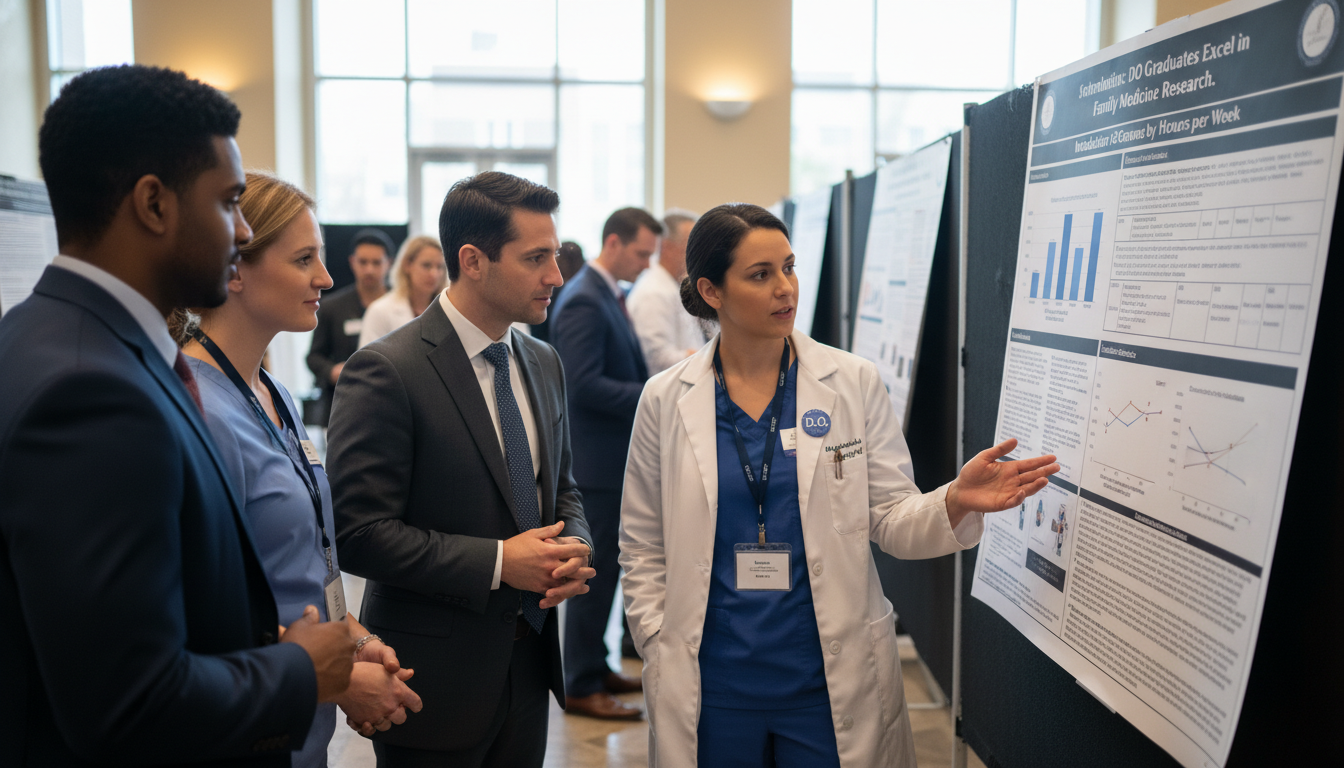
- Present at least one poster and one oral presentation during residency
- Be part of at least one manuscript submission (authorship order can vary)
- Articulate your scholarly interests clearly on your CV and in interviews
5.3. Considering fellowships and advanced training
Some DO graduates in family medicine pursue additional training in:
- Sports medicine
- Geriatrics
- Palliative care
- Addiction medicine
- Obstetrics & women’s health
- Integrative medicine
Research experience:
- Strengthens your applications
- Gives you something distinctive to discuss in interviews
- Positions you for programs with an academic residency track or more scholarly focus
If you anticipate fellowship, consider aligning your PGY-2 or early PGY-3 project with that interest. For example:
- Sports medicine: outcomes of non-operative management of knee injuries in primary care
- Geriatrics: deprescribing interventions in polypharmacy
- Addiction medicine: buprenorphine initiation and retention in a family medicine clinic
5.4. Overcoming DO-specific challenges and stereotypes
Participating in rigorous research and presenting your work can help counter any lingering bias you may encounter in the osteopathic residency match ecosystem or later academic environments.
By:
- Publishing in peer-reviewed journals
- Presenting at national meetings alongside MD peers
- Leading QI efforts that demonstrate measurable improvement
You showcase that the distinction between DO and MD is educational pathway-based, not capability-based.
6. Practical Examples of Family Medicine Resident Research Projects
To make this concrete, here are examples that DO graduates have successfully completed in FM residency:
Example 1: QI – Improving colorectal cancer screening
- Setting: Community-based family medicine clinic
- Question: Can adding a pre-visit planning checklist improve colorectal cancer screening rates?
- Design: QI project, no IRB required
- Intervention:
- Train MAs to review patient charts before visits
- Add an EMR flag for patients due for screening
- Provide standardized patient education handouts
- Outcome:
- Screening rates increased from 55% to 72% in 12 months
- Presented at a regional family medicine conference
- Later written up as a brief report
Example 2: Retrospective study – Opioid prescribing patterns
- Setting: Academic FM residency clinic
- Question: How did opioid prescribing patterns change after implementing a standardized chronic pain agreement and naloxone co-prescribing policy?
- Design: Retrospective chart review, IRB approved
- Data:
- Pre- and post-intervention prescribing data
- Rates of high-dose opioids, concurrent benzos, naloxone prescriptions
- Outcome:
- Statistically significant reduction in high-dose prescriptions
- Increase in naloxone co-prescriptions
- Poster at a national conference, manuscript submitted to a primary care journal
Example 3: Case series – OMT for pregnancy-related low back pain
- Setting: Osteopathically oriented FM residency
- Question: What are the self-reported outcomes of pregnant patients receiving OMT for low back pain?
- Design: Case series + prospective symptom tracking
- Data:
- Pain scores before and after OMT sessions
- Functional measures (e.g., ability to perform daily activities)
- Outcome:
- Small sample but clear improvement trends
- Presented at an osteopathic conference, then published as a case series
Each of these projects:
- Is realistic within residency time constraints
- Directly improves or informs patient care
- Builds your CV and your identity as a thoughtful, evidence-informed family physician
Frequently Asked Questions (FAQ)
1. I’m a DO graduate in family medicine and not very research-experienced. Is it too late to start during residency?
No. Residency is actually a common starting point for research during residency, especially in family medicine. Begin with:
- A case report or QI project to learn the basics
- Partnering with a more experienced co-resident or faculty mentor
- Attending any research or QI workshops offered by your program
You don’t need prior publications to make meaningful contributions as a resident.
2. How many research projects should I aim for during residency?
Quality matters far more than quantity. For most family medicine residents:
- 1 substantial project (QI, retrospective, or prospective study), plus
- 1–2 smaller projects (case reports, educational projects, or co-authorships)
is a realistic and impactful goal. If you’re targeting a highly academic role or competitive fellowship, you may aim a bit higher, but never at the cost of clinical competence or burnout.
3. Can I still do research if my residency program has limited resources?
Yes. In a resource-limited setting, focus on:
- QI projects based on clinic metrics (vaccinations, screening, chronic disease control)
- Simpler retrospective reviews using EMR data
- Case reports and case series on unique or illustrative patients
Also consider:
- Collaborating with faculty who have academic affiliations
- Joining multi-site projects through practice-based research networks (PBRNs)
- Using institutional or regional supports (e.g., statewide AAFP research networks)
4. Does research help if I’m interested mainly in outpatient community practice, not academia?
Absolutely. Even if you never write another paper after residency, your resident research projects will:
- Improve your ability to critically evaluate evidence
- Enhance your effectiveness in implementing practice improvements
- Prepare you to lead quality initiatives or serve as a medical director in the future
For a community-oriented DO family physician, research literacy and QI skills are powerful tools for better patient outcomes and for navigating value-based care environments.
By approaching research during your family medicine residency thoughtfully—choosing feasible projects, seeking mentorship, and aligning your work with your interests—you can transform scholarly activity from a stressful obligation into a meaningful part of your growth as an osteopathic physician.