Research and scholarly activity are increasingly important in family medicine residency. Whether you see yourself in community practice, academic medicine, or a fellowship, understanding how to approach research during residency can significantly strengthen your career trajectory and competitiveness in the FM match and beyond.
This guide breaks down how research fits into family medicine training, what kinds of projects are realistic, and how to integrate scholarly work into a busy clinical schedule—especially if you’re interested in an academic residency track or leadership roles.
Why Research Matters in Family Medicine Residency
Family medicine is often (incorrectly) perceived as a “non-research” specialty. In reality, family physicians are on the front lines of patient care, population health, and quality improvement—areas where evidence generation and implementation are critical.
Key Reasons Research Matters
Improving Patient Care and Systems
- Family physicians manage chronic diseases, preventive care, and mental health across all ages.
- Resident research projects can directly improve:
- Hypertension control in your clinic
- Cancer screening rates
- Diabetes outcomes
- Behavioral health integration
- Many family medicine resident projects are practice- or system-focused, leading to rapid, real-world impact.
Standing Out for Fellowships and Academic Careers
- If you’re interested in sports medicine, geriatrics, OB, palliative care, addiction medicine, or other fellowships, scholarly work strengthens your application.
- Publications, presentations, and quality improvement (QI) data show that you:
- Understand evidence-based medicine
- Can complete projects
- Work well with teams and mentors
- Academic departments look for residents who can teach, lead, and contribute to scholarship.
Developing Critical Thinking and Lifelong Learning
- Research teaches you to:
- Ask better clinical questions
- Critically appraise literature
- Recognize bias and limitations
- Translate evidence into practice
- These skills are essential whether you practice in a small rural clinic or a large academic center.
- Research teaches you to:
Meeting Accreditation and Program Requirements
- ACGME requires family medicine residents to participate in scholarly activity, which can include:
- Research
- Quality improvement
- Curriculum design
- Case reports
- Educational projects
- Many programs now formally track resident research projects and expect at least one scholarly output by graduation.
- ACGME requires family medicine residents to participate in scholarly activity, which can include:
Types of Research and Scholarly Activity in Family Medicine
Research during residency doesn’t always mean randomized controlled trials or complex bench science. In family medicine, the most common—and feasible—forms of scholarly work are applied, pragmatic, and often team-based.
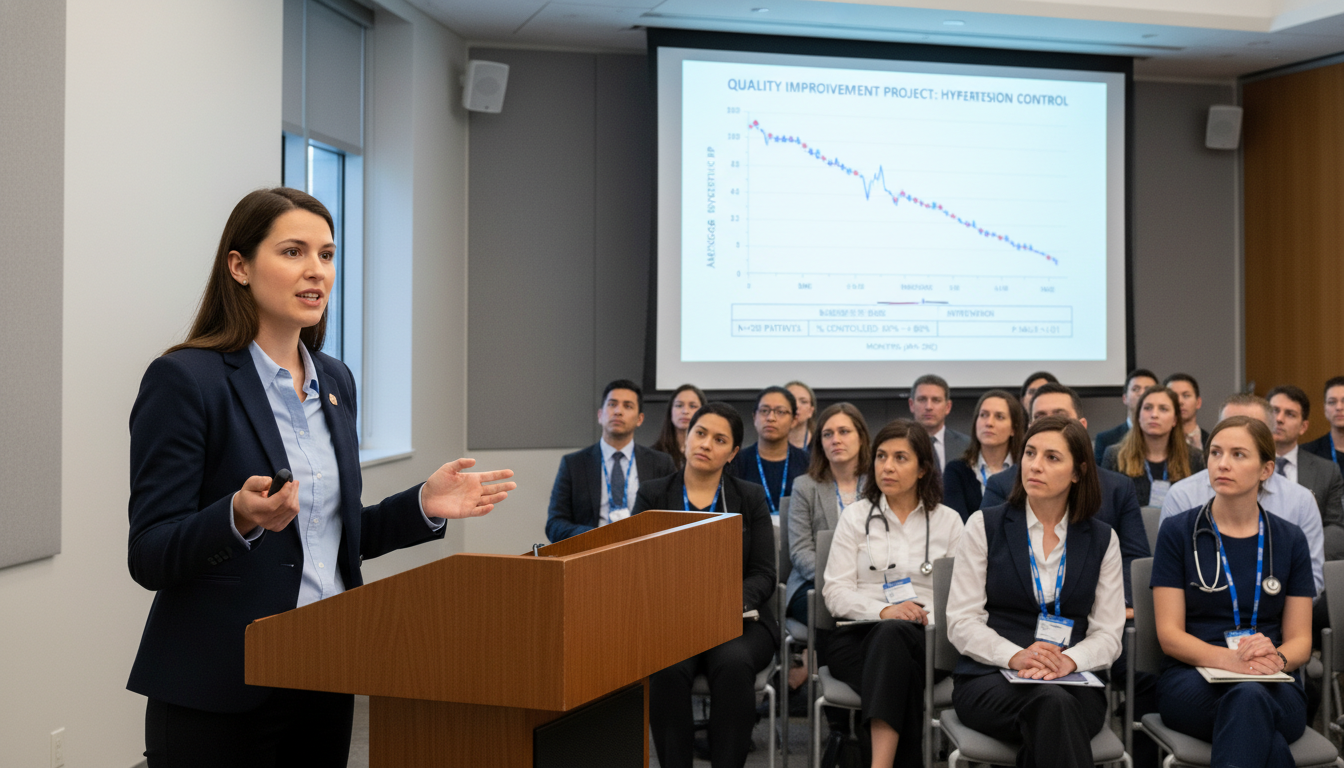
1. Quality Improvement (QI) Projects
QI is the backbone of resident research in many programs.
Examples:
- Increasing colorectal cancer screening rates by improving outreach and reminder systems.
- Reducing unnecessary antibiotic prescribing for viral upper respiratory infections.
- Improving depression screening and follow-up in primary care.
- Decreasing no-show rates using text reminders or schedule redesign.
Why QI is ideal for residency:
- Directly connected to your clinic’s needs.
- Often supported by your program or health system infrastructure.
- Can be completed within 1–2 years.
- Produces data that works for posters, presentations, and sometimes publications.
2. Clinical Research
Clinical research focuses on patient-level questions, disease outcomes, and interventions.
Examples:
- Retrospective chart review on:
- Diabetes control outcomes with different insulin regimens.
- Telehealth vs in-person follow-up for hypertension management.
- Prospective observational study of:
- Sleep quality and blood pressure in clinic patients.
- Maternal mental health in the postpartum period.
Considerations:
- Requires IRB approval and more rigorous study design.
- May involve data collection, surveys, or standardized assessments.
- More likely to lead to peer-reviewed publication if well planned.
3. Educational Research and Curriculum Development
Family medicine residents also serve as teachers—for medical students, other residents, and sometimes community providers.
Examples:
- Designing and evaluating a new workshop on:
- Motivational interviewing for smoking cessation.
- Point-of-care ultrasound (POCUS) skills.
- Studying the impact of:
- A longitudinal community health curriculum.
- Simulation sessions for procedures (joint injections, IUD insertion).
Outputs:
- Education research posters or oral presentations.
- Submissions to MedEdPORTAL or similar education-focused journals.
- Curriculum tools that can be adopted by other programs.
4. Case Reports and Case Series
These are particularly accessible for busy residents and can still be valuable scholarly work.
Examples:
- Unusual presentations:
- Myocardial infarction in a young woman with atypical symptoms.
- Rare drug reactions first seen in primary care settings.
- “Teaching cases” that illustrate:
- Diagnostic reasoning challenges.
- Health disparities or social determinants of health.
- Complex multimorbidity management.
Good for:
- Building your writing skills.
- Learning the publication process.
- Presenting at regional and national meetings (e.g., STFM, AAFP).
5. Community-Engaged and Population Health Research
Family medicine frequently intersects with public health and community engagement.
Examples:
- Community-based participatory research (CBPR) with:
- Local schools on adolescent health.
- Faith communities on hypertension or diabetes control.
- Evaluating a new food insecurity screening and referral program.
Benefits:
- Strong alignment with family medicine values.
- Opportunities for longitudinal projects and partnership-building.
- Can lead to powerful stories and outcomes that resonate with funders, institutions, and communities.
Getting Started: Finding a Project and Mentor
Many residents struggle not with motivation, but with direction. The first step is strategic: finding a mentor and a feasible project that fits your schedule and career goals.

Step 1: Clarify Your Goals
Ask yourself:
- Do I want an academic residency track or future faculty role?
- Am I targeting a fellowship where research is a plus or expectation?
- Do I mainly need to fulfill program requirements with one well-done project?
- What topics energize me? (e.g., OB, geriatrics, behavioral health, population health, addiction, sports medicine, health equity)
Your answers shape the scope and type of project to pursue.
Step 2: Learn What Your Program Offers
Investigate:
- Is there a research director or scholarly activity lead?
- Are there:
- Protected research blocks or elective rotations?
- Regular research meetings, journal clubs, or work-in-progress sessions?
- Data analysts or statisticians available?
- Are there established resident research projects you can join?
In some family medicine residency programs, joining an existing team project is the most efficient way to get involved, especially if you start in PGY-2 or later.
Step 3: Identify a Mentor (or Mentoring Team)
A strong mentor often matters more than the most original topic.
Look for:
- Faculty actively involved in ongoing projects with evidence of productivity (posters, publications, QI initiatives).
- Someone who:
- Responds to email and follows up regularly.
- Has a realistic understanding of resident time constraints.
- Is willing to guide you through IRB, data collection, analysis, and dissemination.
In many programs, you might assemble a team:
- Clinical content mentor (e.g., your OB faculty).
- Methods/statistics mentor (possibly outside your department).
- Education or QI mentor, if relevant.
Step 4: Choose a Feasible Project
Your project must fit within:
- Your rotation schedule and call responsibilities.
- The time remaining in your residency.
- Available data and support (EHR reports, staff help, IRB office, etc.).
A common pitfall is choosing something too big, such as a large prospective randomized controlled trial. Instead, scale down:
Example 1: Over-ambitious
- “Proving that a new clinic-wide diabetes group visit model reduces hospitalizations over 5 years.”
Feasible alternative
- “Pilot a 6-month diabetes group visit program in our clinic and compare pre/post A1c and patient satisfaction in 30–40 participants.”
Example 2: Too vague
- “Studying health disparities in our population.”
Feasible alternative
- “Describing racial and ethnic differences in colorectal cancer screening rates over the last 2 years in our residency clinic, and testing a targeted reminder intervention.”
Step 5: Draft a Simple Project Plan
Even a one-page plan keeps you focused:
- Background and rationale (2–3 sentences).
- Research or QI question.
- Design (retrospective chart review, pre/post QI, survey, etc.).
- Population and setting (who, where).
- Outcomes and measures (what you’ll track).
- Timeline (what happens in PGY-1, PGY-2, PGY-3).
- Deliverables (poster, conference abstract, manuscript, internal report).
Balancing Research With Clinical Duties
One of the biggest resident concerns is time. Family medicine residency is busy: inpatient medicine, OB, night float, clinic continuity, didactics, and more. Still, many residents successfully complete research during residency with planning and boundaries.
Time Management Strategies
Start Early
- If possible, explore interest in PGY-1, even informally.
- Use lighter rotations to:
- Meet mentors.
- Brainstorm topics.
- Complete literature searches.
- Aim to have a clear project direction by early PGY-2.
Use Elective Time Strategically
- Many programs allow:
- A “research elective” or “scholarly activity rotation.”
- Time in an academic residency track for scholarly work.
- Use these blocks for:
- IRB submissions.
- Data extraction and cleaning.
- Writing abstracts and manuscripts.
- Many programs allow:
Break Tasks Into Small, Specific Steps
- Instead of “work on research,” set:
- “Draft data collection form.”
- “Review 10 articles and summarize key findings.”
- “Create first version of survey in REDCap.”
- Use 30–60 minute windows on slower days to knock out micro-tasks.
- Instead of “work on research,” set:
Schedule Regular Research Meetings
- Meet your mentor every 4–6 weeks.
- Before each meeting:
- Send a short update.
- List decisions you need from them.
- Share any draft materials.
Leverage Team Members
- Share workload with:
- Co-residents.
- Medical students.
- Data analysts, if available.
- Example:
- A 3-resident team each reviews 50 charts instead of one person reviewing 150.
- Share workload with:
Protecting Your Well-Being
- Do not let research jeopardize your sleep, mental health, or patient care.
- It’s acceptable to scale back scope if:
- Call schedule changes.
- Personal or family events arise.
- Unexpected system barriers emerge (EHR changes, staffing shortages).
Talk to your program leadership early if you feel overwhelmed; many will help reframe or narrow your project to something manageable.
Dissemination: Turning Projects Into Posters, Presentations, and Publications
Doing the work is only part of the scholarly process; sharing your findings multiplies the impact and helps your CV stand out in the FM match (if you’re still applying) and later career moves.
Levels of Dissemination
Local
- Department research day.
- Residency noon conference.
- Hospital-wide QI fair.
Benefits:
- Lower stakes.
- Great for early feedback.
- Often required by programs as a capstone presentation.
Regional and National
- Examples:
- State Academy of Family Physicians meetings.
- AAFP National Conference (especially for residents and students).
- STFM (Society of Teachers of Family Medicine).
- NAPCRG (North American Primary Care Research Group).
- Submissions often include:
- Abstract (250–500 words).
- Poster format or 10–15 minute oral talk.
- Examples:
Peer-Reviewed Publication
- Ideal but not mandatory for every project.
- Typical outlets:
- Family medicine journals (e.g., Family Medicine, Annals of Family Medicine, Journal of the American Board of Family Medicine).
- Education journals (for curriculum and teaching interventions).
- QI or implementation science journals.
Practical Steps to Get Your Work Out There
Write the Abstract Early
- Abstracts force you to define:
- Your question.
- Methods.
- Key findings.
- Conclusions.
- You can refine them as your project progresses.
- Abstracts force you to define:
Use Poster Templates
- Ask your program for sample posters from prior residents.
- Use institutional templates for branding and layout.
- Focus on:
- Clear visuals (charts, run charts, diagrams).
- Minimal text.
- A simple, take-home message.
Plan Your Manuscript Structure from the Start
- IMRaD (Introduction, Methods, Results, Discussion) structure works for most research.
- For QI, include:
- Problem description.
- Context.
- Intervention.
- Study of the intervention.
- Measures and results.
- Lessons and limits.
Acknowledge All Contributors
- Follow authorship guidelines:
- Substantial contribution to design, data, or writing.
- Drafting or revising the work critically.
- Final approval and accountability.
- Recognize other helpers (clinic manager, IT support) in Acknowledgments.
- Follow authorship guidelines:
Planning for Research Before and During Residency (FM Match Perspective)
If you’re still in medical school or early in the FM match process, you can start positioning yourself now for research success during residency.
As a Medical Student Applying to Family Medicine
Engage in a Small, Complete Project
- Even a case report, small chart review, or QI project shows initiative.
- Aim to:
- Submit at least one poster or presentation.
- Demonstrate follow-through.
Highlight Research in Your Application
- In ERAS:
- List research and QI projects clearly.
- Clarify your specific role (design, data collection, analysis, writing).
- In your personal statement:
- Mention how research has shaped your thinking, especially in family medicine contexts (primary care, health equity, prevention).
- In ERAS:
Ask Programs About Scholarly Opportunities on Interview Day
- Suggested questions:
- “How are resident research projects supported in your program?”
- “Do you have an academic residency track or dedicated scholarly activity time?”
- “What are examples of recent resident projects and where were they presented or published?”
- Look for:
- Evidence of structured mentorship.
- Past resident success stories.
- Available time or resources.
- Suggested questions:
During Residency: Strategic Use of Tracks and Electives
Many family medicine programs now offer:
- Academic residency tracks
- Community health tracks
- Global health tracks
- Leadership or education tracks
These often include:
- Protected time for scholarly work.
- Regular meetings with track directors.
- Expectations for a capstone project.
If you have a strong interest in research or academia:
- Opt into these tracks early (often PGY-1).
- Use their structure to keep your project on track.
Common Pitfalls and How to Avoid Them
Overly Ambitious Scope
- Solution: Start small. You can always expand or follow up later.
No Clear Mentor
- Solution: Ask your program leadership to help you connect; consider co-mentors.
Delaying IRB Submission
- Solution: Treat IRB like a rotation assignment. Set a deadline, use templates, and get feedback early.
Data Chaos
- Solution:
- Define variables and data collection forms before starting.
- Pilot your data collection on 5–10 charts or participants to test your system.
- Solution:
Not Planning Dissemination Until the End
- Solution:
- Decide early where you’d like to submit (local vs national).
- Work backward from abstract deadlines.
- Solution:
Conclusion: Making Research Work for You in Family Medicine
Research during residency in family medicine is not reserved for physician-scientists alone. With the right mentor, a feasible project, and realistic planning, you can:
- Meet your program’s scholarly requirements.
- Contribute meaningfully to patient care improvement.
- Build a stronger CV for fellowships or academic opportunities.
- Enhance your skills as a critical, reflective, and evidence-informed clinician.
Whether you choose a QI project on hypertension control, a clinical chart review on postpartum depression, or an educational study evaluating a new curriculum, your work can shape not only your career—but the quality and equity of care for the communities you serve.
FAQs About Research During Family Medicine Residency
1. Do I need research to match into a family medicine residency?
Research is not strictly required for the FM match, and many excellent family medicine residents match without extensive research backgrounds. However:
- Having some scholarly activity (QI, case reports, or small projects) can:
- Strengthen your application.
- Signal interest in academic or leadership roles.
- Programs with strong academic focus or an academic residency track may favor applicants who show genuine interest or prior experience in research.
If you have limited research, emphasize:
- Clinical experiences.
- Community engagement.
- Any QI or scholarly work you do have—even if small.
2. How much research can I realistically do during residency?
Most residents can complete at least one solid project during training. The scale depends on:
- Program structure and protected time.
- Mentor availability.
- Your own interest and bandwidth.
A realistic target:
- 1 QI or research project leading to:
- 1–2 local or regional presentations.
- Possible manuscript submission.
- Optional:
- Additional case reports or education projects if time and interest allow.
3. Does quality improvement “count” as research?
For residency purposes, yes—QI is typically considered a form of scholarly activity, and many family medicine programs actively encourage it. For publication:
- QI projects can be published, but journals will look for:
- Clear description of context and intervention.
- Systematic measurement and analysis.
- Thoughtful discussion of generalizability and limitations.
When in doubt, discuss with your mentor and IRB whether your project is QI-only, research, or both.
4. How do I know if my project is publishable?
Consider:
- Is the question relevant beyond your own clinic or institution?
- Does your project address a gap in the literature or apply known methods in a novel context (e.g., rural clinic, underserved population)?
- Are your methods systematic and clearly documented?
Even if your project doesn’t seem “groundbreaking,” it may still be publishable—especially in family medicine and education journals that value real-world, practice-based evidence. Your mentor can help you identify the right journals and shape your manuscript to highlight what’s new and useful about your work.
By approaching research during residency thoughtfully and strategically, you can make scholarly activity a meaningful, manageable, and rewarding part of your family medicine training.