Understanding the Role of Research During Interventional Radiology Residency
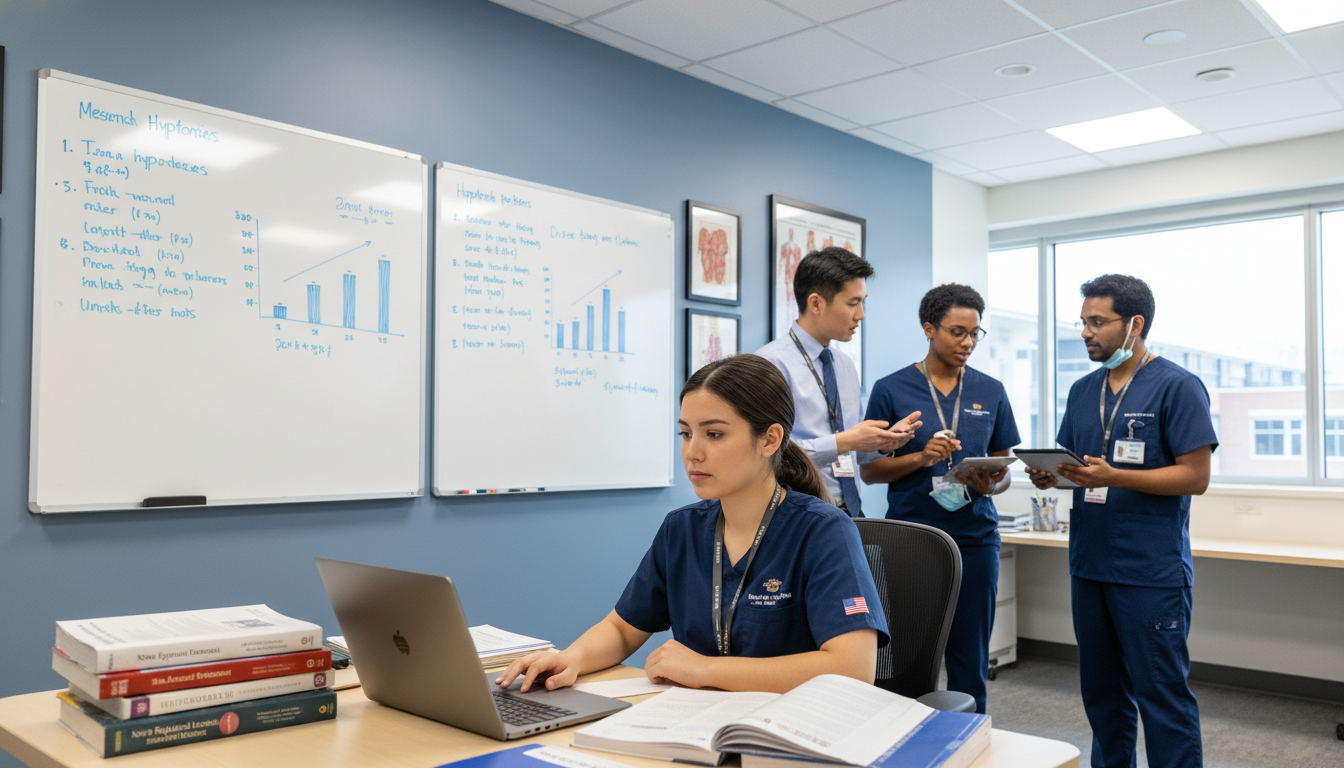
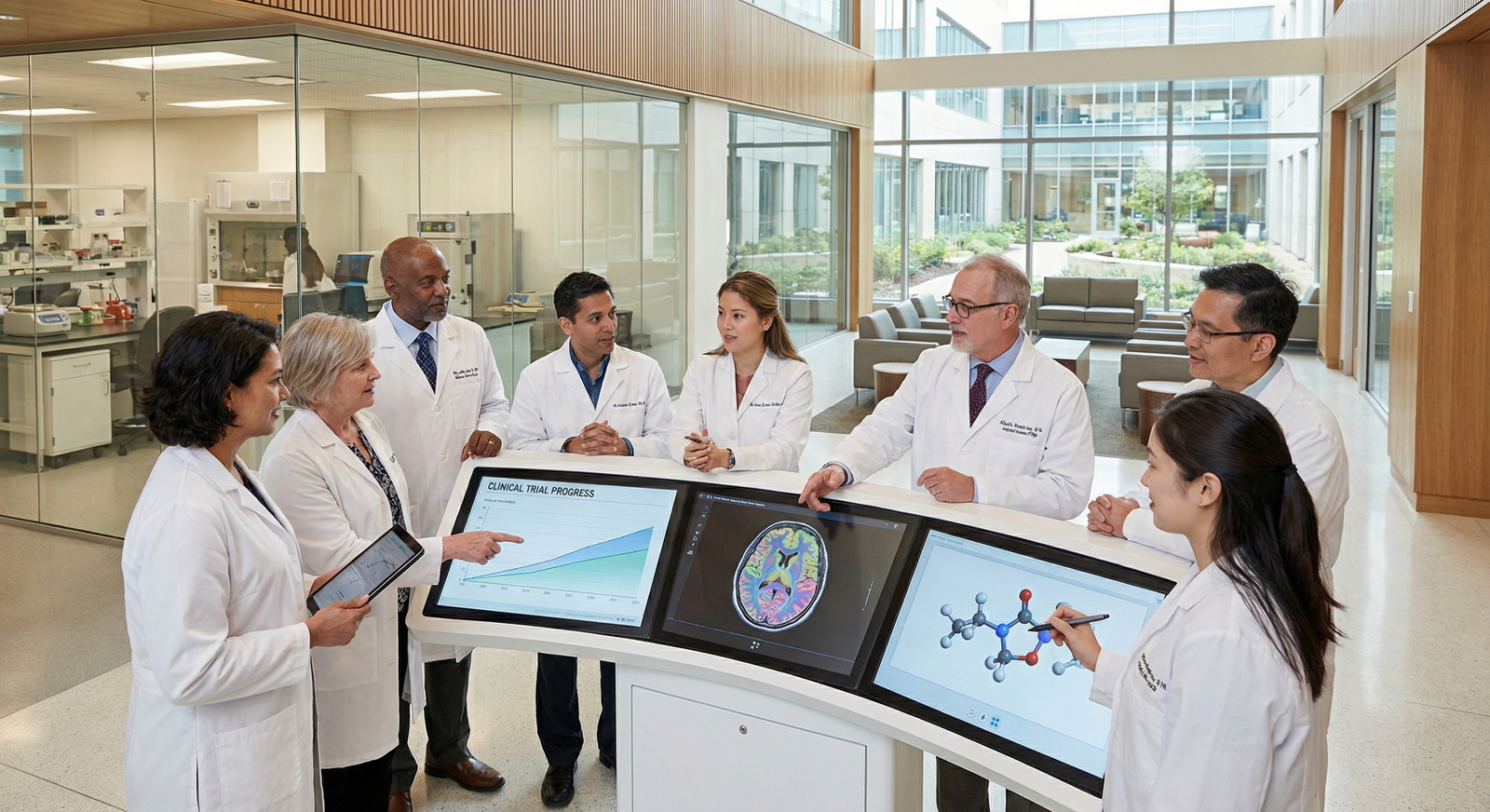
Research during residency is more than a line on your CV—it can shape your clinical skills, academic opportunities, and future competitiveness in the IR match for fellowship or early-career jobs. As a DO graduate entering interventional radiology, research may also help you bridge perceived gaps between osteopathic and allopathic training, highlight your strengths, and build a recognizable academic profile.
For interventional radiology (IR), in particular, the landscape is evolving rapidly: new devices, image-guided therapies, and minimally invasive techniques are constantly being tested. Programs value residents who can critically evaluate evidence, contribute to innovation, and collaborate across specialties. Whether you envision an academic residency track, a hybrid private practice with research, or a pure clinical role, understanding how to integrate research during residency will help you maximize your training years.
This article focuses specifically on DO graduates in IR—what unique advantages you bring, how to navigate potential obstacles, and how to strategically build resident research projects that align with your goals.
Why Research Matters for DO Graduates in Interventional Radiology
1. Strengthening Your Academic Profile as a DO Graduate
As a DO graduate, you may already be keenly aware of differences in perception between osteopathic and allopathic training. While this gap continues to close—especially after the single accreditation system—some competitive academic IR environments may still lean heavily MD-dominant.
Research during residency helps you:
- Demonstrate evidence-based thinking consistent with academic radiology standards
- Show you can compete on the same metrics (abstracts, manuscripts, presentations)
- Build a track record that program leadership, fellowship directors, and future employers recognize
For DO graduates who may not have had extensive research during medical school, residency represents a prime opportunity to catch up and even excel.
Example:
A DO graduate in a mid-sized community-based IR residency with academic affiliation may not have access to numerous basic science labs. However, they can build a strong portfolio with:
- Several case reports in interventional oncology
- A retrospective cohort study on outcomes of TACE vs Y-90 in their institution
- A multi-center survey study on osteopathic principles in IR training
These contributions demonstrate academic productivity regardless of degree letters.
2. Improving Your Competitiveness for IR Fellowships and Jobs
Even if you are already in an integrated interventional radiology residency, fellowship-like subspecialization or early-career jobs at high-volume centers may still rely on your scholarly output. For independent IR pathways or advanced practice positions, your research may differentiate you from peers.
Research experience can:
- Signal interest in niche areas (e.g., interventional oncology, neurointerventional, trauma/embolization)
- Show comfort with evidence synthesis and quality improvement
- Provide talking points for interviews and networking at conferences
Many hiring groups appreciate candidates who can lead outcomes projects, evaluate new devices, or collaborate with industry responsibly.
3. Deepening Clinical Reasoning and Procedural Insight
Research is not just abstract theory. For interventional radiology residents, it:
- Forces you to define procedural indications and contraindications clearly
- Helps you understand nuances in complication rates and risk factors
- Sharpens your ability to critique IR literature (important for changing practice patterns)
For DO graduates, this blends naturally with osteopathic training, which emphasizes holistic, systems-based thinking. You can bring a unique perspective to IR outcomes, such as functional status, pain, and quality-of-life measures that traditional radiology studies sometimes underemphasize.
Types of Research Projects Feasible During IR Residency
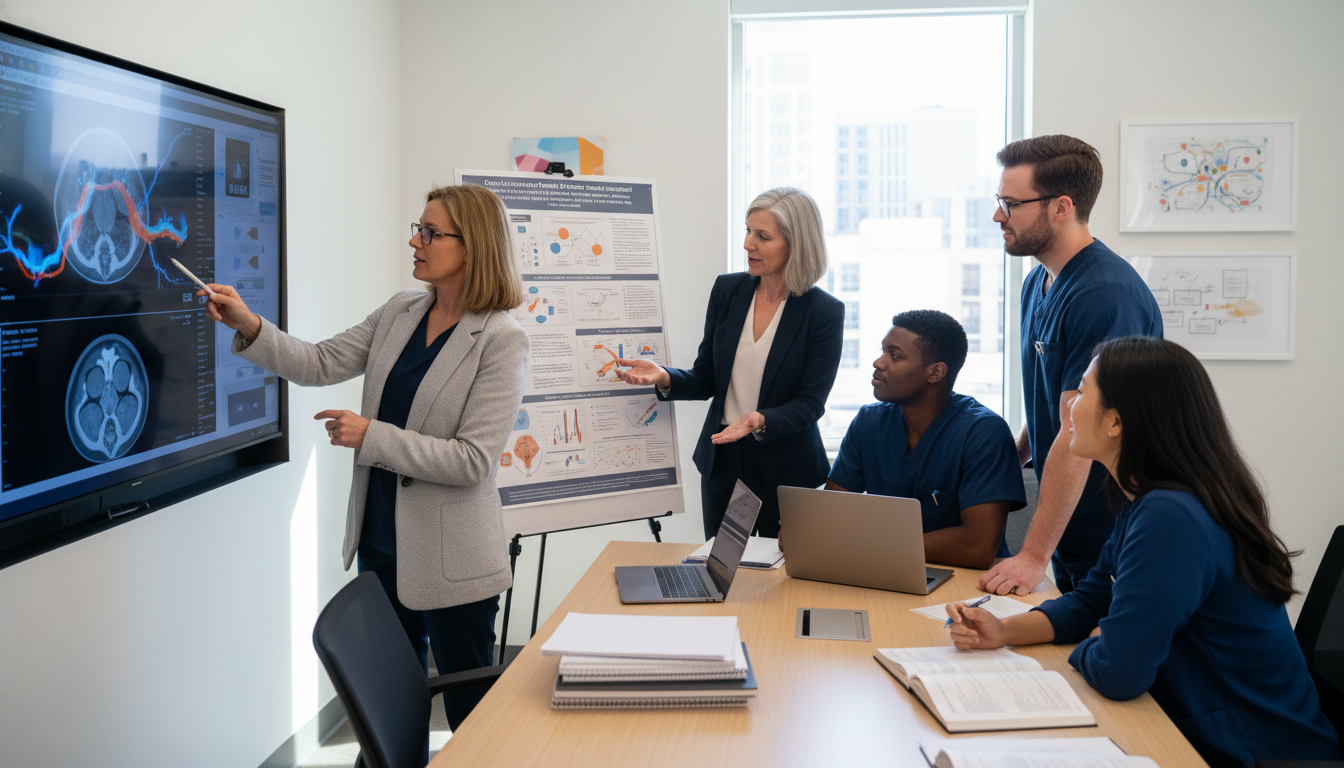
Balancing a demanding IR schedule with research can be challenging, but certain project types are well-suited to the realities of residency. Your strategy should prioritize feasibility, mentorship, and clear, achievable endpoints.
1. Case Reports and Case Series
Best for: PGY-1 to early PGY-3 residents, or those new to research.
Why they work:
- Straightforward structure
- Rapid turnaround
- High relevance to daily procedures
In IR, unique or rare cases often present:
- Uncommon vascular malformations
- Novel use of embolic materials
- Complications successfully managed with innovative techniques
As a DO graduate, you can also bring an osteopathic angle—integrating functional outcomes, symptom trajectories, or musculoskeletal sequelae.
Action steps:
- Inform attendings you are eager to write up interesting cases.
- Keep a “case log” notebook or secure digital list with MRN, date, and key features.
- When a strong case appears, immediately start collecting details: imaging, procedural notes, follow-up.
2. Retrospective Chart Review Studies
Best for: Residents who have basic research skills and moderate time capacity.
Retrospective studies can answer clinically relevant questions using existing data:
- Outcomes of percutaneous cholecystostomy in high-risk surgical candidates
- Predictors of post-TACE liver decompensation
- Comparison of access routes (radial vs femoral) in specific IR procedures
Considerations for DO graduates:
- You may be well-positioned to design studies that also capture functional, pain, and quality-of-life metrics, reflecting osteopathic training.
- These projects can yield conference abstracts, posters, and manuscripts within 12–18 months if well-planned.
Keys to success:
- Narrow your hypothesis early (avoid trying to study everything at once).
- Ensure IRB approval and data-use permissions.
- Use standardized data collection forms (REDCap, spreadsheets with defined variables).
3. Prospective Clinical Studies and Registries
Best for: Residents in programs with strong research infrastructure or in an academic residency track.
Prospective work is more complex, but valuable:
- Device registries (e.g., new stent-grafts or embolic agents)
- Prospective quality improvement interventions
- Structured follow-up of patients receiving IR procedures
As a DO graduate, involvement in a prospective registry showcases your ability to work in well-organized, multidisciplinary research environments.
Practical advice:
- Join ongoing trials or registries; don’t try to start from scratch alone.
- Take responsibility for specific components (consent process, data entry, follow-up calls).
4. Quality Improvement (QI) Projects with Research Potential
QI is increasingly recognized in residency milestones and often overlaps with research.
IR-specific QI ideas:
- Reducing contrast load in CKD patients
- Improving door-to-puncture time for emergent thrombectomy
- Standardizing anticoagulation management pre-IR procedures
If you design these QI initiatives rigorously, they can be converted into publishable research.
5. Educational and Curriculum Research
Given the growing complexity of IR training pathways, educational research is highly relevant:
- Evaluating a new IR bootcamp for residents
- Assessing simulation-based training effects on fluoroscopy time
- Studying osteopathic manipulative treatment (OMT) for pain control post-IR procedures (in select contexts)
As a DO graduate, you’re uniquely placed to investigate integration of osteopathic principles within IR education and patient care.
Finding Mentorship and Infrastructure as a DO IR Resident
1. Identifying the Right Mentor
Effective research during residency hinges on strong mentorship. For a DO graduate, mentorship can also help navigate any hidden biases and advocate for your potential.
Ideal mentor characteristics:
- Active involvement in IR research or adjacent fields (vascular surgery, oncology, cardiology)
- A track record of publications with resident/fellow co-authors
- Willingness to align projects with your interests and time constraints
- Supportive of DO graduates and inclusive of osteopathic backgrounds
You may have:
- A primary IR research mentor (procedural/outcomes-focused)
- A secondary mentor (e.g., biostatistician, education researcher, or outcomes scientist)
How to approach potential mentors:
- Prepare a one-page academic “snapshot” (interests, prior research, career goals).
- Ask for a short meeting focused specifically on how you can plug into ongoing projects.
- Be explicit about your level of prior training in stats, study design, and writing.
2. Leveraging Institutional Resources
Even community-based programs often have access to:
- Institutional Review Board (IRB) support
- Biostatistics core services
- Medical library with literature search assistance
- REDCap or similar data platforms
Ask your program director or chief residents:
- Which offices support resident research?
- Are there protected research days or elective blocks?
- What resident research projects have succeeded in the last 3–5 years?
For DO graduates coming from schools with less research emphasis, taking the time to learn how to use these resources early in PGY-2 or PGY-3 can pay large dividends.
3. Networking Beyond Your Institution
If your home program has limited IR research:
- Connect with national organizations (SIR – Society of Interventional Radiology).
- Join DO-friendly research collaboratives or multi-center IR registries.
- Seek “remote” mentorship, where you contribute to data analysis or manuscript writing.
National networking helps you:
- Learn how other programs structure academic residency tracks
- Get involved in multicenter resident research projects
- Build relationships that may aid future IR match for fellowships or early-career positions
Balancing Clinical Demands and Research During Residency
1. Understanding Your Time Constraints in IR
Interventional radiology residency is intense:
- Long procedural days
- Call responsibilities and emergencies
- Pre- and post-procedural patient management
- Imaging interpretation and rotations in diagnostic radiology
Research must fit around these realities. Unrealistic projects lead to frustration and burnout.
Tactical advice:
- Start with one primary project and one or two minor contributions (e.g., co-authorships).
- Treat research time as an explicit scheduled commitment (like a clinic or conference).
- Use low-cognitive-load periods (post-call, evenings) for low-complexity tasks (data cleaning, simple chart reviews).
2. Using “Micro-Blocks” of Time Effectively
Break research tasks into 20–40 minute segments:
- Literature search for a single subsection
- Screening 10–20 abstracts for relevance
- Extracting data from 5–10 patient charts
- Drafting or revising a single paragraph
Tools that help:
- Reference managers (Zotero, Mendeley, EndNote)
- Task managers (Todoist, Notion, or even a simple spreadsheet)
- Cloud-based drafting so you can work from multiple locations securely
3. Protecting Wellness as a DO Resident Researcher
Your osteopathic training emphasizes the whole person—apply that philosophy to yourself. Overcommitting to research can erode sleep, physical health, and performance in the IR suite.
Watch for signs:
- Persistent fatigue and cynicism
- Declining procedural focus
- Strained relationships with co-residents or attendings
If needed:
- Scale down or narrow the scope of projects
- Negotiate clearer expectations and boundaries with mentors
- Consider using elective time as a designated research block to achieve key milestones
Building a Strategic Research Portfolio for an Academic or Hybrid IR Career
1. Aligning Projects With Long-Term Goals
Think about where you see yourself 5–10 years post-residency:
- Academic interventional radiology (assistant professor, clinician-investigator)
- Hybrid practice (high procedural volume with select research projects)
- Industry-collaborative role (device trials, registries)
- Education-focused (program leadership, curriculum development)
Your research portfolio should reflect that trajectory.
Examples:
Interested in interventional oncology?
- Focus on TACE, Y-90, ablation outcomes, portal vein embolization studies.
- Join liver tumor board regularly; use these discussions to guide project ideas.
Drawn to limb salvage and PAD interventions?
- Study patency rates, wound-healing outcomes, and functional mobility measures.
Passionate about osteopathic principles and patient-centered IR?
- Design projects that incorporate pain management, functional outcomes, and quality-of-life metrics, highlighting your DO training.
2. Understanding the Academic Residency Track
Some programs have a defined academic residency track within IR or diagnostic radiology:
Features may include:
- Protected research time (e.g., 6–12 months spread over residency)
- Formal coursework in biostatistics, epidemiology, or clinical trials
- Mentorship committees and research progress reviews
- Requirements for manuscripts or grant submissions
As a DO graduate, applying for or advocating for placement in such a track can be powerful, signaling your commitment to scholarship.
If your program lacks a formal track:
- Informally create your own structure:
- Define annual research goals (e.g., 1 abstract PGY-2, 1 manuscript PGY-3, etc.).
- Seek cross-departmental collaborations (oncology, vascular surgery, hepatology).
- Ask your program director to support limited protected time for major deadlines (e.g., before conference submissions).
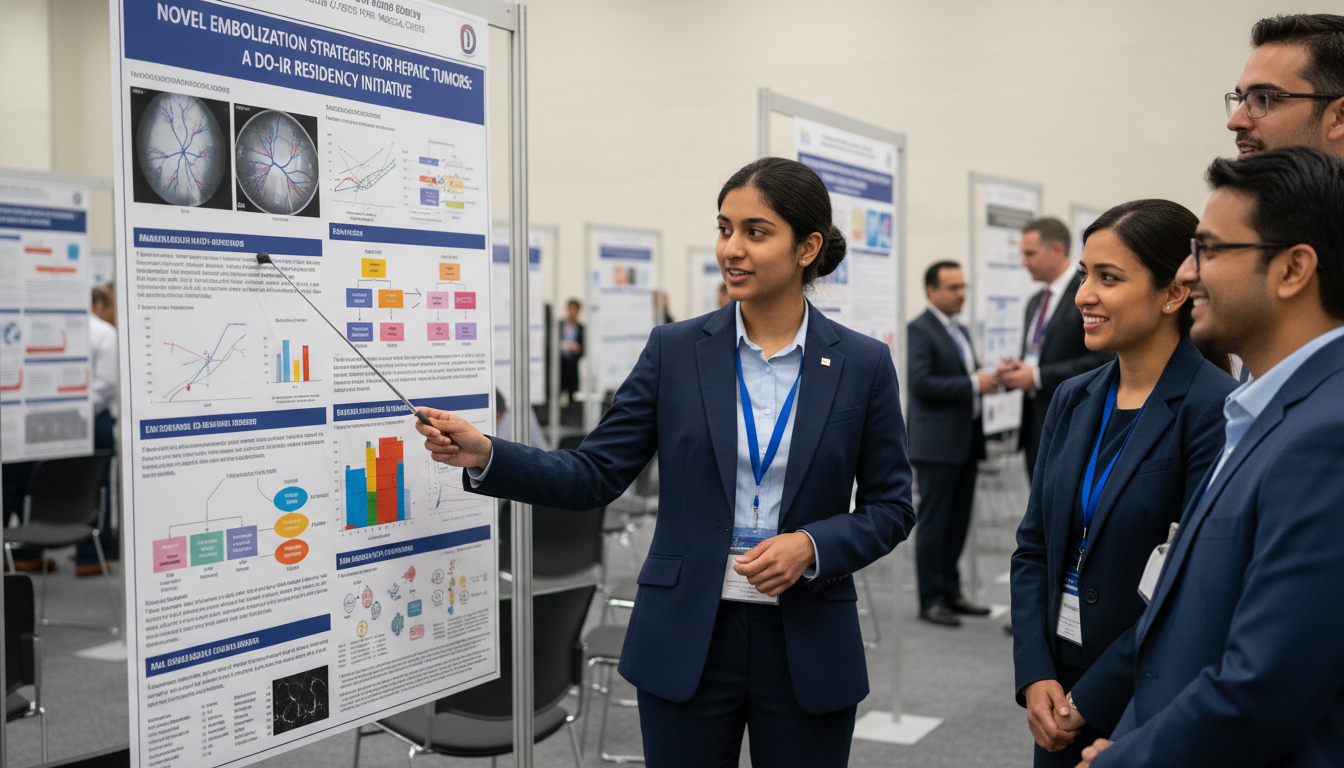
3. Disseminating Your Work: Posters, Presentations, and Publications
Dissemination is where your efforts become visible and impactful.
Conferences to target:
- Society of Interventional Radiology (SIR) Annual Scientific Meeting
- Cardiovascular and Interventional Radiological Society of Europe (CIRSE)
- RSNA and other radiology organizations
- Osteopathic conferences that welcome IR topics (for DO-centered projects)
Tips:
- Start with poster presentations; they are often easier for first-time presenters.
- Use posters to meet other IR researchers and potential collaborators.
- Convert posters to manuscripts within 3–6 months while the data and feedback are still fresh.
Practical Roadmap: A Sample 4-Year Plan for Research During IR Residency (DO Graduate)
Assume you are a DO graduate in a 5-year IR pathway (including DR years); adapt as needed.
PGY-1 (Preliminary/Transitional Year)
- Attend basic research workshops if available.
- Identify broad interests: interventional oncology, PAD, trauma, etc.
- Start reading key IR journals (JVIR, Cardiovascular and Interventional Radiology, Radiology).
PGY-2 (Early Diagnostic Radiology)
- Meet IR faculty and ask about research opportunities.
- Join 1–2 ongoing projects in a supporting role (data collection, chart review).
- Aim for your first abstract submission by the end of PGY-2.
- Learn basics of IRB, consent, and data protection.
PGY-3–4 (Advanced DR + Early IR Exposure)
- Take on a primary project (e.g., retrospective outcomes study).
- Submit at least one abstract/ poster per year (preferably IR-focused).
- Co-author one or two case reports or small series with IR attendings.
- Consider a small educational or QI project (e.g., improving pre-procedure checklists).
PGY-5 (Dedicated IR Year or Integrated IR Year)
- Focus on completing and submitting at least one full manuscript.
- Present at a major IR meeting (SIR, RSNA).
- Seek roles in multi-center registries or IR working groups (if available).
- Clarify your intended career path (academic vs hybrid vs clinical) and adjust your portfolio accordingly.
Throughout, maintain:
- A centralized CV that’s updated with every presentation and publication.
- A list of ongoing and potential projects to discuss at semi-annual meetings with mentors or your program director.
Common Pitfalls and How to Avoid Them
Overcommitting to too many projects
- Remedy: Focus on 1–2 primary projects that you can realistically finish.
Poor communication with mentors
- Remedy: Set clear expectations; schedule recurring check-ins (monthly or every 6–8 weeks).
Neglecting IRB and ethics considerations
- Remedy: Involve the IRB office early; complete required training modules.
Letting projects stall after data collection
- Remedy: Build writing timelines from the start; consider forming a small writing group with co-residents.
Underestimating the impact of small wins
- Remedy: Recognize that case reports, QI projects, and posters are legitimate building blocks for a strong IR research portfolio—especially during a busy residency.
FAQs: Research During Residency for DO Graduates in Interventional Radiology
1. I had minimal research in medical school as a DO graduate. Is it too late to build a strong research profile during residency?
No. Many residents—MD and DO—start serious research activities only in residency. If you are intentional, you can develop a solid record with case reports, retrospective studies, and QI projects over 3–4 years. Focus on feasible, well-mentored projects and prioritize completion and publication over sheer volume.
2. Do I need basic science or lab-based research to be competitive in interventional radiology?
Not necessarily. In IR, clinical outcomes research, device registries, QI, and educational studies are often just as valued, sometimes more so, because they directly inform patient care and procedural practice. If you have an interest in basic science or translational work, that’s a bonus, but it is not mandatory for success in IR.
3. How can I find research mentors if my IR residency is more clinically oriented and not strongly academic?
Look beyond your immediate IR section:
- Collaborate with vascular surgeons, cardiologists, oncologists, or hospitalists on IR-related projects.
- Engage your institution’s research office or GME office for connections.
- Reach out through professional societies like SIR to identify faculty at other institutions open to remote collaboration.
Even a single supportive mentor with existing projects can launch your research trajectory.
4. Will research during residency actually help my future career if I plan a mostly clinical, non-academic IR practice?
Yes. Research experience improves your ability to interpret evidence, implement new technologies responsibly, and participate in local QI or outcomes projects. Even in private or hybrid settings, groups increasingly value physicians who can lead data-driven initiatives, support marketing with outcomes data, and collaborate with industry while understanding trial design and bias. A modest but focused research portfolio from residency can set you apart across practice settings.
By approaching research during residency strategically—as a DO graduate in interventional radiology—you can build a meaningful scholarly foundation without sacrificing your clinical training or wellness. Thoughtful project selection, strong mentorship, and consistent small steps will position you well for the evolving, research-driven future of IR.