Why Research During Interventional Radiology Residency Matters
For an MD graduate entering interventional radiology (IR), residency is not just about mastering procedures. It is also the window where you can establish yourself as a clinician–scholar, build a publication record, and position yourself for competitive fellowships or academic careers. Research during residency has become an expected component of training—especially in a field as innovation-driven as IR.
In the current allopathic medical school match landscape, IR already selects for applicants with substantial scholarly activity. Once you match into an interventional radiology residency, your research trajectory can be the difference between:
- Matching into elite advanced fellowships (e.g., complex endovascular, interventional oncology, neurointerventional)
- Securing an academic residency track or early faculty position
- Being seen as a leader in a niche area (e.g., portal interventions, venous disease, women’s health, MSK interventions)
Research is how IR advances—from new embolic agents and devices to practice-changing trials and quality improvement (QI) projects. As a resident, you’re in a unique position: you see the day-to-day clinical questions and also have institutional support to explore them.
This article will walk you through how to strategically approach research during your interventional radiology residency: selecting projects, finding mentors, managing time, building a coherent portfolio, and translating your efforts into long-term career benefit.
Understanding the Landscape: Types of Research in IR Residency
Interventional radiology is inherently multidisciplinary and procedure-driven, so research opportunities are diverse. As an MD graduate in IR, you should understand the main categories, what they demand, and how feasible they are within residency constraints.
1. Retrospective Clinical Studies
What they are:
Analyses of existing patient data from charts, PACS, or institutional databases.
Examples in IR:
- Outcomes of TACE vs Y-90 for HCC at your institution
- Complication rates and predictors after uterine fibroid embolization
- Long-term patency after iliocaval stenting
Pros:
- Most feasible during residency (no need to recruit new patients)
- Faster IRB approval compared to prospective trials
- Can be done with limited funding
- High yield for abstracts and manuscripts
Cons:
- Subject to biases in existing data
- Data cleaning can be time-consuming
- May not be as impactful as prospective or randomized studies
2. Prospective Clinical Studies and Trials
What they are:
Pre-planned data collection going forward in time, sometimes involving interventions, protocols, or randomized assignment.
Examples:
- Prospective registry of patients undergoing portal vein recanalization
- Randomized comparison of two access closure devices
- Structured assessment of patient-reported outcomes after venous stenting
Pros:
- Often higher impact and more publishable in major journals
- Can form the foundation for your academic reputation
- Opportunity to work closely with device companies or multi-center networks
Cons:
- Longer timelines (may extend beyond your residency)
- Heavier regulatory requirements (IRB, possibly FDA oversight)
- Requires strong mentorship and institutional infrastructure
3. Quality Improvement (QI) and Outcomes Research
What they are:
Projects that systematically evaluate and improve processes, patient safety, efficiency, or adherence to guidelines.
Examples:
- Reducing complication rates after tunneled catheter placements with a standardized checklist
- Decreasing radiation exposure in complex embolization procedures
- Improving pre-procedure consent and documentation for IR patients
Pros:
- Often easier and faster to implement, sometimes not requiring full IRB approval (check with your institution)
- Directly improves patient care and workflow
- Highly valued by program leadership and hospital administration
Cons:
- Publication potential can be more limited if narrowly focused
- Requires buy-in from entire team for sustained change
4. Basic Science and Translational Research
What they are:
Bench or animal-model research aimed at understanding mechanisms or testing new devices/agents.
Examples:
- Animal models testing novel embolic materials
- Cellular mechanisms of radiation injury and protection
- Nanoparticle-based drug delivery systems for interventional oncology
Pros:
- High impact potential and can lead to first-author papers in major journals
- Strong platform for an academic residency track or physician–scientist pathway
- Builds unique skills for device innovation and translational IR
Cons:
- Time-intensive; often needs protected time (research years) and a strong lab infrastructure
- Steep learning curve for MDs without prior bench experience
- Less flexible with clinical scheduling
5. Education, Simulation, and Training Research
What they are:
Studies evaluating teaching methods, simulation, curricula, or assessment tools in IR training.
Examples:
- Impact of a simulation-based curriculum on residents’ angiography skills
- Development of a competency-based assessment tool for central line placement
- Evaluating flipped-classroom IR anatomy teaching modules
Pros:
- Very doable within residency; often lower regulatory barriers
- Great for residents drawn to teaching and academic residency tracks
- Can have significant impact on how IR is taught nationally
Cons:
- May be perceived as less “clinical” by some (though still valuable)
- Requires thoughtful study design to be publishable

Getting Started: Finding Mentors, Ideas, and a Research Home
Identify the Right Mentors Early
As an MD graduate entering IR, your first step should be identifying mentors who are both productive and accessible.
Look for:
- Attendings with a track record of recent publications (last 3–5 years)
- Faculty frequently presenting at SIR, CIRSE, RSNA, or other IR conferences
- Fellows or senior residents who are actively publishing and can guide you
Actionable steps in PGY-1/PGY-2 (early years):
- Scan PubMed for your institution + “interventional radiology” to see who is publishing.
- Visit your department website and note faculty with research leadership roles (e.g., Director of Research, Section Chief).
- Ask your program director or chief residents: “Who in our department is most active with resident research projects?”
Aim for 2–3 mentors filling slightly different roles:
- A primary clinical IR mentor
- A methodology or statistics mentor (could be outside radiology)
- Possibly a secondary mentor in your niche interest (e.g., oncology, vascular surgery, hepatology, OB/GYN)
Turn Clinical Questions into Research Questions
As you rotate through IR, keep a running list of “why do we do it this way?” questions. Many high-yield projects begin as practical observations:
- “We see a lot of post-TIPS encephalopathy—can we predict who’s at risk?”
- “Are our complication rates after gastrostomy placements higher than published benchmarks?”
- “Does ultrasound-guided access reduce hematoma risk for our emergent PE thrombectomy cases?”
Convert these into researchable questions using a framework:
- Population: Which patients?
- Intervention / Exposure: What procedure or factor?
- Comparator: What is it compared to, if anything?
- Outcomes: What measurable clinical endpoints?
Example:
“In patients undergoing uterine fibroid embolization (Population), using cone-beam CT guidance (Intervention) compared to fluoroscopy alone (Comparator) reduces reintervention rates and radiation dose (Outcomes).”
Choose a Research “Home” or Niche
Your research portfolio is more powerful if it develops around a coherent theme. As you move through residency, try to gravitate toward one or two focus areas, such as:
- Interventional oncology (e.g., TACE, Y-90, ablation techniques)
- Venous disease (e.g., DVT, May-Thurner, IVC reconstruction)
- Women’s health (e.g., UFE, pelvic congestion)
- Portal and hepatobiliary interventions
- Trauma and emergency IR
- Neurointerventional topics (if offered at your program)
This does not mean you can’t do varied projects, but ideally 50–70% of your resident research projects should cluster within a focus area. That coherence is very attractive when you apply for IR fellowships, academic positions, or specialized advanced training.
Structuring Research During a Busy IR Residency
Interventional radiology residency is intense: IR call, procedures, ICU consults, and imaging rotations can quickly consume your time. To make progress with research during residency, you need both structure and strategy.
Understand Your Program’s Research Expectations and Resources
Early in PGY-1 or PGY-2, clarify:
- Does your program have protected research time (e.g., 4–8 weeks per year)?
- Is there funding for conference travel if you present?
- Are there institutional databases or IR registries you can access?
- Are there formal resident research requirements (e.g., at least one abstract or manuscript)?
If your program has an academic residency track, consider whether applying is strategic for you. These tracks often include:
- Additional research blocks
- More formal mentorship
- Expectations for higher scholarly output
For MD graduates already eyeing a career in academic IR, the academic residency track can be a major asset.
Time Management: Building a Weekly Research Habit
Consider the following approach:
1. Set a minimum weekly commitment.
Even in your busiest blocks, aim for a non-negotiable 2–4 hours/week dedicated to research. Treat it like a scheduled clinic: specific time, specific location.
2. Define your “research tasks” precisely.
Vague plans like “work on manuscript” tend to fail. Instead:
- “Extract data for 10 more patients from EMR”
- “Revise methods section based on mentor comments”
- “Draft abstract for SIR submission (200-word limit)”
3. Use your lighter rotations strategically.
On rotations such as diagnostic radiology, elective, or outpatient clinic blocks:
- Expand to 5–8 hours/week of research
- Push projects to completion: submission-ready abstracts and manuscripts
Breaking Projects into Stages
Each project moves through stages; explicitly track which stage each resident research project is in:
Idea and Feasibility Check
- Brief meeting with mentor
- Quick literature search: is the question novel enough?
- Check if data and sample size are available
Protocol and IRB Submission
- Define inclusion/exclusion criteria and outcomes
- Draft methods; meet with statistician if needed
- Submit to IRB; anticipate revisions
Data Collection and Cleaning
- Design standardized data collection forms (e.g., REDCap)
- Ensure consistent definitions (e.g., what counts as a “major complication”?)
Analysis and Interpretation
- Work closely with biostatistics if available
- Be involved in the analysis—not just a passive observer
Manuscript and Abstract Writing
- Start by writing Methods and Results while data are fresh
- Then add Introduction and Discussion with a focused narrative
Submission and Revisions
- Target appropriate journals or conferences (e.g., JVIR, CVIR, RSNA, SIR)
- Expect at least one round of revision; plan time for it
Maintaining a simple spreadsheet or Trello board with each project’s status can keep you from losing momentum.
Maximizing Impact: From “Lines on CV” to a Coherent Scholarly Portfolio
Many residents accumulate scattered posters and small projects. To stand out in the IR match for advanced fellowships or when applying for early faculty positions, you want a coherent trajectory that tells a story.
Build Depth, Not Just Volume
Program directors and academic leaders look for signs that you are becoming an expert in something. Instead of:
- 1 abstract on portal hypertension
- 1 case report on trauma
- 1 QI project on sedation workflow
- 1 educational project on simulation
Consider a sequence like:
- Retrospective study on outcomes of TIPS in HCC patients
- QI project to standardize pre-TIPS evaluation and reduce post-TIPS complications
- Prospective registry of TIPS patients with patient-reported quality-of-life outcomes
- Review article or invited lecture on complex portal interventions
Now your CV tells a clear story: you are the “portal interventions” person, with research during residency that naturally points toward an academic IR career in hepatology-related procedures.
Choosing the Right Mix of Project Sizes
You should have a portfolio mix of:
Quick wins (1–3 months):
- Case reports, brief communications, smaller QI projects, educational resources
- Purpose: Get early publications and build momentum
Medium projects (6–12 months):
- Retrospective cohort studies, institutional outcomes papers
- Purpose: Anchor your CV with 1–3 strong first-author works
Long-term/ambitious projects (12–24+ months):
- Prospective studies, multi-center collaborations, major reviews or book chapters
- Purpose: Position you for competitive academic or interventional radiology residency leadership roles
Balance is critical: too many long projects can leave you with minimal tangible output by graduation; too many tiny projects dilute your profile.
Leveraging Conferences and Networks
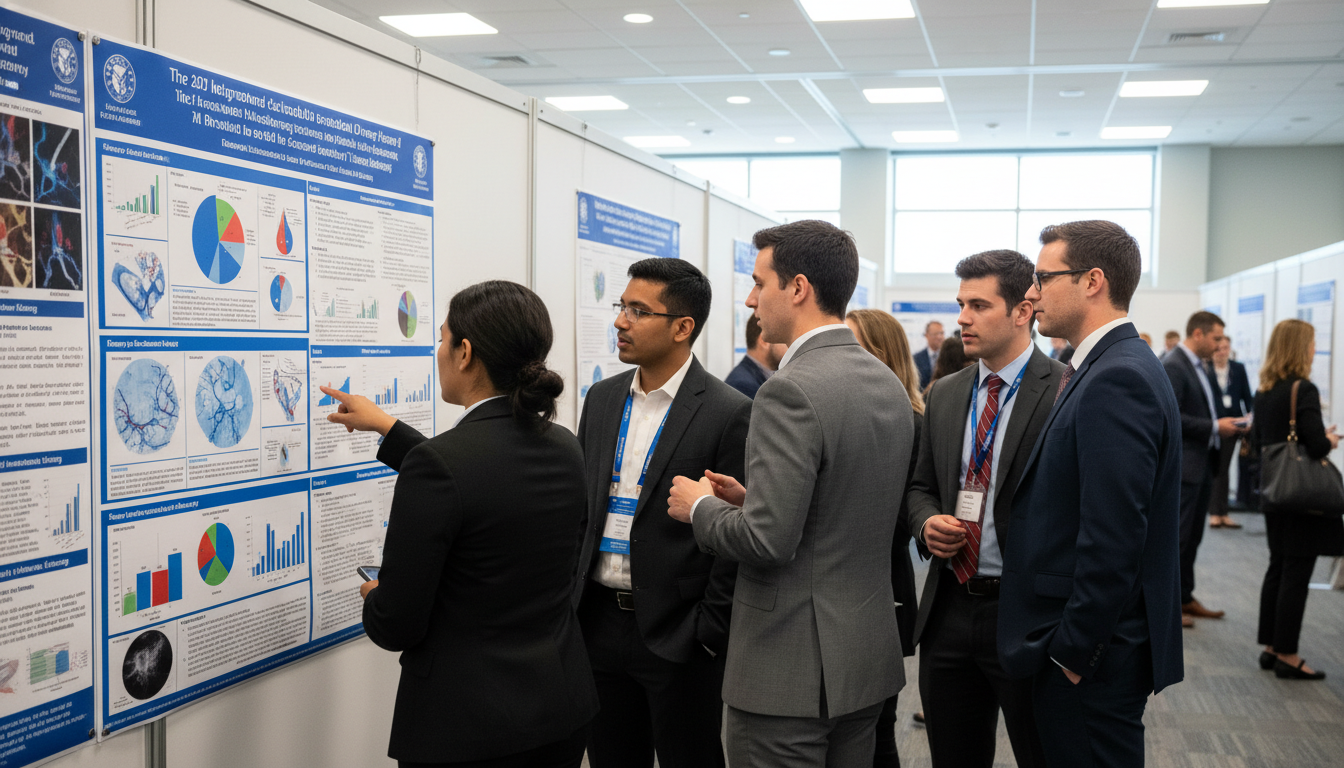
Presenting your resident research projects is not just about a line on your CV; it’s about relationship-building within IR:
Submit abstracts to:
- SIR (Society of Interventional Radiology) – cornerstone IR meeting
- RSNA, ARRS, CIRSE, or subspecialty meetings (e.g., neuro, oncology, trauma)
At conferences:
- Introduce yourself to leaders in your niche (e.g., well-known portal hypertension or venous disease IRs)
- Mention your work briefly and ask about gaps they see in the literature
- Follow up by email with your abstract or manuscript link
These connections can lead to multi-institutional studies, mentorship, and fellowship opportunities.
Collaborating Across Specialties
Interventional radiology intersects with multiple clinical services—oncology, hepatology, surgery, OB/GYN, vascular medicine, pulmonary/critical care.
Examples of cross-disciplinary projects:
- With hepatology: Combined outcomes of IR and hepatology management for portal hypertension
- With oncology: Comparative effectiveness of IR vs systemic therapy for certain metastatic patterns
- With vascular surgery: Joint registries on limb salvage outcomes
These collaborations:
- Increase clinical impact of your work
- Make your IR match profile more compelling for academic or tertiary centers
- Teach you how to function as a key player in multi-disciplinary teams
Planning for Life After Residency: Translating Research into Career Trajectory
Research during residency is not an isolated exercise; it’s the foundation for your career as an interventional radiologist.
For Those Pursuing an Academic IR Path
If your goal is academic IR faculty or leadership in residency/fellowship programs:
- Aim for at least 3–5 first-author publications by the end of residency, with multiple in your chosen niche.
- Seek formal academic mentorship and consider:
- A chief resident role with scholarly emphasis
- An academic residency track or research year(s), if available
- Enrollment in a clinical research or education certificate program
Prepare for your early career by:
- Developing grant-writing skills (even small institutional or society grants)
- Participating in resident research committees or institutional review boards
- Volunteering for guideline-writing, society task forces, or SIR committees relevant to your research area
For Those Leaning Toward Private Practice IR
Even if you anticipate a predominantly private-practice path, IR research during residency is still valuable:
- Shows you can critically appraise the literature and apply evidence-based practice
- Positions you to lead quality initiatives, device evaluations, and protocol development in your group
- Gives you credibility when interacting with hospital leadership, vendors, and referring physicians
In private practice, you may still:
- Enroll patients in multi-center registries
- Lead local QI or outcomes projects
- Co-author case series or practical clinical reviews
Residency research experience will make you more efficient and effective at these tasks.
Strategically Highlighting Research in Applications and Interviews
As you advance from MD graduate residency to IR fellowship or faculty positions, you should be prepared to:
Tell a coherent story:
“My primary interest has been interventional oncology, specifically Y-90 and TACE for HCC, where I’ve conducted X, Y, and Z studies, and I want to build on this with more prospective outcomes research.”Emphasize impact, not just numbers:
Mention specific clinical practice changes, QI outcomes, or how your work informed institutional protocols.Show you understand next steps:
How would you expand your resident research projects into multi-center studies or grant proposals as a fellow or junior faculty member?
This framing demonstrates maturity, vision, and readiness for an increasingly academic and outcomes-focused IR environment.
FAQs: Research During IR Residency for MD Graduates
1. How important is research for an interventional radiology resident who already matched?
Even after you secure an IR match, research remains highly important. Downstream opportunities—competitive fellowships, academic residency track positions, and early faculty roles—often hinge on your scholarly record. Within residency, research also:
- Deepens your understanding of procedures and outcomes
- Makes you more marketable (even in private practice)
- Helps you build national-level professional relationships
While it may not be mandatory for basic competency, research is central to leadership and advancement in interventional radiology.
2. I have minimal prior research experience from medical school. Can I still be productive during residency?
Yes. Many MD graduates from allopathic medical schools enter residency with uneven research exposure. You can become productive by:
- Finding hands-on mentors who will teach you study design and writing
- Starting with retrospective studies, case reports, or QI projects to quickly learn the process
- Taking advantage of institutional resources (biostatistics, clinical research offices, online modules)
Within 1–2 years, you can go from novice to first-author on multiple projects, provided you are consistent and proactive.
3. How many projects should I take on at once as a resident?
For most IR residents, a realistic active load is:
- 1–2 primary projects where you are first or second author and deeply involved
- 1–3 secondary projects where you play a more limited role (e.g., data collection, contributing to a multi-author paper)
Too many simultaneous projects can dilute your effort and lead to unfinished work. Focus on bringing a few high-quality projects all the way to publication, rather than starting many and finishing none.
4. How do I balance procedural skill development and research time?
Think of them as complementary, not competing. Research can sharpen your clinical judgment, and clinical work supplies the questions your research should answer. Tactically:
- Protect clinical time on heavy IR blocks; schedule your research hours on lighter days or rotations
- Use short, focused sessions (1–2 hours) for data entry or writing, rather than waiting for full “days off”
- Combine educational goals (e.g., reading about advanced TIPS techniques) with literature reviews for ongoing projects
If your program offers protected research blocks, use them to push major projects to key milestones: IRB submission, completion of data collection, or manuscript draft.
Research during residency for an MD graduate in interventional radiology is not just about padding a CV. Done thoughtfully, it is how you develop an identity within IR, contribute to the field’s evolution, and open doors to the most rewarding clinical and academic opportunities. By choosing mentors well, structuring your time, and building a coherent research niche, you can emerge from residency not only as a skilled interventionalist, but as a genuine contributor to the science and practice of interventional radiology.