
Why Research During a Medical Genetics Residency Matters
Research is not a “nice-to-have” add-on in medical genetics; it is a core competency. Modern clinical genetics sits at the intersection of rapidly evolving science and real-time patient care. Variants are reclassified, new syndromes are described, and emerging therapies are trialed almost weekly. Participating in research during residency equips you to:
- Interpret an ever-changing literature and apply it to patient care
- Understand the evidence behind genetic testing, counseling, and therapy
- Contribute to the discovery of new disease genes and phenotypes
- Build a competitive profile for fellowships, academic positions, and industry roles
- Develop transferable skills in data analysis, critical appraisal, and scientific writing
Accreditation bodies and most academic programs expect residents to engage in scholarly activity, which usually includes at least one research- or quality-improvement–focused project. In medical genetics, this often goes beyond minimum requirements and becomes a defining part of your training.
This guide will walk you through the landscape of research during residency in medical genetics—how to choose projects, find mentors, balance service with scholarship, and leverage your work for the genetics match and your long-term career.
Understanding the Research Landscape in Medical Genetics
Medical genetics offers a particularly rich, interdisciplinary research environment. Before you commit to specific projects, understand what “research” can look like in this specialty.
Common Research Domains in Medical Genetics
Clinical Genetics Research
Focus: Patient phenotypes, diagnostic yield, care pathways, health outcomes.
Examples:- Studying diagnostic yield of whole-exome sequencing in pediatric patients with developmental delay
- Characterizing the natural history of a rare skeletal dysplasia
- Evaluating the impact of rapid genomic sequencing in the NICU on clinical decision-making
Molecular and Genomic Research
Focus: Mechanisms of disease, variant interpretation, functional studies.
Examples:- Investigating the functional impact of a novel missense variant using in vitro assays
- Developing pipelines for variant classification using ACMG/AMP guidelines
- Applying RNA sequencing or long-read sequencing to solve unsolved cases
Biochemical Genetics and Metabolic Research
Focus: Inborn errors of metabolism, biomarkers, treatment optimization.
Examples:- Assessing the effectiveness of newborn screening follow-up protocols
- Evaluating long-term outcomes of patients treated with enzyme replacement therapy
- Studying metabolomic profiles in urea cycle disorders
Genetic Counseling and Ethical/Policy Research
Focus: Patient communication, ethics, health systems, implementation science.
Examples:- Analyzing patient understanding of secondary findings from exome sequencing
- Studying equitable access to genetic testing across diverse populations
- Evaluating the impact of tele-genetics on no-show rates and patient satisfaction
Translational & Precision Medicine Research
Focus: Moving discoveries from bench to bedside, novel therapies, N-of-1 trials.
Examples:- Collaborating on gene therapy or ASO (antisense oligonucleotide) trials
- Designing individualized treatment protocols for ultra-rare disorders
- Participating in pharmacogenomics implementation in clinical practice
Types of Resident Research Projects
Your resident research projects don’t all need to be lab-based or multi-year. Some common and feasible project types:
Retrospective Chart Reviews
- Example: Outcomes in patients with 22q11.2 deletion syndrome followed at your center.
- Pros: Feasible in 1–2 years; often IRB-exempt or expedited.
- Skills: Study design, data abstraction, basic statistics, manuscript writing.
Prospective Observational Studies
- Example: Surveying parental experiences around receiving a new genetic diagnosis.
- Pros: Stronger evidence; potential for impactful insights.
- Cons: Requires more planning, IRB approval, and longer timeframe.
Case Reports and Case Series
- Example: Describing a novel phenotype associated with a known gene.
- Pros: Good entry point for first-time authors; highly relevant in rare diseases.
- Bonus: Often lead to further collaborations and gene discovery work.
Quality Improvement (QI) Projects
- Example: Reducing turnaround time from genetic test order to counseling visit.
- Pros: Required by many programs; directly improves patient care and workflow.
- May count as scholarly work if systematically studied and disseminated.
Basic/Translational Lab Projects
- Example: Modeling a variant of uncertain significance (VUS) in a cell line.
- Pros: Deep mechanistic understanding, highly valued in academic careers.
- Cons: Time- and resource-intensive; alignment with clinical schedule needed.
Understanding this spectrum allows you to select a portfolio of projects that fit your schedule, interests, and long-term goals.

Choosing the Right Research Path: Aligning Projects With Your Goals
Your time in a medical genetics residency is limited—usually 2 years for combined programs after pediatrics or internal medicine, or 3+ years in integrated tracks. Strategic choices early on maximize your impact and satisfaction.
Step 1: Clarify Your Long-Term Career Direction
You do not need a fully defined plan, but ask yourself:
Do I see myself primarily as:
- A clinician-educator,
- An academic physician-scientist,
- A clinical lab director (e.g., molecular genetics, cytogenetics),
- A biotech/pharma medical director or
- A public health/genomics policy expert?
Am I more excited by:
- Direct patient interaction and care pathways?
- Lab-based discovery and functional studies?
- Data science, bioinformatics, and large genomic datasets?
- Ethics, communication, and health equity in genetics?
Your answers guide what an academic residency track might look like for you: e.g., Clinician-Educator Track vs Physician-Scientist Track, or an informatics-focused path.
Step 2: Consider Types of Research That Fit Your Reality
Match project type to your constraints:
- Time-intensive rotations → Opt for chart reviews, case series, or QI that can be advanced in smaller time blocks.
- Dedicated research blocks → Consider lab-based projects, prospective studies, or multi-center collaborations.
- Limited stats background → Start with mentor-structured projects, or partner with a biostatistician.
- Interest in data science → Seek projects using large exome/genome datasets, variant databases, or EHR-linked genomic data.
Example:
If your goal is to become a clinical molecular genetics lab director, you might choose:
- A lab-based project on functional evaluation of VUS in a cancer predisposition gene
- A bioinformatics project refining variant curation pipelines
- A case series on genotype-phenotype correlations in patients with specific CNVs
Conversely, a resident aiming for genetic counseling research or ethics might focus on:
- Survey-based work on informed consent in genomic sequencing
- Qualitative interviews with families about incidental findings
- Policy analysis of coverage and access for genomic tests
Step 3: Balance Ambition With Feasibility
Common pitfalls:
- Overly broad questions (“What are the long-term outcomes of all patients with rare disease X?”)
- Single-resident attempts to run complex multi-site trials within 18 months
- Underestimating IRB and data-collection timelines
Feasibility checklist:
- Can the core data collection and analysis be completed within your residency?
- Are the data readily available (existing database, EMR, or biobank)?
- Is there a mentor with time and track record to guide you?
- Are software and analytic support available (e.g., REDCap, SPSS/R, bioinformatics pipelines)?
Aim to have at least one “quick win” project (e.g., a case report, small chart review) plus one more ambitious project that can extend into fellowship or early faculty years.
Finding Mentors and Building a Research Team
Effective mentorship is often the single strongest predictor of productive research during residency.
Identifying the Right Mentor(s)
Look for mentors who offer a mix of:
Content Expertise
- Specific to your interest area (e.g., neuromuscular genetics, cancer genetics, metabolic disorders).
- Bonus: involvement in national consortia (e.g., ClinGen, Undiagnosed Diseases Network, disease-specific networks).
Research Track Record
- Regular publications in peer-reviewed journals.
- Active grants or funding (NIH, foundations, disease-specific organizations).
- Experience supervising resident or fellow research projects.
Availability and Mentoring Style
- Willing to schedule regular check-ins.
- Known among residents for being supportive and responsive.
- Offers constructive feedback on writing and presentations.
Checklist of people to approach:
- Program director or associate program director
- Division chief or research director
- Faculty who lead specialized clinics (e.g., connective tissue disorders, mitochondrial clinic)
- Clinical lab directors (molecular genetics, cytogenetics, biochemical labs)
- Genetic counselors with active research portfolios
- Data scientists/bioinformaticians attached to the genetics division
Bring a brief “research CV snapshot” when you meet: prior research experiences, methods skills, and 2–3 topics that excite you.
Structuring the Mentoring Relationship
Clarify expectations early:
Goals:
- Manuscript? Abstract? Resident research day presentation?
- National conference submission (ASHG, ACMG, WESG, or disease-focused meetings)?
Timeline:
- Key milestones (IRB approval, data collection, analysis, first draft).
- How often will you meet (biweekly, monthly)?
Roles:
- Who handles IRB?
- Who coordinates data access and management?
- Who will be first and senior authors; how are contributions recognized?
Consider forming a micro-team:
- Primary mentor (content and strategy)
- Secondary mentor (methods, stats, or informatics)
- Peer—another resident or fellow involved in the same project
- Genetic counselor collaborator if relevant to patient communication/implementation aspects
This team-based approach helps continuity when clinical duties escalate and mitigates the impact of any one person’s schedule.
Making Research Work Within Residency: Practical Strategies
Balancing clinical responsibilities and research during residency is challenging but absolutely achievable with structure and discipline.
Using the Structure of Your Program
Ask your program leadership:
- How many protected research weeks or blocks are built in?
- Are there expectations for a capstone project or scholarly product?
- Is an academic residency track available that provides additional research time or coursework (e.g., in epidemiology, biostatistics, or bioinformatics)?
- Are there institutional resident research grants or funds for conference travel?
If you’re early in training or applying to programs, ask about:
- Percentage of residents who present at national meetings
- Typical number of publications from residents
- Examples of successful past resident projects in medical genetics
This information can also be helpful when considering your genetics match rank list or when negotiating elective/research time.
Time Management Tactics
Realistically, you will rarely have full days dedicated to research outside of formal blocks. Strategies that work:
Micro-scheduling
- Block 3–5 hours per week (often in 1–2 hour chunks) specifically for research.
- Treat these blocks as non-negotiable meetings with yourself.
Task Chunking
Break projects into small, actionable tasks:- Draft introduction background paragraph
- Extract data from 10 patient charts
- Clean dataset and verify inclusion/exclusion criteria
- Create 1–2 figures or tables
- Draft abstract for upcoming conference submission
Leverage Natural Lulls
- Post-call afternoons (if permissible).
- Quieter outpatient days between patient visits.
- Early mornings or designated weekend hours (protect most of the weekend for rest).
Use Tools Wisely
- Reference managers (Zotero, Mendeley, EndNote) to organize papers.
- REDCap or secure institutional tools for data entry.
- Templates for IRB, data dictionaries, and manuscript sections.
- Shared cloud folders (with HIPAA compliance in mind) for collaborative writing.
Research Ethics, IRB, and Data Management
Even “simple” resident projects must respect ethical and regulatory standards:
IRB Approval:
- Confirm whether your project is research, QI, or exempt.
- Many institutions have simplified pathways for resident projects—ask your research office.
Confidentiality and HIPAA:
- De-identify data whenever possible.
- Store data on secure, encrypted institutional platforms.
- Never use personal email or unapproved cloud services for PHI.
Authorship and Credit:
- Discuss authorship expectations at the outset, re-visit before submission.
- Acknowledge contributions from genetic counselors, lab technologists, or others.
These processes may feel tedious at first but are essential skills for a sustainable academic career.
Showcasing and Leveraging Your Research
Your residency research is not only about generating knowledge; it’s about shaping your professional identity in medical genetics.
From Data to Dissemination
Aim for multiple levels of dissemination:
Local/Institutional Level
- Residency research day or departmental seminar.
- Grand rounds or genetics case conference.
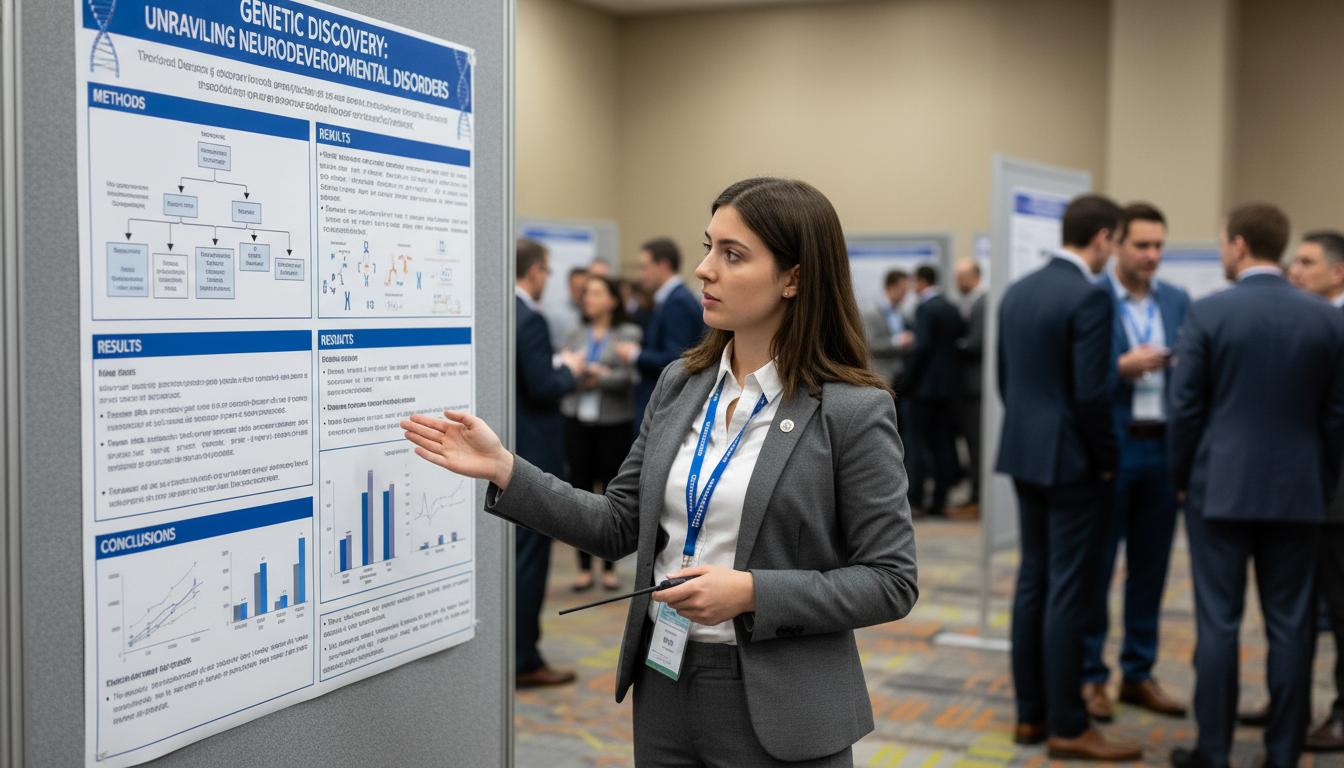
- Internal poster sessions (often low-pressure, great for first presentations).
Regional/National Meetings
Common conferences for medical genetics residents:- American College of Medical Genetics and Genomics (ACMG) Annual Clinical Genetics Meeting
- American Society of Human Genetics (ASHG) Annual Meeting
- Society for Inherited Metabolic Disorders (SIMD) for biochemical genetics topics
- Disease-specific or subspecialty meetings (e.g., muscular dystrophy, cancer genetics, neurogenetics consortia)
Submitting abstracts:
- Start drafts at least 6–8 weeks before deadlines.
- Ask your mentor to review and offer example abstracts.
- Follow formatting guidelines closely.
Peer-Reviewed Publications
Target journals can include:- Genetics in Medicine, American Journal of Medical Genetics (AJMG)
- Molecular Genetics & Genomic Medicine
- Journal-specific to your subspecialty (e.g., Journal of Inherited Metabolic Disease)
- Education or ethics journals for counseling/communication projects
Turning your resident research projects into manuscripts takes persistence. Build in post-residency follow-up time if needed, especially if your mentor can keep the project moving.
Using Research for Fellowship and Job Applications
If you plan to pursue:
- Subspecialty Fellowships (e.g., biochemical genetics, cancer genetics, clinical molecular genetics)
- Academic Faculty Positions
- Industry or Lab-Based Roles
…your research portfolio becomes a key differentiator.
Elements to highlight:
Consistency and Focus:
A chain of related projects in one area (e.g., mitochondrial disorders) can be more compelling than scattered, unrelated experiences.Impact:
- Clinical changes implemented as a result of your QI project
- Publications and conference presentations
- Database or registry you helped establish
Roles and Skills:
Make it clear when you:- Designed the study or protocol
- Led data collection and analysis
- Wrote the first draft of the manuscript
- Managed a multi-disciplinary research team
In your personal statement and interviews, be ready to discuss:
- The research question, why it mattered clinically or scientifically
- Your specific contributions
- Challenges you faced (e.g., data limitations, IRB delays) and how you adapted
- What you learned and how it shapes your future career direction
Strong research during a medical genetics residency signals that you can navigate the complexities of modern genomics, generate new knowledge, and thrive in an academic residency track or similarly rigorous role.
Frequently Asked Questions (FAQ)
1. Do I need prior research experience before starting a medical genetics residency?
Prior research experience is helpful but not mandatory. Many residents enter with modest exposure (e.g., a summer project or a small publication) and build substantial portfolios during residency. What matters most is your willingness to learn, your curiosity, and your perseverance. Programs typically provide mentorship, institutional resources, and structured expectations for scholarly activity.
2. How early should I start looking for research opportunities in residency?
Begin in the first 1–3 months of your medical genetics residency. Use orientation and early rotations to identify potential mentors and clinical areas of interest. Ideally, you will have a project concept—and a mentor—secured by the end of your first 6 months, allowing enough time for IRB approval, data collection, and dissemination before graduation.
3. Can I realistically publish during residency, given the clinical workload?
Yes. Many residents publish at least one paper, often more, during their training. The key is selecting feasible projects, maintaining regular communication with mentors, and breaking the work into small, manageable tasks. Case reports and retrospective chart reviews are especially amenable to the residency timeframe. Ambitious, long-term projects can be initiated during residency and completed during fellowship or early faculty years.
4. How does research during residency influence my competitiveness for the genetics match or future positions?
For those entering an integrated or combined pathway, a strong research record can:
- Help you match into programs with robust academic and research infrastructures
- Distinguish you for academic residency track positions or institutional funding
- Demonstrate commitment to the field of medical genetics and capacity for scholarly productivity
Later, your residency research portfolio will bolster applications for:
- Subspecialty genetics fellowships
- NIH-funded or foundation-supported positions
- Academic, laboratory, and industry roles where evidence appraisal and knowledge generation are central
Even if your ultimate career is more clinical, research experience during residency provides critical skills in critical appraisal, communication, and innovation that will enhance your practice and leadership potential.
By approaching research during your medical genetics residency strategically—choosing meaningful questions, partnering with strong mentors, and planning for dissemination—you can make your scholarly work a cornerstone of both your training and your long-term career in this rapidly evolving specialty.