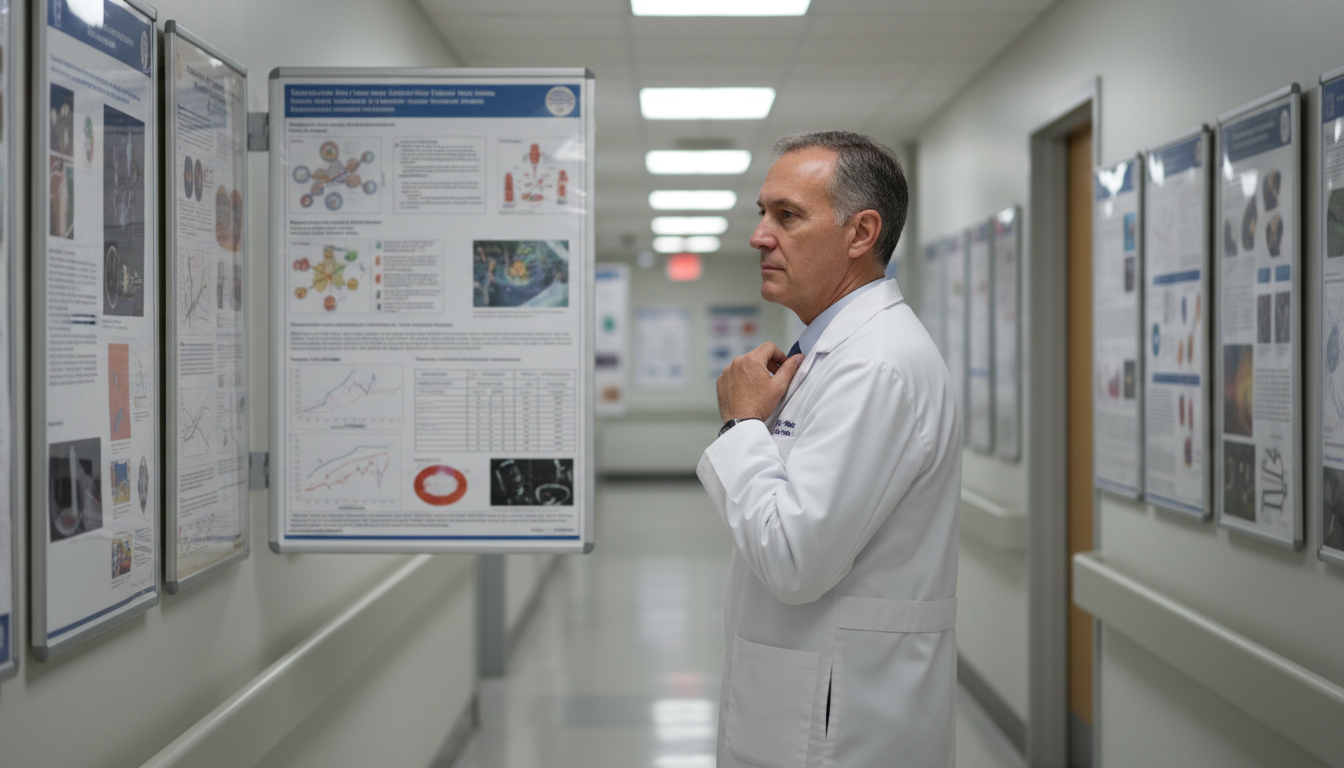
Understanding Research During Medicine-Pediatrics Residency
For an MD graduate entering a Medicine-Pediatrics (Med-Peds) residency, research can feel like one more demanding expectation on top of long hours, challenging patients, and intense learning. Yet, research during residency is one of the most powerful ways to shape your future career—whether you see yourself in academic medicine, community practice with a teaching role, public health, or subspecialty fellowship.
Unlike medical school, where research is often an “extra,” residency is where you learn to integrate scholarship into your everyday clinical life. For Med-Peds residents, the potential impact is unique: you straddle the worlds of adult medicine and pediatrics, and your research can address questions that cross the lifespan, bridge care gaps during transitions from pediatric to adult systems, and illuminate conditions that span childhood and adulthood (e.g., congenital heart disease, cystic fibrosis, sickle cell disease, diabetes).
This article will walk you through:
- Why research matters in Med-Peds residency
- The types of projects that are realistic during training
- How to find mentors and join an academic residency track
- Practical steps to launch, manage, and complete resident research projects
- How to leverage your work for fellowships and early career opportunities
Throughout, the focus is on the MD graduate residency experience in Medicine-Pediatrics, with concrete examples and actionable strategies you can apply immediately.
Why Research Matters in a Med-Peds Residency
1. Expanding Career Options
Engaging in research during residency dramatically broadens your options after graduation. Whether you choose primary care, hospital medicine, med peds residency–friendly subspecialties (like cardiology, endocrinology, infectious disease, or adolescent medicine), or a career in academic medicine, having experience with resident research projects is a major asset.
Research experience:
- Strengthens fellowship and academic job applications
- Demonstrates intellectual curiosity and follow-through
- Signals that you can ask good questions and systematically seek answers
For MD graduates who matched from an allopathic medical school match into Med-Peds, residency is often the first time you’re consistently exposed to faculty participating in clinical, translational, or educational research. This is a chance to observe models of career paths and see which fit your interests and life goals.
2. Developing a Lifelong Scholarly Skill Set
Even if you do not pursue a heavily research-focused career, basic research literacy and scholarly skills are essential for any modern physician:
- Critically appraising literature to guide patient care
- Understanding study design and bias when reading guidelines
- Using quality improvement (QI) methods to change local practice
- Applying data from clinical registries or EMR for population health
For Med-Peds residents, you will frequently navigate areas where evidence from pediatric trials must be extrapolated to adults or vice versa. Understanding how studies are designed and what their limitations are is crucial to practicing safe, evidence-based medicine across age groups.
3. Improving Patient Care Across the Lifespan
Med-Peds physicians are uniquely positioned to identify gaps in care during transitions—from NICU to pediatrics, pediatrics to adult care, or between inpatient and outpatient settings. Research during residency allows you to:
- Study the transition of care for youth with chronic disease (e.g., type 1 diabetes, cystic fibrosis, congenital heart disease, sickle cell disease)
- Examine how social determinants of health affect outcomes differently in children vs. adults
- Explore long-term impacts of pediatric conditions on adult health
Your vantage point in a combined program means your questions and projects can be uniquely impactful—and often quite publishable—because they bridge two worlds that are often siloed in traditional residency training.

Types of Research Projects Feasible During Med-Peds Residency
Many MD graduates assume that “real” research means starting a randomized controlled trial or complex lab project. In residency, your time and schedule are limited; focusing on feasible, well-scoped projects is key. Fortunately, there are many realistic and valuable options.
1. Clinical Research
Clinical projects often use existing patient data or prospective, pragmatic designs embedded in routine care.
Examples suited to a Medicine-Pediatrics residency:
Retrospective chart reviews
- Comparing outcomes of adolescents with inflammatory bowel disease transitioning from pediatric to adult GI services
- Assessing readmission rates for young adults with congenital heart disease admitted to adult services vs pediatric services
Prospective observational studies
- Tracking adherence and outcomes in young adults with type 1 diabetes before and after transfer to adult endocrinology
- Studying the prevalence of depression and anxiety in adolescents with chronic medical conditions at the time of transition
Clinical prediction rules / risk stratification
- Developing or validating tools to predict 30-day readmission for patients with sickle cell disease in the 18–30 age range
Clinical projects are attractive because they often use existing data (EMR, registries), which shortens the timeline and simplifies IRB approval.
2. Quality Improvement (QI) and Patient Safety
QI is one of the most accessible and high-yield forms of research during residency. These projects:
- Directly improve local care
- Often require less time than traditional trials
- Are highly valued by hospital leadership and program directors
- Can be presented at local and national conferences
Med-Peds–oriented QI examples:
- Increasing completion rate of transition readiness assessments for adolescents with chronic illness
- Improving influenza vaccination rates in young adults with asthma in both pediatric and internal medicine clinics
- Standardizing handoffs between pediatric and adult teams for patients admitted at age 17–21
QI work blends well with the academic residency track at many institutions and is frequently required as part of ACGME milestones. With good structure—clear aims, PDSA cycles, and data tracking—QI can be publishable research.
3. Medical Education Research
Many Med-Peds residents are natural teachers, often involved with both medical students and junior residents in internal medicine and pediatrics. Educational research is a great option if you:
- Enjoy teaching and curriculum development
- Are interested in a clinician-educator career
- Want to measure the impact of educational innovations
Examples:
- Designing and evaluating a curriculum on pediatric-to-adult transition for internal medicine residents
- Creating a joint Med-Peds simulation scenario (e.g., managing a congenital heart disease patient in adulthood) and studying its effect on learner confidence
- Implementing a cross-disciplinary conference (peds + medicine) on chronic disease management and tracking its influence on ordering practices or guideline adherence
These projects can be easier to control in scope and timeline and may not require complex statistics, especially if the primary outcomes are learner satisfaction, knowledge, or confidence.
4. Health Services, Equity, and Population Health Research
Med-Peds residents often have a deep interest in public health and health equity, given the continuity from childhood to adulthood. Health services research can investigate:
- Insurance gaps during transition from pediatric to adult care
- Disparities in access to adult specialists for survivors of childhood cancer
- Patterns of emergency department use among young adults with chronic pediatric-onset disease
These projects often leverage large datasets or collaborations with hospital or health system analysts, and can be highly impactful for policy and systems-level change.
5. Basic Science and Translational Research
Some MD graduates, especially those with prior lab experience, want to maintain or build bench or translational research. This is usually more feasible if:
- You join a program with a strong research infrastructure
- You enter an academic residency track with protected research time
- You identify a lab before or early in PGY-1
Bench-based projects may be harder to complete within residency alone but can form the foundation for a longer-term collaboration into fellowship or early faculty positions.
Finding Mentorship and Joining an Academic Residency Track
The difference between a successful, satisfying research experience and a frustrating one often comes down to mentorship and structure.
1. Identifying the Right Mentor(s)
For MD graduate residency trainees in Med-Peds, your mentor does not have to be Med-Peds trained, but they should:
- Have an active research program and a track record of publishing
- Be accessible and responsive
- Have experience working with residents or fellows
- Understand your time constraints and help you design a feasible project
You may ultimately assemble a small mentorship team:
- A primary research mentor – usually a faculty member in internal medicine, pediatrics, Med-Peds, or a related subspecialty
- A methodology mentor – biostatistician, epidemiologist, QI expert, or education researcher
- A Med-Peds perspective mentor – someone who understands the combined workflow and can help tailor the project’s relevance
Practical steps:
- Attend research seminars and departmental grand rounds
- Ask your program leadership for a list of research-active faculty who work with residents
- Talk to senior residents and fellows about who is supportive and effective
- Schedule brief “research informational interviews” early in PGY-1 or during audition season if possible
2. Exploring or Creating an Academic Residency Track
Many Med-Peds programs offer an academic residency track or a “research pathway” that includes:
- Additional protected research time (elective blocks, ambulatory time structured for scholarship)
- Formal teaching in research methods, statistics, QI, and grant writing
- Expectations for at least one poster or manuscript during training
If your program advertises an academic residency track, meet with the track director early to understand:
- Entry requirements (e.g., prior research experience, application process)
- Scope of commitment and expectations (output, presentations)
- Scheduled protected time and how it’s shielded from clinical responsibilities
If your program does not have a formal track, you can still create a “de facto” academic structure by:
- Aligning your elective time into contiguous research blocks where possible
- Using ambulatory weeks strategically for data collection and analysis
- Negotiating clear expectations for protected project time with your program director
Programs that emphasize research during residency typically view resident research projects as central to their identity; they may support conference travel, poster printing, and statistician time. Learn the culture and resources of your own institution early.

Designing, Managing, and Completing a Resident Research Project
Research during residency is not just about having a good idea—it’s about finishing the project in the real-world constraints of call schedules, night float, and rotations.
1. Start with a Focused, Feasible Question
A common pitfall is starting with a project so big that it becomes impossible to finish. Aim for narrow and answerable questions.
Use the FINER framework (Feasible, Interesting, Novel, Ethical, Relevant):
- Feasible – Can you access the data? Is sample size adequate? Time realistic?
- Interesting – Does it genuinely interest you? You’ll need motivation when work is busy.
- Novel – Does it add something new (new setting, new population, or new application)?
- Ethical – Can it be done without undue risk to patients?
- Relevant – Will the answer matter to clinicians, patients, or systems?
Med-Peds example:
Instead of: “How can we improve all transition of care outcomes for all chronic diseases across our system?”
Try: “Does implementing a standardized transition readiness assessment for adolescents with type 1 diabetes improve attendance rates at the first adult endocrinology appointment at our hospital?”
2. Understand IRB and Regulatory Requirements Early
Every project involving patient data or human subjects must be evaluated for IRB needs. Steps:
- Discuss with your mentor what level of IRB review is needed: exempt, expedited, or full.
- Identify institutional supports – some hospitals have research navigators who help residents with IRB forms.
- Plan for timelines – IRB review may take weeks to months, so start the application early.
QI projects may be exempt from full IRB review, but do not assume this. Your institution may still require a determination letter.
3. Build a Realistic Timeline Backwards from Your End Goal
Decide what you want to achieve:
- Abstract presentation at a specific conference?
- Manuscript submitted by a certain PGY-year?
- Institutional research day poster?
Then work backward:
Identify the abstract deadline or intended manuscript submission window.
Estimate time needed for:
- IRB approval
- Data collection
- Data analysis
- Drafting the abstract/manuscript
- Revisions from mentor/coauthors
Place each step on a calendar, noting higher-intensity rotations.
Plan to do most “heavy lift” work during electives, outpatient months, and academic blocks.
4. Use Tools and Systems to Stay Organized
Common challenges during MD graduate residency include fragmented time and cognitive overload. A few practical tools:
Shared project folder (e.g., institution-approved cloud drive) with:
- Protocol, data dictionary, IRB documents
- Draft manuscripts, analysis code, meeting notes
Project management system (Trello, Notion, or even a simple spreadsheet) to track:
- Tasks (IRB, data pull, cleaning, analysis, writing)
- Who is responsible
- Deadlines
Standing meetings with your mentor (e.g., once monthly during busy months, more frequently during key phases)
5. Collaborate Wisely: Build a Small, Effective Team
Adding co-residents, medical students, or fellows can:
- Distribute workload
- Offer learning opportunities for junior trainees
- Increase the project’s resilience when schedules change
Clarify roles early (e.g., who handles IRB, who leads data collection, who is first author). Use authorship guidelines (e.g., ICMJE) to set expectations and avoid conflict.
Med-Peds–specific team example:
- Med-Peds resident – project lead, first author
- Pediatric endocrinology fellow – content expert, helps interpret pediatric data
- Internal medicine attending – adult care perspective and access to adult clinic data
- Statistician – guides analysis
- Medical student – data entry and literature review
6. Data Analysis: Know When to Ask for Help
You are not expected to become a statistician during a medicine pediatrics match residency. What you do need is:
- Basic understanding of common designs and statistics (t-tests, chi-square, regression, odds ratios, confidence intervals)
- The ability to explain your research question and variables clearly to a statistician
- Awareness of data quality issues (missing data, outliers, misclassification)
Most institutions have biostatistics cores or individuals who assist residents with analysis. Contact them early, not after you’ve collected data in a suboptimal format.
7. Writing, Presenting, and Publishing
Choose your initial output based on scope and timing:
- Posters – relatively fast, good for early dissemination and feedback
- Oral presentations – research day talks, regional or national meetings
- Manuscripts – take longer but are high-yield for your CV and future career
Conferences particularly relevant for Med-Peds residents include:
- Society of General Internal Medicine (SGIM)
- Pediatric Academic Societies (PAS)
- Society for Pediatric Research
- Med-Peds focused meetings or transition care conferences
- Subspecialty societies related to your topic (e.g., ADA, APA, ATS, AHA)
Your mentor can help you select appropriate journals and navigate submission and revision.
Positioning Your Research for Fellowships and Early Career
If you anticipate pursuing fellowship or an academic position after med peds residency, strategic planning is important.
1. Align Projects with Your Long-Term Interests
If you’re considering:
- Adult or pediatric subspecialty (e.g., cardiology, ID, endocrine) – focus on projects related to that field, ideally with a lifespan or transition element.
- Hospital medicine or primary care – QI, health services, and implementation science projects are ideal.
- Clinician-educator role – focus on medical education research, curriculum development, or simulation.
Your goal is to show a coherent story in your CV and personal statement: a clear interest, progressively deepened over time.
2. Build a Track Record, Not Just a Single Project
For an MD graduate residency trainee, even a modest research footprint is impactful if it shows continuity:
- 1–2 posters per year
- 1–2 manuscripts across residency (as first or significant coauthor)
- Participation in ongoing resident research projects or networks
Fellowship directors and academic recruiters are looking for evidence that you can carry ideas from conception to completion and contribute meaningfully in a scholarly environment.
3. Leverage Institutional and External Support
Look for:
- Resident research grants or departmental pilot funding
- Protected time mechanisms (scholar tracks, longitudinal research electives)
- Statistical and methodologic support services
- Institutional Med-Peds interest groups or transition care teams
Externally, don’t overlook:
- Society-sponsored resident research awards
- Travel grants for conference presentations
- Early career mentoring programs within national societies
4. Tell Your Story Effectively in Applications
In fellowship and job applications, emphasize:
- The question you tried to answer and why it mattered, especially for patients across the lifespan
- What you personally contributed (design, data collection, analysis, writing)
- What you learned—from both successes and challenges
- How your experience with research during residency shapes your future goals
Program leadership understands that residents may not have multiple first-author publications. Depth of engagement, clarity of purpose, and evidence of growth often matter more than raw volume.
FAQs: Research During Medicine-Pediatrics Residency
1. Do I have to do research in a Med-Peds residency to have a successful career?
No, research is not mandatory for success, especially if you plan a community-based, clinically focused career. However, some scholarly activity (QI, case reports, small projects) is usually required for ACGME accreditation, and many programs expect residents to participate in at least one project. Even a modest experience with resident research projects enhances your ability to practice evidence-based medicine, improves your CV, and keeps doors open for future opportunities.
2. How early should I start a research project in residency?
Ideally, start exploring possibilities in PGY-1:
- Use your first few months to identify interests and possible mentors.
- Aim to commit to a concrete project by mid–PGY-1 to early PGY-2.
This timeline allows time for IRB approval, data collection, analysis, and dissemination before graduation. If you matched into an academic residency track from an allopathic medical school match, you might even begin lining up mentors before residency starts.
3. Can I realistically complete a project with my call schedule?
Yes, if the project is appropriately scoped and well supported. Key strategies include:
- Choosing designs that leverage existing data or small-scale QI interventions.
- Using elective and ambulatory blocks as “research sprints.”
- Setting small, regular goals and meeting with your mentor consistently.
Many Med-Peds residents successfully complete at least one project, and some complete several, even in busy programs.
4. What if I don’t have strong research experience from medical school?
Residency is a very reasonable time to develop these skills. You are not expected to be an expert; that is what mentors, methodologists, and institutional resources are for. Start with a manageable, well-structured project, ask for help early, and view the process as part of your professional growth. Many MD graduate residency trainees with minimal prior research experience go on to successful academic careers after discovering their interest during Med-Peds residency.
Research during a Medicine-Pediatrics residency is not just a line on your CV—it can be a formative experience that defines your professional identity, deepens your clinical reasoning, and amplifies your impact on patients across the lifespan. With focused questions, the right mentorship, and realistic planning, meaningful scholarship is entirely achievable, even in a busy training environment.