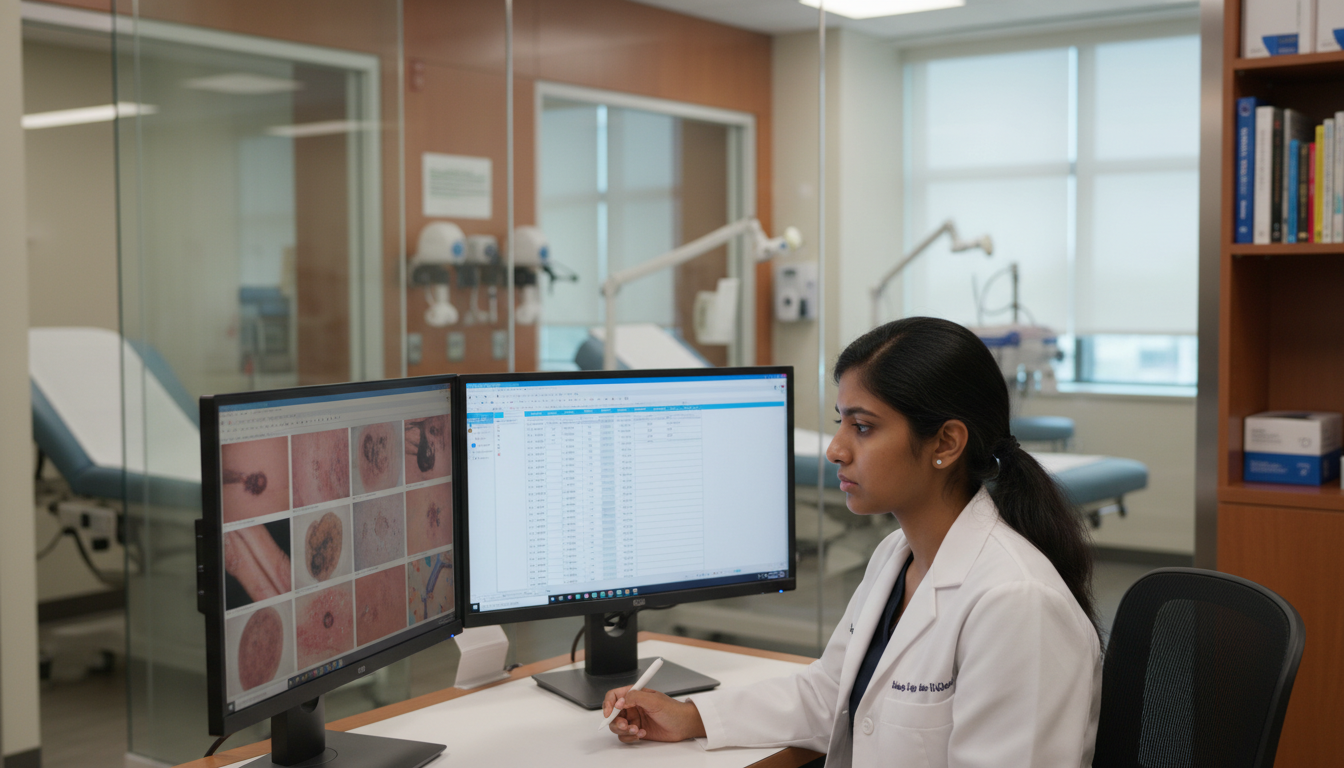
Why Research During Neurosurgery Residency Matters for an MD Graduate
As an MD graduate entering neurosurgery, you’re stepping into one of the most innovation‑driven fields in medicine. Almost every major advance in brain surgery—from functional MRI–guided planning to endoscopic skull base surgery and novel neuromodulation devices—has come from clinician–scientists who balanced clinical duties with research during residency and beyond.
For an MD graduate (with an allopathic medical school background), understanding how to approach research during residency is not just “nice to have.” It is central to:
- Matching to a competitive neurosurgery residency (if you’re still applying)
- Positioning yourself for top fellowships and academic jobs
- Contributing to safer, more effective brain surgery practices
- Developing a focused academic niche early on
This article will walk through how neurosurgery residents can build and sustain research productivity—from PGY‑1 to chief year—and how to use resident research projects strategically to advance an academic residency track or a hybrid academic–private career.
The Role of Research in a Neurosurgery Career
Why Neurosurgery Is So Research‑Intensive
Neurosurgery deals with diseases where small differences in technique, timing, and technology can dramatically affect outcomes. That reality drives a strong culture of inquiry.
Research is central in neurosurgery because:
- The evidence base shifts rapidly. New devices (e.g., flow diverters, responsive neurostimulation, spinal instrumentation), novel imaging modalities, and biologics are constantly introduced.
- Outcomes are high‑stakes. Complications like stroke, paralysis, or loss of speech make even small improvements in technique or patient selection extremely meaningful.
- Pathophysiology is complex and heterogeneous. Brain tumors, epilepsy, vascular malformations, and spinal pathologies are genetically and anatomically diverse, requiring tailored solutions.
- Translation from bench to bedside is visible. Many neurosurgeons bridge lab discoveries (e.g., glioma molecular markers) into direct clinical protocols.
For an MD graduate residency applicant in neurosurgery, programs look for candidates who can contribute to this culture of innovation.
How Research Shapes Your Career Trajectory
Research during residency can influence:
Fellowship Opportunities
Strong publication records in subspecialties like vascular neurosurgery, functional neurosurgery, or spine can make you a top candidate for competitive fellowships.Academic vs. Private Practice Pathways
- An academic residency track emphasizes investigation and teaching, often with protected research time and support to build a lab or clinical research program.
- Private practice neurosurgeons may still publish case series, participate in device trials, or collaborate with academic centers, but research is usually less central.
Leadership and National Visibility
Resident research projects that become influential papers, guidelines, or multi‑institutional collaborations can place you on the national stage early in your career.Skill Set Beyond the OR
- Critical appraisal of literature
- Methodology and statistics
- Grant writing and project management
- Interdisciplinary collaboration (neurology, oncology, radiology, engineering)
These skills are increasingly important for any neurosurgeon, not just those in classic “lab‑based” roles.
Types of Research Opportunities During Neurosurgery Residency
Neurosurgery training structures can vary by institution, but most allopathic medical school–affiliated programs offer rich research opportunities. Understanding the landscape helps you choose projects aligned with your goals.

1. Clinical Outcomes and Quality Improvement (QI) Research
Core idea: Use patient data, registries, and clinical systems to answer questions about outcomes, safety, and efficiency.
Common examples:
- Predictors of shunt failure in pediatric hydrocephalus
- Outcomes after minimally invasive vs. open lumbar fusion
- Complication rates and predictors following aneurysm clipping vs. coiling
- Implementation of Enhanced Recovery After Surgery (ERAS) protocols in spine surgery
Why this is valuable:
- Highly feasible even with limited lab infrastructure
- Directly improves local patient care
- Often leads to conference abstracts, QI recognition, and first‑author papers
- Great starting point in PGY‑1 and PGY‑2 years
2. Translational and Basic Science Research
Core idea: Investigate disease mechanisms and novel therapeutic approaches at the cellular, molecular, or animal model level.
Potential topics:
- Tumor microenvironment in glioblastoma
- Gene expression profiles in meningiomas
- Neuroregeneration after spinal cord injury
- Biomaterials for dural repair or interbody fusion
Settings:
- Dedicated neurosurgery labs
- Shared neuroscience or cancer research institutes
- Collaborations with biomedical engineering departments
This track is particularly important for residents pursuing a heavily academic residency track aimed at running a lab or competing for NIH/major extramural funding.
3. Neuroimaging and Computational Neuroscience
This area is growing rapidly and is very accessible to MD graduates with strong analytical interests.
Projects may involve:
- Advanced MRI (DTI, fMRI, tractography) in tumor or epilepsy surgery planning
- AI/ML algorithms to predict outcomes of brain surgery residency cases (e.g., aneurysm occlusion prediction)
- Automated segmentation of tumors or hemorrhages
- Decision support tools for triaging traumatic brain injury
These projects can be done with:
- Large imaging datasets from your institution
- Publicly available repositories
- Collaborations with data scientists or radiology departments
4. Device, Technology, and Innovation Research
Neurosurgeons are often early adopters and co‑developers of new technologies such as:
- Robotic‑assisted spine surgery platforms
- Novel neurostimulation devices
- Endoscopic instruments
- Augmented reality navigation systems
Resident research projects here might include:
- First‑in‑human or early clinical experience case series
- Comparative trials vs. standard techniques
- Human factors or workflow studies in the OR
- Cost‑effectiveness analyses
This is ideal for residents interested in industry collaboration and technology‑driven careers.
5. Education, Simulation, and Workforce Research
Projects in this area may focus on:
- Simulation‑based training for aneurysm clipping or microsuturing
- Assessment tools for resident skill progression
- Burnout and wellness in neurosurgery residency
- Diversity, equity, and inclusion in neurosurgery training and the pipeline from allopathic medical school match to faculty
These can be impactful and often require smaller datasets and less time, making them suitable for busy clinical years.
Structuring Research Across the Neurosurgery Residency Timeline
A 7‑year neurosurgery residency can feel both long and incredibly compressed. To maximize research during residency, it helps to think in phases.

PGY‑1 to PGY‑2: Orientation, Foundations, and Early Wins
Goals:
- Learn the institutional landscape and key research mentors
- Gain basic research skills (IRB, data extraction, statistics)
- Complete 1–2 shorter, feasible projects to build early productivity
Action steps:
Identify research mentors early.
- Ask your program director and senior residents: “Who is active in clinical outcomes, translational, or imaging research?”
- Meet with 2–3 potential mentors and discuss expectations, timelines, and authorship.
Start with retrospective or QI projects.
For example:- Retrospective review of all pituitary adenoma surgeries over the last 5–10 years
- QI project to reduce external ventricular drain infections, with pre/post intervention comparison
Obtain IRB and regulatory training.
- Complete institutional CITI or equivalent training
- Shadow a senior resident submitting an IRB; then submit your own
Develop basic analysis skills.
- Learn to use R, SPSS, Stata, or Python for basic statistics
- Practice generating tables/figures and performing regression analyses
Deliverables by end of PGY‑2:
- At least 1–2 abstracts submitted to a regional or national meeting (e.g., CNS, AANS)
- 1 manuscript drafted or submitted
- A clearer sense of your research interests (tumor, vascular, spine, functional, etc.)
PGY‑3 to PGY‑4: Building a Niche and Increasing Complexity
These years are critical for defining your academic identity.
Goals:
- Align research focus with a neurosurgery subspecialty interest
- Take on more complex projects (prospective, multi‑institutional, or translational)
- Solidify your academic residency track if your program has one
Action steps:
Choose a thematic focus.
Examples:- Brain tumor surgery: outcomes, tumor biology, imaging, or clinical trials
- Vascular neurosurgery: aneurysm or AVM outcomes, cerebral perfusion imaging
- Spine: adjacent segment disease, frailty indices, intraoperative navigation
Link clinical exposure with resident research projects.
As you rotate on subspecialty services, actively ask:- “What questions do we not know the answer to?”
- “What clinical debates are unresolved—can we turn that into a study?”
Pursue prospective or multi‑center projects when feasible.
- Example: Prospective registry of patients undergoing minimally invasive vs. open decompression
- Join or help launch collaborative registries through societies (e.g., N2QOD, institutional tumor banks)
If interested in basic/translational work, secure a lab home.
- Identify a PI with ongoing NIH/major funding aligned with neurosurgery topics
- Start working several hours per week with lab meetings and bench work
Deliverables by end of PGY‑4:
- Several conference presentations
- Multiple manuscripts submitted/published, ideally with at least one as first author
- A convincing research “story” if you were to apply for a dedicated research fellowship or advanced academic position
Dedicated Research Year(s) (Often PGY‑4 to PGY‑6, Depending on Program)
Many neurosurgery residencies affiliated with allopathic medical schools offer 1–2 years of dedicated research time. This is a defining feature of an academic residency track.
Goals:
- Pursue high‑impact, in‑depth projects
- Build a robust, coherent academic portfolio
- Potentially complete advanced degrees (e.g., MS, MPH, PhD) or formal research training
Action steps:
Plan at least 6–12 months ahead.
- Decide on your primary mentor(s) and key projects
- Apply for internal grants or national funding (foundation grants, society awards)
Structure your time like a full‑time researcher.
- Maintain a weekly schedule (bench work, data analysis, writing blocks, meetings)
- Set quarterly milestones and manuscript submission goals
Consider formal training or degrees.
- Clinical research programs (epidemiology, biostatistics)
- Laboratory methods training
- Data science or biomedical engineering coursework
Aim for depth and continuity.
Instead of many small, disconnected projects, build:- A series of related papers around a central question
- A dataset or registry that the department can use long‑term
Deliverables by the end of research time:
- Several submitted manuscripts, including at least one substantial or senior‑authored work
- Experience with grants or fellowships (even if not funded, the process is educational)
- A clear research vision you can present in future job or fellowship interviews
Senior Years (PGY‑6–7): Translating Research into Leadership
Goals:
- Integrate research insights into your surgical practice and teaching
- Mentor junior residents and medical students
- Prepare for fellowship or attending‑level roles
Action steps:
Finish pending projects.
- Use chief year to finalize publications rather than start entirely new ones
- Delegate manageable parts to juniors you can mentor
Present at major meetings.
- Aim for podium presentations at CNS, AANS, or subspecialty meetings
- Network with leaders in your niche for potential collaborations or job opportunities
Develop your “academic pitch.”
Be able to articulate:- Your main research question or theme
- Your methods expertise (e.g., clinical trials, big data, animal models, imaging)
- Your 3–5‑year plan post‑residency
Transition your projects to younger trainees.
Ensure continuity of any registry or long‑term study by pairing it with a PGY‑1–3 resident.
Practical Strategies to Succeed with Resident Research Projects
Choosing the Right Projects
As an MD graduate in neurosurgery residency, time is your most limited resource. Use these filters:
Feasibility:
- Is the dataset accessible?
- Can you realistically complete the project in 6–12 months?
Mentorship Quality:
- Does the mentor have a track record of publishing with residents?
- Are expectations and timelines clear?
Alignment with Career Goals:
If you’re leaning toward:- Academic neurosurgery → consider multi‑paper, thematic research programs, grant exposure
- Private practice with academic ties → pursue clinically relevant, outcomes‑based work that impacts day‑to‑day practice
Authorship Clarity:
Discuss:- Who will be first author?
- Who will be senior author?
Clarify this early to avoid conflict.
Time Management in a Demanding Brain Surgery Residency
Balancing OR, call, and research is challenging but doable with structure.
Strategies:
Micro‑blocks:
Use 20–40 minute windows between cases or during quiet call periods for:- Abstract writing
- Literature searches
- Revising drafts
Protected time when possible:
Some programs provide formal research half‑days. Guard these carefully.Batch tasks:
Group similar tasks (e.g., data cleaning on one day, writing results section on another).Leverage teams:
Work in small teams with:- A junior resident or medical student for data collection
- A senior mentor for strategy and editing
- A statistician for analysis
Building Skills: Statistics, Writing, and Presentations
Statistics and Methods:
- Take advantage of institutional biostatistics cores
- Attend workshops or short courses in clinical trial design, regression, survival analysis
- Learn enough to understand and critique analyses, even if others run them
Scientific Writing:
- Read high‑quality neurosurgery journals (Journal of Neurosurgery, Neurosurgery, Spine, etc.)
- Deconstruct the structure of strong papers
- Aim for clear, concise, hypothesis‑driven writing
Presentations:
- Practice giving 5–10 minute talks on your projects
- Focus on the clinical problem, your method, key results, and how it changes practice
- Ask for direct feedback on storytelling and slide design
How Research During Residency Influences Matching, Fellowships, and Jobs
Although you are already an MD graduate and either in or about to start residency, it’s helpful to understand how research fits into the broader career picture.
For Applicants to Neurosurgery Residency from Allopathic Medical Schools
Programs often look for:
- A record of sustained scholarly work (not just one-off efforts)
- First‑author publications and podium presentations
- Evidence you can see projects through to completion
If you’re still in the allopathic medical school match phase, demonstrating that you already understand research culture and have contributed to neurosurgery or neuroscience projects can distinguish you among MD graduate residency applicants.
For Fellowships (e.g., Vascular, Oncology, Functional, Spine)
Fellowship directors look for:
- Research experience within that subspecialty (e.g., tumor molecular markers for tumor fellowships)
- Letters from mentors highlighting your research independence
- Evidence you can balance research and high‑volume clinical work
Residents with well‑developed research portfolios—especially those who maximized dedicated research time—tend to be more competitive for elite fellowships and academic positions.
For Academic vs. Hybrid Careers
Academic neurosurgeons are generally expected to:
- Maintain ongoing research (trials, registries, lab work)
- Publish regularly
- Mentor residents and fellows
- Secure intramural or extramural funding over time
Hybrid or private practice neurosurgeons may:
- Participate in device trials or multicenter registries
- Publish selected case series or practice innovations
- Collaborate with academic centers for complex cases or research questions
In both settings, the habits and skills you build through research during residency will shape your practice style, critical thinking, and career agility.
Frequently Asked Questions (FAQ)
1. How much research is “enough” during neurosurgery residency?
“Enough” depends on your career goals. As a rough guide:
Academic track aspirants:
- Aim for a coherent body of work with multiple first‑author publications
- Participation in larger collaborative or grant‑funded projects
- Clear thematic focus (e.g., brain tumor imaging, spine outcomes)
Non‑academic or hybrid track:
- Solid experience with a few meaningful clinical projects
- At least 2–4 peer‑reviewed papers or major abstracts
- Demonstrated ability to ask good clinical questions and follow through
The key is quality, coherence, and completion—not just a raw publication count.
2. Do I need a PhD or advanced degree to be an academic neurosurgeon?
No. Many successful academic neurosurgeons have only an MD but have developed robust research skills during residency and early faculty years. However, advanced degrees (MS, MPH, PhD) in areas like clinical research, epidemiology, or neuroscience can:
- Accelerate your methodological expertise
- Enhance grant competitiveness
- Support more ambitious research agendas
This is highly individual and should be aligned with your long‑term goals and available program resources.
3. How can I get involved in research if my residency program is clinically busy with limited protected time?
Even in clinically intense programs, you can:
- Start with small, well‑defined retrospective projects with clear timelines
- Collaborate with other residents or medical students to share workload
- Use accessible data sources like operative logs, EMR‑based queries, or published registries
- Seek mentors who are efficient and realistic about resident constraints
- Schedule protected “micro‑blocks” of 1–2 hours weekly dedicated solely to research tasks
Consistency, even in small increments, builds meaningful output over 5–7 years of training.
4. What if I start a research project and realize I’m no longer interested in that area?
This is common early in residency. Instead of abandoning it:
- Try to finish the project to completion if feasible—completing work builds credibility.
- Extract what you can (poster, abstract, smaller paper) even if you don’t expand further.
- Use the experience to better define what you do enjoy—different pathology, methods, or mentors.
- Gradually pivot your focus: your “final” academic profile can incorporate early work as part of your learning curve, even if your mature niche is distinct.
Over a 7‑year training period, evolution is expected. What matters is that you develop a pattern of thoughtful inquiry, reliable follow‑through, and growing sophistication in how you design and execute resident research projects.
Research during residency is one of the most powerful levers you have as an MD graduate in neurosurgery to shape not only your CV, but your thinking, your practice, and your long‑term impact on patient care. With strategic mentorship, careful project selection, and disciplined time management, you can emerge from a demanding brain surgery residency not only as a skilled surgeon, but as a physician–scientist prepared to push the field forward.