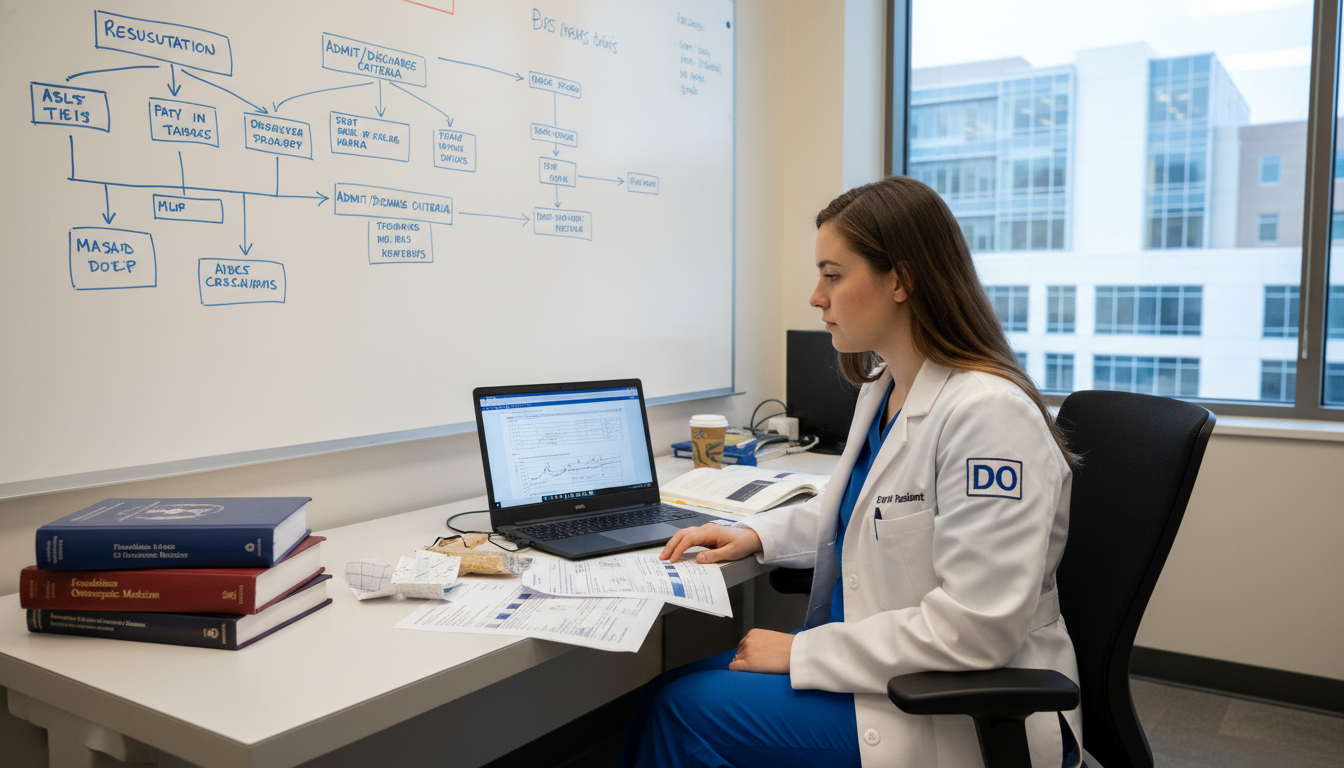
Understanding Research During OB GYN Residency as a DO Graduate
Research during residency can feel intimidating—especially if you identify more with clinical care than with lab benches or statistics. As a DO graduate entering an OB GYN residency, you may also wonder whether program directors and academic faculty view your application or scholarly potential differently compared with MD graduates, and how that impacts your path in the obstetrics match, fellowship prospects, and career trajectory.
In reality, research during residency is less about becoming a career scientist and more about learning to ask good questions, critically interpret evidence, and improve patient care. For DO graduates, strong engagement in research can also help counteract stigma, highlight your osteopathic training as an asset, and open doors to leadership and academic positions.
This article walks through how to approach resident research projects in obstetrics and gynecology, what to expect from an academic residency track, and how to strategically use research during residency to enhance your career—whether you see yourself in community practice, academic medicine, or subspecialty fellowship.
Why Research Matters in OB GYN Residency (Especially for DO Graduates)
Evidence-based practice in a high-stakes specialty
Obstetrics and gynecology is uniquely dynamic: clinical guidelines change rapidly, technologies evolve (from minimally invasive surgery to fetal interventions), and medico‑legal risk is high. Research literacy is essential for:
- Navigating new evidence (e.g., updated labor management guidelines, preeclampsia prevention strategies)
- Balancing maternal and fetal risks with limited data
- Evaluating new surgical techniques, medications, or devices
- Participating in quality improvement (QI) to reduce adverse outcomes like postpartum hemorrhage or severe maternal morbidity
Even if you plan zero “traditional” research projects, you will constantly engage with data and literature in OB GYN practice.
The DO graduate perspective in the osteopathic residency match
For a DO graduate residency path in OB GYN (now fully within the single accreditation system), research experience may carry several advantages:
- Competitiveness for academic OB GYN programs: Many academic residency programs value applicants with research experience or at least demonstrated scholarly interest. As a DO, having tangible research or scholarly output can offset any perceived disadvantage from coming from a newer or less research-intensive school.
- Future fellowship training: If you are even mildly considering subspecialty training—such as MFM, Gyn Onc, REI, MIGS, or FPMRS—research experience during residency makes you a more compelling fellowship applicant.
- Bridging the MD/DO perception gap: Submitting abstracts, presenting at national conferences, or publishing case reports shows that you can thrive in an academic environment, regardless of degree.
Research as professional identity-building
Research during residency is also a powerful way to:
- Define your niche (e.g., OB hospitalist medicine, surgical simulation, health disparities in prenatal care)
- Network with faculty, program leaders, and national organizations
- Build a portfolio of work that supports future promotion, leadership roles, or protected academic time
- Show initiative and curiosity, traits that program leadership often rewards
For DO graduates interested in an academic residency track or academic career, early and consistent research involvement is one of the clearest signals of long-term potential.
Types of Research and Scholarly Projects in OB GYN Residency
Not every resident research project has to be a randomized controlled trial or basic science bench research. In fact, most resident projects are pragmatic, clinically focused, and achievable within residency time constraints.
1. Clinical research
Clinical research is the most common form of research during residency and typically uses data already being collected in the course of patient care.
Examples for OB GYN residents:
Retrospective chart review
- Investigating postpartum hemorrhage rates before and after a new protocol
- Assessing indications and outcomes for repeat cesarean versus TOLAC (trial of labor after cesarean)
- Evaluating outcomes after minimally invasive hysterectomy versus abdominal hysterectomy in your institution
Prospective observational study
- Tracking adherence to antenatal corticosteroid guidelines in preterm labor
- Following patients with gestational diabetes management changes and assessing neonatal outcomes
For a busy DO graduate residency schedule, retrospective studies are often the most feasible, since they don’t require altering care pathways or obtaining patient consent in real time.
2. Quality improvement (QI) projects
Many residencies now require at least one QI project. QI overlaps with research but focuses more on changing systems to improve care within your institution.
Examples relevant to OB GYN:
Implementing a standardized postpartum hemorrhage cart and measuring:
- Time to uterotonic administration
- Frequency of massive transfusion
- Maternal ICU admissions
Creating a checklist for preoperative gynecologic cases and evaluating:
- Surgical start delays
- Specimen labeling errors
- Documentation completeness and compliance
Designing a process to reduce no‑show rates for postpartum visits, especially in vulnerable or underserved populations.
QI projects are often highly practical, achievable, and valued by hospital leadership. Many resident QI projects ultimately become podium presentations or even published articles.
3. Case reports and case series
For DO graduates new to research, case reports can be an excellent entry point.
Examples:
- Rare complications in pregnancy (e.g., spontaneous hepatic rupture in preeclampsia)
- Unusual gyn pathology (e.g., rare ovarian tumor in a teenager)
- Unique outcomes (e.g., successful VBAC in a medically complex patient using a novel management strategy)
Case reports help you:
- Learn literature review skills
- Practice writing for publication
- Build confidence before larger projects
They’re especially achievable during the early PGY years when your schedule is intense and unpredictable.
4. Educational research and curriculum development
If you are drawn to teaching, consider scholarly work in medical education:
- Designing a simulation-based curriculum for OB emergencies (e.g., shoulder dystocia, eclampsia)
- Evaluating the impact of an ultrasound boot camp for interns
- Studying the effect of a structured handoff curriculum on errors or miscommunication
These projects are particularly aligned with an academic residency track and can be attractive if you want to stay in teaching institutions.
5. Basic science and translational research
A subset of OB GYN residents, especially those at large academic centers, may join basic or translational research labs:
- Placental biology, preeclampsia mechanisms, perinatal immunology
- Gynecologic cancers, targeted therapies, or tumor microenvironment
- Reproductive endocrinology, fertility preservation, or ovarian reserve research
This path usually requires:
- A strong mentor and research infrastructure
- Longer time frames (often spanning several PGY years)
- Protected time, sometimes with a formal research track
For DO graduates, this can be a powerful way to demonstrate high-level academic capability—but it must be balanced against clinical demands and career goals.

Getting Started: First Steps in Resident Research Projects
Step 1: Clarify your goals and bandwidth
Before you commit to a project, ask yourself:
- What are my long-term goals?
- Community practice vs. academic medicine vs. fellowship?
- How much time can I realistically commit?
- Do I have research time built into my schedule?
- What are my personal responsibilities (family, commuting, wellness)?
- What kind of scholarly work excites me?
- Data analysis, writing, teaching, system redesign, innovation?
For example:
- If you want MFM or REI fellowship, aim for multi-year clinical or translational projects plus at least one first-author publication.
- If your goal is high-quality community practice, a solid QI project and a couple of poster presentations may be sufficient.
Step 2: Find the right mentor
A strong mentor is the most important factor for successful research during residency.
Look for a mentor who:
- Has a track record of publishing or presenting at conferences
- Works in an area that genuinely interests you (e.g., MFM, gynecologic oncology, family planning)
- Has time and willingness to meet regularly
- Has successfully mentored other residents
How to find one:
- Ask your program director which faculty are active in research.
- Review faculty bios on your department website.
- Talk to senior residents who have completed projects—they often know who is supportive and effective.
As a DO graduate, a supportive mentor can also help advocate for you, introduce you to academic networks, and dispel any lingering bias by showcasing your work.
Step 3: Choose a feasible project
A common mistake is choosing a project that is too large for residency constraints.
To assess feasibility, ask:
- Can I:
- Complete data collection within 6–12 months?
- Analyze data with support from faculty or a statistician?
- Draft and submit a manuscript or abstract before graduation?
Good signs of feasibility:
- Existing datasets (e.g., perinatal database, surgical outcomes database)
- Existing IRB-approved protocols you can join as a co-investigator
- Clear, narrow research questions (e.g., “Among singleton pregnancies induced for gestational hypertension, what is the cesarean rate by Bishop score category?”)
Step 4: Learn the basics of IRB and study design
Most institutions require an IRB (Institutional Review Board) review for human subjects research.
Early in your project:
- Complete your institution’s human subjects training (e.g., CITI).
- Meet with your mentor to:
- Define your research question, hypothesis, and outcomes.
- Choose a design (retrospective cohort, cross-sectional, case-control, etc.).
- Prepare an IRB application if needed.
For QI projects, clarify whether IRB review is required; some QI is exempt, but you need documentation.
Step 5: Start small, then build
For DO graduates who did not do extensive medical school research, starting with a manageable project builds skills and confidence:
- First year: Case report or small QI project; help with data collection on a larger study.
- Second year: Lead your own retrospective study with mentor support.
- Third/fourth year: Turn your work into abstracts, podium presentations, and manuscripts; mentor juniors starting their projects.
Over time, your portfolio grows without overwhelming any single stage of training.
Maximizing the Impact of Research During Residency
Strategically integrating research into your schedule
OB GYN residency is demanding: nights, 24‑hour calls, labor and delivery, and high emotional intensity. To make research sustainable:
- Block time on lighter rotations:
- Gyn clinic blocks or elective months can be critical for concentrated writing or data analysis.
- Use “micro-time”:
- 20–30 minutes between cases to proofread abstracts or scan articles.
- Commute time (if safe and feasible via public transit) for reading papers.
- Coordinate with your mentor:
- Set realistic monthly goals (e.g., “Complete data extraction on 50 charts by month’s end”).
Turning projects into presentations and publications
A common pitfall: completing a project but not following through to dissemination.
To avoid this:
- Plan for abstract submission early:
- ACOG (American College of Obstetricians and Gynecologists)
- SMFM, SGO, AUGS, AAGL, or other specialty societies (depending on your focus)
- Use annual resident research days at your institution as intermediate deadlines.
- Ask your mentor to help:
- Identify journals appropriate for your topic.
- Structure your manuscript (IMRAD: Introduction, Methods, Results, and Discussion).
- Respond to peer-review comments.
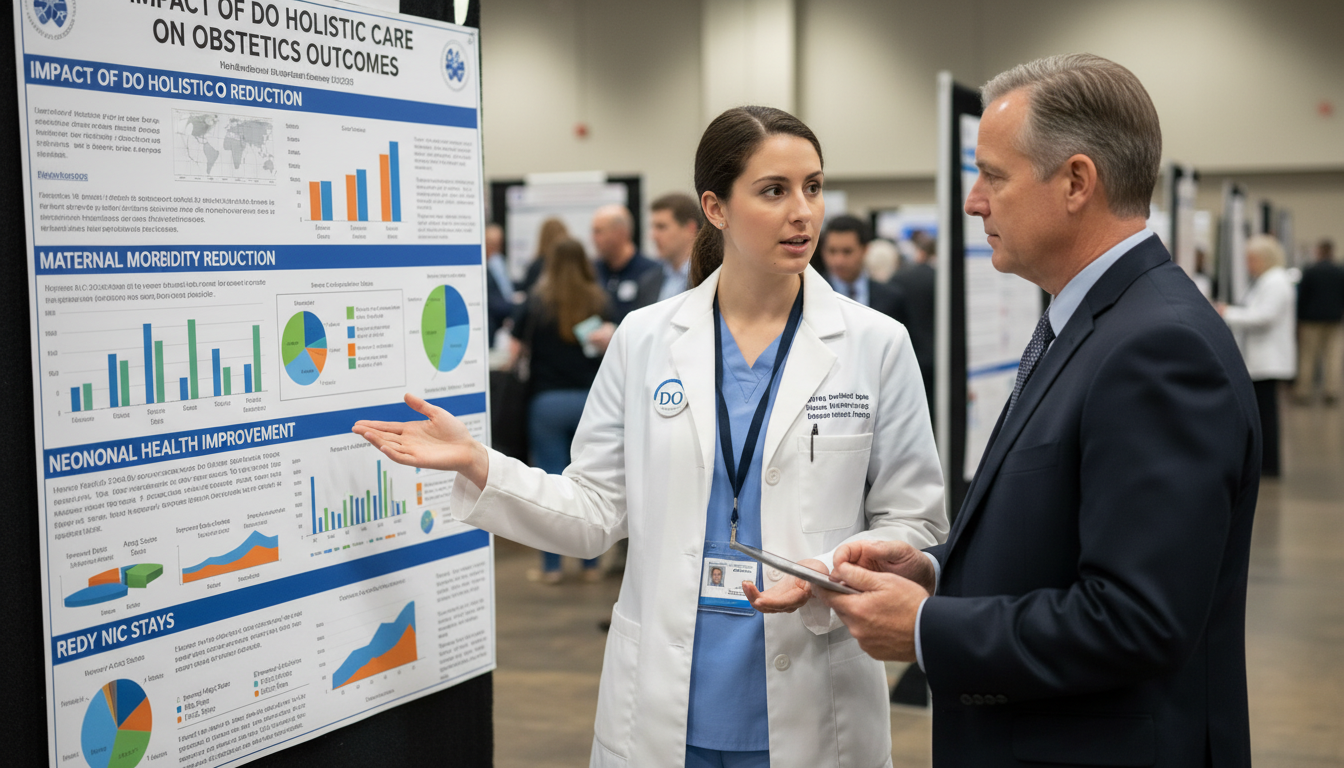
For osteopathic physicians, presenting at national meetings is particularly valuable—your name and DO credentials appear prominently on the program, highlighting your training and scholarly contribution.
Navigating an academic residency track
Many OB GYN residencies—especially at university hospitals—offer a formal or informal academic residency track for residents strongly interested in research, teaching, or leadership.
Features might include:
- Additional protected research time
- A formal expectation of publications or grant submission
- Mentoring committees
- Opportunities to teach medical students and junior residents
- Support for attending academic conferences
If your program has such a pathway:
- Express interest early (PGY‑1 or PGY‑2).
- Clarify expectations and deliverables.
- Leverage this structure to deepen your scholarly work, not just check a box.
For DO graduates, successfully completing an academic residency track is a clear demonstration that you can excel in an environment traditionally dominated by MDs, which can matter for future promotions, academic appointments, and competitive fellowships.
Research, Career Paths, and Life After Residency
Research and the obstetrics match: looking forward
Although you are already past the osteopathic residency match and in (or about to start) OB GYN training, understanding how research affects future recruitment is useful if you plan to:
- Apply for fellowships
- Seek positions at academic medical centers
- Compete for roles with protected research time
Program directors and fellowship selection committees tend to value:
- Consistency over time, not just a single short-term project
- Progression in responsibility (e.g., from data collector to first author)
- Evidence of teamwork, perseverance, and intellectual curiosity
For DO graduates, having a strong research profile during residency can reassure reviewers that your success is based on capability and commitment, not just a one-time effort.
Pathways after residency: community vs. academic practice
Your research experience can shape, but does not dictate, your path.
Community practice
- Research during residency:
- Helps you practice evidence-based OB care
- Makes you more competitive for quality-focused groups or hospital leadership roles
- Common outcomes:
- Serving on hospital committees (perinatal safety, operative review)
- Leading local QI initiatives (e.g., hemorrhage bundles, induction protocols)
- Research during residency:
Academic practice
- Research is often a key component of your job description.
- You may:
- Mentor residents and medical students in their research
- Continue or expand the projects you started during residency
- Aim for promotion through scholarly work, teaching, and leadership
Subspecialty fellowship (MFM, Gyn Onc, REI, MIGS, FPMRS)
- Many fellowships strongly prefer or require:
- Prior research experience
- At least one or two publications or national presentations
- As a DO graduate, strong research experience reduces any perceived gap vs. MD peers from large research institutions.
- Many fellowships strongly prefer or require:
Maintaining your osteopathic identity in research
As a DO graduate, you bring distinctive strengths to OB GYN research:
- A holistic view of patient care
- Emphasis on function, wellness, and systems thinking
- Familiarity with diverse practice settings, including community and underserved care
You can highlight your osteopathic perspective by:
- Choosing topics that align with whole-person care:
- Maternal mental health
- Social determinants of obstetric outcomes
- Functional recovery after gynecologic surgery
- Participating in research on integrative or adjunct interventions where evidence is emerging.
- Collaborating with osteopathic institutions or DO faculty when opportunities arise.
Your DO background is an asset, especially in projects that require understanding complex biopsychosocial factors.
Practical Tips, Pitfalls, and Time-Saving Strategies
Practical tips for success
Keep a simple research notebook (digital or paper) with:
- Your project aims and hypotheses
- Key deadlines (IRB submissions, conference abstracts)
- Brief summaries of key articles you read
Use reference management software:
- Zotero, Mendeley, or EndNote to organize citations and format references.
Leverage institutional resources:
- Data analysts or statisticians
- Librarians who can assist with literature searches
- Research coordinators familiar with regulatory processes
Break writing into small tasks:
- One morning: draft Methods.
- Another: outline Introduction.
- Another: create tables and figures.
Common pitfalls to avoid
Overcommitting:
- Taking on multiple ambitious projects while on heavy call rotations can lead to burnout and incomplete work.
Lack of clear authorship expectations:
- Before starting, discuss:
- Who will be first author?
- What are the expectations for contribution?
- How will order be determined if the team grows?
- Before starting, discuss:
Waiting too long to start:
- Starting in PGY‑3 for a major project can be challenging if you want a completed paper before graduation, especially with fellowship applications due early in your fourth year.
Ignoring mentorship fit:
- A brilliant but unavailable mentor may slow your progress more than a moderately research-active but highly engaged faculty member.
Balancing research with wellness
Research should enrich, not erode, your residency experience.
- Be honest about your limits and discuss them with your mentor.
- Protect time off; schedule research work like a part-time job, not like an open-ended obligation.
- If you are struggling, consider:
- Simplifying the project scope.
- Shifting from a multi-aim study to a focused, single-question analysis.
- Pivoting to a case report or narrative review that fits your bandwidth.
Burnout undermines both patient care and research productivity. Your long-term well-being must remain the priority.
FAQs: Research During OB GYN Residency for DO Graduates
1. I’m a DO graduate with little or no prior research experience. Can I still be successful with research during residency?
Yes. Many residents, including DO graduates, start research in residency. Begin with manageable projects—case reports, small QI initiatives, or retrospective chart reviews with a strong mentor. Over time, you can build toward more complex work. Your willingness to learn, reliability, and follow-through often matter more than prior research background.
2. Does research during residency really matter if I plan to go into community OB GYN practice?
It can still be very valuable. Even if you do not pursue an academic career, research and QI experience improve your ability to practice evidence-based medicine, contribute to hospital initiatives, and take on leadership roles. Community groups and hospitals increasingly value physicians who understand data, outcomes, and quality metrics.
3. How important is research for OB GYN fellowship applications, especially as a DO?
For most OB GYN subspecialty fellowships, research is an important differentiator—sometimes essential. Fellowship programs look for applicants who can engage with the literature, complete projects, and contribute academically. As a DO graduate, having completed meaningful resident research projects, with at least one or two presentations or publications, can significantly strengthen your application and reduce any perceived disadvantage compared with MD applicants.
4. What if my program doesn’t have strong research infrastructure or an academic residency track?
You still have options. Identify at least one faculty member interested in research or QI, even if their resources are limited. Consider feasible projects like retrospective chart reviews, QI initiatives, or collaborations with outside institutions (e.g., via professional societies or your medical school’s network). Use online resources for study design and statistics, and aim for conference abstracts and case reports if larger projects are not realistic. Consistent, well-executed small projects are far better than an overly ambitious study that never finishes.
Research during residency does not require you to become a full-time scientist. For a DO graduate in obstetrics and gynecology, it is a powerful tool: to refine your clinical reasoning, expand your opportunities, and shape the kind of physician—and leader—you want to become. By choosing feasible projects, finding the right mentors, and aligning your work with your career goals, you can make research a meaningful, manageable, and rewarding part of your OB GYN training.