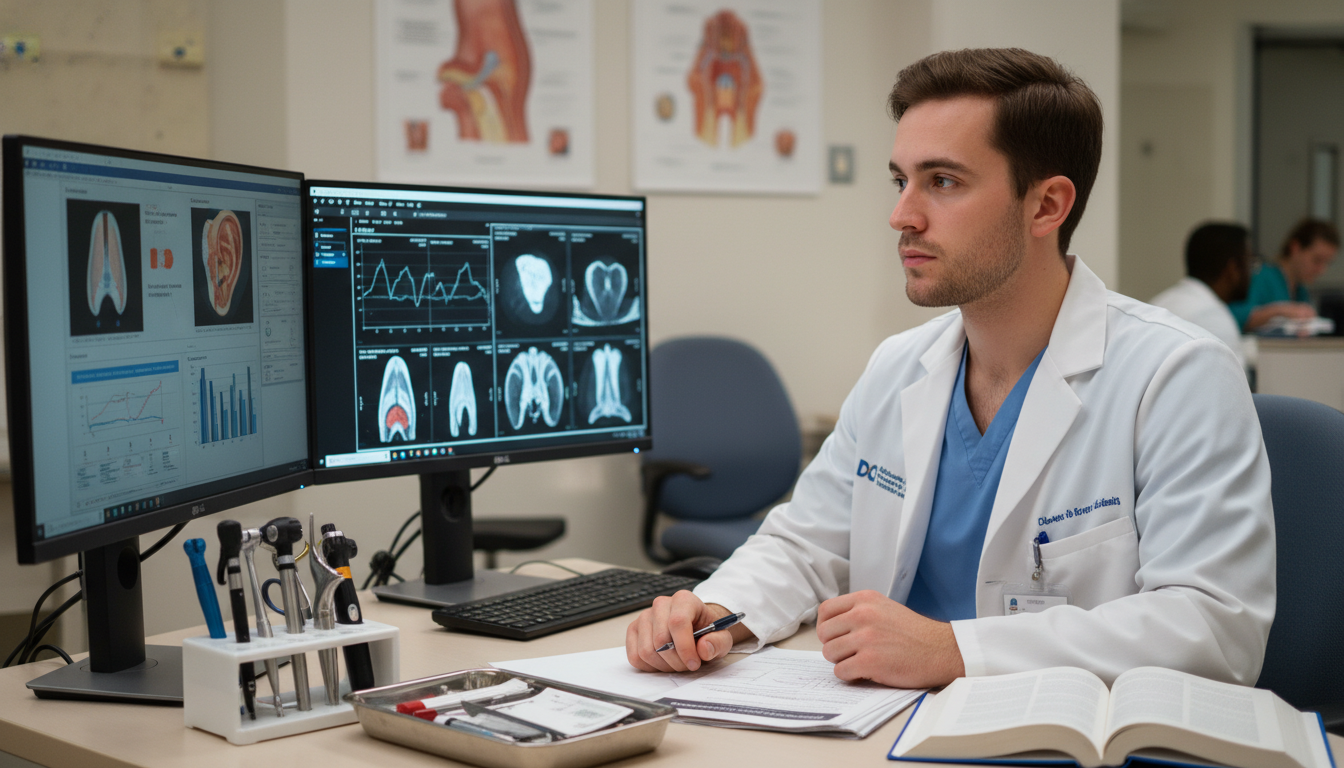
Why Research During Ophthalmology Residency Matters (Especially for US Citizen IMGs)
For a US citizen IMG (American studying abroad) in ophthalmology, research during residency is more than a “nice to have.” It can:
- Differentiate you in a highly competitive field
- Open doors to fellowships, academic jobs, and leadership roles
- Help you transition from “good clinician” to “clinician-scientist”
- Compensate for initial disadvantages you may have faced as an IMG in the ophtho match
Many US citizen IMGs enter ophthalmology residency feeling behind peers who trained and networked at US medical schools. The good news: residency is a powerful equalizer—especially if you use it to build a strong research profile.
This article will walk you through how to approach research during residency as a US citizen IMG in ophthalmology: what matters, how to get started, how to choose projects, and how to strategically build an academic residency track if you’re interested in a long-term academic career.
Understanding the Role of Research in Ophthalmology Training
Research in ophthalmology residency can range from simple case reports to complex clinical trials or basic science projects. For a US citizen IMG, it serves several critical functions.
1. Boosting Your Competitiveness for Fellowships and Jobs
Selective subspecialty fellowships—like retina, cornea, glaucoma, and oculoplastics—often screen applicants using:
- Letters from well-known academic faculty
- Evidence of scholarly productivity (publications, conference presentations)
- Demonstrated interest in a specific subspecialty
If you are an American studying abroad who matched into a US ophthalmology residency, you’ve already overcome one big hurdle. Research during residency gives you a second big advantage:
- A track record that says: “I can do high-level scholarly work in the US system.”
- A portfolio of projects that showcase your subspecialty interests.
Programs will notice when your CV shows consistent involvement in resident research projects—especially if they are well-structured and lead to peer-reviewed publications.
2. Building Your Reputation and Network
Research will:
- Put you in regular contact with faculty, fellows, statisticians, and sometimes industry or cross-department collaborators
- Allow you to present at meetings (AAO, ARVO, subspecialty societies), where you meet leaders in the field
- Help you get strong letters of recommendation from faculty who know your analytical skills and work ethic
As a US citizen IMG, this networking aspect is especially important. You may not have the built-in network that US MD/DO graduates get from their home institutions. Research is one of the best structured pathways to create that network.
3. Strengthening Your Clinical Reasoning
Research is not just about “checking boxes.” It trains you to:
- Ask the right questions about diagnosis and management
- Evaluate the evidence behind treatments and guidelines
- Recognize biases and limitations in the literature
- Think systematically about patient outcomes and quality improvement
Even if you ultimately choose private practice, these skills translate directly into better patient care.

Laying the Groundwork: First-Year Strategies for US Citizen IMGs
The first year (PGY-2 in ophthalmology) is crucial. You are juggling call, clinics, and the steep learning curve of eye exams and surgery. As a US citizen IMG, your instinct might be to “wait until things calm down” before starting any research. That usually backfires.
The best approach is early, strategic engagement with research—even in small steps.
Step 1: Assess Your Program’s Research Culture
Start by understanding your environment:
- Does your program have a formal research curriculum or scholarly requirement?
- Are there protected research blocks, or is research done on your own time?
- Is there a dedicated research director or vice-chair of research?
- How many residents typically present at ARVO/AAO each year?
Ask senior residents:
- “Which attendings are most active in research?”
- “Who is good to work with as a resident?”
- “What kind of projects are realistic given our workload?”
If you trained abroad, you may be used to systems where research was informal or difficult to access. US academic departments often have more infrastructure than you realize—IRB support staff, statisticians, research coordinators—once you know where to look.
Step 2: Identify Your Research Interests (Without Overcommitting)
You do not need to decide your lifelong subspecialty as a PGY-2, but having a general direction helps:
- Anterior segment / cornea
- Retina / uveitis
- Glaucoma
- Oculoplastics
- Neuro-ophthalmology / pediatric
- Global ophthalmology, telemedicine, or health services research
As a US citizen IMG, you might bring unique perspectives—such as interest in international blindness prevention, surgery outreach, or healthcare system comparisons. These can lead to meaningful, niche projects.
To start:
- Shadow different subspecialty clinics with an “academic eye”: What unanswered questions are there? What patterns do you notice?
- Skim recent issues of journals like Ophthalmology, JAMA Ophthalmology, and specialty journals (e.g., Retina, Cornea, J Glaucoma).
- Note topics you naturally gravitate toward or like discussing.
Step 3: Find a Mentor (Or Two)
The right mentor can be more important than the “perfect topic.” For a US citizen IMG, a strong mentor-advocate is also a political ally within the department.
Look for someone who:
- Has a track record of publishing with residents or fellows
- Shows genuine interest in teaching and mentoring
- Responds to emails reliably and respects deadlines
- Has research aligned with your broad interests
When you approach them, be clear and concise:
“I’m a PGY-2 resident and a US citizen IMG particularly interested in retina and diabetic eye disease. I’d love to get involved in a project where I can contribute meaningfully and learn about study design and data analysis. Would you have 15–20 minutes to discuss potential projects that might be suitable for a resident?”
Prepare 2–3 lines about your background, including any previous research (even if from abroad), so they understand your starting point.
Types of Resident Research Projects in Ophthalmology
Not all research is equally feasible during residency. Choosing the right resident research projects depends on your time, skills, and program resources.
1. Retrospective Chart Reviews
What it is: Analyzing existing patient data pulled from charts, EMR, or imaging databases.
Pros:
- Usually no need to recruit new patients
- Often faster to start and complete
- Commonly used for resident-friendly projects
Cons:
- Dependent on data quality and completeness
- Often limited to observational conclusions
Example:
Studying visual outcomes of intravitreal injections for diabetic macular edema at your institution, comparing real-world outcomes to major clinical trial results.
For a US citizen IMG, chart review projects are one of the most accessible ways to produce publishable work early in residency.
2. Case Reports and Case Series
What it is: Detailed reports of unusual or instructive cases.
Pros:
- Great for beginners
- Can be turned around relatively quickly
- Enhances your ability to write clearly and systematically
Cons:
- Lower academic weight compared to original research
- Increasingly competitive for publication in high-impact journals
Example:
A rare presentation of optic neuritis revealing an underlying systemic condition, or a unique surgical complication and its management.
These projects build writing skills and help you learn the submission and peer-review process.
3. Prospective Clinical Studies
What it is: Designing a study going forward in time, enrolling and following patients according to a protocol.
Pros:
- Higher impact potential
- Strong evidence if well-designed
- Excellent for learning about trial methodology
Cons:
- Time-consuming; may not fully mature within residency
- Requires strong organization, IRB planning, and possibly funding
Example:
A trial comparing patient comfort after two different forms of postoperative drop regimens following cataract surgery.
If you’re aiming for an academic residency track or future NIH-type work, even assisting on a larger prospective study is highly valuable.
4. Basic Science or Translational Research
What it is: Lab-based work—cell culture, animal models, molecular pathways, or imaging technologies.
Pros:
- Highly valued in certain academic circles
- Develops deep understanding of disease mechanisms
- Can lead to impactful publications and strong academic credentials
Cons:
- Requires substantial time and continuity
- Steeper learning curve if you don’t have prior lab experience
- Harder to fit into a busy residency unless you have a designated research block or research year
For a US citizen IMG interested in a serious research career, consider whether your program (or a nearby institution) has a lab where residents can be integrated into ongoing projects.
5. Quality Improvement (QI) and Educational Research
What it is: Projects aimed at improving clinical workflows, patient safety, or resident education.
Pros:
- Often required by ACGME; easier to get institutional support
- Direct impact on patient care and trainee experience
- Good entry point for learning about study design and implementation
Cons:
- Publication may be more challenging without a clear research question and robust metrics
- Sometimes undervalued compared to clinical or basic science work (though that is changing)
Example:
Reducing time to intravitreal injection for patients with vision-threatening macular edema by optimizing clinic flow; assessing the impact of a new simulation curriculum on cataract surgery complications.
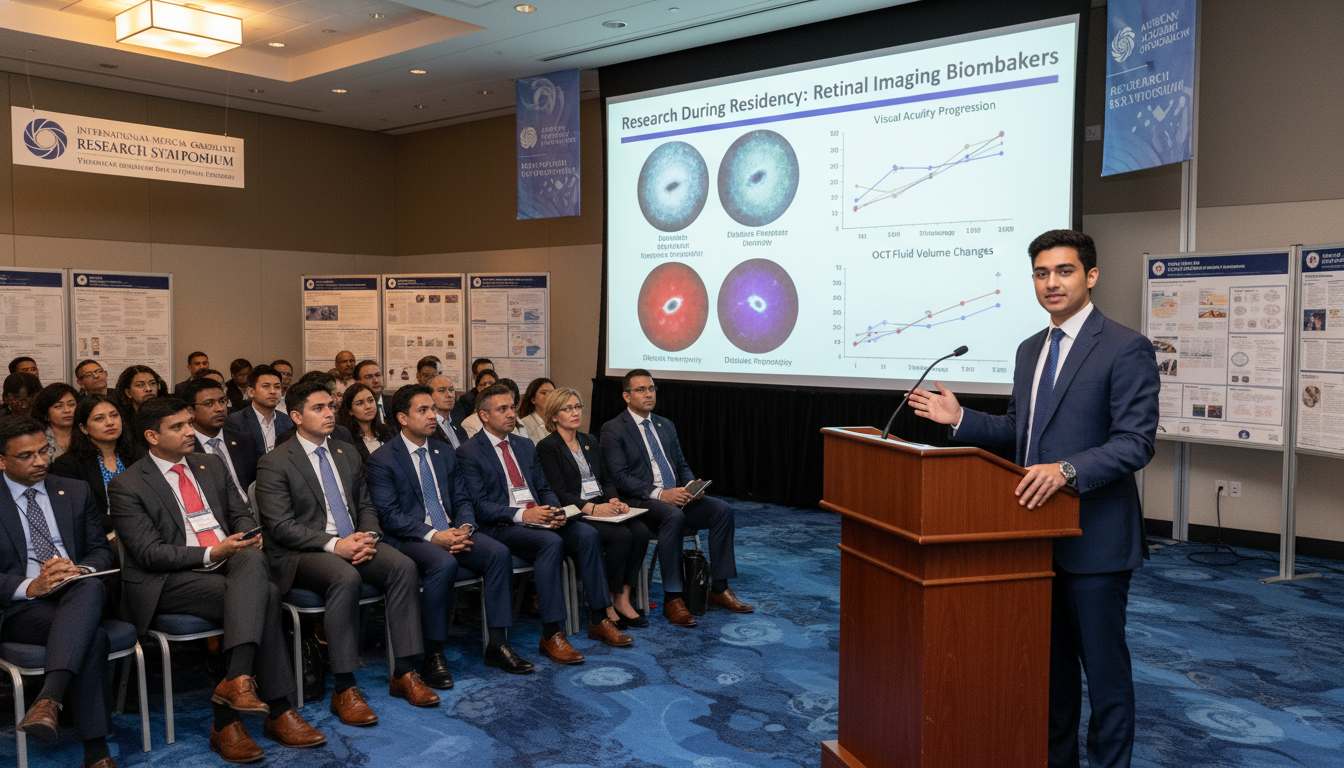
How to Execute a Successful Research Plan During Residency
Once you’ve identified your interests and a potential mentor, the key challenge is execution—turning good intentions into completed projects and publications.
Setting Realistic Research Goals by PGY Year
Think in terms of what you want to achieve each year.
PGY-2 (First Ophtho Year)
- Join 1–2 ongoing projects in a meaningful but manageable role (data collection, literature review, basic analysis)
- Aim for at least 1 abstract submission (local or national)
- Learn the basics of IRB, research ethics, and database organization
PGY-3
- Take on more ownership—for example, leading a retrospective study or a case series
- Present at a national meeting (AAO, ARVO, or a subspecialty conference)
- Draft at least one manuscript for submission
PGY-4
- Complete and submit all pending manuscripts
- If pursuing fellowship, align at least part of your work with your target subspecialty
- Solidify letters from research mentors emphasizing your scholarship and initiative
As a US citizen IMG, an organized trajectory is particularly important; selection committees notice when your research productivity shows a clear upward trend over residency.
Time Management: Balancing Clinics, Call, and Research
Residency is demanding. To make research sustainable:
- Use low-intensity time: Data extraction, literature searching, and drafting introductions can be done on post-call afternoons or lighter clinic days.
- Block off micro-times: 30–60 minutes several times a week is more realistic than one massive weekend block you never reach.
- Create shared timelines: Ask your mentor to agree on key milestones (IRB submission, data lock, abstract deadline) so you’re not working in a vacuum.
- Leverage tools:
- Reference managers (Zotero, EndNote, Mendeley)
- Statistical software (R, SPSS, Stata) or at least comfort with Excel
- Shared documents (Google Docs, institutional OneDrive) for collaborative writing
Navigating IRB and Regulatory Requirements
If your medical school abroad had minimal IRB exposure, US systems can feel bureaucratic. Get help early:
- Ask a senior resident to walk you through a previous IRB submission.
- Attend any institutional IRB training sessions (often required).
- Start with studies of minimal risk (e.g., chart reviews, de-identified datasets).
- Be explicit about HIPAA compliance and data security (de-identification, secure servers).
Understanding IRB early on will save you months of delay later.
Working Effectively With Co-authors and Teams
Successful resident research projects share common features:
- Clear expectations: Who is doing what, and by when?
- Regular check-ins: Short monthly or biweekly meetings keep projects from stalling.
- Transparent authorship discussions: Address order of authorship early; as the resident lead, you typically are first author if you manage the project and write the bulk of the manuscript.
- Professional communication: Respond to emails within 24–48 hours when possible, especially as deadlines approach.
Turning Projects Into Abstracts and Publications
Aim to move every project along the pipeline:
- Hypothesis/idea → IRB → data collection
- Data analysis → abstract → conference submission
- Poster or oral presentation → manuscript draft → journal submission
For conferences like AAO and ARVO:
- Note their abstract deadlines early (often 6–9 months before the actual conference).
- Ask co-authors to review your abstract 1–2 weeks before the submission date.
- Use standard IMRaD structure even for abstracts (Introduction, Methods, Results, and Discussion).
For manuscripts:
- Start with the Methods and Results sections first; they’re the most objective.
- Use figures and tables to clarify your findings—especially for imaging-heavy subspecialties like retina and glaucoma.
- Don’t be discouraged by rejection; many solid papers find their home on the second or third attempt.
Positioning Yourself for an Academic Track or Competitive Fellowship
If you’re a US citizen IMG who envisions an academic residency track or a long-term scholarly career, research during residency is your foundation.
Building a Coherent Academic Story
Try to develop a recognizable theme in your work by PGY-4, such as:
- Diabetic eye disease and retinal imaging
- Corneal transplantation and keratoconus outcomes
- Angle-closure glaucoma in specific populations
- Pediatric strabismus surgery outcomes
- Neuro-ophthalmology and optic neuropathies
Your CV will then show:
- Multiple projects in related areas
- Conference presentations aligned with that topic
- A clear narrative: “This resident is developing expertise in X.”
Selection committees for fellowships and junior faculty roles prefer applicants with more than scattered, unrelated projects.
Transitioning From “Project Helper” to “Project Leader”
By mid-residency, aim to:
- Initiate at least one project where you framed the question and wrote the protocol
- Coordinate with statisticians or methodologists yourself
- Lead the writing and submission process as first author
This shift demonstrates not only that you can contribute, but that you can drive research—essential for an academic career.
Considering Dedicated Research Time or Additional Degrees
If you’re heavily research-oriented, consider:
- Programs that offer a research track with a dedicated research year
- A post-residency research fellowship or clinical-research hybrid year
- Longer-term goals like a Master’s in Clinical Research, Epidemiology, or Public Health
As a US citizen IMG, these additional credentials can be especially powerful in offsetting earlier disadvantages and establishing your academic identity.
Keeping an Eye on Long-Term Funding and Collaboration
Even during residency, you can:
- Assist on grant-supported projects (NIH, foundation, or industry-sponsored)
- Learn basics of grant structure (specific aims, background, significance)
- Build relationships with investigators who can involve you in future multi-center studies
This exposure prepares you for future roles where obtaining funding and managing resident research projects will be part of your job.
Frequently Asked Questions (FAQ)
1. I am a US citizen IMG with limited prior research—can I still build a strong research profile during ophthalmology residency?
Yes. Many US citizen IMGs start residency with minimal research experience and still develop robust CVs by graduation. Focus on:
- Joining one or two realistic projects early (often retrospective or case-based)
- Working with mentors who are known for getting residents to publication
- Being reliable with deadlines and open to learning methods and statistics
Consistency and completion matter more than having dozens of unfinished ideas.
2. How much research is “enough” if I want a competitive fellowship?
There is no strict number, but a strong fellowship applicant—especially from an IMG background—often has:
- 3–6 peer-reviewed publications (not all as first author, but at least one or two)
- Several national presentations or posters
- Projects clearly aligned with the target subspecialty
Quality, relevance, and strong letters from research mentors are more important than sheer volume.
3. Do I need basic science research to get an academic job in ophthalmology?
Not necessarily. Many academic ophthalmologists focus on clinical or outcomes research, health services research, or education research. Basic science or translational work is valuable but not mandatory.
If your residency program has limited lab opportunities, you can still build a strong academic profile through:
- Well-designed clinical studies
- Multi-center collaborations
- Education or quality-improvement research with rigorous methodology
4. How can I highlight my status as a US citizen IMG without it becoming a disadvantage?
Use your background as an asset:
- Emphasize adaptability, cross-cultural perspective, and resilience.
- Align research with areas where your perspective adds value—global ophthalmology, epidemiology of eye disease in different populations, or health disparities.
- Show that you have successfully integrated into the US academic environment through ophthalmology residency research, presentations, and collaborations.
Your research achievements demonstrate that, regardless of where you completed medical school, you can function—and excel—within the US medical and academic system.
By intentionally planning and executing research during residency, you can transform your status as a US citizen IMG in ophthalmology from a perceived limitation into a differentiated strength. Start early, choose mentors wisely, prioritize completion, and let your projects tell the story of who you are becoming: a thoughtful, evidence-driven ophthalmologist with a clear trajectory in clinical care and scholarship.