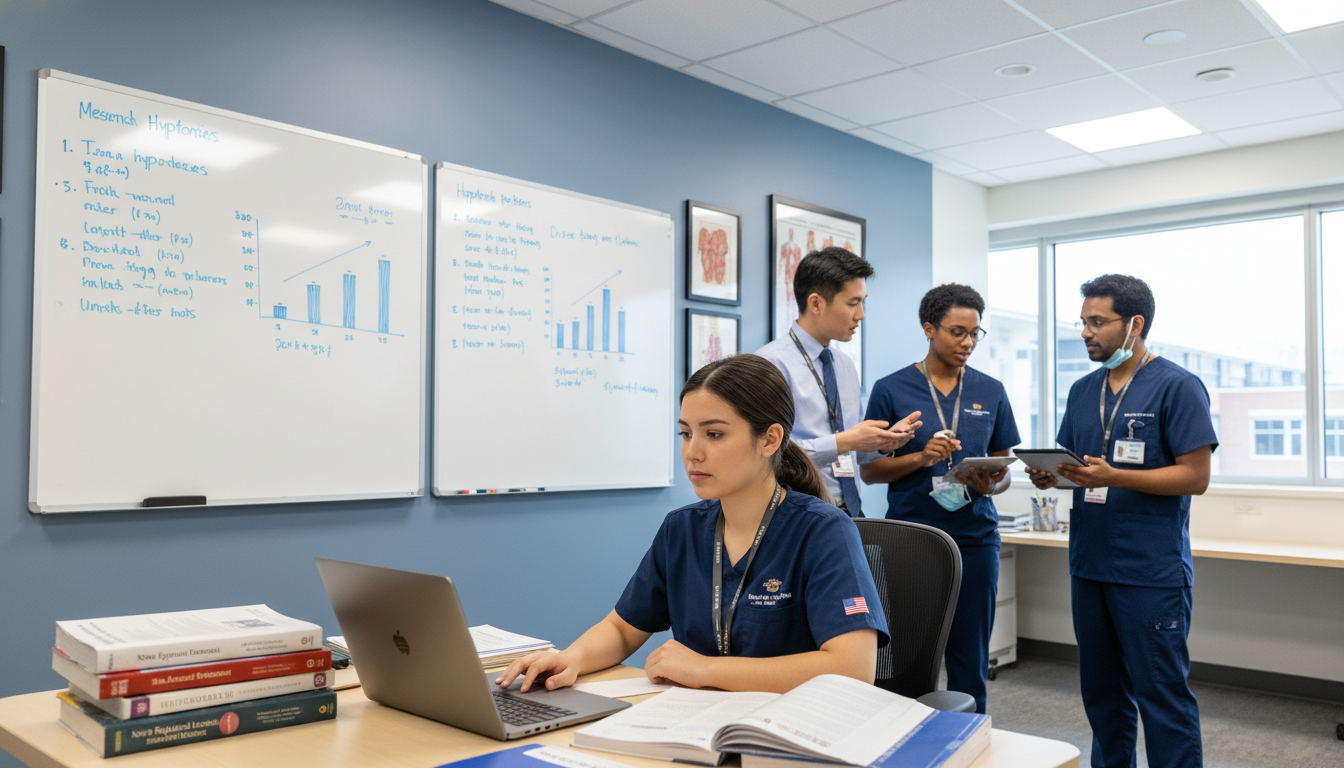
Understanding Research During a Preliminary Surgery Year as a Caribbean IMG
For a Caribbean medical school graduate stepping into a preliminary surgery year, “research during residency” can feel like an optional extra—something you’ll get to when you have time. In reality, for a Caribbean IMG in a prelim surgery residency, research is often one of the most powerful levers you have to:
- Strengthen your application for a categorical surgery position (or another specialty)
- Compete with U.S. grads who already have robust academic portfolios
- Build relationships with faculty who can advocate for you
- Demonstrate academic potential beyond board scores or stigma associated with a Caribbean medical school background
This is especially true if you’re coming from a well-known Caribbean institution (e.g., SGU), where your peers may already be pursuing research aggressively to support their SGU residency match and subsequent career moves.
This article will walk you through:
- Why research matters in a preliminary surgery year
- How to realistically integrate research into a busy surgical schedule
- Practical strategies to find projects, get mentorship, and be productive fast
- How to position yourself for an academic residency track or competitive categorical roles
- Common pitfalls and how Caribbean IMGs can avoid them
Why Research Matters So Much for Caribbean IMGs in Preliminary Surgery
1. You’re “auditioning” for categorical spots
In a prelim surgery residency, everything you do is part of a year-long audition:
- For a categorical general surgery position at your own institution
- For other programs and other specialties if you decide to pivot (anesthesiology, radiology, IM, etc.)
Program directors reviewing your file later will often ask:
- Did this prelim resident take initiative beyond clinical work?
- Did they show academic curiosity and follow-through?
- Are they on track for an academic residency track if they want it?
A history of resident research projects (even small ones) answers those questions in your favor.
2. Counterbalancing being a Caribbean IMG
Unfortunately, many PDs still view Caribbean medical school residency applicants with extra skepticism, regardless of how strong you are individually. Strong USMLE scores help—but what really starts to shift perception is when you can show:
- Multiple abstracts or posters
- Peer-reviewed publications
- First-author work or substantial contributions
- Research tied to surgery or your target specialty
This signals: “I function at a level comparable to U.S. grads, and I can be an academic contributor.”
3. Building a case for academic surgery or competitive specialties
If you’re aiming for:
- Academic general surgery
- Surgical subspecialties (e.g., vascular, colorectal, trauma/critical care)
- Competitive fields like radiology or anesthesiology after prelim surgery
…then a strong research portfolio is almost a requirement, not an optional extra. Your prelim year may be the most research-rich environment you’ll have immediate access to—take advantage of it.

Types of Research You Can Realistically Do During a Prelim Surgery Residency
You will be tired. You will be on call. Your time will be fragmented. That means you need research formats that are feasible in a high-intensity prelim surgery year.
1. Retrospective chart reviews
Most common and often most feasible:
- Use existing patient data from your institution’s EMR
- Example topics:
- Outcomes of emergent appendectomies in older adults
- Readmission predictors after laparoscopic cholecystectomy
- Impact of delayed OR availability on length of stay in trauma cases
Why this works:
- No need to recruit new patients
- Often can be done evenings/weekends and during lighter rotations
- IRB processes for minimal-risk retrospective work are often more straightforward
2. Case reports and small case series
These are low-barrier entry projects and excellent for a busy prelim:
- Unique, rare, or particularly instructive cases
- Examples:
- Unusual presentation of small bowel obstruction in young adult
- Rare surgical complication with key learning points
- Complex polytrauma management with multidisciplinary coordination
Benefits:
- Faster timeline from concept to submission
- Good for building early momentum and getting your first publications
- Helps you learn the anatomy of academic writing
3. Quality improvement (QI) projects
Most surgery departments care deeply about QI:
- Reducing surgical site infections
- Improving pre-op antibiotic timing
- Decreasing OR delays or cancellations
- Standardizing VTE prophylaxis in high-risk surgery patients
QI projects can often turn into:
- Posters or oral presentations at hospital, regional, or national meetings
- Peer-reviewed publications if written up systematically
- Strong talking points during interviews: “I helped improve X process, and here’s the data.”
4. Secondary data analysis & collaborative projects
If you don’t have time to design from scratch:
- Join a multi-institutional collaborative if your program participates
- Ask a research-oriented faculty:
“Do you have any ongoing datasets where you need help with data cleaning, analysis, or writing?”
These often lead to:
- Co-authorships on multi-author publications
- Exposure to higher-level methodology
- Networking beyond your single institution
5. Educational research
As a Caribbean IMG who often had to self-direct learning extensively, you may have valuable insights into:
- Surgical education for IMGs
- Simulation-based training
- Bootcamps for new interns or medical students
You can contribute to:
- Developing or evaluating a curriculum
- Studying an intervention (e.g., new intern orientation, skills lab)
-Publishing in education-focused journals or presenting at meetings (e.g., ASE)
How to Find and Secure Research Opportunities in Your Prelim Surgery Program
Step 1: Identify research-active faculty early
Within your first 2–4 weeks:
Study the department website
- Look for:
- Faculty with recent publications
- Titles like “Director of Research,” “Vice Chair for Academic Affairs,” “Program Director”
- Divisions known for academics (trauma, surgical oncology, transplant, vascular)
- Look for:
Ask senior residents and fellows
- Script example:
- “I’m a prelim this year and I’m very motivated to be productive academically. Which attendings are most involved in research and receptive to residents helping?”
- Script example:
Look for a formal research infrastructure
- Research seminars, journal clubs, divisional meetings
- Department research coordinator or statistician
Step 2: Craft your approach as a Caribbean IMG
Be straightforward but confident. For email or in-person:
“I’m a preliminary surgery resident and a Caribbean IMG from [School; e.g., SGU]. I’m very interested in contributing to clinical or outcomes research during my intern year. I recognize my schedule is demanding, but I’m prepared to work evenings/weekends if needed to be productive. Would you be open to meeting briefly to discuss how I could help with any ongoing projects?”
Key elements:
- Acknowledge time limitations
- Emphasize commitment and work ethic
- Show you understand you’ll likely start by assisting with existing projects
Step 3: Prioritize mentors strategically
Not all potential mentors are equal. Look for:
- Active publishing track record in the last 3–5 years
- History of involving residents and students as co-authors
- Receptiveness to IMGs and prelims (ask other residents quietly)
- Willingness to help with both:
- Short-term wins (posters, case reports)
- Longer-term projects (retrospective cohorts, QI)
As a Caribbean IMG, a mentor who is visibly willing to advocate for you when categorical spots open is invaluable.
Step 4: Start small but visible
Your first project doesn’t need to be groundbreaking. Focus on:
- Projects that can realistically yield tangible output within 6–9 months
- Topics that align with your rotations, so access to data and cases is easier
- Building a track record of reliability:
- Meeting deadlines
- Responding quickly to feedback
- Doing “unsexy” work (data entry, chart review) extremely well
These behaviors build the trust that leads mentors to offer you better and more central roles in later projects.

Time Management: Fitting Research into a Punishing Prelim Surgery Schedule
Understand your rotation “seasons”
Not all months are equal. Map your year:
- Heavy rotations: Trauma, ICU, busy general surgery services
- Lighter rotations: Elective rotations, night float with protected mornings, consult service
Strategy:
- Use heavier months to:
- Plan projects
- Do literature review
- Draft IRB protocols or data collection templates
- Use lighter months to:
- Push data collection aggressively
- Analyze data
- Write and revise manuscripts/posters
Use micro-blocks of time
In surgery, you will rarely get full days off just for research. Instead:
- 20–30 minutes in the call room: Update your literature matrix or references
- Post-call afternoon: Annotate 2–3 articles or refine the introduction section
- Weekend half-day: Dedicated to data entry or writing
Create a simple weekly structure:
- Weekdays:
- 2–3 micro-blocks of 20–30 minutes for reading, emails, or small tasks
- 1–2 sessions per week of 2–3 hours (often weekends) for deep work (data analysis, writing)
Protect your energy and avoid burnout
As a prelim surgery resident, your primary job is to be a safe, reliable clinician. Do not sacrifice:
- Sleep to a dangerous degree
- Patient care responsibilities
- Your mental health
Sustainable tactics:
- Batch communication: Reply to all research emails once daily, not constantly during rounds
- Use tools like reference managers (Zotero, Mendeley) to avoid repetitive formatting work
- Set realistic targets:
- “One figure finalized this week”
- “Data abstraction completed for 10 charts per day”
If your fatigue is severe or your clinical performance is slipping, pull back and regroup. A smaller number of high-quality, completed projects is better than many half-finished attempts.
Building an Academic Narrative: From Prelim Surgery to Categorical or Academic Tracks
Your goal isn’t just to “do research.” It’s to tell a coherent academic story when you apply for:
- Categorical general surgery positions
- Other specialties after your prelim year
- Future fellowships
1. Align your projects when possible
If you’re interested in trauma/critical care:
- Focus on trauma outcomes, ICU QI projects, or emergency general surgery
If you’re considering switching to anesthesiology, radiology, or IM:
- Try to join multidisciplinary studies (perioperative medicine, imaging in trauma, post-op complications) that speak to those specialties.
This alignment strengthens your case for both:
- A categorical spot in surgery (clear sustained interest)
- An alternate specialty (transferable skills and relevant projects)
2. Turn one theme into multiple outputs
From a single QI or retrospective project, you might derive:
- 1 hospital or regional poster
- 1 national conference abstract
- 1 peer-reviewed article (even in a smaller journal)
- A short invited talk or resident research day presentation
This multiplies your “research during residency” impact without multiplying your workload linearly.
3. Leverage your Caribbean and prelim background as strengths
In personal statements and interviews, you can frame your story as:
- You trained at a Caribbean medical school where you had to be resourceful and self-directed
- Your SGU residency match (or other Caribbean school match) into a prelim surgery year gave you U.S. clinical exposure under pressure
- You proactively sought resident research projects to prove your academic potential and to improve patient care
This turns what some see as “weaknesses” (Caribbean IMG, prelim status) into evidence of resilience, initiative, and commitment.
4. Ask for strong letters tied to research
A clinically strong letter is good; a clinically and academically strong letter is better.
Ask your research mentor to highlight:
- Your reliability and independence
- Specific contributions (data collection, analysis, drafting, revising)
- Your ability to balance heavy clinical work with meaningful research output
- Your potential for an academic residency track or future leadership in surgery
These letters carry particular weight when you’re competing with U.S. grads.
Common Pitfalls for Caribbean IMGs in Prelim Surgery—and How to Avoid Them
Pitfall 1: Saying “yes” to everything, finishing nothing
When you’re hungry to prove yourself, it’s easy to agree to multiple projects.
Instead:
- Limit to 1–2 main ongoing projects at a time
- Only add others once you’ve moved the first set into abstract submission or manuscript draft stage
- Regularly ask: “What’s the realistic timeline for this project?”
Pitfall 2: Being invisible on multi-author projects
If you join a large group project, clarify your role early:
- Who is first author?
- What exactly are your deliverables?
- How will contributions be recognized?
As a Caribbean IMG in a prelim position, you can’t rely on assumptions. Politely clarify:
“To make sure I’m contributing at the right level, can we outline my specific tasks and likely authorship position if I complete them as planned?”
Pitfall 3: Neglecting IRB and ethical requirements
Do not:
- Collect patient data without IRB approval (unless clearly exempt, and confirmed)
- Share HIPAA-protected information improperly
- Submit abstracts or manuscripts with patient identifiers unredacted
Missteps here can be catastrophic, especially for a prelim resident seeking categorical conversion.
Pitfall 4: Letting perfection prevent submission
Many residents—especially IMGs who feel scrutinized—get stuck endlessly revising.
Better:
- Submit the poster or abstract on time
- Respond to feedback and improve with each cycle
- Learn from rejection rather than endlessly delaying
Remember: even a rejected abstract teaches you something and can often be reworked for another meeting or journal.
Practical Sample Plan: A Caribbean IMG’s First 6–9 Months of Prelim Surgery
Here’s an example of how you might structure your academic year:
Month 1–2: Orientation and reconnaissance
- Identify 2–3 research-active faculty
- Attend journal club and any research meetings
- Express interest, schedule brief meetings
- Start literature review for 1–2 feasible projects
Month 3–4: Project definition and IRB
- Finalize research question(s) with mentor(s)
- Help draft and submit IRB for retrospective or QI project
- Begin 1–2 case report drafts from memorable/interesting cases
Month 5–6: Data collection and early outputs
- Systematic data abstraction during lighter rotation blocks
- Submit at least 1 case report to a journal
- Abstract submission for an internal or regional meeting
Month 7–9: Analysis and manuscript drafting
- Work with mentor or statistician on analysis
- Draft manuscript(s) for main project
- Identify 1 additional smaller project if capacity allows
Month 10–12: Dissemination and application positioning
- Submit manuscript(s)
- Present at internal resident research day or conference
- Request letters that explicitly mention your research contributions
- Integrate research story into personal statements and interviews
This doesn’t require heroics—just consistent, structured effort and good mentorship.
FAQs: Research During a Preliminary Surgery Residency as a Caribbean IMG
1. Is it realistic to publish during a single prelim surgery year?
Yes, but you must choose wisely:
- Aim for at least:
- 1–2 case reports or small series
- 1 retrospective or QI project with at least an abstract or poster submitted
- A full first-author manuscript acceptance may or may not happen during the year, but submission itself is already a strong signal.
Program directors recognize the constraints of prelim surgery residency; they care that you initiated, contributed, and followed through.
2. Should I prioritize research over clinical excellence to get a categorical spot?
No. Clinical excellence comes first:
- Being reliable, hardworking, and safe on the wards and in the OR
- Being someone your team wants to work with again
However, if two prelim residents are similar clinically, the one with meaningful resident research projects often stands out for categorical positions—especially at programs that value an academic residency track.
3. I came from a Caribbean medical school with little prior research. Does that hurt me?
It does not have to. Many Caribbean IMGs enter residency with limited formal research experience. What matters now:
- How quickly you engage with opportunities in residency
- Whether you show steep growth and commitment during this prelim year
- That you can tell a cohesive story:
“I didn’t have many research options in medical school, but once I entered a U.S. training environment, I actively pursued and completed projects.”
4. Do I need “big-name” journals or national conferences to make an impact?
Not necessarily. For a prelim surgery resident:
- Any peer-reviewed publication (even in smaller journals) is valuable
- Regional or institutional conferences still count; they show dissemination and initiative
- Over time, you can aim for higher-impact outlets, but it’s better to have:
- Several completed, real outputs
- Than one endlessly “perfected” project that never gets submitted
Focus on productivity, reliability, and learning the process. Bigger opportunities often come once mentors see you can deliver.
Research during a prelim surgery residency is challenging—but for a Caribbean IMG, it can be transformative. With targeted mentorship, realistic project choices, and disciplined time management, you can turn this intense year into a launchpad for a categorical surgery position, another specialty, or even a long-term academic career.