Why Research During Residency Matters for Future Pulmonary & Critical Care Physicians
For an MD graduate planning a career in Pulmonary & Critical Care, research during residency is not just a “nice-to-have”—it is fast becoming a core expectation. Whether your goal is to match into a competitive PCCM fellowship, build an academic career, or become a clinically focused intensivist who can interpret and apply evidence at the bedside, meaningful research experience during residency can significantly shape your trajectory.
Pulmonary & Critical Care Medicine is a data-driven, rapidly evolving field. From ARDS management and ventilator strategies to interstitial lung disease and pulmonary hypertension therapeutics, practice patterns change quickly. Fellowship program directors increasingly look for residents who understand study design, can interpret complex literature, and have demonstrated commitment to scholarly work.
This article walks you through how to think strategically about research during residency as an MD graduate in an allopathic program, how to integrate it with your clinical responsibilities, and how to position yourself for a competitive PCCM fellowship and long-term academic success.
Understanding the Research Landscape in Pulmonary & Critical Care
Pulmonary & Critical Care offers a wide spectrum of research opportunities—far beyond traditional clinical trials. Knowing the landscape helps you choose projects that match your interests, timelines, and skill set.
Major Research Domains in Pulm/Crit
Clinical Outcomes Research
- Focus: Patient outcomes, process measures, quality improvement.
- Examples:
- Predictors of ICU mortality in septic shock.
- Outcomes of COPD patients after ICU admission for acute exacerbation.
- Readmission patterns after hospitalization for pneumonia.
- Why it’s resident-friendly: Often uses existing data (EHR, registries), smaller learning curve, feasible within residency timelines.
Epidemiology & Health Services Research
- Focus: Population-level patterns, healthcare utilization, disparities.
- Examples:
- Racial and socioeconomic disparities in access to lung transplant.
- ICU utilization patterns in patients with end-stage lung disease.
- Impact of tele-ICU implementation on rural hospitals.
- Value: Strong for residents interested in policy, systems-based practice, or future leadership in health systems.
Quality Improvement (QI) & Patient Safety Projects
- Focus: Improving care processes and outcomes.
- Examples:
- Reducing ventilator-associated events through bundle implementation.
- Improving adherence to low tidal volume ventilation in ARDS.
- Standardizing sedation weaning protocols in the ICU.
- Advantage: Often required by ACGME; faster cycle times; highly practical and visible to fellowship programs.
Translational & Basic Science Research
- Focus: Mechanistic studies from bench to bedside.
- Examples:
- Molecular pathways in pulmonary fibrosis.
- Biomarkers predicting ARDS severity or ICU delirium.
- Animal models of ventilator-induced lung injury.
- Considerations: Often requires more time and technical training; best if you have a protected research year, a prior science background, or an academic residency track with strong mentorship.
Educational Research in Pulm/Crit
- Focus: Teaching and learning in ICU and pulmonary settings.
- Examples:
- Assessing simulation-based training for ventilator management.
- Evaluating a curriculum on breaking bad news in the ICU.
- Studying trainee burnout and resiliency in critical care rotations.
- Ideal for: Residents considering clinician-educator careers or leadership in medical education.
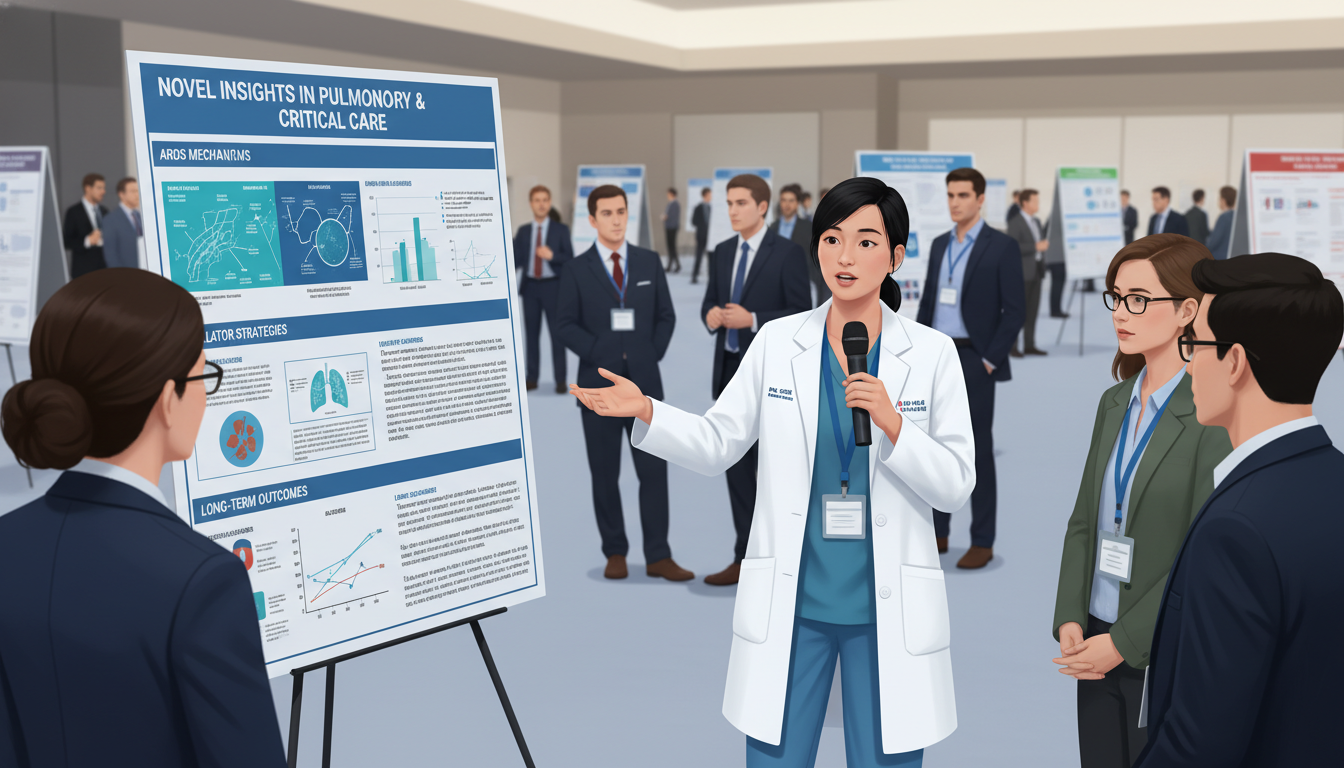
Aligning Your Research Strategy With Career Goals
Not all resident research projects are equal in terms of time demands, skills learned, or impact on your CV. As an MD graduate aiming for Pulmonary & Critical Care, it’s essential to be deliberate.
Clarify Your Long-Term Trajectory
Ask yourself:
- Do I see myself in a high-volume clinical role with occasional research or QI?
- Am I interested in a research-focused academic career, possibly with external funding?
- Do I want to be a clinician-educator who leads curricula or simulation programs?
- Am I drawn to health policy, leadership, or system improvement?
Your answers will shape the type of projects you pursue and how deeply you invest in methods training.
Examples:
Clinically focused intensivist:
Prioritize pragmatic clinical research and QI projects that demonstrate impact on ICU practice (e.g., sepsis bundle improvement, ventilator weaning protocols).Academic physician-scientist:
Seek longitudinal projects, mentorship from NIH-funded investigators, possibly a dedicated research year, and early experience with grants and manuscripts.Clinician-educator:
Combine educational research (e.g., simulation-based ventilator training) with clinical QI.
Understanding What PCCM Fellowship Directors Look For
Most PCCM fellowship programs, especially academic ones, value at least some evidence of scholarly productivity. For graduates of an allopathic medical school match now in residency, prior experience can help, but fellowship decisions weigh heavily on your residency output.
Programs commonly look for:
- Evidence of completed projects (not just “in progress”).
- Posters, abstracts, or oral presentations at regional or national meetings (ATS, CHEST, SCCM, local pulmonary societies).
- At least one or more peer-reviewed publications, even if not first-author.
- Demonstrated follow-through: starting, analyzing, and disseminating a project.
- A coherent narrative: how your research interests relate to pulmonary, critical care, or healthcare systems.
Even if your program doesn’t have a formal academic residency track, you can create an academic “profile” through strategic project selection, networking, and consistent productivity.
Getting Started: Finding Mentors, Topics, and Feasible Projects
Step 1: Identify the Right Mentor(s)
Good mentorship is the single most important predictor of successful research during residency.
Where to look:
- Pulmonary, critical care, and sleep faculty with active publications.
- Directors of ICU quality improvement or sepsis programs.
- Faculty with leadership roles in your institution’s clinical and translational science institute.
- Alumni who did a PCCM fellowship and remain involved as adjunct or affiliated faculty.
Traits of a strong mentor:
- Active in research, with recent publications in reputable journals.
- Track record of mentoring residents: ask co-residents who has successfully guided projects.
- Available and responsive; meets regularly and sets clear expectations.
- Willing to align a project to your timeline (e.g., completion before fellowship applications).
Often, you may need two mentors:
- A content expert (e.g., ARDS outcomes, ILD, ICU sedation).
- A methods expert (e.g., biostatistician, clinical epidemiologist).
Step 2: Choose a Project Type That Matches Your Stage
For most residents, especially in early PGY years, time is limited. Aim for projects with clear scope and realistic timelines.
Project Types & Feasibility
Retrospective chart review
- Pros: Uses existing data, shorter timelines, no need to recruit patients.
- Example:
“Association between timing of ICU transfer and mortality in patients with COVID-19 respiratory failure.” - Typical timeline: 6–18 months from idea to submission.
Database / Registry Analysis
- Pros: High impact potential, large sample size, often good for publications.
- Examples:
- Use ICU registry data to evaluate adherence to low tidal volume ventilation.
- Use national databases (e.g., NRD, NIS) to study hospital outcomes in COPD exacerbations.
- Needs: Statistical support; clear question and pre-specified analysis plan.
Prospective observational study
- Pros: High-quality data, tailored variables.
- Cons: Longer time frame; regulatory demands.
- Example:
“Prospective assessment of delirium prevalence and risk factors in a medical ICU.”
Quality improvement project
- Pros: Very resident-friendly, often required, directly improves care.
- Example:
“Implementation of a standardized daily spontaneous awakening and breathing trial protocol in the ICU.” - Key: Use formal QI methodology (PDSA cycles, run charts, etc.) to increase academic credibility.
Educational intervention
- Pros: Combine teaching interest with scholarly work.
- Example:
“Impact of a simulation-based ultrasound-guided thoracentesis curriculum on resident procedural competency.”
Step 3: Define a Clear Research Question
Use frameworks like PICO (Population, Intervention, Comparison, Outcome) or FINER (Feasible, Interesting, Novel, Ethical, Relevant) to sharpen your question.
Pulm/Crit example using FINER:
- Question: “Does implementation of a standardized ARDS ventilator protocol improve adherence to low tidal volume ventilation and reduce ICU mortality?”
- Feasible: Uses existing ICU data; can implement and track protocols over 1–2 years.
- Interesting: Aligns with current best practices and institutional goals.
- Novel: May apply protocol to a new population (e.g., mixed med-surg ICU).
- Ethical: QI nature; minimal patient risk.
- Relevant: Direct clinical significance, attractive to PCCM fellowships.

Integrating Research Into a Busy Residency Schedule
Research during residency has to coexist with call, ICU nights, and boards. The difference between residents who are productive and those who are overwhelmed often comes down to structure and realistic planning.
Map Your Research to the Residency Calendar
Consider your peak and low-intensity rotations:
- High-intensity: Inpatient wards, ICU months, night float.
- Focus: Data collection that fits into short blocks, brief literature reading, short meetings.
- Lower-intensity: Outpatient, elective, consult-heavy months.
- Focus: Major writing, data analysis sessions, IRB work, manuscript drafting.
Actionable approach:
- Early PGY-1: Identify mentors, attend research meetings, choose 1–2 projects, start IRB process.
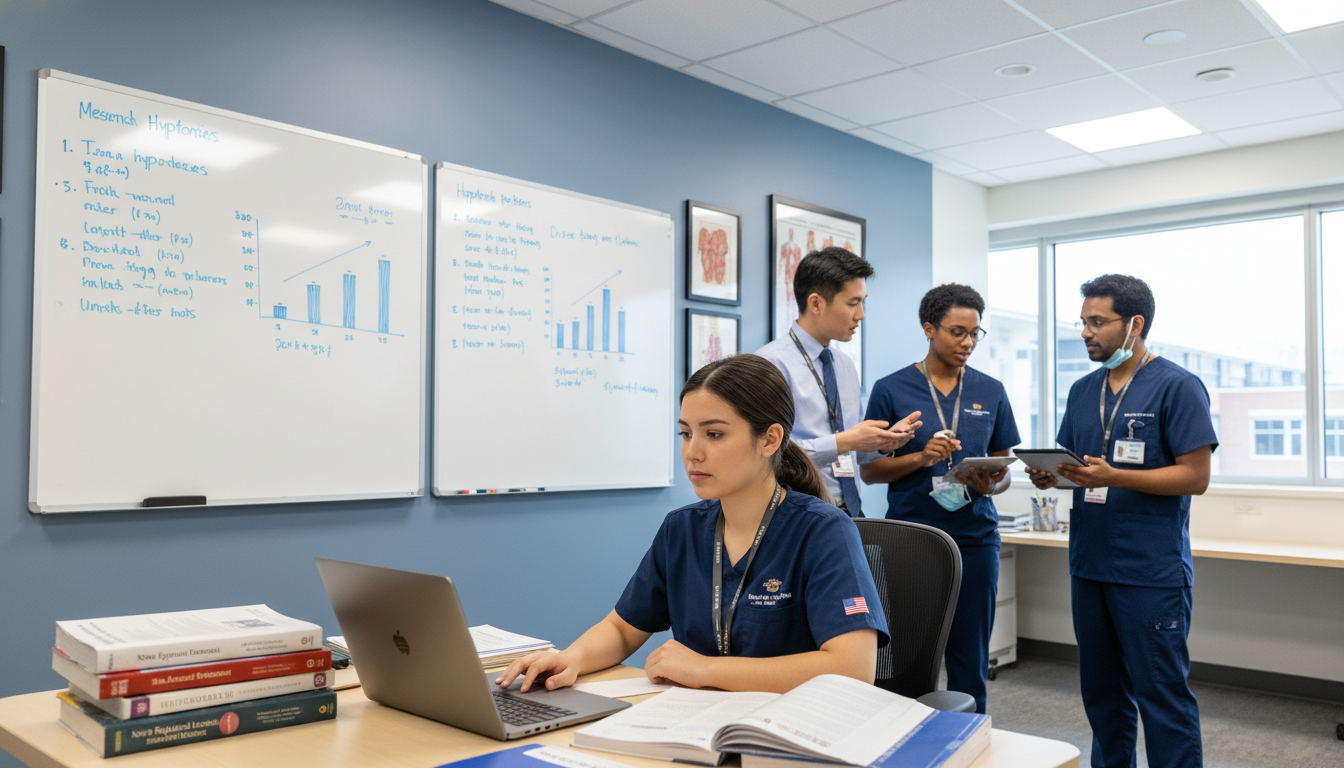
- Late PGY-1 to PGY-2: Begin data collection/cleaning; draft abstract(s); aim for a local or regional poster.
- PGY-2 to early PGY-3: Complete analysis; write and submit manuscripts; present at national meetings before PCCM fellowship interviews.
- PGY-3: Finalize projects; possibly start a new, smaller project that will carry into fellowship.
Time Management Tactics
- Schedule standing research time: 1–2 hours per week, protected in your calendar like a clinic appointment.
- Use “micro-blocking”: On lighter days, set 20–30 minute sprints to write a paragraph or clean data.
- Create shared project timelines: Use Gantt charts or Trello/Notion boards with milestones.
- Batch tasks: Reserve entire half-days (when possible) for focused writing rather than scattered 10-minute intervals.
Negotiating for Protected Time and Support
Especially in programs with strong academic infrastructure or an academic residency track, you may be able to formalize research commitments:
- Ask about:
- Research electives (2–4 weeks).
- Scheduled academic half-days.
- Institutional “research tracks” for residents with guaranteed protected time.
- Approach your program leadership with a plan, not just a request:
- Summarize your project(s) and mentors.
- Outline your timeline and expected deliverables (abstracts, papers).
- Show how your work aligns with departmental priorities (e.g., ICU quality metrics, institutional sepsis initiatives).
Building a Competitive Research Portfolio for PCCM Fellowship
For an MD graduate aiming at a competitive PCCM fellowship, your research portfolio should tell a coherent, pulmonary/critical care–relevant story by the time you apply (typically in PGY-2 or early PGY-3).
What “Enough Research” Looks Like
You don’t need dozens of publications, but you do need depth and completion. A strong portfolio might look like:
- 1–2 first-author abstracts or posters at ATS, CHEST, or SCCM.
- 1–2 published or in-press papers (first author ideal, but co-author is still valuable).
- Evidence of a longitudinal interest in Pulm/Crit topics:
- Example: ICU delirium QI project + retrospective sepsis outcomes analysis + case series in ILD.
Highlighting Your Research on Your CV and ERAS Application
- Create a dedicated “Research and Scholarly Activity” section.
- List:
- Role (first author, co-author).
- Type (original research, QI, case report, review).
- Status (published, in press, submitted, in preparation).
- For resident research projects, briefly emphasize:
- Your specific contribution (study design, data collection, analysis, writing).
- The pulmonary/critical care relevance.
- If you participated in resident research programs or won awards:
- Include “Research awards,” “Best poster,” or “Resident research day finalist” to signal recognition.
Using Research to Strengthen Your Personal Statement and Interviews
Fellowship programs want to see how your research during residency reflects your intellectual curiosity and your future goals.
In your personal statement:
- Briefly describe one or two key projects.
- Emphasize what you learned (study design, data analysis, leadership, collaboration).
- Connect your research interests to your future in Pulm/Crit:
- “My work examining ICU readmissions fostered my interest in care transitions and has led me to seek a PCCM fellowship where I can continue outcomes research in high-risk pulmonary populations.”
In interviews:
- Be prepared to:
- Explain your research question in clear, concise language.
- Discuss methods at a high level (retrospective cohort, logistic regression, QI methods).
- Acknowledge limitations and potential next steps.
- Describe how you balanced research with clinical duties.
Programs are often less interested in the results than in how you think about problems and apply evidence.
Long-Term Perspective: Using Residency Research as a Springboard
Transitioning From Resident to Fellow Research
As you enter a pulm crit fellowship or combined PCCM fellowship, your residency work can form the foundation for a more advanced research agenda.
Potential next steps:
- Expand residency QI into a multicenter study as a fellow.
- Use a retrospective study as preliminary data for a prospective trial or implementation project.
- Develop a mentored K-award application (if on an academic/research-focused path) using themes from your resident research.
If you trained in an academic residency track, you may already have exposure to grant writing, which will be useful for future funding applications (e.g., NIH F32, K awards, foundation grants).
Maintaining Academic Momentum After Residency
Whether you join an academic center or a high-volume clinical practice, your research skills remain relevant:
In academia:
- You can build a program in ICU outcomes research, ventilator management, interstitial lung disease, or pulmonary hypertension.
- You’ll likely mentor residents on their own resident research projects, paying forward the guidance you received.
In community or hybrid settings:
- Lead ICU QI initiatives (sepsis protocols, sedation bundles).
- Participate in multi-center registries and pragmatic trials.
- Serve as the critical care lead for evidence-based practice and protocol development.
Residency is not your only chance to do research—but it’s a critical period to build foundational skills, habits, and networks that will serve you throughout your Pulmonary & Critical Care career.
FAQs: Research During Residency for Pulmonary & Critical Care–Bound MD Graduates
1. Do I absolutely need research during residency to match into a PCCM fellowship?
Not absolutely—but it is increasingly important, especially for academic or highly competitive programs. Programs recognize that not all residencies have the same resources, but most expect some form of scholarly activity. At minimum, aim for:
- A completed project (QI, clinical, or educational) with clear pulmonary/critical care relevance.
- At least one abstract/poster and ideally one publication or manuscript in progress.
For community-focused fellowships, strong clinical performance and recommendations can sometimes outweigh research, but having research experience still strengthens your application.
2. I went to an allopathic medical school but did little research as a student. Am I behind?
No. Many residents begin serious research only during residency. As an MD graduate, you can still develop a strong profile by:
- Quickly identifying good mentors in Pulm/Crit or ICU.
- Starting a feasible project early in PGY-1 or PGY-2 (often retrospective or QI).
- Targeting at least one abstract and one publication by the time you apply for fellowship.
Your trajectory and demonstrated growth matter as much as your starting point.
3. How many projects should I take on during residency?
For most residents, 2–3 well-executed projects are far better than 6–7 unfinished ones. A practical target:
- 1 major project (e.g., retrospective study or substantial QI initiative) that leads to an abstract + paper.
- 1–2 smaller projects (case reports, educational projects, or co-authorship roles) to diversify your CV.
Focus on completion and impact. Overcommitting is a common reason residents end up with “in progress” lists that don’t translate into tangible output.
4. Does quality improvement count as “real” research for Pulm/Crit fellowships?
Yes—if it is rigorous, well-designed, and results in dissemination. Many PCCM fellowship directors value QI highly, as it directly improves ICU care and demonstrates systems thinking. To maximize academic value:
- Use established QI methodology (PDSA cycles, run charts, control charts).
- Clearly define pre- and post-intervention metrics.
- Write up the project for posters or manuscripts.
- Frame it in your application as both improvement work and scholarly activity.
By strategically planning research during residency, seeking strong mentorship, and aligning your projects with long-term Pulmonary & Critical Care goals, you can build a compelling academic profile while still becoming an excellent clinician. Your residency years are busy—but with deliberate choices, they can also be the launchpad for a meaningful and impactful career in PCCM.