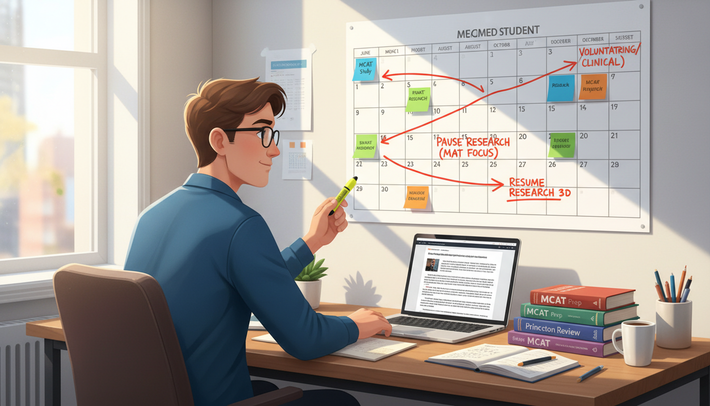
Diagnostic radiology attracts residents who are curious, analytical, and often highly research-oriented. Yet many applicants and new residents feel uncertain about what research during residency actually looks like, how much is expected, and how to balance it with clinical training and board preparation. This guide walks you through the landscape of research in a radiology residency, with a focus on diagnostic radiology, and offers practical strategies whether you’re a future applicant, incoming intern, or junior resident.
Why Research Matters in Diagnostic Radiology
Research is not just an academic checkbox in radiology residency—it’s tightly woven into the specialty’s future.
1. Radiology is a technology-driven field
Diagnostic radiology evolves rapidly: AI-based image analysis, functional imaging, new MRI/CT protocols, and image-guided therapeutics are constantly emerging. Many of these advances begin as resident- or fellow-driven projects. Participating in research helps you:
- Understand new imaging techniques at a deeper level
- Critically appraise the technology you’ll eventually use in practice
- Stay ahead of future changes in clinical practice patterns
2. Research boosts your diagnostic radiology match and career trajectory
If you’re still a medical student, research during medical school (especially radiology-related) strengthens your diagnostic radiology match profile. Later, research during residency can:
- Distinguish you for competitive fellowships (e.g., neuroradiology, IR, MSK, body imaging)
- Support applications for academic positions (assistant professor roles, clinician–educator tracks)
- Help build a reputation within a subspecialty community
Programs with a strong academic residency track often expect residents to complete at least one meaningful project, if not more. Even in community-focused programs, having resident research projects signals engagement, curiosity, and leadership.
3. Research skills improve clinical practice
Whether or not you become a lifelong researcher, research experience during residency sharpens clinically relevant skills:
- Critical reading of literature: Essential for incorporating new evidence into practice
- Study design basics: Helps you judge the strength of clinical guidelines and trials
- Statistics literacy: Allows you to understand risk, diagnostic performance, and predictive value beyond buzzwords
These skills contribute directly to better patient care and more thoughtful imaging recommendations.
Types of Research Available to Radiology Residents
Not all “research during residency” means bench work or complex AI algorithms. Diagnostic radiology offers a wide spectrum of research types, allowing you to find something aligned with your interests, time, and skill set.
1. Clinical imaging research
This is the most common category for diagnostic radiology residents.
Examples:
- Comparing diagnostic performance of different imaging protocols (e.g., low-dose CT vs standard-dose CT for lung nodule detection)
- Evaluating the impact of a new MRI sequence on lesion characterization
- Assessing the utility of CT angiography vs ultrasound for a specific indication
Typical methods involve retrospective chart and image review, sometimes prospective enrollment if infrastructure allows.
Why it’s resident-friendly:
- Uses existing imaging studies and clinical data
- Often feasible with modest sample sizes
- Directly anchored to your day-to-day clinical work
2. Quality improvement (QI) and operations research
QI projects can double as research when structured rigorously.
Examples:
- Reducing contrast extravasation rates in CT
- Improving report turnaround time for emergency department CT scans
- Standardizing reporting of incidental pulmonary nodules or thyroid nodules
- Implementing and evaluating a structured reporting template
These projects are highly valued by departments and hospital leadership, and they often produce measurable changes in workflow and patient outcomes.
3. Educational research
Particularly relevant if you’re interested in an academic residency track or future clinician–educator role.
Examples:
- Studying the impact of a new resident boot camp or simulation curriculum
- Evaluating a structured feedback system for residents reading overnight cases
- Assessing the effectiveness of spaced repetition tools for learning radiology physics
Educational research blends your daily teaching and learning environment with formal study design—perfect for residents who enjoy mentoring and academic development.
4. Informatics, AI, and data science projects
An increasingly visible domain in diagnostic radiology.
Examples:
- Developing or validating an AI tool for detecting intracranial hemorrhage or pulmonary embolism
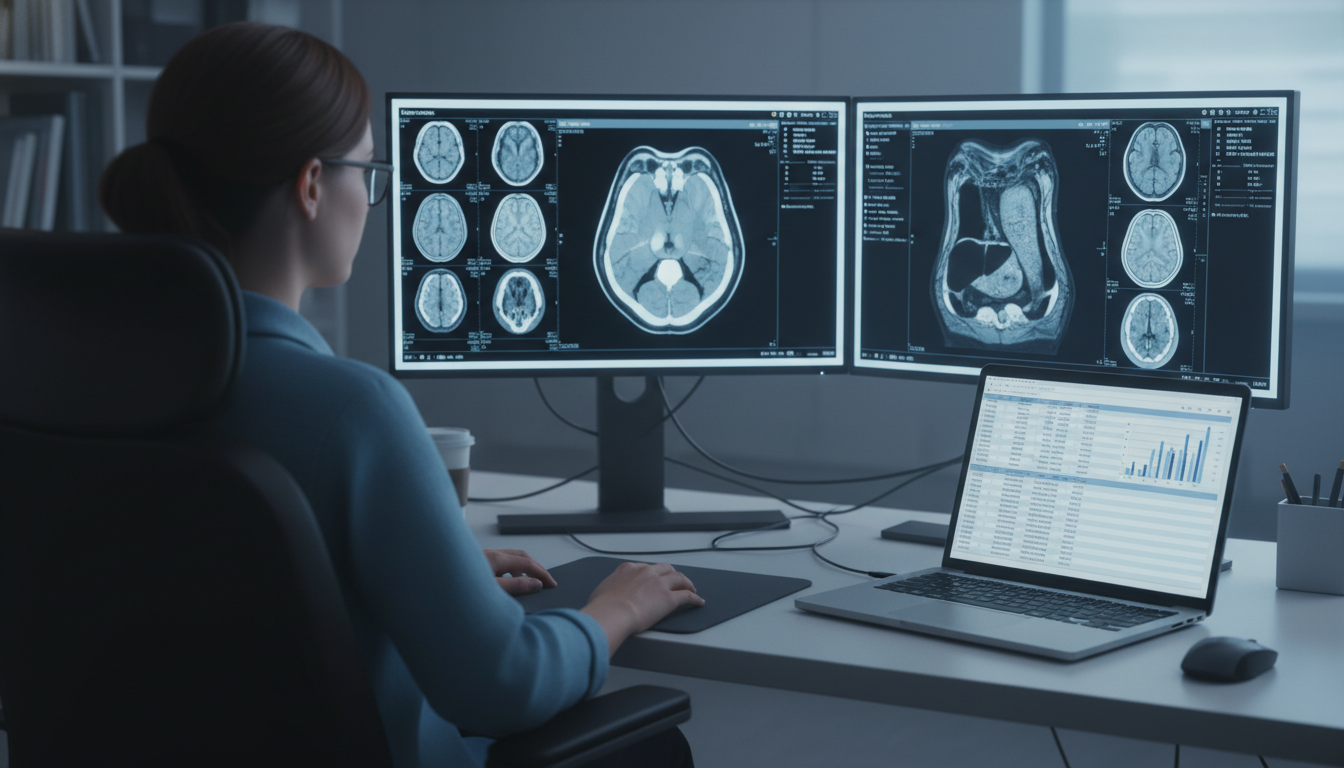
- Creating a natural language processing (NLP) pipeline to analyze radiology reports
- Building decision-support tools embedded in the PACS or EMR
- Evaluating workflow impact of AI triage tools (e.g., stroke alerts)
These projects often require collaboration with data scientists, engineers, or informatics faculty. They can be more complex but are highly visible and potentially high-yield in impact and publications.
5. Basic and translational imaging science
More common in large academic centers with research institutes.
Examples:
- Investigating new contrast agents or molecular imaging probes
- Optimizing MRI sequences or CT reconstruction algorithms
- Imaging biomarkers for tumor response in oncology
These usually require substantial faculty and infrastructure support. Residents typically contribute in defined roles (e.g., image analysis, protocol optimization, or data interpretation).
How Research Fits into Radiology Residency Structure
Programs differ dramatically in how they integrate research during residency. Understanding typical models can help you plan strategically.
1. Dedicated research time vs. integrated research
Dedicated research time models may include:
- A block in R2–R4 years (e.g., 1–3 months of protected research rotation)
- Year-long or multi-month research tracks for selected residents
- Funded “research year” between residency and fellowship in some institutions
Integrated models often include:
- Research performed alongside standard rotations
- Half-day per week or occasional “academic days” for ongoing projects
- Electives during later residency focused on finalizing manuscripts or advanced projects
Ask specifically during interviews or orientation:
- How many weeks/months of dedicated research time are typical?
- Is research time guaranteed or competitive?
- Are there formal academic residency track positions?
2. Program expectations for resident research
Expectations vary:
- Some programs require at least one scholarly project (abstract, poster, or publication) to graduate.
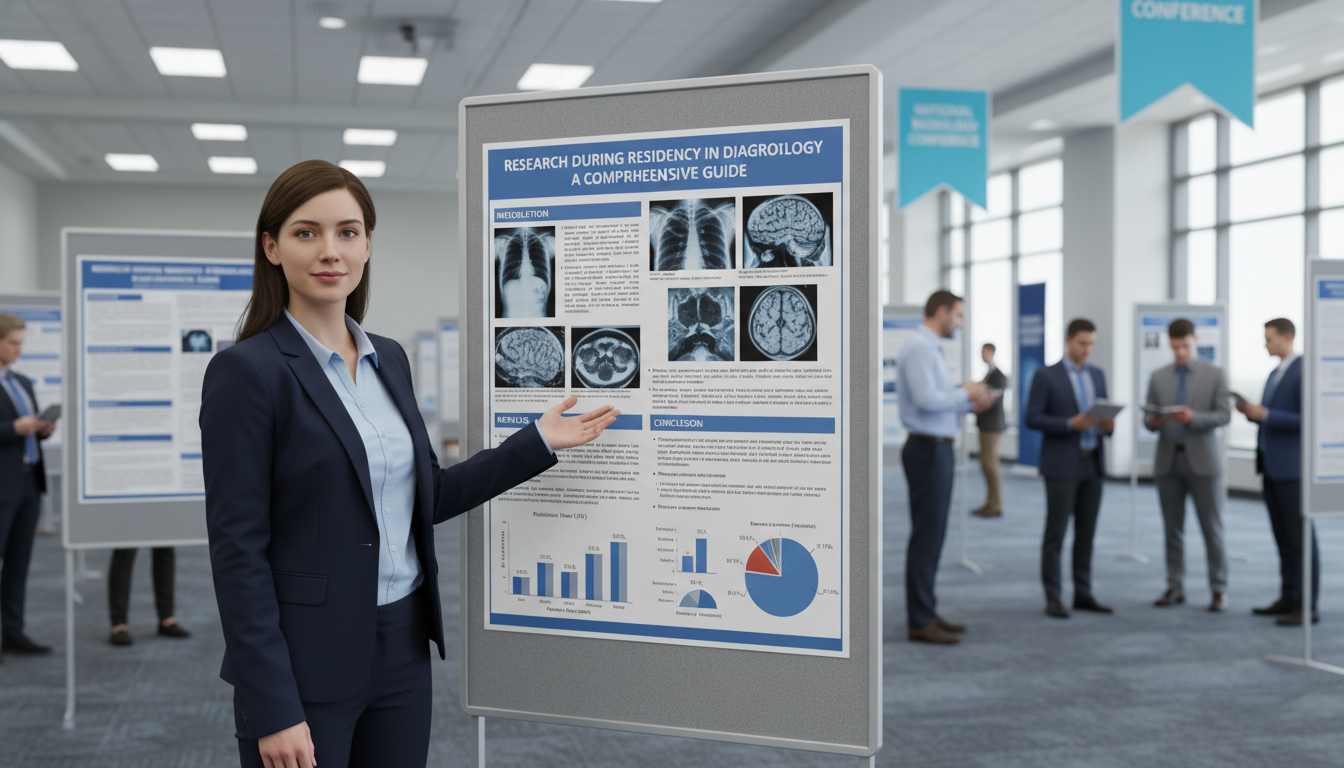
- Others have a culture where many residents present annually at regional or national meetings (e.g., RSNA, ARRS, subspecialty societies).
- A few are more clinically focused with optional research, though even here, QI projects are often encouraged.
Clarify early:
- Is a scholarly product (poster, talk, paper) required?
- Are QI projects counted as “research”?
- Are case reports/educational exhibits valued?
3. Mentorship and infrastructure
Well-structured programs have:
- A vice chair for research or equivalent faculty champion
- A list of active faculty research projects and areas of interest
- Access to statistical support, IRB assistance, and research coordinators
- A residents’ research curriculum covering study design, ethics, statistics, and manuscript writing
If such structure is not obvious when you start, don’t assume it doesn’t exist—often it’s just not well advertised to new trainees. Ask senior residents who has been productive and how they got started.
How to Get Started: Step-by-Step for New Residents
Whether you’re an intern about to start radiology or an early R1, you can set yourself up for success with a deliberate approach.
Step 1: Clarify your own goals
Before jumping into the first available project, ask yourself:
- Do I see myself in academic medicine long term?
- Am I targeting a highly competitive fellowship?
- How comfortable am I with statistics, coding, or advanced methods?
- How many projects do I realistically want (and need) during residency?
Examples:
- Resident A: Wants private practice, moderate research interest. Goal: 1–2 solid projects, maybe one publication and one national meeting presentation.
- Resident B: Aims for academic neuroradiology. Goal: Several subspecialty projects, presentations at major meetings, at least 2–4 peer-reviewed publications.
- Resident C: Strong informatics background. Goal: A longitudinal AI project, perhaps leading to multi-author publication and grant involvement.
Your goals inform how ambitious and time-intensive your projects should be.
Step 2: Find the right mentor
Mentor selection often matters more than the project itself.
Look for mentors who:
- Have a track record of publishing with residents
- Respond to emails and respect deadlines
- Involve residents meaningfully (not just “data extraction”)
- Are aligned with your interest area (e.g., MSK, chest, IR, neuro, body)
How to find them:
- Ask senior residents: “Who are the best people to work with in MSK/body/neuro for resident research projects?”
- Check departmental faculty pages for recent publications and ongoing projects
- Attend subspecialty divisional meetings if allowed; many will mention ongoing or planned studies
Step 3: Choose a feasible first project
For your first diagnostic radiology research project during residency:
Aim for something:
- Retrospective rather than prospective
- With a manageable dataset (e.g., 100–300 patients)
- That uses clear imaging outcomes (e.g., presence/absence of a finding, measurement reproducibility)
- With a well-defined primary question and limited secondary analyses
Examples of appropriate “starter” projects:
- “Diagnostic yield of CT pulmonary angiography ordered for isolated tachycardia in the ED”
- “Interobserver agreement among residents and attendings for PI-RADS scoring in prostate MRI”
- “Impact of a new structured template on appendicitis CT report completeness”
Avoid at the outset:
- Multi-institutional trials unless well-supported
- Complex AI model development without local informatics support
- Projects that hinge on outside services (e.g., industry partnerships) without established agreements
Step 4: Understand IRB and regulatory basics
Most retrospective resident research projects require institutional review board (IRB) oversight, even if they qualify for exemption.
Key actions:
- Complete required institutional research training (e.g., CITI modules).
- Ask your mentor for a previous IRB application as a template.
- Clarify who will submit and manage IRB documents—often the faculty PI, but residents may help.
Learning this process early will speed up future projects.
Step 5: Develop core analytical skills
You don’t have to become a statistician, but basic competence goes a long way.
Helpful skills:
- Spreadsheet management: Clean data in Excel or Google Sheets (consistent labels, coding of categorical variables).
- Basic statistics: Understand t-tests, chi-square, sensitivity/specificity, ROC curves, confidence intervals.
- Entry-level software exposure: SPSS, R, or Python (even at a beginner level, guided by a statistician).
Most programs have seminars or short courses in statistics; take advantage early rather than the week before submission.
Step 6: Write early and revise often
Don’t wait until you “have all the data” to start writing.
Start with:
- Introduction: background, gap in literature, study objective
- Methods: inclusion/exclusion criteria, imaging protocol, data collection
- Planned results tables and figure structure
As data arrive, you’ll be able to populate tables and refine narratives rather than starting from a blank page.
Balancing Research with Clinical Responsibilities and Exams
A common concern is how to balance research during residency with call, rotations, and board prep.
1. Timing your projects
Typical strategy:
- R1 year (early):
- Observe and learn; identify potential mentors and projects.
- Start one small, manageable project by mid to late R1.
- R2–R3 years:
- Most productive research time for many residents.
- Take advantage of lighter rotations or vacation-adjacent weeks for analysis and writing.
- R4 year:
- Board preparation takes priority.
- Focus on finishing and submitting manuscripts or abstracts rather than starting large new projects.
2. Time management tactics
- Block scheduling: Protect 2–3 hours at a time (e.g., weekend mornings) dedicated to research work. Short 15-minute sessions are rarely sufficient for deep work.
- Micro-goals: “Complete the draft of Methods section” is more realistic than “Work on research.”
- Calendar your deadlines: Abstract due dates for RSNA, ARRS, or subspecialty meetings should be in your calendar months ahead.
Example rhythm during a lighter rotation:
- Monday evening: Revise introduction (1–1.5 hours)
- Wednesday evening: Clean and finalize dataset (1.5 hours)
- Saturday morning: Statistical analysis and draft results (2–3 hours)
Even modest, consistent investment compounds over months.
3. Protecting board study time
When your Core Exam approaches:
- De-prioritize starting new research questions.
- Delegate tasks when appropriate (e.g., junior co-residents can continue chart review).
- Set boundaries with mentors: “I can work on revisions and correspondence but can’t take on new data collection until after the exam.”
Most mentors who are used to resident collaborators will understand and respect these constraints.
Leveraging Research for Future Opportunities
Research during residency has value well beyond the CV line items. Use it strategically to open doors.
1. Fellowship applications
Programs often care more about quality and coherence than sheer quantity.
Strong indicators:
- Multiple projects in the same subspecialty area (e.g., 3 body MRI or thoracic imaging projects)
- Mentors who are known in the subspecialty and can write detailed recommendation letters
- Presentations at relevant society meetings (e.g., SAR for abdominal, ASNR for neuro, etc.)
Message this clearly in your application and interviews:
- Highlight your resident research projects as evidence of subspecialty commitment.
- Be ready to explain study design and findings at a conceptual level—interviewers will ask.
2. Academic residency track and early faculty roles
If your program has an academic residency track:
- Join early; these tracks may provide additional protected time, mentorship meetings, or small grants.
- Use structured expectations (e.g., yearly research milestones) to maintain momentum.
As you near graduation:
- Use your projects and publications to outline a 1–3 year academic plan in faculty interviews.
- Show how your research agenda aligns with departmental goals (e.g., AI deployment, oncologic imaging, outcomes research).
3. Transitioning from resident research projects to grants
While few residents will be PI on large grants, you can:
- Participate as co-investigator or sub-investigator on existing funded studies.
- Work with mentors to transform resident research into pilot data for a future grant (e.g., RSNA seed grant, institutional pilot funding).
- Gain experience with IRB amendments and basic grant administration vocabulary.
This early exposure is invaluable if you envision a long-term academic or physician–scientist path.
Common Pitfalls and How to Avoid Them
Even motivated residents can run into obstacles. Awareness of common pitfalls helps you navigate them.
1. Overcommitting to too many projects
It’s tempting to say yes to every opportunity, especially early in training. The risk: multiple unfinished projects, frustrated mentors, and little to show during fellowship applications.
Solution:
- Limit active major projects to 1–3 at any time, depending on complexity and your bandwidth.
- Before agreeing, ask: “What is the realistic timeline, and what is my specific role?”
- If taking on a small role (e.g., data collection), clarify authorship expectations upfront.
2. Poor communication with mentors
Long silence breaks momentum.
Solution:
- Agree early on how often to check in (e.g., monthly emails, short Zoom or in-person meetings).
- Send periodic updates even if minimal: “IRB approved, started chart review, 40/150 cases completed.”
- Don’t disappear before big exam periods—signal early if you need a few weeks off research.
3. Unclear authorship and role expectations
Misunderstandings around first authorship and contribution are common but preventable.
Solution:
- Ask your mentor explicitly: “If I do X, Y, and Z responsibilities, is first authorship appropriate?”
- Establish upfront who will handle writing, analysis, and submission.
- Document with a brief email summary after your meeting.
4. Underestimating the time from idea to publication
Timelines often run longer than anticipated:
- IRB approval: weeks to months
- Data collection: months
- Analysis and writing: additional months
- Peer review and revision: many more months
Solution:
- Start early in residency if you want accepted publications by R4.
- Consider abstracts and poster presentations as intermediate milestones—these are valuable and faster to achieve.
Frequently Asked Questions (FAQ)
1. How important is research during residency for a diagnostic radiology match if I’m still a medical student?
For medical students, research—especially radiology-related—can strengthen your diagnostic radiology match profile, but it isn’t absolutely mandatory at every program. Radiology is increasingly competitive, and many successful applicants have some research experience (case reports, retrospective studies, QI projects). Focus on:
- At least one or two meaningful projects with clear roles
- An understanding of the study’s clinical relevance and design
- The ability to discuss your work thoughtfully during interviews
If your school lacks radiology mentors, consider collaborating with other departments (e.g., neurology, oncology) and involving imaging components where possible.
2. Do I need first-author publications during residency to match into a competitive fellowship?
First-author publications are advantageous but not strictly required for all fellowships. Fellowship directors often look for a combination of:
- Clear subspecialty interest supported by related research or electives
- Strong letters from subspecialty faculty (who may be your research mentors)
- Evidence of follow-through: projects that lead to posters, talks, or manuscripts
One or two well-executed projects—particularly in the relevant subspecialty—can be more impactful than several incomplete or unsubmitted ones.
3. I’m not interested in an academic career. Is it still worth doing research during residency?
Yes, for several reasons:
- Research teaches critical appraisal of literature, which is essential for evidence-based practice in any setting.
- Many projects are directly tied to improving workflow, patient safety, or report quality—skills highly valued in private practice.
- Having at least one complete project signals professionalism, curiosity, and the ability to manage longer-term tasks, traits that appeal to employers.
You don’t need a large portfolio; one or two high-yield projects (especially QI or operations focused) are often enough.
4. How can I find resident research projects if my program doesn’t seem very research-oriented?
Even in less academic environments, you can usually find or create opportunities:
- Ask the program director and chief residents who in the department has done recent research or QI work.
- Look for departmental needs—report standardization, protocol optimization, communication of critical results—and propose structured QI projects around them.
- Consider multicenter resident-led collaboratives or national society-sponsored projects, which may welcome participants from a range of institutions.
- Reach out to subspecialty faculty at nearby academic centers; some are open to external collaborations, especially for chart review or image analysis.
Research during residency in diagnostic radiology is a powerful way to deepen your understanding of imaging, shape your career trajectory, and contribute meaningfully to patient care. With thoughtful goal-setting, the right mentorship, and realistic project selection, you can build a research portfolio that enhances both your training experience and your future opportunities—whether in academia, private practice, or industry.