Why Research During Residency Matters for Caribbean IMGs in Addiction Medicine
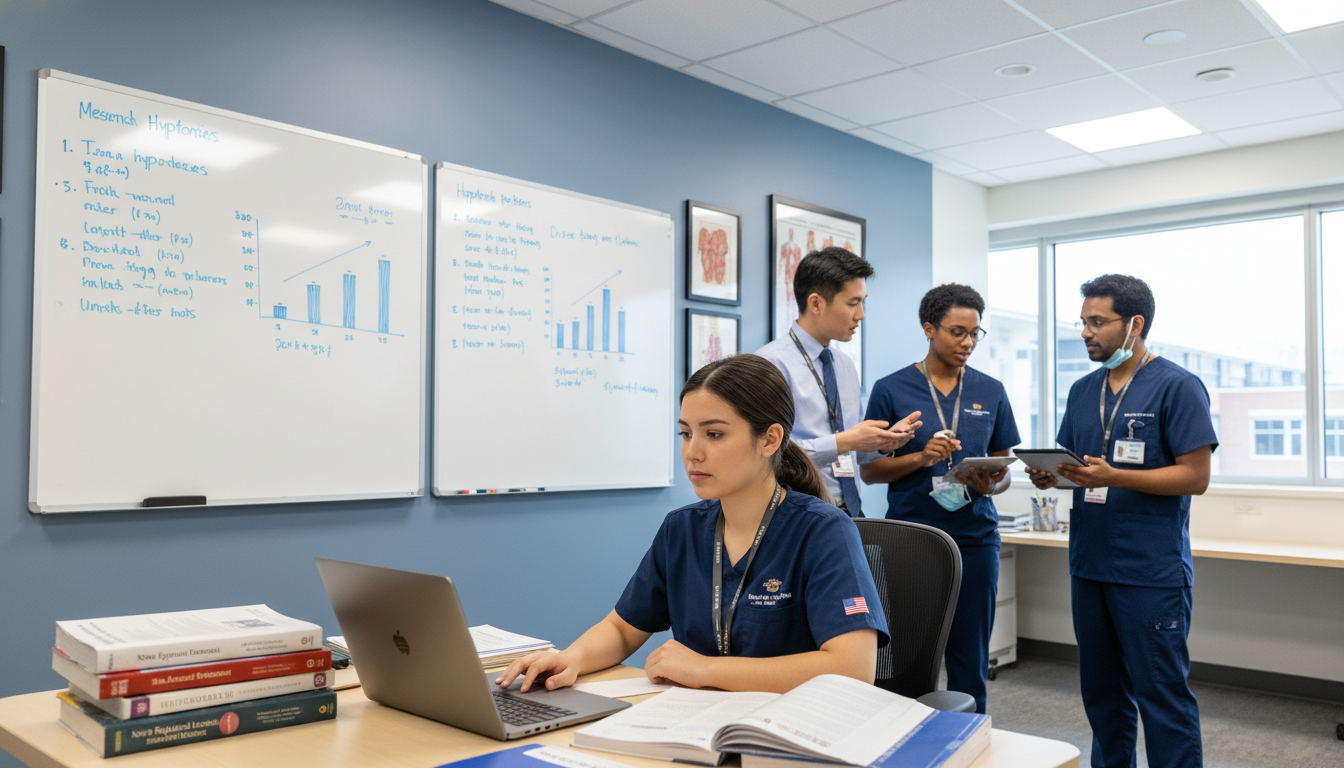
For Caribbean international medical graduates (IMGs), residency is not just about learning clinical skills—it is also a critical time to build a scholarly foundation that can define your career trajectory. In addiction medicine, where evidence is rapidly evolving and stigma remains high, being involved in research during residency can:
- Strengthen your competitiveness for an addiction medicine fellowship
- Demonstrate your ability to practice evidence-based care
- Compensate for perceived disadvantages of being a Caribbean medical school graduate
- Open doors to academic residency tracks and future educator roles
- Position you as a leader in substance abuse training and program development
Whether you’re coming from an institution like SGU (St. George’s University) and thinking about how an SGU residency match can set you up for research, or you trained at another Caribbean medical school and are now in U.S., Canadian, or UK training, your engagement in research during residency can be a powerful equalizer.
This article will walk you step-by-step through how to understand the research landscape in addiction medicine, find opportunities, build projects, and leverage your work for fellowship and long-term career advancement.
Understanding the Role of Research in Addiction Medicine
Addiction medicine is a young, rapidly expanding specialty where research directly shapes both policy and bedside care. Knowing where research fits helps you target your efforts.
Key Domains of Addiction Medicine Research
Common areas of addiction-related research that residents can realistically engage in include:
Clinical outcomes research
- Comparing medications for opioid use disorder (MOUD) such as buprenorphine vs methadone
- Evaluating relapse rates after inpatient vs outpatient detox
- Studying outcomes of integrated care models (primary care + addiction)
Health services and implementation research
- Impact of starting MOUD in the emergency department
- Evaluating screening, brief intervention, and referral to treatment (SBIRT) in primary care
- Assessing hospital protocols for alcohol withdrawal or overdose response
Quality improvement (QI) and patient safety
- Reducing delays in starting MOUD on admission
- Improving naloxone prescribing at discharge
- Increasing screening for alcohol and drug use in primary care clinics
Public health and policy research
- Harm reduction programs (syringe services, safe consumption sites)
- Criminal justice and addiction: diversion programs, drug courts
- Stigma, bias, and access to treatment among marginalized groups
Education and training research
- Evaluating new substance abuse training curricula for residents or medical students
- Studying stigma reduction workshops
- Assessing competency-based addiction medicine training
For a Caribbean IMG, these domains are ideal because many resident research projects can be built directly from clinical experiences, QI initiatives, or educational efforts without needing large external grants.
Why Research Is Especially Important for Caribbean IMGs
Caribbean graduates often feel they have more to prove. Research helps in several ways:
Differentiation in fellowship applications
Addiction medicine fellowships are competitive in high-demand locations. Research involvement shows initiative, curiosity, and long-term commitment to the field.Addressing program director concerns
Some programs may be unfamiliar with your Caribbean medical school. A research track record and publications demonstrate you can perform at or above peers from U.S. schools.Evidence of academic potential
If you’re interested in an academic residency track or future faculty position, research is often a key requirement.Building your narrative
For personal statements and interviews, a coherent story linking your clinical interests, research experiences, and career goals is compelling—especially in addiction medicine, where many applicants have a personal or community connection to the field.

Finding and Creating Research Opportunities in Residency
You do not need a formal research track to be productive. Even if your program is small, there are ways to build meaningful scholarship.
Step 1: Map the Research Environment in Your Program
Start by answering:
- Is there a director of research, QI champion, or scholarly activity lead?
- Does your program have:
- An addiction consult service?
- A psychiatry or addiction medicine division?
- A public health or population health department?
- A medical education office or center?
Look for:
- Faculty with addiction interest (even if not formally addiction-trained):
- Hospitalists who run alcohol withdrawal protocols
- ED physicians starting buprenorphine
- Psychiatrists managing dual diagnosis
- Primary care physicians in MAT clinics
Review department and hospital websites to identify:
- Ongoing projects
- Recent publications
- Existing resident research projects you might join
As a Caribbean IMG, proactively introducing yourself and expressing interest is essential. Many faculty are open to involving motivated residents in their work.
Step 2: Leverage Your Background as a Caribbean IMG
Your Caribbean training can be a strength:
- You may have exposure to different drug-use patterns (e.g., alcohol, cannabis, prescription misuse, synthetic drugs) across islands.
- You may have experience navigating limited-resource settings, which is valuable for public health and implementation research.
- You may bring unique cultural insights into stigma, family dynamics, and help-seeking behaviors.
Potential angles:
- Comparative perspectives: “How opioid prescribing practices differ between U.S. and Caribbean settings”
- Cultural aspects: “Stigma and help-seeking among Caribbean immigrants with substance use disorders”
- Access issues: “Barriers to addiction treatment in immigrant and uninsured populations”
These can be transformed into qualitative projects, surveys, or literature reviews.
Step 3: Identify Project Types That Fit a Busy Resident Schedule
You are time-limited; choose project types that align with residency realities.
High-yield, feasible project types:
Case reports and case series
- E.g., unusual presentations of substance-induced psychosis, complex polysubstance overdoses
- Quick to produce; great entry point for publications
Retrospective chart reviews
- E.g., characteristics of patients started on buprenorphine in your ED
- Addiction-related readmissions or AMA discharges
- Alcohol withdrawal outcomes before and after a new protocol
Quality improvement projects
- E.g., increasing naloxone prescriptions at discharge
- Improving screening for unhealthy alcohol use
- Often fulfills ACGME scholarly activity requirements and can be turned into abstracts and manuscripts
Educational projects
- Designing and evaluating a short curriculum on addiction for interns or medical students
- Workshop on managing opioid use disorder for primary care residents
- These can be written up as medical education research
Secondary data analysis
- Using existing EMR data, institutional registries, or publicly available databases
- Requires some statistics support but can be very impactful
If your residency has a formal academic residency track, it may offer protected time, mentors, and structured support; if not, you can recreate many of these advantages by building your own informal “track” with a mentor.
Designing and Executing a Resident Research Project in Addiction Medicine
Once you’ve identified an area of interest, follow a structured approach.
1. Narrow and Define Your Research Question
Use the FINER criteria (Feasible, Interesting, Novel, Ethical, Relevant):
Instead of:
“Substance use among hospitalized patients”
Refine to:
“What proportion of general medicine inpatients are screened for unhealthy alcohol use at admission, and what factors predict failure to screen?”
Or:
“Does initiation of buprenorphine in the ED reduce 30-day readmissions among patients with opioid use disorder?”
For Caribbean IMGs, consider questions where your perspective adds value, e.g., disparities by language, ethnicity, or immigration status.
2. Find a Mentor and Build a Small Team
A strong mentor relationship often matters more than the perfect project idea.
Ideal mentor characteristics:
- Active or recent involvement in addiction-related work
- Publication history or experience presenting at conferences
- Willingness to meet briefly but regularly (even 30 minutes monthly)
- Supportive of resident-led initiatives
Team members can include:
- Co-residents (including other Caribbean IMGs)
- A statistician or epidemiologist (often through a research office)
- Medical students interested in addiction medicine
- Nursing or pharmacy colleagues, especially for QI projects
3. Understand IRB and Ethics Requirements
Almost all research involving patient data requires IRB (Institutional Review Board) review, even if “exempt.”
Common IRB pathways for residents:
- Case reports: May not require full IRB; many institutions have a simplified path
- QI projects: Sometimes considered non-research, but you should formally confirm
- Retrospective chart reviews: Usually expedited review
Action steps:
- Ask your mentor or program coordinator for your institution’s IRB process guide
- Start IRB early; approval can take weeks to months
- As a Caribbean IMG, make sure to clarify how data use and authorship are handled if you are on a J-1 or H-1B visa (usually no problem, but worth confirming)
4. Plan Your Methods and Data Collection
Be meticulous; clear methods will make writing and publication much easier.
For a retrospective chart review on ED buprenorphine initiation, define:
- Inclusion criteria (e.g., all adult patients with ICD-10 codes for opioid use disorder seen in ED between 2022–2024)
- Exclusion criteria (e.g., incarcerated patients, incomplete charts)
- Variables:
- Demographics (age, sex, race/ethnicity, insurance, immigration status if available)
- Clinical: overdose history, co-occurring psychiatric disorders, housing status
- Outcomes: initiation of buprenorphine, follow-up visits, 30-day ED visits or admissions
Use a standardized data collection tool (Excel, REDCap, or institutional database tools).
5. Analyze and Interpret Results
If you have limited statistical experience:
- Start with descriptive statistics (means, medians, proportions)
- Use simple comparisons (chi-square, t-tests) with help from a statistician
- Focus on clinically meaningful findings, not just p-values
Interpret your results within the context of:
- Existing addiction medicine literature
- Unique aspects of your patient population (e.g., high proportion of immigrants, language barriers)
- Limitations: sample size, single-center, retrospective design
Turning Your Work into Presentations, Publications, and Career Capital
Research only becomes visible when you disseminate it. This is where many residents, especially busy IMGs, fall short.
Presenting at Conferences
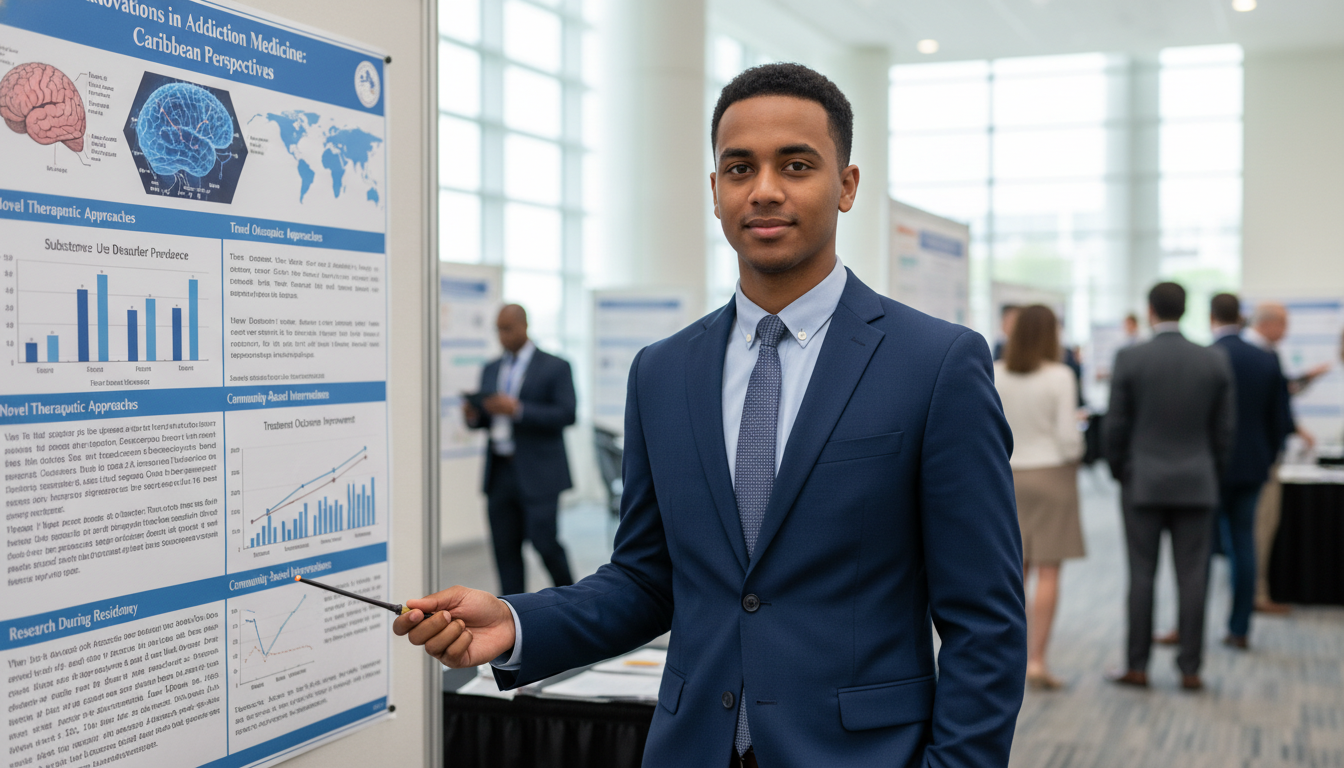
Aim to present at least one project regionally or nationally during residency.
Target conferences for addiction medicine:
- American Society of Addiction Medicine (ASAM)
- American Academy of Addiction Psychiatry (AAAP)
- Society of General Internal Medicine (SGIM) – addiction sessions
- American Psychiatric Association (APA) – substance use sections
- Local/state addiction or public health conferences
Tips:
- Many meetings offer resident discount rates and sometimes travel scholarships.
- Start with an abstract (often 250–400 words) summarizing background, methods, results, and conclusion.
- Poster presentations are more accessible than oral presentations and still valuable on a CV.
Publishing Your Work
For residents, realistic publication formats include:
- Case reports/case series (e.g., atypical substance-induced conditions)
- Brief reports (small QI projects or pilot data)
- Original research articles (for more substantial projects)
- Educational innovations in addiction training
Potential journal types:
- Addiction medicine or psychiatry journals
- General internal medicine or hospital medicine journals
- Medical education journals (for training-related projects)
Work with your mentor to:
- Choose appropriate journals (balance impact factor vs. acceptance likelihood)
- Respond to reviewer feedback
- Avoid predatory journals that charge high fees with minimal peer review
For Caribbean IMGs, each peer-reviewed publication can significantly elevate your perceived academic strength.
Linking Research to Addiction Medicine Fellowship Applications
When you apply for an addiction medicine fellowship, program directors will look for:
- Consistent clinical exposure to patients with substance use disorders
- Evidence of focused interest (electives, rotations, SBIRT work, advocacy)
- Scholarly output: abstracts, posters, manuscripts, curriculum projects
Use your research to:
Craft a compelling personal statement:
- Describe how your project exposed you to systemic barriers in addiction care.
- Show how your interest evolved from single cases to system-level questions.
Support your letters of recommendation:
- Ask your research mentor to highlight your initiative, perseverance, and ability to complete scholarly work.
Demonstrate fit with fellowships that emphasize resident research projects or offer an academic residency track toward future faculty roles.
Balancing Research With Clinical Duties as a Caribbean IMG
Time is your scarcest resource. Balancing research with call, clinic, exams, and life can be challenging, especially if you feel the need to “overperform” as an IMG.
Practical Time-Management Strategies
Start small and early
A well-designed case series early in PGY-2 can be worth more than a large project that never finishes.Use low-intensity time blocks
- 20–30 minute windows for literature searches or drafting sections
- Post-call afternoons for low-cognitive tasks like formatting references
Batch your work
- Set aside one protected half-day every 1–2 weeks, if your program allows it
- Coordinate with your mentor so those blocks are productive and focused
Track progress
- Maintain a simple project tracker with milestones: IRB submitted, data collected, analysis complete, abstract submitted, manuscript drafted.
Managing Stress and Avoiding Burnout
Addiction medicine can be emotionally intense; pairing that with research can increase stress.
Protect yourself by:
- Being realistic about capacity—one solid project is better than five abandoned ones.
- Choosing topics that energize you rather than drain you (e.g., stigma reduction, improving access, educational interventions).
- Seeking peer support, especially from fellow Caribbean IMGs who understand your unique pressures.
Integrating Research Into a Long-Term Career in Addiction Medicine
Research during residency is not just about a line on your CV; it can shape your career identity.
Academic vs. Community Paths
If you’re drawn to an academic career:
- Seek out an academic residency track if available or build a de facto track by:
- Engaging in multiple projects over residency
- Taking responsibility for manuscript writing
- Teaching medical students using what you’ve learned from your research
If you prefer community practice:
- Focus on QI and implementation projects that directly improve clinical systems.
- Use your research to advocate for:
- Expanded access to MOUD
- Harm reduction services
- Integration of addiction care into primary care or hospital settings
Building a Thematic Niche
Over time, try to align your projects around a coherent theme, such as:
- Stigma and access among immigrant populations
- Hospital-based addiction consult services
- Integrated care models for co-occurring psychiatric and substance use disorders
- Education and substance abuse training for non-addiction clinicians
This allows you to present yourself as “the person who works on X,” which is more memorable to fellowship directors, hiring committees, and collaborators.
FAQs: Research During Residency for Caribbean IMGs in Addiction Medicine
1. I’m in a small community program with no addiction medicine faculty. Can I still do meaningful research?
Yes. Start with projects that don’t require large teams or specialized labs, such as QI, case series, or retrospective chart reviews on alcohol withdrawal, overdose, or opioid prescribing. Look for remote mentors through professional societies (ASAM, AAAP) or your medical school alumni network—many SGU residency match alumni and other Caribbean-trained physicians are willing to mentor from a distance.
2. How much research do I need for an addiction medicine fellowship?
There is no fixed requirement. One or two well-executed projects—especially if they lead to a poster or publication—can significantly strengthen your application. Programs value consistency and follow-through more than sheer number of projects. Quality over quantity is especially true if you can clearly articulate how your research ties into your commitment to addiction medicine.
3. I have limited research experience from my Caribbean medical school. How do I build skills quickly?
Start with manageable projects (case reports, QI) and learn by doing. Ask your mentor to walk you through the basics of study design, IRB, and data analysis. Take advantage of:
- Online courses (Coursera, edX) in biostatistics and research methods
- Institutional workshops on resident research or QI
- Templates from prior resident projects in your program
With each project, your skills and confidence will grow.
4. Does research during residency really matter if I just want to work clinically in addiction medicine?
Yes, but in a different way. Even if you don’t aim for an academic career, research and QI help you:
- Understand the evidence behind treatments like buprenorphine and methadone
- Improve systems in your future clinic or hospital
- Advocate effectively for policy changes and resources
You don’t need a long list of publications, but having at least one solid project and an understanding of basic research principles will make you a more effective and respected clinician-leader in addiction medicine.
By approaching research during residency strategically—leveraging your unique Caribbean IMG perspective, choosing feasible projects, and working closely with supportive mentors—you can transform scholarly activity into a powerful tool for building a meaningful, impactful career in addiction medicine.