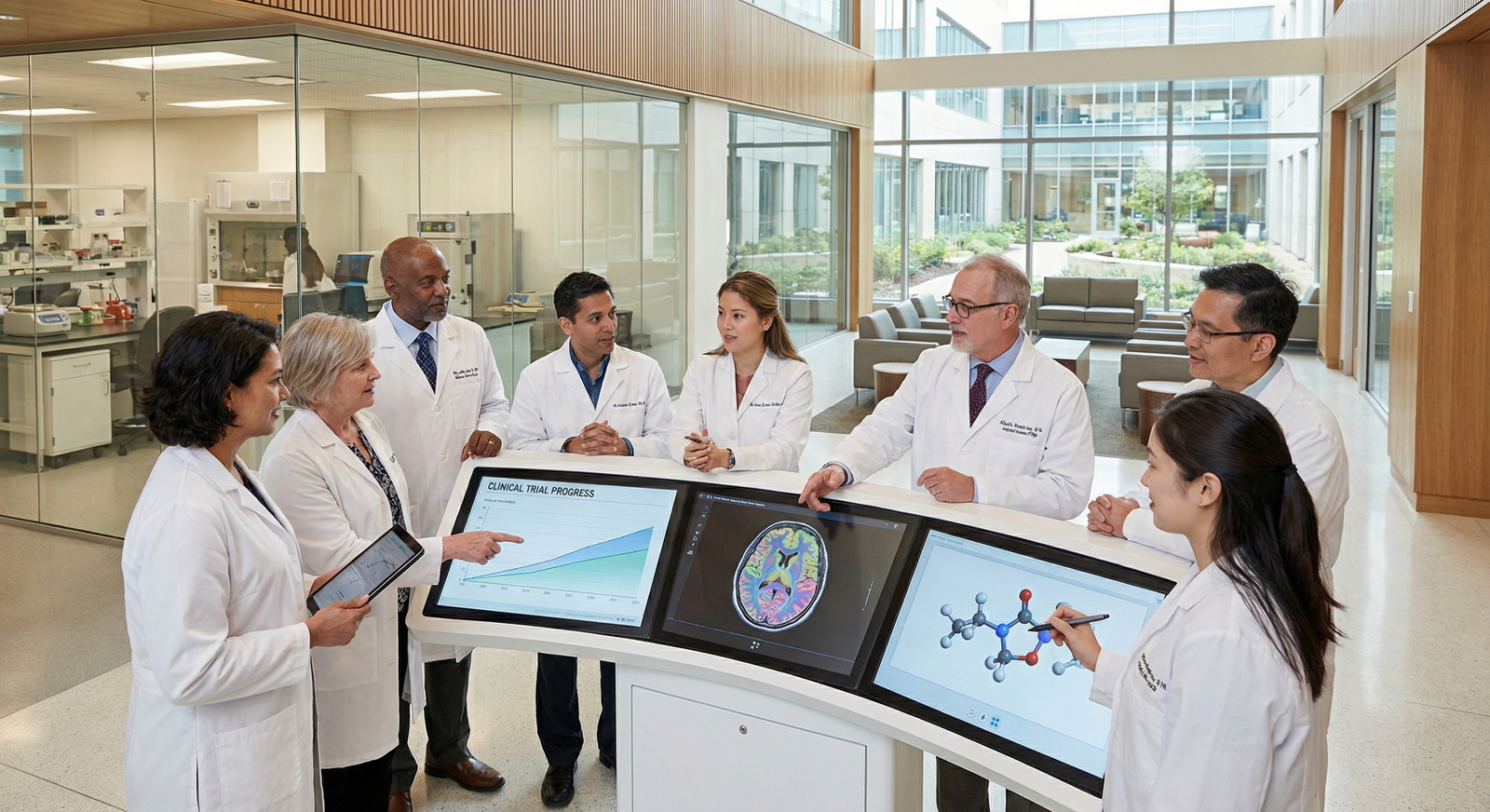
Why Research During Addiction Medicine Residency Matters
Research during residency in addiction medicine is more than an academic checkbox—it’s one of the most powerful ways to shape your career, influence policy, and improve care for people with substance use disorders (SUDs). Whether you plan to enter community practice or pursue an addiction medicine fellowship and an academic career, developing research skills early opens doors you may not even see yet.
Addiction medicine sits at the intersection of internal medicine, psychiatry, public health, and social policy. The field is rapidly evolving:
- New pharmacologic treatments and behavioral interventions appear regularly
- Harm reduction strategies and public health approaches are shifting
- Stigma, health inequities, and social determinants of health remain major barriers
Participating in research during residency allows you to:
- Contribute to evidence that directly impacts patient care
- Learn to critically appraise literature in a field with rapidly changing evidence
- Build a track record that strengthens applications to an addiction medicine fellowship
- Position yourself for an academic residency track or early-career junior faculty roles
Importantly, “research” doesn’t only mean bench science or large randomized trials. In addiction medicine, meaningful resident research projects often focus on:
- Clinical outcomes (e.g., treatment retention, overdose prevention)
- Quality improvement (QI) in SUD treatment access and continuity
- Implementation science (e.g., integrating medications for opioid use disorder into primary care)
- Health services research and policy evaluation
Understanding the landscape and opportunities early in residency is crucial—especially because timelines are tight and competition for mentorship and funding can be real.
Types of Research Projects Suitable for Addiction Medicine Residents
You do not need formal research training or an MPH to get started. Choosing the right type of project that matches your skills, interests, and time constraints is the key.
1. Clinical Research in Addiction Medicine
Clinical research examines how best to diagnose, treat, and manage patients with SUDs.
Common resident-friendly clinical projects:
Retrospective chart reviews
- Example: Comparing treatment retention for patients started on buprenorphine in the emergency department vs primary care clinic.
- Feasible because data already exist in the electronic health record (EHR).
- Often appropriate for newcomers to research.
Prospective observational studies
- Example: Following a cohort of patients admitted for alcohol withdrawal to evaluate predictors of early relapse after discharge.
- Requires some planning and IRB approval but can provide high-impact, real-world data.
Clinical screening or brief intervention studies
- Example: Studying the effect of a standardized screening tool (e.g., AUDIT-C, DAST) integrated into a general medicine clinic visit.
These projects are particularly valuable if you aim for an addiction medicine fellowship or a future academic residency track, because they demonstrate competency in hypothesis-driven work and data analysis.
2. Quality Improvement (QI) and Implementation Projects
QI and implementation projects are especially well-suited for the busy resident and often align with accreditation requirements.
Common QI topics:
- Increasing the rate of SUD screening on inpatient admissions
- Improving linkage to outpatient addiction treatment at discharge
- Implementing routine naloxone prescribing for high-risk patients
- Increasing use of medications for opioid use disorder in primary care or inpatient services
Example project:
You identify that only 10% of inpatients with opioid use disorder are discharged with buprenorphine prescriptions. You design and implement a protocol where residents receive EHR best-practice alerts and standardized order sets for buprenorphine and naloxone. You then compare prescribing rates before and after the intervention.
QI projects often use Plan-Do-Study-Act (PDSA) cycles and can be completed within a few months. They are excellent for residents who want to improve local care and still produce presentable scholarly work (posters, abstracts, or even publications).
3. Health Services, Policy, and Population Health Research
Addiction medicine is deeply intertwined with public policy, insurance coverage, criminal justice, and social services. Residents with an interest in advocacy, public health, or systems-level change are often drawn to:
- Health services research
- Example: Evaluating the impact of Medicaid expansion on access to medications for opioid use disorder.
- Policy evaluations
- Example: Examining local overdose rates before and after the opening of a syringe services program.
- Epidemiologic analyses using state or national databases
- Example: Using a statewide prescription monitoring database to study trends in prescribed opioids and overdose deaths.
These projects can require statistical support and more complex data sources, but they are powerful for applicants targeting an academic residency track or future careers in policy-oriented addiction medicine.
4. Medical Education Research in Addiction Medicine
If you enjoy teaching, educational research can be both feasible and impactful.
Potential ideas:
- Evaluating a new curriculum on managing opioid use disorder in primary care residents
- Studying the effect of simulation-based training for overdose response and naloxone distribution
- Assessing changes in trainee attitudes toward patients with SUDs after a dedicated addiction medicine rotation
These projects often use pre/post surveys, objective structured clinical examinations (OSCEs), or knowledge assessments. They are well-suited for residents who work closely with clerkship, residency, or fellowship leadership.
5. Basic or Translational Science (Less Common but Possible)
A smaller subset of residents participate in:
- Neurobiology of addiction research
- Genetic or molecular correlates of SUD vulnerability
- Translational research focused on new pharmacotherapies
This path typically requires access to a lab, prior research experience, and a supportive program that can provide protected time. It’s more common in physician-scientist pathways or dedicated research residencies.
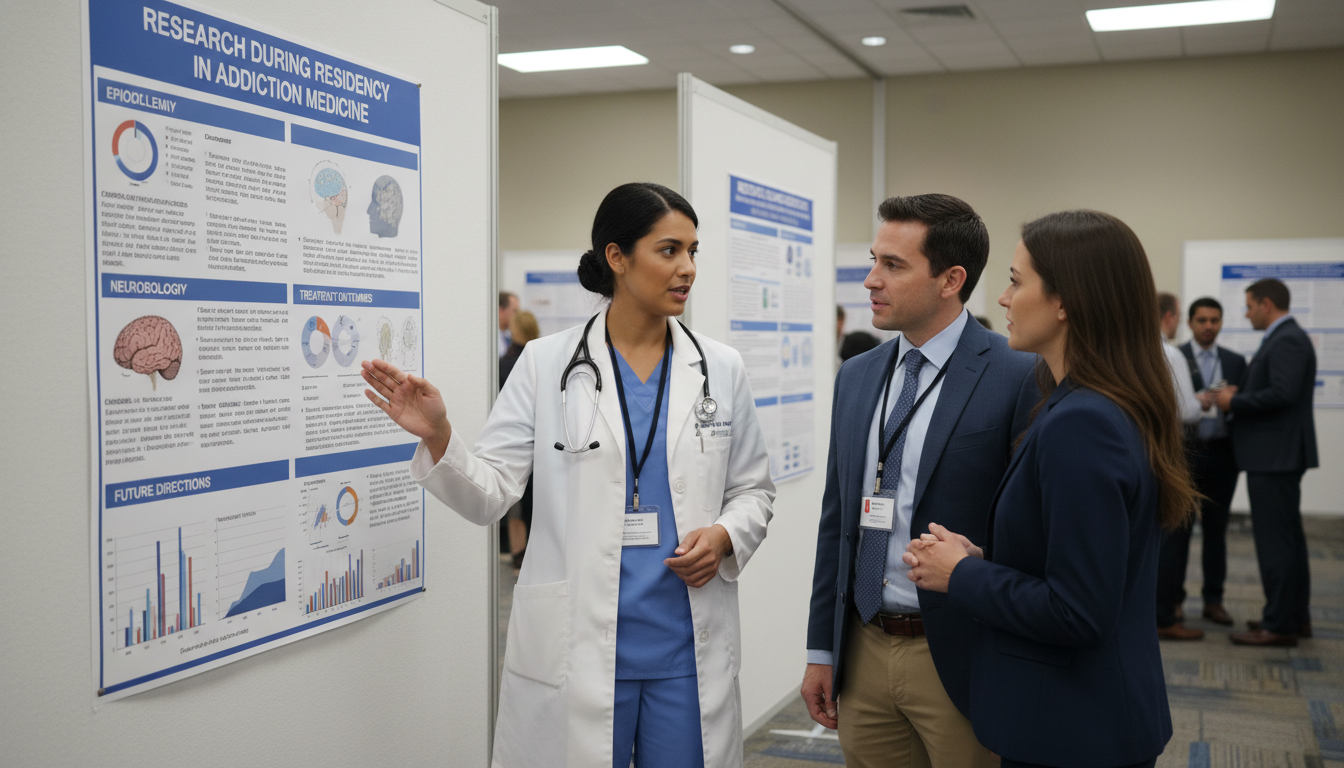
Finding Mentorship, Resources, and the Right Environment
Your success in research during residency hinges on mentorship and environment as much as personal motivation.
Identifying the Right Mentor
Look for mentors with:
Content expertise in addiction medicine
- Board-certified in addiction medicine or addiction psychiatry
- Active clinical work with SUD populations
A track record of scholarly productivity
- Recent publications or conference presentations
- Existing ongoing projects that residents can join
Experience working with trainees
- Previous mentees who have published or presented
- Clear expectations and supportive communication style
You may not find all three attributes in a single person. Consider building a mentoring team:
- A primary addiction medicine mentor (clinical content expert)
- A research methodologist or biostatistician
- A career mentor (e.g., program director, academic faculty)
Practical steps:
- Review your institution’s addiction medicine faculty profiles and recent publications.
- Ask your program director or chief residents which faculty actively mentor resident research projects.
- Attend addiction medicine or SUD-focused conferences, grand rounds, and journal clubs to observe potential mentors in action.
- Send a concise email (2–3 paragraphs) outlining:
- Your background and current PGY year
- Your interests in addiction medicine fellowship or related career goals
- Specific ideas or willingness to join existing projects
- Your time frame (e.g., hope to complete a project within the next 18–24 months)
Leveraging Institutional Resources
Common resources within academic medical centers:
Clinical and Translational Science Institutes (CTSI) that offer:
- Biostatistics support
- Grant-writing workshops
- Pilot funding for resident research projects
Office of Graduate Medical Education (GME) or Research Offices:
- Competitive resident research grants
- Protected research electives
- Internal resident research day for presentations
Libraries and librarians:
- Assistance with literature searches
- Reference management (EndNote, Zotero)
- Help with systematic or scoping reviews
If you are in a smaller or community-based program, consider:
- Partnering with nearby academic centers or addiction medicine fellowship programs
- Remote collaborations using virtual meetings and data-sharing agreements
- Joining national networks focused on addiction research (e.g., CTN-type networks, depending on your region)
Choosing a Program or Track that Supports Research
For medical students or early residents considering a transfer, evaluating the research climate is critical.
Key signals of a strong environment for research during residency:
Explicit academic residency track with:
- Dedicated research curricula
- Protected time in PGY2–PGY3 years
- Structured mentorship programs
Visible resident involvement in:
- Addiction medicine publications or conference abstracts
- Institutional SUD or overdose task forces
- Community-engaged addiction projects
Existence of an addiction medicine fellowship at the same institution:
- Often correlates with stronger faculty engagement and more ongoing projects
- Provides a pipeline for continuation of resident research into fellowship
When interviewing, ask specifically:
- “What proportion of residents participate in research, and in what areas?”
- “What support exists for resident research projects in addiction medicine?”
- “Are there residents who have recently matched into an addiction medicine fellowship, and did research play a role?”
Designing and Executing a Feasible Resident Research Project
Ambition is important—but feasibility is everything. Your time and bandwidth are limited, especially in busy clinical years.
Step 1: Define a Focused Research Question
Use frameworks like PICO (Population, Intervention, Comparison, Outcome) for clinical questions, or SQUIRE/QI templates for quality improvement work.
Examples of well-structured questions:
Clinical: “Among hospitalized adults with opioid use disorder (P), does initiation of buprenorphine during admission (I) compared with referral only (C) improve 30-day follow-up engagement in addiction treatment (O)?”
QI: “Does implementing a standardized discharge checklist that includes naloxone prescribing (I) increase the proportion of high-risk patients with take-home naloxone at discharge (O) over six months (T)?”
Your mentor can help refine the question to something that’s both meaningful and manageable.
Step 2: Match the Design to Your Time Frame
Rough feasibility guideline for a resident:
- Small QI project: ~3–6 months (enough for a poster or internal presentation)
- Retrospective chart review: ~6–12 months (suitable for poster + manuscript)
- Prospective cohort or intervention study: ~12–24 months (often extends into senior residency or fellowship)
Design choices should consider:
- Expected sample size given your setting
- Complexity of the necessary data extraction
- Availability of data analysts or biostatisticians
- Institutional Review Board (IRB) timelines
Step 3: Navigate IRB and Regulatory Processes
Many residents are intimidated by the IRB, but your mentor and institutional templates can streamline this.
Common pathways:
Exempt or expedited review for minimal-risk projects like:
- Retrospective chart reviews with de-identified data
- Some educational or survey-based studies
QI vs research distinction:
- True QI may not require formal IRB approval if intended solely for internal improvement.
- However, if you anticipate publishing your results, many institutions still recommend some IRB involvement or determination letter.
Start the IRB process early—often as soon as you have a clear question, design, and data source.
Step 4: Data Collection and Management
Key practical tips:
Work closely with your IT or EHR analytics team to create data pulls.
Use secure, institution-approved platforms such as REDCap for:
- Data entry
- Surveys
- Longitudinal follow-up
Predefine variables and a basic data dictionary:
- Variable names, types, and allowed values
- Definitions of key outcomes (e.g., “treatment retention” = at least one visit within 30 days of discharge)
Keep patient privacy and HIPAA compliance central:
- De-identify data whenever possible
- Restrict access to minimal necessary personnel
Step 5: Basic Analysis and Interpretation
You are not expected to become a biostatistician during residency, but you should understand core concepts enough to interpret results.
Common analytical approaches for resident projects:
- Descriptive statistics (means, medians, proportions)
- Chi-square or Fisher’s exact tests for categorical variables
- t-tests or nonparametric alternatives for continuous variables
- Simple logistic or linear regression with guidance from a statistician
Aim to understand:
- Magnitude and direction of the effect (not just p-values)
- Potential confounders and limitations
- Clinical, educational, or systems-level relevance of your findings

Turning Your Work Into Presentations, Publications, and Career Capital
Your project becomes truly valuable—both for the field and your career—when you disseminate it.
Presenting Your Resident Research Projects
Typical venues for addiction medicine research during residency:
Local/institutional:
- Resident research day
- Department grand rounds
- Division seminars (e.g., general internal medicine, psychiatry, public health)
Regional and national conferences, such as:
- American Society of Addiction Medicine (ASAM)
- American Academy of Addiction Psychiatry (AAAP)
- Society of General Internal Medicine (SGIM)
- American College of Physicians (ACP) or AMA meetings
Submitting an abstract:
- Work with your mentor to identify conferences 6–12 months in advance.
- Abstracts are often 250–400 words, focused on:
- Background (1–2 sentences)
- Methods (2–3 sentences)
- Results (even preliminary data are helpful)
- Conclusions and implications
A poster or oral presentation is a strong talking point for interviews—particularly for addiction medicine fellowship and faculty positions.
Publishing Your Work
For many residents, the target is:
- One to two peer-reviewed publications or accepted manuscripts by the end of residency, ideally with first- or second-author status.
Types of publications:
- Original research articles (e.g., clinical, QI, policy)
- Brief reports or research letters (suited for smaller datasets)
- Educational innovations or curriculum descriptions
- Case series related to novel aspects of SUD care
Journal options (examples; specifics change over time):
- Addiction and addiction medicine–specific journals
- General medicine or psychiatry journals with SUD sections
- Journals focused on medical education or health services research
Your mentor can advise on journal fit, authorship, and responding to peer-review feedback.
How Research Supports an Addiction Medicine Fellowship Application
Strong evidence of research during residency signals:
- Commitment to addiction medicine
- You chose to focus your scholarly efforts on SUDs.
- Ability to complete projects
- You can see work through IRB, data collection, and dissemination.
- Academic potential
- Programs aiming to train clinician–scholars weigh this heavily.
In fellowship interviews, you should be ready to:
- Clearly explain your project question, methods, and key findings
- Reflect on challenges (e.g., recruitment, data quality) and how you adapted
- Describe how this experience shapes your future research interests
Building a Long-Term Research Identity
Use residency to explore and define your emerging niche, for example:
- “Hospital-based addiction consultation and transitions of care”
- “Integrated primary care–addiction medicine models”
- “Telehealth and digital interventions for SUDs”
- “Stigma and health inequities in addiction treatment”
- “Medical education and faculty development in addiction medicine”
This evolving narrative helps you:
- Select appropriate addiction medicine fellowships and mentors
- Apply for early-career grants or K-type awards later on
- Fit naturally into an academic residency track or clinician–researcher role
Balancing Research With Clinical and Personal Demands
Time is the main barrier to research during residency. Realistic strategies are essential.
Protecting Time and Setting Boundaries
Clarify expectations early with your mentor:
- How many hours per week can you realistically commit?
- Which rotations are best suited for research time?
Identify “high-yield” blocks:
- Electives
- Ambulatory months
- Night float schedules that create day-time flexibility
Use micro-time:
- 30–60 minutes between admissions to edit an abstract
- Early-morning or weekend blocks for focused writing
Avoiding Overcommitment
Common pitfalls:
- Joining too many projects, then failing to complete any
- Being listed as a peripheral co-author on multiple projects without a central role
- Choosing overly ambitious designs requiring large samples and complex interventions
Aim for one primary addiction medicine research project with meaningful authorship, plus perhaps one or two smaller side roles.
Taking Care of Yourself
Research can be energizing, but it is also extra work layered onto an already demanding schedule.
- Be honest with mentors if burnout or personal issues arise.
- Use resident wellness resources; research productivity should not come at the cost of mental health.
- Recognize that longitudinal projects may reasonably extend into fellowship or early faculty years.
Frequently Asked Questions (FAQ)
1. Do I need prior research experience from medical school to succeed in research during residency?
No. Prior experience helps but is not required. Many residents start their first substantial study during residency. What matters most is finding a good mentor, picking a feasible project, and being consistent. Students who did research during medical school may advance a bit faster, but motivated residents can quickly acquire core skills in study design, basic statistics, and scholarly writing.
2. How early should I start if I’m interested in an addiction medicine fellowship?
Ideally, start exploring mentors and ideas in PGY1, and solidify a project by early PGY2. This timing allows:
- Data collection and preliminary analysis during PGY2–early PGY3
- Abstract presentations by late PGY2 or PGY3
- Manuscript submission before fellowship applications are due
If you are already in PGY3, it is still worthwhile to join an ongoing project; just be realistic about what you can complete in time for your fellowship application and prepare to continue the work into fellowship.
3. What if my residency program has limited addiction medicine faculty or no addiction medicine fellowship?
You still have options:
- Identify general internal medicine, psychiatry, or emergency medicine faculty doing SUD-related work.
- Seek external mentors through regional academic medical centers, professional societies, or virtual collaborations.
- Focus on practical resident research projects such as QI or implementation work that improve SUD care in your institution.
- Use your achievements to pursue an addiction medicine fellowship at a more research-oriented center, where you can deepen your scholarly work.
4. Is a research-heavy academic residency track necessary if I want to be a clinician focused on addiction medicine?
Not necessarily. Many outstanding addiction medicine clinicians have minimal formal research training. However, even for clinically focused careers, exposure to research during residency helps you:
- Interpret evidence and guidelines more critically
- Implement best practices in your own clinic or hospital
- Contribute to QI and institutional initiatives around SUD care
If you anticipate a future hybrid role (clinical plus teaching, leadership, or limited research), an academic residency track or active engagement in projects can be especially beneficial.
Research during residency in addiction medicine is a powerful lever—for your patients, for the field, and for your career. By choosing feasible projects, cultivating strong mentorship, and steadily building skills in study design and dissemination, you position yourself to contribute meaningfully to one of the most urgent areas of modern medicine, whether you ultimately practice in a community clinic, pursue an addiction medicine fellowship, or join the ranks of academic clinician–investigators.