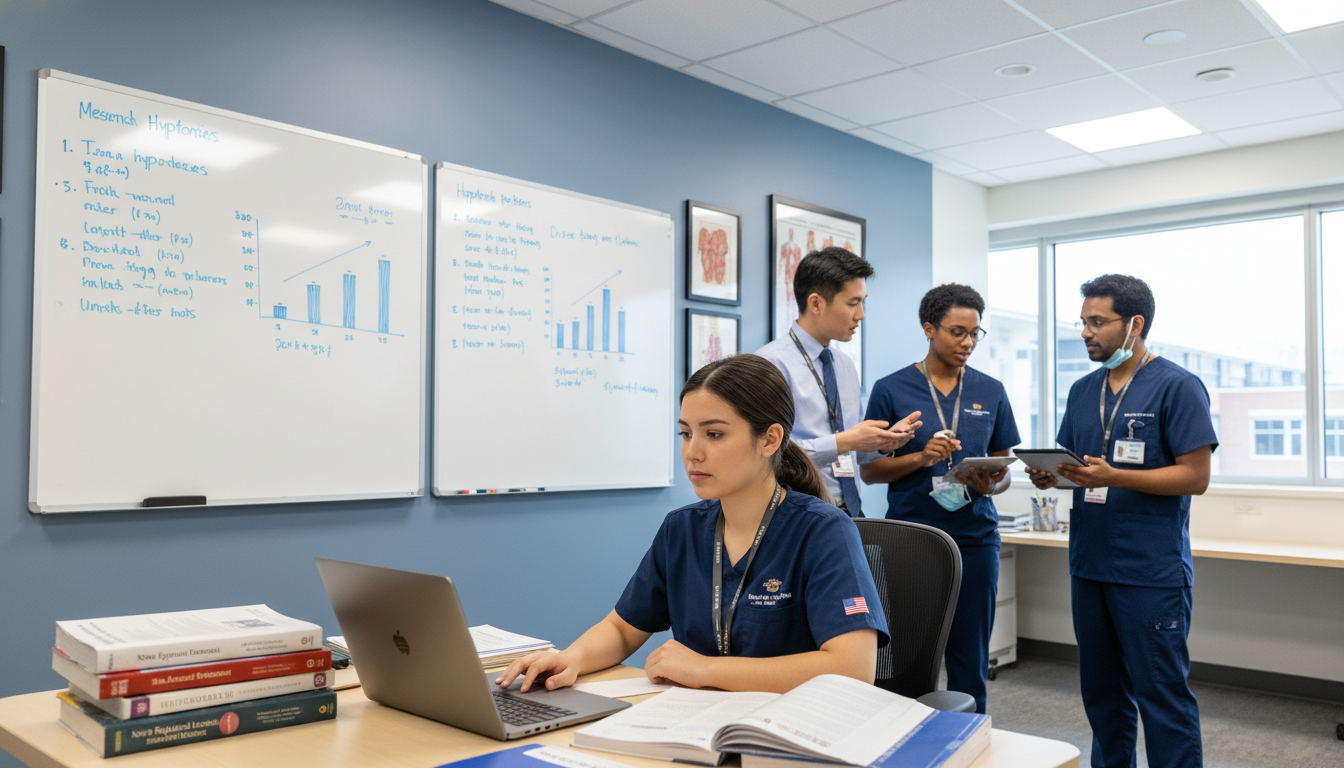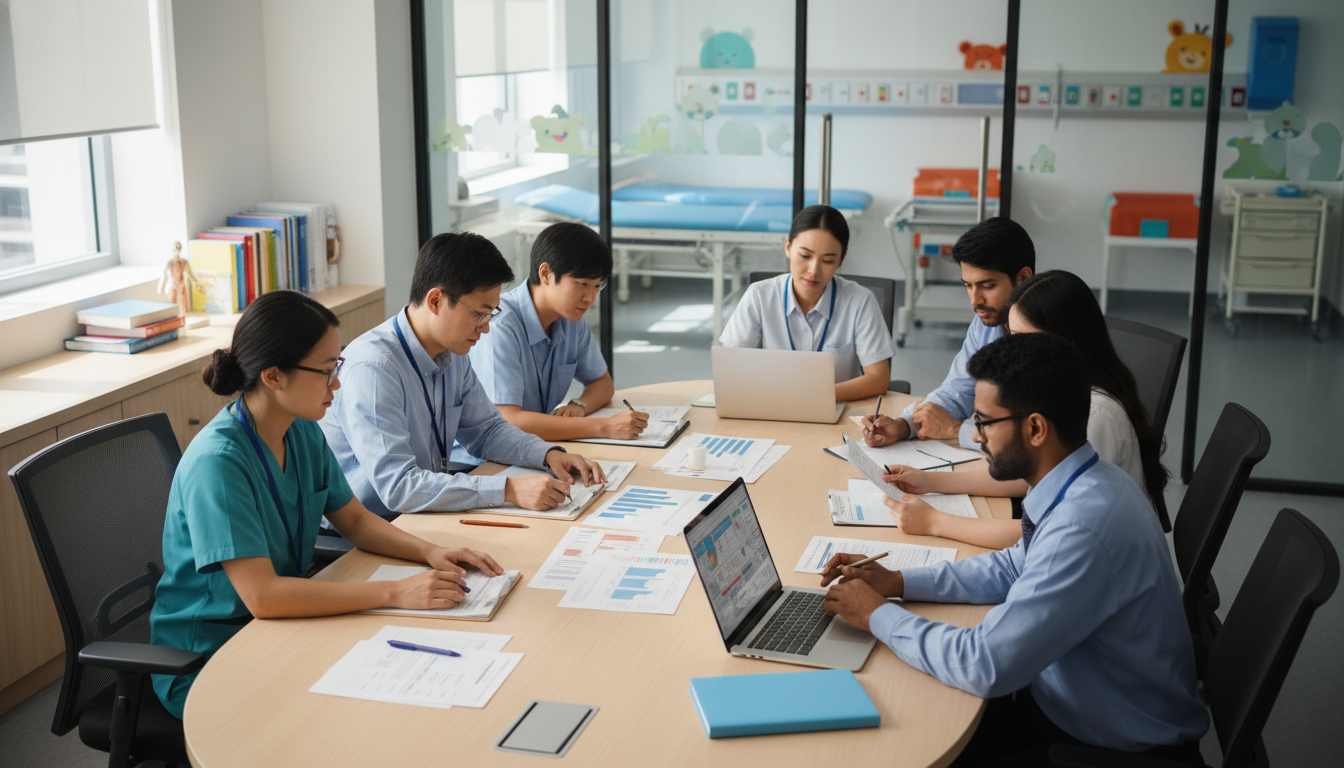
Why Research During Residency Matters for Caribbean IMGs in Heme-Onc
For a Caribbean international medical graduate (IMG) who dreams of becoming a hematologist-oncologist, research during residency is not optional—it is a strategic necessity.
Fellowship programs in hematology-oncology are among the most competitive internal medicine subspecialties. Program directors routinely screen applicants based on:
- Strength of internal medicine training
- Board scores and clinical performance
- Letters of recommendation from hematology-oncology faculty
- Evidence of sustained interest in the field
- And critically: research productivity and academic potential
If you are coming from a Caribbean medical school, residency program directors and future fellowship selection committees may not recognize your medical school name as readily as U.S. MD or DO schools. That is where research during residency becomes one of your most powerful equalizers.
Well-structured resident research projects can demonstrate:
- Intellectual curiosity and scientific thinking
- Commitment to hematology-oncology as a career
- The ability to complete long-term, complex work
- Skills in data analysis, writing, and presentation
- Readiness for an academic residency track or research-intensive heme onc fellowship
This is particularly important whether you are coming from programs like SGU, AUC, or Ross. An SGU residency match in internal medicine is a major milestone—but to convert that residency into a competitive oncology fellowship match later, you must use residency strategically to build a research portfolio.
In this article, you’ll learn how to:
- Plan a research strategy across all three years of internal medicine residency
- Find mentors and projects even in “community” programs with limited research
- Build a heme-onc–focused scholarly profile that programs will notice
- Overcome IMG-specific challenges in time, access, and resources
- Maximize your chances of matching into hematology-oncology fellowship
Understanding the Heme-Onc Fellowship Landscape as a Caribbean IMG
Hematology-oncology attracts residents who are drawn to complex medicine, longitudinal patient care, and rapidly evolving science. That scientific intensity is reflected in what fellowship programs value.
What Fellowship Programs Look For
Most heme onc fellowship programs—especially at academic centers—expect:
Demonstrated interest in hematology-oncology
- Heme/onc electives
- Clinic or inpatient rotations on malignant hematology, benign heme, or solid tumor services
- Tumor board participation
Evidence of scholarly activity
- Case reports or case series involving hematology or oncology
- Retrospective chart reviews
- Quality improvement (QI) projects related to cancer care
- Clinical research projects, even small ones
- Conference posters and oral presentations
- Peer-reviewed publications (strong plus, not mandatory at all programs)
Academic mindset
- Comfort with reading and applying literature
- Ability to function in an academic residency track if offered
- Openness to ongoing research during fellowship
For a Caribbean IMG, research accomplishes something additional: it reassures programs that you can perform at the same academic level as graduates from U.S. schools.
Why Heme-Onc Is Uniquely Research-Intensive
Hematology-oncology changes fast:
- New targeted therapies, immunotherapies, and cellular therapies are constantly emerging.
- Clinical trials drive day-to-day treatment decisions.
- Guidelines in leukemia, lymphoma, and solid tumors are updated frequently.
Programs expect future fellows to:
- Understand clinical trial design and statistics at a practical level.
- Be able to evaluate new evidence critically.
- Potentially participate in or lead research during fellowship.
Doing research during residency signals that you are comfortable in that environment—and that you can be productive in it.

Designing Your Research Strategy Across All Three Years of Residency
To be competitive for oncology fellowship match, you cannot wait until PGY-3 to think about research. You need a three-year plan.
PGY-1: Positioning Yourself and Entering Projects
Your PGY-1 year is overwhelming: new hospital system, notes, call schedules, rapid responses, long hours. You will feel like you have no time for anything else. That is exactly why you need a realistic strategy.
Main goals in PGY-1:
- Identify your niche within hematology-oncology.
- Find mentors and research-friendly attendings.
- Join existing resident research projects rather than starting from scratch.
- Get at least one small project moving (case report, QI, or retrospective review).
Practical steps:
Early in PGY-1 (first 3–4 months):
- Ask your chief residents or program leadership:
“Which faculty are active in hematology/oncology research and work with residents?” - Introduce yourself to those faculty via email or in person:
- Brief introduction (Caribbean IMG background, career interest in heme-onc).
- Short note on why you like the field.
- Ask for a brief meeting or virtual chat.
- Attend tumor boards or multidisciplinary conferences when on relevant rotations.
- Ask your chief residents or program leadership:
Middle of PGY-1:
- Ask potential mentors: “Do you have any ongoing resident research projects I can join?”
- Volunteer for well-defined tasks:
- Data collection from charts
- Literature review
- Figure creation for a poster
- Start at least one simple, low-barrier project, such as:
- Case report about a rare leukemia presentation
- Case of immune-related adverse events from checkpoint inhibitors
- Case series of thrombosis in cancer patients on DOACs
End of PGY-1:
- Aim to have:
- 1–2 case reports drafted or submitted
- Active involvement in a retrospective or QI project
- Ask mentors: “What can we realistically submit to a conference next year?”
- Aim to have:
Why case reports matter for you as a Caribbean IMG:
Case reports are not high-level research, but they:
- Are relatively quick and feasible
- Teach medical writing and literature review
- Offer poster opportunities
- Build a track record of completion
Add “hematology-oncology” to your titles and topics whenever appropriate to emphasize your specialty interest.
PGY-2: Building Depth and Productivity
PGY-2 is your critical research year. You are more efficient clinically and typically have elective time. This is your window to develop projects that will stand out in your fellowship application.
Main goals in PGY-2:
- Take on 1–2 substantial projects with measurable outcomes.
- Produce at least one poster and ideally a manuscript.
- Increase visibility through presentations.
Strategic moves:
Choose one “flagship” heme-onc project.
Examples:- Retrospective analysis of outcomes in patients with DLBCL treated at your center
- QI project to increase adherence to VTE prophylaxis in hospitalized oncology patients
- Evaluation of time-to-treatment for acute leukemia presentations
Use elective time wisely:
- Schedule a hematology-oncology elective plus a research elective if available.
- During these blocks:
- Finalize IRB submissions for your retrospective studies.
- Aggressively collect data and build your database.
- Work on abstracts and manuscripts while not on call.
Aim for conference submissions:
- Local or hospital research day
- State or regional ACP meeting
- Oncology-focused conferences (e.g., ASCO, ASH) if your mentor is active and your data is strong
Document everything:
- Keep a simple spreadsheet of:
- Project title
- Role (first author/co-author, data collection, manuscript writer)
- Status (in progress, submitted, accepted, published)
- Conference presentations
- Keep a simple spreadsheet of:
By the end of PGY-2, you should ideally have:
- 1–2 posters accepted or presented
- 1 manuscript submitted (even if not yet accepted)
- 2–4 total scholarly items (case reports, QI, small projects)
This level of productivity significantly strengthens your oncology fellowship match prospects, especially starting from a Caribbean medical school residency context.
PGY-3: Converting Work Into Applications and Matches
PGY-3 is about consolidation and showcasing.
Main goals in PGY-3:
- Finish ongoing projects and get them accepted or published.
- Present your work whenever possible.
- Integrate research into your fellowship application narrative.
Action points:
Early PGY-3: Fellowship application season
- Update your ERAS CV with every scholarly item.
- In your personal statement:
- Reference a few key research experiences that shaped your interest.
- Show how research deepened your understanding of hematology-oncology.
- Ask research mentors for strong, specific letters of recommendation.
Mid-late PGY-3:
- Continue to submit remaining manuscripts.
- If you are on an academic residency track:
- Clarify your long-term academic goals and discuss them at interviews.
- If fellowship match is delayed (e.g., applying in PGY-4):
- Maintain momentum with at least one ongoing project.
Remember: programs care less about the total number of lines on your CV than about the story they tell—consistent effort, focus on hematology-oncology, and increasing responsibility.
Finding Mentors, Projects, and Opportunities—Even in Less Academic Settings
Many Caribbean IMG graduates match into community or hybrid programs where robust research infrastructure may be limited. That does not mean you cannot be successful—it just means you must be strategic and proactive.
Identifying the Right Mentors
Ideal mentors for heme-onc–bound residents have at least one of these characteristics:
- Hematologist-oncologist on staff (particularly one affiliated with an academic center)
- Internal medicine faculty who publish or present regularly
- Hospitalists or intensivists involved in oncology-related research
- Pathologists or radiologists with interest in malignant disease
How to approach potential mentors:
Research them first:
- Look up their names on PubMed or Google Scholar.
- Check hospital websites for “publications” or “research interests.”
Email template you can adapt:
- Introduce yourself as a resident and Caribbean IMG.
- State your interest in hematology-oncology.
- Mention specific papers or topics they have worked on.
- Ask if they are open to discussing possible resident research projects.
Be clear about what you can offer:
- Time for chart review/data collection
- Help writing case reports or abstracts
- Enthusiasm and reliability
Mentors are more likely to work with residents who show initiative and follow through.
Types of Research You Can Realistically Do as a Resident
Not every program will support prospective trials, but most can support:
Case Reports and Case Series
- Example: “Severe thrombocytopenia following CAR-T therapy: A case report.”
- Hands-on exposure to unusual heme-onc issues.
- Often fastest path to publication for busy residents.
Retrospective Chart Reviews
- Example: “Outcomes of older adults with diffuse large B-cell lymphoma treated at a community cancer center.”
- Requires:
- IRB approval (often expedited review)
- Defined inclusion/exclusion criteria
- Data collection via EMR review
- Good way to learn about study design and basic statistics.
Quality Improvement (QI) Projects
- Example: “Improving timely initiation of anticoagulation for cancer-associated VTE.”
- Often lower regulatory barriers.
- Aligns well with residency program requirements.
Education Research
- Example: “Impact of an online module on resident comfort with managing oncologic emergencies.”
- Combines your experience as a resident with hematology-oncology content.
Multi-center Collaborations
- If you are at a site affiliated with a larger academic center, ask mentors:
- “Are there multicenter registries or trials where residents can help with data?”
- If you are at a site affiliated with a larger academic center, ask mentors:
Each of these project types can generate resident research projects that are realistic in scope yet appealing for fellowship review committees.
Accessing Resources as a Caribbean IMG
You may feel “behind” compared with U.S. MDs with built-in research years. To close that gap:
Leverage any academic affiliations.
- Many community programs are affiliated with a university.
- Ask if you can access the university library, biostatistics support, or online resources.
Learn basic research skills online.
- Free courses in basic statistics, research methods, or scientific writing (Coursera, edX, etc.).
- ASCO and ASH often provide educational modules about research interpretation.
Use structured tools.
- Reference managers (Zotero, Mendeley) for citations.
- Simple spreadsheets for data capture.
- Templates for IRB forms and protocols (often provided by your institution).
Your goal is not to become a biostatistician—it is to become a clinically grounded future hematologist-oncologist who can participate meaningfully in academic work.
Balancing Clinical Demands, Research, and Personal Life
As a resident—especially on busy internal medicine services—time is your scarcest resource. This is often even more stressful for Caribbean IMGs, who may feel extra pressure to prove themselves. You need sustainable habits.
Time Management Strategies
Micro-block your time.
- Instead of “work on research sometime this week,” schedule:
- 30–60 minutes 3–4 times per week.
- Post-call afternoons when you are rested.
- Weekend sessions when feasible.
- Instead of “work on research sometime this week,” schedule:
Create a visible, shared timeline.
- For each project:
- Deadlines for IRB, data completion, abstract submission, manuscript draft.
- Share with your mentor to keep both of you accountable.
- For each project:
Assign specific tasks to each session.
- “Review 20 charts.”
- “Draft introduction section.”
- “Format references.”
Breaking tasks down makes them manageable even on a 60–80 hour workweek.
Communication With Mentors
- Set expectations early:
- “Given my schedule as a resident, I can reasonably commit X hours per week.”
- Ask for feedback on how to prioritize:
- “Of the three ideas we discussed, which is most realistic for completion before I apply for fellowship?”
- Provide regular progress updates:
- Short monthly emails summarizing what you’ve done and what you plan next.
Respectful, consistent communication reassures mentors that your Caribbean medical school residency background does not limit your professionalism or reliability.
Protecting Your Well-Being
Burnout is common in both residency and heme-onc. To sustain yourself:
- Accept that you cannot do every project.
- Aim for a small number of meaningful projects rather than many shallow commitments.
- Maintain sleep, exercise, and social connection as non-negotiable whenever possible.
- Seek peer support—other residents with research goals can form accountability groups.
Remember: fellowship programs prefer a resident who did two well-executed projects and is emotionally intact over one who attempted ten and burned out.
How Your Residency Research Sets You Up for Heme-Onc Fellowship and Beyond
Everything you do in residency builds the foundation for your future as a hematologist-oncologist. Thoughtful research involvement has benefits far beyond the fellowship application.
Impact on Your Oncology Fellowship Match
Residency research can:
Make your ERAS application stand out:
- Multiple heme-onc–related entries under publications or presentations
- A coherent narrative of evolving interest and responsibility
Strengthen your letters:
- Mentors can write:
- “This resident led a retrospective study of 120 patients…”
- “She drove a QI project that reduced delays to chemotherapy…”
- Mentors can write:
Enhance your interviews:
- You can discuss:
- Specific cases that changed your thinking
- Data you collected and how you interpreted it
- Challenges you faced and overcame
- You can discuss:
Programs want fellows who can explain why they are interested in hematology-oncology and who have already demonstrated the discipline needed for academic medicine.
Positioning for an Academic Career
If you are drawn to an academic residency track or aspire to an academic heme onc fellowship, residency research is your training ground to:
- Learn how to write IRB protocols and manuscripts.
- Understand the workflow of clinical research.
- Build early collaborative relationships.
Later, as a fellow, you will have more sophisticated opportunities (prospective studies, clinical trials, translational collaborations). Your residency experiences will let you step into those roles with confidence.
Long-Term Career Flexibility
Even if you eventually choose a more clinically focused practice:
- Research experience improves your ability to interpret new literature.
- You’ll be more comfortable engaging with clinical trials and referring patients.
- You may be more competitive for leadership roles (e.g., cancer committee, tumor board leader, QI initiatives).
As a Caribbean IMG, the combination of solid clinical training, thoughtful research involvement, and resilience often produces outstanding physicians who can stand shoulder to shoulder with any colleague—U.S. trained or otherwise.
FAQs: Research During Residency for Caribbean IMG in Hematology-Oncology
1. I matched into a smaller community internal medicine program with no obvious research infrastructure. Is a heme onc fellowship still realistic?
Yes, but you must be proactive. Identify any hematologist-oncologists practicing at or affiliated with your hospital. Ask about case reports, chart reviews, or QI projects involving oncology patients. Consider collaborating with external academic centers if permitted. Even a few well-executed projects can make you competitive, especially if you highlight leadership and initiative.
2. I attended a Caribbean medical school and did not do much research as a student. Will that hurt my chances?
Lack of prior research is not fatal, but it means residency is your key window to develop a track record. Commit early in PGY-1 to joining ongoing projects. Fellowship directors understand that some students have less opportunity; they focus on what you did once opportunities became available. A strong record of research during residency can more than compensate.
3. How many publications or posters do I “need” for a competitive oncology fellowship match?
There is no fixed number. Many successful applicants have:
- 1–2 first-author case reports or QI projects
- A few additional co-authored abstracts or posters
- Possibly 1–2 peer-reviewed manuscripts (not always heme-onc)
Quality, relevance, and your ability to discuss the work intelligently matter more than raw quantity. If your work clearly reflects interest in hematology-oncology and increasing responsibility, you are on the right track.
4. Does doing an academic residency track or extra research year make a big difference?
If available, an academic residency track or research-focused year can help—especially if you aim for highly academic heme onc fellowship programs. These tracks typically give you protected research time, access to mentors, and sometimes formal instruction in study design. However, they are not mandatory. Many residents—particularly from Caribbean medical school residency pathways—match into solid heme onc fellowships with well-managed research during standard residency years.
By approaching research during residency strategically—starting early, finding mentors, choosing realistic projects, and aligning everything with your hematology-oncology goals—you can transform your Caribbean IMG background into a strength and position yourself competitively for the next phase: a heme onc fellowship and a meaningful career in caring for patients with cancer and blood disorders.