Why Research During Residency Matters for Caribbean IMGs in Interventional Radiology
Caribbean international medical graduates (IMGs) entering or aiming for an interventional radiology residency are navigating one of the most competitive, innovation‑driven specialties in medicine. In IR, procedures, devices, and indications evolve rapidly; research is not a side activity—it’s part of the DNA of the field.
For a Caribbean medical school graduate, research during residency serves several crucial purposes:
- Differentiation in a competitive field like interventional radiology
- Credibility for future academic or subspecialty positions
- Visa and job security, as research productivity can strengthen fellowship and job applications
- Networking with leaders who can write powerful letters of recommendation
- Skill-building (study design, statistics, critical appraisal) that will make you a better clinician
If you came from a Caribbean medical school residency pipeline—whether through an SGU residency match or another Caribbean medical school residency path—you may worry about “starting behind” your US‑trained peers. The good news: IR is still a field where a motivated IMG can catch up quickly through structured, high‑yield resident research projects and smart planning.
This guide walks you through how to approach research during residency as a Caribbean IMG in interventional radiology, from day one of intern year to planning for an academic residency track or fellowship.
Understanding the Research Landscape in Interventional Radiology
Interventional radiology is inherently procedural, but the research ecosystem is broad. You don’t need a PhD or a year of dedicated research to make meaningful contributions.
Main Types of IR Research You’ll Encounter
Clinical Outcomes Studies
- Compare techniques (e.g., radial vs femoral access)
- Evaluate procedural outcomes (e.g., complication rates of TIPS in different patient populations)
- Assess patient-centered metrics (length of stay, pain scores, cost-effectiveness)
Case Reports and Case Series
- Unique or rare procedures (e.g., unusual embolization targets)
- Novel use of existing devices
- Complications and how they were managed
Retrospective Chart Reviews
- Often the most accessible for residents
- Use IR procedure logs and imaging archives
- Can produce abstracts, posters, and publications relatively quickly
Prospective Cohort Studies / Clinical Trials
- Higher complexity and regulatory burden
- Great if your program has existing IR trials; you can join as a coordinator or sub‑investigator
Quality Improvement (QI) and Workflow Research
- Radiation dose reduction initiatives
- Procedure room efficiency projects
- Standardized pre‑ and post‑procedure protocols
Educational Research
- Simulation‑based training for residents
- Image‑guided procedural skill assessment tools
- Online curriculum development for IR trainees
Basic / Translational Research
- Device development, animal models, material sciences
- More common at large academic centers, but you can often contribute via data analysis or imaging review
Where Caribbean IMGs Typically Start
Caribbean IMGs often enter residency with:
- Less formal research training
- Limited prior publications or structured research mentorship
- Strong clinical motivation and a need to build academic credibility
You are most likely to start with:
- Case reports and case series
- Retrospective chart reviews
- QI projects in the IR suite
These are realistic, achievable, and can snowball into bigger resident research projects as you gain experience.

Getting Started: First Steps for Caribbean IMGs in Residency
Whether you’re in a dedicated interventional radiology residency (integrated or independent) or coming from a preliminary/transitional year, your first moves matter.
Step 1: Understand Your Program’s Research Expectations
Before committing to any project, clarify:
- Is research required? Some IR residencies have explicit scholarly activity requirements.
- Are there protected research blocks? Some programs offer elective time during PGY‑4/5.
- What counts as scholarly work? Presentations, abstracts, QI, or peer‑reviewed publications.
Ask your program director (PD) or associate PD:
- “What type of research has recent residents done?”
- “What are the program’s expectations for research during residency?”
- “Is there an academic residency track or clinician‑scientist pathway here?”
Even in community-heavy programs, there is almost always room to develop resident research projects if you are proactive.
Step 2: Identify IR Research Mentors Early
As a Caribbean IMG, you may not have existing networks, so building them quickly is critical.
Look for:
- IR attendings with active projects
- Check their publication histories on PubMed
- Ask fellows which faculty are “research heavy”
- Radiology or IR fellows doing research
- Fellows often need help with data collection and analysis
- This is a great way to get “on the paper” while learning the process
- Institutional research infrastructure
- Clinical and Translational Science Institutes (CTSI)
- Biostatistics core
- Department research coordinators
How to approach:
- Send a concise email:
- Introduce yourself (Caribbean IMG, PGY level, IR interest)
- Mention any prior research, even basic (e.g., SGU student research group, poster during Caribbean medical school residency experience)
- Ask if they have ongoing projects where a motivated resident could help
Specific ask:
“I’m hoping to get involved in 1–2 resident research projects this year and would love to contribute to data collection, image review, or manuscript preparation on any of your active studies.”
Step 3: Choose Realistic, High-Yield Early Projects
Your first IR research during residency should be:
- Feasible within 6–12 months
- Not dependent on long-term patient follow-up
- Not requiring complex prospective enrollment (at least at the beginning)
Good starter ideas:
- Case report: An unusual IR procedure or complication you saw on call
- Small retrospective study: Outcomes of a common IR procedure at your institution (e.g., outpatient port placements, UFE outcomes)
- QI project: Reducing post‑biopsy hemorrhage by standardizing anticoagulation guidelines
As a Caribbean IMG, completing one project early (ideally by end of PGY‑2/PGY‑3) helps:
- Build confidence
- Give you a concrete item on your CV
- Strengthen relationships with mentors
Designing and Executing Resident Research Projects in IR
Once you’re oriented, the next step is executing projects efficiently without burning out.
Step 1: Learn the Basics of Study Design and Ethics
You don’t need to become a statistician, but you must understand:
- Retrospective vs prospective
- Case-control vs cohort
- Primary vs secondary endpoints
- Inclusion/exclusion criteria
- IRB (Institutional Review Board) requirements
Many institutions offer free short courses or online modules on:
- Clinical research basics
- Good Clinical Practice (GCP)
- Research ethics
Take them early; they make conversations with mentors much more productive.
Step 2: Build a Simple IR Research Workflow
A generic workflow for resident research projects in IR:
Idea generation
- From an interesting case, workflow problem, or literature gap
- Discuss with an IR attending to refine into a researchable question
Literature review
- Use PubMed, Google Scholar, and IR journals (JVIR, CVIR, Radiology, AJR)
- Identify what has been done and where your project fits
Feasibility check
- How many patients or cases will be available?
- Is data accessible through EMR and PACS?
- Do you need help from IT or a data warehouse team?
IRB Submission
- Most residents use an attending as PI (principal investigator)
- Start with your institution’s standard templates
- QI vs research: clarify with your mentor and IRB office
Data collection
- Set up a de‑identified database (e.g., REDCap, Excel with institutional approval)
- Define variables clearly with a data dictionary
- Use standardized imaging criteria when possible (e.g., mRECIST in oncology)
Analysis
- Use basic stats (t‑tests, chi‑square, regression) with help from a biostatistician if needed
- Focus on clinically meaningful outcomes
Writing and dissemination
- Abstract for a meeting (e.g., SIR Annual Scientific Meeting)
- Manuscript for a peer‑reviewed journal
- Present at your hospital’s research day
Step 3: Balancing Clinical Demands and Research Time
Interventional radiology residency is intense—call, procedures, consults, and reading room work. Caribbean IMGs sometimes also juggle visa issues, remittances, and family obligations. Time management is critical.
Practical strategies:
Dedicated weekly research block
- Even 2–3 hours/week consistently is better than random bursts
- Protect it as if it were a scheduled procedure
Chunk tasks
- Week 1–2: finalize research question and outline
- Week 3–4: literature review
- Month 2–3: IRB submission
- Subsequent months: data collection + analysis
Use off‑service rotations strategically
- During lighter rotations (e.g., elective, outpatient), push forward your research
- During ICU or heavy call rotations, maintain minimal “maintenance tasks” only
Collaborate smartly
- Work with co‑residents or fellows
- Divide tasks: one person extracts data, one writes methods, one handles tables
Leveraging Research for IR Match, Fellowship, and Academic Careers
Even if you are already in an IR track, how you handle research during residency shapes your future options—especially as a Caribbean IMG.
Linking Resident Research to the IR Match and Career Progression
For those in diagnostic radiology with an eye on the IR match (e.g., independent IR residency or ESIR pathway):
Program directors look for:
- Evidence of sustained academic interest (not one last‑minute project)
- Relevance to IR, radiology, or procedural specialties
- Ability to see projects through to completion
Strong research signals:
- First‑ or second‑author publications in relevant journals
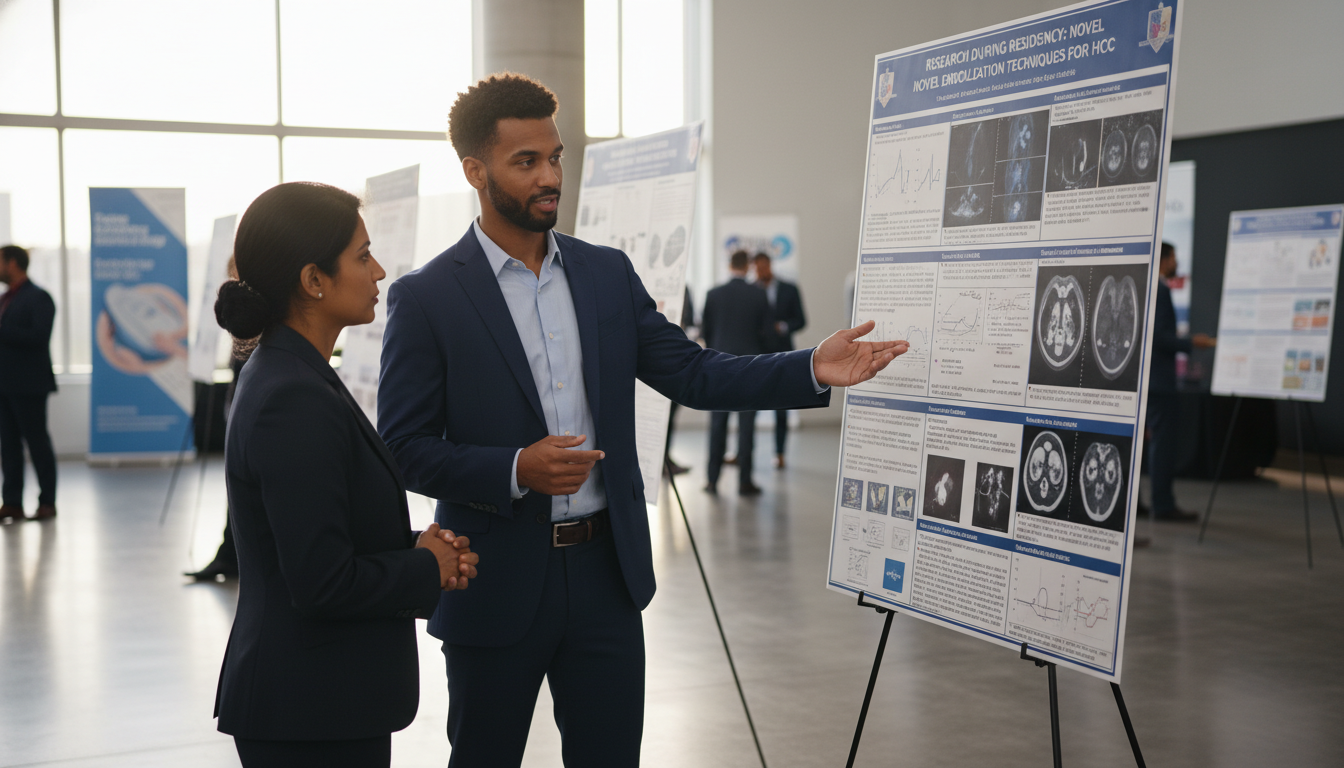
- Presentations at SIR or regional radiology meetings
- Letters from known academic IRs highlighting your research work ethic
If you came from a Caribbean medical school residency pathway (e.g., you matched radiology through SGU residency match or similar), strong resident research projects help counteract:
- Biases against Caribbean medical school backgrounds
- Limited pre‑residency research on your CV
- Perceived gaps in academic preparation
Research and the Academic Residency Track
If your institution offers an academic residency track or a clinician‑scientist pathway, research productivity is often a prerequisite.
Academic track benefits:
- Additional mentorship and structured oversight for research
- Possibly protected research time or coursework in statistics and methodology
- Priority for presentation funding (travel grants, conference support)
To make yourself competitive:
- Aim for at least 1–2 IR‑relevant projects by mid‑residency
- Demonstrate continuity: not just isolated projects, but a developing “theme”
- Example theme: venous interventions, oncologic IR, or access site management
Research During Residency and Competitive IR Sub‑Areas
Certain niches within IR are particularly research‑heavy:
- Interventional Oncology
- Ablation techniques, chemoembolization, Y‑90
- Imaging biomarkers, response criteria studies
- Complex Vascular and Venous Interventions
- IVC reconstruction, deep venous stenting, PTS interventions
- Neurointerventional Radiology (if your program overlaps)
- Stroke thrombectomy outcomes, device trials
If you might target these areas later (fellowship or first job), use residency research to build a relevant portfolio.
Targeted approaches:
- Join existing faculty projects in your area of interest
- Co‑author review articles or pictorial essays on those topics
- Present at subspecialty meetings (e.g., SIO for interventional oncology)
Practical Tips, Pitfalls, and Strategies for Caribbean IMGs
Common Pitfalls for Caribbean IMGs in IR Research
Waiting too long to start
- PGY‑4/5 is late to begin your first project
- Start in PGY‑1/2, even with small case reports
Overcommitting to too many projects
- Better: 2–3 projects you finish than 8 half‑done
- Learn to say, “I’m at capacity; I can help briefly but can’t take a major role.”
Ignoring authorship discussions
- Clarify expectations early:
- Who is first author?
- Who will present if the abstract is accepted?
- This matters especially when you work with fellows and multiple attendings
- Clarify expectations early:
Underestimating IRB and data access time
- Build in buffer time for approvals
- Use institutional templates and ask senior residents for successfully approved protocols
Not documenting your work
- Keep a running list of:
- Project titles
- Roles (e.g., data collection, image interpretation, writing)
- Abstract submissions and acceptances
- This becomes invaluable when updating CVs or ERAS
- Keep a running list of:
Making the Most of Limited Resources
Many Caribbean IMGs end up in programs without a massive research machine. That’s okay—you can still be productive.
Tactics:
Collaborate across institutions
- If you have mentors from your Caribbean school (e.g., SGU faculty), they may join multi‑institutional projects
- Use virtual platforms to participate in collaborative IR studies
Lean into QI and education
- These are more accessible and can still be published
- Example: Developing a standardized pre‑procedure checklist for IR clinics and measuring its impact
Use publicly available datasets (when appropriate)
- Some national databases can be used for IR‑related questions with methodological help:
- National Inpatient Sample (NIS)
- National Cancer Database (NCDB) for oncologic procedures
- Some national databases can be used for IR‑related questions with methodological help:
Presenting and Networking as a Caribbean IMG
Your goal isn’t just publications—it’s visibility.
Actionable steps:
Submit abstracts to IR conferences
- Society of Interventional Radiology (SIR)
- Regional SIR chapters
- Other radiology meetings (RSNA, ARRS, local radiology societies)
At conferences:
- Introduce yourself as a Caribbean IMG IR resident
- Highlight your interests and projects
- Ask potential mentors: “Can I email you to discuss collaborative ideas?”
Use your Caribbean background as a strength
- Consider global IR or access‑to‑care projects (e.g., IR in low‑ and middle‑income countries, including the Caribbean)
- These projects can be powerful and unique, and some IR leaders are passionate about global health
Integrating Research Into a Sustainable IR Career as a Caribbean IMG
You don’t need to become a full‑time researcher to benefit from research during residency. The key is integration.
Options After Residency
Academic IR Faculty
- Protected time for research (often 10–40%)
- Expectations for ongoing resident research projects, grants, and publications
- Research‑heavy fellowships (e.g., at institutions with R01‑funded IR programs) can be stepping stones
Hybrid Academic‑Community IR
- Some research and teaching, with a large procedural volume
- Ideal if you like research but don’t want it to dominate your career
Primarily Clinical IR
- You can still:
- Participate in device registries
- Collaborate on multicenter outcomes studies
- Contribute case series or technique papers
- You can still:
Building a Long-Term Research Identity
Start thinking about a “niche” even during residency:
- Topic-based:
- Venous disease, embolization, IR oncology, trauma, dialysis access, women’s health
- Method-based:
- Outcomes research, cost‑effectiveness, education, global health
As a Caribbean IMG, having a clear niche:
- Makes your CV more cohesive
- Helps you become “the go‑to” person in that area within your network
- Creates opportunities for invited talks, book chapters, and leadership roles
FAQs: Research During Residency for Caribbean IMGs in Interventional Radiology
1. I have almost no prior research from medical school in the Caribbean. Is it too late to start in residency?
No. Many successful IR physicians, including Caribbean IMGs, began research during residency. Start early with realistic projects (case reports, retrospective reviews, QI). Show continuity and follow‑through rather than aiming for a huge randomized trial right away.
2. How many publications do I “need” for a strong IR match or academic job as a Caribbean IMG?
There is no strict number, but competitive applicants often have:
- 2–4 meaningful IR or radiology‑related publications or abstracts
- Evidence of progression (e.g., from case reports to larger studies) Quality, relevance, and your specific role (first or second author) matter more than raw quantity.
3. I’m in a smaller program with limited IR research. What can I realistically do?
You can:
- Develop QI projects within your own IR suite
- Collaborate with attendings on retrospective studies
- Reach out to external mentors (including prior Caribbean school faculty) for multi‑institutional projects
- Attend virtual research meetings and webinars from SIR and related societies
4. How do I talk about my research during residency in fellowship or job interviews?
Be ready to:
- Summarize your main projects in 1–2 sentences each
- Explain your exact role (design, data collection, analysis, writing)
- Highlight any challenges you overcame (limited resources, starting late as a Caribbean IMG)
- Connect your research themes to your future goals in interventional radiology (e.g., academic residency track, interventional oncology focus, global IR)
Research during residency is one of the most powerful tools a Caribbean IMG can use to thrive in interventional radiology. By starting early, choosing feasible projects, finding strong mentors, and consistently following through, you can transform initial disadvantages into a compelling, academically grounded IR career trajectory.