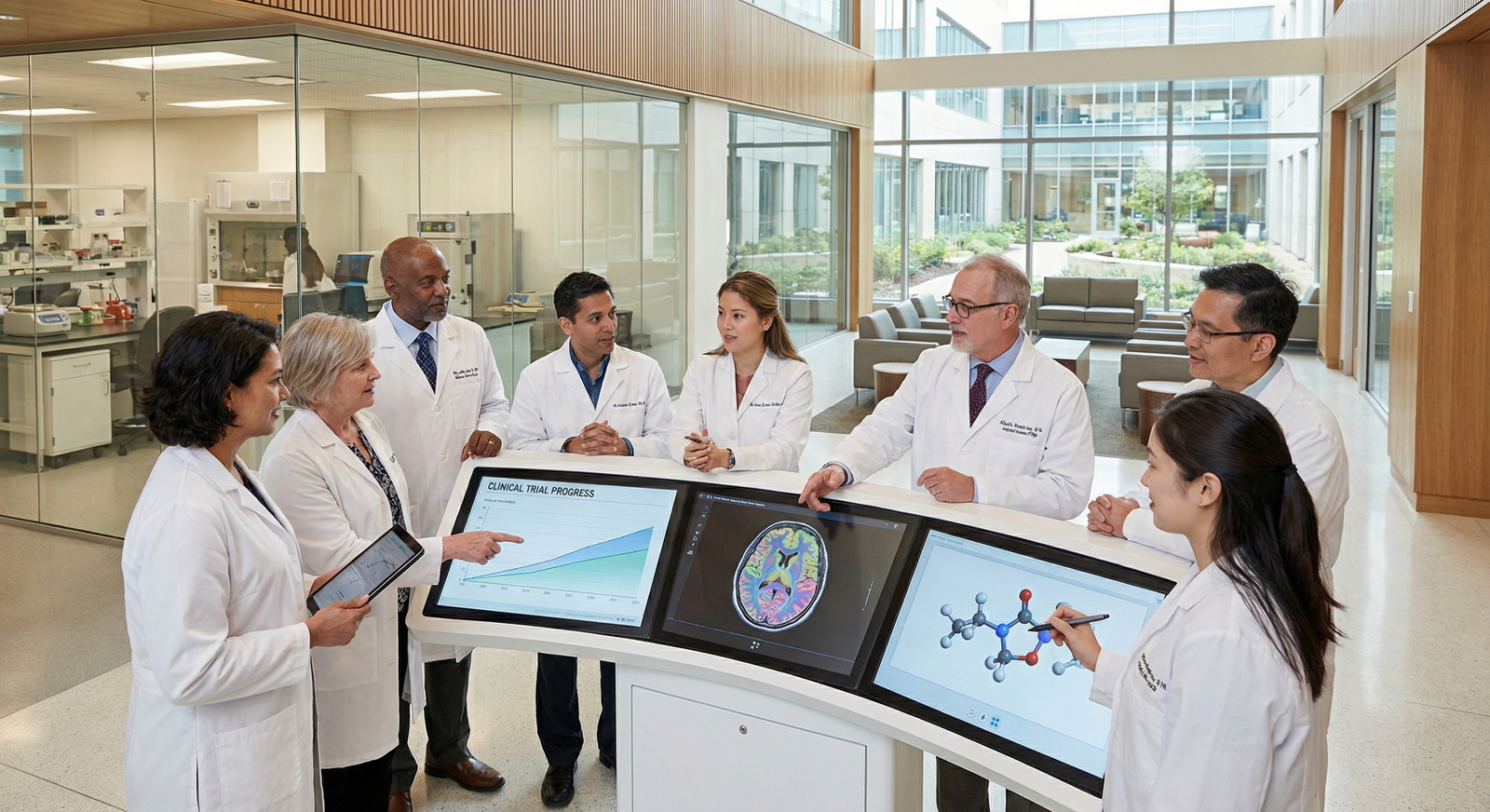
As a DO graduate entering—or preparing for—a clinical informatics–focused residency path, you sit at the intersection of medicine, data, and systems change. Research during residency can be the engine that moves you from “user of the EHR” to “architect of better care.” This article will walk you through how to strategically build a research portfolio in clinical informatics while training as a resident, with special attention to the unique opportunities and realities for osteopathic physicians.
Why Research During Residency Matters for a DO on the Clinical Informatics Path
For a DO graduate residency experience is already demanding, but adding structured research can multiply your long‑term options in clinical informatics and beyond.
1. It positions you for clinical informatics fellowship
Competitive clinical informatics fellowship programs increasingly favor applicants who:
- Demonstrate a track record of scholarly work
- Understand data-driven QI (quality improvement) and implementation science
- Have at least one or two first-author or co-author publications, posters, or abstracts
- Show authentic interest in health IT, not just “EHR complaining”
Research during residency gives you concrete evidence of this interest. Even small resident research projects—a QI study on sepsis alerts or a pilot of a new discharge summary template—can demonstrate that you know how to ask questions, design projects, and collaborate with IT.
2. It differentiates you as a DO graduate
DO applicants sometimes worry about bias in the osteopathic residency match or fellowship selection. Strong research lowers that barrier by shifting the conversation from degree type to demonstrable capability.
- Publications in informatics, outcomes research, or health services draw attention away from letters like “MD” or “DO” and toward your contributions.
- Being the “resident who knows Epic/Cerner/Meditech and does data projects” can quickly make you indispensable in your program.
Couple that with the DO emphasis on whole-person care and systems thinking, and you have a persuasive narrative: you understand both patient-level and system-level drivers of health.
3. It opens doors in health IT and leadership
If you see yourself moving into:
- CMIO (Chief Medical Informatics Officer) roles
- Health system quality leadership
- Digital health startups
- Policy or population health analytics
then health IT training plus research experience is critical. Research skills help you:
- Evaluate vendor claims critically
- Design pilot projects for new tools
- Present outcomes to leadership with credible data
- Translate frontline clinician pain points into measurable informatics interventions
During residency, these skills start with simple QI projects and grow into more rigorous investigations if you plan deliberately.
Understanding the Research Landscape in Clinical Informatics
Before jumping into a project, you need to know what “counts” as research in clinical informatics and where it fits within residency.

Types of research relevant to a clinical informatics–oriented resident
Quality Improvement (QI) and Patient Safety Projects
- Aim: Improve a local process or outcome (e.g., reduce time-to-antibiotics, improve discharge documentation completeness).
- Methods: PDSA cycles, run charts, small-sample iterative changes.
- Informatics angle:
- Design or refine EHR alerts
- Improve order sets
- Standardize documentation templates
- Create dashboards for frontline teams
Implementation Science / Health Services Research
- Aim: Understand how and why interventions work in real-world environments.
- Examples:
- Evaluating clinician adoption of a new clinical decision support (CDS) tool
- Studying barriers to using a telehealth workflow
- Methods: Mixed methods (surveys, interviews, EHR data analytics).
Data Analytics / Predictive Modeling Projects
- Aim: Use data to predict outcomes or identify at-risk patients.
- Example: Developing or validating a risk score for readmission using EHR data.
- Often requires collaboration with data scientists or statisticians.
Education and Workflow Research
- Aim: Improve how residents and staff learn and work with EHRs and digital tools.
- Example: Evaluating an EHR bootcamp for interns and measuring its impact on documentation errors and burnout.
Policy and Ethics in Informatics
- Aim: Examine privacy, equity, algorithmic bias, or regulatory issues.
- Example: Studying disparities in clinical decision support performance across demographic groups.
All of these can be valid “research during residency” options that align with a clinical informatics fellowship trajectory.
Where this research sits within residency structures
Many programs now offer an academic residency track or a “research track,” which may include:
- Protected time (e.g., half-day per week) for scholarly work
- Mentorship committees
- Formal curricula in study design, statistics, and manuscript writing
If your program doesn’t have a defined academic track, you can still:
- Partner with a faculty mentor who has an informatics/quality role
- Integrate research into required QI rotations or projects
- Volunteer for hospital committees (e.g., EHR optimization committee, sepsis task force) and turn their work into a formal study
For DO graduates, especially those in smaller or community-focused programs, being proactive is key. You may need to seek external mentors (through your medical school, local health systems, or online professional groups) to build your informatics research environment.
Planning Your Resident Research Projects: A Step-by-Step Roadmap
A successful research experience as a resident doesn’t happen by accident. It requires planning, boundaries, and alignment with your long-term goals.
Step 1: Clarify your informatics niche
Clinical informatics is broad. Narrowing your focus helps you choose projects that build a coherent story. Possible niches:
- Clinical decision support and evidence-based alerts
- EHR usability and clinician workflow
- Telehealth and remote monitoring
- Population health dashboards
- Documentation quality, coding, and revenue cycle
- Patient-facing technology (portals, messaging, digital therapeutics)
Example:
You’re a DO internal medicine resident with an interest in sepsis care. Your niche could be “informatics solutions for early recognition of critical illness.” Projects might include:
- Evaluating the performance of a sepsis alert
- Redesigning ED order sets for sepsis bundles
- Studying documentation quality for severe sepsis diagnoses
This alignment shows focus when you later apply for a clinical informatics fellowship.
Step 2: Map your time realistically
Residency is intense. To avoid burnout:
- PGY-1: Focus on learning systems, identifying pain points, and doing small-scale QI. Collect ideas, join informatics-related committees, and learn basics of EHR reporting tools.
- PGY-2: Launch one structured project with a feasible timeline (6–12 months). Get IRB approval if needed. Aim for a poster or abstract submission.
- PGY-3+ (or chief/residency extension): Expand or spin off projects into more rigorous research. Target manuscripts, multi-site collaborations, or more advanced analytics.
Practical advice:
- Reserve specific time blocks (e.g., one evening a week or a designated half-day when rotations allow) for research work.
- Use “lighter” rotations (ambulatory, electives) to push projects forward.
- During intense rotations (ICU, nights), set micro-goals: reading relevant papers, refining your research question, or drafting small sections of a manuscript.
Step 3: Find mentors with overlapping interests
For a DO graduate, mentorship can be the single most important factor in turning a good idea into a completed project.
Look for mentors who:
- Have roles in informatics, quality, or EHR optimization (CMIO, associate CMIO, clinical champions)
- Have a track record of publications or successful QI initiatives
- Understand the unique time constraints and career goals of residents
If your home institution lacks obvious clinical informatics faculty:
- Reach back to your osteopathic medical school; many have faculty working in population health or informatics initiatives.
- Attend hospital or system-level IT meetings and introduce yourself to leaders there.
- Use professional societies (AMIA, AOA, or specialty societies) to connect with informatics-oriented physicians open to mentoring.
Ask potential mentors directly:
“I’m a DO resident with a strong interest in clinical informatics, and I’d like to complete a well-designed research project during residency. Would you be open to meeting to discuss potential areas where I could contribute?”
Step 4: Choose feasible, high-yield questions
A resident project should be:
- Answerable with data you can realistically get
- Meaningful for both clinical care and informatics
- Finishable in 6–12 months
Examples of feasible resident projects:
Alert Optimization
- Question: “Does simplifying the sepsis alert criteria reduce alert fatigue while maintaining or improving early recognition of sepsis?”
- Methods: Compare alert frequency, clinician response rates, and outcomes pre- and post-intervention.
Order Set Redesign
- Question: “Does redesigning an admission order set reduce duplicate orders and medication errors?”
- Methods: EHR log analysis, chart review, error reports.
Resident EHR Training Program
- Question: “What is the impact of a structured EHR onboarding curriculum on documentation quality and time spent charting?”
- Methods: Pre-post surveys, time-motion studies, audit of documentation elements.
Patient Portal Engagement
- Question: “Which factors predict patient portal use among patients with diabetes in our continuity clinic?”
- Methods: Retrospective EHR data analysis, logistic regression.
For each project, think through:
- Data sources (EHR, surveys, logs)
- Feasibility of IRB approval
- Stakeholders (IT, nursing, residents, leadership)
How to Execute and Complete Research During Residency
Planning is important, but execution is where most resident projects live or die. This is especially true for informatics, which often depends on complex data and multiple stakeholders.

Navigating data access and IRB approval
Data Access
- Learn who controls data extraction at your institution (clinical analytics team, IT, research informatics core).
- Understand what built-in tools your EHR offers (reports, dashboards, query tools).
- Clarify data governance early—what is allowed for QI vs. research?
QI vs. Research: Do you need IRB?
- Many QI informatics projects are exempt or can be reviewed as non-human-subjects research, but do not assume.
- Discuss your project with your mentor and the IRB office early.
- If you may want to publish outside a QI journal or present at a scientific meeting, formal IRB approval is often safer.
Practical tip for residents:
Draft a one-page project summary (background, aim, methods, data needed, timeline). Use it for:
- Mentor meetings
- IRB pre-consult discussions
- Asking IT/data teams for help
It shows you’re serious and prepared.
Managing scope and timeline
Common pitfalls:
- Starting with a question that requires more data than you can obtain.
- Designing a project that depends on major EHR build changes (which may take months or years).
- Trying to conduct multi-center research before you’ve completed a single-site study.
Strategies to stay on track:
- Use a Gantt chart or simple timeline with milestones: IRB submission, data extraction, analysis, abstract drafting, manuscript drafting.
- Set specific monthly goals with your mentor.
- When scope creep appears (and it will), ask: “Will this change help me complete and present/publish the project during residency?”
Remember: a smaller, completed project is more valuable than a grand, unfinished idea.
Writing, presenting, and publishing
Your goal is not just to “do research” but to create tangible outputs:
- Abstracts for specialty meetings (AMIA, ACP, ACOI, or your core specialty’s conference)
- Posters at local or regional research days
- Short papers in informatics, QI, or clinical journals
As a DO graduate residency timeline is tight; use templates and checklists to speed writing:
- Base your abstract on your original one-page project summary.
- Use IMRAD structure (Introduction, Methods, Results, Discussion) even for posters.
- Ask your mentor for 2–3 sample papers similar to what you’re aiming for.
If writing is daunting, start with:
- Case reports highlighting informatics tools (e.g., CDS that prevented an error)
- Brief reports or “innovation in practice” pieces about educational or workflow interventions
These shorter pieces still strengthen your portfolio for future clinical informatics fellowship applications.
Integrating Osteopathic Principles and Building a Long-Term Career Story
As a DO resident, you bring a distinctive lens to clinical informatics research. Use it.
Highlighting the osteopathic perspective in informatics
Osteopathic medicine emphasizes:
- Whole-person care
- Structure-function relationships
- Preventive care and lifestyle factors
- Systems thinking and interconnection
In informatics research, you might:
- Study how EHR design supports (or undermines) whole-person care (e.g., integration of behavioral health, social determinants).
- Evaluate tools that address musculoskeletal complaints, chronic pain management, or non-pharmacologic interventions.
- Investigate alert or algorithm performance across different demographic groups, highlighting equity and holistic outcomes.
In your abstracts and personal statements, draw explicit connections:
“My osteopathic training emphasized understanding the patient in the context of their environment and systems. My informatics research applies that principle by examining how EHR design, decision support, and data flows shape patient outcomes and clinician behavior.”
Positioning yourself for next steps: fellowship, health IT, or academic track
By graduation, you want a coherent narrative that weaves together your:
- Clinical training in your base specialty
- Informatics projects and skills
- Research outputs (posters, publications)
- Long-term goals (fellowship, health IT training, academic leadership)
A strong portfolio might include:
- 1–2 completed QI or informatics projects with defined outcomes
- 1–3 posters or presentations at regional/national meetings
- 1+ manuscripts submitted or in press (even if not yet accepted)
- Active participation in an academic residency track, if available
When applying for a clinical informatics fellowship, emphasize:
- How your projects improved care locally (practical impact)
- How they prepared you to work with multidisciplinary teams (IT, analytics, nursing, administration)
- How your DO background and research during residency together fuel your interest in clinical informatics and systems-level change
FAQs: Research During Residency for DO Graduates in Clinical Informatics
1. Is research absolutely required to match into a clinical informatics fellowship as a DO?
It’s not always mandatory, but it is highly advantageous. Some fellowships may accept applicants with strong operational and IT experience even without publications. However, for most programs:
- Having at least one substantial resident research project (especially with an informatics focus) significantly strengthens your application.
- For DO applicants, research can counterbalance any perceived disadvantage in the osteopathic residency match or fellowship selection.
Aim for at least one concrete scholarly product (poster, abstract, or paper) by the time you apply.
2. I’m in a smaller community program without informatics faculty. How can I still build a competitive research profile?
You can:
- Identify hospital leaders in IT, quality, or EHR optimization and ask to collaborate on projects.
- Work on EHR-based QI projects that are feasible locally (alerts, order set changes, documentation quality).
- Seek external mentors through your DO school, national organizations (AMIA, AOA, specialty societies), or virtual networks.
- Use multi-site resident collaboratives or registries if available.
Even without a formal academic residency track, completed local projects with real outcomes are valuable.
3. How much time should I realistically dedicate to research during residency?
There’s no single answer, but a sustainable model for many residents is:
- PGY-1: Minimal research time; focus on learning the system and identifying potential questions.
- PGY-2–3: ~4–8 hours per week on average, with flexibility based on rotation intensity.
Protected time through an academic residency track helps, but even without it, you can progress by:
- Using lighter rotations and vacations strategically for writing and analysis.
- Setting monthly micro-goals and holding brief check-ins with mentors.
Consistency matters more than raw total hours.
4. What kinds of research outputs are most valuable if I want to go into academic clinical informatics?
Prioritize:
- Peer-reviewed publications in informatics, QI, or clinical journals (even brief reports).
- National/regional presentations (AMIA, specialty society meetings, informatics tracks).
- Documented leadership in informatics initiatives (committee roles, project leadership).
Together, these show you can conceive, execute, and disseminate work—key skills for an academic career. Over time, you can grow from local QI projects into more formal studies and multi-center collaborations as your training and networks expand.
By approaching research during residency with a clear clinical informatics focus, strategic mentorship, and realistic scope, you can transform your DO background into a compelling asset. You’ll not only be the resident who understands the EHR, but the physician-leader who can use data and technology to improve care at scale.