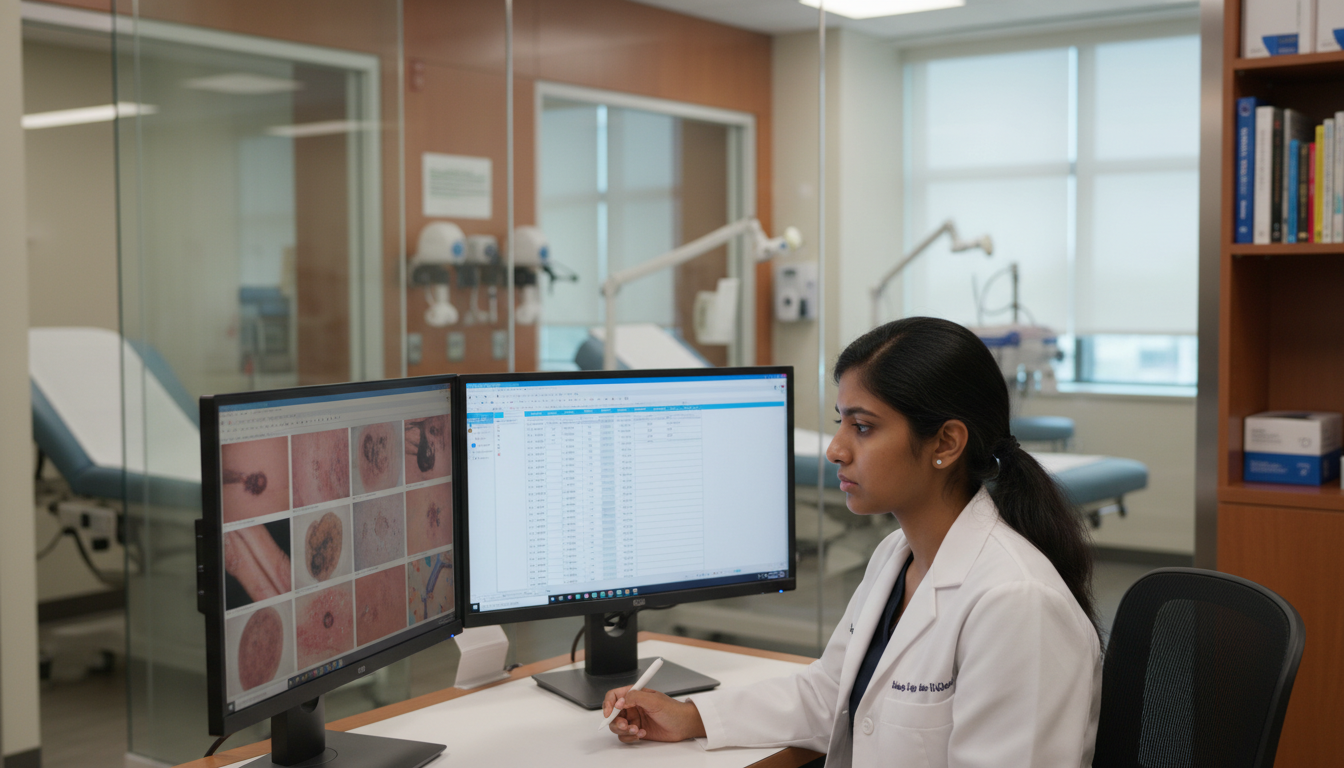
As a DO graduate entering internal medicine, you’re stepping into a specialty where research can significantly amplify your training, professional identity, and long‑term career options. Research during residency isn’t just for future physician‑scientists—it’s increasingly expected in academic internal medicine and highly valued even in community practice.
This article will walk you through why research matters specifically for DO graduates in internal medicine, how to realistically integrate it into your IM residency, and how to use it strategically to shape your career—whether you’re headed for an academic residency track, fellowship, or community-based practice.
Why Research Matters for a DO Graduate in Internal Medicine
1. Leveling the playing field for DO graduates
Many DO graduates entering internal medicine residency still feel they must “prove” themselves in academic environments historically dominated by MDs. High‑quality research involvement is one of the most effective ways to:
- Demonstrate academic rigor and critical thinking
- Show that you’re comfortable with evidence-based medicine
- Build credibility with program leadership and subspecialty faculty
- Strengthen your CV for competitive fellowships (cardiology, GI, heme/onc, critical care, etc.)
While the single accreditation system has unified ACGME programs, subtle biases can persist—structured resident research projects are a concrete way to counteract that.
2. Increasing expectations from residency programs and fellowships
Internal medicine is an evidence-driven specialty. Programs and fellowship selection committees increasingly expect:
- At least some involvement in scholarly activity
- Evidence that you can interpret, apply, and ideally generate data
- Familiarity with core research principles (study design, bias, basic statistics)
For competitive fellowships, it’s rare to see successful applicants without any meaningful research. Even if you’re currently unsure about fellowship, engaging in research during residency keeps doors open.
3. Benefits beyond academics: skills that translate to any career path
Whether you pursue an academic residency track, a hospitalist role, or primary care, research during residency builds skills that are universally valuable:
- Critical appraisal: Distinguish high‑quality studies from weak evidence
- Data literacy: Understand risk, benefit, and uncertainty when counseling patients
- Systems thinking: Quality improvement (QI) projects teach you how to change workflows, not just treat individual patients
- Communication: Writing abstracts, manuscripts, and presenting at conferences improves clarity and persuasion
- Team leadership: Many resident research projects require coordinating with faculty, pharmacists, nurses, and other residents
These skills support you whether you’re designing an RCT or leading a QI project to reduce readmissions in your future practice.
Understanding Research Opportunities in Internal Medicine Residency
Not all resident research looks the same. You don’t have to be in a lab doing basic science to be “doing research.” As a DO graduate in internal medicine, you can engage in several forms of scholarly activity that align with your interests and time constraints.
1. Types of research during internal medicine residency
a. Clinical research
This is the most common and accessible:
- Retrospective chart reviews (e.g., outcomes of patients with HFpEF on different regimens)
- Observational cohort studies
- Case-control studies
- Clinical prediction tools or risk scores
- Secondary analysis of existing databases or registries
These often use data already collected in the electronic health record (EHR), which makes them feasible within residency.
b. Quality improvement (QI) and patient safety projects
Many programs require QI work, and this absolutely counts as research if done rigorously:
- Reducing 30-day readmissions for heart failure
- Improving anticoagulation monitoring in AFib patients
- Increasing appropriate DVT prophylaxis on general medicine floors
- Optimizing sepsis bundle compliance
You can turn a QI project into a poster or manuscript by:
- Clearly defining the problem and outcome measures
- Using Plan–Do–Study–Act (PDSA) cycles
- Collecting and analyzing pre/post data
- Reflecting on generalizability and limitations
c. Case reports and case series
Especially early in residency, case reports are an excellent way to:
- Learn medical writing basics
- Get a PubMed‑indexed publication
- Build relationships with faculty
Internal medicine has many opportunities for publishable cases: unusual presentations, rare complications, or unexpected responses to treatment.
d. Systematic reviews and narrative reviews
If your program has limited patient volume or data access, literature-based projects are valuable:
- Systematic reviews with meta-analysis (more involved, but high yield)
- Narrative reviews on a focused clinical topic (e.g., DOAC use in CKD)
- Clinical update articles
These help you master a topic and build your academic profile.
e. Basic or translational research
Less common in many community programs, but more available in university-based or academic residencies:
- Work in a lab (cardiology, immunology, oncology, etc.)
- Translational studies bridging bench and bedside
This path is particularly beneficial if you’re targeting highly research-intensive fellowships or physician-scientist careers.

How to Get Started: Step-by-Step Strategy for DO IM Residents
1. Clarify your goals early
During your intern year, ask yourself:
- Do I want a competitive fellowship (cardiology, GI, heme/onc, pulm/crit, nephrology)?
- Am I leaning toward a hospitalist/primary care career with some academic involvement?
- Am I interested in an academic residency track or clinician-educator role?
Your answers shape your research strategy:
- Fellowship-bound: Aim for multiple projects, at least 1–2 publications or national presentations, ideally in your target field.
- Hospitalist/primary care: Prioritize QI, outcomes research, and practical clinical projects that relate to population health and systems improvement.
- Academic or teaching focus: Consider education research (curriculum, assessment, simulation, etc.) in addition to clinical projects.
2. Learn your program’s research ecosystem
Within the first few months of PGY‑1:
- Identify a Director of Resident Research or scholarly activity lead
- Ask about:
- Required scholarly output
- Available databases or registries
- Protected research time (if any)
- Ongoing projects that need help
- Internal medicine faculty with strong research portfolios
For a DO graduate, this is also an opportunity to show early initiative and interest in academic work, which program leadership often notices.
3. Choose mentors strategically
A good mentor is more important than a “perfect” topic. Look for:
- Accessibility: Do they respond to emails and meet consistently?
- Track record: Have they successfully published or presented with residents?
- Alignment with your goals: Ideally in your target subspecialty (e.g., cardiology for a future cardiology fellow)
- Team structure: Are there fellows or senior residents who can help you with day-to-day guidance?
Practical approach:
- Attend internal medicine or subspecialty conferences/Grand Rounds
- Listen for faculty repeatedly mentioned in relation to research
- Send a short, focused email:
- Who you are (PGY level, DO background)
- Your career interests
- Your research experience (or lack thereof)
- What you’re hoping for (e.g., “to join an active project and learn the process”)
4. Start with something small and finishable
One of the big pitfalls in resident research is starting an over-ambitious project that never gets completed. For your first project, prioritize:
- Well-defined scope
- Clear timeline (6–12 months)
- Realistic data needs
Good first projects:
- A case report or small case series
- A retrospective chart review with a clear primary outcome
- A defined QI project on your inpatient rotation
Once you’ve completed something and seen it through to a poster or publication, you’ll have the confidence and infrastructure to tackle larger projects.
5. Learn the basics of methodology and statistics
As a DO graduate, you’ve had exposure to evidence-based medicine, but residency is where you refine it. You don’t need to become a statistician, but you should:
- Understand common designs (cohort, case-control, cross-sectional, RCT)
- Recognize confounding and bias
- Interpret p-values and confidence intervals
- Know when to ask a statistician for help
Practical resources:
- Your institution’s research or biostatistics core
- Free online EBM and research methodology courses (e.g., from major universities)
- Reading methods sections of high-quality IM journals (NEJM, JAMA, Ann Intern Med)
6. Protect your time and integrate research into your schedule
Residency is busy. To make research viable:
- Use elective time for research blocks if your program allows
- Block 1–2 hours weekly on ambulatory weeks for research tasks
- Break projects into small steps:
- Week 1: literature review
- Week 2–3: IRB submission
- Week 4–8: data collection, etc.
- Use nights and weekends strategically—but avoid burnout by setting realistic expectations
Programs with a formal academic residency track often offer:
- Dedicated research rotations
- Longitudinal mentorship
- Structured coursework in study design and statistics
If this exists at your institution, consider applying, especially if you’re research-focused.
Building a Strong Research Portfolio for the Internal Medicine Match and Beyond
1. Positioning yourself during the IM match as a DO graduate
If you’re still in medical school or early PGY‑1 and thinking ahead, research can influence where you train:
- For the osteopathic residency match (historical context) and now the unified ACGME match, programs with strong academic reputations will look favorably on:
- Research during medical school
- Case reports, QI projects, or poster presentations
- As a DO graduate, this can counterbalance:
- Slightly lower USMLE/COMLEX scores
- Limited home institutional research infrastructure
In your ERAS application and interviews, be ready to:
- Explain your role in each project
- Describe what you learned from the research process
- Discuss how your projects relate to your career interests
2. Strategizing research during residency for fellowship applications
For fellowship-bound internal medicine residents (especially DOs), research is often a key differentiator. By PGY‑2, aim to:
- Have at least one completed project (poster or publication)
- Be actively working on one or two more advanced projects
Typical timelines:
- Case report: 2–3 months from idea to submission
- Retrospective clinical study: 6–12 months (IRB, data collection, analysis, manuscript)
- QI project: 6–9 months with at least one PDSA cycle and pre/post data
Priorities by year:
- PGY‑1: Learn the system, identify mentors, start small projects (case report, QI)
- PGY‑2: Execute more substantial projects, present at regional/national meetings
- PGY‑3: Focus on final publications, presentations, and bringing projects to completion before fellowship interviews
For DO graduates, having at least one PubMed‑indexed publication in your target field can significantly improve your fellowship application narrative.
3. Showcasing your research effectively
Your CV and interviews should present your research during residency as:
- Coherent: Linked to your clinical and career interests
- Progressive: Showing growth from smaller to larger, more sophisticated projects
- Impactful: Highlighting outcomes, such as:
- Local practice change from a QI project
- Presentations at ACP, SGIM, subspecialty conferences
- Implementation of new clinic workflows or protocols
Be honest about your role: fellowship directors can tell the difference between a first-author resident-led project and a minor supporting role—but both can be valuable if explained clearly.

Practical Advice: Making Research Sustainable and Meaningful
1. Balancing clinical duties and research
Realistically, you’ll face:
- Long inpatient months
- Night float
- Outpatient continuity clinic
To maintain momentum:
- Focus on lower-cognitive-load tasks on busy days (e.g., organizing references)
- Use tools like reference managers (Zotero, EndNote, Mendeley)
- Communicate with your team about realistic deadlines
- Keep a shared project tracker (e.g., Google Sheet, project management app)
2. Common challenges for DO internal medicine residents—and how to handle them
Challenge 1: Limited prior research experience
Solution:
- Start with case reports and QI projects
- Ask mentors to walk you through each step explicitly
- Use institutional and online research workshops as structured learning
Challenge 2: Fewer research-heavy faculty at a community program
Solution:
- Look for:
- Hospital-based QI departments
- System-wide initiatives you can join
- Multi-site collaborative projects
- Consider partnering with:
- Pharmacy
- Nursing
- Hospital administration
- Reach out to nearby academic centers for collaborative opportunities
Challenge 3: Imposter syndrome as a DO in an academic environment
Solution:
- Recognize that your holistic DO training adds value:
- Systems thinking
- Whole-person care
- Emphasis on function and quality of life
- Use that lens to generate unique research questions (e.g., functional outcomes, patient-centered measures, multimodal interventions)
3. Ethics, professionalism, and DO identity in research
As a DO graduate, your philosophy of care can shape your research:
- Consider patient-centered outcomes, functional status, and quality of life measures
- Pay attention to:
- Informed consent (where applicable)
- Respect for patient privacy and data security
- Equity and access issues in your study design
Professionalism also means:
- Meeting deadlines
- Accurately representing your contributions
- Avoiding data manipulation or “p-hacking”
- Giving proper credit to co-authors and collaborators
4. Thinking long term: building an academic or hybrid career
If you discover you love research during residency, internal medicine offers several paths:
- Academic clinician: Mix of inpatient/outpatient care, teaching, and ongoing clinical research
- Clinician-educator: Focus on curriculum and education research within IM
- Physician-scientist: More time in the lab or advanced clinical investigation (often requires additional training, e.g., research fellowship, MPH, or MS)
To prepare:
- Seek an academic residency track if available
- Apply for small internal grants or resident research awards
- Consider formal research training (e.g., certificate, MPH) in later years or during fellowship
FAQs: Research During Internal Medicine Residency for DO Graduates
1. Do I need research during residency if I’m not planning on a fellowship?
You don’t strictly “need” it, but having at least one meaningful research or QI project is advantageous. It builds critical thinking skills, enhances your CV, and shows future employers you can engage with data and systems-level improvement. Even community hospitalist and primary care jobs increasingly value experience with QI and outcomes projects.
2. Is it harder for DO graduates to get involved in research compared to MDs?
In most ACGME-accredited internal medicine programs, opportunities are open to both DO and MD residents. The main differences stem from institutional culture and individual initiative, not degree. As a DO, you may sometimes need to be more proactive—approach faculty early, express your goals clearly, and follow through reliably. Once you demonstrate productivity, doors open quickly.
3. How many publications or projects do I need for a competitive fellowship?
There’s no magic number, but for highly competitive fellowships (cardiology, GI, heme/onc), a strong DO applicant often has:
- 1–2 first-author abstracts or posters at regional/national meetings
- 1–2 publications (case reports, reviews, or clinical studies)
- Evidence of longitudinal involvement in at least one substantial project
Quality, relevance, and your ability to discuss the work thoughtfully matter more than raw numbers.
4. Can QI projects really “count” as research?
Yes—if conducted rigorously, QI projects are a recognized form of scholarly activity. Many internal medicine programs and fellowships value QI highly because it directly improves patient care and hospital systems. To maximize impact, treat your QI project like research: define clear outcomes, collect and analyze data systematically, and aim to present or publish your results.
Research during residency can seem intimidating, especially if you feel behind or come from a less research-intensive background. As a DO graduate in internal medicine, you don’t need to become a full-time scientist to benefit enormously. With the right mentors, realistic projects, and consistent effort, you can build a research portfolio that strengthens your training, broadens your career options, and ultimately improves the care you deliver to patients.