Understanding the Value of Research During a Preliminary Surgery Year as a DO Graduate
For a DO graduate in a preliminary surgery residency, research can be one of the most powerful levers to shape your future career—whether your goal is to reapply to categorical general surgery, transition to another surgical specialty, or pivot into a non-surgical field with a strong academic profile. While your prelim year is demanding, strategically incorporating research during residency can upgrade your CV, refine your critical thinking, and signal to program directors that you bring more than solid clinical skills.
This article will walk through why and how to pursue resident research projects during a busy prelim surgery year, with a focus on the unique position of osteopathic graduates and the realities of the osteopathic residency match and subsequent applications.
1. Why Research Matters for a DO Graduate in a Preliminary Surgery Residency
1.1. The unique position of DO graduates
As a DO graduate, you may already be familiar with some of the challenges:
- Many competitive categorical surgery programs still receive far more MD than DO applications.
- Some academic departments may be less familiar with osteopathic training pathways.
- Objective signals (USMLE/COMLEX scores, publications, strong letters) carry even more weight in distinguishing you.
In this environment, research during residency becomes a critical differentiator:
- It demonstrates that you can function in an academic environment.
- It shows curiosity, motivation, and follow-through beyond day-to-day clinical work.
- It gives you structured opportunities to work closely with surgical faculty who can write substantive letters of recommendation.
If you are coming from a DO school with limited research opportunities or a weaker research background, your preliminary surgery year may be your best opportunity to “catch up” and build a competitive scholarly profile.
1.2. How research impacts future match and career options
Whether you ultimately want:
- A categorical general surgery spot
- A subspecialty fellowship down the line
- A transition to radiology, anesthesia, EM, PM&R, or another field
- A long-term academic residency track or faculty career
…your research record can be a substantial asset.
Research helps you:
- Strengthen your ERAS application with pubmed-indexed publications, abstracts, posters, and presentations.
- Show alignment with a desired specialty or subspecialty (e.g., trauma outcomes, surgical oncology, minimally invasive surgery).
- Build a network of mentors and sponsors who can advocate for you during the match and beyond.
- Gain skills in critical appraisal, study design, and statistical thinking that will serve you throughout your career.
For DO graduates specifically, research productivity can help reassure more research-heavy or historically MD-dominant programs that you can thrive in their environment.
1.3. Research vs “just surviving” your prelim year
A prelim surgery residency is intense: long hours, heavy call, procedural demands, and steep learning curves. It’s normal to feel like you barely have time to sleep, much less publish. That’s why your mindset matters:
- You do not need an R01-level project.
- You do need realistic, tightly scoped projects tailored to your schedule.
- Strategic choices—retrospective chart reviews, case reports, QI projects—can produce output with modest time investment.
The goal is smart, feasible scholarship, not perfection.
2. Finding and Choosing Research Opportunities in Your Prelim Surgery Year
2.1. Mapping the research landscape at your institution
In your first few weeks, you should quietly “map” the research ecosystem of your program and hospital:
- Which attendings are visibly academically active (publications, grant funding, conference talks)?
- Are there dedicated research coordinators, statisticians, or institutional resources?
- Does the department have an academic residency track or protected research time for some residents?
- Are there existing databases or registries (trauma, surgical oncology, bariatric, transplant, etc.)?
Practical steps:
- Scan faculty profiles on the department website and PubMed their names.
- Ask senior residents which attendings actually get projects across the finish line.
- Attend any research meetings, morbidity & mortality (M&M) conferences, and grand rounds.
As a DO preliminary resident, you are temporarily part of this ecosystem; your job is to plug yourself into ongoing work rather than trying to build everything from scratch.
2.2. Aligning topics with your goals
Your research can serve as a narrative thread in your future applications. Ask yourself:
- Do I want to stay in surgery (e.g., general surgery, vascular, trauma, surgical oncology)?
- Am I considering migrating to another specialty (e.g., anesthesia, radiology, EM)?
- Am I leaning toward a career with a heavy academic component?
If you want categorical general surgery, try to focus on:
- Perioperative outcomes
- Surgical quality improvement
- Trauma and acute care surgery
- Minimally invasive and robotics
- Surgical oncology outcomes
If you think you might transition to another specialty, you can still choose cross-cutting topics:
- Perioperative medicine, ICU care, and pain management (useful for anesthesia, IM, EM).
- Imaging, diagnostic pathways, and disease staging (relevant to radiology, IM).
- Health services research, disparities, and systems-level topics (valuable in many fields).
Programs like to see coherence: your publications, personal statement, and rotations should tell a consistent story.
2.3. Types of feasible projects for a busy prelim surgery resident
Given your call schedule and limited control over rotations, focus on low-friction project types:
Case reports and case series
- Identify unusual presentations, rare complications, or unique operative approaches.
- These are feasible when you are the one managing the patient.
- Ideal early-win projects: you can often complete them in weeks, not years.
Retrospective chart reviews
- Use existing data from your institution’s EHR.
- Topics: post-op complications, ERAS protocol compliance, readmission rates, time-to-intervention metrics.
- Requires IRB approval, but once the protocol is set, data collection can be done in small daily chunks.
Quality improvement (QI) projects
- Especially relevant to surgery (e.g., improving compliance with DVT prophylaxis, handoff quality, antibiotic timing).
- Can be presented at local or regional meetings and often publishable.
Secondary analysis of existing databases
- If your program uses national datasets (e.g., NSQIP, TQIP), you can join ongoing projects with predefined data.
- Time intensive during analysis and writing, but minimal patient-facing work.
Educational research
- Projects about resident performance, simulation training, or curricular changes.
- If you are interested in surgical education or academic leadership, these can be useful.
As a DO graduate, even 2–3 solid, finished projects can significantly enhance your profile compared to peers with no research output.

3. Building Mentorship, Support, and a Research Identity
3.1. Identifying good research mentors
Finding the right mentor is arguably more important than picking the perfect topic. Look for surgeons or faculty who:
- Have a consistent publication record over several years.
- Have worked with residents on prior projects that actually led to papers or presentations.
- Are approachable and responsive.
- Understand the time constraints of a prelim surgery residency.
Ask senior residents:
- “Which faculty members are good at getting residents published?”
- “Who is known for supporting DO graduates or prelim residents?”
Red flags:
- Faculty with many “ideas” but no demonstrable track record of completed projects.
- Mentors who are frequently out of the hospital (extremely busy clinically, traveling constantly).
- Poor communication or slow email response when you first reach out.
3.2. How to approach potential mentors as a prelim DO resident
As a preliminary resident, you may feel less secure approaching faculty, especially if many categorical residents are already embedded in research. You can still position yourself well:
Sample email structure:
- Brief introduction: “I’m a DO graduate in the preliminary surgery year here at [Hospital].”
- Express interest in their work: reference 1–2 of their recent publications.
- State your goals: “I’m planning to pursue a categorical surgery position and would like to become involved in outcomes or QI research.”
- Offer concrete help: “I can assist with chart review, data extraction, literature review, and manuscript drafting.”
- Ask for a short meeting: 15–20 minutes to discuss potential projects.
Be honest about your schedule but emphasize reliability. Programs and mentors will often give more responsibility to someone who consistently follows through, even on small tasks.
3.3. Clarifying expectations and authorship
Before diving into a project, clarify:
- Your role: data collector, co-author, first author?
- Expected timeline: realistic in 6–12 months?
- Who owns which tasks: IRB submission, data analysis, manuscript drafting.
- How authorship will be determined (ICMJE criteria, level of contribution).
You can ask transparently but respectfully:
“Since my prelim year is only 12 months, I’d like to make sure we set a realistic plan. If I contribute substantially to data collection and writing, would it be reasonable to aim for [position] authorship?”
These conversations may feel uncomfortable but are critical, especially when your time at that institution is limited and your future match depends on tangible outcomes.
4. Time Management: Integrating Research Into a Heavy Prelim Surgery Schedule
4.1. Be realistic about your bandwidth
A typical prelim surgery residency can involve:
- 70–80+ hour weeks
- Q3–Q4 call
- Frequent weekend rounding
- Morning and evening sign-out responsibilities
Given that, your research strategy should aim for:
- 1–2 primary projects where you are meaningfully involved.
- Possibly 1–2 smaller contributions (e.g., co-authoring a case report or review).
Overcommitting to 5–6 projects is a common trap and usually leads to none getting finished.
4.2. Micro-scheduling research activities
Use micro-blocks of time instead of waiting for “a free day” (which rarely comes):
- 20–30 minutes early morning or late evening for literature review.
- 10–15 minutes between cases or after sign-out for quick data entry.
- One slightly longer 1–2 hour block on a lighter day off every 1–2 weeks for deeper writing or data analysis.
Concrete tactics:
- Keep all project documents in a cloud folder (e.g., Google Drive, OneDrive) accessible from work and home.
- Use reference managers (Zotero, Mendeley, EndNote) to quickly save and annotate articles.
- Maintain a running to-do list per project: small, discrete tasks that you can complete in 10–30 minutes.
4.3. Leveraging lighter rotations
During your prelim year, some rotations may be less time-intensive (e.g., non-ICU electives, outpatient surgery, consult months). Plan to:
- Front-load data collection and IRB steps during these periods.
- Push manuscript drafting and revisions when your call schedule is lighter.
- Coordinate with your mentor to set deadlines aligned with your rotation calendar.
If you know that your last 2–3 months will be hectic (e.g., trauma, ICU, transplant), try to finish the bulk of your contributions earlier.
4.4. Avoiding burnout
Trying to be a stellar clinical resident and a productive researcher on top of a new city, licensure, and exam prep can be overwhelming. Guardrails:
- Set a realistic output goal for your prelim year (e.g., 1–2 submitted manuscripts, 1 regional presentation).
- Protect sleep and basic self-care; chronic fatigue will torpedo both your clinical and academic performance.
- If research is consistently making you feel worse, not better, discuss scope adjustments with your mentor.
Programs value residents who perform clinically and remain safe and reliable. Research should enhance, not compromise, your clinical growth.
5. Translating Research Into Career Advancement and Match Success
5.1. Strengthening your ERAS application with research
Your research output from a prelim year can significantly bolster your next application:
- List publications, abstracts, and presentations clearly, including accepted but not yet published items.
- Emphasize your role: first author vs co-author, data/statistics vs literature review.
- Tie projects to your chosen specialty in your personal statement and interviews.
For example, if aiming for categorical general surgery:
- Highlight a trauma outcomes project as evidence of your interest in acute care surgery.
- Reference your QI project on postoperative infection rates as proof of your commitment to system-level improvement.
If you pivot to another specialty (e.g., anesthesiology, radiology), frame your work in terms of:
- Patient safety
- Perioperative optimization
- Diagnostic or management pathways
5.2. Letters of recommendation from research mentors
Strong letters from research mentors can be invaluable, especially as a DO graduate:
- They can attest not only to your academic capacity but also to your work ethic, communication, and teamwork.
- Mentors who know you in both clinical and research settings can speak to your comprehensive strengths.
To facilitate strong letters:
- Provide them with your CV, personal statement draft, and summary of your contributions to each project.
- Gently remind them of specific examples (e.g., staying late to finalize a dataset, presenting at an internal conference).
- Ask early—well before ERAS deadlines—to allow for thoughtful letters.
5.3. Positioning yourself for an academic residency track
If you are interested in a long-term academic residency track or future faculty role:
- Choose at least one longer-term project with clearer academic depth (e.g., outcomes research, national database analysis).
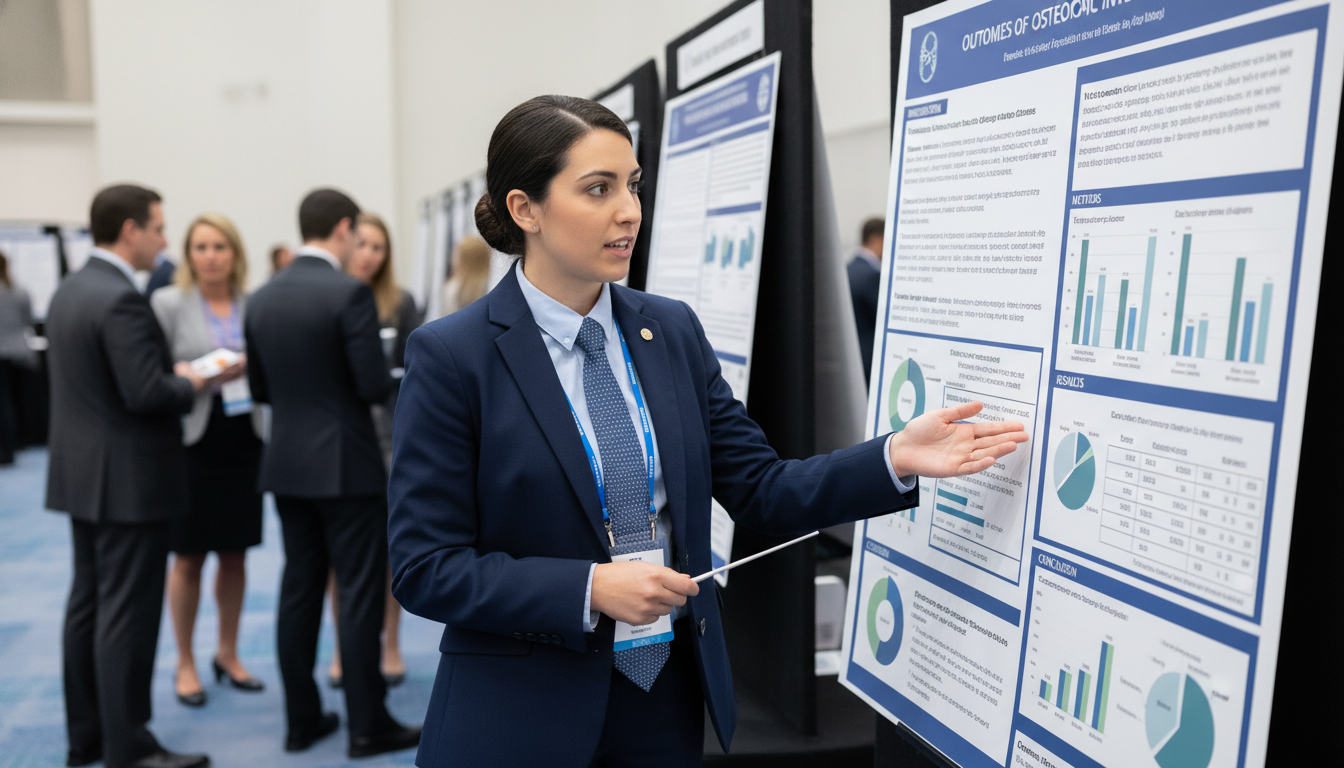
- Seek opportunities to present oral presentations at regional or national meetings (e.g., ACS, regional surgical societies).
- Express in your personal statement and interviews how your research experience shaped your professional goals.
Even from a preliminary surgery position, DO graduates can convincingly position themselves as future academic surgeons if they demonstrate:
- Publication productivity
- Conference participation
- Clear academic interests (e.g., surgical education, health disparities, quality improvement)
6. Practical Tips, Pitfalls, and Strategic Advice for DO Graduates in Prelim Surgery
6.1. Key practical tips
Start early:
- Within the first 4–6 weeks, identify potential mentors and at least one concrete project.
Document everything:
- Track your contributions (dates, tasks, meetings) so you can later describe them accurately.
Choose low-hanging fruit first:
- Begin with a case report or small retrospective project that can realistically be completed in under a year.
Communicate proactively:
- Regularly update your mentor on progress, especially as schedules change.
Use nights and weekends strategically—not constantly:
- Short, focused work bursts can be more sustainable than marathon sessions.
6.2. Common pitfalls to avoid
Overcommitting
Joining too many projects dilutes your effectiveness. Focus on depth, not quantity.Unclear authorship expectations
Without early clarity, you risk doing heavy work but being buried in the middle of an author list.Poor project selection
Projects requiring long prospective data collection or complex interdepartmental coordination are high-risk in a 12-month prelim.Lack of follow-through
Disappearing mid-project can damage your reputation. If your schedule becomes impossible, communicate early and honestly.
6.3. Leveraging your DO background positively
As a DO graduate, lean into your strengths:
- Emphasize your holistic, patient-centered perspective, especially in outcomes and QI research.
- Highlight how your osteopathic training fostered team-based care, which often benefits multidisciplinary research.
- In academic environments, demonstrate that you are equally comfortable with evidence-based medicine and critical appraisal as any MD colleague—your research output provides tangible proof.
When asked about your path (DO degree + preliminary surgery year), you can frame it as:
- A deliberate process of exploration and growth.
- Evidence of resilience and adaptability.
- A foundation that sharpened your clinical judgment and academic interest.
Frequently Asked Questions (FAQ)
1. As a DO graduate in a busy preliminary surgery residency, is it realistic to get publications in one year?
Yes, if you are strategic. Focus on:
- Case reports/series: Often the fastest path to publication.
- Retrospective chart reviews: Feasible if an IRB-approved protocol and database already exist.
- QI projects: Many can be written up for institutional or regional journals.
Aim for 1–2 well-executed projects rather than stretching yourself thin. Early planning and a responsive mentor are crucial.
2. Will research during my prelim year really help me move into a categorical surgery spot?
It can significantly help, especially for DO graduates. Research demonstrates:
- Commitment to surgery as a field.
- Ability to succeed in an academic environment.
- Initiative and follow-through beyond basic clinical duties.
When paired with strong clinical evaluations and letters of recommendation, resident research projects can differentiate you in a competitive pool of applicants vying for categorical positions.
3. How do I balance research with 80-hour weeks and call?
Use a micro-task strategy:
- Break projects into small steps (finding 3–5 articles, entering 10 charts, drafting one paragraph).
- Work in 20–30 minute segments during lighter days or between obligations.
- Use lower-intensity rotations to push projects forward.
If at any point research endangers your clinical performance or well-being, reassess scope with your mentor. Quality and sustainability matter more than volume.
4. Should I focus my research on surgery even if I might switch specialties?
In most cases, yes—but choose topics with transferable relevance:
- Outcomes, complications, and care pathways are valued across many specialties.
- Perioperative medicine and ICU topics translate well to anesthesia, EM, and IM.
- Imaging and diagnostic pathway projects can help if you pivot to radiology.
You can later frame your research as evidence of your analytical skills, interest in patient outcomes, and engagement in academic medicine, regardless of final specialty.
By approaching research during residency with intentionality, even a demanding prelim surgery residency year can become a launchpad for a stronger academic profile and a more competitive match outcome. As a DO graduate, your scholarly work is a powerful way to show program directors that you belong in their operating rooms, conferences, and faculty meetings for years to come.