Why Research During PM&R Residency Matters for DO Graduates
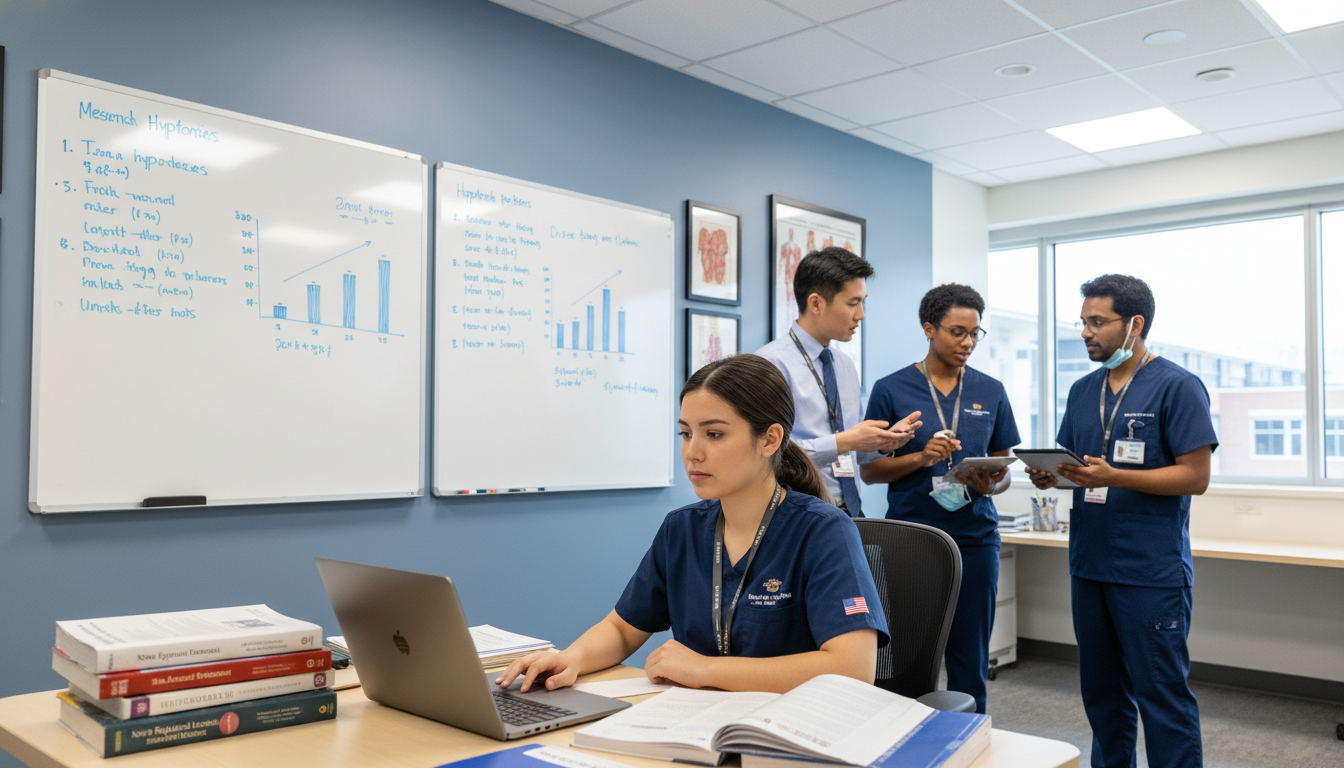
For a DO graduate entering Physical Medicine & Rehabilitation (PM&R), residency is not just about learning to manage spasticity, prescribing therapies, or interpreting EMG/NCS—it’s also a powerful time to build a research foundation that can shape your career. Whether your goal is a clinical practice job, a pain or sports fellowship, or an academic residency track, engaging in research during residency can open doors and differentiate you in an increasingly competitive physiatry match and job market.
Specifically for DO graduates, meaningful research experience during residency can:
- Strengthen your profile for fellowships (pain, sports, brain injury, SCI, pediatric rehab, etc.)
- Support promotion and advancement in academic medicine
- Position you to lead quality improvement (QI) and resident research projects
- Enhance your credibility when collaborating with other specialties (ortho, neuro, anesthesia, neurology)
- Help you compete at the same level as MD peers in research-focused environments
This article walks through how to strategically pursue research as a PM&R resident, with a focus on practical, realistic steps that fit into a busy residency schedule—and with specific attention to opportunities and challenges for a DO graduate residency path.
Understanding the Landscape: Research in PM&R Residency
PM&R is a broad, function-focused specialty that naturally lends itself to diverse research areas:
- Neurorehabilitation (stroke, TBI, SCI)
- Musculoskeletal and sports medicine
- Spasticity management and chemodenervation
- Prosthetics and orthotics
- Pain medicine and interventions
- Electrodiagnostic medicine (EMG/NCS)
- Amputee rehabilitation
- Cancer rehabilitation
- Cardiac and pulmonary rehabilitation
- Health services research, outcomes, and value-based care
- Technology and innovation (wearables, VR, robotics, exoskeletons)
The Reality of DO Graduate Residency Programs
If you’re a DO graduate, you may find yourself in one of three settings:
Formerly AOA-approved programs now ACGME-accredited
- Often strong in clinical training and osteopathic principles
- Research infrastructure can vary: some well-developed, some still growing
Historically MD-dominated academic centers
- Strong research culture and resources
- May have subtle biases, but increasingly open to DO graduates with strong credentials
Community-based PM&R programs
- Heavy clinical load, smaller research footprint
- High potential for quality improvement and outcomes-based projects
In each setting, research during residency is possible, but the type and scope of projects will differ. Your strategy should align with your environment, your career goals, and your available mentorship.
Getting Started: Building a Research Plan as a PM&R Resident
Step 1: Clarify Your Career Goals
Before saying yes to any project, define what you want from research during residency:
- Academic career / academic residency track:
Aim for multiple projects, at least one first-author paper, and national presentations. - Fellowship-bound (pain, sports, SCI, etc.):
At least one or two projects in your area of interest, preferably with a presentation or publication. - Primarily clinical career:
One or two resident research projects or QI initiatives that improve your CV and your local practice.
Your goals will influence how much time you allocate and what type of projects you choose.
Step 2: Assess Your Program’s Research Environment
Ask early in PGY-2 (or even in your intern year if possible):
- Is there a research director or designated faculty responsible for resident scholarly activity?
- Are there ongoing projects you can join?
- Does the program have protected research time or elective blocks?
- What have recent graduates published or presented?
- Are there internal funding opportunities (small grants, resident research awards)?
Look at your program’s website, PubMed, and conference abstracts (AAPM&R, AAP, ASRA, AMSSM) to see what your faculty are working on. This helps you identify mentors and realistic projects.
Step 3: Choose the Right Type of Projects for Your Stage
During PM&R residency, time is limited. Look for projects that are:
- Feasible within 12–24 months
- Supported by local data/mentors
- Aligned with your fellowship or career interests
- Reasonable in scope (not a 5-year prospective trial)
Common, manageable project types:
Retrospective chart review
- Example: Outcomes of spasticity management with botulinum toxin in post-stroke patients at your rehab hospital
- Pros: Uses existing data; more feasible in busy residency
- Cons: Requires IRB approval and careful data management
Quality improvement (QI) project
- Example: Implementing a new screening tool for neuropathic pain in SCI patients and measuring its impact
- Pros: Often easier IRB path; strongly valued by programs and hospital leadership
- Cons: Less traditional “research,” but increasingly important
Case reports or case series
- Example: Unusual EMG findings in a patient with coexisting radiculopathy and polyneuropathy
- Pros: Great for learning writing and submission process; easier to complete
- Cons: Less impact than larger studies, but ideal first steps
Educational research
- Example: Evaluating a new PM&R ultrasound curriculum for residents
- Pros: Aligns well with academic residency track and teaching roles
- Cons: Requires some familiarity with study design and survey tools
Multicenter or collaborative projects
- Example: National PM&R resident-led studies, registry-based research
- Pros: Build academic network; better generalizability
- Cons: More complex coordination
Aim to have a mix: perhaps one “easier” project (case report/QI) and one more substantial project (retrospective study or collaboration).
Practical Strategies: Fitting Research into a Busy PM&R Residency
Time Management: Working With Your Schedule, Not Against It
PM&R residency often has more predictable hours than some surgical fields, but your plate will still be full with inpatient rehab, consults, EMG, and call. To make research sustainable:
- Start small but start early.
Even in PGY-1, you can:- Join existing projects
- Read background literature
- Identify mentors in EMG, SCI, or sports
- Block your time.
Use 1–2 hours per week consistently:- Early mornings or less busy afternoons
- Dedicated weekend block once or twice a month
- Use elective time strategically.
Plan a “research elective”:- 2–4 weeks focused on data collection, analysis, and writing
- Coordinate in advance with your mentor and program director
- Leverage rotations.
On certain rotations:- Inpatient rehab: outcomes and QI projects
- EMG: diagnostic pattern studies or novel case series
- Pain/spasticity clinics: intervention outcomes research
Building Your Research Skill Set
Many DO graduates feel their preclinical training had less emphasis on large academic research ecosystems. You can close this gap quickly:
Learn the basics of study design and statistics.
- Free resources:
- Coursera / edX courses (epidemiology, biostatistics)
- NEJM and JAMA “Users’ Guides to the Medical Literature”
- Focus on:
- Retrospective vs. prospective
- Cohort, case-control, cross-sectional designs
- Basic stats (t-tests, chi-square, regression basics)
- Free resources:
Understand the IRB process.
- Learn:
- How to submit protocols
- When a project is QI vs. human subjects research
- Ask an experienced faculty member to show you a successful example
- Learn:
Develop data management habits.
- Use secure, HIPAA-compliant tools:
- REDCap (common in academic centers)
- Encrypted Excel with de-identified data
- Always follow institutional guidelines for PHI
- Use secure, HIPAA-compliant tools:
Improve your scientific writing.
- Read published PM&R literature to model structure and tone
- Practice writing:
- Structured abstracts
- Introductions (context and gap)
- Methods (clear and reproducible)
- Ask mentors and co-residents for feedback
Specific Opportunities for DO Graduates in PM&R Research
Leveraging Osteopathic Training in Physiatry Research
As a DO graduate, you bring a whole-person, function-oriented mindset that naturally complements PM&R. This perspective can be highlighted in research:
- Osteopathic manipulative treatment (OMT) in rehab settings
- Studying OMT’s role in:
- Chronic low back pain in rehab patients
- Recovery after sports injuries
- Headache or neck pain in TBI patients
- Studying OMT’s role in:
- Holistic outcomes
- Incorporating:
- Patient-reported outcomes (PROs)
- Function, participation, and quality of life measures
- Incorporating:
- Integrative rehab approaches
- Mind-body interventions
- Non-pharmacologic pain management strategies
These topics align well with trends in health systems and can help you stand out as a DO-focused physiatrist.
Building Mentorship: Local and National
Strong mentorship is critical for effective research during residency. For DO graduates, this may mean combining local and national mentors:
Local mentors
- Identify:
- PM&R faculty with recent publications
- Faculty involved in resident research projects
- Research directors at your institution
- Approach them with:
- A brief intro email
- A one-page CV
- Clear statement of your interests (e.g., “PM&R residency, interested in pain and EMG research”)
- Identify:
National mentors and networks
- Join organizations:
- AAPM&R
- Association of Academic Physiatrists (AAP)
- Specialty societies (ASRA for pain, AMSSM for sports, etc.)
- Engage in:
- Resident and fellow sections
- Mentorship programs
- Collaborative research initiatives
- Attend:
- National meetings
- Resident-focused workshops on research methods and academic careers
- Join organizations:
For a DO graduate entering the osteopathic residency match or combining DO and MD training paths, national networks can also provide visibility and unbiased mentorship.
Resident Research Projects That Align With Fellowship Goals
Consider examples tailored to specific career paths:
- Pain medicine fellowship
- Retrospective review of outcomes after fluoroscopic vs. ultrasound-guided injections
- QI project on opioid stewardship in inpatient rehab
- Sports medicine fellowship
- Analysis of return-to-play timelines after specific injuries
- Ultrasound-guided injection outcome studies in athletes
- SCI or TBI fellowship
- Spasticity treatment patterns and functional outcomes
- Impact of early rehab on community re-integration
- Pediatric rehab fellowship
- Outcomes of botulinum toxin injections combined with orthotic management
- Care coordination for medically complex children
Aligning your resident research projects with your future fellowship aspirations strengthens your narrative and your CV.
Turning Resident Research Into Tangible Career Benefits
Strategically Using Your Work for Advancement
You don’t want your research to live in a folder on your desktop. Convert each project into clear academic outputs:
Abstracts and Posters
- Submit to:
- AAPM&R Annual Assembly
- AAP Annual Meeting
- Specialty conferences
- Benefits:
- Networking
- CV lines
- Practice presenting and fielding questions
- Submit to:
Oral Presentations
- Resident research days at your institution
- Regional PM&R or rehab conferences
- National conferences if accepted
Manuscripts
- Even one publication as first or second author is powerful
- Target journals:
- PM&R
- American Journal of Physical Medicine & Rehabilitation
- Archives of Physical Medicine and Rehabilitation
- Subspecialty journals (pain, sports, neurorehab)
Positioning Yourself for an Academic Residency Track
If you are considering an academic career:
Document your trajectory.
- CV sections:
- Research experience
- Publications
- Abstracts and presentations
- Highlight:
- Leadership roles in projects
- Mentorship of junior trainees or medical students
- CV sections:
Ask faculty early about academic pathways.
- Inquire:
- “What does an academic PM&R career look like at your institution?”
- “What expectations are there for research productivity in junior faculty?”
- Ask to:
- Join existing research groups or labs
- Co-mentor medical students on projects
- Inquire:
Lead at least one project.
- Even a small QI project where you are PI or first author shows initiative
- Practice:
- IRB submission
- Data collection and analysis
- Manuscript drafting
How Research Helps in the Physiatry Match and Beyond
You may already be in a PM&R residency, but research still influences:
Fellowship applications
- Pain and sports fellowships are increasingly competitive
- Program directors value:
- Specialty-relevant research
- Evidence of persistence and completion
First job search
- Academic centers look for:
- Demonstrated research interest
- Ability to collaborate on grants or trials
- Even private practices value:
- QI experience
- Ability to interpret and apply current literature
- Academic centers look for:
Long-term growth
- Research skills support:
- Evidence-based practice
- Leadership in clinical guideline development
- Participation in multicenter trials and registries
- Research skills support:
Common Pitfalls and How to Avoid Them
Overcommitting to Too Many Projects
Enthusiasm often leads residents to say yes to everything. Consequences:
- Burnout
- Incomplete projects
- Strained relationships with mentors
Solution:
Limit yourself to 1–3 meaningful projects you can realistically complete and a few smaller, opportunistic contributions (e.g., a single case report or co-authorship).
Lack of Clear Roles and Expectations
Ambiguity causes conflict—especially near deadlines or when submitting manuscripts.
Solution:
At project start, clarify:
- Who is first author?
- Who handles data, writing, analysis?
- Target conference/journal and deadlines
- How you will communicate (email, monthly meetings, shared documents)
Ignoring Authorship and Ownership Issues
Authorship disputes can be painful and career-damaging.
Solution:
- Discuss authorship early and in writing
- Follow journal guidelines (e.g., ICMJE) for authorship criteria
- Involve your mentor if conflicts arise
Delayed IRB Approval
Starting data collection before IRB approval can jeopardize your work and ethics.
Solution:
- Start IRB as early as possible
- Use templates and prior approvals as guides
- Work with a faculty member experienced with IRB processes
FAQs: Research During PM&R Residency for DO Graduates
1. Do I need research during residency if I’m not planning an academic career?
You don’t need extensive research to be a successful community physiatrist, but one or two well-chosen projects still help you:
- Learn to critically appraise literature
- Improve your CV
- Demonstrate initiative and leadership
- Contribute to QI efforts in your practice
You can keep it limited and targeted—e.g., a single QI project and one case report—but the skills and experience will still pay off.
2. How much research is “enough” for competitive PM&R fellowships?
There is no strict number, but for more competitive fellowships (pain, sports, SCI at top centers), a strong profile might include:
- 1–3 research projects, preferably aligned with fellowship interests
- At least 1–2 national conference presentations (poster or podium)
- Ideally 1 or more publications (first or second author)
For other fellowships or less research-intensive programs, well-executed projects and strong letters can compensate for fewer total outputs.
3. I’m a DO graduate in a smaller or community-based PM&R program. How can I still be competitive in research?
Focus on what is accessible and feasible in your setting:
- QI projects that improve inpatient rehab care or clinic workflows
- Retrospective chart reviews using local data
- Case reports/series from interesting EMG, pain, or inpatient cases
- Collaborations with:
- Other departments (neurology, ortho, anesthesia)
- External mentors from national societies or former rotations
You can also reach out to PM&R researchers at larger centers for remotely collaborative resident research projects, especially with clear interests and a willingness to handle data or writing tasks.
4. How do I balance research with my clinical responsibilities and board preparation?
Prioritize clinical competence and board preparation—they are foundational. Then:
- Design small, sustainable blocks of research time (e.g., 1–2 hours per week)
- Use less busy rotations or elective time to do the “heavy lifting”
- Delegate tasks within your team when possible
- Integrate study time with research reading: articles you read for your project often reinforce board-relevant knowledge
Research during residency should complement, not undermine, your training. A thoughtful, strategic approach allows you to build a research portfolio while still excelling clinically and preparing for boards.
By approaching research during residency intentionally—especially as a DO graduate in PM&R—you can gain more than just lines on a CV. You develop a way of thinking, a network of mentors, and a toolkit for lifelong learning and leadership in physiatry. Whether you are targeting the osteopathic residency match, planning a PM&R residency with strong academic aspirations, or simply aiming to deliver the best possible care, integrating research into your training is a powerful investment in your future as a physiatrist.