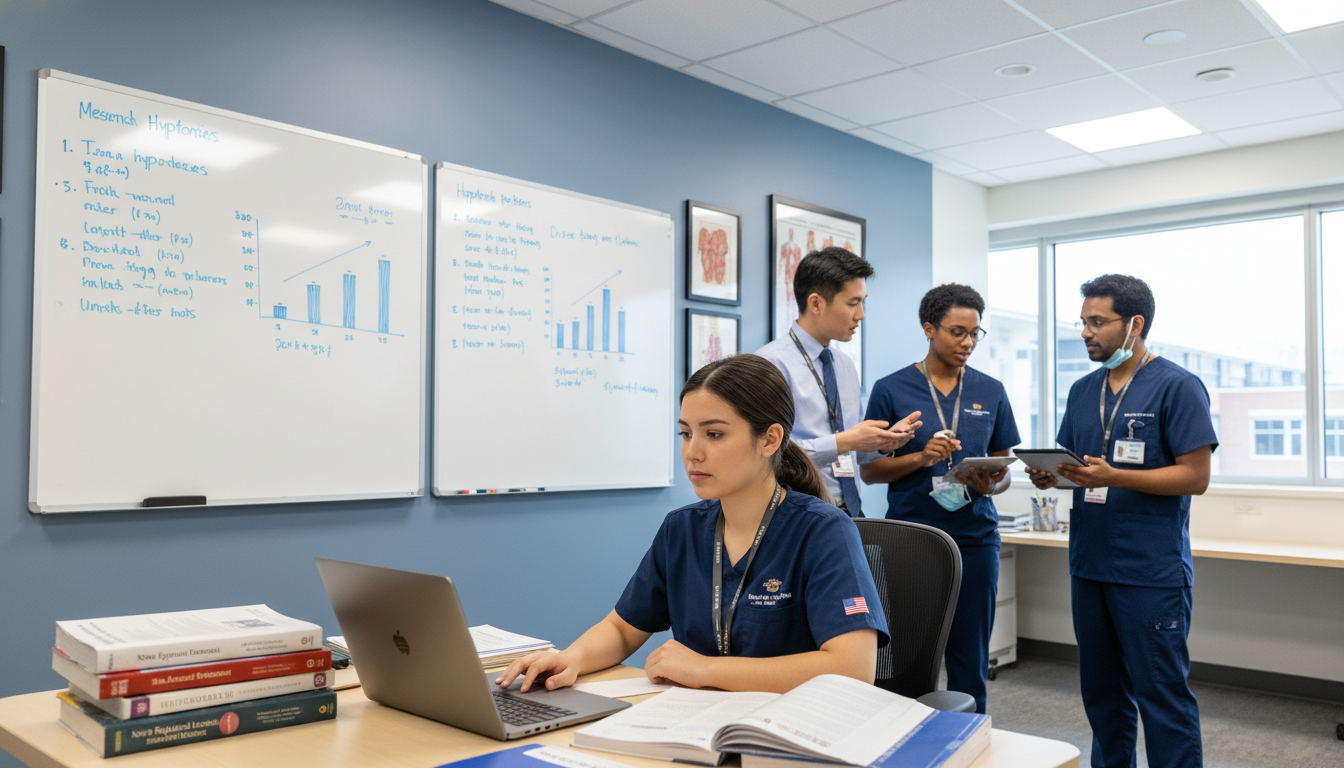
Pulmonary & Critical Care Medicine (PCCM) is one of the most research-rich fields in internal medicine. Whether you’re aiming for a pulm crit fellowship, an academic career, or simply want to become a more analytical clinician, research during residency can be a powerful differentiator.
This guide walks you through why research matters, how to get started even if you have minimal experience, and how to strategically build a portfolio that supports your future in PCCM—including integrated PCCM fellowship programs and academic pathways.
Why Research Matters in Pulmonary & Critical Care
Research is deeply embedded in pulmonary and critical care practice. Many of the interventions that define modern ICU care—low tidal volume ventilation, conservative fluid strategies, prone positioning in ARDS, ECMO selection—are products of carefully conducted clinical trials and observational studies.
1. Fellowship Competitiveness
For a pulm crit fellowship, research is not strictly mandatory at every program, but it is often a major differentiator, especially at academic institutions. Programs look for:
- Evidence that you can formulate a question and pursue it systematically
- The ability to work on a team, meet deadlines, and see projects to completion
- Familiarity with the literature and comfort discussing evidence-based practice
Even a modest set of resident research projects can show you have the skills and curiosity to thrive in a research-rich environment.
What fellowship directors often like to see:
- A coherent “story” in your CV—e.g., multiple projects in critical care, ARDS, sepsis, mechanical ventilation, or pulmonary vascular disease
- Progression from simple contributions (e.g., data collection, case reports) to more complex roles (e.g., first author, protocol design)
- At least one completed product: abstract, presentation, or publication
2. Building Skills You Will Use Daily
Research isn't just about publications—it teaches skills that make you a better intensivist or pulmonologist:
- Critical appraisal: You’ll read trials on ventilator strategies, sepsis resuscitation, or pulmonary hypertension with a more skeptical and nuanced eye.
- Data literacy: You’ll understand risk, odds ratios, hazard ratios, and confidence intervals, which helps when evaluating new guidelines and therapies.
- Systematic thinking: Designing a study trains you to identify confounders, biases, and limitations—skills that transfer directly to complex ICU decision-making.
3. Preparing for an Academic Career
If you’re interested in an academic residency track or envision becoming faculty, early research experience is crucial. It helps you:
- Learn how to navigate IRBs, grants, and collaborative teams
- Identify a niche (e.g., ARDS, lung cancer, interstitial lung disease, ICU outcomes, quality improvement)
- Build relationships with mentors who can sponsor you for career development awards later
Understanding the Research Landscape in PCCM
Pulmonary & Critical Care offers a wide variety of research modalities. You don’t need to do all of them; understanding the spectrum helps you choose projects that fit your interests and available time.
1. Types of Research Common in PCCM
Clinical Outcomes & Epidemiology
- Focus: ICU mortality, ventilator days, readmissions, long-term functional outcomes of ARDS survivors, COPD exacerbation rates.
- Typical design: Retrospective chart review, prospective cohort, registry-based studies.
- Skills: Data extraction, basic statistics, interpretation of observational data.
Clinical Trials
- Focus: Interventions such as ventilator strategies, sedation regimens, proning protocols, pulmonary vasodilators.
- Your role as a resident: Patient screening, consenting, data collection, protocol adherence.
- Pros: Direct patient impact; strong learning environment.
- Cons: Timelines are long; you may not see final results during residency.
Quality Improvement (QI) and Implementation Science
- Focus: Process changes like sepsis bundle adherence, ventilator-associated event reduction, improving handoff quality, or reducing inappropriate transfusions.
- Many programs view clinically rigorous QI projects as part of your resident research projects.
- Often more feasible in limited timeframes and can lead to posters, presentations, and even publications.
Basic and Translational Science
- Focus: Mechanisms of lung injury, inflammation, fibrosis, vascular remodeling, ventilator-induced lung injury.
- Typically requires dedicated protected time and often extra training (e.g., PhD, T32 research years, research-heavy academic residency track).
- Best for residents strongly interested in a physician-scientist path.
Health Services & Data Science
- Focus: ICU utilization, tele-ICU impact, hospital-level outcomes, cost-effectiveness of interventions.
- Increasingly common with EHR-based datasets and large registries.
Medical Education Research in PCCM
- Focus: Simulation in airway management, ultrasound training, ventilator management curricula.
- Good option if you love teaching and plan to combine education and PCCM.
Getting Started: First Steps During Residency
Even in a busy residency, you can strategically launch a meaningful research portfolio. The key is to start early, be realistic, and align projects with your actual bandwidth.
1. Clarify Your Goals
Ask yourself:
- How interested am I in an academic or research-oriented career?
- Am I aiming for highly competitive PCCM fellowship programs?
- What do I want my “story” to be? (e.g., sepsis & shock, mechanical ventilation, COPD, pulmonary hypertension, lung cancer, interstitial lung disease, sleep medicine)
Your answers help shape the number and type of projects you pursue.
Example goal sets:
Goal: Competitive academic pulm crit fellowship at a major center
- Aim: 2–3 substantive projects, with at least one first-author abstract and one manuscript in progress or accepted.
Goal: Good PCCM fellowship, not necessarily top-tier research focus
- Aim: 1–2 meaningful projects (e.g., a QI project and a case series or retrospective chart review), plus smaller contributions.
Goal: Primarily community practice with some academic exposure
- Aim: 1 project or collaboration to understand the basics of research and critical appraisal.
2. Find the Right Mentors
Mentorship is the single most important determinant of success for resident research projects.
How to identify potential mentors:
- Ask your program director or chief residents: “Who in PCCM is most involved in resident research or has ongoing projects?”
- Search your institution’s website for “Pulmonary and Critical Care research” and review faculty bios.
- Look at recent publications with residents from your institution and note the attending authors.
Red flags in potential mentors:
- Vague project ideas with no clear timelines
- No track record of publishing with residents
- Poor responsiveness or unclear roles
Green flags:
- Specific, realistic project scopes
- Examples of previous residents who published or presented under their mentorship
- Willingness to meet early to map out goals and deadlines
3. Choose Projects Strategically
You’ll have limited time. Be deliberate in selecting projects that are:
- Feasible within 6–18 months
- Supported by a mentor with a strong track record
- Aligned—at least loosely—with pulmonary or critical care
Ideal early-residency project types:
- Case reports or small case series (fastest time to completion)
- Retrospective chart reviews with clear data elements and defined outcomes
- QI projects with existing institutional support (e.g., ICU sepsis bundle initiatives)
Project types that may be challenging without protected time:
- Large prospective trials
- Complex translational lab work that requires bench skills
- Very large multi-center datasets requiring advanced statistics

Practical Steps to Plan and Execute Resident Research Projects
Once you have a mentor and a general idea, the real work begins. A structured approach will increase your chances of actually finishing and disseminating your project.
1. Formulate a Clear Research Question
Use the PICO or similar framework:
- Population: ICU patients with ARDS, COPD admissions, patients on mechanical ventilation
- Intervention/Exposure: Prone positioning, sedation strategy, early mobilization, high-flow nasal cannula
- Comparison: Standard care, alternative strategy, historical control
- Outcome: Mortality, ventilator-free days, ICU length of stay, readmissions, complications
Example PCCM research questions:
- Among ICU patients with sepsis, is compliance with early antibiotic administration associated with reduced ICU mortality?
- In COPD patients admitted with exacerbations, does early initiation of non-invasive ventilation reduce need for intubation?
- Does the implementation of a ventilator “bundle” reduce ventilator-associated events in a mixed medical-surgical ICU?
A focused question prevents scope creep and makes IRB submission, data collection, and analysis more manageable.
2. Understanding IRB and Regulatory Steps
Most clinical projects involving patient data require Institutional Review Board (IRB) review.
Common pathways:
- Exempt or expedited review for minimal risk, de-identified retrospective chart reviews
- Full review for prospective interventions or anything altering patient care outside standard practice
- QI determinations: Some QI projects may be considered non-human-subjects research and not require IRB, but always confirm this in writing.
Ask your mentor or a research coordinator for:
- Template protocols from similar projects
- Example consent forms (if needed)
- Institutional data use agreements, if accessing large databases
3. Designing Data Collection
Before you start, define:
- Inclusion and exclusion criteria: e.g., all adult ICU patients with ARDS between specific dates.
- Variables to collect: demographics, lab values, ventilator settings, severity scores (APACHE, SOFA), treatments, outcomes.
- Data sources: EHR, ICU-specific databases, registry data.
Use a structured data collection tool:
- REDCap (commonly used and user-friendly)
- Excel or Google Sheets for smaller projects (ensure secure storage and HIPAA compliance)
Work with a statistician or biostatistics core if available, especially for:
- Sample size considerations
- Proper choice of statistical tests
- Handling missing data
4. Time Management Strategies
You will be juggling clinical work with research. Protect your time:
- Set a weekly research block (e.g., 1–2 hours on a scheduled off-clinic afternoon or weekend morning).
- Use elective blocks to intensify project work—plan well in advance.
- Break down tasks: IRB submission, dataset creation, data cleaning, analysis, abstract writing, manuscript drafting.
Example 12-month timeline for a retrospective ICU study:
- Month 1–2: Finalize question, literature review, draft protocol.
- Month 3–4: IRB submission and revisions.
- Month 5–7: Data extraction and cleaning.
- Month 8: Preliminary analysis with biostatistics support.
- Month 9: Abstract preparation and submission to a national meeting (e.g., ATS, CHEST, SCCM).
- Month 10–12: Manuscript drafting and submission.
Building a Cohesive Research Portfolio for Pulm Crit Fellowship
Your goal is not just to complete random projects; it’s to tell a coherent academic story that supports your future in PCCM.
1. Aligning Your Projects With a Thematic Area
You don’t need a perfectly linear path, but some clustering helps. Examples of thematic tracks:
Ventilator management & ARDS
- QI project on low tidal volume adherence
- Retrospective study of outcomes in ARDS patients with early vs late proning
- Case report on ECMO in severe refractory ARDS
Sepsis and Shock
- Chart review on compliance with sepsis bundles
- ICU QI project on early vasopressor initiation
- Outcomes comparison between different fluid strategies (if feasible)
Chronic lung disease (COPD, ILD, pulmonary hypertension)
- Study of readmission predictors in COPD
- Case series of ILD exacerbations requiring ICU care
- Small educational study on outpatient COPD management in residents
When fellowship programs review your CV, they can then see that your research during residency reflects genuine interest in PCCM topics.
2. Leveraging an Academic Residency Track (If Available)
If your program offers an academic residency track or research pathway:
- Apply early—often in PGY-1 or early PGY-2.
- These tracks may offer:
- Protected research time
- Formal mentorship committees
- Structured curricula in research methods, grant writing, or statistics
- Use this time to tackle more ambitious projects or to start a long-term relationship with a PCCM research mentor.
Even without a formal track, you can simulate this structure by:
- Coordinating electives as “research blocks”
- Working with your program director to avoid overloaded rotations during critical project months
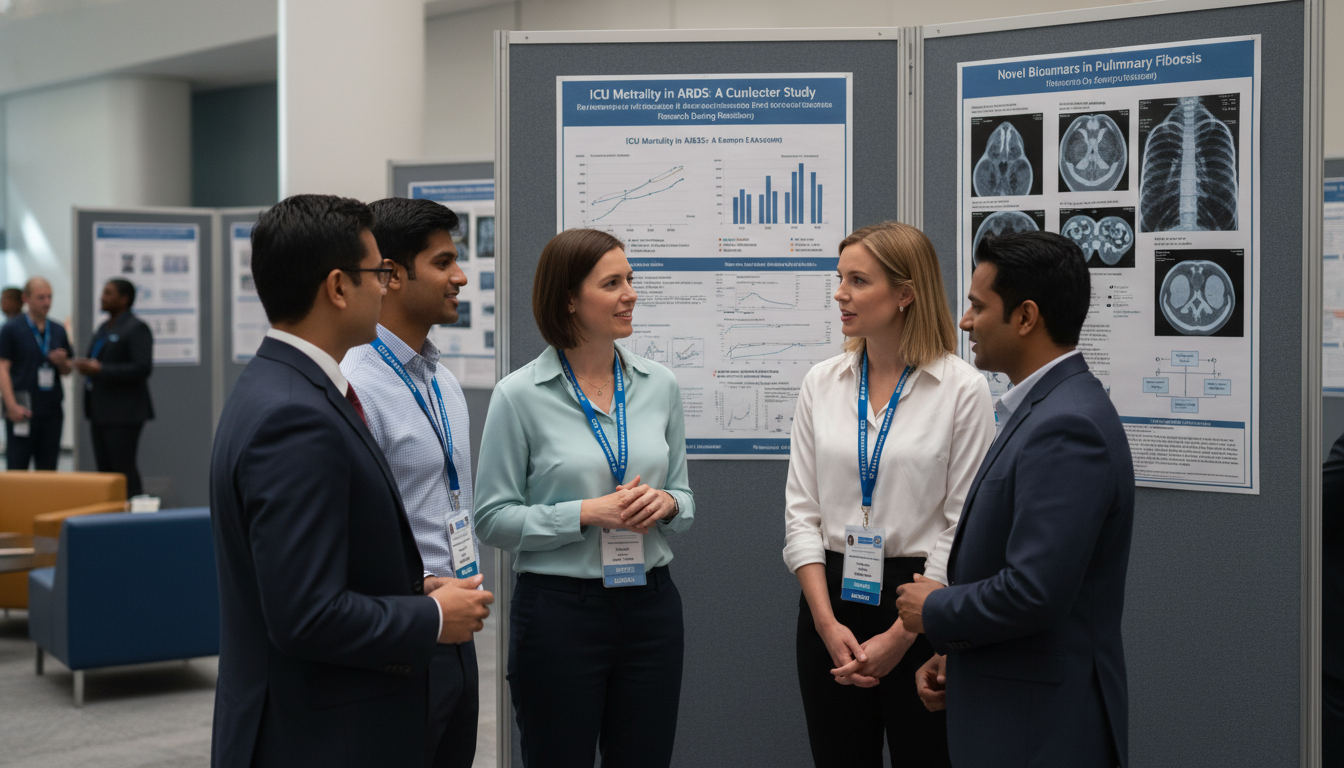
3. Presentations, Publications, and Visibility
Fellowship programs care about outputs, not just efforts.
Aim for:
- Local/regional presentations: Hospital research day, state or regional society meetings.
- National conferences: American Thoracic Society (ATS), Society of Critical Care Medicine (SCCM), American College of Chest Physicians (CHEST).
- Publications: Even one first-author paper in a peer-reviewed journal is impactful; case reports or brief reports also count.
Don’t underestimate:
- Letters to the editor or short commentaries on recent PCCM trials
- Review articles co-authored with faculty (e.g., on a niche PCCM topic)
- Book chapters in critical care or pulmonary texts (often invited by mentors)
Each of these strengthens your profile for a pulm crit fellowship and gives you talking points for personal statements and interviews.
Common Challenges and How to Overcome Them
Research during residency is rewarding but not easy. Anticipating challenges will help you navigate them more smoothly.
1. Limited Time and Burnout Risk
Problem: Heavy clinical load, call nights, and fatigue can derail even well-planned projects.
Solutions:
- Start with smaller, high-yield projects (case reports, QI) to build momentum.
- Be honest with mentors about your schedule constraints before committing.
- Use tools like shared Trello boards or task lists to keep projects on track in small increments.
- Protect personal time; burnout undermines both your clinical and academic performance.
2. Lack of Prior Research Experience
Problem: You may feel behind peers who did extensive medical school research.
Solutions:
- Acknowledge the learning curve and use it as a talking point: “I discovered my interest in PCCM research during residency and built skills quickly through focused projects.”
- Take advantage of institutional workshops on statistics, research methods, or manuscript writing.
- Lean on your mentor and institutional resources (research offices, biostatistics cores).
3. Projects That Stall or Never Finish
Problem: Common, especially with poorly scoped projects or mentor changes.
Solutions:
- At project start, define concrete deliverables and target dates.
- If a project is clearly stalled due to factors beyond your control, ask your mentor:
- “Is there a smaller, more feasible paper we can salvage from this data?”
- “Can we re-scope this as a short report or conference abstract?”
- Limit the number of concurrent projects to 1–2 major and 1–2 minor commitments.
4. Choosing Between Breadth and Depth
Problem: Temptation to say “yes” to every opportunity vs. focusing on a coherent niche.
Solutions:
- During PGY-1, some exploration is fine: different topics, mentors, and project types.
- By mid-PGY-2, begin to narrow your focus on 1–2 main themes relevant to PCCM.
- When offered a new project, ask:
- “Does this contribute to my overall story and goals for PCCM fellowship?”
- “Can I realistically complete this before I apply for fellowship?”
Frequently Asked Questions (FAQ)
1. Do I need multiple first-author publications to match into a good pulm crit fellowship?
Not necessarily. Many strong PCCM fellowship programs value quality and coherence over quantity. A typical successful applicant might have:
- 1–2 first-author abstracts or presentations at national meetings
- 1 first-author or co-first-author publication (even if pending)
- Additional co-authorships or case reports
What matters most is that your research aligns with PCCM and that you can clearly articulate your role, what you learned, and how it shaped your career goals.
2. Is quality improvement (QI) considered “real” research for residency and fellowship applications?
Yes, if it is rigorously designed and evaluated. Well-executed QI projects:
- Often address meaningful ICU outcomes (e.g., reducing ventilator-associated events, improving sepsis care)
- Can lead to abstracts and publications
- Show you can improve systems of care—a core skill for intensivists
Be sure to apply systematic methods (e.g., PDSA cycles, proper outcome measurement) and discuss your QI work as part of your resident research projects during interviews.
3. What if my residency program has limited PCCM research opportunities?
You still have options:
- Look for faculty doing related work in hospital medicine, general internal medicine, or emergency medicine that overlaps with sepsis, respiratory failure, or ICU admissions.
- Collaborate remotely with investigators at other institutions—especially if your mentor has external collaborations.
- Focus on high-quality case series, narrative reviews, or educational projects connected to pulmonary and critical care topics.
Explain in your application that you maximized the opportunities available to you, and highlight your initiative.
4. When should I start research if I’m aiming for a PCCM fellowship?
Ideally:
- Begin exploring and meeting with potential mentors in PGY-1.
- Have at least one active project (and hopefully one near completion) by early PGY-2.
- By the time you apply for fellowship (typically late PGY-2 or early PGY-3), aim to have presented or submitted at least one project and be able to discuss an ongoing project in detail.
Starting later is still possible, but you may have fewer completed outputs; in that case, focus your application on the depth of your engagement and the clear trajectory toward an academic or evidence-based PCCM career.
Research during residency in pulmonary and critical care is both challenging and deeply rewarding. With smart project selection, thoughtful mentorship, and disciplined time management, you can build a research portfolio that not only supports your pulm crit fellowship aspirations but also transforms you into a more thoughtful, evidence-driven clinician—regardless of where your career ultimately leads.