
Why Research During Residency Matters for Family Medicine MD Graduates
For an MD graduate entering family medicine residency, research might seem secondary to learning core clinical skills, managing call, and passing boards. Yet research during residency can strongly shape your career trajectory—clinically, academically, and professionally.
Whether you trained at an allopathic medical school or took a non-traditional route, engaging in resident research projects during your family medicine residency can:
- Make you more competitive for an academic residency track or future faculty roles
- Expand your clinical reasoning and critical appraisal skills
- Help you stand out in the FM match if you’re applying to fellowships (e.g., sports medicine, geriatrics, academic medicine)
- Open doors to leadership, QI, or population health positions after graduation
For many MD graduate residency applicants, the key concern is: How do I realistically do research during residency when I’m already overwhelmed? This guide walks through what research in family medicine looks like, how to get involved early, and how to align projects with your long-term career goals—without burning out.
Understanding the Landscape: Research in Family Medicine Residency
Research in family medicine looks different from lab-heavy subspecialties. It is usually patient-centered, community-based, and frequently pragmatic, focused on real-world problems that primary care physicians face daily.
Common domains for resident research projects in family medicine include:
Clinical research:
- Evaluating outcomes of chronic disease management (diabetes, hypertension, COPD)
- Studying prescribing patterns (e.g., opioids, antibiotics)
- Examining vaccine uptake or preventive care adherence
Quality improvement (QI) and patient safety:
- Reducing hospital readmissions from your clinic population
- Improving cancer screening rates (Pap, mammogram, colon cancer screening)
- Streamlining transitions of care from ED/hospital to clinic
Health services and systems research:
- Impact of telemedicine in rural or underserved populations
- Social determinants of health screening and its effect on outcomes
- Workflow optimization in residency clinic settings
Medical education research:
- Evaluating new curricula (POCUS in primary care, behavioral health integration)
- Studying resident wellness interventions, burnout prevention, or mentorship models
Community-based and public health research:
- Community interventions for obesity, smoking cessation, or mental health
- Partnerships with local health departments or schools
For most family medicine programs in the U.S., ACGME requires scholarly activity, which may include research, QI, or structured scholarly projects. That means nearly every MD graduate in a family medicine residency will have at least some opportunity—often an expectation—to participate in research.
What Counts as “Research” During Residency?
Not every project has to be an RCT or a large multi-center trial. For residency purposes, research may include:
- Retrospective chart reviews
- Prospective cohort or observational studies
- QI cycles with data collection and analysis (PDSA cycles, run charts)
- Educational interventions with pre/post assessment
- Case series or structured case reports with literature review
- Practice-based research network (PBRN) studies
The key is that the project has:
- A focused question
- A reproducible method
- Systematic data collection
- Some form of analysis
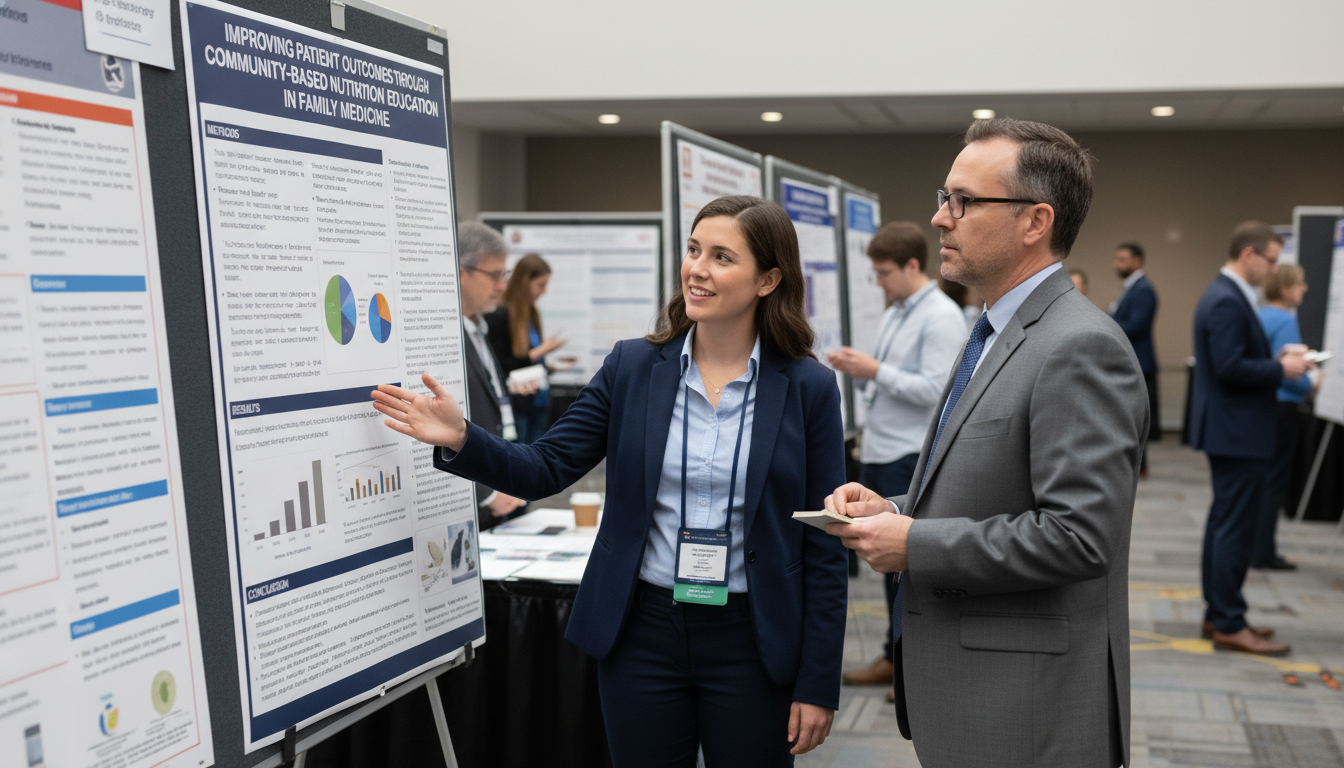
- Plans to disseminate (poster, oral presentation, manuscript)
Getting Started: First Steps in Resident Research
As an MD graduate resident, you don’t need to arrive with a fully formed research proposal. You do need curiosity, initiative, and a realistic strategy.
1. Start Early: Intern Year Matters
If you’re serious about research during residency, start in PGY-1—ideally in the first 6 months:
Ask your program director or chief residents:
- “Which faculty are most active in research?”
- “Do we have an academic residency track or a research track?”
- “Are there existing projects that need a resident to join?”
Attend any research orientations, workshops, or journal clubs.
Join the research or QI committee if your program has one.
Starting early allows time for:
- IRB approvals
- Data collection (often slower than expected)
- Revisions
- Abstract submissions and conference timelines
Waiting until late PGY-2 or PGY-3 can severely limit what you can accomplish.
2. Identify Your Interests and Career Goals
Aligning your research with your future plans makes the work more meaningful and sustainable. Consider:
Interested in academic medicine or an academic residency track?
- Aim for projects that can produce abstracts and manuscripts.
- Focus on curricular innovation, teaching, or primary care outcomes.
Planning a fellowship (sports, geriatrics, palliative, OB, addiction, etc.)?
- Select a topic related to that field: concussion management, frailty in older adults, perinatal mental health, MAT in primary care.
Aiming for community practice after graduation?
- Emphasize QI, population health, and practice redesign projects that mirror what you’ll need in real groups or health systems.
Example:
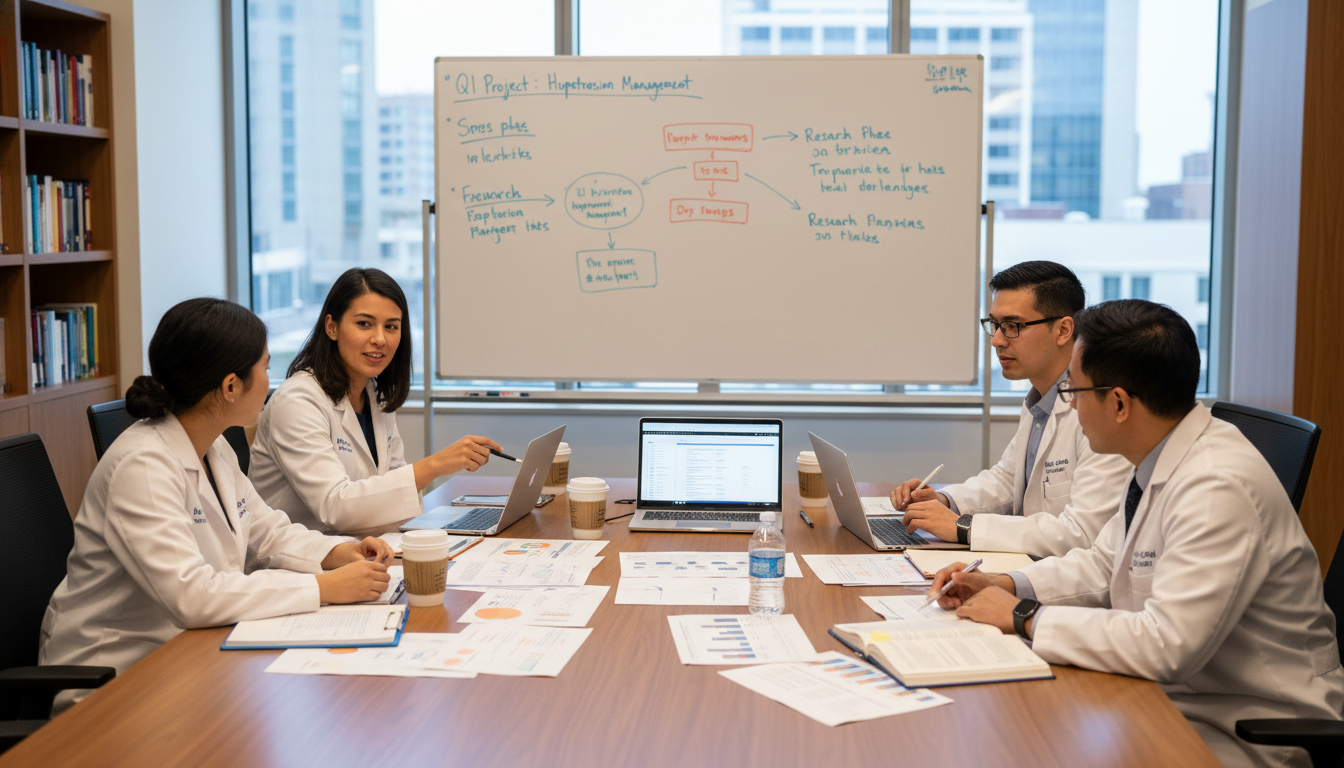
If you see yourself as a future medical director, you might lead a QI project on improving hypertension control rates in your clinic—developing skills directly transferrable to leadership roles.
3. Find the Right Mentor(s)
Your mentor choice can make or break your experience. Look for:
- Someone with a track record: publications, presentations, or active projects
- A mentor whose working style matches yours (organized, responsive, realistic)
- A person who has successfully mentored previous residents
- Ideally, a co-mentor in biostatistics or QI if available
Questions to ask potential mentors:
- “What are your expectations for a resident mentee?”
- “How often do you typically meet with your research group?”
- “What types of dissemination (conference, papers) do you typically aim for?”
- “Are there ongoing projects I could join quickly?”
If your family medicine department is limited, look to:
- Other departments: pediatrics, internal medicine, psychiatry, OB/GYN
- Public health or epidemiology faculty at affiliated universities
- Practice-based research networks associated with your clinic
Types of Resident Research Projects That Work in Family Medicine
To succeed with research during residency, choose projects with scope appropriate to your time and resources. Below are realistic models for an MD graduate in a busy family medicine residency.
1. Retrospective Chart Review
Why it works: No need to recruit patients prospectively; you use existing EMR data.
Example project ideas:
- Antibiotic prescribing for acute sinusitis in your clinic over 2 years
- Diabetes control rates (A1c <7 or <8) before and after implementing a care manager
- Patterns of depression screening and follow-up in prenatal care patients
Key steps:
- Refine a focused, answerable question
- Define inclusion/exclusion criteria
- Decide outcome measures and variables
- Obtain IRB approval (often expedited)
- Work with IT/EMR or a data analyst if available
- Clean and analyze data (often with faculty or a statistician)
This format is high-yield for abstracts and sometimes manuscripts.
2. Quality Improvement (QI) Project with Research Rigor
Many residencies require QI projects; you can design yours to be both QI and publishable.
Example:
You want to improve colorectal cancer screening rates in your clinic.
Steps:
- Baseline measurement: current screening rates
- Identify barriers: EMR alerts, patient factors, workflow issues
- Implement interventions:
- EMR reminders
- Pre-visit planning by nursing staff
- Patient education materials
- Re-measure after an intervention period
- Use simple statistical methods (chi-square, run charts)
- Reflect and adjust (PDSA cycles)
Document it well, and this can become:
- A local or regional conference poster
- A submission to family medicine or QI journals
This is particularly valuable for MD graduate residency trainees who expect to work in value-based care settings.
3. Prospective Observational Study
More effort than a chart review, but still feasible during residency.
Examples:
- Tracking outcomes of a new group visit model for diabetes
- Evaluating patient satisfaction and no-show rates with telemedicine roll-out
- Studying the impact of integrated behavioral health in your clinic
You’ll need:
- Strong mentorship, careful planning, and IRB approval
- A feasible timeline and clear sample size goals
- Simple, well-chosen outcomes
4. Educational Research
If you’re drawn to teaching or an academic residency track, educational studies can be ideal.
Examples:
- Implementing a new bedside ultrasound curriculum in your program and measuring skill acquisition
- Studying whether a resident-led community health teaching program improves student knowledge
- Evaluating the impact of a new resident wellness curriculum
Often these projects use:
- Pre/post tests
- Surveys
- Objective Structured Clinical Examination (OSCE) performance
- Qualitative data (focus groups, interviews)
5. Case Reports and Case Series
Case work is particularly accessible during busy rotations:
- Unusual presentations of common diseases (e.g., atypical shingles, silent MI)
- Rare but educational conditions seen in outpatient family medicine
- Complex multi-morbidity cases with ethical or systems-based challenges
Though less impactful than original research, these can:
- Develop your writing skills
- Build your CV with early publications
- Help you understand literature review and referencing
Practical Strategies to Balance Research With Residency Demands
The biggest barrier to research during residency is not interest—it’s time and fatigue. To make this sustainable:
1. Choose Scope Wisely
- Start with one primary project, not three.
- Avoid overly ambitious designs that require complex recruitment or long follow-up unless you have a strong, experienced team.
- Ask your mentor: “Is this realistically doable within 12–18 months for a busy resident?”
2. Build Research Into Your Schedule
Leverage any built-in structures in your family medicine residency:
- Research elective blocks (2–4 weeks):
- Use these intensely for project planning, IRB, heavy data work.
- Longitudinal scholarly activity half-days:
- Set aside protected time, and treat it like a clinical commitment.
Be proactive:
- At the start of each academic year, block off time on your personal calendar for data analysis, writing, or meetings.
- Negotiate protected research time if you’re on an academic residency track.
3. Use Tools and Systems
- Project management: Trello, Asana, Notion, or a shared Google Doc to track tasks, deadlines, IRB stages.
- Citation management: Zotero, Mendeley, or EndNote to organize articles.
- Writing: Draft in small chunks; even 20–30 minutes can be productive if you know your next step.
Example weekly routine:
- 1 hour on a lighter clinic day: update data spreadsheet
- 30 minutes one evening: revise abstract introduction
- Weekend hour (twice a month): literature search or reading
4. Collaborate With Co-Residents
Team projects build support and distribute workload:
- One resident leads IRB and protocol
- Another handles data extraction
- Another focuses on analysis and presentation preparation
Ensure clear authorship and role expectations from the beginning, ideally confirmed with your mentor.
5. Protect Your Well-Being
Research should enhance, not destroy, your residency experience:
- Avoid saying yes to every opportunity—prioritize projects aligned with your goals.
- Watch for signs of burnout; speak with mentors if your workload becomes unmanageable.
- Understand that some projects will face setbacks—IRB delays, negative results, incomplete data. That is normal and educational.
Turning Research Into Career Capital: CV, Match, and Beyond
For MD graduates coming from an allopathic medical school match into family medicine, research enhances your trajectory even after the FM match is over.
1. How Research Strengthens Your CV
Well-executed resident research projects can translate into:
- Abstracts at local, regional, and national conferences:
- AAFP National Conference of Family Medicine Residents and Medical Students
- STFM (Society of Teachers of Family Medicine)
- NAPCRG (North American Primary Care Research Group)
- Manuscripts in peer-reviewed journals
- Institutional and departmental awards
This signals to future employers or fellowship directors that you:
- Can manage complex tasks while maintaining clinical responsibilities
- Understand evidence-based medicine beyond textbook knowledge
- Are likely to contribute to scholarly or QI efforts in their institution
2. Academic Residency Track and Future Roles
If your program offers an academic residency track, strong research involvement can:
- Qualify you for additional protected academic time
- Connect you with departmental leaders and potential faculty positions
- Provide a teaching and research portfolio you can present when seeking an academic job
After graduation, your experience with research during residency can lead to roles such as:
- Core or associate residency faculty
- Medical director or QI lead in a clinic or health system
- Population health or system redesign positions
- Participation in practice-based research networks
3. Using Research to Differentiate Yourself
Even in a broad specialty like family medicine, niches matter.
Examples:
- If you focus on resident research projects in addiction medicine (e.g., buprenorphine in primary care), you can position yourself for targeted roles in integrated addiction and primary care clinics.
- A portfolio of educational research on curriculum design in family medicine outpatient settings may lead to clerkship director or program leadership positions.
- QI projects demonstrating improved chronic disease outcomes can support your case for roles in health systems leadership.
4. Communicating Research Experience Effectively
You must be able to articulate your work clearly in interviews and networking:
Be prepared to answer:
- “What was the main question your project was trying to answer?”
- “What did you learn from the process—especially the challenges?”
- “What would you do differently if you repeated this project?”
- “How did this experience change your clinical practice?”
Frame your research as not just academic, but directly relevant to better patient care, which resonates strongly in family medicine.
FAQs: Research During Family Medicine Residency for MD Graduates
1. I completed an MD graduate residency match into family medicine with no prior research experience. Is it too late to start?
No. Many residents begin research during residency with zero prior experience. Start by:
- Meeting with a research-oriented faculty member early in PGY-1
- Joining an ongoing project instead of designing one from scratch
- Participating in structured scholarly activity or research workshops offered by your program
You can still produce meaningful QI or clinical projects within 2–3 years of training.
2. Do I need research during residency if I plan to do only community family medicine and not an academic career?
Not strictly, but it’s still valuable:
- QI and outcomes-based projects mirror what many community groups and health systems expect under value-based care models.
- Research skills help you interpret new evidence, design clinic workflow changes, and participate in leadership discussions.
- Having at least one well-done project can distinguish you in job interviews, especially for roles with leadership potential.
3. How do I choose between a QI project and a more traditional research study?
Consider:
- Time and infrastructure: If your program has strong EMR support and QI culture, a QI project may be smoother.
- Career goals: If you’re strongly aiming at an academic residency track or future fellowship, a more hypothesis-driven study could provide better odds of publication.
- Mentorship: Follow where the best mentor and support exist; a well-mentored QI project can be more impactful than a poorly supported research study.
Many residents successfully design hybrid QI-research projects, which fulfill residency requirements and produce publishable data.
4. How many research projects should I aim to complete during family medicine residency?
Focus on quality over quantity. For most MD graduates, a realistic goal in a 3-year family medicine residency is:
- 1 major project (QI or clinical research) that leads to at least a poster or oral presentation
- Possibly 1–2 smaller projects, such as a case report, educational study, or secondary authorship on a collaborative project
Trying to start multiple large projects often leads to incomplete work and frustration. One well-executed, disseminated project is more valuable than several half-finished ones.
Research during residency does not turn family medicine into a lab-based specialty, but it deepens your practice, broadens your career options, and helps you become the kind of physician-leader modern primary care needs. By starting early, choosing the right mentor and manageable projects, and aligning your work with your long-term goals, you can transform research from “extra work” into a powerful accelerator for your future in family medicine.