Why Research During Residency Matters for Caribbean IMGs in Pulm Crit
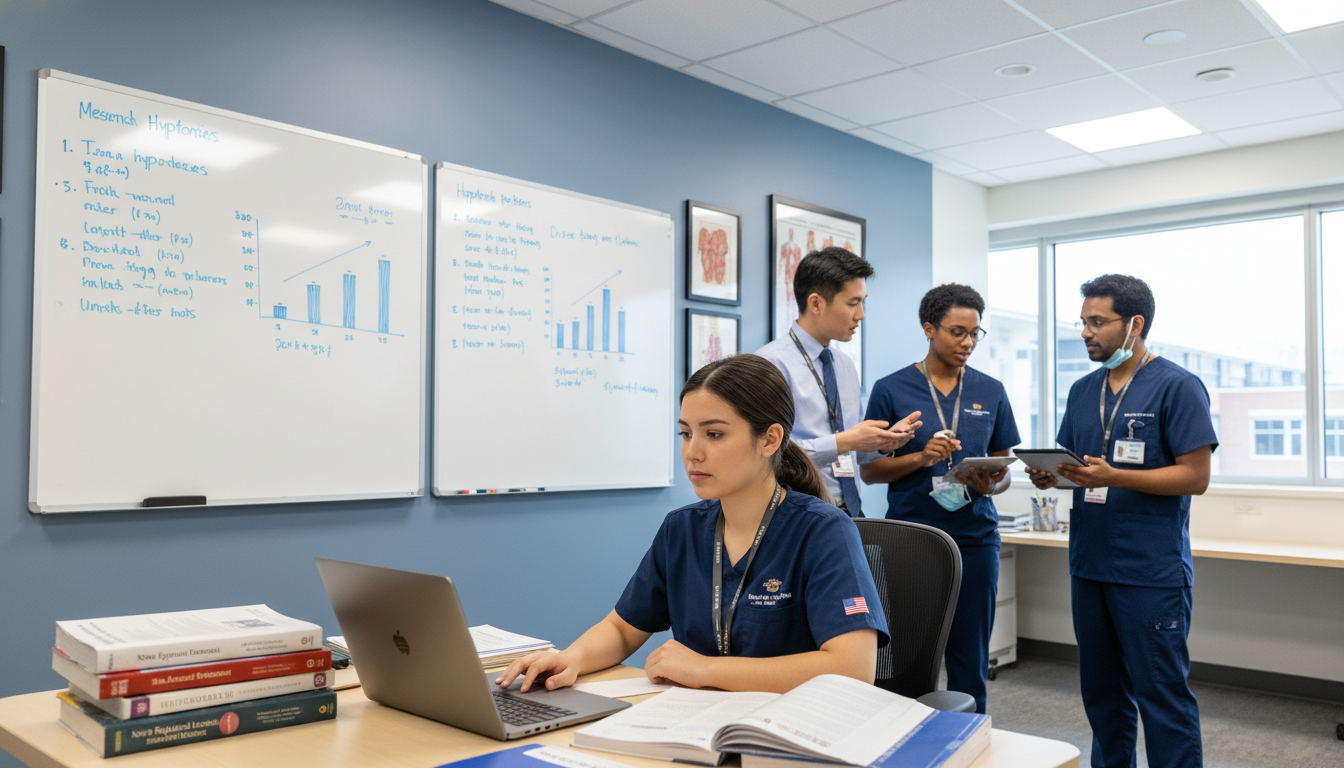
If you are a Caribbean medical school graduate aiming for a Pulmonary & Critical Care (PCCM) fellowship, research during residency is no longer “optional.” For many programs, particularly academic PCCM fellowships, it is a core criterion used to differentiate applicants with similar board scores and clinical evaluations.
As a Caribbean IMG, you already know you’re working to overcome extra scrutiny: concerns about training background, visa issues, and assumptions about research exposure. Strategic, focused resident research projects can help you:
- Signal academic potential beyond board scores
- Demonstrate commitment specifically to pulmonary and critical care medicine
- Build relationships with division faculty who can advocate for you
- Produce concrete output: abstracts, posters, manuscripts, quality improvement (QI) projects
- Strengthen your application for an academic residency track or future PCCM fellowship
This article walks you step-by-step through how to plan, execute, and leverage research during residency as a Caribbean IMG targeting a pulm crit fellowship (Pulmonary & Critical Care Medicine). Even if you are starting with zero publications and limited research experience at a Caribbean medical school, you can still build a strong scholarly portfolio during residency.
Understanding the Research Landscape in Pulmonary & Critical Care
Before you sign up for any project, it helps to understand how pulmonary and critical care research typically looks at the resident level.
Common Types of Resident Research Projects
Retrospective chart reviews
- Examples:
- Outcomes of ARDS patients managed with prone positioning at your ICU
- Risk factors for readmission in COPD patients discharged from your hospital
- Pros: Feasible, can often be done without extra patient contact, good starter projects
- Cons: Data cleaning is time-consuming, publication may be limited by single-center design
- Examples:
Quality improvement (QI) projects
- Examples:
- Improving compliance with sepsis bundle within 3 hours of ED arrival
- Increasing screening for ICU delirium using CAM-ICU
- Pros: High-yield for resident portfolios; many PCCM fellowships value QI experience; often easier to get IRB approval or use QI exemption pathways
- Cons: May be harder to publish in high-impact journals, but still strong for abstracts/posters and demonstrating systems-thinking
- Examples:
Case reports/series
- Examples:
- Unusual presentation of hypersensitivity pneumonitis
- Novel complication of ECMO support in your ICU
- Pros: Great to start writing; can be realistically completed in residency; highlights clinical reasoning
- Cons: Lower impact, but still useful for early CV building and learning the manuscript process
- Examples:
Prospective studies
- Example:
- Prospective assessment of adherence to lung-protective ventilation strategies in ARDS patients
- Pros: Higher impact potential; may lead to strong publications and presentations
- Cons: More complex logistics, data collection burden, longer timelines (may extend beyond graduation)
- Example:
Educational research
- Example:
- Evaluating an ICU ultrasound curriculum for residents and measuring pre- and post-knowledge scores
- Pros: Good fit if you like teaching and want an academic residency track; often feasible with limited resources
- Cons: Requires some comfort with survey design and basic statistics
- Example:
What PCCM Fellowship Directors Actually Look For
Program directors evaluating a Caribbean IMG’s application for PCCM fellowship usually consider:
Track record of scholarly activity
- At least 1–2 substantial projects (abstracts, posters, manuscripts) related to pulmonary/critical care
- Participation in resident research projects, especially if you moved something from idea → data → presentation/publication
Evidence of follow-through
- Did you see the project through to completion?
- Did you present at a regional or national meeting (e.g., ATS, CHEST, SCCM)?
Letters detailing research involvement
- Strong letters from PCCM faculty explaining your role in the project (design, data analysis, writing) carry significant weight
- For Caribbean IMGs, these letters help offset bias about perceived training gaps
Fit with an academic environment
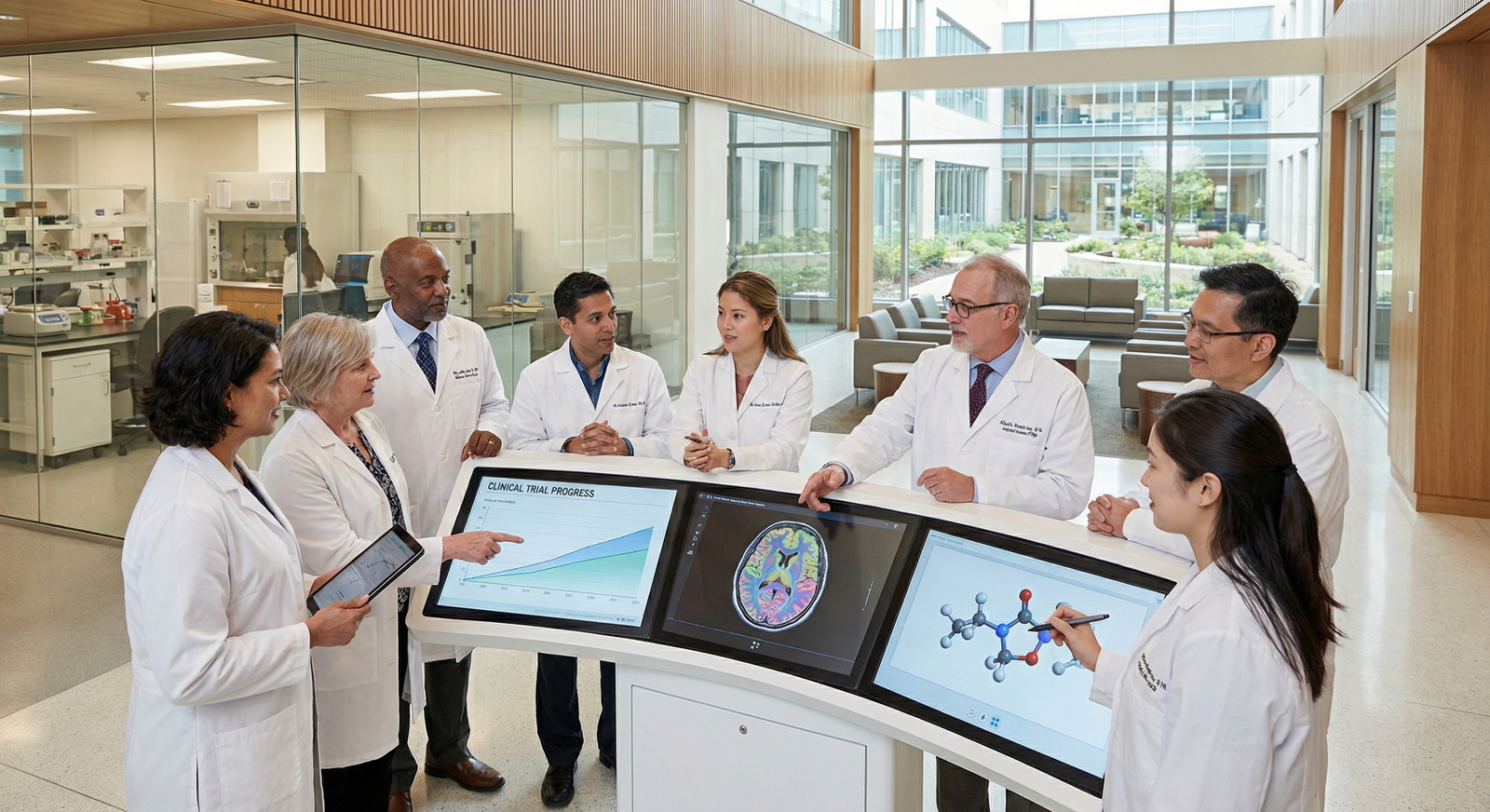
- If you’re applying to a more academic PCCM fellowship or an academic residency track, they want to see comfort with reading literature, asking research questions, and engaging in scholarly discussions during ICU rounds and journal club.
Getting Started: From Caribbean Med School to Resident Investigator
Many Caribbean IMGs come from curricula that emphasize clinical rotations and board prep over formal research training. That is not a deal-breaker. You just need a deliberate strategy early in residency.
Step 1: Be Honest About Your Starting Point
Ask yourself:
- Do I have any research experience from my Caribbean medical school?
- Example: participation in an SGU residency match–oriented research elective or a small study during clerkships
- Have I ever worked with an IRB, collected data, or written a manuscript?
- What skills am I missing: statistics, writing, study design?
This will help you communicate your needs when you approach faculty.
Step 2: Identify Pulmonology and ICU Mentors Quickly
Within the first 3–6 months of intern year, you should:
Pay attention on your ICU and pulmonary consult rotations:
- Who leads journal club?
- Who is always referencing recent studies?
- Who mentions their ongoing trials or publications?
Ask upper-level residents:
- “Which attendings are actively involved in research during residency?”
- “Who is known for involving residents in PCCM projects?”
Look at your institution’s website:
- Search for “Pulmonary and Critical Care” faculty and scan their publications
- Identify 2–3 faculty whose clinical interests match yours (e.g., ARDS, sepsis, asthma, interstitial lung disease, sleep medicine).
Then, send a concise email:
Subject: Internal Medicine Resident Interested in Pulmonary/Critical Care Research
Dear Dr. [Name],
I am a PGY-1 internal medicine resident with a strong interest in pursuing a PCCM fellowship. I am especially interested in [ARDS, ICU outcomes, COPD, etc.]. As a Caribbean IMG, I’d like to build a solid foundation in research during residency and would be grateful for an opportunity to get involved with any ongoing or upcoming projects.
Would you have 15–20 minutes to discuss how I might contribute to your research or any division projects appropriate for a resident?
Sincerely,
[Name, PGY level]
Keep it respectful, direct, and specific to pulmonary/critical care.
Step 3: Clarify Expectations Early
When a mentor shows interest, ask:
- What is the realistic timeline for this project?
- What will be my role (data collection, chart review, literature review, analysis, writing)?
- Is there a chance for presentations or publications if we do our part?
- How will authorship be decided?
As a Caribbean IMG, it’s especially important to ensure your contributions are visible and documented. You want projects where you can be:
- First author on at least 1–2 abstracts/posters
- Meaningful co-author on 1–2 case reports or retrospective studies
Designing and Executing High-Yield Resident Research Projects
Once you’ve connected with a mentor, your next challenge is making sure the project is realistic within residency constraints.
Choosing a Feasible Project for Your Schedule
Ideal early projects meet these criteria:
- Clearly defined question
- Example: “What was the mortality and length of stay for mechanically ventilated COVID-19 patients in our ICU during the first wave?”
- Limited, accessible data
- Single-center, 6–24 month time frame
- Measurable outcomes
- Mortality, ICU length of stay, ventilator-free days, readmissions, bundle compliance
- Alignment with fellowship interests
- Ventilator management, ARDS, septic shock, pulmonary hypertension, ILD, COPD, asthma, sleep-disordered breathing, or ICU QI
You don’t need a randomized controlled trial to impress PCCM fellowship programs. A well-executed QI or retrospective project is absolutely valuable.
Integrating Research Into a Busy Residency
Some practical strategies:
Block scheduling
- Use elective rotations or ambulatory blocks when the workload is lighter to perform data extraction or intensive writing.
- If your program allows, request an “academic elective” for research during PGY-2 or PGY-3.
Protecting time
- Set a recurring weekly 1–2 hour block (e.g., Sunday mornings) for literature review or manuscript drafting.
- Treat it as seriously as a clinic or ICU shift—don’t cancel unless there’s an emergency.
Use downtime wisely
- On slower night shifts (if allowed), outline introductions, review articles, or read relevant literature.
- Keep a running list of references in a citation manager (Zotero, Mendeley, EndNote).
Example: A Realistic Resident-Level ICU QI Project
Project: Improve adherence to lung-protective ventilation in ARDS patients
Question:
- What is our ICU’s current adherence rate to low tidal volume ventilation in ARDS, and can a targeted intervention improve it?
Baseline assessment:
- Retrospectively review charts of ARDS patients over the prior 6–12 months.
- Collect tidal volumes, predicted body weight, P/F ratios, outcomes.
Intervention:
- Design a simple checklist for ventilator settings included in initial ICU orders.
- Provide a 10-minute in-service to ICU nurses and RTs.
- Add a daily prompt in ICU rounds to verify tidal volume and plateau pressures.
Post-intervention measurement:
- Collect data on ARDS patients during the 3–6 months after the intervention.
- Compare tidal volume adherence and secondary outcomes.
Output:
- Abstract/poster at ATS, CHEST, or SCCM.
- Potential short manuscript in a QI or critical care journal.
This type of project directly reflects knowledge and skills in pulmonary and critical care, is manageable during residency, and looks excellent in a PCCM fellowship application.

Building a Research Portfolio That Supports a PCCM Fellowship
To maximize the impact of your research during residency, you need a deliberate portfolio strategy, not random disconnected projects.
Aim for a Balanced Mix of Outputs
Over three years of residency, an ambitious—but realistic—goal for a Caribbean IMG interested in a pulm crit fellowship is:
- 1–2 pulmonary/ICU-focused QI or retrospective projects
- At least one completed to the point of abstract/poster and (ideally) manuscript submission
- 2–4 case reports or small series
- Focus on unusual pulmonary diseases, critical care complications, or procedural issues (e.g., ECMO, bronchoscopy, thoracentesis complications)
- Journal club and evidence-based presentations
- Keep slides and notes—these can support discussions in interviews and show your comfort with critical appraisal.
If your program has an academic residency track, actively seek it out. These tracks often include:
- Protected research time
- Structured mentorship
- Grant writing or research methods seminars
- Expectations for submission to local or national meetings
For a Caribbean IMG, participation in an academic residency track is a strong signal to fellowship programs that you function well in a scholarly environment.
Strategic Presentation and Publication Choices
Priority targets for PCCM-focused resident research projects:
Conferences:
- American Thoracic Society (ATS)
- American College of Chest Physicians (CHEST)
- Society of Critical Care Medicine (SCCM)
- Local/regional IM or PCCM society meetings
Journals (appropriate for resident-level work):
- Critical care and pulmonary subspecialty journals that accept case reports, brief communications, or QI initiatives
- Resident or trainee-oriented journals and institutional journals
Don’t underestimate local research days or residency research symposia. Winning, or even presenting, at an internal event:
- Strengthens your CV
- Often leads to automatic abstract publications in institutional proceedings
- Shows follow-through on your projects
Using Research to Offset Caribbean IMG Bias
Fellowship committees sometimes have unconscious biases regarding Caribbean medical school residency applicants. Strong research during residency helps counter this by:
- Demonstrating self-direction: you sought and created scholarly opportunities despite a nontraditional path
- Providing objective evidence of academic ability via accepted abstracts, posters, or publications
- Supporting strong letters from well-regarded PCCM faculty, who can explicitly state:
- “This resident functions at or above the level of our U.S. MD/DO residents in research engagement.”
- “They will succeed in an academically oriented PCCM fellowship.”
When possible, ask your mentor to mention:
- Your role in designing the research question
- Initiative you took in troubleshooting IRB or data collection
- Your persistence in revising abstracts and manuscripts
Practical Skills You Need: From IRB to Basic Statistics
You don’t need a PhD in biostatistics to produce meaningful research during residency, but you do need working knowledge in a few areas.
IRB and Research Ethics
Learn your institution’s IRB process
- Exempt vs expedited vs full review
- Requirements for retrospective chart review vs prospective data collection
Understand patient privacy
- HIPAA-compliant data handling
- De-identifying data for analysis and presentations
If you’re new to IRB applications, ask to see previous submissions from your mentor’s group and adapt the structure.
Data Management and Basic Stats
Even if your mentor or a biostatistician handles most of the analysis, you should be comfortable with:
- Setting up a data dictionary and spreadsheet
- Clear variable labels: e.g., “ICU_LOS_days,” “ventilator_free_days_28,” “ARDS_by_Berlin_criteria”
- Understanding basic tests:
- T-tests, chi-square, simple logistic regression
- Recognizing limitations of your data:
- Single-center, observational, sample size, confounders
Common tools used during residency:
- Excel or Google Sheets for initial data entry
- SPSS, R, or Stata for analysis (often via biostatistics support)
Writing and Communication Skills
Focus on three core written outputs:
Abstracts
- Short, structured, required for most conferences
- Practice condensing your project into background–methods–results–conclusion within strict word limits
Case reports
- Good training ground to structure clinical narratives and integrate literature
- Reproducible: once you understand one journal’s format, you can adapt
Short manuscripts
- Might be outcome papers from QI or retrospective projects
- Aim to complete at least one draft before residency ends; even if not yet accepted, it shows commitment and experience.
Writing improves with repetition and feedback. Seek line-by-line critique from mentors and be willing to revise multiple times.
Transitioning from Residency Research to a Competitive PCCM Fellowship Application
Your research during residency should directly strengthen your final application for a pulm crit fellowship.
How to Present Your Research on ERAS
When you fill out ERAS:
- Clearly label pulm/ICU-related projects under Publications/Presentations
- Use concise, understandable titles that highlight critical care or pulmonary relevance
- In the description section, note your role:
- “Primary data extractor and first author”
- “Led literature review and manuscript drafting”
For multi-author projects, do not exaggerate your role, but don’t undersell it either.
Discussing Research in Fellowship Interviews
Be ready to:
- Summarize your most important project in 2–3 sentences
- Include question, methods, and major findings or implications
- Describe a challenge you encountered (e.g., IRB delay, missing data) and how you overcame it
- Explain how the experience prepared you for research in a PCCM fellowship
- Connect your project to broader clinical questions in pulmonary and critical care, such as:
- ARDS management strategies
- Sepsis bundle implementation
- COPD readmission prevention
Interviewers often probe whether you understand your own study’s limitations and next steps. Being honest and thoughtful here leaves a strong impression.
Aligning Research With Long-Term Career Goals
If you see yourself:
Academically oriented (future faculty)
- Emphasize interest in ongoing scholarly work, involvement in multicenter trials, or future K awards
- Highlight any academic residency track experience and your comfort with teaching plus research
Clinically focused but research-aware
- Show that you use evidence to drive ICU and clinic decisions
- Emphasize QI and practice-improving projects
Even if you ultimately practice in a more community-oriented pulmonary/critical care group, your resident research projects show you can interpret data, improve systems, and contribute to local initiatives.
FAQs: Research During Residency for Caribbean IMG in Pulmonary & Critical Care
1. I did almost no research in my Caribbean medical school. Is it too late to start in residency?
No. Many residents—IMG and AMG—start research during residency. Begin by identifying a PCCM mentor early in PGY-1, choose feasible resident research projects (case reports, QI, retrospective charts), and aim for at least one pulmonary/ICU-related abstract or poster before you apply for fellowship.
2. How much research is “enough” for a competitive PCCM fellowship application as a Caribbean IMG?
There is no fixed number, but a strong profile often includes:
- 1–2 substantial pulmonary/critical care-focused projects (QI or retrospective) with at least abstract/poster presentation
- Several case reports or small series
- Strong letters from PCCM faculty describing your meaningful involvement.
More important than quantity is evidence of real contribution and follow-through.
3. What if my residency program has limited formal research infrastructure?
You can still succeed:
- Focus on clinical QI projects (sepsis bundle compliance, ventilator protocols, COPD discharge planning) that can be done with relatively simple data collection.
- Collaborate with motivated PCCM faculty, even if they’re not part of a massive research group.
- Look for external opportunities (multi-center registries, virtual collaborations, or national society trainee projects).
Resource limitations are common; what matters is creativity and persistence.
4. Does doing research guarantee a pulm crit fellowship spot in the U.S. as a Caribbean IMG?
No, nothing guarantees a match. But strong research during residency significantly improves your chances, especially when combined with solid clinical evaluations, strong letters, and a clear narrative of commitment to pulmonary and critical care. Many programs value Caribbean graduates with demonstrated academic productivity and resilience, and your research portfolio is a powerful piece of that story.
Research during residency is one of the most effective ways for a Caribbean IMG to stand out in the competitive world of Caribbean medical school residency graduates applying for a PCCM fellowship. With deliberate planning, good mentorship, and consistent effort, you can build a scholarly record that not only supports an SGU residency match–level trajectory, but also launches you into a rewarding, evidence-driven career in Pulmonary & Critical Care Medicine.