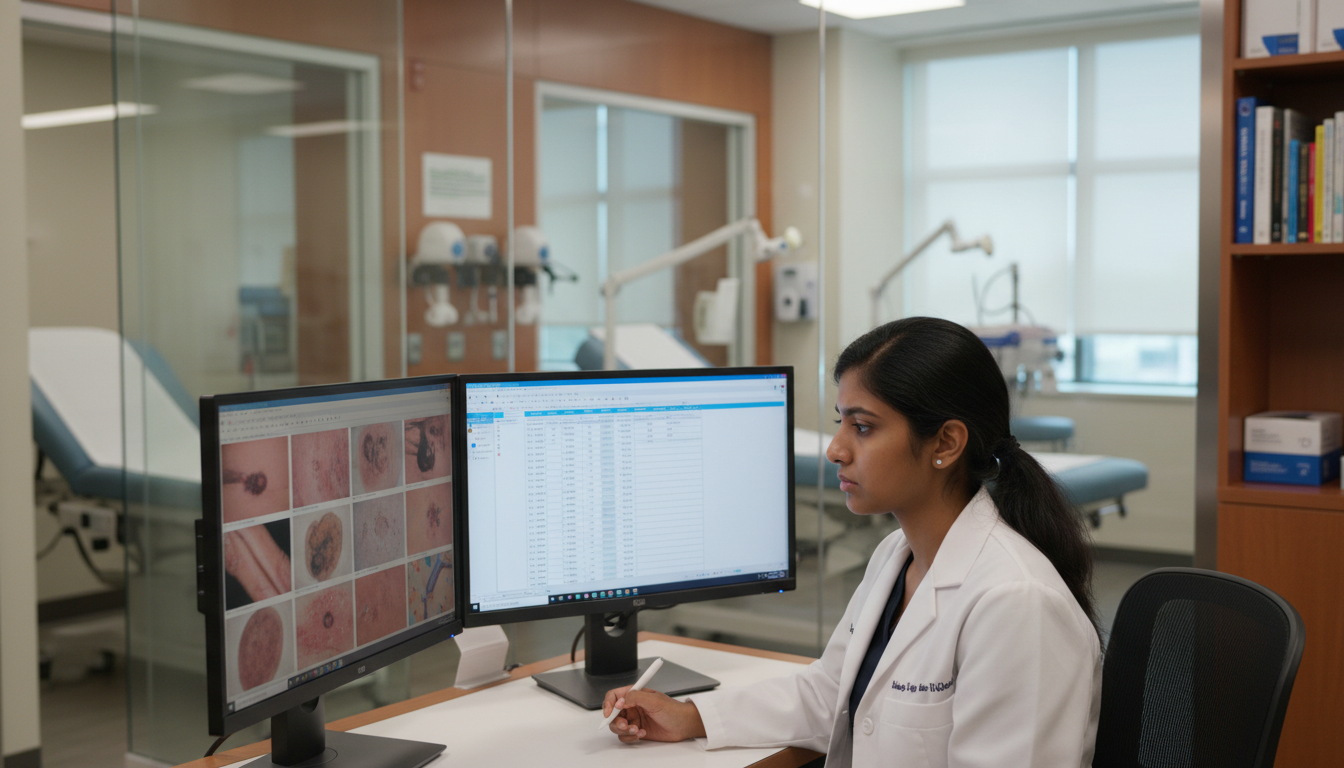
Understanding the Role of Research During Dermatology Residency for DO Graduates
For a DO graduate who has successfully entered a dermatology residency, research can be one of the most powerful levers for shaping your career. Whether you’re aiming for a highly competitive fellowship, an academic residency track, or simply want to become a more thoughtful, evidence-based clinician, research during residency is a high-yield investment.
Dermatology is a data-rich field—new biologics, novel imaging tools, evolving cosmetic techniques, and rapidly changing guidelines in areas like psoriasis and atopic dermatitis. Residents who understand research methods and contribute to the literature become better clinicians and more competitive applicants for future positions.
This article focuses specifically on DO graduates in dermatology residency—especially those who may have felt pressure to “prove themselves” in the osteopathic residency match or derm match process. You’ll learn how to choose the right projects, navigate time constraints, build mentorship, and strategically align your research during residency with long-term career goals.
1. Why Research Matters for DO Dermatology Residents
1.1 Shifting Landscape After the Single Accreditation System
With the ACGME single accreditation system, DO graduates now train alongside MD graduates in the same dermatology residency programs. This eliminated the old, separate “osteopathic residency match,” but it also increased competition for each dermatology residency slot.
For many DO graduates, this means:
- You may feel an ongoing need to showcase academic productivity.
- You might face subtle bias or outdated assumptions about osteopathic training.
- You may have fewer pre-residency publications compared with MD peers from research-heavy schools.
Research during residency is one of the clearest, objective ways to demonstrate your capability, curiosity, and commitment to dermatology. A strong track record of resident research projects moves the conversation away from degree labels and toward your performance and potential.
1.2 Research as a Career Accelerator
Research isn’t just about padding a CV; it directly contributes to your professional growth:
- Clinical excellence: Reading and generating research forces you to critically evaluate evidence, understand statistics, and stay current with rapidly changing therapies.
- Network building: Projects often involve multi-institutional collaborators, statistician support, and cross-specialty partnerships (e.g., rheumatology, oncology).
- Future opportunities: Publications and presentations are valued in:
- Fellowships (e.g., Mohs, dermatopathology, pediatric dermatology)
- Academic positions
- Leadership roles in hospital systems and professional societies
If you envision an academic residency track or hybrid clinical-academic career, demonstrating consistent research productivity during residency becomes almost essential.
1.3 Research and the DO Identity
As a DO graduate, you bring unique strengths:
- Training that emphasizes holistic, patient-centered care
- Exposure to musculoskeletal and systemic medicine that intersects with dermatologic disease
- Often, experience with underserved populations or community-focused rotations
Effective research during residency allows you to highlight those strengths. For example:
- Studying disparities in access to dermatologic care in rural populations
- Evaluating musculoskeletal manifestations of psoriasis in community settings
- Integrating osteopathic principles into research questions about function, quality of life, or patient-centered outcomes

2. Types of Research Opportunities in Dermatology Residency
Not all research looks the same, and not every resident needs to pursue a basic science PhD-level project. Understanding the spectrum of possible resident research projects helps you choose options that genuinely fit your goals, capacity, and resources.
2.1 Clinical Research
This is the most common and accessible type of research during residency.
Examples:
- Retrospective chart reviews (e.g., comparing outcomes of patients on different biologics)
- Prospective observational studies (e.g., following patients with hidradenitis suppurativa over time)
- Quality improvement (QI) projects that also produce publishable findings
- Comparing diagnostic approaches or treatment algorithms
Why it’s great for DO dermatology residents:
- Directly connected to everyday patient care
- Easier to fit into a busy clinic schedule
- Builds a strong foundation in clinical epidemiology and statistics
2.2 Case Reports and Case Series
Case-based work is often the fastest way to start publishing, especially early in residency.
Good candidates:
- Rare conditions (e.g., unusual cutaneous lymphomas)
- Unexpected drug reactions (e.g., novel immune-related skin toxicities from checkpoint inhibitors)
- Unique clinical presentations or mimickers
These are particularly achievable for residents who may lack prior research experience or institutional support. For a DO graduate, strong early case reports can:
- Boost your confidence
- Signal productivity to program leadership
- Provide talking points for future interviews (fellowships, jobs)
2.3 Basic Science and Translational Research
Not every program has a fully equipped lab, but if yours does (or if you can collaborate with a nearby institution), basic science and translational projects can be insightful:
- Studying pathophysiology of autoimmune blistering diseases
- Investigating molecular markers in melanoma
- Exploring microbiome changes in inflammatory skin diseases
This path is particularly relevant if you are considering a long-term academic residency track or a future as a physician-scientist.
2.4 Epidemiology, Health Services, and Outcomes Research
Dermatology increasingly intersects with public health, health policy, and outcomes measurement.
Example areas include:
- Access to dermatologic care in rural or underserved communities
- Teledermatology effectiveness
- Cost-effectiveness of various treatments
- Disparities in skin cancer outcomes among different racial/ethnic groups
These projects are ripe for DO graduates who are often drawn to holistic, community-based medicine. They can also be done using large databases or multi-center collaborations.
2.5 Educational Research
If you enjoy teaching or are considering an academic residency track, education research is a natural fit:
- Evaluating new curricula (e.g., dermoscopy teaching modules)
- Studying how simulation or OSCEs improve procedural competency
- Reviewing how early derm exposure impacts student performance or career choice
This is especially appealing at programs with a large medical student presence or DO schools nearby.
3. Getting Started: From Idea to Project
3.1 Assess Your Program’s Research Culture
Different dermatology residencies vary widely in their expectations and support for research during residency.
Key questions to ask (or observe):
- Is resident research required or optional?
- Is there a research curriculum (lectures on stats, study design, manuscript writing)?
- Are there protected research blocks or elective time?
- Who are the main research-active attendings, and what are their focus areas?
- Are recent graduating residents presenting at national meetings or publishing?
If your program has limited research infrastructure, you’ll need a different strategy—focusing on more feasible projects (case reports, chart reviews, QI) and looking for external collaborators or mentors.
3.2 Finding a Mentor (or Mentors)
Mentorship often determines the success of resident research projects.
Ideal qualities in a research mentor:
- Established track record of publications and resident involvement
- Responsiveness and clear communication
- Realistic about your time constraints
- Alignment with your interests (e.g., psoriasis, pediatric derm, dermpath)
For DO graduates, it can be helpful to seek:
- At least one mentor who is active in academic dermatology and knows the expectations for fellowships and academic positions.
- If possible, a faculty member who is a DO themselves or has experience supporting DO residents through the derm match and beyond.
Don’t hesitate to have multiple mentors: one for project content, one for statistics, one for career guidance.
3.3 Choosing the Right Project Scope
A frequent mistake is overreaching—a massive multi-year project that doesn’t fit into the constraints of residency.
Ask yourself:
- Can this project realistically be completed in 6–18 months?
- Are the necessary data and resources already available?
- Does the project seem publishable if executed well?
- Does it align with my career goals and subspecialty interests?
For PGY-2 or early residents, smaller, more achievable projects are ideal. For senior residents, you can consider more complex work, especially if you already understand IRB processes and data management.
3.4 Navigating IRB and Regulatory Requirements
Any project involving patient data or interventions usually requires Institutional Review Board (IRB) approval.
Key tips:
- Start the IRB process early; it often takes longer than expected.
- Ask co-residents or mentors for sample IRB submissions to model your own.
- For QI projects, check if your institution has a streamlined pathway (some QI work may be exempt from full IRB review if designed purely for internal quality improvement, though journals sometimes still require IRB or an exemption letter).
Understanding regulatory processes is part of being an academic physician; it’s worth the learning curve.
4. Balancing Clinical Duties and Research During Residency
Dermatology residency is demanding—full clinics, call, didactics, and board preparation. DO graduates may also feel pressure to keep proving themselves academically. Without a plan, research can easily become a source of stress instead of growth.
4.1 Time Management Strategies
Block scheduling:
Dedicate specific, recurring blocks of time to research (e.g., Friday afternoons, one evening per week). Treat it like a scheduled clinic—protected and non-negotiable whenever feasible.
Micro-tasks:
Break projects into small tasks you can complete in 20–30 minutes:
- Draft the methods section
- Clean a subset of data
- Draft a figure or table layout
- Write the introduction paragraph on background
Leverage “low-cognitive-load” times:
On lighter rotations or elective blocks, push forward bigger tasks (data analysis, manuscript drafting). On call-heavy or procedural months, focus on small steps (literature searches, outlining).
4.2 Teamwork and Collaboration
Resident research does not have to be solo work. Indeed, team-based projects are often more productive and more enjoyable.
Collaborators might include:
- Co-residents interested in the same topic
- Medical students (especially DO students from nearby schools who may be eager for mentorship)
- Fellows or junior faculty who can help manage day-to-day aspects
For DO residents, mentoring medical students (including DO students) in your projects has dual benefits:
- Increases your own productivity
- Strengthens your profile as an emerging academic leader
4.3 Using Tools to Stay Organized
Consider tools to track your progress:
- Reference managers: EndNote, Zotero, Mendeley for organizing literature
- Project management tools: Trello, Notion, Asana to track study milestones
- Data tools: Excel, REDCap, SPSS, R (depending on your institution)
Set explicit deadlines with your mentor—e.g., “First draft of introduction by April 15,” “IRB submitted by June 1”—to keep momentum.
5. Maximizing the Impact of Your Resident Research
5.1 From Project to Publication
Early in your project, identify target journals and conferences. This shapes:
- Formatting needs (word count, figure limits)
- Level of detail needed in methods and results
- Whether you aim first for a poster, oral presentation, or direct manuscript submission
Steps to publication:
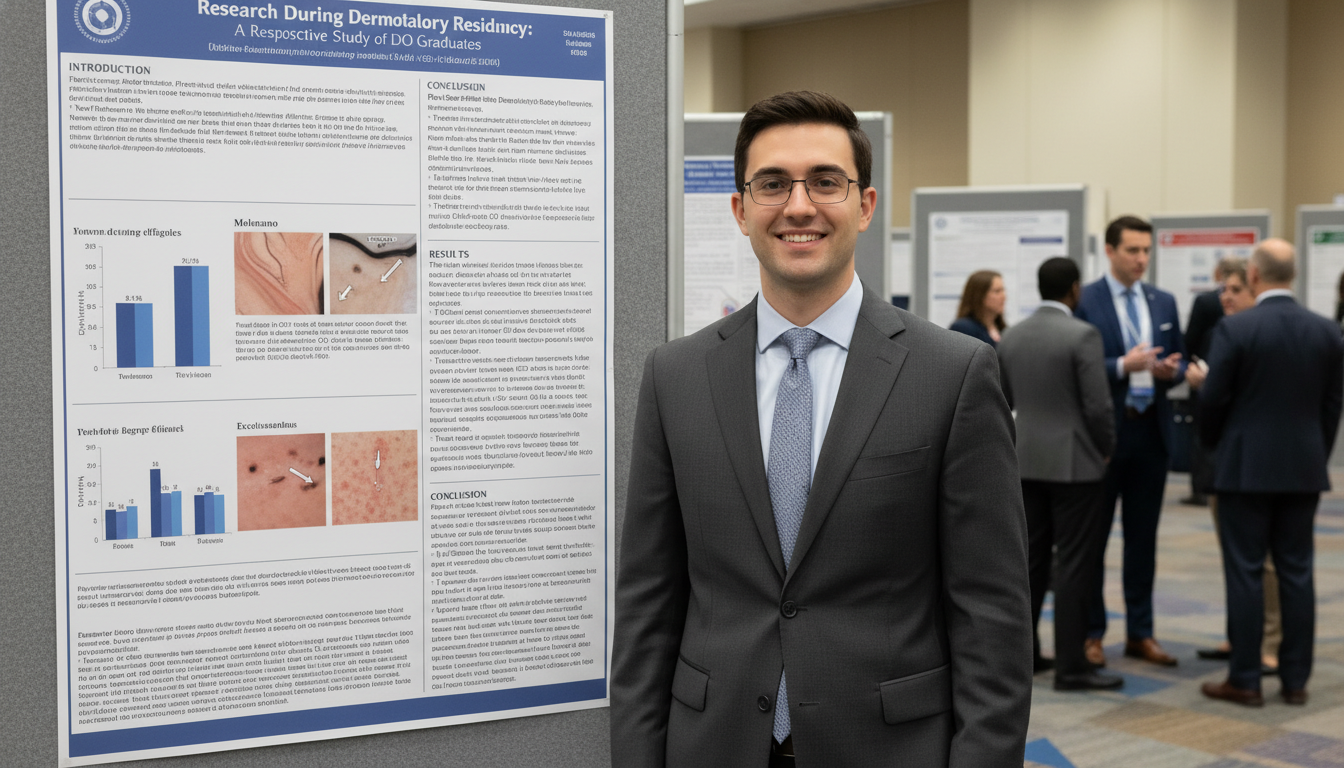
- Abstract: Draft and submit to a regional or national meeting (e.g., AAD, SDPA, specialty society meetings).
- Poster or Talk: Present your findings; refine your message based on questions and feedback.
- Manuscript: Expand and polish your work into a full article for journal submission.
Try to lead at least one project as first author during residency. This often carries more weight on CVs than multiple middle-author entries.
5.2 Strategic Alignment With Career Goals
Your choice of research during residency should reflect your desired next steps:
- Dermatology fellowship (Mohs, dermatopathology, pediatric derm):
- Aim for projects in your intended subspecialty.
- Seek letters from research mentors who are recognized in that field.
- Academic residency track / clinician-educator path:
- Combine clinical and educational research.
- Present regularly at both clinical and education conferences.
- Private practice career:
- Focus on practical clinical topics that enhance your expertise (e.g., cosmetic techniques, psoriasis management, acne scarring).
- Consider projects in outcomes, efficiency, or patient satisfaction.
For DO graduates especially, a coherent narrative helps: “I came from X background, I pursued Y dermatology research during residency, and now I’m building a career that bridges these.”
5.3 Building a Recognizable Niche
Even in residency, you can begin to establish a “mini-niche.” For example:
- Resident A: Multiple projects and presentations on hidradenitis suppurativa.
- Resident B: Focuses on skin of color and pigmentary disorders.
- Resident C: Works on dermoscopy education for trainees.
A niche makes you more memorable to fellowship directors, academic departments, and collaborators who may seek you out later as an expert.
6. Practical Examples: Research Pathways for a DO Dermatology Resident
To make this concrete, here are a few realistic scenarios.
6.1 Early PGY-2 DO Resident With Limited Prior Research
Background:
- DO graduate, matched into dermatology with 1–2 case reports from medical school.
- Intimidated by complex statistics and big trials.
Action plan:
- Identify a patient with a rare presentation of a common disease (e.g., unusual psoriasis distribution).
- Write a case report with a focusing teaching point.
- Partner with a senior resident who has published before and an attending with interest in your topic.
- Submit to a small but reputable dermatology journal.
- Simultaneously, join a co-resident’s ongoing retrospective chart review to gain experience in data collection.
Outcome within 12–18 months:
- 1–2 case reports accepted or under review.
- Middle-author role on a larger retrospective study.
- Whisper network reputation: “This resident is reliable and produces.”
6.2 Mid-Residency DO Resident Targeting Mohs Fellowship
Background:
- DO graduate, moderate research exposure, strong interest in procedural dermatology and oncology.
Action plan:
- Join or initiate a project on non-melanoma skin cancer margins or recurrence rates at your institution.
- Collaborate with Mohs attendings for access to data and mentorship.
- Present preliminary data at a national meeting.
- Seek involvement in guideline updates or systematic reviews if your mentors are involved in these.
Outcome:
- High-yield publications relevant to Mohs.
- Strong letters of recommendation pointing to your research productivity and commitment.
- Competitive Mohs fellowship applications where your DO degree is a non-issue compared with your demonstrable track record.
6.3 DO Resident on an Academic Residency Track
Background:
- DO graduate with clear interest in academic dermatology and teaching.
Action plan:
- Develop an educational research project: e.g., flipped classroom dermoscopy curriculum for residents or medical students.
- Partner with your institution’s education experts or medical education office.
- Collect pre- and post-intervention data on knowledge and confidence.
- Publish in a dermatology or medical education journal.
- Volunteer as a mentor for DO and MD students working on smaller projects under your umbrella.
Outcome:
- A coherent portfolio of clinical and educational research.
- Clear fit for faculty positions at teaching institutions.
- Early foundation for a career as a clinician-educator.
FAQs: Research During Dermatology Residency for DO Graduates
1. I’m a DO graduate with almost no prior research. Is it too late to start in residency?
No. Many dermatology residents, DO and MD alike, begin meaningful research during residency. Start with smaller, feasible projects such as case reports, short retrospective reviews, or QI projects. As you gain experience and confidence, you can take on more complex work. The key is to engage early, find a supportive mentor, and choose achievable goals.
2. How much research do I need if I’m not planning an academic career?
If you plan to enter private practice, you don’t need a massive publication list. However, having some research experience:
- Strengthens your critical appraisal skills
- Helps you understand evidence behind treatments
- Makes you more competitive if your plans change (e.g., you later decide to pursue a fellowship or academic role)
Even one or two well-executed projects during residency can provide lasting value, regardless of your career setting.
3. Does being a DO affect how my research is viewed?
In most modern academic dermatology settings, your work is judged on its quality, not your degree initials. The osteopathic residency match is no longer separate, and ACGME standards apply universally. That said, DO graduates sometimes feel they need to demonstrate academic strength more clearly. Research during residency is an excellent way to do so—solid publications and presentations speak louder than assumptions.
4. How can I find research opportunities if my program has limited infrastructure?
If your home program’s resources are limited, consider:
- Focusing on case reports, small retrospective studies, and QI projects using easily accessible data.
- Reaching out to faculty at nearby academic centers or derm departments for collaborative projects.
- Leveraging national organizations (e.g., AAD, subspecialty societies) that sponsor mentor-matching or resident research networks.
- Connecting with DO schools or MD institutions with stronger research infrastructure for multi-institutional collaborations.
With persistence and creativity, you can still build a meaningful research portfolio, even without a large in-house research apparatus.
Research during residency is not just a checkbox; it’s a powerful way for DO dermatology graduates to shape their professional identity, prove their academic capabilities, and directly improve patient care. By choosing projects strategically, seeking strong mentorship, and aligning your efforts with your long-term goals, you can turn residency into a launchpad for a fulfilling, evidence-driven dermatology career.