Why Research Matters for a DO Graduate in Neurosurgery Residency
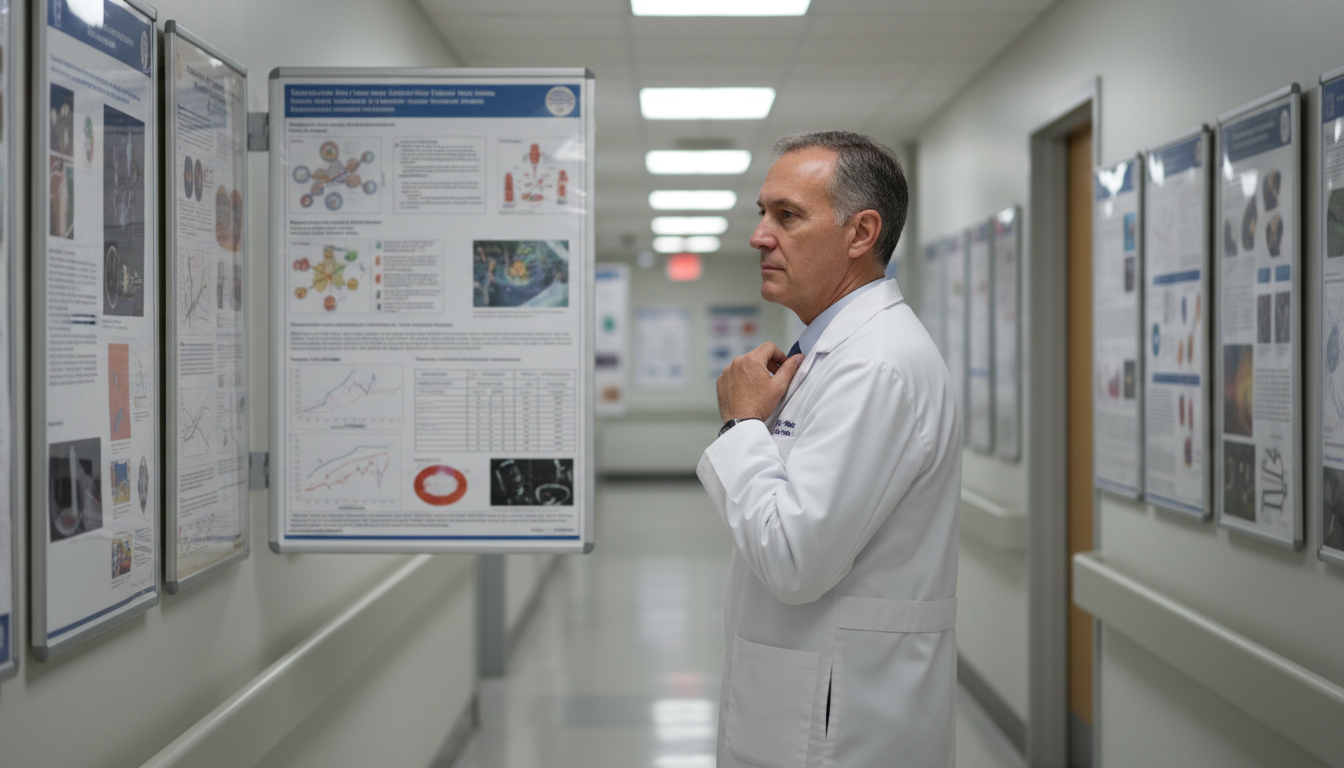
For a DO graduate pursuing neurosurgery, research during residency is more than a checkbox—it’s a critical component of your training, your professional identity, and your long‑term career trajectory. Neurosurgery is one of the most research-driven specialties in medicine, and even if your primary goal is clinical practice rather than academia, engaging meaningfully in resident research projects can:
- Strengthen your clinical decision-making
- Open doors to fellowships and advanced training
- Enhance your competitiveness for academic or hybrid private practice roles
- Build a professional network across institutions
- Showcase the unique strengths of a DO graduate residency pathway
As a DO entering neurosurgery, you may be particularly aware of historical biases in highly competitive specialties. Strong research productivity during residency is one of the clearest ways to demonstrate that your training and capabilities stand shoulder-to-shoulder with any MD graduate, especially if you’re aiming for an academic residency track or a subspecialized brain surgery residency focus (e.g., vascular, tumor, functional, or spine).
This article will walk you through how to approach research during neurosurgery residency as a DO graduate—from the first day of PGY-1 through senior resident years—with practical strategies, examples, and common pitfalls to avoid.
Understanding Research in Neurosurgery Residency
Neurosurgery residency is inherently research-oriented. Most programs—especially those with a strong academic residency track—expect residents to produce scholarly work. For DO graduates, being intentional and strategic about this is key.
Types of Research You’ll Encounter
Clinical Research
- Chart reviews (retrospective studies)
- Prospective clinical trials
- Outcomes research (e.g., surgical morbidity, functional recovery scores)
- Quality improvement (QI) projects that can lead to publications
Example: A resident research project analyzing 5-year outcomes of endoscopic vs. microscopic pituitary surgery at your institution, including complication rates and visual field improvement.
Translational / Basic Science Research
- Lab-based projects: molecular biology, tumor genomics, neural stem cells
- Animal models of brain injury, spinal cord injury, epilepsy, or tumors
Example: Working in a lab studying gene expression in glioblastoma cells exposed to a novel chemotherapeutic agent.
Health Services & Systems Research
- Cost-effectiveness analyses
- Access to neurosurgical care in rural areas
- OR efficiency, time to intervention for stroke or trauma
Example: Examining door-to-OR times for decompressive craniectomy in traumatic brain injury patients and their impact on functional outcomes.
Educational Research
- Simulation-based training assessments
- Curriculum development for neurosurgery residents or medical students
- Competency-based evaluation tools
Example: Studying the impact of a new microsurgical simulation curriculum on PGY-2 residents’ performance in aneurysm clipping simulations.
How Expectations Differ Across Programs
Highly Academic Programs
- Formal protected research time (6–24 months, often mid-residency)
- Strong infrastructure: statisticians, research coordinators, IRB support
- Clear productivity targets (e.g., X publications before graduation)
- Strong culture of neurosurgery/brain surgery residency research
Hybrid Academic–Community Programs
- Some protected time, but less structured
- Expectation to produce a few meaningful projects
- Opportunities often driven by individual initiative
Primarily Community-Based Programs
- Less built-in research infrastructure
- More reliance on QI, case series, and multi-center collaborations
- Often ideal for clinically focused residents, but still possible to generate impactful work if you are proactive
As a DO graduate, you may match into any of these environments. Your strategy must adapt to the program’s culture and resources, while aligning with your long-term goals.

Positioning Yourself as a DO Graduate in an Academic Neurosurgery Environment
The osteopathic residency match landscape has changed with the single accreditation system, but perceptions can lag behind reality. Strong research productivity is one of the most effective ways to counter any lingering biases and build credibility.
Leverage Your DO Training
Osteopathic training often emphasizes:
- Holistic, patient-centered care
- Musculoskeletal and biomechanical understanding
- Strong clinical skills and bedside manner
These strengths can inform your research questions, particularly in:
- Spine surgery outcomes and functional status
- Patient-reported outcomes after neurosurgical procedures
- Pain, quality of life, and long-term rehabilitation following brain surgery
Example: Designing a project on functional recovery and quality of life in patients after lumbar decompression surgery, leveraging your osteopathic background in biomechanics and function.
Overcoming Imposter Syndrome as a DO in Neurosurgery
Imposter syndrome is common—especially for DO graduates entering highly competitive fields like neurosurgery. Research can amplify this if you feel “behind” in statistics, methods, or writing.
Counter this with specific steps:
- Start small and early: Case reports, small retrospective series, or QI projects.
- Find a method mentor: A faculty member or research coordinator who can walk you through study design and basic statistics.
- Develop one niche: Aim to be “the resident who does spine outcomes” or “the resident who owns the pituitary surgery database,” etc.
Your goal is not just to participate in research, but to become a reliable, productive collaborator who brings value to any team—regardless of your degree initials.
Practical Roadmap: Research During Each Stage of Neurosurgery Residency
Neurosurgery residency spans 7+ years, and your research focus should evolve as your clinical responsibilities grow.
PGY-1: Foundation and Orientation
As a DO graduate entering your intern year:
Assess Your Environment
- Identify key research faculty: Who publishes frequently? Who mentors residents?
- Look for ongoing resident research projects that need help with data collection or chart review.
- Learn how your hospital’s IRB process works.
Clarify Expectations
- Ask your program director or research director:
- “What are the minimum research expectations for residents here?”
- “How is protected research time structured over residency?”
- “What have successful graduates done in terms of publications?”
- Ask your program director or research director:
Start With Low-Barrier Projects
- Case reports (unique tumors, rare complications, unusual surgical approaches)
- Case series (small groups of similar procedures)
- QI projects that can turn into abstracts/posters
- Database assistance for a senior resident’s ongoing project
Skill Building
- Take a basic biostatistics or research methods course (often free via institutional CME or online).
- Learn a reference manager (EndNote, Zotero, or Mendeley).
- Become familiar with major neurosurgery journals and conferences:
- Journal of Neurosurgery, Neurosurgery, World Neurosurgery, etc.
- CNS, AANS annual meetings.
PGY-2 to PGY-3: Building Momentum and Focus
During early neurosurgery years when operative exposure ramps up:
Define a Preliminary Niche Common areas:
- Neuro-oncology (gliomas, metastases, skull base)
- Cerebrovascular (aneurysms, AVMs, bypass)
- Spine (degenerative, deformity, minimally invasive)
- Functional neurosurgery (DBS, epilepsy surgery)
- Trauma and critical care
Pick an area where:
- There is an active mentor,
- There is accessible data, and
- You are clinically interested.
Take Ownership of a Project
- Move beyond “helper” to “primary resident” on at least one study.
- Aim for:
- 1–2 retrospective studies (chart-based) you lead
- 1–2 case reports or technical notes
Present Early and Often
- Submit abstracts to:
- Regional neurosurgery meetings
- Institutional research days
- CNS/AANS section meetings
- Practice delivering a 5–10-minute presentation with clear visuals and concise methods/results.
- Submit abstracts to:
Develop Basic Data Skills
- Learn basic spreadsheet organization for data collection.
- Become comfortable with simple statistics (chi-square, t-tests, logistic regression).
- If possible, learn R or SPSS basics, or develop a strong relationship with a biostatistician.
Dedicated Research Time (If Available): Going Deeper
Many neurosurgery residencies offer 6–24 months of protected research time, often between PGY-3 and PGY-5. For a DO graduate interested in an academic residency track, this period is crucial.
Choose Wisely Between Lab vs. Clinical Research
- Lab/Bench Research
- Pros: Can lead to high-impact publications, fellowships, and long-term academic trajectory.
- Cons: Learning curve, can be slow to produce tangible outputs in a short timeframe.
- Clinical/Outcomes Research
- Pros: Often faster time to publication, directly translatable to patient care, less technically demanding.
- Cons: May be more competitive to achieve high-impact publications, dependent on data quality and institutional resources.
Many residents combine both, but focus is key.
- Lab/Bench Research
Set Concrete Goals With Your Mentor
- Define:
- Number of manuscripts to submit during research time (e.g., 3–5)
- Target journals
- Timelines for each project (design → IRB → data → manuscript)
- Define:
Think Long-Term: A Thematic Research Identity
- Example tracks:
- “Resident who does research on minimally invasive approaches for brain surgery residency procedures, focusing on patient-reported outcomes.”
- “Resident specializing in spinal deformity outcomes and cost-effectiveness.”
- “Resident studying molecular predictors of glioblastoma survival.”
This thematic identity can carry into fellowship applications and early faculty roles.
- Example tracks:
Network Outside Your Institution
- Attend national meetings and introduce yourself to leaders in your niche.
- Join multi-center trial groups or consortia, if available.
- Seek co-mentorship from experts at other institutions (by email, Zoom, or in-person meetings).
Senior Years (PGY-5 to Chief): Translating Research Into Career Capital
As you become more senior and operative responsibilities peak:
Refine and Consolidate
- Complete lingering manuscripts from earlier years.
- Aim for at least one first-author paper in your chosen subspecialty per year if pursuing an academic track.
Bridge to Fellowship or First Job
- Use your research portfolio to support:
- Subspecialty fellowships (vascular, tumor, functional, complex spine)
- Academic or hybrid private practice positions
- Present at high-profile meetings, and ask mentors to introduce you to potential future collaborators.
- Use your research portfolio to support:
Mentor Junior Residents and Medical Students
- Co-mentor DO and MD students on manageable projects.
- Take leadership in your program’s research pipeline.
- This not only multiplies your research output but also demonstrates leadership—important for chief roles and faculty recruitment.

Practical Strategies to Succeed: Time Management, Project Selection, and DO-Specific Tips
Balancing research during residency with long call hours, busy OR days, and studying is challenging. You need systems that work in reality, not in a hypothetical 9-to-5 schedule.
Time Management Tactics That Actually Work
Micro-Sprints
- Use small windows (20–30 minutes) to:
- Edit a paragraph
- Update references
- Enter data from 2–3 charts
- Keep a running “micro-task list” so you always know what can be done in a short block of time.
- Use small windows (20–30 minutes) to:
Protected Time, Even If Unofficial
- Block off specific half-days or evenings as “research time.”
- Communicate this to your team when possible, especially during lighter rotations.
- Protect this time as you would a mandatory conference.
Batching Tasks
- Group similar work:
- One evening for literature searches
- Another for data cleaning
- Another for drafting methods/results
- Reduces startup time and mental friction.
- Group similar work:
Use Templates and Checklists
- Create templates for:
- Abstracts
- Manuscript sections (Intro, Methods, Results, Discussion)
- IRB applications
- Maintain a checklist for each project stage so nothing falls through the cracks.
- Create templates for:
Choosing the Right Projects (And Saying No)
One of the biggest pitfalls—especially for motivated DO graduates—is taking on too many projects without adequate bandwidth or mentorship.
Before Saying Yes, Ask:
- Is there a clear, answerable research question?
- Is the data readily accessible?
- Who is the senior author, and what is their track record of getting projects published?
- What is my specific role and authorship position?
Red Flags
- Vague projects with no written plan or timeline.
- Mentors who are chronically non-responsive.
- “Let’s collect data on everything and see what we find” without a defined hypothesis or outcome measure.
Prioritization Framework Rank opportunities by:
- Impact on your niche
- Likelihood of completion/publication
- Realistic time commitment
Aim to have:
- 1–2 major projects (high effort, high impact)
- 2–4 minor projects (case reports, collaborations, co-authorships)
DO-Specific Strategies to Enhance Visibility
Highlight Your Path in Your Work
- Incorporate osteopathic-informed questions when appropriate:
- Functional, holistic outcomes
- Rehabilitation and long-term quality of life
- But always maintain rigorous methodology aligned with mainstream academic neurosurgery standards.
- Incorporate osteopathic-informed questions when appropriate:
Seek Cross-Institutional Collaborations
- Partner with MD-heavy academic centers through mentors or multi-center research groups.
- Co-author papers with recognized leaders—this can mitigate any residual bias about your training pathway.
Document and Showcase Your Productivity
- Maintain an up-to-date CV with:
- Peer-reviewed publications
- Abstracts and posters
- Invited talks or presentations
- Use online platforms:
- ORCID, Google Scholar, ResearchGate (if allowed by your institution)
- This is especially important if you trained in a DO graduate residency or former osteopathic program that others may know less about.
- Maintain an up-to-date CV with:
Career Implications: How Resident Research Shapes Your Future
Research during residency does more than fill a CV line. It shapes your skills, reputation, and trajectory in neurosurgery.
For an Academic Residency Track
If you envision yourself as a future faculty member:
Non-negotiables:
- Multiple first-author publications by the end of residency.
- Evidence of independent thought and project leadership.
- Clear, thematic research focus.
Value-Adds:
- Grants or pilot funding (even small institutional grants).
- Award-winning abstracts or presentations.
- Co-authorship with national-level figures in your subspecialty.
Your DO background can become an asset if you position yourself as someone who brings both rigorous scientific thinking and a uniquely holistic clinical lens to academic neurosurgery.
For a Primarily Clinical or Private Practice Career
Even if you don’t plan a heavy research career:
Research develops:
- Critical appraisal skills for new evidence
- Comfort with data and outcomes analysis
- The ability to ask and answer practical clinical questions
It also:
- Enhances your appeal to high-end private groups that value quality and innovation
- Provides leverage to negotiate for hybrid roles (clinical plus 10–20% academic time)
- Prepares you to participate in industry-sponsored trials or quality initiatives
For a DO neurosurgeon, this can be a differentiator in competitive markets.
Transitioning to Subspecialty Fellowships
Subspecialty fellowships (e.g., vascular, skull base, complex spine, functional) often weigh:
- Quality and relevance of your research to their field
- Strength of recommendations from your research mentors
- Evidence of initiative, persistence, and professionalism in scholarly work
A resident who led a well-designed outcomes study in aneurysm treatment, presented it nationally, and authored multiple follow-up papers will be much more attractive to cerebrovascular fellowship directors—regardless of DO or MD background.
FAQs: Research During Neurosurgery Residency for DO Graduates
1. Do I need a huge research portfolio as a DO to be competitive in neurosurgery?
You don’t need dozens of publications, but you do need meaningful, high-quality work. Programs and future employers care about:
- Evidence of consistent productivity
- First-author papers that show you can lead a project
- Relevance to neurosurgery or brain surgery residency topics
As a DO graduate, a solid, focused portfolio (e.g., 5–10 neurosurgery-relevant publications by graduation, with several first-author) can more than offset any initial doubts about your pathway.
2. I’m in a program with limited research infrastructure. What can I realistically do?
Even in community-leaning or resource-limited settings, you can:
- Focus on retrospective chart reviews and case series.
- Build QI projects around neurosurgical processes (e.g., time to OR for trauma, perioperative complication reduction).
- Collaborate with external mentors at other institutions via virtual meetings.
- Use publicly available datasets (if appropriately supervised and IRB-approved).
Your initiative often matters more than your starting environment.
3. I feel behind in statistics and methodology. How can I catch up during residency?
- Take online introductory courses in biostatistics and research design (many are free).
- Read the methods and discussion sections of neurosurgery research articles critically.
- Ask to meet regularly with a biostatistician or methods-oriented faculty member.
- Start with projects that use relatively simple analyses and build your skills over time.
You do not need to become a full-time statistician; you do need to understand the basics well enough to design sound studies and interpret results intelligently.
4. How do I balance research with intense neurosurgery call and OR schedules?
- Protect small, consistent blocks of time each week.
- Prioritize fewer, higher-yield projects rather than saying yes to everything.
- Use micro-sprints and task batching to make progress in short windows.
- Partner with reliable co-residents and students to share the workload.
- Communicate clearly with mentors about realistic timelines.
Over the span of a 7-year neurosurgery residency, steady, incremental progress accumulates into a robust research portfolio—especially if you’re strategic and organized.
By approaching research during residency with intentionality, structure, and an awareness of your unique strengths as a DO graduate, you can build a neurosurgery career that is not only clinically excellent but also academically meaningful. Whether your goal is a high-level academic residency track, a subspecialty brain surgery residency fellowship, or a research-informed clinical practice, the work you do as a resident will lay the foundation for the rest of your professional life.