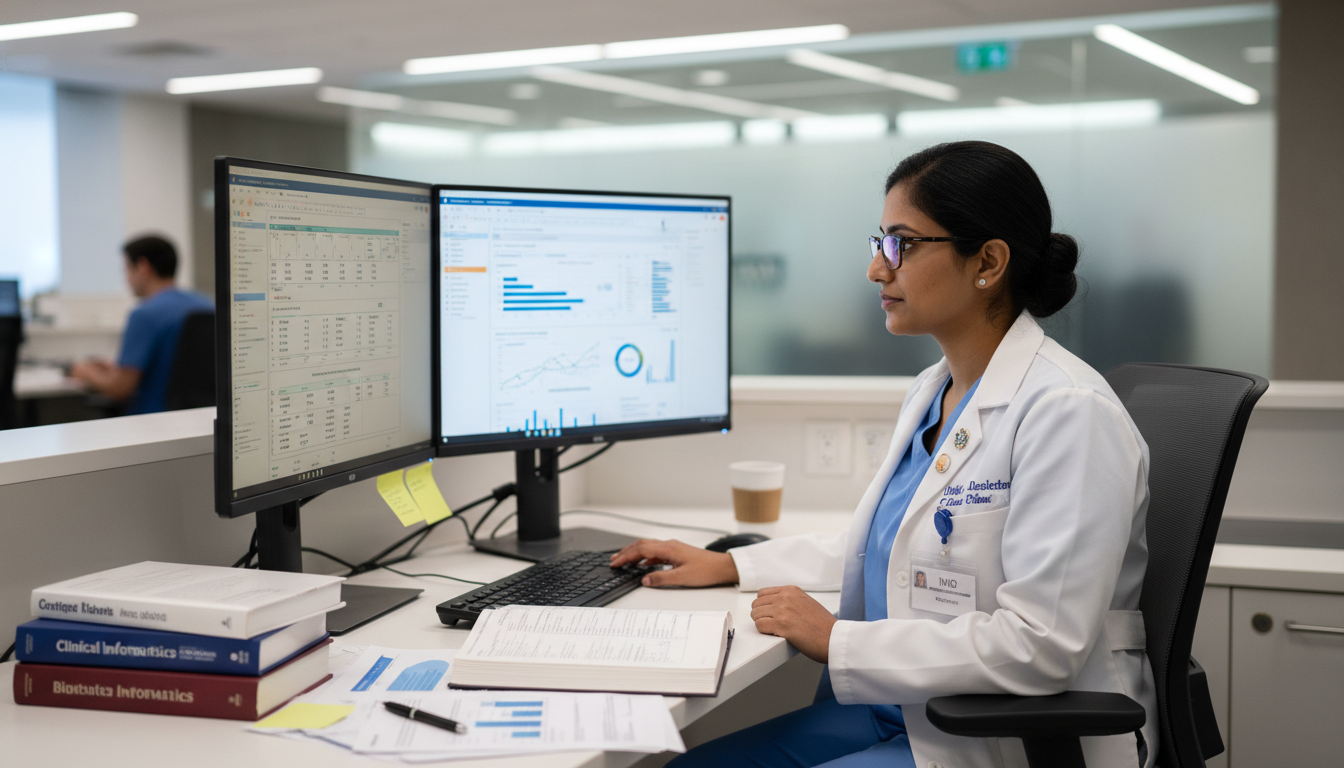
Understanding Research During Residency for IMGs in Clinical Informatics
For the international medical graduate (IMG) interested in clinical informatics, residency is not just about mastering patient care in a new health system. It is also the most strategic time to build a research portfolio that can launch a career in health IT, data science, and digital innovation.
Clinical informatics thrives on evidence: how electronic health records (EHRs) are designed, how clinical decision support tools change physician behavior, how AI impacts diagnostics, and how health IT systems affect patient outcomes and health equity. As an IMG, research during residency is one of the most powerful ways to:
- Demonstrate academic potential in a new country and system
- Build credibility in a data-driven specialty
- Compensate for gaps in your CV or initial exam scores
- Position yourself competitively for a clinical informatics fellowship and academic residency track opportunities
This IMG residency guide will walk you through how to strategically use residency to build a strong research profile in clinical informatics—step by step, with practical examples and templates you can adapt.
Why Research Matters So Much for IMGs in Clinical Informatics
1. The Unique Position of IMGs in a Data-Driven Field
As an international medical graduate, you bring:
- Experience with different health systems and workflows
- Insight into resource-limited settings and global health IT challenges
- Firsthand understanding of language, culture, and digital literacy barriers
These perspectives are highly valuable for clinical informatics research, which often asks questions like:
- How can EHRs be adapted for diverse populations?
- What digital tools work in low-resource environments?
- How does health IT support or widen health disparities?
Research during residency allows you to transform your background into measurable academic output: abstracts, posters, manuscripts, and quality improvement (QI) projects.
2. How Program Directors and Fellowship Directors View Research
Residency and fellowship leadership in informatics look closely at:
- Documented resident research projects with a clear role (e.g., first or second author)
- Evidence of initiative (designing a project, securing data, IRB approval)
- Consistency: multiple projects over several years, not just one isolated effort
- Alignment with clinical informatics themes: health IT, digital tools, workflow, data
A strong record of research during residency signals:
- Curiosity and problem-solving ability
- Comfort with data and systems thinking
- Readiness for advanced health IT training and a clinical informatics fellowship
For IMGs, this can be particularly important if:
- You trained abroad in a system with limited research exposure
- Your US clinical experience started later than your peers
- You want to compete for an academic residency track or informatics-focused positions

Laying the Foundation: Getting Ready Before and Early in Residency
Even if you are already in residency, you can quickly build a foundation. If you are still applying, you can start preparing now.
1. Clarify Your Niche Within Clinical Informatics
Clinical informatics is broad. Narrowing a focus helps you find mentors and feasible projects. Examples of niches include:
- EHR optimization and workflow redesign
- Clinical decision support (alerts, order sets, risk scores)
- AI and machine learning in diagnosis or risk prediction
- Telemedicine and remote monitoring
- Patient portals and patient engagement tools
- Population health dashboards and predictive analytics
- Medication safety and computerized provider order entry (CPOE)
- Interoperability and data exchange between systems
Pick 1–2 areas that overlap with:
- Your interests (e.g., telehealth in rural communities)
- Your prior experience (e.g., mobile health in your home country)
- Your residency program’s strengths (e.g., strong IT department, data warehouse)
This alignment is critical—it makes it easier to join ongoing research during residency instead of starting from zero.
2. Map the Research Ecosystem of Your Institution
Within your first 2–3 months of residency (or even during interview season, if possible):
Identify key people:
- Chief medical information officer (CMIO)
- Program director and associate program director
- Clinical informatics faculty and fellows (if your institution has a fellowship)
- Quality improvement and patient safety leaders
- Data science, health IT training, or biostatistics teams
Find existing structures:
- Clinical informatics or health IT committees
- QI committees, EHR optimization task forces
- Data warehouse or “clinical data repository” office
- Graduate medical education (GME) research support services
Learn the process:
- Who controls access to data?
- What is the IRB (Institutional Review Board) process and timeline?
- What training is required to work with patient data (HIPAA, CITI, etc.)?
As an IMG, there may be an added learning curve in understanding US privacy, compliance, and research regulations. Ask for a clear checklist; most institutions have formal researcher onboarding.
3. Strengthen Core Skills for Informatics Research
Even basic competence can make you a more attractive collaborator. Focus on:
Data and statistics basics:
- Descriptive statistics, common tests (chi-square, t-test, regression)
- Familiarity with tools like R, Python, or at least Excel/SPSS
EHR literacy:
- Become a “power user” of your hospital’s EHR
- Learn about order sets, templates, dashboards, reporting tools
Research essentials:
- Study design (retrospective cohort, cross-sectional, pre-post QI)
- Bias, confounding, validity, generalizability
Free resources (completed during pre-residency or early PGY-1):
- Coursera/edX: introductory biostatistics, data science for health
- AMIA (American Medical Informatics Association) free webinars
- Online HIPAA and human subjects research training (often provided by your institution)
Choosing and Designing Clinical Informatics Resident Research Projects
The biggest challenge for many IMGs is not motivation, but project selection and realistic design. You want projects that are:
- Feasible: doable within residency timeline and call schedule
- Visible: connected to institutional priorities or informatics leaders
- Publishable: likely to generate at least an abstract or manuscript
1. Start With QI and Operational Informatics Projects
For many IMGs, quality improvement projects are the easiest entry into research during residency. They often:
- Involve informatics (EHR changes, order sets, templates)
- Address real clinical problems
- Require less complex methodology than full-scale research
Examples in clinical informatics:
- Reducing unnecessary lab testing by modifying EHR order sets
- Improving sepsis bundle compliance using alerts and reminders
- Streamlining admission order workflows with a new template
- Increasing vaccination rates using patient portal reminders
These can evolve from internal QI to publishable research during residency if you:
- Collect pre- and post-intervention data
- Define clear outcome measures (e.g., time to antibiotics, number of unnecessary tests)
- Document intervention design and implementation details
2. Frame Researchable Questions Early
Convert clinical frustrations into researchable questions. For example:
Frustration: “Our EHR sepsis alert fires constantly and people ignore it.”
- Research question: “What is the impact of a high-frequency sepsis alert on physician response time and patient outcomes?”
Frustration: “Telehealth no-show rates seem higher in older patients.”
- Research question: “Which demographic and clinical factors are associated with telehealth visit no-shows in our clinic?”
A simple structure for research questions (PICOT where possible):
- Population: Which patients or providers?
- Intervention/Exposure: What informatics/IT element?
- Comparison: Before vs. after, or exposed vs. unexposed
- Outcome: Clinical, process, or efficiency outcome
- Time: Over what period?
3. Match Project Scope to Your Training Year
PGY-1 (or early residency):
- Join existing projects rather than starting your own
- Aim for roles such as:
- Data collection and chart review
- Literature review and background writing
- EHR workflow mapping and process observation
Your goal: get your name on a poster, abstract, or small paper by the end of the year.
PGY-2:
- Start leading a QI or retrospective chart review project
- Negotiate dedicated research time if your program allows it
- Begin to focus your efforts within one informatics niche
Your goal: 1–2 substantial projects, at least one where you are first author or primary driver.
PGY-3 (and beyond):
- Consolidate work into manuscripts and conference submissions
- Seek leadership roles on informatics committees
- Align projects explicitly with your clinical informatics fellowship applications
Your goal: several outputs (abstracts, posters, manuscripts), plus clear demonstration that you can initiate and complete resident research projects from idea to dissemination.
Working With Mentors, Data, and the Health IT Environment
1. Finding and Approaching the Right Mentor as an IMG
Mentorship is one of the strongest predictors of success in research during residency—especially in a niche field like clinical informatics.
Potential mentors include:
- Clinical informatics faculty (MD or PhD)
- CMIO / associate CMIOs
- Residency program faculty with QI or EHR roles
- Clinical informatics fellows
When approaching a potential mentor:
Be prepared:
- Have a brief academic CV and a 1-paragraph statement of your interests
- Prepare 2–3 ideas or areas you’d like to explore, even if vague
Be specific:
- “I’m an international medical graduate in internal medicine with strong interest in clinical decision support and EHR optimization. I’d like to contribute to ongoing projects or start a small project under your guidance. Could we meet for 20–30 minutes to discuss possibilities?”
Be realistic:
- Ask about what is feasible within your schedule and their capacity
- Clarify how often you can meet and who else will be part of the team
As an IMG, you may feel hesitant or worry about language or cultural differences. Remember: research is collaborative and structured. Preparation and reliability often matter more than perfect fluency.
2. Understanding and Accessing Clinical Data
In clinical informatics, data access is often the bottleneck. Key concepts:
- Clinical Data Warehouse (CDW): a centralized database of EHR data
- Data Governance: policies on who can access what and how
- Data Use Agreements: sometimes required for sharing or analyzing de-identified data
- PHI vs. de-identified data: affects IRB requirements and security training
Steps to gain access:
Meet with your mentor and/or data analyst to define:
- Exact data elements needed (e.g., diagnosis codes, lab values, timestamps)
- Inclusion/exclusion criteria
- Time frame
Learn your institution’s process:
- Many hospitals have online request forms for data pulls
- There may be wait times (2–8 weeks)
Clarify analysis resources:
- Is there a biostatistician or data scientist available?
- Will you analyze with R/Python yourself or work with an analyst?
As an IMG, this may be your first exposure to such structured data systems. Take notes and ask process-oriented questions—you are also learning core clinical informatics concepts through this process.
3. Navigating the IRB and Regulatory Landscape
Any research involving patient data typically requires IRB review, even if it is minimal risk or retrospective.
You will need to:
- Complete required training (CITI, HIPAA, institutional modules)
- Decide on the type of IRB review:
- Exempt (minimal risk, de-identified data, QI in some cases)
- Expedited (retrospective chart reviews with identifiable data)
- Full review (more complex or higher-risk studies)
Tips for IMGs:
- Ask for examples of successful IRB submissions from your department
- Use standard templates provided by your institution
- Have your mentor listed as PI (Principal Investigator) if you are a resident
Turnaround times can be several weeks, so build this into your project timeline.
Turning Projects Into a Long-Term Academic and Informatics Career
Your research during residency is not just about “checking a box.” It should form a coherent story that supports your next steps: an academic residency track, clinical informatics fellowship, or health IT leadership trajectory.
1. Building a Cohesive Research Narrative
Over time, your projects should align into a theme. For example:
- “My work focuses on optimizing EHR-based clinical decision support tools to improve sepsis care and reduce alert fatigue.”
- “I am interested in using telehealth and patient portals to improve chronic disease management in underserved populations.”
- “My research examines how predictive analytics can be integrated into clinician workflows without increasing burnout.”
This narrative should:
- Appear in your personal statement and fellowship applications
- Be reflected in your CV: titles and abstracts should clearly relate
- Be reinforced in letters of recommendation describing your role and impact
2. Disseminating Your Work Strategically
To maximize the impact of your resident research projects:
Present locally:
- Departmental or institutional research days
- Quality improvement/Patient safety conferences
Present regionally/nationally:
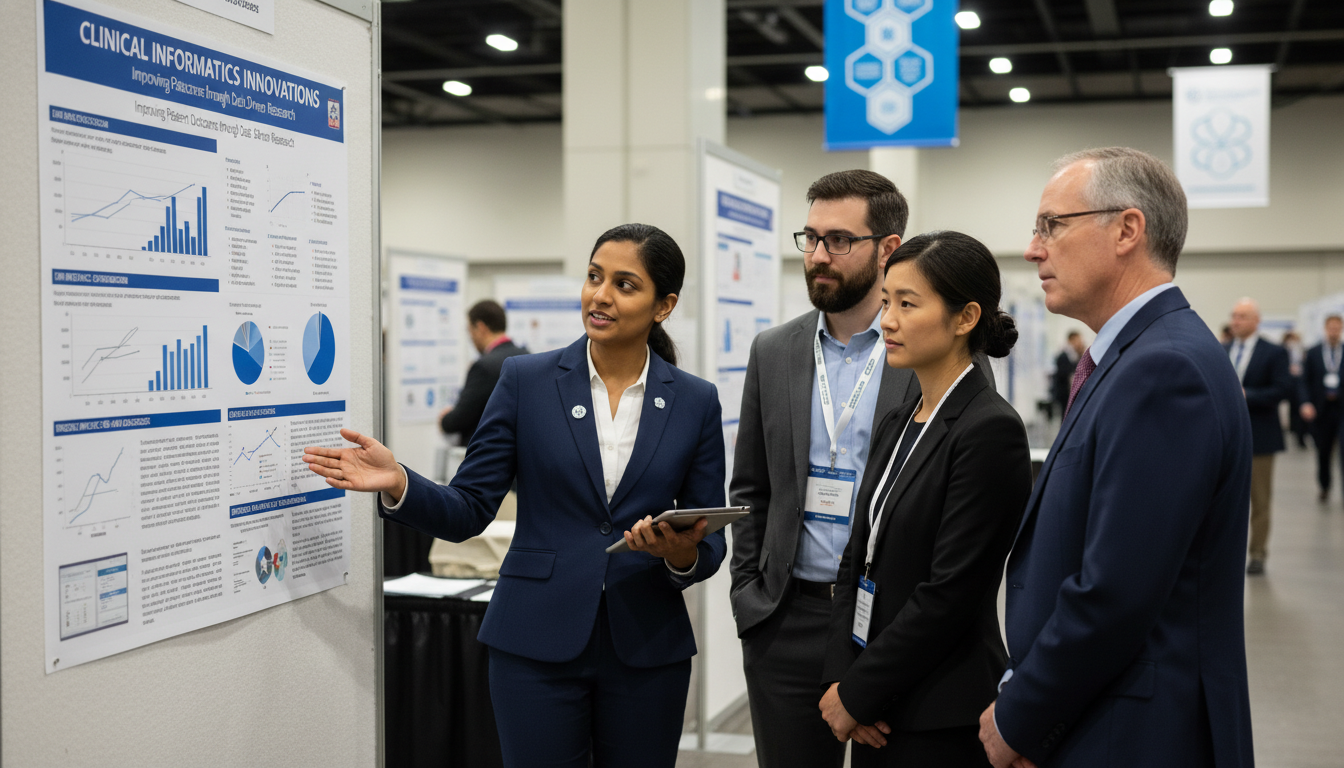
- AMIA Annual Symposium (key for clinical informatics)
- Specialty-specific informatics sections (e.g., HIMSS, internal medicine conferences, pediatrics, etc.)
Publish:
- Start with short communications, case series, or QI reports
- Target journals that welcome informatics/QI work, such as:
- Journal of the American Medical Informatics Association (JAMIA)
- Applied Clinical Informatics
- Specialty journals with informatics sections
Even if a project seems “small,” a well-written brief report can be a strong line on your CV.
3. Connecting Residency Research to a Clinical Informatics Fellowship
When applying to a clinical informatics fellowship, programs will look for:
- Evidence of sustained, not random, interest in informatics
- Concrete outputs (posters, papers, talks)
- Understanding of core informatics challenges (usability, integration, data quality, workflow)
- Capability to handle informatics-related health IT training (data, programming exposure, system design)
Use your residency research to demonstrate:
- You can identify real-world problems that benefit from informatics solutions
- You understand the interplay between IT systems, clinicians, and patients
- You can work with multidisciplinary teams: IT, data science, clinicians, administrators
You do not need to be a programmer, but you should be comfortable interacting with technical teams and thinking in systems.
Practical Action Plan for IMGs: 12–24 Months of Research During Residency
Here is a practical, time-based roadmap you can adapt:
Months 0–3 (early PGY-1):
- Complete research and HIPAA training
- Map institution’s informatics ecosystem
- Meet at least two potential mentors
- Join one ongoing project (data abstraction, literature review, or workflow mapping)
Months 4–9:
- Take ownership of a specific piece of the project
- Aim for local presentation (departmental meeting, internal QI forum)
- Start brainstorming your own small project with mentor guidance
Months 10–18 (late PGY-1 to mid PGY-2):
- Design and launch your own QI or retrospective project in an informatics area
- Submit IRB if needed; plan realistic endpoints
- Target a regional or national abstract submission
Months 19–24 (late PGY-2 to PGY-3):
- Complete data collection and analysis
- Draft manuscript(s) with mentor
- Present at least one conference, submit at least one paper
- Articulate your research narrative and how it relates to a clinical informatics fellowship or academic residency track
Throughout:
- Keep an updated research CV (including works in progress, under review, accepted)
- Ask mentors early if they are willing to write letters once they see your sustained engagement
- Reflect regularly: Does each new project reinforce or dilute your core informatics theme?
FAQs: Research During Residency for IMGs in Clinical Informatics
1. I have no prior research experience. Can I still be competitive for clinical informatics?
Yes, but you need to use residency strategically. Start with:
- Joining an existing project to learn research basics
- Focusing on practical QI or EHR-based projects that fit into your daily clinical work
- Building stepwise: local presentation → regional/national presentation → publication
Clinical informatics values real-world problem solving; even small, well-executed projects on workflow, EHR optimization, or telehealth can be impactful, especially if you complete them and disseminate results.
2. Do I need to know programming (R/Python) to do informatics research as a resident?
It is not mandatory, but basic familiarity helps:
- You can rely on statisticians or analysts for complex work
- You should, however, understand what the data represent and how analyses are performed
- Learning simple data handling (e.g., using R for basic plots, or SQL basics) can greatly increase your independence
Many successful informatics fellows and faculty started with minimal coding knowledge during residency and built skills over time, often through health IT training integrated into or following their clinical work.
3. How many projects or publications do I need for a clinical informatics fellowship as an IMG?
There is no fixed number, but patterns matter:
- Ideally, 2–4 substantial resident research projects related to informatics
- At least 1–2 peer-reviewed abstracts or publications (including QI reports)
- Clear progression: participation → leadership → dissemination
Fellowship directors focus more on the coherence and depth of your work than the raw count. A handful of well-designed, well-executed informatics projects is more persuasive than many unfinished or unrelated efforts.
4. My program doesn’t have a formal clinical informatics fellowship. How can I still get good informatics research exposure?
You can still build a strong profile by:
- Identifying a tech-oriented faculty member, CMIO, or IT liaison as a mentor
- Partnering with the hospital’s quality or analytics teams on EHR- or data-driven projects
- Participating in virtual informatics communities (e.g., AMIA student/trainee groups)
- Seeking remote collaborations or short-term electives at institutions with informatics programs
Even without a formal fellowship at your site, you can generate meaningful resident research projects and position yourself well for future clinical informatics fellowships or health IT training programs elsewhere.
Research during residency is one of the strongest levers you have as an international medical graduate to shape your future in clinical informatics. By approaching it strategically—choosing the right projects, building relationships, understanding data and systems, and disseminating your work—you can transform residency from a survival phase into a launchpad for a career at the intersection of medicine, technology, and innovation.