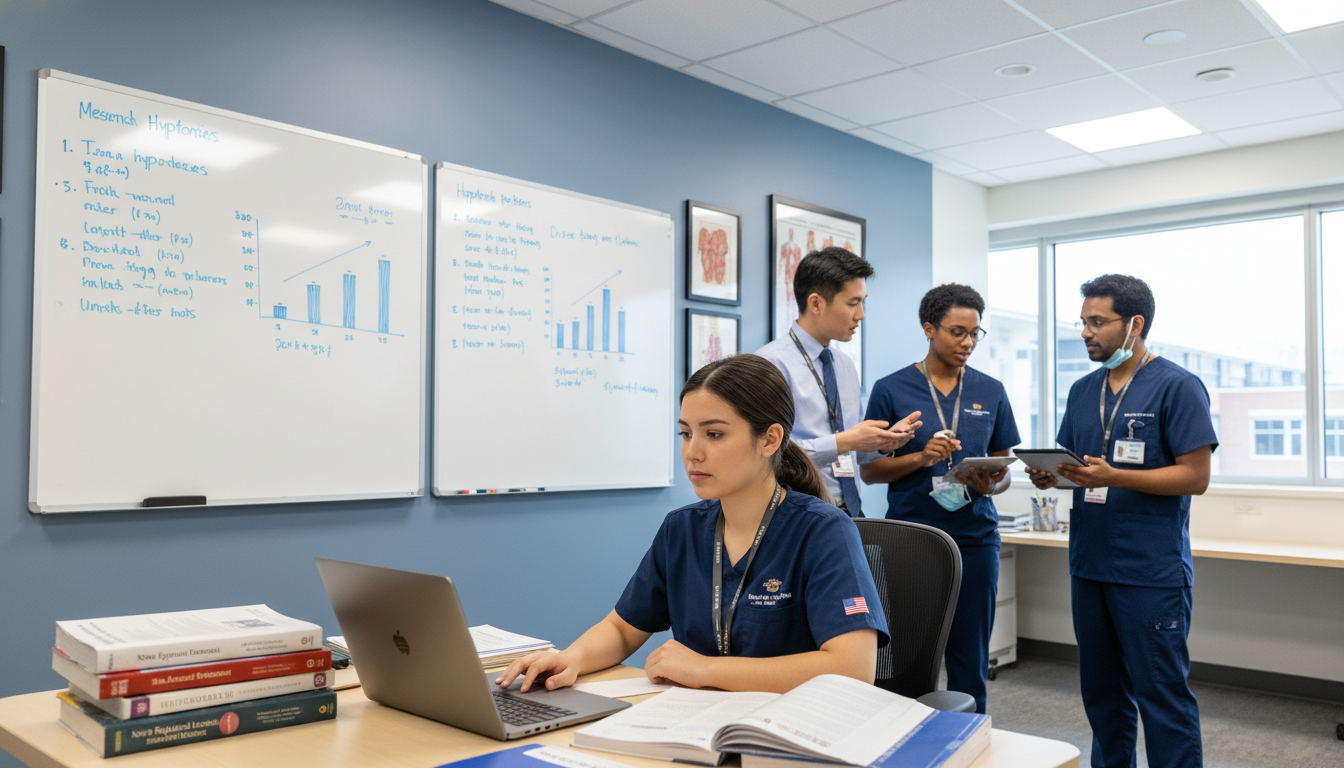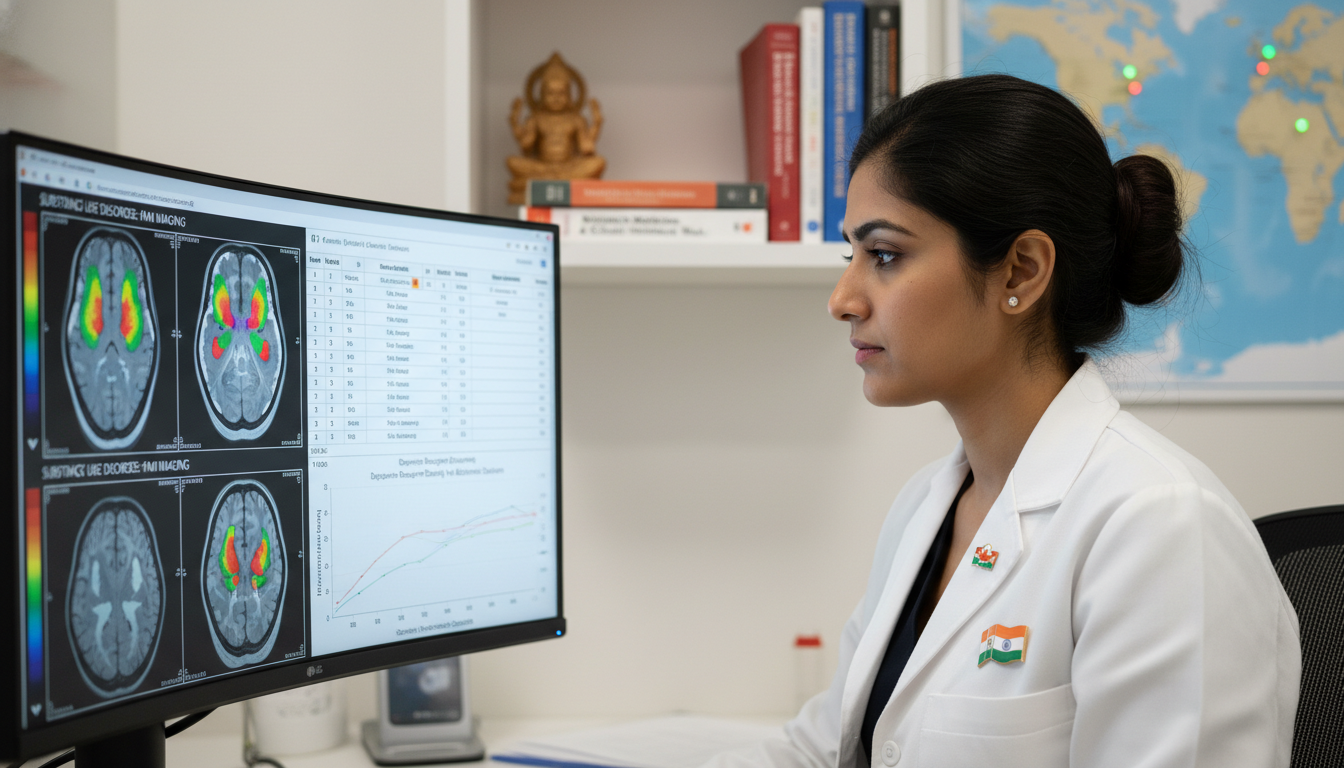
Understanding the Value of Research During Residency in Addiction Medicine
For a non-US citizen IMG (international medical graduate), residency is more than clinical training—it is your primary opportunity to build a track record that convinces programs, fellowship directors, and future employers that you belong in academic and clinical addiction medicine in the United States.
Research during residency is especially powerful in addiction medicine for three reasons:
- Addiction medicine is evidence-driven and rapidly evolving. New medications, harm reduction strategies, and integrated care models are constantly emerging.
- Programs and fellowships are hungry for residents who can help build or expand substance use services. Research experience signals that you can contribute to quality improvement, grants, and publications.
- As a foreign national medical graduate, research helps you stand out. It demonstrates initiative, intellectual curiosity, and the ability to navigate US academic systems—traits that reassure program leadership and visa sponsors.
Whether you plan to pursue an addiction medicine fellowship, an academic residency track, or a community-based career with a strong quality-improvement focus, structured research experience will significantly strengthen your profile.
How Research Strengthens Your Addiction Medicine Career as a Non-US Citizen IMG
1. Differentiating Yourself in a Competitive Field
Addiction medicine fellowships and academic internal medicine or psychiatry tracks often receive many applications from well-trained US and international graduates. When two applicants have similar exam scores and clinical evaluations, resident research projects can tip the balance.
Research experience shows:
- You can ask focused clinical questions (e.g., “Why are our MOUD follow-up rates so low?”).
- You understand basic research design and can interpret scientific literature.
- You can work productively with mentors and research teams.
- You follow through on long-term projects despite busy clinical schedules.
For a non-US citizen IMG, this is especially important; some programs may be unfamiliar with your medical school or prior training. Peer‑reviewed publications, posters, and presentations give them an objective way to evaluate your capabilities.
2. Building a Clear Narrative Toward Addiction Medicine
Fellowship directors want to see a coherent story: why addiction medicine, and why you? Having substance abuse training plus research that directly involves substance use disorders (SUDs) allows you to build that narrative:
- Quality improvement (QI) project on buprenorphine induction in the ED.
- Chart review on alcohol withdrawal management outcomes.
- Survey study on stigma toward patients with opioid use disorder among house staff.
These experiences show that your interest is not superficial—you have repeatedly invested time in understanding and improving care for people with SUDs.
3. Supporting Visa and Academic Opportunities
For many foreign national medical graduates, visa status (J-1 or H-1B) shapes career options. While research alone does not guarantee any specific visa outcome, it can help in several indirect ways:
- Stronger fellowship applications increase your chances of matching into an addiction medicine fellowship at a large academic center—many such centers are experienced visa sponsors.
- Research productivity (publications, abstracts, involvement in grants) can help later if you pursue academic positions, waiver jobs, or, in some cases, long-term academic careers requiring strong CVs.
- Mentorship connections from research may introduce you to leaders who can advocate for you in hiring and sponsorship decisions.

Finding the Right Research Niche in Addiction Medicine
You do not need a PhD or formal epidemiology training to do impactful research during residency. What you need is a practical, focused niche and a project that can realistically be completed within residency time constraints.
1. Common Types of Addiction Medicine Research for Residents
a. Quality Improvement (QI) Projects
QI projects are often the most feasible resident research projects. Examples:
- Increasing naloxone prescribing rates at discharge for patients with opioid use disorder.
- Reducing against-medical-advice (AMA) discharges among patients hospitalized for alcohol withdrawal.
- Implementing a screening, brief intervention, and referral to treatment (SBIRT) workflow in primary care or the ED.
- Streamlining referral pathways from the hospital to outpatient MOUD (medication for opioid use disorder) clinics.
QI is attractive because:
- It addresses immediate clinical problems.
- IRB requirements may be simpler or waived as QI.
- Results can be presented at local and national conferences.
- It aligns with ACGME expectations and hospital priorities.
b. Retrospective Chart Reviews
These projects use existing medical records to answer focused clinical questions:
- Outcomes of different buprenorphine induction strategies in hospitalized patients.
- Predictors of readmission among patients with alcohol-related liver disease and coexisting SUD.
- Patterns of benzodiazepine prescribing in patients with co-occurring anxiety and opioid use disorder.
As a non-US citizen IMG, chart reviews can be a good starting point because they are:
- Time-efficient.
- Low-cost (no need for large grants).
- Often feasible with a mentor’s existing datasets.
c. Survey and Educational Research
You can study knowledge, attitudes, or practices regarding addiction medicine among:
- Residents and medical students (e.g., training gaps in substance abuse training).
- Primary care or ED physicians (e.g., barriers to initiating buprenorphine).
- Nurses or social workers (e.g., perceptions of harm reduction strategies).
Educational research projects might include:
- Evaluating a new addiction medicine curriculum for residents.
- Measuring changes in stigma after a workshop on person-first language in SUD.
d. Clinical or Implementation Research
If your institution has an existing addiction medicine program or trial, you might:
- Help enroll patients in an ongoing study.
- Participate in data collection/management.
- Co-author manuscripts based on established projects.
This is ideal if you want to pursue an academic residency track, as it exposes you to more rigorous research design and analysis.
2. Choosing a Feasible Project as a Busy Resident
To keep your project realistic:
- Scope down, then scope down again. Instead of “all SUD patients,” pick a narrower group: e.g., “patients admitted with opioid overdose to the medicine service over 12 months.”
- Use existing data or workflows when possible. Work with what already exists (EMR data, existing consult service, ongoing curriculum).
- Align with institutional priorities. Hospital leadership is more likely to support projects that improve metrics such as readmissions, length of stay, or ED revisits.
A useful rule of thumb: if your project cannot reasonably produce a poster, presentation, or manuscript within 12–18 months, it is probably too large for a single resident without dedicated research time.
Finding Mentors and Research Opportunities as a Non-US Citizen IMG
1. Where to Look for Mentors
As a non-US citizen IMG, you may initially feel outside existing networks, but there are clear steps you can take:
Within your residency program:
- Addiction medicine faculty (if your program has a consult service or clinic).
- Psychiatry or internal medicine faculty who are interested in SUD, pain management, or behavioral health integration.
- Program leadership who know which faculty are “resident‑friendly” researchers.
- Hospital-based QI departments or population health teams.
Across the institution:
- Public health or epidemiology departments affiliated with your hospital.
- Center for addiction medicine or behavioral health research centers.
- Clinical and translational science institutes (CTSI/CTSA) with pilot grants and mentorship programs.
Beyond your institution:
- National societies: ASAM (American Society of Addiction Medicine), AAAP (American Academy of Addiction Psychiatry), or specialty‑specific groups.
- Virtual mentorship programs or research collaboratives, which increasingly welcome residents interested in addiction medicine fellowship careers.
2. How to Approach Potential Mentors
Busy faculty respond better to clear, respectful requests. When emailing:
- Use a clear subject line:
“Resident interested in addiction medicine research – brief meeting request” - Introduce yourself in 2–3 sentences:
- Name, PGY level, specialty.
- Non-US citizen IMG with strong interest in addiction medicine.
- Express your interests:
- “I’m particularly interested in substance abuse training, care models for opioid use disorder, and resident research projects.”
- Be specific about your ask:
- “Could we meet for 20–30 minutes to discuss potential opportunities to get involved with your ongoing projects or to develop a feasible resident project?”
Bring to the meeting:
- A short CV.
- A very rough list of questions or ideas:
- “Is there a need to evaluate our MOUD follow-up rates after discharge?”
- “Are there ongoing projects where I could help with data collection and authorship?”
3. Building a Mentorship Team
You may need more than one mentor:
- Content mentor: Addiction medicine expert who understands SUD and clinical context.
- Methodology mentor: Someone with research design or biostatistics expertise.
- Career mentor: A faculty member familiar with visa, fellowship, and academic promotion issues for foreign national medical graduates.
These roles can overlap, but identifying who can help with each aspect makes your progress more efficient.
Practical Strategies to Balance Research and Residency
1. Protecting Time and Setting Realistic Goals
Resident life is busy, but structured planning helps:
- Block protected time. Even 2–3 hours weekly, consistently scheduled, can move projects forward.
- Set micro-goals:
- Week 1–2: Finalize research question and meet with mentor.
- Week 3–4: Draft protocol or IRB/QI proposal.
- Month 2–3: Begin data collection.
- Month 4–6: Finish data collection and start basic analysis.
- Month 7–9: Draft abstract or manuscript.
Collaborate with co-residents or medical students; sharing tasks eases the workload and can increase your impact.
2. Navigating IRB and QI Approvals
Understanding regulatory processes is crucial:
- Many QI projects may not require full IRB review, but your institution may still require submission to confirm QI status.
- Retrospective chart reviews usually need at least expedited IRB review.
- As a foreign national medical graduate, there is no special limitation on IRB involvement, but:
- Make sure your role in accessing data complies with institutional policies.
- Complete required human subjects training (e.g., CITI program).
Work closely with your mentor; they should guide you through the IRB process and help you frame your project appropriately.
3. Developing Core Research Skills
You do not need to be a statistician, but you should develop basic skills:
- Formulating a research question using frameworks like PICO (Population, Intervention, Comparison, Outcome).
- Basic study designs: cross-sectional, cohort, pre–post, QI cycles (PDSA).
- Introductory statistical concepts: descriptive statistics, simple comparisons (e.g., t-test, chi-square), interpretation of p-values and confidence intervals.
- Literature search skills: using PubMed, Google Scholar, and institutional library resources.
Many residencies offer:
- Research seminars or workshops.
- Access to biostatistics support for residents.
- Small grants for resident research projects—these look excellent on your CV.
Turning Your Work Into Presentations, Publications, and Future Opportunities
1. Maximizing Academic Output
To translate research during residency into career capital:
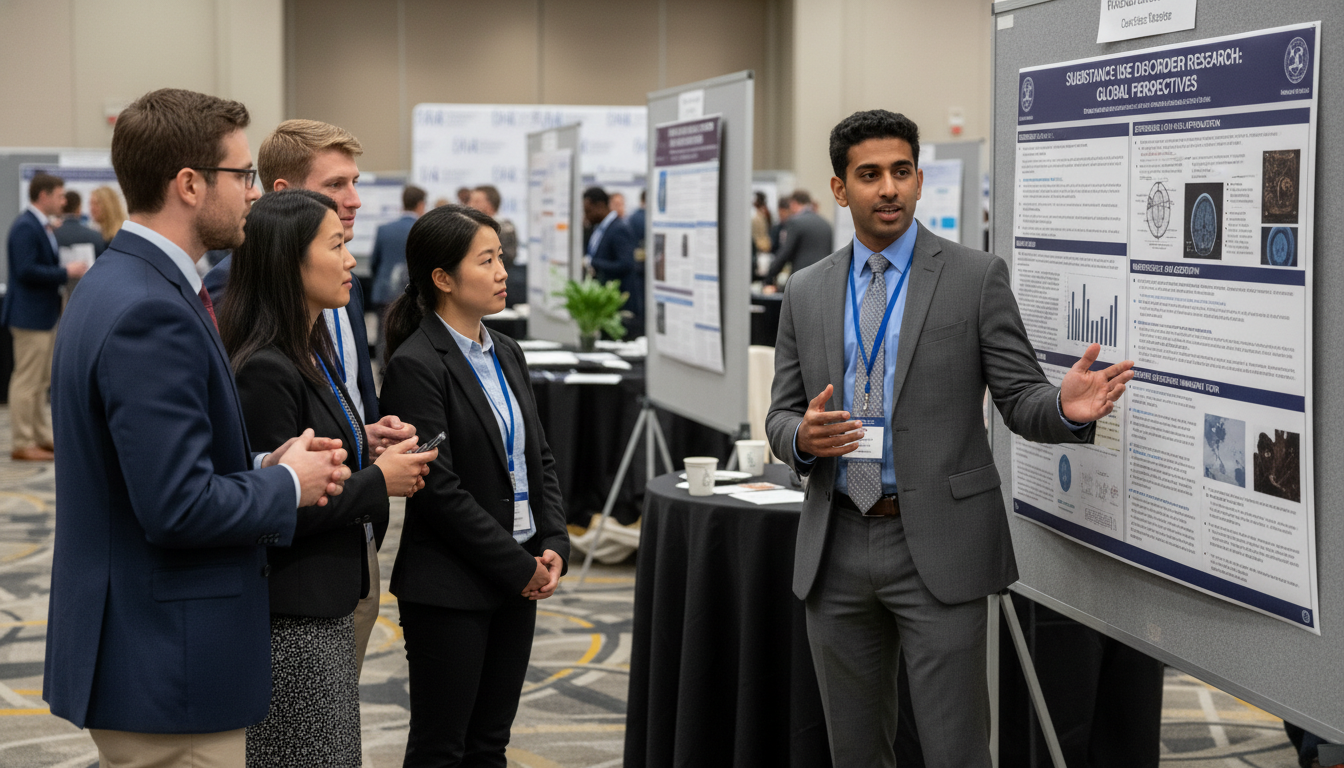
Present internally:
- Departmental grand rounds.
- Resident research day.
- Quality improvement fair.
Present externally:
- Addiction medicine or psychiatry conferences (e.g., ASAM, AAAP, APA).
- Specialty meetings (e.g., internal medicine, family medicine) with addiction-related sections.
- Public health or behavioral health conferences.
A single well-designed project can yield:
- 1–2 posters.
- A local or regional presentation.
- A peer-reviewed manuscript (original article, brief report, or QI paper).
2. Strengthening Your Addiction Medicine Fellowship Application
Research demonstrates your long-term investment in the field. For addiction medicine fellowship applications, emphasize:
- How your project addressed a real gap in SUD care.
- Your concrete role (e.g., “designed data collection tools, collected data on 120 patients, drafted the first version of the manuscript”).
- Lessons learned about systems of care, stigma, or integrated behavioral health.
Strong letters from research mentors that explicitly describe your contributions and work ethic can significantly boost your application—especially if you are a non-US citizen IMG competing for limited visa-sponsoring positions.
3. Planning for an Academic Residency Track or Career
If your program has an academic residency track or clinician‑educator track:
- Explore whether dedicated research time (e.g., 3–6 months total) is available in PGY2–PGY3.
- Ask about expectations: posters, manuscripts, teaching roles.
- Clarify how your addiction-related work can be integrated into the track’s goals.
For those aiming for academic careers:
- Consider additional training (e.g., MPH, certificate in clinical research, addiction medicine fellowship with a strong research focus).
- Seek multi-year mentorship plans rather than one-off projects.
- Look for opportunities to join larger grants or multicenter studies.
Special Considerations and Challenges for Non-US Citizen IMGs
1. Visa Status and Research Opportunities
Visa type rarely restricts participation in research, but funding can be more complex:
- Some federal grants have citizenship restrictions for principal investigators; however, you can still be a co-investigator or team member.
- Institutional or foundation grants are often more flexible.
- You may not be able to take extended, fully funded “lab years” without careful visa planning, but short-term resident projects are almost always possible.
Discuss long-term goals openly with mentors and, if necessary, with your institution’s international office or GME office.
2. Cultural and Communication Barriers
As a non-US citizen IMG, you might face:
- Unfamiliarity with US academic norms (e.g., expectations around authorship, emails, and meetings).
- Hesitation to speak up in group research meetings.
Practical strategies:
- Observe how senior residents communicate with faculty—model concise, respectful, and proactive messages.
- Ask mentors to clarify roles and expectations at the start of any project.
- Request feedback on drafts and presentations, and use each as a learning opportunity to improve your academic English and communication style.
3. Leveraging Your International Background
Your perspective as a foreign national medical graduate can be a strength:
- You may bring insights from different health systems, harm reduction policies, or cultural frameworks around substance use.
- Comparative or global addiction medicine ideas can inspire unique projects (e.g., adapting screening tools used in your home country to US immigrant populations).
- Bilingual abilities may help with research on non-English‑speaking SUD populations.
Highlight this in your personal statements, presentations, and interviews: your international experience informs a broader, more nuanced understanding of addiction and recovery.
Putting It All Together: A Sample Three-Year Plan
For an IMG resident (e.g., in internal medicine or psychiatry) aiming for addiction medicine:
PGY1: Exploration and Foundations
- Identify 1–2 addiction medicine faculty; schedule introductory meetings.
- Join an ongoing project (e.g., data collection for a retrospective study on MOUD outcomes).
- Attend local or national addiction-focused conferences if possible.
- Complete human subjects training and learn basic research methods.
PGY2: Lead a Feasible Project
- Develop your own QI or retrospective project focused on SUD care (e.g., improving naloxone prescribing).
- Submit IRB or QI proposal; start data collection.
- Present preliminary results at resident research day.
- Begin drafting an abstract for a national meeting.
PGY3: Consolidation and Output
- Complete data analysis and finalize manuscript.
- Present at a national conference (ASAM, AAAP, APA).
- Ask mentors for strong letters highlighting your research and clinical interest in addiction medicine.
- Apply to addiction medicine fellowship or addiction-focused academic positions.
By the end of residency, you will not only have solid substance abuse training and clinical experience but also a tangible research portfolio that showcases your readiness for advanced training and academic contribution.
FAQs: Research During Residency for Non-US Citizen IMGs in Addiction Medicine
1. Do I need prior research experience before residency to succeed in addiction medicine research?
No. While prior research is helpful, many residents—especially non-US citizen IMGs—start with minimal experience. What matters most is your willingness to learn, find good mentors, and complete at least one or two well-executed resident research projects during training. Starting with QI or retrospective chart reviews is perfectly acceptable.
2. Will being a non-US citizen IMG limit my ability to get involved in research or publish?
In most programs, your citizenship status does not limit your ability to join research teams, access de‑identified data under proper supervision, present at conferences, or publish in peer-reviewed journals. Some grant-funded positions or extended research fellowships may have citizenship-related constraints, but standard resident-level research is usually unaffected.
3. How much research is “enough” for an addiction medicine fellowship application?
There is no fixed number, but:
- One substantial project with your clear, documented contribution (poster plus manuscript or in‑progress submission) is strong.
- Additional smaller projects (case reports, QI posters, survey studies) further strengthen your CV.
- Demonstrating a consistent addiction-focused trajectory—substance abuse training electives, clinical exposure, and research—is more important than sheer quantity.
4. What if my residency program has limited addiction medicine resources or no formal addiction faculty?
You can still engage in addiction-related research by:
- Identifying faculty in psychiatry, internal medicine, emergency medicine, or primary care who see many patients with SUD and are open to QI projects.
- Partnering with public health departments or community treatment centers.
- Seeking virtual mentorship through national organizations like ASAM or AAAP.
- Designing feasible projects such as screening rates for alcohol or opioid misuse, or improving referral pathways to community SUD services.
With proactive effort and smart project design, you can build a strong addiction medicine research foundation during residency—even in resource-limited settings and as a non-US citizen IMG.