Why Research During Residency Matters for Non-US Citizen IMGs
For a non-US citizen IMG in internal medicine, residency is often about much more than clinical training. It is also your main opportunity to build a research profile that can:
- Open doors to fellowships (cardiology, GI, heme-onc, pulm/crit, etc.)
- Strengthen your chances for academic or hospitalist positions in the US
- Support future visa needs (H-1B, O-1, or even permanent residency in the long run)
- Compensate for perceived disadvantages as a foreign national medical graduate competing in an academic environment
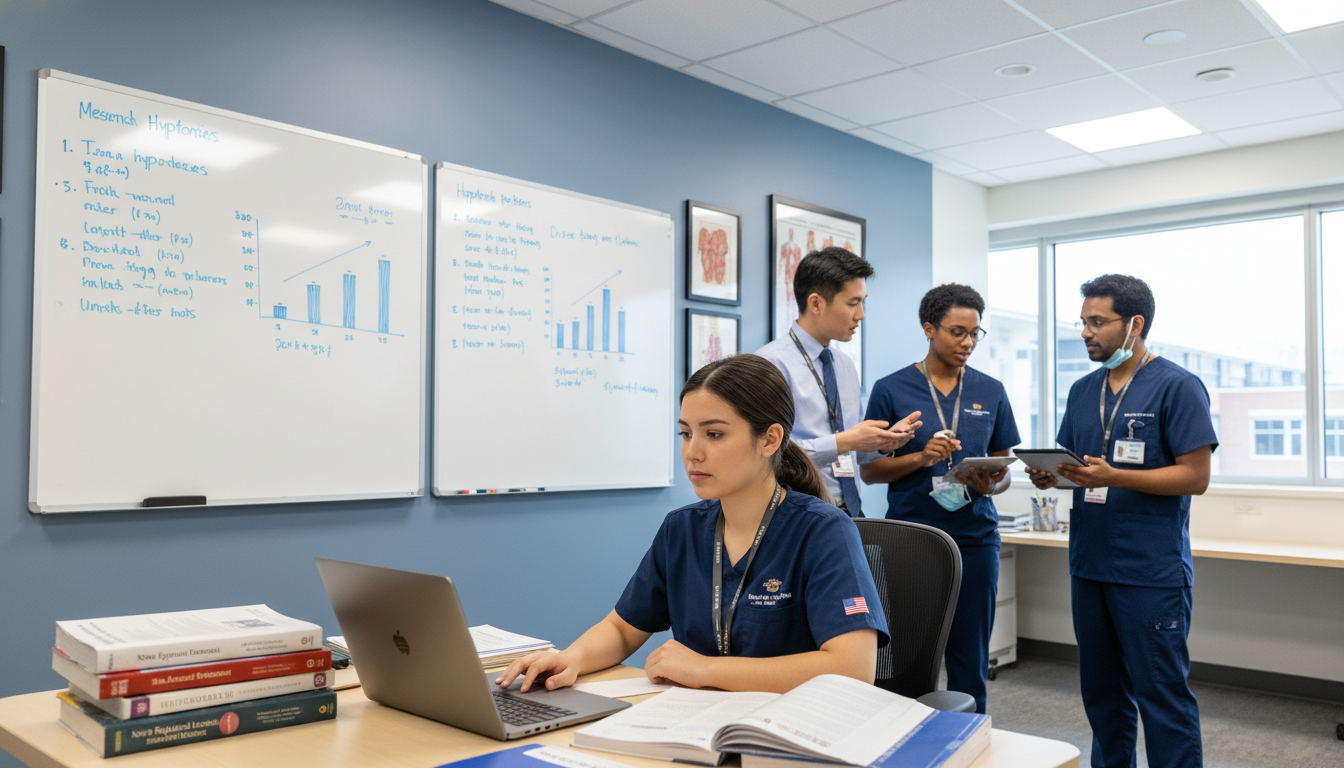
While many IM residents focus exclusively on clinical duties, those who strategically engage in research during residency stand out. This does not necessarily mean running randomized trials or publishing in NEJM. It means understanding how to plug into resident research projects, choosing the right mentors, and aligning your scholarly work with your long-term goals.
This article is written specifically for the non-US citizen IMG in internal medicine residency, with practical, realistic strategies that consider visa limitations, time constraints, and common barriers.
Understanding the Research Landscape in Internal Medicine Residency
Types of Research You Can Do as a Resident
Internal medicine offers a broad range of research opportunities. As a resident, you’re most likely to be involved in:
Clinical Research
- Retrospective chart reviews (e.g., outcomes of patients with heart failure readmissions)
- Prospective observational studies
- Quality improvement (QI) with a research component
- Clinical trials (often as a sub-investigator or coordinator role)
Quality Improvement (QI) and Patient Safety
- Projects tied to institutional goals: readmissions, sepsis bundles, antibiotic stewardship
- Often easier to start and complete within residency timelines
- Frequently presented at national meetings (ACP, SGIM, hospital medicine conferences)
Medical Education Research
- Curriculum development (e.g., ultrasound teaching during morning report)
- Assessment tools (OSCE design, evaluation methods)
- Surveys of residents or students and analysis of outcomes
Health Services / Outcomes Research
- Cost-effectiveness, length of stay, resource utilization
- Health disparities and access to care
- Ideal for residents interested in hospital medicine or public health
Basic Science / Translational Research
- Lab-based or bench research
- Harder to fit into a tight residency schedule
- More feasible in programs with strong research infrastructure and protected time
For a foreign national medical graduate with limited time, clinical, QI, and education research are usually the most realistic and high-yield.
How Programs View Resident Research
Residency programs and faculty generally view research during residency as:
- A sign of initiative and intellectual curiosity
- Evidence that you can critically appraise literature and apply evidence to practice
- A predictor of success in fellowship and academic careers
Some programs formally separate residents into academic residency track vs. categorical track (sometimes called “research track”). Others simply offer elective time, mentorship, and resources to anyone who is interested.
If you are a non-US citizen IMG, research also signals:
- Commitment to the US academic system
- Ability to work within IRB, HIPAA, and institutional rules
- Potential to support future O-1 “extraordinary ability” visa applications (if you later go that route)

Getting Started: First-Year Strategy for Non-US Citizen IMGs
Step 1: Stabilize Clinically, But Plan Early
During your first 3–4 months (PGY-1), your primary goal is to learn the US clinical system:
- Electronic medical record (EMR)
- Documentation and billing
- Communication with nurses, consultants, and case managers
- ACGME duty hours and work-flow
However, waiting until late PGY-2 to think about research can be a mistake—especially if you want a competitive fellowship. Instead:
- Spend the first 2–3 months observing and adjusting
- Simultaneously begin gathering information about research:
- Ask senior residents which attendings are active in resident research projects
- Identify which residents recently presented posters or published papers
- Attend any “Scholarship in Residency” or “Research 101” workshops
Step 2: Map the Research Infrastructure at Your Program
Important questions to answer early as a non-US citizen IMG:
Who is the research director or scholarly activity coordinator?
- Internal medicine program director (PD) may direct you to an Associate PD for research
- This person can help match you with interested faculty
Is there a formal academic residency track?
- If yes, what are the requirements and deadlines to join?
- Do they offer:
- Protected research time?
- A guaranteed mentor?
- Dedicated research seminars?
What databases and support services exist?
- Access to biostatistical support
- Medical librarian services
- Internal seed grants or funding for conferences
- IRB office assistance for protocol submission
How is research credit/elective time structured?
- Typical options:
- 2–4 weeks of research elective per year
- Longitudinal half-day per week research block
- Dedicated research blocks in an academic track (e.g., 3–6 months over 3 years)
- Typical options:
Document what is realistically available so you can plan around it.
Step 3: Select a Mentor Strategically
For a non-US citizen IMG, mentor selection is crucial. Look for:
- Track record of resident mentorship
- Have their residents produced posters, publications, or national presentations?
- Alignment with your goals
- If you want cardiology fellowship, a cardiologist who publishes regularly is ideal
- If you want hospitalist/academic IM, a general internal medicine or hospital medicine researcher is great
- Willingness to guide newcomers
- Ask senior IMGs who has been supportive and responsive
- Understanding of your visa and time constraints
- Someone familiar with the pressures non-US citizens face and supportive of realistic timelines
Actionable approach:
- Email 2–3 potential mentors:
- Attach your CV
- Briefly describe your background as a foreign national medical graduate
- Express your research interests and long-term plans (e.g., “I’m interested in pursuing a heme-onc fellowship and would like to get involved in outcomes research related to leukemia care.”)
- Ask for a 20-minute meeting (in person or virtual)
During the meeting, ask:
- “What projects are currently available for a resident to join?”
- “What is the expected timeline and work commitment?”
- “Have previous residents successfully completed and presented/published with you?”
Choose one main mentor initially rather than scattering your efforts.
Choosing the Right Kind of Research During Residency
Match Research Type to Your Timeline and Goals
As a non-US citizen IMG, you must balance:
- Heavy clinical duties
- USMLE Step 3 (if not done yet)
- Visa-related stress
- Need to build a research profile quickly for the IM match in fellowship or early job search
A practical way to categorize projects:
Short-Term, High-Feasibility Projects (3–6 months)
- Case reports / case series
- Simple retrospective chart reviews with small datasets
- Educational posters (e.g., novel teaching tools)
- QI projects with pre-existing data
These are ideal in PGY-1, especially late PGY-1 and early PGY-2.
Medium-Term Projects (6–18 months)
- Larger retrospective cohorts
- Multi-step QI interventions with before–after data
- Survey-based medical education studies
- Single-center observational studies
These are often started in PGY-1/early PGY-2 and aimed to finish by late PGY-2 or early PGY-3.
Long-Term Projects (18+ months)
- Prospective studies
- Complex multi-site collaborations
- Lab/translational projects
- Major grants proposals or multi-phase educational interventions
These can be pursued if:
- You are in an academic residency track with protected time, and
- You commit early in PGY-1, and
- You have a strong, experienced mentor
Example Pathway for a Non-US Citizen IMG in IM
PGY-1 (Months 4–12):
- 1–2 case reports (e.g., rare autoimmune disease, unusual infection in an immigrant population)
- Join a small QI project (e.g., improving DVT prophylaxis compliance on your teaching service)
- Begin data collection for a retrospective study (e.g., outcomes in patients with uncontrolled diabetes admitted to your hospital)
PGY-2:
- Complete and submit the retrospective project as a poster abstract to ACP or a subspecialty conference
- Transform QI project into a manuscript with help from mentor and statistician
- If aiming for fellowship, PGY-2 summer/fall is critical: you want at least accepted posters/papers on your CV for applications
PGY-3:
- Lead a more substantial project or continue a longitudinal one
- Aim for 1–3 publications or at least high-quality conference presentations
- Use your research work to build strong letters of recommendation from academic faculty

Practical Tips to Succeed in Resident Research as a Non-US Citizen IMG
1. Manage Time Ruthlessly
Clinical duties will always expand if you let them. To protect time for research:
- Use post-call afternoons for literature review or writing
- Reserve one evening per week exclusively for research tasks
- During outpatient blocks or electives, schedule one hour per day for research
- Set up recurring meetings with your mentor every 2–4 weeks for accountability
Tools that help:
- Task managers (Todoist, Notion, Trello)
- Citation managers (Zotero, Mendeley, EndNote)
- Shared documents (Google Docs, institutional OneDrive)
2. Start with Low-Hanging Fruit
Many IMGs overestimate what’s needed to “do research.” Starting small builds traction:
Case Reports:
- Identify unusual or educational cases early
- Ask your attending if the case is publishable
- Look for journals that accept case reports or clinical images
- Submit to poster sessions at local/regional ACP, hospital medicine, or subspecialty meetings
Conference Abstracts:
- Watch for abstract deadlines for:
- ACP (American College of Physicians)
- SGIM (Society of General Internal Medicine)
- SHM (Society of Hospital Medicine)
- Subspecialty societies (ACC, ASH, CHEST, ATS, AASLD, etc.)
- Even if the final paper is not ready, an abstract with preliminary data gets you:
- Presentation experience
- CV entries
- Networking opportunities
- Watch for abstract deadlines for:
3. Learn the Basics of Research Methods and Statistics
You don’t need to become a biostatistician, but understanding the fundamentals allows you to:
- Design feasible resident research projects
- Communicate effectively with statisticians
- Interpret literature critically on rounds and in journal club
Practical steps:
- Take advantage of any institutional “Introduction to Clinical Research” courses
- Complete free or low-cost online resources (Coursera, edX, or university-based modules)
- Ask your program if you can attend medical school or epidemiology seminars
4. Protect Yourself from Exploitative or Unproductive Situations
As a foreign national medical graduate, you may feel pressure to say “yes” to every opportunity. Be selective:
Red flags:
- Projects without a clear plan or timeline (“We’ll figure it out later”)
- Mentors who haven’t published or presented in years
- Requests to do large amounts of data collection with no clarity on authorship
Before committing, ask:
- “What is the realistic endpoint (poster, paper, both)?”
- “Who will be the first author?”
- “What is the expected timeline?”
It is better to do 2–3 well-defined projects to completion than 7–8 scattered projects that never result in presentations or publications.
5. Understand Authorship and Collaboration Etiquette
To build a sustainable academic reputation:
- Clarify authorship roles early and document expectations via email
- Contribute actively to:
- Literature review
- Study design (if possible)
- Drafting sections of the manuscript
- Data interpretation
- Keep organized records of:
- Datasets (de-identified and secure)
- IRB approvals
- Version history of manuscripts
As a non-US citizen IMG, professional and reliable collaboration can make faculty more willing to work with and recommend you for fellowships and jobs.
Visa Considerations and Long-Term Career Impact
How Research Helps with Fellowships
Most competitive internal medicine subspecialties (cardiology, GI, heme-onc, pulm/crit, nephrology) heavily value research productivity. For a non-US citizen IMG, that matters because:
- You may be starting with less US-based academic exposure compared to US grads
- Some fellowship programs prefer applicants with:
- US publications
- US-based mentors who can write strong letters
- Evidence of persistence and intellectual engagement
Research during residency can:
- Make your ERAS fellowship application more competitive
- Show commitment to your chosen field
- Provide US-based scholarly references (which are often critical if you’re on a visa)
Visa Paths Where Research May Matter
J-1 Visa (ECFMG-sponsored)
- Widely used by non-US citizen IMGs in internal medicine residency
- Research during residency is allowed as long as it’s part of your training program
- If you later apply for academic or research-heavy positions, your publications and projects can strengthen your profile
H-1B
- Some residencies and fellowships sponsor H-1B instead of J-1
- A research track record is not mandatory but can be helpful if you later:
- Apply for academic or university-based H-1B positions
- Seek promotions or leadership roles
O-1 (Extraordinary Ability)
- Requires evidence of sustained national or international acclaim
- Publications, citations, conference presentations, reviewer roles, and impactful research all contribute
- If you ever aim for an O-1 or EB-1 pathway, a strong research portfolio built right from residency is an asset
Overall, the goal is not just to have a visa but to have leverage and options. Research gives you flexibility, credibility, and bargaining power.
Frequently Asked Questions (FAQ)
1. I am a non-US citizen IMG in a community internal medicine residency with limited research. Is it still possible to do meaningful research?
Yes. Even in community programs, you can:
- Initiate quality improvement projects (e.g., improving hypertension control in clinic)
- Perform retrospective chart reviews with local data
- Work on case reports and clinical vignettes for ACP or subspecialty meetings
- Collaborate with:
- Nearby academic centers (through alumni or faculty connections)
- Hospitalist or specialist groups who maintain local registries
Be proactive in proposing projects that align with institutional priorities (readmissions, sepsis, antibiotic stewardship, etc.). These are usually well-received and can yield publishable work.
2. How many publications do I need for a competitive fellowship?
There is no fixed number, but for non-US citizen IMGs applying to competitive fellowships:
- Having 2–3 solid research outputs (e.g., 1–2 first-author abstracts or papers, plus a few co-author roles) is often a realistic and respectable target.
- Quality matters more than quantity:
- A well-designed QI paper in a respected journal plus a subspecialty abstract can be more valuable than 6 unfinished projects.
- Strong letters from mentors who can convincingly describe your research skills are critical.
3. Can I start research during residency if I have no prior research experience?
Absolutely. Many non-US citizen IMGs begin their first real research work in residency. To make it manageable:
- Start with case reports and small QI projects to learn the process
- Seek mentors who are used to working with research beginners
- Use institutional and online resources to gain basic skills in:
- Study design
- Statistics
- Scientific writing
Your lack of prior research is not a barrier if you show reliability, curiosity, and persistence.
4. How do I highlight my resident research projects on my CV and ERAS application?
For each project, include:
- Type of work: “Retrospective cohort study,” “Quality improvement project,” “Case report,” “Medical education study,” etc.
- Your role: First author, co-author, data analysis, manuscript drafting
- Status:
- “Published” with full citation
- “Accepted for publication”
- “Submitted” (with journal name)
- “Presented as poster/oral presentation” (conference name, year, location)
- If still ongoing, list it under “Work in progress / Ongoing projects” and be prepared to discuss:
- Objectives
- Your responsibilities
- Expected outcomes
Being specific and honest about your role and the project status is more impressive than vague claims.
Research during residency is not just an optional extra for the non-US citizen IMG in internal medicine. It is a powerful way to shape your long-term career, strengthen fellowship and job applications, and build a professional identity in the US academic system. By starting early, choosing mentors wisely, focusing on feasible projects, and understanding the broader implications for visas and career advancement, you can make resident research one of the most rewarding parts of your training.