Why Research During Residency Matters for Non‑US Citizen IMGs in Pulmonary & Critical Care
For a non‑US citizen IMG aiming for a pulm crit fellowship (PCCM fellowship) in the United States, research during residency is not optional—it is one of the most important levers you control.
Pulmonary & Critical Care is a highly academic, research‑heavy specialty. US program directors want to see clear evidence that you:
- Understand the science behind critical care and respiratory disease
- Can work within an academic team and complete complex projects
- Have potential to become faculty, clinician‑scientists, or system leaders
For a foreign national medical graduate, research also helps bridge two major challenges:
- Relative unfamiliarity: Program directors often know less about your medical school and prior training.
- Visa and sponsorship concerns: When programs are selective about whom they sponsor, they want strong, low‑risk candidates. A robust research portfolio signals reliability and long‑term academic value.
This guide breaks down, in practical terms, how to use residency to build a convincing research profile that supports your goal of a PCCM fellowship in the US—even if you start with no prior publications.
Understanding the Role of Research in PCCM Fellowship Applications
Why PCCM Is So Research‑Sensitive
Pulmonary & Critical Care practices at the intersection of:
- High‑technology care (ventilators, ECMO, advanced hemodynamics)
- Rapidly evolving guidelines (e.g., ARDS management, sepsis bundles)
- Multi‑system disease (cardiovascular, renal, infectious, immunologic)
As a result, fellowship programs place high value on:
- Evidence‑based thinking
- Ability to interpret complex data
- Comfort with guidelines, trials, and statistical inference
Research during residency is the clearest way to demonstrate these abilities. In particular, non‑US citizen IMGs are often judged less on “who you know” and more on what you have tangibly produced—abstracts, posters, manuscripts, QI projects.
How Program Directors Evaluate Your Research
Most PCCM program directors care less about whether you published in the “best” journal and more about whether your research history shows:
- Consistency: More than a one‑time poster in PGY‑1.
- Progression: Clear growth from data collection/helper → first author → more complex projects.
- Relevance: Linkage to pulmonary, critical care, or adjacent areas (e.g., hospital medicine, sepsis, ARDS, COPD, asthma, sleep, lung cancer, post‑ICU outcomes).
- Impact on your story: How you talk about the work in your personal statement and interviews.
For a non‑US citizen IMG, a thoughtfully constructed research narrative can compensate for:
- Slightly lower USMLE scores
- Lesser‑known medical schools
- Limited US clinical experience before residency
Research vs. Clinical Performance
You still must be a strong clinician. No amount of research can fix:
- Poor evaluations
- Failed or delayed medical licensing exams
- Patterns of unprofessional behavior
But among residents who are clinically solid, research often becomes the key differentiator for PCCM fellowship selection—especially for international and foreign national medical graduate applicants.
Getting Started: First 6–12 Months of Residency
Step 1: Clarify Your Research Goals Early
Before committing to any project, answer three questions:
What is my likely timeline?
- 3‑year internal medicine residency → aim to have at least 1–2 completed abstracts/posters by end of PGY‑2 and at least 1 manuscript submitted by mid‑PGY‑3.
What story am I building toward a PCCM fellowship?
- Example: “I am interested in ARDS, mechanical ventilation strategies, and ICU outcomes in resource‑limited settings.”
What do I realistically have capacity for?
- Night float, visa appointments, and new‑country adaptation are real constraints, especially for a non‑US citizen IMG. Pick projects with achievable scope.
Write this out as a one‑page “research vision” you can share with mentors. It shows maturity and focus.
Step 2: Map Your Institution’s Research Ecosystem
In your first 2–3 months:
Review faculty bios in Pulmonary & Critical Care, Hospital Medicine, Infectious Diseases, and Emergency Medicine. Note:
- Who publishes regularly?
- Who leads ICU‑related QI projects?
- Who has a reputation for supporting residents?
Identify existing research structures:
- Internal medicine research during residency tracks or an academic residency track
- Departmental research director or vice chair for research
- Clinical and Translational Science Institute (CTSI) resources
- Biostatistics or epidemiology consult services
Ask co‑residents and chief residents:
- “Which attendings actually get resident papers over the finish line?”
- “Who is good at mentoring non‑US citizen IMG residents specifically?”
Document this information; you will use it to prioritize where to invest your limited time.
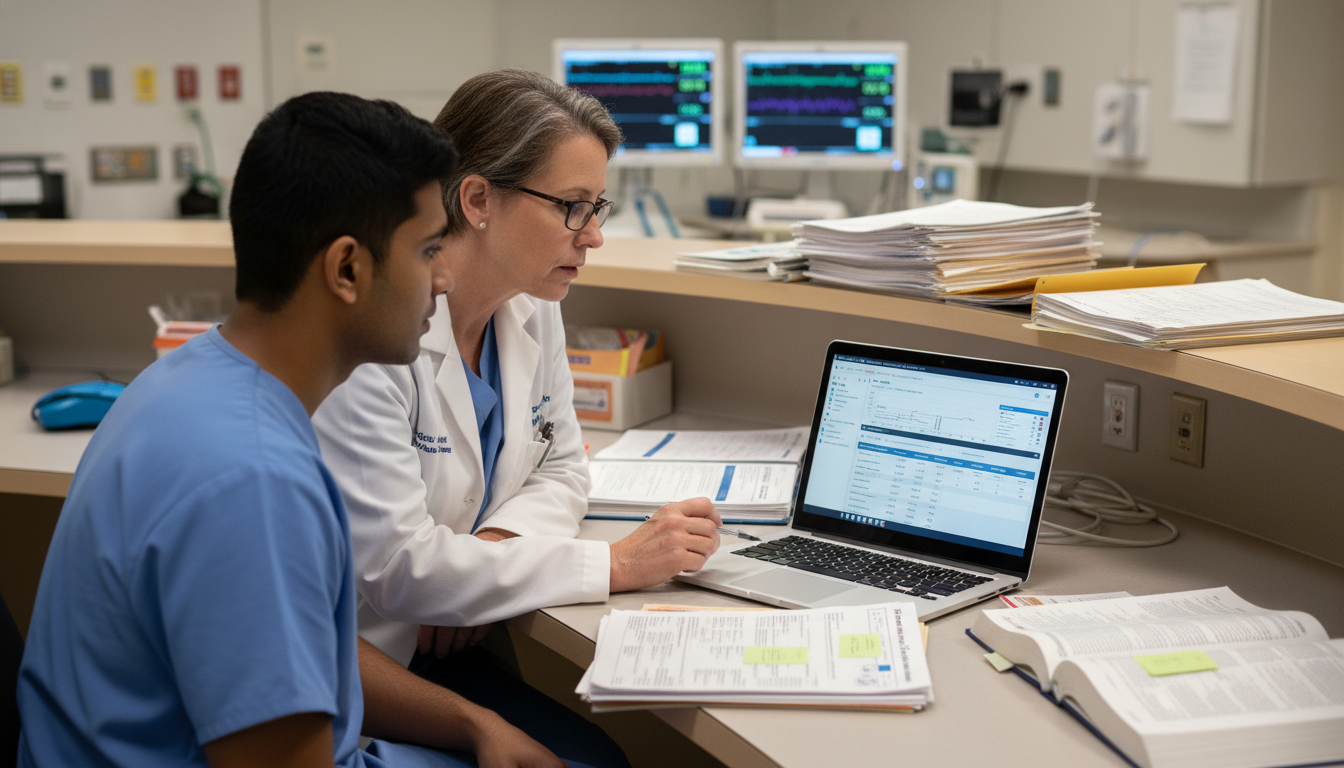
Step 3: Secure a Mentor (or Mentors) with PCCM Alignment
Aim to build a small “research advisory group”:
Primary research mentor (PCCM or closely related):
- Ideally a pulmonologist or intensivist with ongoing projects
- Someone who has successfully mentored residents before
- Comfortable with foreign national medical graduates and visa‑related constraints
Secondary methods mentor:
- Could be a hospitalist, epidemiologist, or biostatistician
- Helps with study design, statistics, and more rigorous projects later
Peer mentor (senior resident or fellow):
- Understands internal logistics (IRB, data access)
- Can help you avoid common mistakes
How to approach a potential mentor:
“I’m a PGY‑1 with a strong interest in Pulmonary & Critical Care and a long‑term goal of a PCCM fellowship. I would like to get involved in resident research projects related to ICU outcomes or respiratory failure. Could we schedule 20 minutes to talk about current projects and how I might contribute?”
Come to the meeting with:
- One‑page CV
- USMLE scores summary
- Any prior research experience (even from your home country)
- Your “research vision” paragraph
Types of Research Projects That Work Well During Residency
You do not need to start with randomized trials. As a resident, feasible, well‑executed projects are more valuable than overly ambitious incomplete ones.
1. Retrospective Chart Reviews (Great for PGY‑1/PGY‑2)
Examples in Pulmonary & Critical Care:
- Predictors of ICU mortality in patients with ARDS
- Outcomes of patients on noninvasive ventilation for COPD exacerbations
- Readmission rates after hospitalization for pneumonia
- Characteristics and outcomes of COVID‑19 ICU patients in your institution
Advantages:
- Use existing data; no need to intervene clinically
- Faster IRB approval compared with interventional studies
- You can work on data extraction during slower rotations or ambulatory blocks
Actionable Steps:
- Identify a focused question with your mentor.
- Check if a similar project has already been done at your institution.
- Draft a brief proposal (1–2 pages) including:
- Background
- Aim
- Inclusion/exclusion criteria
- Data elements to extract
- Basic analysis plan
- Submit for IRB (often expedited or exempt).
- Start data collection and refinement of the research question based on what you see.
2. Quality Improvement (QI) Projects in the ICU
QI counts as scholarship, especially if:
- You present it at a regional or national meeting
- You write it up following SQUIRE guidelines
Possible ICU QI topics:
- Improving compliance with low tidal volume ventilation in ARDS
- Reducing central line–associated bloodstream infections (CLABSI)
- Increasing adherence to sepsis bundle timelines
- Standardizing post‑ICU follow‑up or delirium screening
QI is particularly friendly for non‑US citizen IMG residents because:
- It aligns with hospital priorities → more institutional support
- It can often be done on rotations you are already on
- It may require less complex biostatistics
3. Case Reports and Case Series
Though lower on the “research hierarchy,” these can be strategic:
Examples in PCCM:
- Rare interstitial lung disease presentations
- Unusual complications of mechanical ventilation
- Complex autoimmune or vasculitis‑related lung manifestations
- Challenging differential diagnoses between infection and malignancy in the lung
Best use:
- As “entry projects” while you build experience and relationships
- To create early abstracts/posters at local or national conferences
- To demonstrate your ability to write and follow through
4. Prospective Observational Studies (Advanced but Feasible)
Once you are comfortable with research basics and have support:
- Implement a standardized delirium screening tool and follow patients longitudinally
- Collect data on early mobilization in the ICU and track functional outcomes
- Study adherence to a new ICU sedation protocol and its association with mechanical ventilation duration
These projects often require:
- More complex IRB applications
- Better data infrastructure
- Strong mentor engagement
However, they can lead to more robust publications, which significantly elevate your profile as a non‑US citizen IMG seeking an academic PCCM fellowship.
Maximizing Output: Strategy for the 3 Years of Residency
PGY‑1: Foundation and Early Wins
Goals by end of PGY‑1:
- Identify 1–2 reliable research mentors
- Join at least one ongoing project (even as a data collector or co‑author)
- Submit at least one abstract to a local/regional meeting
- Possibly complete a case report or QI abstract
Practical tactics:
- Use elective or ambulatory weeks for concentrated research time.
- Block 2 fixed research hours weekly, even on busy months.
- Learn basic data handling (Excel, REDCap, or institution‑specific databases).
As a non‑US citizen IMG, you may also be managing visa issues and cultural adaptation. Be honest with your mentors about your bandwidth; over‑promising and then disappearing is worse than starting small but being reliable.
PGY‑2: Build Depth and Visibility
PGY‑2 is the crucial year for resident research projects if you’re targeting a PCCM fellowship.
Goals by end of PGY‑2:
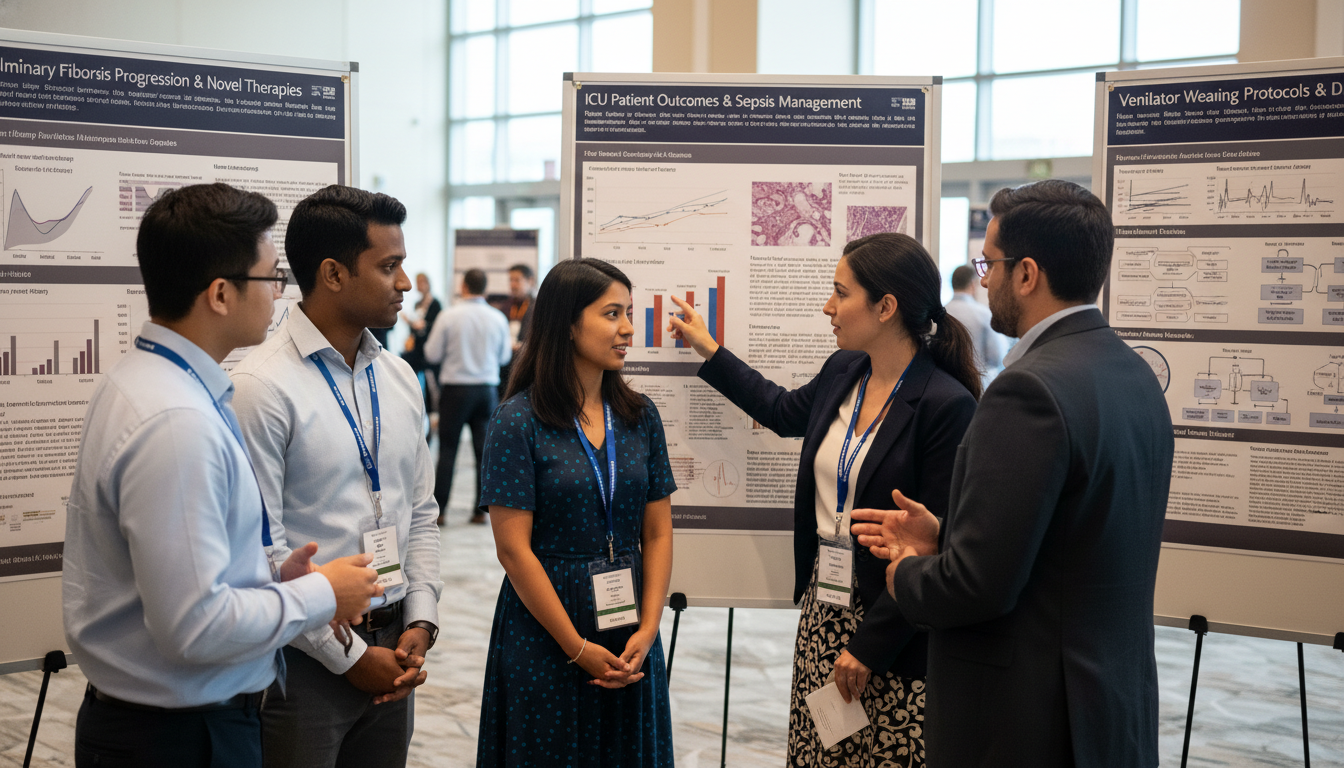
- At least 1–2 abstracts at national or major regional meetings (e.g., ATS, CHEST, SCCM, ACP, state chapters)
- At least one manuscript submitted (even if not yet accepted)
- Clear central theme in your research interests (e.g., sepsis, ARDS, COPD, ICU outcomes)
Consider joining or formalizing:
- An academic residency track or “research pathway” if your program has one
- Protected research electives (4–8 weeks if available)
- Longitudinal PCCM‑aligned projects (e.g., ICU registry, pulmonary clinic database)
This is also when you should:
- Present at your department’s research day
- Ask mentors for concrete roles that move you toward first‑author work
- Request feedback on your CV and how your research story appears on paper
PGY‑3: Consolidation and Fellowship Application
PGY‑3 is about converting your work into tangible outputs and a coherent narrative.
Goals by fellowship application time (summer of PGY‑3):
- Multiple abstracts/posters presented (including at least one national if possible)
- 1–3 publications (submitted/accepted; ideally at least one first‑author)
- Strong letters of recommendation highlighting:
- Your analytical thinking
- Independence and reliability
- Long‑term academic potential in PCCM
Also:
Use your research to frame your personal statement:
- Why PCCM?
- What research question(s) do you want to pursue in fellowship?
- How have your projects prepared you?
Prepare concise, high‑impact summaries of each major project for interviews:
- The question
- Your role
- Key findings
- What you learned
Unique Considerations for Non‑US Citizen IMGs and Foreign National Graduates
Visa, Funding, and Institutional Politics
As a foreign national medical graduate, your situation affects how you should navigate research:
Visa type (J‑1 vs H‑1B):
- Some grants and funded research positions are limited by visa.
- Ask early if certain research positions or years (e.g., research chief, extra research year) require specific visa types.
Institution’s willingness to sponsor:
Program directors may favor you for academic tracks if they believe you will stay in the US long term. Demonstrating commitment through sustained research and scholarly activity can help.Funding limitations:
Some internal research grants are restricted to US citizens/permanent residents. However:- You can still be co‑investigator or lead on unfunded/departmentally supported projects.
- Industry‑sponsored trials often have more flexible eligibility for investigators.
Be transparent with mentors:
“As a non‑US citizen IMG on a J‑1 visa, I may have certain limitations regarding paid research time or specific grants. I still want to build a strong academic profile for a PCCM fellowship; what structures here would be available to someone in my situation?”
Translating Prior International Research Experience
If you did research in your home country:
- Include it clearly on your CV, even if in non‑US journals.
- Emphasize:
- Methods you used (chart review, randomized trial coordination, lab work)
- Skills that transfer (data management, patient recruitment, manuscript writing)
- If possible, continue collaborations remotely and convert unfinished work into publications.
In interviews and mentor meetings, frame this as:
“My earlier work in [country] focused on [topic]; I’m now building on that foundation with US‑based research on [PCCM topic].”
This presents you as someone with longitudinal academic interest, not someone doing research solely for applications.
Overcoming Structural Disadvantages
You may face:
- Less familiarity with US academic culture and “hidden curriculum”
- Accents or communication differences
- Limited family support in the US
Counterbalance this with:
Reliability:
Show up. Meet deadlines. Answer emails. Protect your academic reputation.Documentation:
Keep organized:- IRB numbers
- Abstract submission confirmations
- Conference presentations
- Drafts and data files
Visible engagement:
- Ask questions on ICU rounds referencing key papers.
- Volunteer to present journal clubs on major PCCM trials.
- Attend pulmonary conferences or grand rounds whenever possible.
These behaviors signal that you are “academic material,” essential when fellowship programs consider sponsoring a non‑US citizen IMG.
Practical Tools and Skills to Develop
To operate effectively in resident research projects, especially in PCCM, build competence in a few core areas.
Basic Biostatistics and Study Design
You do not need a PhD, but you should understand:
- Observational vs interventional studies
- Cohort vs case‑control vs cross‑sectional designs
- Basic statistical concepts (p‑values, confidence intervals, regression in broad terms)
Free or low‑cost resources:
- Coursera/edX: Introductory biostatistics and epidemiology
- NEJM and JAMA “Users’ Guides to the Medical Literature”
- Your institution’s research seminars or workshops
Data Tools: Excel, REDCap, and Basic Statistical Software
At minimum:
- Learn to set up clean data entry templates (clear variable names, coding).
- Understand de‑identification and HIPAA requirements.
- Get comfortable with:
- Excel pivot tables
- REDCap (frequently used for clinical research)
- Basic functions in SPSS, R, or Stata (with support from a statistician)
As a resident, you can often rely on a biostatistician for complex analyses. Your job is to:
- Define the question
- Ensure accurate data collection
- Interpret results with clinical insight
Scientific Writing and Presentation
Skills that make you stand out to PCCM programs:
- Writing clear abstracts:
- Background, Methods, Results, Conclusion in tight word limits
- Structuring manuscripts logically:
- IMRAD format (Introduction, Methods, Results, Discussion)
- Presenting concisely:
- 5–10 minute oral presentations summarizing key points
- Well‑organized posters with minimal clutter and clear graphs
Ask mentors or senior residents to review your first few abstracts and posters. Feedback early in residency pays major dividends by PGY‑3.
Pulling It Together: Building a Cohesive Academic Story for PCCM
By the time you apply for a pulm crit fellowship, you want your CV, personal statement, letters, and interview answers to all align around a few central themes:
- Clinical passion: Specific aspects of pulmonary or critical care that energize you (e.g., ARDS, ECMO, COPD, post‑ICU recovery).
- Research trajectory: How your resident research projects have deepened your understanding of those areas.
- Future direction: What you hope to study during fellowship and beyond—often in the context of your background as a non‑US citizen IMG:
- Global critical care
- Resource‑limited ventilator strategies
- Health equity in respiratory disease
For example:
“My residency research began with a retrospective study of sepsis outcomes in our MICU, then progressed to a QI project improving time‑to‑antibiotics in ED‑to‑ICU transfers. These experiences clarified my interest in optimizing early critical care interventions, especially for resource‑limited environments similar to where I trained as a foreign national medical graduate. In fellowship, I hope to study scalable models to reduce sepsis mortality across diverse ICU settings.”
This kind of integrated narrative helps fellowship programs see you not just as a strong resident, but as a future colleague and academic contributor.
FAQs: Research During Residency for Non‑US Citizen IMGs in Pulmonary & Critical Care
1. I started residency with no publications. Can I still be competitive for a PCCM fellowship as a non‑US citizen IMG?
Yes. Many successful applicants begin residency without publications. What matters is what you accomplish during residency: participating in several resident research projects, producing abstracts/posters (ideally at national meetings), and submitting at least one or two manuscripts. Consistency and follow‑through impress programs more than a late, rushed attempt to add one paper.
2. Does my research absolutely need to be in Pulmonary & Critical Care to help my PCCM application?
Not absolutely—but PCCM‑relevant work is best. ICU, sepsis, shock, respiratory infections, COPD, asthma, interstitial lung disease, lung cancer, or even hospitalist QI work that touches on respiratory or ICU outcomes all strengthen your application. If you already have strong non‑PCCM research, try to add at least one or two projects that clearly connect to critical care or pulmonary medicine during residency.
3. How many publications or abstracts do I need to be considered “strong” for PCCM?
There is no fixed number, but for a non‑US citizen IMG, a commonly competitive profile might include:
- 2–4 abstracts/posters (with at least one at a major national meeting like ATS, CHEST, or SCCM, if feasible)
- 1–3 manuscripts (submitted/accepted), ideally including at least one first‑author piece
More important than raw numbers is that you can clearly describe your role, your learning, and how the work shaped your academic goals.
4. Is an academic residency track mandatory for a PCCM fellowship?
Not mandatory, but very helpful. An academic residency track often provides structured mentorship, protected time, and easier access to ongoing projects. If your program does not have a formal track, you can still build a strong portfolio by proactively seeking mentors, leveraging ICU‑related QI work, and maintaining a steady output of scholarly activity. PCCM programs understand that not all institutions offer the same resources; they look at what you did with what was available.
By approaching research during residency strategically—especially as a non‑US citizen IMG or foreign national medical graduate—you can position yourself as a compelling candidate for a Pulmonary & Critical Care fellowship and lay the groundwork for a long‑term academic career.