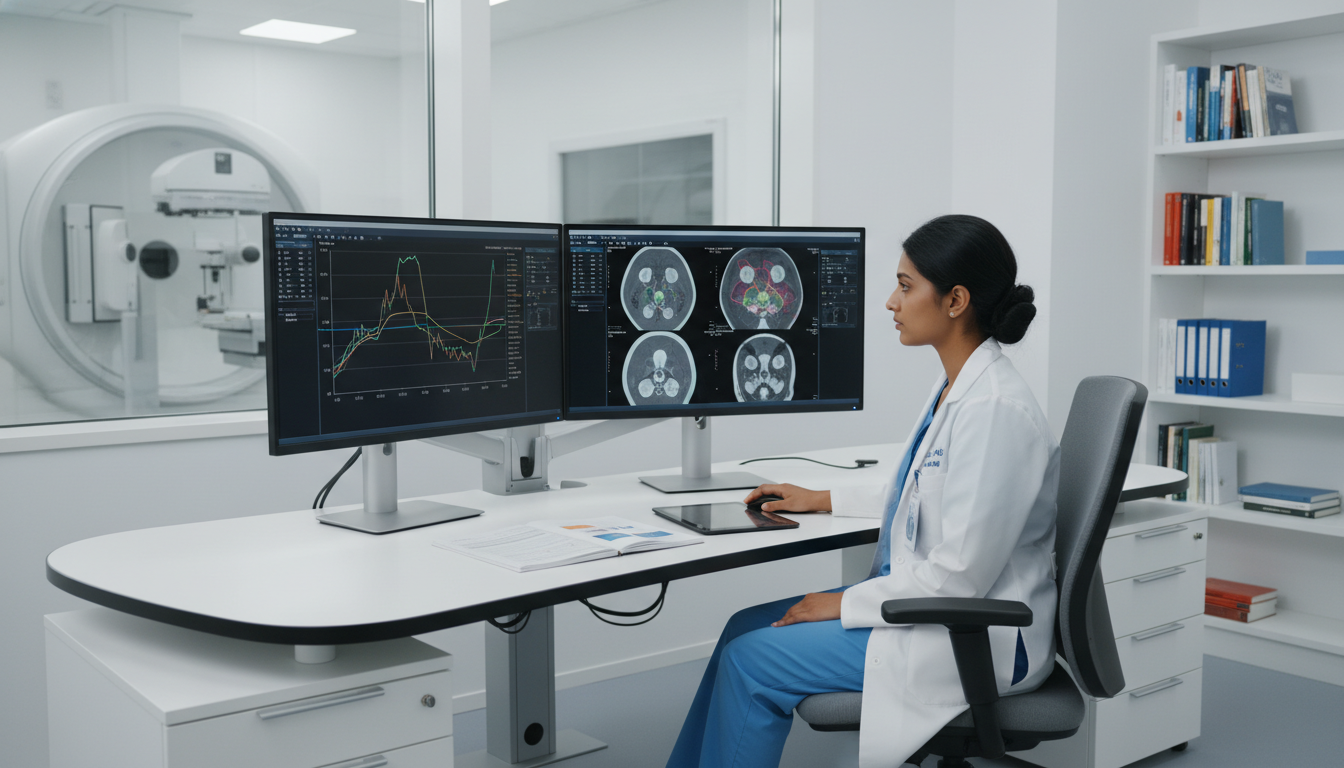
Entering psychiatry residency as a non-US citizen IMG (international medical graduate) is both exciting and challenging. One of the most powerful ways to strengthen your career trajectory—especially in academic psychiatry, subspecialty fellowships, and competitive post-residency positions—is to engage in meaningful research during residency.
This article is tailored specifically to the non-US citizen IMG in psychiatry, walking through how to identify research opportunities, overcome visa and time constraints, and build a research portfolio that supports a successful psych match, fellowship applications, and long-term academic goals.
Why Research During Residency Matters for Non-US Citizen IMGs in Psychiatry
Research is not mandatory to become a competent psychiatrist, but it offers significant advantages, particularly for a foreign national medical graduate navigating the US system.
1. Strengthening Your Career Options
For a non-US citizen IMG, residency may already feel like the “hardest hurdle.” But in psychiatry, your trajectory beyond residency is also strongly influenced by:
- Competitiveness for fellowships (e.g., child & adolescent psychiatry, addiction, geriatric, consult-liaison, forensic)
- Eligibility and competitiveness for academic faculty positions
- Opportunities in research-oriented institutions or VA systems
- Long-term visa and employment stability in the US
Research during residency signals to program directors and future employers that you can:
- Think critically and systematically
- Contribute to evidence-based practice
- Engage in scholarly inquiry and publication
- Work effectively in multidisciplinary academic teams
For a foreign national medical graduate who may already feel they need to “prove themselves” compared to US graduates, this is particularly valuable.
2. Compensating for Common IMG Barriers
Many non-US citizen IMGs:
- Attend medical schools with fewer formal research opportunities
- Lack home-institution mentors with US research connections
- Have fewer US-based publications at the time of residency application
Engaging in resident research projects during training helps to:
- Build a US-based academic track record
- Add PubMed-indexed publications and posters to your CV
- Generate strong, academic letters of recommendation
- Demonstrate growth since medical school
This is particularly important for those considering an academic residency track, clinician-scientist careers, or research-focused fellowships.
Understanding Research Options in Psychiatry Residency
Psychiatry training is an excellent environment for research, with many paths available even if you start with no prior experience.
1. Types of Research You Can Do as a Psychiatry Resident
Most programs will offer multiple types of projects. Common options include:
Clinical research
- Chart-review studies (e.g., outcomes of patients treated with a specific medication regimen)
- Prospective clinical trials (more demanding but often highly impactful)
- Treatment adherence, relapse rates, or symptom trajectories in specific populations
Health services and systems research
- Access to care for underserved or immigrant populations
- Emergency psychiatry utilization patterns
- Telepsychiatry interventions and outcomes
- Integration of mental health into primary care
Quality improvement (QI) projects
- Reducing 30-day readmission rates for patients with severe mental illness
- Improving screening rates for depression, PTSD, or substance use in specific clinics
- Enhancing follow-up after psychiatric hospitalization
QI is often required in residency and, with proper design and write-up, can be converted into posters or papers—especially valuable for the non-US citizen IMG.
Educational research
- Evaluating new teaching methods in resident didactics
- Studying burnout or well-being interventions among residents
- Developing and assessing simulation-based training in psychiatry
Neuroscience and translational research
- Brain imaging studies (fMRI, PET) related to psychiatric disorders
- Biomarker research (e.g., inflammatory markers in depression)
- Genetic or epigenetic studies in psychiatric populations
These tend to be more time-intensive and often require early commitment.
Psychotherapy and behavioral research
- Outcomes of specific psychotherapy modalities (e.g., CBT, DBT, psychodynamic therapy) in your clinical setting
- Measuring the impact of group therapies or rehab programs
- Studying adherence and engagement in psychotherapy
2. Research Tracks and Academic Residency Pathways
Many psychiatry programs offer an academic residency track or research track. This is crucial for residents who want to:
- Receive protected research time (e.g., 20–50% of their schedule)
- Work closely with funded investigators
- Prepare for T32 research fellowships or clinician-scientist careers
For a non-US citizen IMG:
- Some NIH training grants (T32) are restricted to US citizens or permanent residents.
- However, many research track experiences, departmental funds, and non-federal grants are open to foreign national medical graduates.
- Even if you cannot be supported on certain US federal grants during training, being embedded in research groups positions you for later opportunities (e.g., after obtaining permanent residency or with private foundation funding).
If you have not yet started residency, it is worth asking during interviews:
- “Does your psychiatry residency have an academic residency track?”
- “What percentage of current residents are involved in research during residency?”
- “Do you have any non-US citizen IMG residents actively publishing or presenting?”

Getting Started: First Steps for the Non-US Citizen IMG
If you’re early in residency (or about to start), you do not need to have a complete research background. What matters most is building a deliberate strategy.
1. Clarify Your Goals
Ask yourself:
- Do I want a primarily clinical career with some scholarly activity?
- Am I drawn toward a research-oriented academic career?
- Am I aiming for a competitive fellowship where research experience helps (e.g., child & adolescent, consult-liaison, addiction, forensics)?
- Is my long-term goal to remain in the US on an academic or hospital-based visa?
Your answers guide how much time and energy to invest in research during residency. For example:
- If you want a community-based clinical career, 1–2 solid projects with posters and possibly a paper may be sufficient.
- If you envision an academic clinician-investigator career, aim for consistent involvement, multiple outputs, and linkage to a mentor with ongoing grants.
2. Understand Program and Visa Constraints
As a non-US citizen IMG, you often train on J-1 or H-1B visas. These rarely prohibit research, but they may limit:
- The type of external employment you can do (e.g., paid research outside your sponsoring institution is usually not allowed)
- The ability to take time away for out-of-institution fellowships or long-term research blocks
Important points to clarify with your program and GME office:
- Are residents allowed protected research time, and from which year (PGY-2, PGY-3, etc.)?
- Are there restrictions on moonlighting or external research roles for your visa category?
- Can elective blocks be used for intensive research rotations?
Your goal is to embed your research within the residency structure, not as an extra job.
3. Find a Mentor Early
Mentorship is the single most important factor in successful resident research projects.
Ideal mentors for a non-US citizen IMG:
- Have a track record of publishing with residents and medical students
- Understand the needs of IMGs and foreign national medical graduates
- Are comfortable with the timeline of residency and call schedules
- Are willing to help navigate conference abstracts, IRB submissions, and manuscripts
Potential mentors can be:
- Psychiatry faculty in your department (clinical or research-focused)
- Faculty in psychology, neuroscience, public health, or biostatistics with psychiatry collaborations
- Fellowship faculty (e.g., in addiction or child & adolescent psychiatry) interested in resident involvement
Practical approach:
- Review department websites for faculty with publication lists and defined research topics that interest you.
- Attend research seminars, grand rounds, or journal clubs to identify active investigators.
- Send a brief, focused email: who you are, your background as a non-US citizen IMG, your interests, and what kind of involvement you are seeking.
4. Start Small, Then Build
A common mistake is aiming for a large, complex project as your very first step. Instead, consider:
- Joining an existing resident research project mid-stream
- Assisting with data collection or chart reviews
- Helping prepare conference abstracts or literature reviews
These early experiences:
- Help you learn the research process and vocabulary
- Familiarize you with IRB and data security
- Lead to faster tangible outputs (posters, co-authorships)
- Build your confidence and working relationship with mentors
Once oriented, you can propose your own project, ideally one that is feasible within 12–18 months.
Designing Feasible Resident Research Projects in Psychiatry
Your time as a resident is compressed and clinically demanding. To succeed, research during residency must be realistic, structured, and protected.
1. Characteristics of a Good Resident Project
Aim for projects that are:
Clinically relevant
Aligned with your rotations (inpatient, outpatient, ER, consult-liaison, community psychiatry).Methodologically simple enough
Chart reviews, cross-sectional surveys, simple pre-post interventions, feasible QI.Time-bounded
Can reasonably be completed (from project design to abstract submission) in 1–2 years.Supported by your mentor’s existing infrastructure
Use existing databases, ongoing studies, or departmental initiatives whenever possible.
Example
You rotate through an inpatient psychiatric unit where many patients present with co-occurring substance use disorders. You can:
- Perform a retrospective chart review of readmission rates for patients with vs. without substance use disorders.
- Analyze existing data using basic statistical methods (logistic regression, survival analysis with support).
- Present findings as a poster at the APA (American Psychiatric Association) meeting and then work towards a manuscript.
2. Integrating QI and Research
QI is mandatory in many programs and an excellent starting point for resident research projects:
- Identify a clinical problem: low depression screening rates, poor follow-up after discharge, inconsistent use of suicide risk tools.
- Implement a small, well-defined intervention (e.g., EMR prompt, training for nurses, standardized checklist).
- Measure pre- and post-intervention outcomes.
With appropriate framing, literature grounding, and methodological rigor, QI projects can be written up as:
- Posters at national/international psychiatry conferences
- Short original research or brief reports in peer-reviewed journals
This is especially helpful for the non-US citizen IMG who needs to maximize the “research value” of existing residency requirements.
3. Collaborating Across Departments
Psychiatry sits at the intersection of neurology, internal medicine, pediatrics, emergency medicine, and public health. Use this to your advantage:
- Partner with neurology on research about functional neurological disorder or comorbid epilepsy and depression.
- Work with internal medicine or primary care on collaborative care models for depression and anxiety.
- Team up with emergency medicine on ED presentations for suicidal ideation, psychosis, or substance use.
Multi-disciplinary collaborations:
- Broaden your network
- Increase the chance of high-impact publications
- Provide exposure to different research cultures and methods
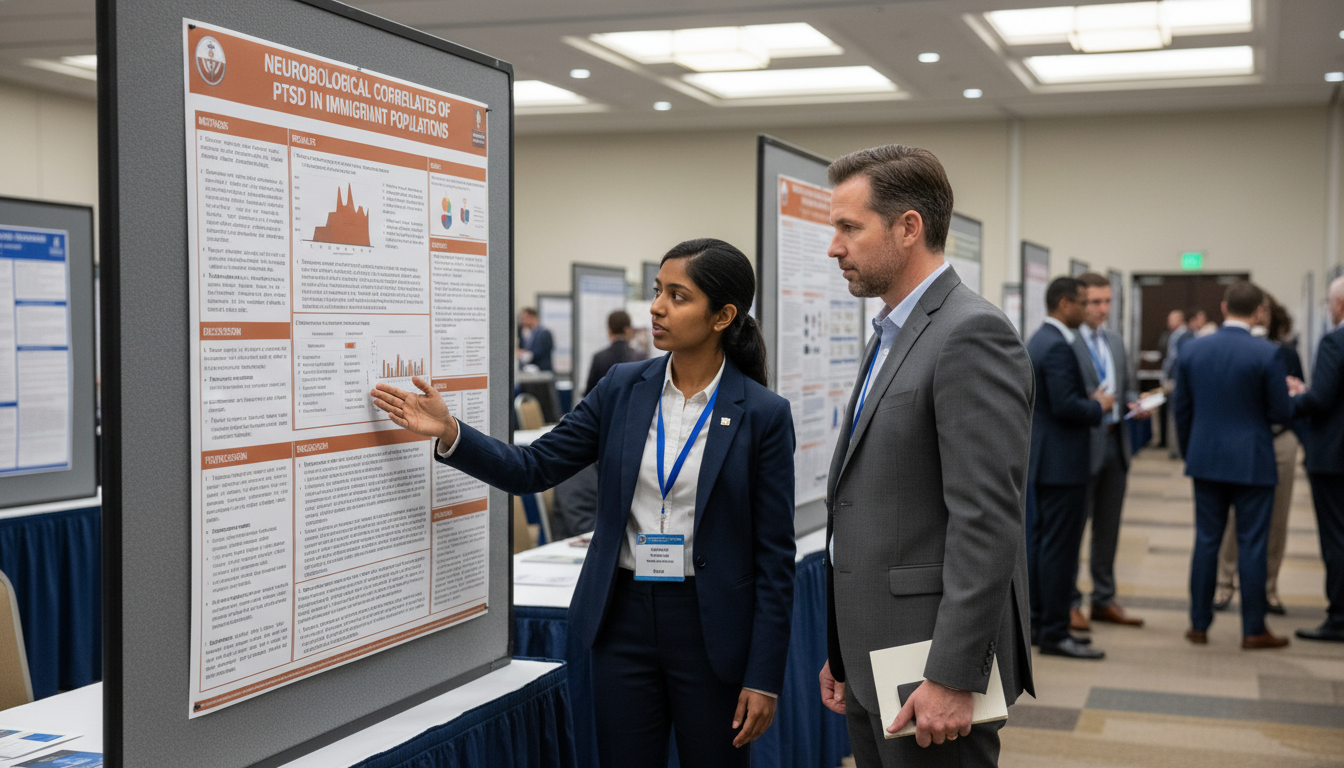
Publishing, Presenting, and Leveraging Research for Your Future Career
Producing research is only half the story. To truly benefit from your efforts, you must ensure your work becomes visible and strategically integrated into your career narrative.
1. Turning Projects into Abstracts, Posters, and Papers
Work with your mentor to:
- Identify appropriate conferences: APA, AACAP (for child psychiatry), APA addiction, consultation-liaison psychiatry societies, or regional meetings.
- Submit abstracts early; many resident-friendly deadlines are 6–9 months before the meeting.
- Prepare posters or oral presentations that clearly highlight:
- Your role in the project
- Clinical implications
- Relevance to psychiatric practice
For publications:
- Aim for journals that are realistic for resident projects, such as specialty psychiatry journals, education journals, or case-report-oriented journals.
- Consider starting with:
- Case reports or case series (if novel or highly instructive)
- Brief reports or letters to the editor
- Original research articles for well-designed projects
For a non-US citizen IMG, even a few papers in US-based journals can transform how fellowship directors and future employers view your application.
2. Highlighting Research in Fellowship and Job Applications
During your PGY-3 and PGY-4 years, you will likely apply for:
- Fellowships (if you choose to subspecialize)
- Academic or hospitalist positions
Make your research a visible and coherent part of your story:
- Emphasize your trajectory: what you learned from each project and how it shaped your interest (e.g., in addiction, psychosis, CL, child).
- Reference specific resident research projects and results during interviews.
- Bring copies of your posters or a concise portfolio.
- Ask mentors involved in your projects to write letters of recommendation that describe:
- Your reliability and independence
- Your critical thinking and problem-solving skills
- Your ability to work as part of a research team
For a foreign national medical graduate, research-active mentors are also valuable advocates with institutional leaders or fellowship directors who may be deciding whom to sponsor for visas or research positions.
3. Planning for Long-Term Academic and Visa Strategy
If you are drawn toward an academic residency track and long-term research career, start thinking early about:
- Potential post-residency research fellowships or postdoc-like positions
- Whether institutions you are interested in regularly sponsor non-US citizens for research or faculty roles
- The timeline and pathway from J-1 or H-1B to a more stable immigration status (discuss with your program and possibly an immigration attorney)
Research increases your value to institutions:
- Productive scholars help departments secure grants, prestige, and better training program reputations.
- Being known as a reliable research collaborator can make departments more willing to provide visa sponsorship or long-term support.
Practical Time Management and Burnout Prevention
Balancing clinical responsibilities, board preparation, personal life, and research during residency is challenging. For a non-US citizen IMG, there may also be added stress from visa issues, family abroad, or cultural adaptation.
1. Protect Your Research Time
Strategies that help:
- Block calendaring: Reserve weekly research time (e.g., 2–4 hours on a specific afternoon or evening) and treat it like a non-negotiable meeting.
- Use elective or scholarly time: Many psychiatry residencies allow 2–4 weeks of elective time per year; consider clustering into a research block.
- Micro-tasks: Break large tasks into smaller components—e.g., write one section of the introduction, or clean one subset of data.
2. Communicate Transparently With Mentors
Be clear about:
- Your call schedule and rotation intensity
- Visa deadlines or travel plans that may interrupt availability
- Your realistic weekly time commitment for the project
Good mentors will help adapt the project scope to your capacity and keep expectations aligned.
3. Watch for Burnout Signals
Signs to monitor:
- You dread research-related meetings or feel excessive anxiety around them.
- You are consistently sacrificing sleep or basic self-care for research tasks.
- The projects no longer feel aligned with your broader career goals.
You always have the option to renegotiate your role, shift toward smaller contributions, or pause. Your well-being and clinical competence are the foundation on which your research activities should sit, not the other way around.
Common Pitfalls for Non-US Citizen IMGs—and How to Avoid Them
1. Waiting Too Long to Start
Many residents think: “I’ll start research once I’m less busy.” In reality, psychiatry residency never becomes completely calm. If you wait until PGY-4, your window to publish and see results before graduation is small.
Solution:
Start with low-intensity involvement by the end of PGY-1 or early PGY-2, even if it’s just helping with data collection or literature review.
2. Overcommitting to Too Many Projects
Taking on 5 projects but finishing none is a common trap.
Solution:
Prioritize 1–2 main projects where you have a clearly defined role and enough time to bring them to completion. Other projects can be “opportunistic” add-ons only if they don’t jeopardize your main work.
3. Misalignment With Mentor or Project Scope
Sometimes mentors are too busy, or projects are too complex for a residency timeline.
Solution:
- Have an explicit conversation about deliverables, timelines, and authorship at the start.
- Ask early: “Is this project realistic to complete and publish within my residency?”
- Don’t hesitate to seek a secondary mentor or supportive senior resident if communication breaks down.
4. Underestimating the Value of Your Background
Non-US citizen IMGs often underestimate how valuable their experiences are. You may bring:
- Expertise in global mental health or psychiatry care systems in your home country
- Fluency in languages useful for culturally focused research
- Understanding of immigrant and refugee mental health challenges
These unique perspectives can inspire important and innovative resident research projects, especially in health disparities and cross-cultural psychiatry.
FAQs: Research During Residency for Non-US Citizen IMGs in Psychiatry
1. I have no prior research experience. Can I still participate in research during psychiatry residency?
Yes. Many residents, including IMGs, start research during residency with zero experience. Programs often provide basic training, journal clubs, and mentorship. Start by joining an existing resident research project rather than designing a complex study from scratch. Clinical or QI projects with strong mentorship are ideal entry points.
2. Does being a non-US citizen IMG limit my ability to do research or access grants?
You can participate in most resident research projects regardless of visa status. Some federal grants (like certain NIH training grants) are restricted to US citizens or permanent residents, but many departmental funds, foundation grants, and internal awards are open to non-US citizens. Your mentor and institutional grants office can help you identify eligible funding sources. Even without direct grant funding, you can still publish, present, and build an academic track record.
3. How many publications do I need for a competitive psych match or fellowship?
For the psych match itself, strong clinical performance, US letters of recommendation, and good fit are more important than a specific number of publications. That said, even 1–2 meaningful research experiences or publications can significantly strengthen a non-US citizen IMG’s profile. For competitive fellowships or academic residency track pathways, a small cluster of abstracts, posters, or papers (e.g., 3–5 scholarly products) is often very helpful.
4. Is it realistic to aim for an academic psychiatry career as a foreign national medical graduate?
Yes, but it requires deliberate planning. Engage in research early in residency, seek research-active mentors, and consider programs or institutions known for supporting international scholars. Understand your visa constraints and explore pathways that allow transition into research fellowships, post-residency academic positions, or sponsored faculty roles. Many non-US citizen IMGs have built successful academic psychiatry careers; research during residency is often the foundation of that trajectory.
Research during residency is not just an optional extra for the non-US citizen IMG in psychiatry—it can be a powerful engine for career advancement, academic opportunity, and long-term stability in the US healthcare system. By starting early, choosing feasible resident research projects, leveraging mentorship, and aligning your efforts with your broader goals, you can turn your years of training into a launchpad for an impactful and intellectually fulfilling career in psychiatry.